Can You Fish Two States in One Trip With a Wyoming License?
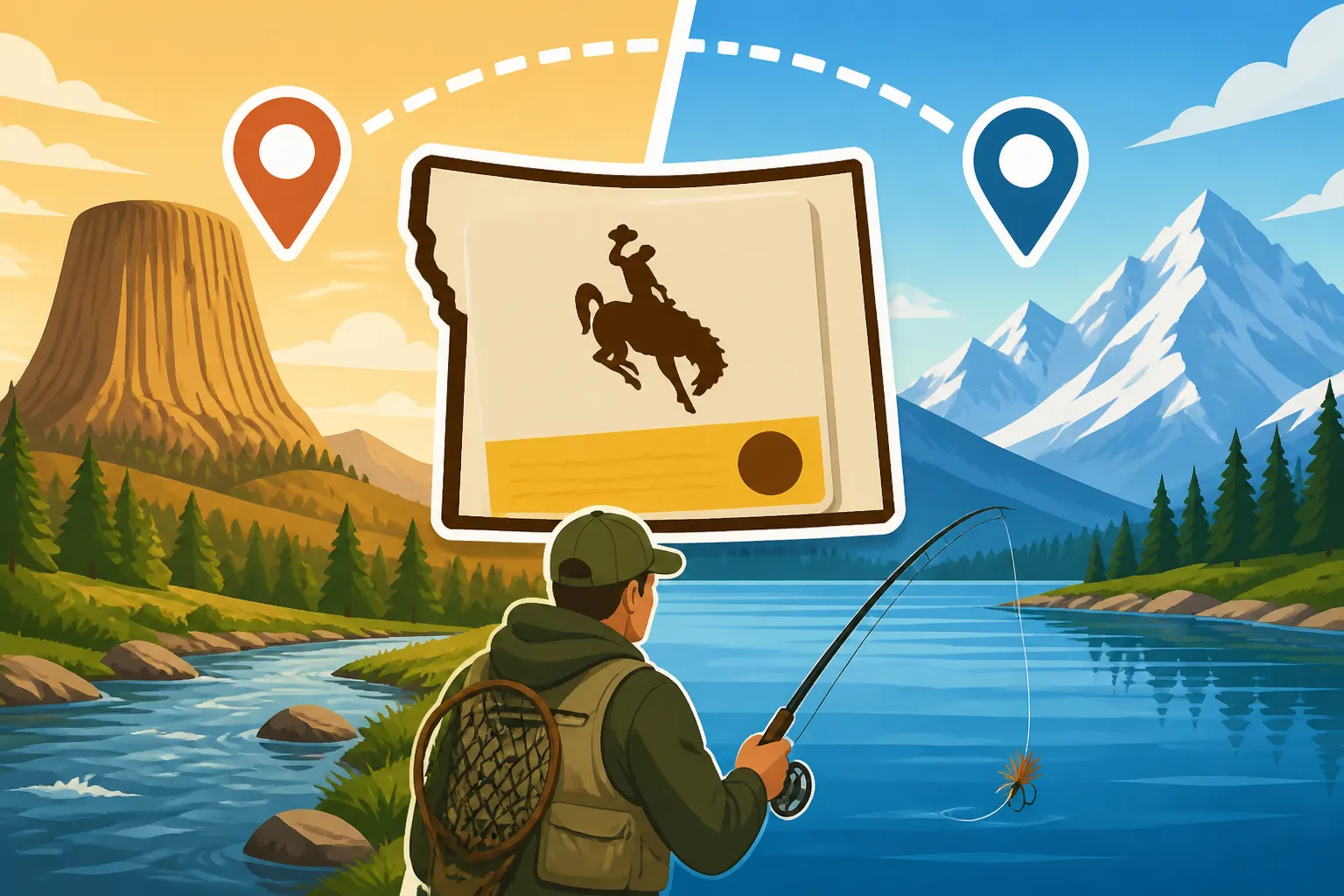
It's a common dream for anglers exploring the vast landscapes of the American West: hitting multiple incredible fishing spots across state lines in one glorious trip. Many of us have wondered if that trusty Wyoming fishing license in our wallet might just stretch to cover a quick cast into an Idaho stream or a Colorado lake. Unfortunately, this isn't usually the case, and assuming your Wyoming license covers you elsewhere can quickly turn a peaceful outing into a frustrating, and potentially costly, encounter with game wardens. This guide will dive deep into why state fishing licenses are state-specific, what you need to know about fishing near borders, and how to legally plan your multi-state angling adventure.
The Immutable Rule: Fishing Licenses Are State-Specific
The simple, unvarnished truth is that your Wyoming fishing license is almost exclusively valid only within the geographical boundaries of Wyoming. There's no magical reciprocity that allows it to function in Montana, Idaho, Colorado, Utah, or South Dakota, even if you're just a few feet over the state line. This fundamental principle is crucial to understand before you even pack your bags.
Why Fishing Licenses Are State-Specific
This isn't just about bureaucracy; it's deeply rooted in the legal framework and resource management responsibilities of each state. Every state, through its Game and Fish or equivalent department, is tasked with managing its own wildlife and fisheries resources. This includes everything from stocking fish and conducting population surveys to habitat restoration and enforcing regulations. The revenue generated from license sales directly funds these efforts. When you buy a Wyoming fishing license, you are contributing to the conservation, management, and enforcement activities specific to Wyoming's waters.
Imagine if licenses were transferable across states. It would create a chaotic mess for resource managers trying to track angler pressure, fund conservation programs, and enforce specific rules. Each state has unique ecological challenges, different fish species priorities, and varying levels of fishing pressure. The cost of a fishing license, whether it's the cost of a Wyoming Resident Fishing License or the higher Wyoming Nonresident Fishing License Cost, reflects the investment each state makes in its own natural heritage. Without state-specific licensing, the system would collapse, and the very fisheries we love to pursue would suffer.
How State Lines Affect Your Fishing Trip
For anglers, this means you need to be acutely aware of where you are casting your line, especially in regions like the West where state borders are often arbitrary lines on a map that bisect rivers, lakes, and vast wilderness areas. You might be floating down a river that meanders back and forth across a state line, or fishing a reservoir where one arm is in Wyoming and another is in a neighboring state.
Consider the example of Flaming Gorge Reservoir, a massive body of water renowned for its trophy lake trout and kokanee salmon. While a significant portion of Flaming Gorge is in Wyoming, a large section extends into Utah. If you launch your boat in Wyoming with a Wyoming license and then cross into the Utah side of the reservoir, you are technically fishing illegally without a valid Utah license. This isn't just a minor infraction; you could face fines, confiscation of your gear, and even loss of future fishing privileges. Game wardens from both states patrol these waters and are very familiar with the nuances of the border. Always remember to check where your intended fishing spot lies geographically.
Border Waters and the Myth of Reciprocal Agreements
The idea of "reciprocal agreements" often comes up when discussing multi-state fishing, and while they exist for certain activities, they are exceedingly rare for basic fishing licenses in the Western states, especially where Wyoming is concerned. It's a common misconception, but relying on it without verifying could land you in hot water.
Understanding Reciprocal Agreements (or Lack Thereof)
A reciprocal agreement, in the context of fishing, would mean that State A recognizes State B's fishing license as valid on certain shared waters, or vice-versa. While some states in other regions of the U.S. might have such agreements for small border lakes or rivers, these are not typically in place for the broad, general fishing licenses in Wyoming and its adjacent states. Wyoming's Game and Fish Department (WGFD) manages its fisheries distinctly. Even for interstate boundary waters, the WGFD generally requires a valid Wyoming license for any angler fishing on the Wyoming side of the border.
The complexity of differing state regulations – from varying bag and possession limits to bait restrictions and special closures – makes blanket reciprocal agreements very difficult to manage for general fishing. For instance, the Wyoming Fishing Regulations Every Angler Should Know are meticulously detailed, and a neighboring state's regulations will have entirely different nuances. If you hear whispers of such an agreement, always, always confirm it directly with the official Wyoming Game and Fish Department or the equivalent agency in the other state before assuming your license is valid. A quick phone call or check of their official website can save you a lot of grief.
The Wyoming-Idaho-Montana Conundrum
Many anglers visit Wyoming as part of a broader trip to the Rocky Mountain region, often including Idaho and Montana, home to world-class trout fisheries. It's incredibly tempting to want to fish a famous river in Wyoming one day and then hop across to Montana's Paradise Valley the next, or to explore Idaho's legendary Henry's Fork. However, each of these states requires its own distinct fishing license.
For example, if you're spending a week fishing the Snake River in Wyoming, you'll need your Wyoming license and potentially a Conservation Stamp. If your itinerary then takes you into Idaho to fish the South Fork of the Snake River, you absolutely must purchase an Idaho fishing license. The same applies to Montana; a separate Montana license is required. There are no current agreements that allow a Wyoming fishing license to be used in Montana or Idaho, or vice versa, for general fishing. This rule also extends to fishing within national parks that straddle state lines, such as Yellowstone National Park, where specific rules and licenses apply, often regardless of the state park entrance you use. If you plan to fish in Grand Teton National Park, you'll still need a Wyoming license.
Planning a Multi-State Fishing Adventure
If your heart is set on fishing in more than one state during your trip, it's absolutely doable! It just requires a bit more planning and a clear understanding of the rules. The key is preparation and budgeting for additional licenses.
Acquiring Licenses for Each State
The most straightforward way to legally fish in multiple states is to purchase a valid fishing license for each state you intend to fish in. Many states, including Wyoming, offer various license options that can be tailored to your trip duration. For example, if you're only spending a day or two in Wyoming, a Wyoming Daily Fishing License Cost might be more economical than an annual one. Similarly, if you're passing through Idaho for just a short stint, look for their short-term or daily nonresident options.
Most state game and fish departments have user-friendly online portals where you can purchase licenses in advance. This is often the easiest and most convenient method. You can usually print a copy immediately, or save it to your phone. Some anglers prefer a physical copy, which can be purchased at authorized vendors like sporting goods stores, some grocery stores, or even designated tackle shops. It's always a good idea to have a backup printout, especially if you're heading into areas with no cell service. Make sure you understand the rules for carrying your Wyoming Fishing License in the Field, which often means having it readily accessible for inspection. When preparing for your trip, consider purchasing a waterproof license holder from Amazon to protect your paper copies from the elements.
Here's a quick look at common license types you might consider for a multi-state trip, keeping in mind specific costs vary by state and residency:
| License Type | Typical Duration | Ideal For | Considerations |
|---|---|---|---|
| Annual Resident | Calendar Year (Jan 1-Dec 31) | Local anglers, frequent visitors | Requires proof of residency, often best value. |
| Annual Nonresident | Calendar Year (Jan 1-Dec 31) | Nonresidents making multiple trips | Higher cost, covers full year. |
| Daily | 1 Day (24 hours) | Short visits, specific target days | Economical for brief stops, often no Conservation Stamp needed. |
| 3-Day/5-Day (Nonresident) | Consecutive Days | Extended multi-state trips | Good balance of duration and cost, often cheaper than multiple dailies. |
| Conservation Stamp/Permit | Annual | Often required with annual licenses | Check if needed for daily/short-term licenses. |
Remember, purchasing a license is just the first step. You also need to understand the associated regulations.
Researching Water-Specific Regulations
Beyond the general statewide rules, many rivers, lakes, and even sections of the same waterway can have highly localized regulations. This is especially true in prime fishing destinations like Wyoming, which has diverse ecosystems and unique fisheries. For instance, the North Platte River might have specific rules for different stretches, like barbless hook requirements on the North Platte River near Gray Reef or special catch-and-release rules in certain areas.
When planning a multi-state trip, you need to consult the regulations for each specific water body you intend to fish in each state. Don't assume that because a river flows from Wyoming into Colorado, the rules remain the same. They almost certainly do not. Pay close attention to:
- Bag and Possession Limits: How many fish of what species you can keep, and how many you can have in your possession. These can vary wildly between states and even within different waters in the same state.
- Size Limits: Minimum or maximum lengths for keeping certain fish.
- Gear Restrictions: Are bait, specific lures, or live bait allowed? Are barbless hooks mandatory? Is it fly-fishing-only?
- Seasons and Closures: Some waters have specific opening and closing dates for certain species or entire sections.
- Time of Day Restrictions: While less common, some areas might have restrictions on night fishing.
- Boat/Watercraft Rules: Invasive species checks, launch permits, or restrictions on motor types.
The Wyoming Game and Fish Department website is an invaluable resource for Wyoming's specific rules. Similarly, visit the official sites of Idaho Fish and Game, Montana Fish, Wildlife & Parks, and Colorado Parks and Wildlife for their respective regulations. Many anglers find it helpful to print out the relevant pages or save PDF versions to their phones, especially when heading into remote areas where internet access is spotty. Amazon also sells physical fishing maps that can detail state boundaries and river access points, providing an excellent visual aid for your planning.
Practical Tips for Border Region Anglers
Fishing near state lines demands extra vigilance. It's not enough to just buy the licenses; you need to be constantly aware of your exact location and the minute details of the regulations that apply.
Knowing Your GPS and Maps
In border regions, precise location awareness is your best friend. Relying solely on visual landmarks can be misleading. A good quality GPS device or a reliable GPS app on your smartphone is crucial. Many fishing-specific apps can show state boundaries and even overlay regulation maps. Before you head out, download offline maps for your chosen areas, as cell service can be non-existent in many prime fishing spots in Wyoming and surrounding states.
Print out maps that clearly show the state lines in relation to the waterways you're targeting. For example, if you're fishing a small creek that forms a border between Wyoming and Colorado, confirm which side is which. Sometimes, a creek may be entirely in one state, but the land on the opposite bank is in another. Ignorance of the boundary is not a defense if a game warden approaches you. Always err on the side of caution and ensure you are legally licensed for the water you are actively fishing.
Double-Checking Gear and Bait Regulations
This is a subtle but critical area where state regulations can diverge. What's perfectly legal bait or gear in Wyoming might be prohibited just across the border.
- Live Bait: Wyoming has strict rules about the use of live baitfish, and many blue-ribbon trout waters are restricted to artificial lures and flies only. Neighboring states may have entirely different policies. Transporting live bait across state lines can also be illegal, even if you intend to use it where permitted, due to invasive species concerns.
- Barbless Hooks: While specific stretches of Wyoming rivers, like parts of the North Platte, require barbless hooks, this is not a universal rule across all Wyoming waters, nor necessarily in adjacent states. Always check. If you're going to a "barbless only" section, it's best to simply crimp the barbs on all your hooks before you go to avoid issues.
- Two-Pole Permits: In Wyoming, if you want to fish with two rods, you typically need to purchase a Two-Pole and Multiple-Rod Rules in Wyoming permit in addition to your general license. Not all states offer this, or they might include it in their base license. Don't assume your Wyoming Two-Pole permit is valid elsewhere.
Before crossing a state line, review the gear and bait regulations for your destination state. It might mean changing out your tackle box contents or switching to artificial lures only. Being caught with illegal bait or gear can result in significant fines, even if you weren't actively using it but merely had it in your possession on prohibited waters. Many specialized items, such as specific fly patterns for Wyoming Cutthroat Trout or unique lures for walleye at Boysen Reservoir, can be purchased easily from retailers on Amazon and delivered to your home before your trip, allowing you to prepare your tackle box with appropriate gear for each state.
Transporting Your Catch Across State Lines Legally
You've had a fantastic day fishing in Wyoming, filled your limit of legal trout, and now you're heading back home or to your next destination in another state. This raises an often-overlooked regulatory hurdle: transporting your catch across state lines.
Most states have regulations about how fish must be transported, particularly if they are regulated by size or species. The general rule of thumb is that fish must be kept in a condition where they can be readily counted and identified. This often means keeping the head and tail attached until you reach your final destination or a processing facility. Filleting fish on the water or before crossing a state line can make it impossible for a game warden to verify that you adhered to bag and size limits, potentially leading to a citation. Some states may also require you to have your fishing license and catch in the same vehicle, especially if multiple people are in your party.
Additionally, be mindful of any state-specific health advisories related to fish consumption. While Wyoming has relatively clean waters, it's always wise to check for any advisories in any state where you catch fish, especially for older, larger fish or certain species in specific waters. When preparing to transport your catch, having reliable coolers and ice is key; you can find highly-rated options on Amazon to keep your fish fresh and easily verifiable.
Final Thoughts on Your Multi-State Fishing Quest
Fishing in Wyoming offers some of the most spectacular angling experiences in the country. From the pristine high-alpine lakes to the world-renowned trout rivers, it's a destination on many anglers' bucket lists. If your travel plans include fishing beyond its borders, embrace the adventure by being fully prepared and compliant with the regulations of every state you visit. A little bit of homework goes a long way in ensuring your multi-state fishing trip is filled with fond memories, not legal woes.
Disclaimer
The information provided in this guide is for general informational purposes only and is subject to change. Fishing regulations are complex and can be updated frequently by state agencies. Always consult the official Wyoming Game and Fish Department website and the official websites of any other state game and fish agencies you plan to visit for the most current and accurate regulations before engaging in any fishing activities. Compliance with all applicable laws and regulations is the sole responsibility of the angler.