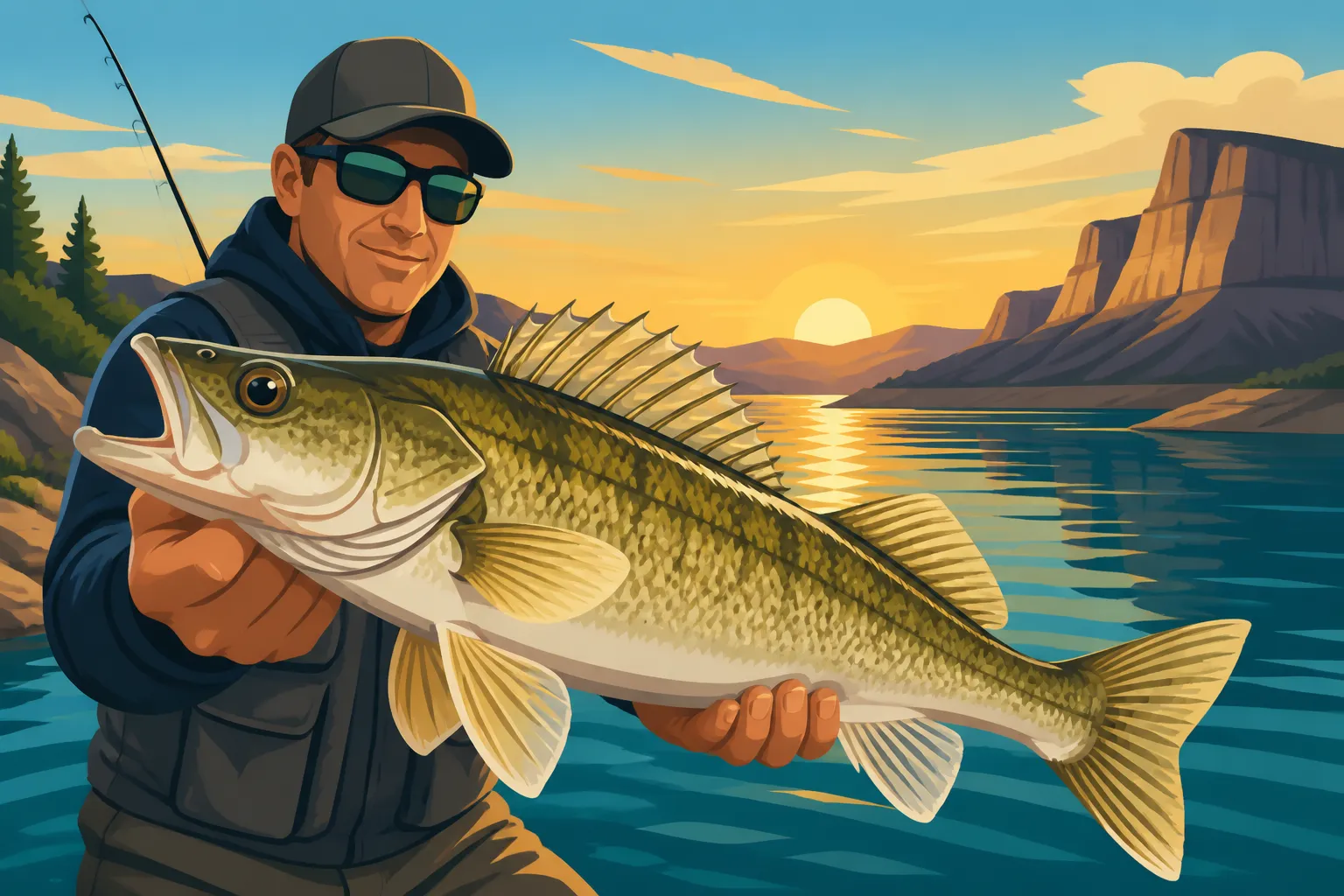
Fishing for Sauger at Boysen Reservoir
Many anglers head to Boysen Reservoir in Wyoming with their sights set firmly on walleye, a truly fantastic sport fish that calls these waters home. But in their pursuit of those toothy predators, a lot of folks unknowingly overlook another incredible fighting fish, one that often shares the very same haunts and can offer equally thrilling action: the sauger. It's a common oversight, and frankly, it's easy to confuse them with their walleye cousins, leading many to miss out on what can be a truly rewarding fishing experience if you just knew where to start. This guide is here to cut through that confusion, helping you specifically pinpoint and target sauger at Boysen Reservoir, equipping you with the know-how to consistently put these hard-fighting fish in your boat or on your line.
Understanding Sauger Habitat in Boysen Reservoir
If you want to catch sauger, you first have to think like a sauger. These fish aren't just random wanderers; they have distinct preferences for where they like to hang out, feed, and feel safe. Boysen Reservoir, with its diverse underwater topography, offers plenty of prime real estate for them, but knowing the specifics can make all the difference.
Deep Channels and Submerged Structures
Sauger, generally speaking, are more oriented towards the bottom than walleye, especially favoring deeper water with a bit of current and often, some murkiness. At Boysen, this means focusing your efforts on the old river channels that wind their way through the reservoir floor. Before the dam was built, the Wind River flowed through this valley, carving out distinct pathways that now lie submerged, creating perfect highways and holding areas for sauger. They love to hug the edges of these channels, particularly where there's a drop-off or a sudden change in depth.
Think about areas where the river channel takes a bend, or where it's intersected by a feeder creek – these are often congregation points. Large, submerged rock piles, old timber, or even subtle changes in the bottom contour can act as ambush points for sauger. They aren't always in the deepest part of the channel; sometimes they'll be just off to the side, waiting for baitfish to drift by. Knowing how to interpret a good depth finder and understanding the Boysen Reservoir's underwater map is key here. You're looking for those hidden contours and breaks that offer them shelter and an easy meal.
Current and Turbidity Preferences
One of the most defining characteristics of sauger, which often differentiates them from walleye, is their higher tolerance, and sometimes even preference, for current and slightly turbid water. While walleye often prefer clearer water or at least less agitated conditions, sauger thrive in areas with a gentle flow, which helps concentrate their prey. At Boysen, this translates to focusing on the upstream end of the reservoir, particularly near the inlet of the Wind River and other feeder streams.
The areas where the river current dissipates into the main body of the reservoir create perfect feeding zones. The water here might be a little cloudier due to inflow, which sauger don't mind at all. In fact, it often gives them a camouflage advantage. Look for current seams, eddies, and subtle backflows where baitfish might be disoriented. These are prime locations where sauger will position themselves, conserving energy while waiting for an easy meal to be swept their way. Understanding how the Wind River Near Boysen Reservoir influences water flow and turbidity within the main body can significantly improve your chances. Even after significant rain or runoff events, when the water might seem too murky for typical walleye fishing, these can be prime times for sauger.
Prime Techniques and Baits for Boysen Sauger
Catching sauger at Boysen Reservoir isn't just about finding them; it's also about presenting your offering in a way that appeals to their specific feeding habits. They can be a bit more subtle than walleye at times, requiring a finely tuned approach.
Jigging and Live Bait Rigs
When it comes to getting a bait right in front of a sauger's nose, jigging is often king. Because sauger prefer to stay tight to the bottom and aren't typically inclined to chase a bait very far, a vertical presentation works wonders. Think about small lead head jigs, typically 1/8 to 1/4 ounce, tipped with a minnow or a soft plastic grub. The key is to keep that jig bouncing or dragging along the bottom, stirring up sediment and mimicking an easy meal. A very slow, deliberate lift-and-drop, or even just dragging it with the boat's drift, can entice a bite.
For live bait, a simple slip-sinker rig or a Lindy rig is incredibly effective. This involves a walking sinker, a swivel, a leader (usually 18-36 inches), and a single hook. Thread a lively shiner minnow, leech, or even a nightcrawler onto the hook, allowing it to swim naturally just off the bottom. The slip-sinker allows the fish to pick up the bait and swim away with minimal resistance before you set the hook. This is particularly useful in those deeper channels where sauger are holding tight to the structure. You can cover ground slowly, dragging this rig along the bottom contours, letting the bait do its work. Many of these techniques overlap with Jigging for Walleye at Boysen Reservoir, making your learning curve easier if you're already familiar with walleye tactics.
Trolling for Sauger with Bottom Bouncers and Crankbaits
While jigging is excellent for targeting specific structures, trolling allows you to cover vast amounts of water, which is often necessary to locate scattered schools of sauger. Bottom bouncers are absolute workhorses for sauger trolling. These L-shaped wire sinkers, typically ranging from 1/2 ounce to 2 ounces depending on depth and current, allow you to drag a snelled hook and live bait (like a minnow or a crawler harness) right on the bottom without snagging excessively. The "bouncing" action they provide attracts attention and keeps your bait in the strike zone.
Alternatively, small to medium-sized crankbaits that dive to the desired depth can be incredibly effective, especially if they have a tight wobbling action. Look for baits with a slender profile that imitate baitfish. Colors can vary, but natural patterns like perch, shad, or firetiger often produce. The trick with crankbaits is to ensure they are consistently making contact with the bottom or just a few inches above it. This often means using a specific line diameter or adding a small amount of weight to get them down. Trolling speeds should be slow, generally between 0.8 and 1.5 miles per hour, adjusting based on fish activity and water temperature. Using a service like FishingBooker can sometimes help you connect with local guides who specialize in these trolling techniques for sauger and walleye on Boysen.
Lure Selection and Color Choices
Choosing the right lure size and color can be surprisingly crucial, especially for sauger who often inhabit murkier waters. Because sauger rely heavily on their lateral line and sight in low-light or turbid conditions, lures that provide both vibration and a contrasting color scheme tend to perform best.
In terms of lures, slender profile crankbaits like Rapala Shad Raps or Berkley Flicker Shads that dive to the 10-25 foot range are excellent starting points. Blade baits, like Johnson ThinFisher or Heddon Sonar, which create significant vibration on the lift, are also highly effective, particularly for vertical jigging over deeper humps. For soft plastics, twister tails, or paddle tail grubs in 3-4 inch sizes, rigged on a lead head, can be deadly.
Color-wise, don't be afraid to go bold in turbid water. Chartreuse, orange, firetiger, or bright greens often stand out best. In clearer conditions or on brighter days, more natural colors like silver, white, or darker blues and greens might be preferred. It's always a good idea to experiment. Start with a couple of different colors and see what the fish respond to on a given day. Sometimes a subtle glitter or a glow-in-the-dark option can make all the difference, especially during dawn, dusk, or heavily overcast conditions. The right lure in the right spot, presented correctly, can turn a slow day into a memorable one.
Best Times and Conditions to Target Sauger at Boysen
Just like any fish, sauger have peak activity periods influenced by seasons, weather, and time of day. Knowing these patterns can give you a significant advantage in Boysen Reservoir.
Seasonal Movements
Sauger at Boysen Reservoir follow predictable seasonal patterns, largely dictated by spawning cycles and food availability.
- Spring: As the ice breaks up and water temperatures begin to rise (typically late March through May), sauger become very active, moving into shallower areas near the Wind River inlet or other spawning grounds. They can be found in 5-15 feet of water, often still in slightly murky areas. This is a fantastic time for jigging with minnows or slow-trolling shallow-diving crankbaits. Their metabolism is kicking into gear, and they're feeding aggressively after the long winter.
- Summer: During the warmer months (June through August), sauger generally move deeper, seeking cooler, more oxygenated water. You'll find them concentrating in the main lake basin, often near the old river channels or deeper humps, usually in 20-40 feet of water. Trolling with bottom bouncers and crawler harnesses or deep-diving crankbaits becomes very effective. They might still come shallower during low-light conditions, but their primary haunts will be in the depths.
- Fall: As water temperatures cool down again (September through November), sauger begin to move shallower once more, sometimes schooling up in preparation for winter. This can be another fantastic time for aggressive feeding. Look for them in 15-30 feet of water, often relating to steep drop-offs or points. Jigging with larger minnows or casting blade baits can be very productive. This is also a good time to consider "Is Jackson Lake Open for Fishing in October Now?" as other Wyoming fisheries experience seasonal shifts.
- Winter (Ice Fishing): Yes, you can absolutely target sauger through the ice at Boysen! If you're interested, you might want to look into "Is There Ice Fishing at Boysen Reservoir?". Sauger often hold near the bottom in 20-40 feet of water during winter. Small jigs tipped with minnow heads or wax worms, fished slowly, are excellent. Make sure to understand how thick ice needs to be to fish safely before venturing out.
Weather and Water Conditions
Sauger are often more cooperative on days when other fish might be finicky. They tend to prefer overcast skies, choppy water, and even light rain. These conditions reduce light penetration, which sauger's larger, light-sensitive eyes are well-adapted for. They become more active, venturing out of their deepest hideouts to feed more aggressively.
A good chop on the water can also help break up light and provide a bit of cover for them, making them feel more secure. Conversely, bright, calm days might push them into the deepest, darkest parts of the reservoir. Cold fronts can certainly slow down any fish, sauger included, but they tend to recover quicker than some other species, especially if there's sufficient current or turbidity to help them ambush prey. Always be prepared for changing weather conditions, as Wyoming's climate can be notoriously unpredictable.
Optimal Time of Day
While sauger are definitely known for their low-light preference, they can be caught throughout the day, especially in Boysen's deeper, murkier sections. Dawn and dusk are prime feeding times, as the reduced light levels make them feel more comfortable moving into slightly shallower feeding flats or along channel edges. During these periods, you can often find them more actively chasing baitfish.
However, don't write off midday fishing, especially if you're targeting those deep channels or areas with significant turbidity. Sauger's eyes are designed for low light, so even at high noon, if they are in 30 feet of water or more, or in cloudy water, they will still be actively feeding. In fact, on many days, if you know how to fish deep structure for Lake Trout, those skills can translate well to finding sauger in similar deep-water scenarios. The most important thing is to be on the water and adjust your tactics based on the conditions you encounter.
Sauger Identification, Regulations, and Conservation
Being able to properly identify a sauger from a walleye is not just about bragging rights; it's crucial for adhering to Wyoming's fishing regulations, which can differ for each species.
Distinguishing Sauger from Walleye
At first glance, sauger and walleye look very similar, but there are distinct features that allow you to tell them apart. Here's a quick breakdown:
| Feature | Sauger | Walleye |
|---|---|---|
| Dorsal Fin (Spiny) | Distinct dark spots in rows on membrane | No distinct spots, sometimes faint streaks |
| Caudal Fin (Tail) | No white tip on the lower lobe | Distinct white tip on the lower lobe |
| Body Markings | Mottled, splotchy pattern, often brownish/gold | More uniform brassy/olive coloration, subtle bars |
| Pyloric Caeca (Internal) | Long, stringy, 6-9 in number | Shorter, stubby, 3-5 in number |
| Body Shape | Generally more slender | Often more robust |
The most reliable visual cues are the spotted dorsal fin and the lack of a white tip on the tail fin for the sauger. If you're ever in doubt, just check that spiny dorsal fin; if it has clear, distinct rows of black spots, you've got a sauger. This distinction is vital because bag and possession limits can vary. For more detailed information, you can always refer to the "Sauger vs Walleye: What's the Difference" guide.
Boysen-Specific Regulations and Limits
Wyoming Game and Fish Department sets specific regulations for different waters, and Boysen Reservoir is no exception. It's imperative that every angler checks the most current regulations before heading out, as they can change annually. You can find detailed information in the "Wyoming Fishing Regulations Every Angler Should Know" guide or by picking up a physical copy of the regulations booklet.
As of current regulations (and these are always subject to change, so verify!), sauger are typically included in the general walleye/sauger aggregate limit for Boysen Reservoir. For example, the combined daily limit for walleye and sauger on Boysen might be a specific number, with some restrictions on length. It's common to see a specific slot limit or a maximum length for fish that can be kept to protect breeding-size fish and manage the fishery. Make sure you understand "Understanding Wyoming's Daily Bag Limits by Species" before you start fishing. Penalties for violating these regulations can be significant, so knowledge is your best defense.
Responsible Angling for Sauger
Conservation and responsible angling practices are paramount to ensuring healthy sauger populations at Boysen Reservoir for years to come. Even if you're keeping a few fish for a meal within the legal limits, practicing proper catch and release for the rest of your catch is essential.
- Minimize Handling: Try to keep the fish in the water as much as possible. If you must remove it, do so quickly and gently.
- Wet Hands: Always wet your hands before touching a fish to protect its protective slime coat.
- Dehooking Tools: Use pliers or a dehooking tool to remove hooks quickly and efficiently, especially if the fish has swallowed the hook. Barbless hooks can also make this process much easier.
- Support Body Weight: If holding the fish for a quick photo, support its body horizontally, avoiding hanging it vertically by the jaw, which can damage its internal organs.
- Revive Gently: If the fish seems sluggish, hold it gently in the water, facing into a mild current, until it can swim away under its own power.
By following these practices and respecting the regulations, you're not just ensuring your own future fishing opportunities, but also contributing to the overall health of Wyoming's cherished fisheries. If you ever have questions about current regulations or the health of specific waters, don't hesitate to check "Where to Check Current Wyoming Water Closures" or contact the Wyoming Game and Fish Department directly.
Disclaimer
Please remember that fishing regulations, conditions, and fish behavior can change rapidly. Always consult the most current Wyoming Game and Fish Department regulations before heading out. This guide provides general information and recommendations, but conditions on the ground may vary. Be safe, fish responsibly, and always prioritize the health of the fishery.