How to Reach the Helicopter-Stocked Lakes Near Dubois
There’s something uniquely challenging and incredibly rewarding about casting a line into a remote, crystal-clear lake high in Wyoming’s mountains, especially when you know those fish were put there just for you (and other hardy anglers). Getting to these helicopter-stocked lakes near Dubois is no small feat, presenting a blend of physical endurance and navigational skill. This guide will walk you through everything you need to know to transform that dream into a successful, unforgettable backcountry fishing adventure.
The Allure of Helicopter-Stocked High Lakes
When you picture fishing in Wyoming, your mind probably goes to our famous rivers like the North Platte or the Snake. But tucked away in the rugged reaches of the Wind River Range, accessible from places like Dubois, are hundreds of smaller, pristine alpine lakes. Many of these would be fishless without a little help, and that's where the helicopter comes in, making them a truly special destination for the adventurous angler.
Why Helicopter Stocking is Necessary
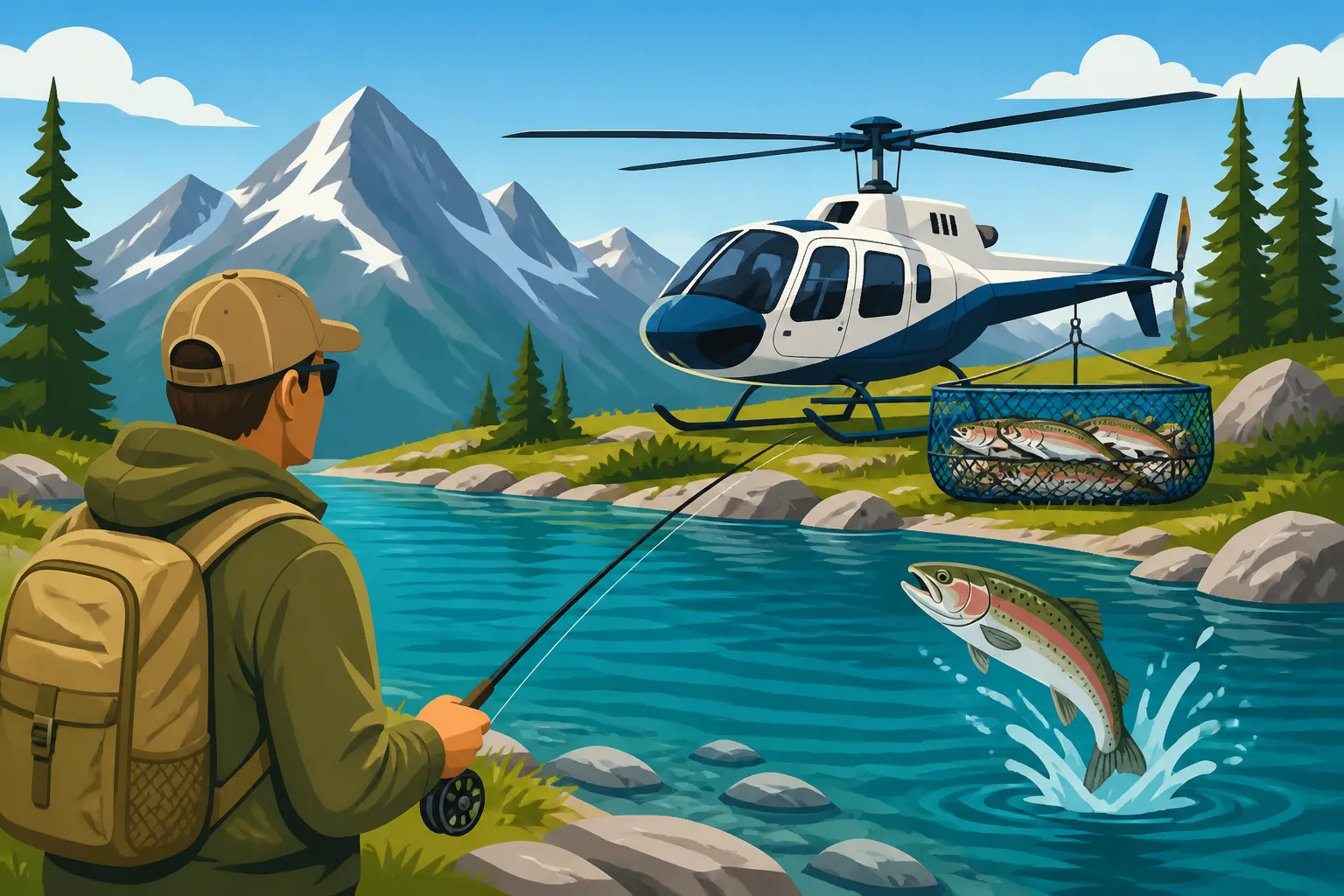
The brutal truth is that many of Wyoming's most breathtaking high-alpine lakes are natural traps for fish. They're often too cold, too remote, or lack the necessary spawning habitat for trout to naturally reproduce. Without inlet or outlet streams for fish to move between larger systems, once a fish population dies out, it's usually gone for good. That's where the dedicated folks at the Wyoming Game and Fish Department (WGFD) step in. Every few years, they undertake the incredible logistical feat of flying young trout fingerlings into these remote waters via helicopter. These tiny fish are carefully dropped into the lakes, given a chance to grow in a predator-free environment, and become the wild, colorful trout that anglers cherish. This ensures that even the most isolated spots offer a fantastic fishing experience, perpetuating a unique angling opportunity that wouldn't exist otherwise. It's truly a testament to conservation and the desire to share Wyoming's natural beauty.
The Types of Fish You'll Find
The WGFD chooses specific fish species for these high-altitude stockings, focusing on those that thrive in cold, nutrient-poor environments and can survive without constant stocking pressure. You’re most likely to encounter a few particular species in these remote, helicopter-stocked lakes. Golden Trout are often the crown jewel, highly prized for their vibrant colors and elusive nature. These stunning fish are a true high-country specialty, and catching one feels like finding a pot of gold. You’ll also frequently find healthy populations of Brook Trout, easily identifiable by their distinctive worm-like markings and reddish fins. While they don’t always grow to massive sizes in these high lakes, they’re aggressive biters and incredibly fun to catch. Occasionally, certain strains of Cutthroat Trout, often native to Wyoming like the Yellowstone Cutthroat, are stocked as well, depending on the specific lake and its ecological considerations. Catching a native cutthroat in such a pristine environment is a profound experience. Knowing a bit about these species, like what a Golden Trout looks like or how to identify Brook Trout, will certainly enhance your trip.
Planning Your Journey to the Dubois High Lakes
Venturing into the high country near Dubois isn't a spur-of-the-moment decision. It requires careful planning, research, and a healthy respect for the rugged wilderness. Think of it as an expedition, not just a day trip. The better prepared you are, the more enjoyable and safer your adventure will be.
Researching Your Destination
Before you even think about lacing up your hiking boots, dedicate ample time to research. The Wyoming Game and Fish Department is your best friend here. Their website often provides detailed stocking reports and lake surveys, which can give you invaluable clues about which lakes have been recently stocked and what species you might find. Topographic maps are absolutely essential – don't rely solely on digital maps, as cell service is non-existent in much of the Wind River Range. Study the contours, identify potential routes, and note any significant elevation changes or water crossings. Resources like the Forest Service and Bureau of Land Management websites will also offer up-to-date information on trail conditions, potential closures, and any required permits for camping or accessing specific areas. Remember, understanding the local Wyoming Fishing Regulations Every Angler Should Know is paramount. This includes bag limits, bait restrictions, and any water-specific rules that might apply to the lakes you plan to visit. Checking these details ahead of time will prevent any unwanted surprises during your trip.
Essential Gear for a Backcountry Trip
A trip to these high lakes demands specific gear that prioritizes lightweight efficiency, durability, and safety. This isn't your average roadside fishing spot. You'll need a solid backpacking setup: a comfortable pack, a lightweight tent or shelter, a warm sleeping bag (even in summer, nights can drop below freezing at high altitudes), and a reliable cooking system. Water filtration is non-negotiable, as you'll be relying on natural sources. Beyond the basics, navigation tools are crucial. A quality GPS device with downloaded maps, a physical map, and a compass are all necessities. Don't forget a headlamp, a first-aid kit, and bear spray, as you'll be deep in prime grizzly country.
For the actual fishing, think light and versatile. A breakdown fly rod or a compact spinning rod is ideal. You'll want to pack a selection of small flies (dry flies like Parachute Adams, caddis, midges, and small nymphs work wonders) or ultralight spinning lures like Mepps or Panther Martin spinners. A small tackle box, extra line, clippers, and forceps will round out your fishing kit. When considering What Gear to Pack for a Backcountry Fishing Trip, remember that every ounce counts, so choose wisely.
Physical Preparation and Safety
The elevation gain and rugged terrain associated with reaching these helicopter-stocked lakes should not be underestimated. Many of these lakes sit above 10,000 feet. If you’re not accustomed to high altitude, plan to spend a day or two in Dubois or a nearby lower elevation to acclimatize before heading up. Intense physical activity at elevation can quickly lead to altitude sickness if you're not prepared. Train beforehand with cardio and leg exercises, mimicking the strenuous climbs you'll encounter. Always inform someone of your itinerary, including your planned route and expected return time. Pack more food and water than you think you’ll need, and dress in layers. Weather can change drastically and rapidly in the mountains, so being prepared for sun, rain, hail, and even snow, all in one day, is crucial. A simple twisted ankle miles from the trailhead can become a serious emergency, so take every precaution.
Navigating the Trails to Remote Waters
Once your pack is dialed in and you're physically ready, the real adventure begins: hitting the trail. Accessing the Wind River Range from Dubois typically means embarking on a multi-mile hike with significant elevation gain. These aren't manicured paths; they are true wilderness trails, sometimes faint or non-existent.
Trailheads and Access Points Near Dubois
Dubois sits at the foot of the Wind River Range, offering several key access points into the high country. Popular trailheads often include those found along the Wind River Road (which eventually becomes Forest Service Road 411 and leads to areas like Brooks Lake and the Continental Divide Trail) or further south via various turn-offs from US-26/287. Specific trailheads like the Bear Creek Trailhead, Whiskey Mountain Trailhead, or those in the Fitzpatrick Wilderness area are common jumping-off points for anglers seeking remote alpine waters. However, pinpointing the exact trailhead for a specific helicopter-stocked lake will require the detailed mapping and research we discussed earlier, as access routes can be complex and sometimes require navigating old logging roads or less-maintained paths. Each trailhead offers a different gateway into the vast wilderness, leading to distinct basins and lake systems.
The Hike In: What to Expect
Prepare for a challenging but incredibly scenic journey. The trails will vary from well-trodden paths at lower elevations to rocky, root-filled ascents, and even stretches of bushwhacking or navigating across open talus slopes as you gain altitude. Expect significant elevation gains, sometimes thousands of feet over several miles. River crossings, especially earlier in the season during runoff, can range from simple rock hops to deeper fords that require careful planning and potentially wet feet. The time commitment for these hikes can vary wildly, from a moderate day-long push for closer lakes to multi-day Overnight Pack Trips for Backcountry Fishing for those deeper in the wilderness.
The rewards, however, are unparalleled: breathtaking panoramic views, encounters with wildlife, and the profound solitude of true wilderness. Remember, you're not just hiking to a lake; you're immersing yourself in the journey. Embrace the challenge, take breaks, and soak in the raw beauty of the Wind Rivers.
Using Navigation Tools Effectively
In the remote reaches of the Wind River Range, where trails can fade and landmarks are vast, proficient navigation is your lifeline. A standalone GPS unit or a smartphone with pre-downloaded topographic maps (and a portable charger!) is incredibly useful for tracking your progress and confirming your location. However, never rely solely on electronics. Batteries can die, and signals can be lost. Always carry a physical map and a compass and know how to use them.
Practice identifying key features on your map, correlating them with what you see on the ground – ridge lines, drainages, prominent peaks, and even vegetation changes. Knowing your general bearing and direction of travel is critical, especially when the trail becomes indistinct. For particularly remote or unmarked routes, understanding how to use contour lines to visualize terrain and how to take a bearing to a distant landmark can prevent you from getting lost. Many of the Best Backpacking Fishing Lakes in the Wind Rivers are not found by following a paved path.
Fishing These Unique Waters
Finally, after all the planning and the demanding hike, you reach your destination. These high-alpine lakes are often pristine and glass-calm in the mornings, reflecting the towering peaks around them. The fishing here is a distinct experience, requiring a different approach than what you might use on larger rivers or reservoirs.
Techniques for High-Altitude Trout
Trout in these high-alpine lakes can be opportunistic feeders, but they can also be incredibly spooky due to the clear water and lack of consistent human presence. Stealth is key. If you’re fly fishing, lighter rods (3-5 weight) with delicate presentations work best. Small dry flies, mimicking local hatches of midges, caddis, or even small terrestrial insects like ants and beetles, are often effective. Nymphs fished under an indicator or with a slow retrieve can also be deadly, especially if you suspect fish are feeding sub-surface. For spin fishing, ultra-light gear is preferred. Small inline spinners (size 0 or 1), tiny spoons, or micro jigs can entice strikes. Always approach the water carefully, keep a low profile, and cast from a distance to avoid spooking fish. In some areas, particularly where regulations allow, a little PowerBait or worms can also be surprisingly effective, especially for stocked brook trout. Understanding How to Fish Wyoming's High-Alpine Lakes will greatly improve your success.
Reading High Lake Water
While high-alpine lakes may seem featureless compared to a river, there are still prime holding areas to identify. Look for deeper drop-offs near shore, rocky points, and submerged structure. Inlets and outlets, even small ones, can be fish magnets as they bring in nutrients or provide cooler, oxygenated water. During warmer parts of the day, trout might retreat to deeper, cooler water. Conversely, during early mornings or late evenings, they might cruise the shallows to feed. Observe the surface for any signs of rising fish, which will tell you they’re feeding on insects. Pay attention to changes in water color or depth, as these can indicate ledges or shelves where fish might congregate. A calm surface allows you to sight-fish, spotting cruising trout before you cast.
Catch and Release Best Practices
Because many of these high-alpine lake fisheries are sustained by stocking and fish populations can be fragile, practicing responsible catch and release is critical for their long-term health. If you plan to keep a fish for a meal (and they often make for some of the Best-Tasting Fish to Keep From Wyoming Waters), check the current regulations for bag and possession limits. For any fish you release, handle them with extreme care. Keep them in the water as much as possible, use wet hands, and minimize handling time. Avoid squeezing them, especially around the gills. If the fish is deeply hooked, snip the line rather than trying to remove the hook, as this often causes more damage. Following Catch and Release Best Practices for Trout ensures that future generations of anglers can enjoy these unique fisheries just as you have.
Considerations for an Epic Adventure
A trip into the Dubois high country is an incredible experience, but it’s the kind of adventure that requires respect for the wilderness and awareness of the challenges it presents. Beyond the fishing, you're venturing into a truly wild environment.
Weather Challenges and Unexpected Surprises
Wyoming's high mountains are notorious for unpredictable weather. A clear, sunny morning can quickly devolve into a violent thunderstorm with hail and lightning by afternoon. Temperatures can plummet rapidly, even in the height of summer, and overnight freezes are not uncommon. Always pack layers of clothing, including waterproof and windproof outer shells. Pay attention to the forecast, but be prepared for it to change. If a thunderstorm rolls in, seek shelter immediately and avoid high points, open ridges, or standing near solitary trees. Don't let a sudden change in weather catch you off guard – preparedness is key to staying safe and comfortable.
Wildlife Encounters and Bear Safety
The Wind River Range is prime habitat for a variety of wildlife, including moose, elk, bighorn sheep, and most importantly, both black and grizzly bears. While encounters are rare, it's vital to be bear aware. Store all food, scented items, and trash in bear-resistant containers or hung from a tree using a bear bag system, well away from your camp. Carry bear spray and know how to use it. Make noise while hiking, especially in dense vegetation, to avoid surprising a bear. If you encounter a bear, remain calm, speak softly, and slowly back away. Never run. Understanding wildlife etiquette and respecting their space is part of the wilderness experience.
Utilizing Guided Services
While the self-sufficient backcountry trip is incredibly rewarding, not everyone has the experience, gear, or time to plan and execute such an adventure independently. This is where a professional guide service can be an absolute game-changer. Guides can provide all the necessary gear, expertise in navigation, knowledge of local fish populations, and insights into techniques that work best in these remote lakes. They can also ensure your trip adheres to all local regulations and safety protocols. For those looking to experience Fishing Wyoming's Wilderness and Backcountry Lakes, but without the headache of extensive planning, a guided trip is an excellent option.
Platforms like FishingBooker can connect you with experienced outfitters in the Dubois area who specialize in these kinds of trips. They can handle the logistics, permit requirements, and even pack animals to help carry gear, making the journey much more accessible. Hiring a guide not only simplifies the trip but also significantly enhances your chances of success, providing invaluable local knowledge and ensuring a safer, more enjoyable experience. Remember, a good guide isn't just about catching fish; they're about teaching you the nuances of the environment and making sure you have a memorable and safe adventure. Don't forget to account for Tipping Etiquette for Wyoming Fishing Guides when planning your budget.
High Lake Backcountry Trip Essentials
Here’s a quick overview of some essential items for your high-country adventure:
| Category | Essential Items | Notes |
|---|---|---|
| Navigation | Topographic Map, Compass, GPS Device | Learn to use all three; pre-download maps on GPS. |
| Shelter | Lightweight Tent/Tarp, Sleeping Bag, Pad | Be prepared for cold nights, even in summer. |
| Hydration | Water Filter/Purifier, Water Bottles/Bladder | Never rely solely on finding clean water without filtration. |
| Food & Cookware | Lightweight Camp Stove, Fuel, Dehydrated Meals | Bear canister or hanging system for food storage is crucial. |
| Safety | First-Aid Kit, Bear Spray, Headlamp, Whistle | Essential for emergencies and night travel. |
| Clothing | Layers (Base, Mid, Outer Shell), Rain Gear | Weather changes rapidly; avoid cotton. |
| Fishing Gear | Light Rod/Reel, Assortment of Flies/Lures, Line | Small, compact gear is best; extra line is a lifesaver. |
| Miscellaneous | Sunscreen, Insect Repellent, Knife, Cordage | Small items that make a big difference. |
Disclaimer
Please note that fishing regulations, access points, and wilderness conditions in Wyoming can change. Always consult the official Wyoming Game and Fish Department website and the relevant land management agencies (e.g., Forest Service) for the most current information before planning any trip. Safety in the backcountry is paramount, and preparation is key.