Fly Fishing Techniques for Wyoming Trout Streams
There's nothing quite like the allure of Wyoming's trout streams, but for many anglers, especially those new to fly fishing or the unique challenges of the Cowboy State, it can feel like cracking a secret code. You've got the gear, you've read a few articles, but getting that perfect drift or figuring out which bug they're eating can be incredibly frustrating. This comprehensive guide is designed to demystify fly fishing in Wyoming, breaking down the techniques, gear, and strategies you'll need to turn those frustrating moments into memorable catches on some of the most stunning waters in the West.
Understanding Wyoming's Trout Streams
Wyoming offers an incredible diversity of trout streams, from wide, meandering rivers like the North Platte to intimate, high-country freestones in the Wind River Range. Each one presents its own set of challenges and opportunities, and truly successful fly fishing begins with learning to read the water and understand the environment you're in. It's not just about casting; it's about connecting with the river's rhythm.
Reading the Water: Riffles, Runs, Pools, Undercut Banks
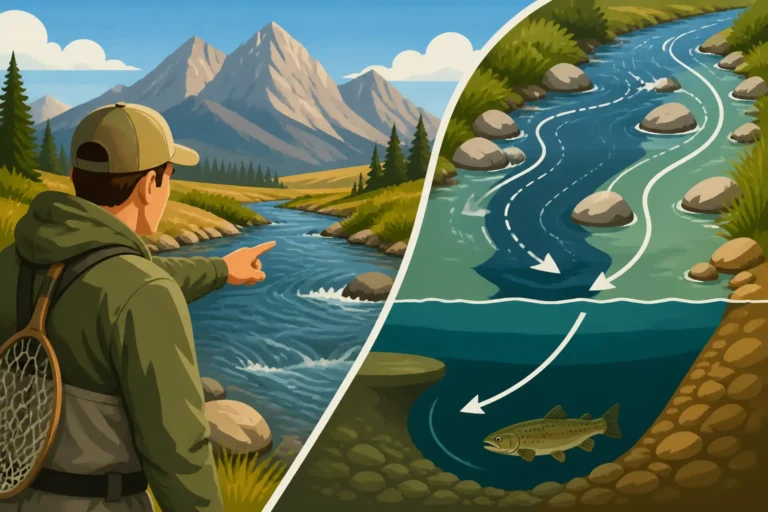
When you approach a stream, don't just blindly cast. Take a moment, observe, and learn to "read" what the water is telling you. Riffles, those shallow, turbulent sections, are oxygen-rich and often hold smaller, active fish looking for dislodged nymphs. They're great places to start with a dry-dropper rig.
Below the riffles, you'll find runs – deeper, smoother currents that transport food. These are classic trout highways, perfect for nymphing or swinging streamers. Keep an eye out for changes in current speed or depth, as these often create ambush points for hungry trout. Deeper pools, especially those with structure like submerged logs or rocks, offer refuge and prime feeding lanes for larger, more cautious fish. These require careful approaches and precise presentations, often with weighted nymphs or streamers fished low and slow.
Finally, don't overlook undercut banks. These shadowy havens provide shelter from predators, strong currents, and harsh sunlight, making them prime lies for big, wary trout. Getting a fly into these spots without spooking the fish is a true test of skill, often requiring a roll cast or a precise curve cast to drift your fly under the overhang. A good pair of polarized sunglasses will be your best friend in identifying these subtle features and the fish holding within them. To dive deeper into this skill, check out our guide on how to read water when trout fishing.
Understanding Current and Depth
The current is the lifeblood of a trout stream, bringing food to fish and dictating how your fly behaves. Understanding its nuances is critical for achieving a natural drift, which is paramount in fly fishing. Faster currents often push fish into slower seams or behind structure, where they can expend less energy while still accessing passing food. Slower currents, on the other hand, might require longer leaders and lighter tippets to ensure your fly sinks naturally without drag.
Depth is another crucial factor. While many anglers love the visual thrill of dry fly fishing, the vast majority of a trout's diet comes from beneath the surface. Knowing how to adjust your fly's depth, whether through split shot, weighted flies, or different indicator setups, means you're presenting your offering where the fish are actually feeding. Remember that water temperatures can also influence where fish hold; colder water might see fish holding deeper, while warmer water (within their comfortable range) could bring them closer to the surface. Understanding how water temperature changes Wyoming trout behavior can greatly improve your success.
Identifying Prime Holding Lies
Trout, like us, seek comfort and convenience. They want shelter, readily available food, and minimal effort. Prime holding lies are spots where these conditions converge. Look for current seams where a fast current meets a slow current, creating a perfect conveyor belt of food. Boulders, logs, and other submerged structures create current breaks, offering fish a comfortable spot out of the main flow while still providing access to drifting insects.
Confluences, where two streams meet, are often incredibly productive, as they combine food sources and create complex current dynamics. Deep runs and pools with overhead cover from trees or undercut banks are also classic spots. Pay attention to changes in substrate – a transition from rocky bottom to a silty section might indicate a deeper pocket. When you're scouting a new piece of water, pause and imagine yourself as a trout: where would you hide, where would you find food, and where would you feel safe? That mental exercise will often point you to the best places to cast your line.
Essential Gear for Wyoming Fly Fishing
Venturing onto Wyoming's beautiful trout streams requires more than just a rod and reel; it demands a thoughtful selection of gear to ensure comfort, safety, and success. The variable weather and diverse conditions mean you need to be prepared for anything, from scorching sun to sudden hailstorms. Investing in quality gear isn't just about catching more fish; it's about enjoying your time on the water, no matter what Mother Nature throws your way.
Rod, Reel, and Line Selection
The "big three" of fly fishing gear – rod, reel, and line – need to be a cohesive unit for optimal performance. For general trout fishing in Wyoming, a 9-foot, 5-weight fly rod is often considered the gold standard. It's versatile enough to handle smaller dries, various nymph rigs, and even lighter streamers. However, if you're targeting larger rivers or bigger fish, a 6-weight can be a great choice for more backbone and casting power. For smaller, brushy mountain streams, a shorter 3- or 4-weight rod offers more delicate presentation and maneuverability. You can find a fantastic selection of rods for different budgets on Amazon, allowing you to compare brands and read reviews before committing.
Your reel should balance your rod, but its primary function for trout is line storage and a smooth drag system. While large arbor reels are popular for quick line retrieval, the drag is more critical when fighting a strong fish. Pair your rod and reel with a high-quality weight-forward floating fly line that matches your rod's weight. Many anglers also carry a sink-tip or full-sinking line for deeper nymphing or streamer fishing, especially in larger rivers or lakes. Understanding the nuances of your setup, like the best fly rod weight for Wyoming trout streams, can dramatically improve your casting and presentation.
Waders, Boots, and Layering for Comfort
Wyoming's waters are almost always cold, even in the height of summer, so a good pair of waders is non-negotiable for comfort and safety. Breathable chest waders are the most popular choice, allowing you to comfortably wade through various depths and offering protection against the elements. Look for durable materials and reinforced knees, as you'll be scrambling over rocks and through brush.
Wading boots are equally important. They need to provide excellent ankle support and reliable traction on slippery riverbeds. Felt soles offer superior grip on slick rocks but can transfer aquatic invasive species, so rubber soles with studs are often preferred by many anglers and are required in some areas to prevent the spread of diseases. Always clean your boots thoroughly between fishing trips.
Layering your clothing is key to adapting to Wyoming's fickle weather. Start with a moisture-wicking base layer, add an insulating mid-layer (fleece or down vest), and top it with a waterproof and windproof outer shell. Don't forget a wide-brimmed hat for sun protection and a warm beanie for colder days, even in summer. Lightweight fishing gloves can protect your hands from sun and nicks.
Must-Have Accessories and Fly Boxes
Beyond the core gear, a few essential accessories will make your fly fishing experience smoother. A net, preferably with a rubber bag to protect fish, is vital for safe catch and release. Hemostats or forceps are crucial for quickly and carefully removing hooks. Nippers for trimming line, a zing-it or retractor for keeping tools handy, and a strike indicator assortment are all invaluable.
Carry at least two fly boxes: one for your go-to dry flies and nymphs, and another for larger streamers or specialty patterns. A small tackle box with split shot, leader material (ranging from 0X to 6X or 7X), and spare indicators is also a good idea. A reliable headlamp is a must if you plan on fishing at dawn or dusk. Finally, always have a water bottle, snacks, sunscreen, insect repellent, and a first-aid kit. Consider a fishing vest or a sling pack to keep everything organized and easily accessible on the water.
Mastering the Cast and Presentation
Having the right gear is only half the battle; knowing how to use it effectively is what truly counts. In fly fishing, the cast is merely a means to an end: achieving a natural presentation of your fly to the fish. Wyoming's diverse stream environments, from open plains rivers to tight mountain creeks, demand a range of casting techniques and a deep understanding of how to make your fly look alive and irresistible.
Basic Casting for Beginners
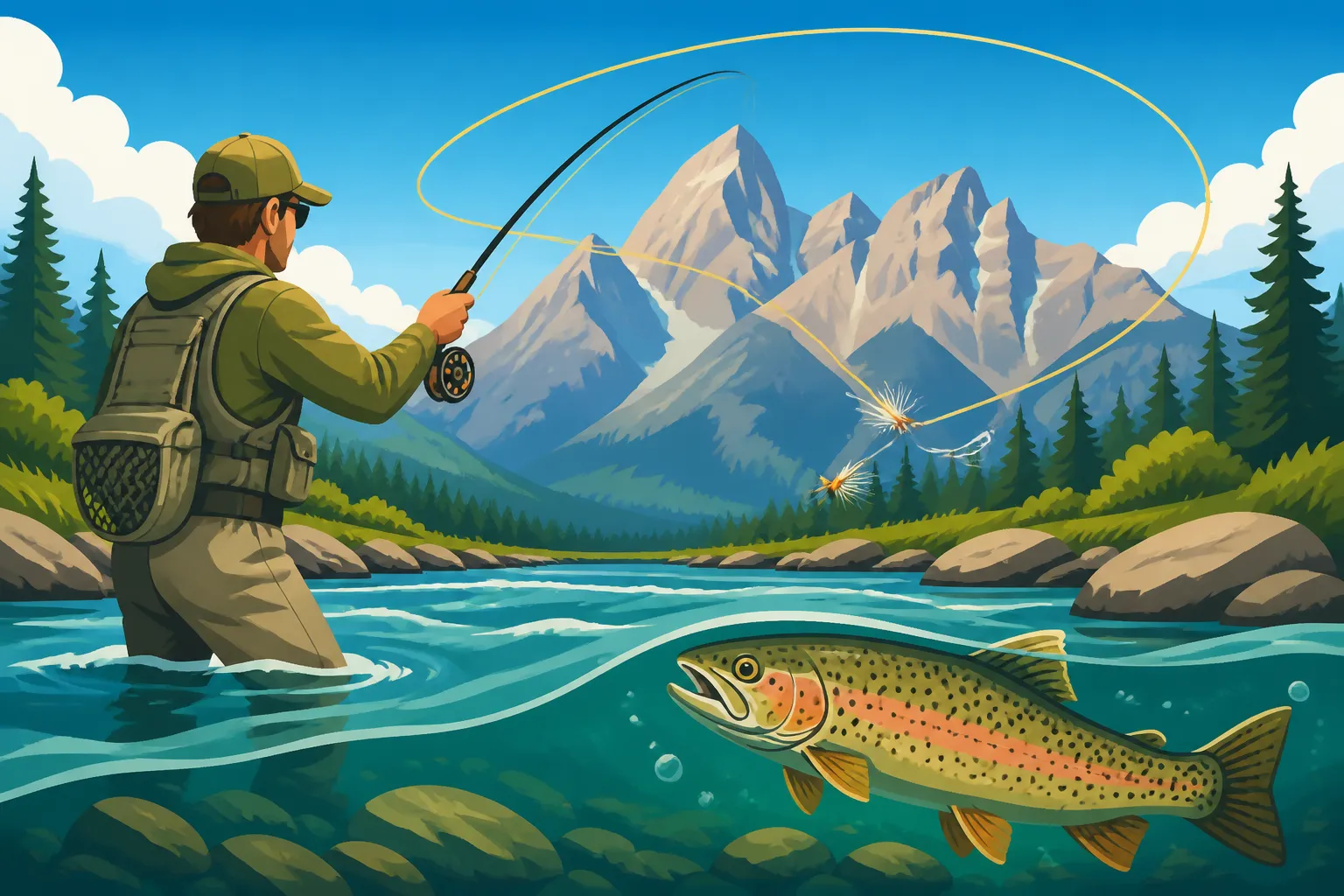
For newcomers, the overhead cast is the foundational skill. It involves moving the rod in a smooth, controlled arc, stopping abruptly at 10 o'clock on the backcast and 2 o'clock on the forward cast, allowing the line to unroll efficiently. The key is to let the rod do the work, focusing on a fluid motion rather than brute force. Practice in an open field, focusing on getting tight loops, which are essential for accuracy and battling wind. Start with just your leader and a bit of fly line, then gradually extend your cast.
Developing a consistent rhythm and learning to "feel" the line load the rod are critical. Don't rush your cast; pause at the end of your backcast to allow the line to fully extend behind you before initiating the forward stroke. Accuracy trumps distance in most trout fishing scenarios. The goal isn't to cast across the river every time, but to place your fly gently and precisely where the fish are holding. Many beginners struggle with overpowering the cast; focus on smooth acceleration and a crisp stop.
Roll Casts and Mending for Tricky Situations
Wyoming often presents tight, brushy banks or overhanging trees that make an overhead cast impossible. This is where the roll cast becomes an indispensable tool. It's a single-plane cast that allows you to launch your fly forward without requiring a backcast, making it perfect for confined spaces. To execute a roll cast, gather your line close, lift your rod tip high, and then quickly sweep it forward, letting the line "roll" out in front of you. Mastering this cast opens up many previously inaccessible pockets of water.
Mending is another crucial technique, perhaps even more vital than the cast itself, especially on complex currents. It's the art of repositioning your fly line on the water after the cast, without moving the fly itself. The goal is to correct for drag, where different currents pull on various parts of your line, causing your fly to move unnaturally. Upstream mends introduce slack to slow your fly down, while downstream mends pull excess slack to speed it up. Learning to mend effectively ensures your fly achieves a natural, drag-free drift, making it appear as a legitimate insect, not a fly tied to a line. Practice these techniques diligently; they will unlock a whole new level of success on the water.
Achieving a Dead Drift
The "dead drift" is the holy grail of fly fishing presentation, particularly when nymphing or dry fly fishing. It means your fly is moving at the exact same speed as the natural current, completely free of any influence from your fly line. To a trout, a dead-drifting fly looks like a natural, unattached insect, making it much more likely to be eaten. Any unnatural drag, however subtle, will typically cause a trout to refuse the fly.
Achieving a dead drift requires a combination of precise casting and continuous mending. Cast slightly upstream of your target, allowing the fly to settle, then immediately begin monitoring your line. If you see the line pulling the fly, mend upstream to throw a loop of slack onto the water. On the other hand, if your fly is getting ahead of your line, a small downstream mend might be in order. The aim is for your fly line, leader, and fly to all move at the same speed, as if they were one with the current. This takes practice and a keen eye, but when you nail it, the strikes will follow. It's truly a dance with the river, constantly adjusting to achieve that perfect, natural presentation.
Key Fly Fishing Techniques for Wyoming
Wyoming's diverse fisheries mean that a one-size-fits-all approach to fly fishing won't cut it. Successful anglers master a variety of techniques and know when to deploy each one based on conditions, time of year, and the specific water they're fishing. From subsurface presentations to delicate dry fly sips, understanding these core methods will dramatically increase your catch rate.
Nymphing: The Subsurface Powerhouse
Ask any seasoned Wyoming angler, and they'll tell you that most trout feeding occurs below the surface. Nymphing is the art of imitating the larval and juvenile forms of aquatic insects as they drift along the riverbed or emerge through the water column. It's often the most productive technique, especially during colder months or when no obvious hatch is occurring. There are several popular nymphing rigs, each with its advantages.
The most common setup involves a strike indicator (often a small foam bobber or a piece of yarn) positioned on your leader, with one or two weighted nymphs suspended below it. The indicator signals strikes and helps you track your drift. Vary your leader length and add split shot as needed to ensure your nymphs are reaching the correct depth – usually just bouncing along the bottom. Techniques like the "European Nymphing" or "Tightline Nymphing" have also gained popularity, where the angler uses a specialized long leader and no indicator, feeling for strikes directly through the line. This method is incredibly effective for getting a natural drift and feeling subtle takes, particularly in technical waters. To learn more about this effective method, consider our guide on nymphing techniques for Wyoming tailwaters.
Dry Fly Fishing: Matching the Hatch
The quintessential image of fly fishing, dry fly fishing, is perhaps the most exhilarating technique. It involves presenting an imitation of an adult insect that has landed on or emerged through the water's surface, waiting for a trout to rise and sip it down. Success hinges on precise casting, delicate presentation, and, most importantly, "matching the hatch" – using a fly that closely imitates the size, shape, and color of the natural insects currently present on the water.
When you observe fish rising, take a moment to identify the naturals. Are they small, dark mayflies? Large, fluttering caddis? Or maybe tiny midges? Once you've made an educated guess, select a fly from your box, cast it gently upstream of the rising fish, and allow it to drift naturally over the trout. Presentation is paramount; any drag will quickly turn off a feeding fish. Wind can be a huge challenge for dry fly fishing, making a smooth presentation difficult. However, on calm evenings, especially on famed rivers like the North Platte, nothing beats the thrill of a trout rising to your well-presented dry fly. Our guide on dry fly fishing on the North Platte River can offer specific insights for this experience.
Streamer Fishing: Hunting for Big Browns
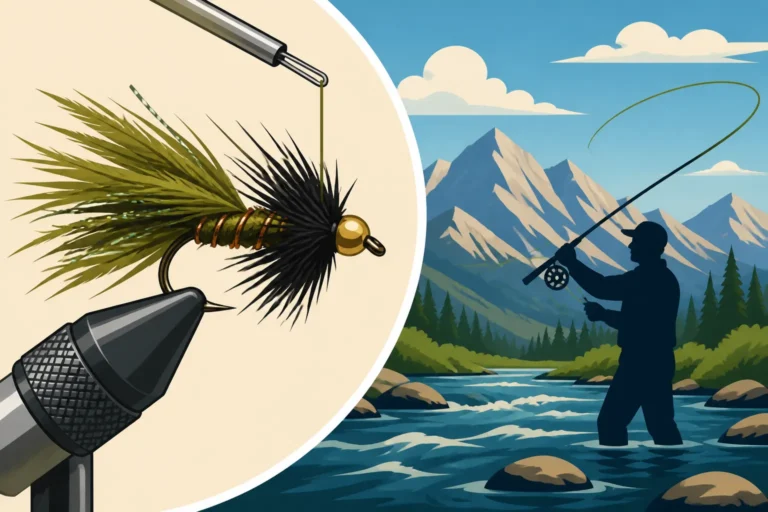
While nymphing and dry fly fishing target insects, streamer fishing imitates baitfish, leeches, or larger aquatic invertebrates, making it the preferred method for enticing larger, predatory trout, especially brown trout. Streamers are typically fished with a stripping retrieve, imparting action to the fly that mimics fleeing baitfish or crawdads. This technique can be incredibly effective when fish aren't actively feeding on insects or when targeting the biggest fish in the river.
Often fished with heavier fly lines (like sink-tips) and stronger leaders, streamers are cast across or downstream and then retrieved in varying strip-and-pause motions. The key is to experiment with retrieve speed and rhythm until you find what triggers a strike. Streamer fishing can be highly productive in off-color water, during low light conditions (dawn, dusk, or overcast days), or when rivers are slightly elevated. It's a more aggressive style of fly fishing that demands a different mindset, but the reward of a powerful brown trout smashing a streamer is unmatched. For dedicated streamer anglers, our guide to streamer fishing for Wyoming brown trout offers valuable tips.
Choosing the Right Flies for Wyoming Trout
Walking into a fly shop can be overwhelming with the sheer number of fly patterns available. However, in Wyoming, while there are thousands of patterns, a core selection will cover most situations you'll encounter. The key is understanding what the fish are likely eating and how to present an imitation convincingly.
Matching the Hatch: Caddis, Mayflies, Stoneflies
The foundation of successful fly fishing often lies in "matching the hatch." This means identifying the dominant aquatic insects that are either emerging or active on the water and then choosing a fly pattern that closely mimics them. The three primary groups of aquatic insects you'll encounter in Wyoming are caddisflies, mayflies, and stoneflies.
- Mayflies: These delicate insects are often the most common and varied. Imitations range from tiny Blue-Winged Olives (BWOs) to larger Green Drakes and Pale Morning Duns (PMDs). They typically hatch in various sizes and colors throughout the year. Nymph patterns like the Pheasant Tail and Hare's Ear are staples, while dry fly patterns like Parachute Adams or specific dun imitations are crucial during surface activity. Learning to identify specific mayfly species is a game-changer.
- Caddisflies: Caddis are robust, moth-like insects that are often found skittering across the water. Their nymphs are also incredibly important food sources. Popular patterns include the Elk Hair Caddis (dry), LaFontaine's Sparkle Pupa (emerger), and various green or olive caddis larvae patterns. They are particularly active during warmer months.
- Stoneflies: These are often the largest of the three and are a primary food source in many Wyoming rivers. Golden Stones and Salmonflies can be massive, providing a huge meal for trout. Nymph patterns like Pat's Rubber Legs or a 20 Incher Stone are highly effective subsurface, while large Stimulators or Chubby Chernobyls work as dry fly imitations (often with a nymph dropper).
Always carry a variety of sizes and colors for each of these categories. You can learn more about this crucial skill in our detailed post on matching the hatch on Wyoming rivers.
Terrestrials and Attractor Patterns
Beyond the aquatic insects, trout in Wyoming's streams often supplement their diet with "terrestrials" – land-dwelling insects that accidentally fall into the water. Grasshoppers, ants, and beetles are prime examples, and during late summer and early fall, these can be incredibly effective patterns, especially on grassy banks or windy days. Large foam hoppers, ant patterns, and beetle imitations can draw aggressive strikes from trout that might be ignoring smaller aquatic insects.
Attractor patterns, on the other hand, don't necessarily imitate any specific insect but are designed to "attract" a fish's attention through their flashy colors, unique profiles, or exaggerated features. Patterns like the Royal Wulff, Stimulator (which can also imitate a stonefly), or various parachute patterns with bright posts fall into this category. They are often excellent prospecting flies when you don't know what fish are eating, or when you want to elicit a reaction strike. Sometimes, a trout just can't resist something bright and buggy floating by.
Nymph and Streamer Selections
For nymphs, a diverse selection is key. Beyond the classics like Pheasant Tail and Hare's Ear, carry patterns that imitate caddis larvae (e.g., green rock worms), stonefly nymphs (Pat's Rubber Legs, Copper John), and midge larvae/pupae (Zebra Midge, Griffith's Gnat). Vary sizes from tiny #20 midges to chunky #8 stoneflies. Having these in different bead colors (gold, silver, black) and with or without flash can make a big difference.
When it comes to streamers, think about imitating baitfish common in Wyoming waters. Woolly Buggers (black, olive, brown) are the ultimate all-around streamer, effective in almost any water. Other excellent choices include Sculpzillas, Sex Dungeons, and various Krystal Bugger patterns. Carry them in different weights and sizes, from small #8s to chunky #2s, to match varying water conditions and the size of the prey fish. Don't forget to have some leech patterns as well. A well-stocked fly box for Wyoming means covering all the bases – the visible hatches, the unseen subsurface activity, and the opportunistic terrestrial snacks. To optimize your fly selection, make sure to explore our guide on best Wyoming fly patterns for cutthroat trout.
Seasonal Strategies for Wyoming Fly Fishing
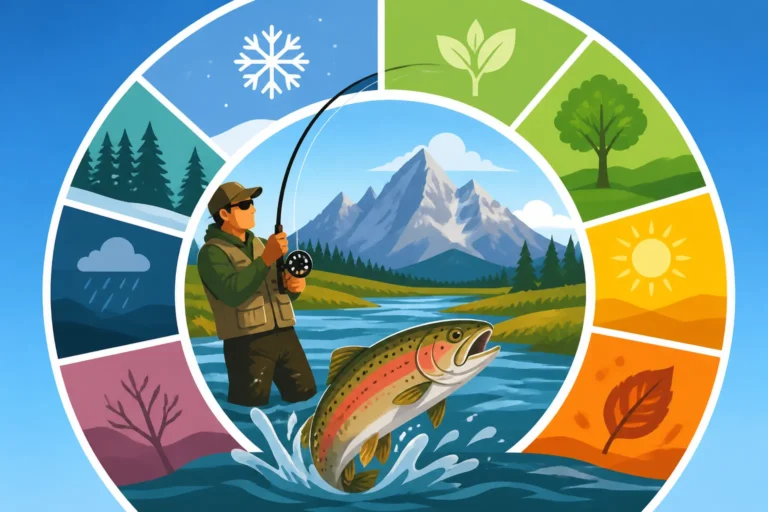
Wyoming's extreme seasonality means that successful fly fishing isn't just about technique or fly choice; it's about understanding how the changing seasons dictate fish behavior, water conditions, and the prevalent insect life. Each season offers unique opportunities and challenges, requiring anglers to adapt their approach.
Spring Fishing: Runoff and Early Season Opportunities
Spring in Wyoming can be a tale of two extremes: incredible early-season fishing on many rivers followed by the dreaded, yet necessary, spring runoff. Before the heavy snowmelt begins, typically in April and early May, many rivers and streams offer fantastic fishing. Trout are often hungry after winter, and water temperatures are slowly rising. Larger stonefly nymphs, egg patterns, and midges can be very productive during this time. Tailwaters below dams, like parts of the North Platte, will often remain fishable and clear throughout runoff, providing consistent opportunities when freestone rivers are blown out. Our guide on Wyoming spring fishing: what to expect delves into this period more.
When runoff hits, usually from late May through mid-June, many rivers become high, muddy, and swift, making fly fishing challenging and often unsafe. During this time, focus on smaller tributaries that clear faster, or target lakes and reservoirs. If you do fish larger rivers during runoff, concentrate on slower, shallower eddies and banks, and use large, dark, weighted flies like Pat's Rubber Legs or dark streamers that create a strong silhouette in the turbid water. High water also often pushes fish to the banks, so target those edges aggressively.
Summer Fishing: Peak Hatches and Alpine Lakes
Summer, from late June through August, is peak fishing season in Wyoming. Runoff subsides, rivers clear, and water temperatures reach optimal levels, triggering prolific insect hatches. Mayflies (PMDs, Green Drakes, Tricos), caddisflies, and stoneflies are all active, making dry fly fishing incredibly exciting. Early mornings and late evenings often provide the best dry fly opportunities, especially during spinner falls.
During the heat of the day, trout will often move to deeper, cooler water or seek shade under undercut banks and in faster riffles. Nymphing remains highly effective during these times. Summer is also the ideal season to access Wyoming's high-alpine lakes. After ice-out, these pristine waters offer incredible fishing for cutthroat, brook, and golden trout, often with willing dry fly takes. A backpack trip to fish these remote gems is a quintessential Wyoming experience. Always be mindful of water temperatures; if they get too warm (above 68°F), consider giving the fish a break to minimize stress on them. Our article on Wyoming summer fishing: peak season tips provides great advice for this busy time.
Fall Fishing: Brown Trout Spawning Runs and Big Fish
Fall, from September through October and sometimes into November, is arguably the most rewarding season for many Wyoming fly anglers. The summer crowds thin out, the aspen trees turn to gold, and the brown trout begin their pre-spawn and spawning migrations. This is the time to target trophy browns, often found in surprisingly shallow water as they move upstream to their spawning redds.
Streamer fishing truly shines in the fall, as aggressive brown trout will readily chase baitfish imitations. Large, articulated streamers in olive, brown, black, or white can be incredibly effective. Nymphing also remains strong, with egg patterns becoming particularly important around spawning areas (though remember to be respectful of spawning fish and their redds). Late-season mayfly hatches like the Blue-Winged Olives can also provide excellent dry fly opportunities on overcast days. Cooler water temperatures mean fish are often active throughout the day, making for longer, more productive outings. For anglers looking for a challenge and potential trophy, understanding Wyoming fall fishing for migrating browns is essential.
Conservation and Etiquette on Wyoming Waters
Fly fishing in Wyoming isn't just about the catch; it's about respecting the incredible natural resources and ensuring these pristine waters remain healthy for generations to come. Practicing good conservation and adhering to proper etiquette are fundamental responsibilities for every angler.
Catch-and-Release Best Practices
While Wyoming does allow anglers to keep certain fish within specific limits, many dedicated fly anglers practice catch-and-release, especially for native species and larger, older trout. If you choose to release a fish, doing so properly is critical to its survival. Minimize the time the fish is out of the water – ideally, keep it submerged as much as possible. Wet your hands before handling the fish to protect its delicate slime coat, which acts as a barrier against disease. Avoid squeezing or putting fingers in the gills.
Use barbless hooks, or crimp down the barbs on your hooks, as this makes hook removal much easier and less damaging to the fish. Forceps or hemostats are essential tools for quick and clean hook extraction. If the fish is deeply hooked, it's often best to cut the line as close to the hook as possible rather than tearing internal organs. When releasing, hold the fish gently in the water, facing upstream, until it regains its strength and swims away on its own. Never just toss a fish back into the current. For a more thorough guide, consult our article on catch-and-release best practices for trout.
Wading Etiquette and Respect for Other Anglers
Wyoming's rivers and streams are shared resources, and respecting other anglers is crucial for a positive experience for everyone. When approaching a fishing spot, always look for other anglers already present. Give them plenty of space – a general rule of thumb is to allow at least 100 yards between yourself and another angler, especially if they are actively fishing a run. Don't walk directly into the water upstream of someone else, as this can spook fish they are targeting. If you must pass, do so quietly and on the bank, offering a polite greeting.
When wading, be mindful of the riverbed and aquatic vegetation. Avoid disturbing spawning redds (circular depressions in the gravel where fish lay eggs), especially during fall. Don't kick up silt unnecessarily, as this can cloud the water and disturb feeding fish. If you encounter a guide and their clients, give them extra deference; they are often paying for a premium experience. A little courtesy goes a long way in fostering a respectful and enjoyable environment for all anglers.
Protecting Wyoming's Fisheries
Beyond individual fish, every angler has a role in protecting the broader fishery. This includes preventing the spread of aquatic invasive species (AIS). Always "Clean, Drain, Dry" your boats, waders, and gear between fishing trips, especially when moving between different drainages. Wyoming Game and Fish Department (WGFD) has mandatory boat inspections at various points, and compliance is essential.
Report any suspicious activities, such as pollution or illegal fishing, to the WGFD. Participate in local conservation efforts or angler groups. Support regulations designed to protect vulnerable fish populations or habitats. Recognize that we are guests in these wild places. By practicing responsible angling and stewardship, we ensure that the incredible fly fishing opportunities in Wyoming will endure for future generations.
Advanced Tips and Troubleshooting
Even with the right gear and basic techniques, Wyoming's challenging conditions and wary trout can sometimes leave you scratching your head. Seasoned anglers learn to adapt, troubleshoot, and use subtle cues to turn a slow day into a successful one.
Fishing After a Cold Front or Rainstorm
Wyoming weather can change on a dime, and understanding how fish react to these shifts is crucial. A strong cold front often causes fish to become lethargic and less willing to feed aggressively. During these times, slow down your presentation, use smaller nymphs or midges, and focus on deeper, slower holding water where fish conserve energy. Don't expect explosive dry fly action immediately after a cold front; subsurface presentations will often be more productive.
After a rainstorm, the river's character can change dramatically. A light rain can sometimes trigger a feeding frenzy, washing terrestrial insects into the water and slightly dislodging aquatic ones. However, heavy rains can cause rivers to rise and become off-color, making fishing difficult. In slightly stained water, larger, darker nymphs or streamers with a strong silhouette can be effective. Fish will often move closer to the banks to escape the main current and find easier food. Once the water starts to drop and clear, the fishing can become excellent as fish take advantage of the flushed-out food sources. Always check local river conditions before heading out, especially after significant precipitation.
Handling Wind and Challenging Conditions
Wind is an almost constant companion in Wyoming, and it can be the bane of a fly angler's existence. Strong winds make casting difficult, hinder delicate presentations, and can make it hard to feel subtle strikes. Instead of fighting it, learn to work with it. If the wind is at your back, it can actually assist with casting distance. If it's in your face, try sidearm casts or roll casts to keep your line low and out of the wind's direct path. Using heavier fly line or slightly larger, more aerodynamic flies can also help penetrate the wind.
Beyond wind, other challenging conditions might include bright, sunny days that make trout spooky, or extremely low, clear water that demands exceptional stealth. In bright sun, focus on early mornings, late evenings, or shaded areas. Use longer, lighter leaders and tippets, and make longer casts to avoid spooking fish. In low, clear water, "less is more" – use tiny flies, light tippet, and approach your fishing spots with extreme caution, staying low and out of the fish's line of sight. Sometimes, wearing drab clothing can even make a difference!
Targeting Specific Trout Species
Wyoming is home to several trout species, each with its own preferences and behaviors. While a general approach works, tailoring your tactics to the species you're targeting can boost your success.
- Cutthroat Trout: Wyoming's state fish, the Yellowstone Cutthroat, and other subspecies like the Snake River Fine-Spotted Cutthroat, are often found in higher elevation streams and lakes. They tend to be less selective than browns or rainbows and are often eager to take dry flies, especially attractor patterns and terrestrials. When nymphing, use standard patterns. They are beautiful fish, but their populations are fragile in many areas, so handle them with care.
- Brown Trout: Known for their wary nature and often larger size, browns are opportunistic feeders. They love structure and will aggressively chase streamers, especially during low light or fall spawning runs. Nymphing with larger stonefly or caddis imitations is also effective. They are a true challenge and a prized catch for many.
- Rainbow Trout: Often found in similar waters to browns, rainbows are strong fighters. They are keen insect eaters, responding well to both nymphs and dry flies, and can be found feeding throughout the water column. Tailwater fisheries are often prime rainbow habitat, where consistent hatches provide ample feeding opportunities.
- Lake Trout (Mackinaw): While typically targeted by gear anglers, large lake trout in reservoirs like Flaming Gorge can be caught on massive streamers or specialized nymph rigs fished deep. This requires different gear and a more dedicated approach to deep water tactics.
By understanding the likely habits of the fish you're pursuing, you can refine your techniques, choose your flies more wisely, and increase your chances of connecting with your target.
Disclaimer
Please note that fishing regulations in Wyoming are subject to change. Always consult the most current Wyoming Game and Fish Department regulations booklet before heading out on the water. This guide is for informational purposes only and does not supersede official regulations.