How to Read a Wyoming Stream for Holding Water
There’s nothing quite as frustrating as standing on the bank of a beautiful Wyoming trout stream, fly rod in hand, and having absolutely no idea where to cast. You see the water rushing by, maybe a ripple here, a calm stretch there, but the secret lies in knowing where the fish are. This guide is dedicated to teaching you how to "read" a Wyoming stream, understanding the subtle clues that reveal prime holding water where trout lie in wait.
Understanding the Basics of Stream Dynamics
Before you can spot a trout's hideout, it helps to understand why certain parts of a stream are more appealing to them than others. It's all about physics, food, and survival. Trout, like us, are looking for a comfortable home with a good pantry and a safe neighborhood.
How Water Flow Shapes the Riverbed
Think of a stream as a sculptor, constantly working on its own landscape. The power of flowing water, especially during high flows like spring runoff, ceaselessly erodes and deposits sediment, creating a diverse underwater topography. Where the current is strongest, it carves out deeper channels and removes lighter gravel. Where the current slows, it drops sediment, building up bars and shallower sections. Obstacles like fallen trees, large boulders, or even sharp bends in the river intensify this process, directing the flow and creating distinct features.
This dynamic interplay between current and substrate is crucial because it directly dictates where trout can find refuge and food. A consistent, unvaried flow offers little in the way of hiding spots or concentrated food sources. However, a stream with diverse flows and structures—deeper scour lines, gravel beds, and pockets behind rocks—provides a smorgasbord of potential homes. Learning to identify these flow patterns is the first step in unlocking a stream's secrets.
The Trout's Perspective: Why They Choose Certain Spots
Trout are masters of efficiency. They want to expend as little energy as possible while maximizing their caloric intake and remaining safe from predators. This fundamental instinct drives their choice of holding water. They're looking for what we call "lies"—spots that offer a trifecta of benefits: a consistent food supply, shelter from predators, and a break from the relentless current.
Imagine trying to stand upright in a strong current all day; you'd be exhausted in minutes. Trout feel the same way. They position themselves in current breaks or slower water, often just inches away from faster currents, where food is swept directly to them. This allows them to dart out, grab a morsel, and retreat to safety without burning precious energy. These safe havens also provide cover from osprey, eagles, and other airborne predators, as well as terrestrial threats like bears or even other anglers. Understanding these needs helps you think like a trout and pinpoint exactly where they’re likely to be.
Key Features of Holding Water in Wyoming Streams
Wyoming's diverse rivers, from the high-desert flows of the North Platte to the winding mountain creeks of the Wind River Range, all share common structural elements that attract trout. Identifying these features is paramount to successful fishing.
Riffles, Runs, and Pools: The Classic Trio
Every healthy trout stream is composed of a repeating sequence of riffles, runs, and pools, each serving a distinct purpose for the fish. Mastering how to read these classic features is fundamental to locating fish. You can learn more in our guide on Reading Riffles and Runs on Wyoming Trout Streams.
-
Riffles: These are the shallow, turbulent sections of a stream where the water tumbles over rocks and gravel. Riffles are the oxygenators, infusing the water with vital air. More importantly, they're food factories. The turbulent water dislodges aquatic insects and carries them downstream, creating a conveyor belt of nutrition for hungry trout. While fish don't typically hold in the fastest, most turbulent part of a riffle due to the energy cost, they will often position themselves directly below or along the edges, in slightly calmer water, waiting for food to drift by. This makes the transition zones from riffle to run incredibly productive.
-
Runs: Downstream from a riffle, the water typically smooths out and deepens slightly, forming a run. Runs are characterized by a more uniform, moderate current. These are often prime feeding lanes where trout can comfortably hold and intercept drifting insects or bait. Good runs will have some depth and perhaps submerged structure like rocks or logs that offer a small current break. Trout will often spread out in runs, especially during active feeding periods, presenting excellent opportunities for wade fishing or drift fishing.
-
Pools: At the end of a run, or where the stream encounters a significant obstruction or bend, the water slows down dramatically and deepens, forming a pool. Pools are the resting and refuge areas for trout. Here, fish can escape strong currents, find deeper, cooler water in the summer, or warmer water in the winter. Larger, trophy-sized trout often reside in the deepest parts of pools, especially those with overhead cover or submerged structure. While not always actively feeding in the middle of a pool, fish will often move to the head (where the run flows in) or the tail (where the water exits) to feed, especially during hatches or when food washes in.
Undercut Banks and Overhanging Vegetation
These natural features are absolute magnets for trout, offering both protection and a ready food source. Many experienced anglers in Wyoming will tell you to target these spots first.
-
Undercut Banks: An undercut bank is exactly what it sounds like: a section of the streambank where the current has eroded the soil and rock from underneath, creating a hidden cave-like structure. These are ideal safe havens for trout. They provide excellent overhead cover from avian and terrestrial predators, a break from the main current, and often deeper, cooler water. Trout will often lie right under the lip of an undercut, facing upstream, ready to dart out for a passing meal. Presenting a fly or lure into or along these undercuts can be incredibly effective, but it requires precision casting. Learning How to Fish an Undercut Bank can dramatically improve your success.
-
Overhanging Vegetation: Low-hanging branches, bushes, and grasses along the streambank also offer critical cover. They shade the water, keeping it cooler in summer, and provide a visual barrier that makes trout feel secure. Even better, this vegetation is a constant source of terrestrial insects (ants, grasshoppers, beetles) that accidentally fall into the water. Trout know this and will often position themselves directly beneath such cover, waiting for an easy meal to drop. Casting tight to these leafy edges, sometimes even bouncing a fly off a branch to simulate a falling insect, can trigger aggressive strikes. Always approach these spots cautiously to avoid spooking the fish holding underneath.
Rocks, Boulders, and Submerged Structure
These stationary elements are critical current breakers and create complex underwater environments that trout adore. They essentially carve out miniature ecosystems within the larger stream flow.
-
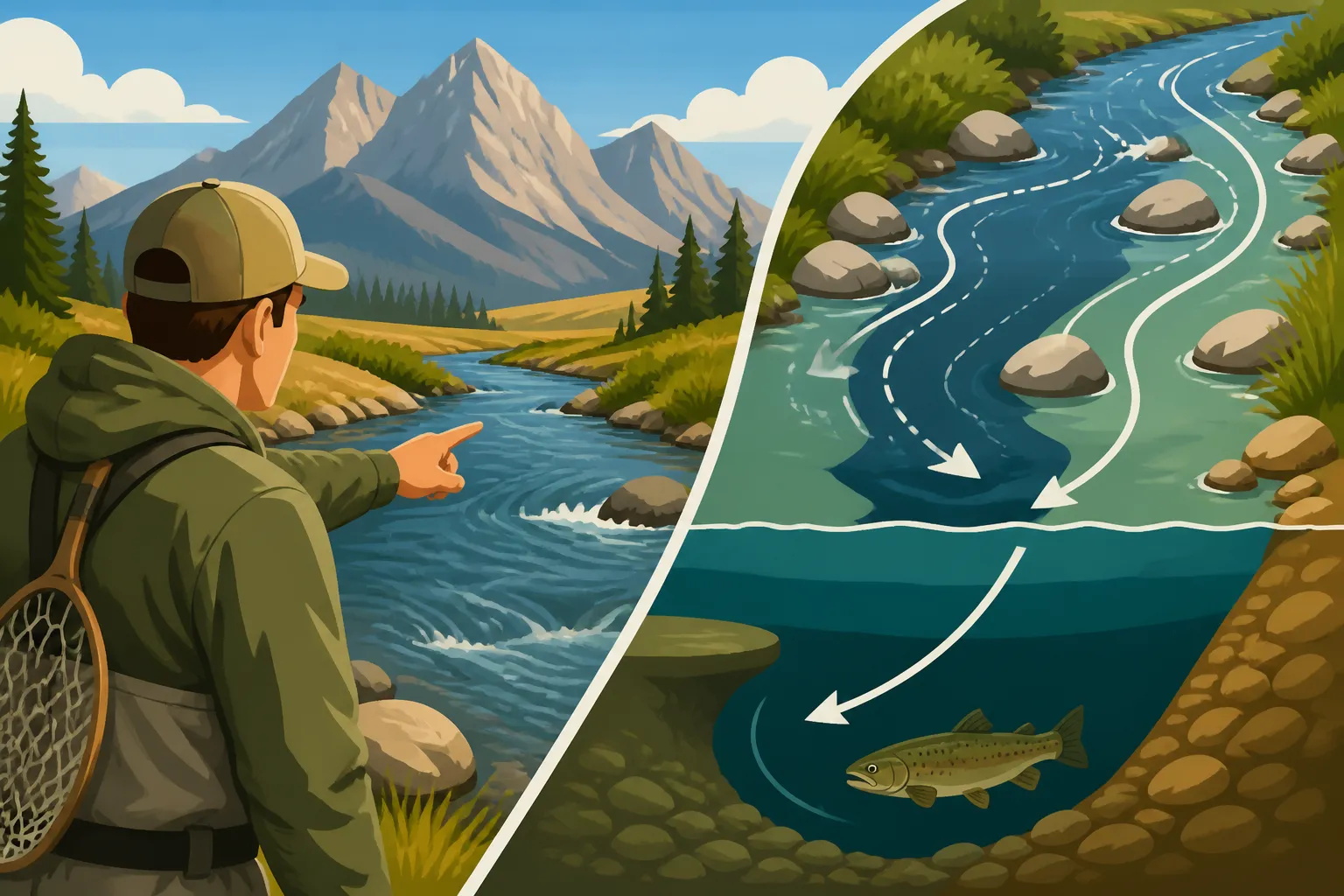
Current Breaks: Any large rock, boulder, or submerged log in the middle of a stream creates a "current break." The water immediately upstream of the obstruction, directly behind it, and along its sides will be slower than the main current. These are prime resting spots for trout. They can hold here without expending much energy, yet they are perfectly positioned to intercept food that gets funneled around the obstruction by the faster currents. Look for these "cushions" of slower water next to faster flows.
-
Eddies: An eddy forms when the main current flows past a large obstruction or into a deep recess, causing water to swirl back upstream or in a circular motion. Eddies are food traps. Debris, insects, and small baitfish often get caught in the swirling currents, making them easy pickings for opportunistic trout. Fish will sit at the very edge of an eddy, or deeper within it, waiting for the current to deliver their next meal. Fishing the seam where the eddy meets the main current is often extremely productive.
-
Conglomerations of Rocks/Logs: Areas where multiple rocks or logs are piled up create even more complex holding water. These spots offer multiple current breaks, deeper pockets, and abundant hiding places. They are essentially multi-story apartment buildings for trout, allowing several fish to hold in close proximity, each with its own preferred lie. Sometimes these are natural rock gardens; other times, it's a "log jam" from a past flood. These areas can be tricky to fish due to potential snags, but the reward often outweighs the risk, especially for larger trout seeking ultimate refuge.
Seams, Eddies, and Current Breaks
Understanding how current interacts with structure and other currents is vital. These dynamic features are often the most productive, yet they can be subtle to identify for the untrained eye. For a more detailed look into where trout prefer to hide in faster water, check out our guide on Where Trout Hide in Fast-Moving Water.
-
Seams: A seam is the visible line where two different currents meet, or where a fast current brushes up against slower water. This could be where a strong flow from a riffle meets the calmer water of a run, or where the main current runs along an undercut bank. Seams are fantastic feeding lanes because they concentrate drifting food. Trout will often sit in the slower water of the seam, facing upstream, allowing the faster current to bring their meals right to them. Visually, look for subtle differences in the water's texture or foam lines that indicate these converging flows.
-
Eddies (revisited): While eddies are created by physical obstructions, their defining characteristic is the reverse or circular flow of water. As mentioned, they're natural traps for food, and trout will position themselves in the calmer water, often with their noses pointed into the main current as it peels off the obstruction, ready to intercept anything that tumbles in. The biggest mistake anglers make is casting directly into the middle of the eddy; often, the best fishing is right on the edge, where the main current interacts with the eddy's slower water.
-
Current Breaks (revisited): Beyond large boulders, smaller features can also create valuable current breaks. Even a subtle depression in the streambed, a small cluster of rocks, or a patch of slightly deeper water can offer enough respite from the main current for a trout to comfortably hold. Learning to spot these subtle variations in water speed and depth comes with practice and keen observation. Polarized sunglasses are your best friend here, helping you peer into the water and see how the current behaves around submerged features.
Advanced Stream Reading Techniques for Wyoming Anglers
Once you've mastered the basic structures, it's time to refine your observation skills. Trout are constantly making micro-adjustments based on environmental cues, and a truly proficient angler can pick up on these nuances.
Reading the Surface and Subsurface
The stream's surface and what lies just beneath it offer a wealth of information if you know how to interpret it.
-
Surface Disturbances: Look for any unnatural disturbances on the surface that might indicate a fish. Rising trout are the most obvious sign – an unmistakable ring on the water, whether it's a subtle sip or an aggressive splash. But also look for swirling water, unusual boils, or even a brief flash of a fish's flank. These could indicate trout moving, feeding subsurface, or chasing baitfish. Don't just look for rises; sometimes a subtle twitch of a leaf on the water or a momentary pause in the current's flow can signal a fish's presence just below.
-
Insect Activity: The presence of aquatic insects (hatches) or terrestrials on the water's surface is a huge giveaway that trout are feeding. If you see caddis flies skittering or mayflies floating, it's a strong indicator that trout will be actively feeding in the vicinity, often in the runs and riffles where these insects are concentrated. Even the lack of insect activity can tell you something; perhaps trout are feeding on nymphs deeper down, or they're not active at all. Bringing a small magnifying glass or even a good pair of binoculars can help you identify the specific insects, which in turn helps you choose the right fly pattern if you're fly fishing.
-
Indicators of Depth and Structure Below: The texture and color of the water can reveal a lot about what's underneath. Smooth, dark green water often indicates a deep pool. Rippled, lighter-colored water suggests shallower riffles. Subtle color changes or streaks can mean a change in substrate from rock to sand. Pay attention to how the current behaves; a sudden change in speed or a standing wave might mean there's a submerged boulder or log breaking the flow. Wearing polarized sunglasses is almost non-negotiable for stream fishing, as they cut glare and allow you to see deeper into the water, spotting hidden rocks, logs, and even fish. Many anglers find quality fishing optics on sites like Amazon.
Factors Beyond Structure: Water Temperature and Clarity
Trout are cold-blooded creatures, and their activity, feeding behavior, and preferred lies are heavily influenced by water temperature and clarity. These factors can sometimes override the ideal structural components.
-
Water Temperature: Trout thrive within a specific temperature range. In the heat of summer, when stream temperatures rise, trout will seek out cooler water. This often means congregating in deeper pools, near springs, or at the mouths of cooler tributaries. Conversely, in the dead of winter, when water temperatures plummet, trout may seek out slightly warmer, more stable water, often found in deep, slow pools or tailwater sections below dams, where groundwater influences can stabilize temperatures. Understanding How Water Temperature Affects Trout Feeding is crucial for year-round success. Always carry a stream thermometer to know what the fish are experiencing.
-
Water Clarity: The clearer the water, the more wary trout become. In crystal-clear mountain streams, trout have excellent visibility and are easily spooked. They'll hug tight to cover like undercut banks, large boulders, or deep pools. You'll need to use longer, lighter leaders and make stealthy approaches. When the water is slightly off-color or murky, perhaps after a rain shower or during spring runoff, trout tend to be less spooky and will often move into shallower, more exposed areas to feed, as their cover has increased. However, if the water is too muddy, their feeding will slow down dramatically as they can't see their prey. Adapt your approach—and your fly or lure choice—to the water clarity.
Seasonal and Time of Day Considerations
Trout are not static creatures; their behavior and preferred holding water shift with the seasons and even throughout the day. A spot that was hot in spring might be barren in summer. You can get a general overview of these changes in Wyoming Fishing Seasons Month by Month.
-
Spring: During spring runoff, streams can be high and turbid. Trout will often move to the calmer water along the banks, in eddies, or behind large obstructions where they can escape the fierce current. As waters begin to clear and warm, they'll spread out into runs and riffles, actively feeding on emerging insects.
-
Summer: In the heat of summer, especially during midday, trout will retreat to the coolest, deepest water available—deep pools, shaded areas, or places with cold springs. Early mornings and late evenings, when temperatures are cooler, are often the best times to find them actively feeding in shallower runs and riffles.
-
Fall: Fall is often prime time for big brown trout, as they prepare for spawning. Many larger fish will move upstream into shallower, gravelly areas to spawn, but they'll also actively feed in deep pools and runs. They become more aggressive, making streamer fishing particularly effective.
-
Winter: During winter, trout will conserve energy in the deepest, slowest pools or tailwater sections where water temperatures are more stable. Their feeding windows are shorter, and they tend to hug the bottom. Ice fishing becomes a popular alternative on many Wyoming lakes during this time, where different rules apply from river fishing.
Understanding these seasonal shifts helps you anticipate where trout will be and adjust your tactics accordingly. For instance, knowing How to Fish a Deep Pool for Big Trout becomes even more crucial in winter, while learning about How to Fish a Spinner for Rainbow Trout might be more effective in a summer run. Choosing the right approach for your target water type is also key, as outlined in Choosing the Right Technique for Wyoming Lakes vs Rivers.
| Holding Water Feature | Best Conditions/Time | Why Trout Hold Here | Fishing Approach Tips |
|---|---|---|---|
| Riffles (edges/below) | Active feeding periods, mild temps | Oxygenated water, dislodged food | Short, accurate casts; dead drifts; small nymphs/dry flies |
| Runs | Consistent flow, moderate depth | Steady food delivery, easy travel | Longer drifts; covering water; varied retrieve for lures |
| Deep Pools | Summer heat, winter cold, high water | Refuge, stable temps, large fish habitat | Slow, deep presentations; weighted flies/lures; stealth |
| Undercut Banks | Anytime, especially clear water | Overhead cover, current break, terrestrials | Precise casts tight to bank; mend line to prevent drag |
| Large Boulders/Logs | Anywhere in stream | Current break, ambush point | Cast upstream, drift past obstruction; target eddy behind |
| Seams (current) | Active feeding, varying flows | Concentrated food lane | Position in slow water, drift into fast current |
| Overhanging Brush | Anytime, especially during hatches | Terrestrial drops, shade, cover | "Dap" flies; short, accurate casts; stealthy approach |
Reading a stream is a skill that develops with time and experience. Don't get discouraged if you don't immediately spot every subtle nuance. The important thing is to be observant, think like a trout, and continuously learn from your time on the water. Bring a good pair of polarized sunglasses (you can find excellent options on Amazon) and give yourself permission to simply watch the water for a while before making your first cast. You'll be surprised at what you begin to see.
Disclaimer
This article is for general informational purposes only and does not constitute professional advice. Laws, prices and regulations vary by location and change over time. Consult a qualified professional for guidance on your specific situation.