What Walleye Eat in Wyoming Lakes
Many anglers in Wyoming find walleye to be an elusive, yet incredibly rewarding, catch. Their behavior can seem mysterious, and knowing where and how to target them often feels like cracking a secret code. But here's the truth: unlocking the mystery of walleye largely comes down to understanding one fundamental thing—what they eat. This comprehensive guide will dive deep into the varied diet of walleye in Wyoming's lakes and reservoirs, revealing how their food choices change with the seasons and habitat, and most importantly, how you can use this knowledge to fill your livewell.
The Walleye's Predatory Nature and Primary Diet
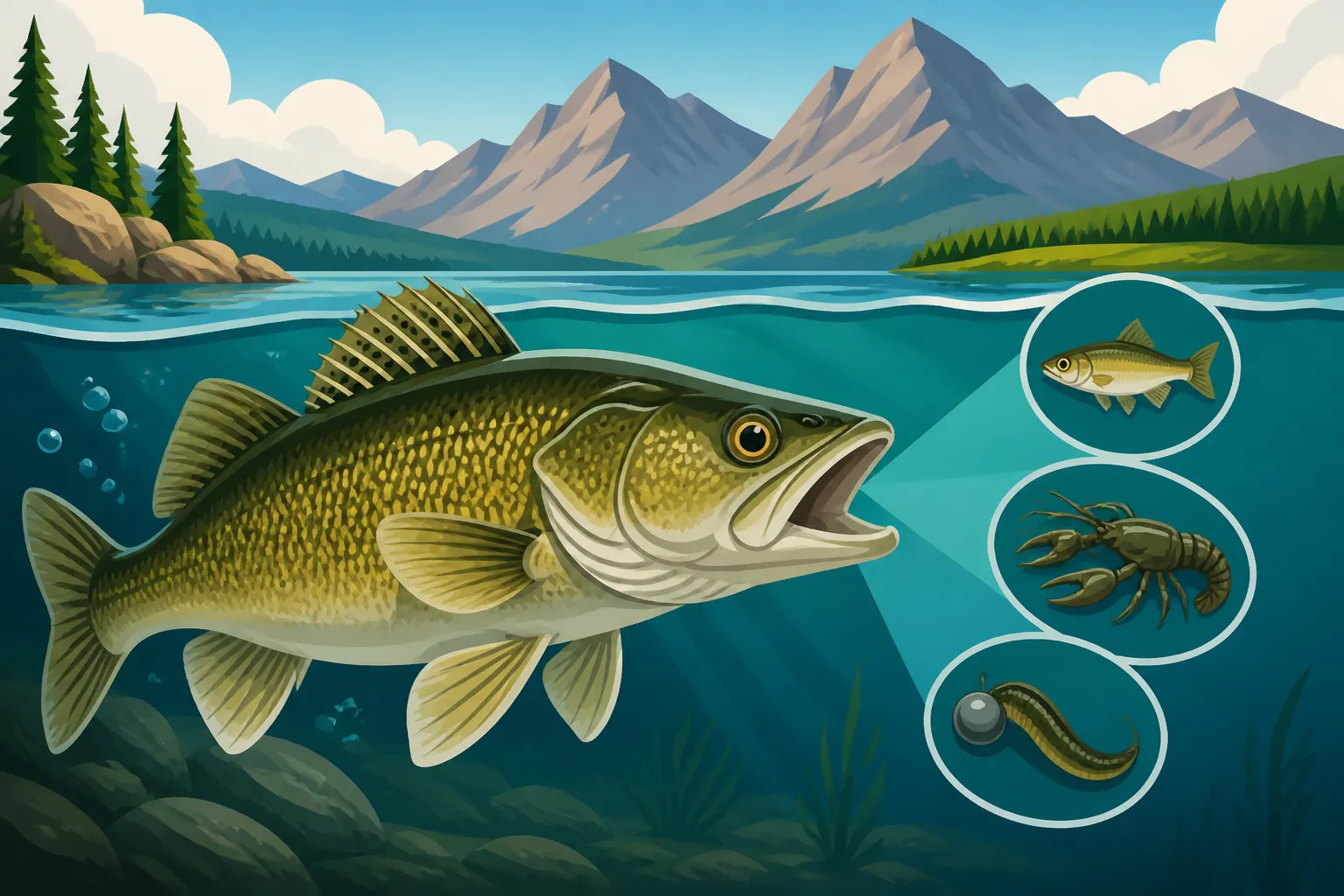
Walleye are lean, mean, eating machines. They are primarily piscivorous, meaning they eat fish, and they're perfectly designed for it with their sharp teeth and excellent low-light vision. They are ambush predators, often lurking near structure, waiting for an unsuspecting meal to swim by. Understanding this fundamental aspect of their nature is the first step to successful walleye fishing.
The Fin-Fish Feast: Preferred Prey Species
While walleye aren't particularly picky if they're hungry enough, they do have preferred meals. In many Wyoming lakes and reservoirs, certain baitfish species form the cornerstone of their diet. Think of these as the main course in the walleye's underwater restaurant.
Yellow perch are undoubtedly one of the top contenders for a walleye's stomach. Perch are abundant, relatively slow-moving, and school up, making them easy targets. Walleye will actively seek out schools of yellow perch, often following them into shallower bays or over structural elements. Many of the most effective walleye lures mimic the shape, color, and swimming action of a perch for this very reason. If you're fishing a lake known for a healthy perch population, you can bet the walleye are keying in on them.
Another significant food source, especially in larger, deeper reservoirs like Flaming Gorge or some sections of Boysen, are cisco (also known as lake herring). These open-water baitfish are crucial for growing truly trophy-sized walleye. Cisco tend to suspend in deeper, cooler water, and walleye will follow suit, often suspending alongside them. The presence of cisco can dictate not only where the walleye are but also how you need to fish for them – often requiring trolling or jigging in the open water column. Don't forget that juvenile trout, particularly rainbow and cutthroat, can also be a significant part of the walleye diet, especially in waters where these species coexist. Walleye are opportunistic, and a small trout is just another meal.
Beyond Fish: Invertebrates and Opportunistic Meals
While fish are certainly the main draw, walleye aren't above rounding out their diet with other readily available protein. Especially when fish populations are low, or for younger, smaller walleye, invertebrates can play a much larger role. Think of these as appetizers or snacks to keep them going between bigger meals.
Crayfish are a prime example. These freshwater crustaceans are common in many Wyoming waters and are a high-protein meal for a walleye. Walleye will scour rocky bottoms, ledges, and weed beds for crayfish, particularly during their molting periods when their shells are soft and they're more vulnerable. You'll find many walleye jigs and crankbaits designed to imitate a crayfish, often with earthy brown, green, or orange colors. Anglers who focus on rocky points and humps often find success by presenting lures that crawl along the bottom, mimicking these tasty crustacean morsels.
Leeches are another common invertebrate that walleye will readily consume. They're slow, easy to catch, and present a substantial meal. Many anglers swear by live leeches as one of the best walleye baits, especially when fished under a bobber or on a slow-retrieve jig. Worms, too, particularly nightcrawlers, are a natural part of a walleye's diet, especially after rain or when washed into the water. Younger walleye and even larger ones will opportunistically snap up worms, which is why a simple worm on a hook can still be incredibly effective. Even aquatic insects in their larval or adult stages, though typically a smaller portion of the diet for mature walleye, can be eaten, especially by juvenile fish or during times of prolific hatches. Walleye truly are opportunistic, and if something edible presents itself, they'll often take it.
Seasonal Shifts in Walleye Foraging Habits
Just like our appetites change with the seasons (who doesn't crave comfort food in winter?), a walleye's diet and feeding patterns are heavily influenced by the time of year. Water temperature, spawning cycles, and the availability of prey all play a crucial role in what, where, and when walleye choose to eat. Understanding these seasonal shifts is critical for consistently finding fish.
Spring and Early Summer: The Post-Spawn Binge and Shad Run
Spring in Wyoming means cold water and, soon after, the annual walleye spawn. After the strenuous activity of spawning, walleye are often recuperating and, more importantly, hungry. This is a prime time for a post-spawn feeding binge, where they'll actively seek out easy meals to replenish their energy reserves. Water temperatures are still cool, so their metabolism isn't in overdrive, but they need to eat.
During this period, walleye often gravitate towards shallower areas near spawning grounds. They'll key in on smaller, easy-to-catch prey. Juvenile yellow perch or minnows that are just becoming active after the winter are common targets. Anglers often find success with smaller jigs tipped with minnows or soft plastics, or by slow-trolling shallow-running crankbaits that mimic these early-season baitfish. They aren't usually chasing down huge meals yet; they want something that requires minimal effort to catch. You might find them cruising along weed lines or shallow rock piles, waiting for an ambush opportunity. This is a great time to focus on the transitions from shallow to slightly deeper water, especially points and humps that offer convenient access to both food and cover.
Mid-Summer to Fall: Following the Baitfish and Deep Water Pursuits
As Wyoming's lakes warm up through mid-summer, walleye's metabolism kicks into high gear, and they become more active predators. However, they also seek out cooler, more oxygenated water, which often means moving to deeper parts of the lake. This migration leads them to follow their primary food sources, which are often also seeking refuge in deeper, cooler zones. This is when Walleye Behavior in Wyoming Reservoirs really changes, and so should your tactics.
During summer, baitfish like cisco and yellow perch will school up tightly in the thermocline (the layer of water where temperature changes rapidly) or over deep-water structure. Walleye will be right there with them. Trolling crankbaits or spinner rigs at specific depths to match the baitfish is often highly effective. You'll need good electronics to locate these baitfish schools and then present your lure right within or just below them. Fishing humps, main lake points, and deep contours becomes paramount. As fall approaches and water temperatures begin to drop again, walleye enter a pre-winter feeding frenzy. They know winter is coming, and they need to pack on as much fat as possible. This can be one of the best times to catch large walleye, as they become incredibly aggressive and will pursue larger baits. They might move shallower again, especially during low light conditions, to ambush schools of perch that are also becoming more active. Look for them on flats adjacent to deep water, or around rocky reefs.
Winter: Slowed Metabolism and Ice Fishing Strategies
When Wyoming's cold fully sets in and the lakes freeze over, walleye enter a period of reduced activity. Their metabolism slows down significantly, and they don't need to eat as frequently or as much. However, they still need to feed, and understanding this slowed pace is key for successful ice fishing. Ice Fishing in Wyoming: A Complete Guide can really help here.
Under the ice, walleye typically target smaller, slower-moving prey. They aren't going to expend a lot of energy chasing down fast-moving fish. Smaller yellow perch, shiners, or even aquatic insects become staple foods. Anglers often find success using small jigs tipped with live minnows, wax worms, or soft plastics. Vertical jigging presentations are particularly effective, as they imitate a wounded or struggling baitfish that's an easy meal. Walleye will often hug the bottom or relate to deep-water structure during winter, so precise bait presentation is crucial. You might find them congregated on breaklines, humps, or near any remaining green weed beds that are still providing oxygen and holding baitfish. Patience is key in winter; bites can be subtle, and it often takes longer for a walleye to commit to a lure.
The Impact of Habitat and Water Conditions on Walleye Diet
Walleye are creatures of their environment, and the specific characteristics of a lake or reservoir—from its underwater structure to its water clarity and temperature—heavily influence their diet and, consequently, their location. Ignoring these factors is like trying to find a restaurant without knowing if it's a bustling diner or a quiet, upscale bistro.
Structure, Cover, and Ambush Points
The physical layout of a lake bottom and the presence of various structures are absolute game-changers for walleye fishing. Walleye are ambush predators, meaning they love to hide and wait. Structure provides these crucial ambush points and also holds their prey. This directly impacts what they eat.
Consider rock piles and rubble fields. These areas are magnets for crayfish, which, as we discussed, are a favorite walleye meal. Walleye will patrol the edges of these rocky areas, darting out to snatch a scurrying crayfish or a small fish seeking cover among the rocks. Similarly, submerged weed beds offer excellent cover for baitfish like juvenile perch and minnows. Walleye will often position themselves on the deeper edges of these weed lines, waiting for unsuspecting baitfish to stray too far from safety. Imagine a hidden diner for walleye! Main lake points, especially those that extend into deeper water, act as highways for baitfish and predators alike. Walleye will use these points as intercept zones, ambushing schools of baitfish moving from shallow to deep water or vice-versa. Understanding these structures helps you predict not just where walleye might be, but also what they might be eating. Are they rooting for crayfish in the rocks, or chasing minnows in the weeds? Your lure choice should reflect this.
Water Clarity, Temperature, and Oxygen Levels
Beyond structure, the actual physical properties of the water itself dictate walleye behavior and feeding. Walleye possess excellent low-light vision, thanks to a special reflective layer in their eyes called the tapetum lucidum. This gives them a distinct advantage in turbid or stained water, or during dawn, dusk, and even night fishing.
In murkier waters, walleye are often more aggressive feeders throughout the day, as their prey finds it harder to see them coming. In contrast, in crystal clear lakes, walleye tend to be more active feeders during low light hours, or they will stay deeper during the day to avoid direct sunlight. This is why a lake like Boysen Reservoir, known for its walleye, often has stained water, providing ideal conditions. The water's temperature directly influences the walleye's metabolism. In colder water, their digestion slows, and they require less food. They'll become less active and target slower, easier meals. As temperatures warm, their metabolism speeds up, and they become more aggressive and require more frequent, often larger, meals. This is a critical factor in understanding Wyoming Fishing Seasons Month by Month.
Finally, oxygen levels are paramount. Both walleye and their prey need adequate oxygen to survive. In warmer months, oxygen levels can deplete in very deep water or in stagnant areas, pushing both walleye and baitfish to more oxygenated zones, often in the thermocline or near inflows. Conversely, in winter under a thick ice sheet, oxygen can become stratified, concentrating fish in specific layers. A walleye will never be where there isn't enough oxygen, and neither will its food.
Using Diet Knowledge to Catch More Walleye
Now that we've dug into the nitty-gritty of what walleye eat and why, let's talk about the fun part: how to use this knowledge to actually catch them. Knowing their menu is the ultimate cheat sheet for any angler. It allows you to select the right presentations and, more importantly, put your bait where they're actively looking for food.
Matching the Hatch: Lures and Baits That Mimic Natural Prey
The concept of "matching the hatch" isn't just for fly fishing; it's absolutely crucial for walleye. If you know what walleye are feeding on, you can present a lure or bait that closely imitates it. This includes not just the species of baitfish, but also its size, color, and behavior.
For instance, if walleye in a particular lake are primarily gorging on yellow perch, then a jig or a crankbait in a perch pattern (green back, gold sides, orange fins) is an excellent choice. If the walleye are keying in on juvenile rainbow trout, then a lure with a silver or iridescent finish with some darker spots might be more effective. Size also matters; don't throw a huge crankbait if they're eating tiny minnows, and vice-versa. You can find an incredible array of specific baitfish imitation lures on sites like Amazon, allowing you to stock up on options that perfectly "match the hatch" for your target waters. Understanding Jigging for Walleye at Boysen Reservoir often means using jigs that mimic the local baitfish.
Live bait is another phenomenal way to match the hatch. Live minnows, particularly shiners or fatheads, are often irresistible to walleye because they are exactly what walleye eat. They provide natural scent, movement, and appearance. Leeches, as mentioned earlier, are also excellent, especially in early season or colder water when walleye prefer a slower, easier meal. Nightcrawlers, either whole or half, on a spinner rig or a simple jig, can also be highly effective, especially when walleye are feeding opportunistically on the bottom. The key is to observe: if you catch a walleye and it regurgitates baitfish, pay close attention to what it looks like!
| Season | Primary Walleye Diet | Recommended Lures/Baits | Typical Walleye Location |
|---|---|---|---|
| Spring | Small minnows, juvenile perch, invertebrates (crayfish) | Small jigs (1/8-1/4 oz) tipped with minnows/soft plastics, shallow crankbaits, live leeches | Shallow bays, spawning flats, transition zones to deeper water |
| Summer | Cisco, yellow perch, larger baitfish | Trolling crankbaits (deep divers), spinner rigs with worms/minnows, vertical jigs for suspended fish | Thermocline, deep humps, main lake points, suspended over open water |
| Fall | Larger baitfish (pre-winter feed), perch, shiners | Larger crankbaits, jigging spoons, substantial swimbaits, large minnows on jig heads | Flats adjacent to deep water, rocky reefs, main lake points, shallower in low light |
| Winter | Small minnows, yellow perch, larvae, leeches | Small ice jigs (1/16-1/8 oz) tipped with minnows/wax worms, small spoons, deadsticked minnows | Bottom structure (humps, breaklines), weed edges, areas with oxygenated water |
Locating Walleye Based on Their Food Sources
Walleye go where the food is. It's a fundamental principle of fishing. Therefore, if you can locate the baitfish, you're halfway to locating the walleye. This requires a combination of observation, electronics, and understanding the patterns of both predator and prey.
Start by looking for signs of baitfish. On calm days, you might see schools of minnows flicking on the surface. Diving birds, like terns or gulls, are often a dead giveaway for baitfish schools being pushed to the surface by predators from below. On your boat, your fish finder is your best friend. Look for large schools of "clouds" or "arcs" on your sonar screen; these are often baitfish. If you find them, the walleye won't be far behind. They might be directly underneath the bait ball, off to the sides, or positioned below, waiting for a straggler. Trolling Techniques for Wyoming Reservoirs often involves locating these bait balls and then presenting lures right through them.
Once you've located potential food sources, consider the structure we discussed earlier. Walleye prefer to ambush. So, if you find baitfish over an open flat, the walleye might be lurking on a nearby breakline, a subtle rise, or a submerged rock pile, waiting for the bait to come to them. If the baitfish are in a large weed bed, the walleye might be sitting on the deeper, outside edge of that weed line. Understanding Best Wyoming Reservoirs for Walleye often comes down to knowing their key structures and how baitfish use them. Pay attention to contour lines on your maps, look for underwater humps, points, and sudden depth changes. These are the highways and intersections where walleye will intercept their meals. The more you think like a walleye and consider their feeding habits, the more effectively you can predict their location, choose the right lure, and ultimately, put more fish in the net.
Disclaimer
This article is for general informational purposes only and does not constitute professional advice. Laws, prices and regulations vary by location and change over time. Consult a qualified professional for guidance on your specific situation.