Which North Platte Stretches Require Barbless Hooks in 2026
Navigating the ever-evolving fishing regulations in Wyoming can feel like trying to untangle a particularly stubborn fishing knot, especially when it comes to specific gear requirements like barbless hooks. It’s frustrating to plan a trip to a renowned spot like the North Platte, only to second-guess if your tackle is even legal. This guide is here to cut through that confusion, giving you a clear, detailed breakdown of which North Platte River stretches require barbless hooks in 2026, ensuring you're compliant and ready for a great day on the water.
Understanding Wyoming's Barbless Hook Regulations
It's no secret that fishing regulations can be dense and, let's be honest, sometimes a little intimidating to decipher. You pick up the Wyoming Game and Fish Department booklet, and it's full of codes, special provisions, and exceptions. It’s enough to make your head spin, and you just want to know if your favorite lure is legal. But understanding the 'why' behind rules like barbless hooks can help them make more sense, and generally, these rules are put in place with the health of our fisheries in mind.
Why Barbless Hooks Are Important for Conservation
The push for barbless hooks, especially on popular rivers and sensitive fisheries, comes down to one critical factor: fish mortality. When a fish takes a barbed hook, that barb is designed to hold fast, making removal trickier and often causing more damage to the fish's mouth, gills, or throat. Even if you release the fish, the stress and injury from a barbed hook can significantly reduce its chances of survival.
On the other hand, a barbless hook, while still requiring careful handling, slides out much more easily and cleanly. This minimizes physical trauma and reduces the time the fish is out of the water, greatly increasing its odds of swimming away healthy to fight another day. For waters where catch-and-release is prevalent, or where wild, self-sustaining trout populations are a treasure, barbless hooks are a non-negotiable part of responsible angling. Many anglers strive to practice proper catch-and-release techniques, and using barbless hooks is a foundational step in that process. You can learn more about specific techniques in our guide to Catch-and-Release Rules on Wyoming Waters. Protecting these resources ensures that future generations can enjoy the same incredible fishing experiences we do.
The General Approach to Special Regulations
Wyoming Game and Fish doesn't just pull regulations out of a hat. There's a deliberate, scientific approach to managing our fisheries. Special regulations, such as those requiring barbless hooks or specific bag limits, are often implemented in areas that support exceptional wild trout populations, receive heavy angling pressure, or are critical for spawning. These rules are tailored to address specific biological and social considerations unique to that body of water.
For instance, a renowned trophy trout fishery might have tighter restrictions to protect larger, older fish that are vital for reproduction. An area with high angler traffic might implement barbless rules to ensure that the cumulative impact of many anglers doesn’t decimate the fish population through incidental mortality. It's all part of a larger plan to sustain world-class fishing opportunities. It's essential for every angler to familiarize themselves with these nuanced rules, and our article on Wyoming Fishing Regulations Every Angler Should Know provides a great overview of these broader concepts. The regulations are regularly reviewed and updated, so what might have been allowed last year could be different this year.
Key North Platte River Stretches with Barbless Hook Rules in 2026
The North Platte River is, without a doubt, one of Wyoming's crown jewels for trout fishing. Anglers travel from all over the world to experience its legendary waters, particularly its blue-ribbon sections. With such high demand and incredible fish populations, it’s understandable that certain stretches have more stringent regulations, including the requirement for barbless hooks.
The Famed Miracle Mile and Its Barbless Requirement
Let's talk about the Miracle Mile. This legendary section, located between Seminoe and Pathfinder Reservoirs, is famous for its massive brown and rainbow trout. It's a truly wild and remote stretch of river, offering some incredible fishing. Because of its unique character and the desire to protect its trophy-caliber fish, the Miracle Mile is one of those special places where barbless hooks are absolutely required. This isn't just a suggestion; it's a firm regulation aimed at maximizing the survival rates of released fish.
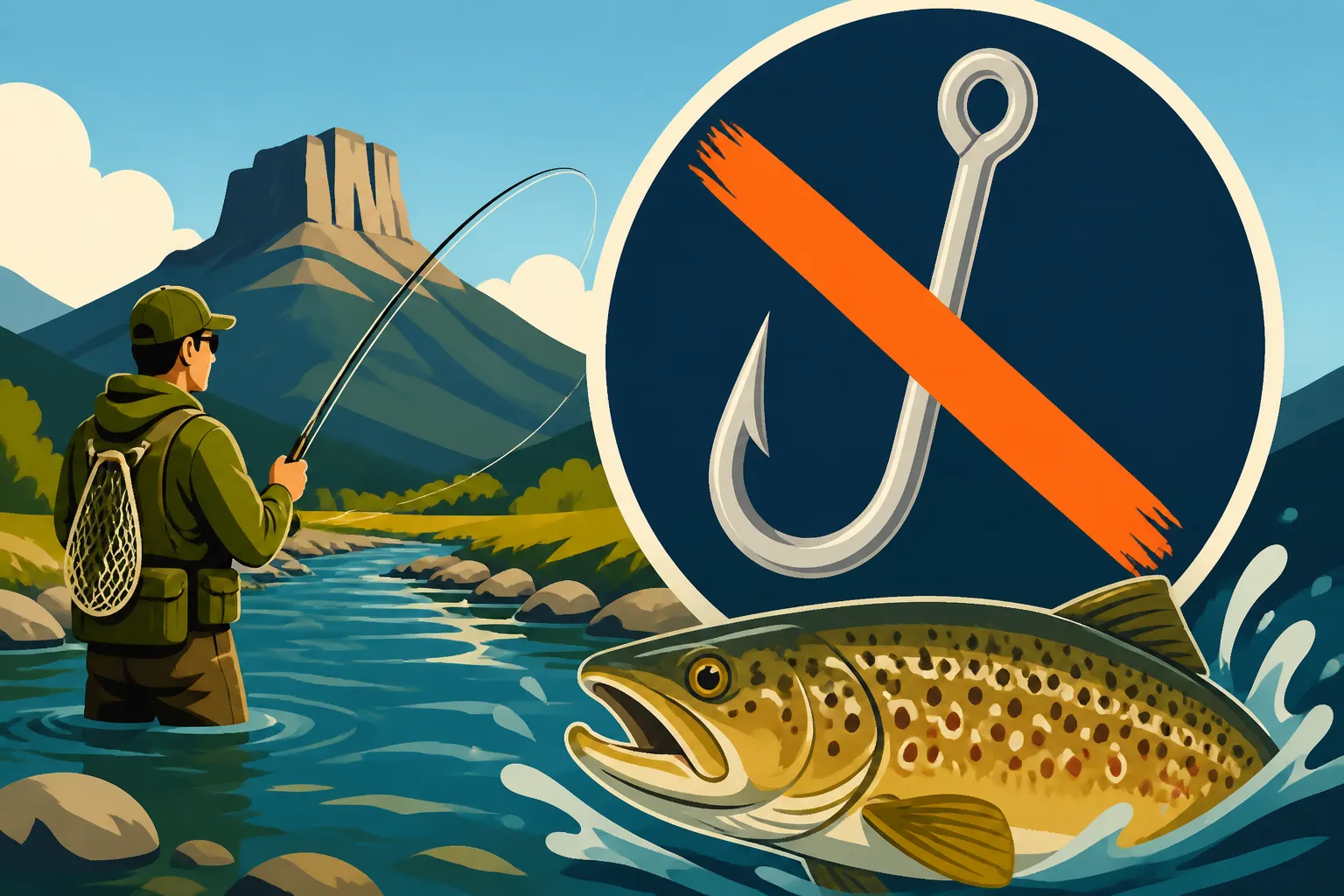
Anglers fishing the Miracle Mile in 2026, regardless of whether they are fly fishing or using spinning gear, must ensure all their hooks are barbless. This applies to single hooks, treble hooks on lures, and even the tiny hooks on your favorite dry flies. The idea is simple: if a fish bites, and you decide to release it, the hook comes out with minimal fuss and damage. It’s part of preserving the magic of this particular stretch of river. For a deeper dive into this incredible fishery, check out our dedicated guide to The Miracle Mile Stretch of Wyoming's North Platte River.
Gray Reef: A Tailwater with Strict Standards
Further downstream from the Miracle Mile, below Alcova Reservoir, lies another iconic section of the North Platte: Gray Reef. This tailwater fishery is renowned for its incredible density of rainbow and brown trout, often boasting thousands of fish per mile. The consistent cold water flows from the bottom of Alcova Reservoir create an ideal environment for trout, but also make it a magnet for anglers.
Similar to the Miracle Mile, the Gray Reef section of the North Platte River also mandates the use of barbless hooks for all angling in 2026. This regulation is crucial here due to the sheer volume of fish and the constant angling pressure. Every fish caught and released benefits from the quick, clean release that barbless hooks provide. Whether you're drifting nymphs under an indicator or stripping streamers, make sure your hooks are pinched or factory-made barbless. Ignoring this rule can lead to significant penalties, which we'll discuss later. Our article on Fishing Gray Reef on Wyoming's North Platte River offers more insights into this incredible area.
Other Noteworthy North Platte Sections and Exceptions
While the Miracle Mile and Gray Reef are the most widely recognized stretches with barbless hook requirements, it’s always prudent to check the current regulations for any other special provisions on the North Platte. These are the primary designated areas for mandatory barbless hooks on the main stem of the North Platte River.
However, it's worth noting that regulations can sometimes have nuances or be updated. For example, some tributary streams, or even specific small sections within larger river systems, might have their own unique rules based on local fish populations or conservation efforts. Always assume that on the North Platte, especially in areas known for high-quality trout fishing, barbless is the safest and most responsible choice unless explicitly stated otherwise for a particular stretch. If you find yourself in a different section of the river, or on other Wyoming waters, always consult the official regulations.
Here’s a quick summary of the North Platte’s key barbless hook zones for 2026:
| North Platte River Stretch | Barbless Hook Requirement | Primary Species | Key Reason for Rule |
|---|---|---|---|
| The Miracle Mile | Mandatory | Brown, Rainbow | Trophy fishery, remote, high conservation value |
| Gray Reef | Mandatory | Rainbow, Brown | High fish density, heavy angling pressure |
| Other mainstem sections | Check regulations | Varies | Generally not mandatory unless specified, but always good practice |
| Tributaries | Check regulations | Varies | May have local, species-specific rules |
Making the Switch: Practical Advice for Anglers
So, you’ve realized that a significant chunk of Wyoming’s premier fishing requires barbless hooks. Don’t panic! Making the switch is simple, and it doesn't mean buying all new tackle, though that's certainly an option.
Converting Your Gear or Buying New
For those of us who already have a tackle box full of cherished lures and flies, converting them to barbless is often the easiest and most economical option. All you need is a good pair of needle-nose pliers or hemostats. Simply grip the barb firmly and gently squeeze it down against the hook shank until it's completely flattened. You might even find it satisfying to know you're making your gear more fish-friendly! For flies, this is often a quick pinch, and you're good to go. For lures with treble hooks, you might need to pinch each barb individually. Some anglers even prefer to replace treble hooks on lures with single, barbless hooks, which can reduce snags and still offer excellent hooking power for species like rainbow trout. You can find excellent pliers and barbless hooks ready-made on Amazon if you prefer not to convert existing gear.
If you’re in the market for new gear, many manufacturers now offer hooks, flies, and lures that are "barbless by design." Brands like Daiichi, Gamakatsu, and Orvis all produce a wide range of barbless options. When shopping online or at your local tackle shop, specifically look for "barbless" in the product description. This is often the simplest way to ensure compliance right out of the package.
Always Check the Current Regulations Booklet
This might sound like a broken record, but it bears repeating: regulations can change. While this guide provides the most accurate information for 2026, emergency closures or in-season changes can occur. The absolute best source of truth for all fishing rules in Wyoming is the official Wyoming Game and Fish Department Fishing Regulations booklet. You can usually pick up a physical copy at any license vendor, G&F office, or many sporting goods stores, or download the latest version directly from their website.
Before every fishing trip, especially if you're venturing to a new area or it's a new season, take a few minutes to review the relevant sections. Pay close attention to the water-specific regulations. These are often listed geographically and will clearly state any special provisions like barbless hook requirements, catch-and-release rules, or bait restrictions. Our comprehensive guide on Reading the Wyoming Fishing Regulations Booklet can help you navigate its layout effectively. It's far better to spend five minutes reading than to face a fine or, worse, inadvertently harm a cherished fish population.
Navigating Enforcement and Staying Informed
Understanding the rules is one thing, but knowing the consequences of not following them, and how to stay on top of future changes, is equally important for any responsible angler. The wardens of the Wyoming Game and Fish Department are out there, not just to enforce the law, but to protect our natural resources, and they take these regulations seriously.
What Happens If You're Caught with Barbed Hooks
Let’s be realistic: nobody wants to get a ticket while they’re out enjoying a peaceful day on the river. However, fishing with barbed hooks in an area specifically designated as barbless is a violation of Wyoming fishing regulations. This isn't a minor infraction; it falls under the umbrella of fishing in violation of regulations, which can carry significant penalties.
Typically, you can expect a fine. The exact amount can vary depending on the severity and whether it's a repeat offense. Beyond the monetary cost, there can be administrative penalties, such as points against your fishing license or even suspension of your fishing privileges, particularly for repeated or egregious violations. It's a real bummer, and it’s entirely avoidable. Game wardens are generally fair, but their job is to protect the resource, and they won't hesitate to issue citations if rules are being broken. To understand more about the potential repercussions, you can refer to our article on Fines and Penalties for Common Fishing Violations. Ultimately, adherence to these rules reflects your respect for the fish, the fishery, and your fellow anglers.
The Future of Barbless Regulations and How to Stay Updated
Wyoming's fishing regulations aren't static; they are living documents that evolve based on scientific data, angler input, and the changing needs of the fishery. What’s required for 2026 might be adjusted in 2027 or beyond. Population studies, environmental factors like drought or disease, and even angler pressure can all influence future decisions.
The best way to stay informed about potential changes is to actively engage with the Wyoming Game and Fish Department. They typically have public comment periods for proposed regulation changes, usually well in advance of their effective date. You can sign up for their email newsletters, follow their official social media channels, and regularly check their website. They also publish press releases announcing significant updates or emergency closures. Knowing How Wyoming Game and Fish Announces Emergency Closures can be particularly helpful during uncertain times.
Many local fly shops and sporting goods stores also serve as excellent information hubs, as they often have the most up-to-date printed regulations and frequently communicate with G&F personnel. Supporting these local businesses, like those you might find on Amazon for specialty items, also means access to local knowledge that can be invaluable. By staying engaged, you not only keep yourself compliant but also become a more informed and responsible steward of Wyoming's incredible fishing heritage.
Disclaimer
The information provided in this guide is for informational purposes only and is based on the latest available data for 2026 Wyoming fishing regulations at the time of writing. Fishing regulations are subject to change by the Wyoming Game and Fish Department at any time. It is the angler's sole responsibility to consult the official, most current Wyoming Fishing Regulations booklet and any in-season emergency orders before fishing. Failure to do so may result in fines or penalties.