Is Snagging Fish Illegal in Wyoming?
Few things are more frustrating than heading out to Wyoming's incredible waters, only to feel a little unsure about the rules. It’s easy to get confused by all the nuances in fishing regulations, and a common question I hear often revolves around "snagging" – whether it’s allowed, and what it even means. This guide will clear up all that uncertainty, so you can confidently enjoy your time on the water, knowing exactly where you stand regarding this particular fishing method.
What Exactly Is Snagging Fish?
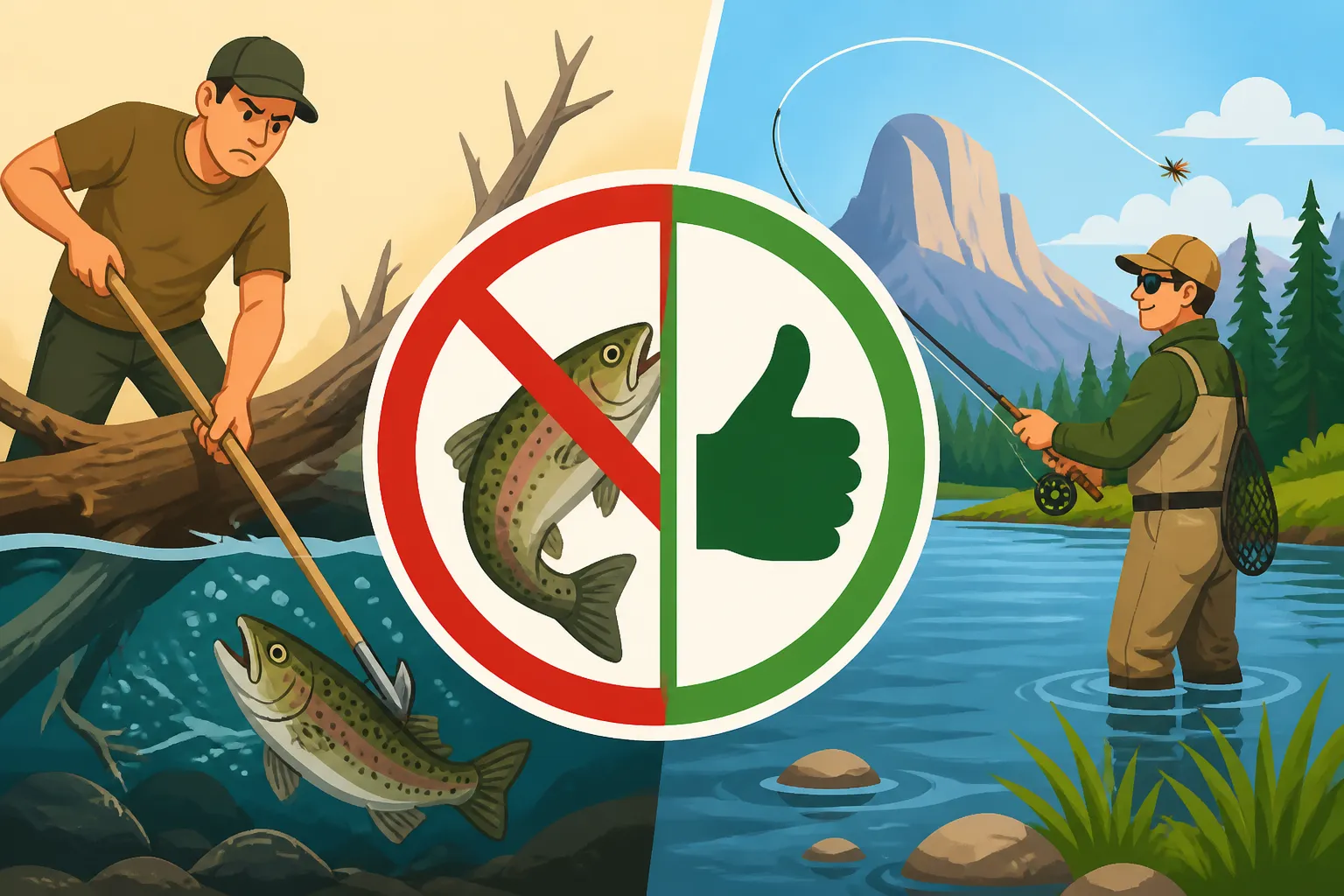
Let's start by defining what we mean by "snagging" or "foul hooking." Imagine you're trying to catch a fish, but instead of the fish biting your bait or lure and getting hooked cleanly in the mouth, your hook ends up piercing it somewhere else on its body – maybe in the side, the tail, or even the eye. That, in essence, is snagging. It's the act of intentionally or unintentionally hooking a fish in a place other than its mouth.
Now, why does this happen, and why is it even a thing people ask about? Often, it happens when fish are schooled up tightly, perhaps during a spawning run, and they're not actively feeding. An angler might cast a hook into the middle of such a school, hoping to 'foul hook' one by sheer luck, rather than waiting for it to strike a lure or bait naturally. This method relies on chance contact rather than skill in attracting a bite. It can be tempting, especially when fish are abundant but not biting, to try and just hook one, but as we'll delve into, this practice has serious ethical and legal implications in Wyoming.
The Clear Legal Stance in Wyoming
Let's cut right to the chase: Yes, snagging game fish is illegal in Wyoming. The Wyoming Game and Fish Department (WGFD) is very clear on this point. Their regulations explicitly state that it is unlawful for any person to take or attempt to take any game fish by the method commonly known as "snagging" or "foul hooking," except as may be specifically provided by Commission regulation in very rare and specific circumstances, which almost never apply to the prized trout and other game fish that most anglers pursue.
For the vast majority of your fishing adventures across the Cowboy State, from the high mountain lakes to the famous trout streams like the North Platte River, snagging is a definite no-go. This isn't a vague guideline; it's a strict prohibition aimed at protecting our valuable fisheries and ensuring fair chase principles. Trying to get around this rule by claiming ignorance won't hold up if a game warden observes you intentionally attempting to snag fish. It’s critical for every angler, resident or nonresident, to understand that the expectation is to catch fish by legitimate means where the fish voluntarily takes the bait or lure. For a broader understanding of fishing rules, you might want to check out the full guide on Wyoming Fishing Regulations Every Angler Should Know.
Why Snagging is Prohibited: Ethics and Conservation
The prohibition on snagging isn't just about making fishing "harder." It's deeply rooted in the ethics of angling and crucial conservation principles designed to maintain healthy fish populations and a respectful angling culture.
Protecting Fish Welfare
When a fish is snagged, especially outside of its mouth, it often results in severe injuries. A hook in the gill plate, eye, or deep in the body cavity can cause significant trauma, leading to infection, hindered feeding, or even death, particularly if the fish is released. Even if the fish survives the immediate injury, its long-term health and ability to thrive are often compromised. This goes against the ethos of responsible angling, which emphasizes minimizing harm to the fish, especially if you intend to practice Catch-and-Release Rules on Wyoming Waters. Snagging essentially turns fishing into a harmful game of chance rather than a skilled interaction with the fish.
Ensuring Fair Chase
One of the cornerstones of ethical hunting and fishing is the concept of fair chase. This means giving the animal a reasonable chance to escape and that the pursuit relies on the skill and knowledge of the angler, not on unsporting advantages. Snagging, by definition, bypasses the fish's natural feeding behavior. It doesn't require the fish to be actively hungry or fooled by a well-presented fly or lure. Instead, it exploits the fish's proximity, turning the act into more of a mechanical capture than a genuine angling challenge. The WGFD upholds this principle to ensure that fishing remains a respectful and challenging sport for everyone involved.
Maintaining Sustainable Fisheries
While it might seem like a small act, widespread snagging can have detrimental effects on fish populations. Spawning fish, in particular, are highly vulnerable to snagging because they often congregate in large numbers and are less focused on feeding. Targeting these fish, which are essential for future generations, can severely impact reproduction rates and overall population health. By prohibiting snagging, Wyoming aims to protect these critical spawning aggregations and ensure the long-term sustainability of its incredible fisheries for years to come. This aligns with broader efforts to manage fish populations, which also includes understanding How Bag and Possession Limits Work in Wyoming.
Avoiding Accidental Snagging and What To Do
While intentional snagging is illegal, sometimes it just happens. You cast your line, and a fish gets hooked in an odd spot accidentally. This is where clarity on rules and proper practice becomes essential.
Tips for Prevention
The best defense against accidental snagging is mindful angling. Here are a few tips:
- Choose Appropriate Gear: Make sure your lures and hooks are sized correctly for the fish you're targeting and the water you're fishing. Using oversized hooks in shallow water with small fish, for example, increases the risk of foul hooking.
- Fish Actively: Maintain contact with your lure or bait. If you're drifting a nymph or a worm, feel for the subtle takes rather than just letting it tumble blindly. When spin fishing, keep your retrieve smooth and consistent, allowing the lure to work as intended. Many anglers find quality gear on platforms like Amazon, which can enhance performance and precision.
- Understand Fish Behavior: Knowing when and where fish are actively feeding versus just resting or schooling can help. If fish are tightly packed but not biting, it's often a sign they aren't feeding, and blindly casting into them may lead to snags.
- Practice Proper Casting and Retrieval: Aim for areas where fish are likely to be actively feeding. For instance, when using a fly like a Best Wyoming Fly Patterns for Cutthroat Trout, a natural drift is key, ensuring the fly behaves like real insect prey. Similarly, understanding how to effectively present Best Lures for Wyoming Rainbow Trout can prevent unintentional foul hooking.
What to Do If You Accidentally Snag a Fish
Even with the best intentions, it can happen. If you accidentally snag a game fish outside the mouth:
- Release Immediately and Carefully: The most important thing is to release the fish as quickly and gently as possible. Do not try to re-hook it in the mouth or keep it. Minimize handling time.
- Avoid Further Harm: If the hook is deeply embedded or the fish is severely injured, it’s still best to release it, but do so with the understanding that its chances of survival might be low. The intent here is not to harvest a fish caught illegally.
- Learn from the Experience: Think about what might have caused the snag. Was your bait too big? Were you fishing in a spot where fish were densely packed but not feeding? Adjust your technique or location to prevent it from happening again.
Remember, the distinction between accidental and intentional snagging often comes down to context and intent. A game warden observing an angler repeatedly snagging fish, or using gear clearly designed for snagging (like large, bare treble hooks cast into dense schools), will likely interpret it as intentional.
Consequences of Snagging in Wyoming
Fishing in Wyoming comes with responsibilities, and violating regulations like the prohibition against snagging can lead to significant penalties. These aren't just slaps on the wrist; they are serious consequences designed to deter illegal activity and protect the state's natural resources.
Fines and Court Appearances
If you are caught snagging game fish, you can expect to face fines. These fines vary depending on the severity of the offense, whether it's a first-time violation, and the specific circumstances. A quick search of Wyoming statutes indicates that fishing violations can range from hundreds to thousands of dollars, along with court costs. Being cited for snagging will almost certainly require a court appearance, which means time away from your home or vacation, significant legal fees, and the stress of a legal process. For a broader view of potential repercussions, you can look into Fines and Penalties for Common Fishing Violations.
Loss of Fishing Privileges
Beyond monetary fines, one of the most impactful consequences can be the suspension or revocation of your fishing license. This isn't just about Wyoming; many states participate in interstate wildlife violation compacts. This means a license suspension in Wyoming could lead to your fishing privileges being suspended in other states as well. Imagine planning that dream fishing trip to Montana or Idaho, only to find out your license is invalid because of a previous violation in Wyoming. This can be a significant blow to any avid angler.
Confiscation of Gear
In some cases, game wardens have the authority to confiscate equipment used in the commission of a violation. This could include your fishing rods, reels, and tackle. Losing valuable gear, which can be quite an investment – especially if you've purchased high-end equipment from retailers like Amazon – adds another layer of financial punishment to the legal penalties.
Damage to Reputation
While not a legal consequence, getting cited for snagging can damage your reputation within the angling community. Responsible anglers value ethical practices, and those who intentionally violate these principles are often viewed negatively. Wyoming's fishing community is tight-knit, and respecting the resource is paramount. It’s always better to earn your catch fairly and enjoy the process, rather than risk your reputation and face legal trouble. If you ever witness potential violations, knowing How to Report a Fishing Violation in Wyoming helps maintain the integrity of our fisheries.
| Aspect | Legal & Ethical Angling | Illegal Snagging (Foul Hooking) |
|---|---|---|
| Method | Fish takes bait/lure voluntarily into mouth | Hook pierces fish anywhere outside the mouth |
| Intent | Attract fish with presentation/bait | Make physical contact regardless of feeding |
| Gear Usage | Appropriate hooks/lures for active feeding | Large, bare hooks or weighted trebles to "foul" fish |
| Fish Welfare | Minimizes harm; focus on clean hooksets | High likelihood of severe injury or death |
| Conservation Impact | Supports sustainable populations | Can harm spawning fish, deplete stocks |
| Fair Chase | Respects fish, relies on angler skill | Circumvents natural behavior, unsporting |
| Legal Status | Permitted (within regulations) | Generally prohibited for game fish |
| Consequences | Enjoyable, penalty-free experience | Fines, license suspension, gear confiscation |
In conclusion, while the allure of a quick catch might be tempting, the risks associated with snagging fish in Wyoming far outweigh any perceived benefit. Stick to ethical, legal methods, and you'll not only avoid trouble but also gain a deeper appreciation for the sport and the incredible fish that call Wyoming home. For detailed rules specific to particular waters, it's always a good idea to consult the Reading the Wyoming Fishing Regulations Booklet.
Disclaimer
The information provided in this guide is for general informational purposes only and does not constitute legal advice. Fishing regulations are subject to change, and it is the responsibility of each individual angler to consult the most current Wyoming Game and Fish Department regulations before fishing.