How to Fish Around Wind on Open Reservoirs
Oh, the wind! If you've spent any time fishing Wyoming's absolutely incredible, but often wide-open, reservoirs, you know that heart-sinking feeling when the breeze picks up. It can turn a perfect day into a frustrating battle against the elements, making casting a nightmare and feeling bites almost impossible. But don't let a blustery day send you home early! This guide will dive deep into how you can successfully fish around wind on these vast, exposed waters, giving you the strategies and gear to turn a challenging day into a productive one.
The Unique Challenge of Wind on Wyoming's Open Reservoirs
Let's be honest, wind is just part of the deal when you're fishing in Wyoming, especially on our big, beautiful reservoirs like Flaming Gorge or Boysen. These massive bodies of water offer little to no protection from the relentless gusts that can sweep across the plains and mountains. And while a little ripple can be great for fishing, a full-blown blow can throw a serious wrench in your plans.
How Wind Affects Your Presentation and Line Control
The most immediate and obvious impact of wind is on your line control. Picture this: you make a perfect cast, your lure sails out, but before it even hits the water, the wind grabs your line, creating a massive belly. This slack makes it incredibly difficult to feel subtle bites, maintain proper lure depth, and get a solid hookset. Your lure might not even reach the strike zone you intended. It feels like you're fighting your tackle more than the fish! Plus, drift speed can become uncontrollable, making it hard to work a specific contour or structure. We’ve all been there, watching our perfectly presented bait get dragged off course faster than we can react.
Impact on Fish Behavior and Location
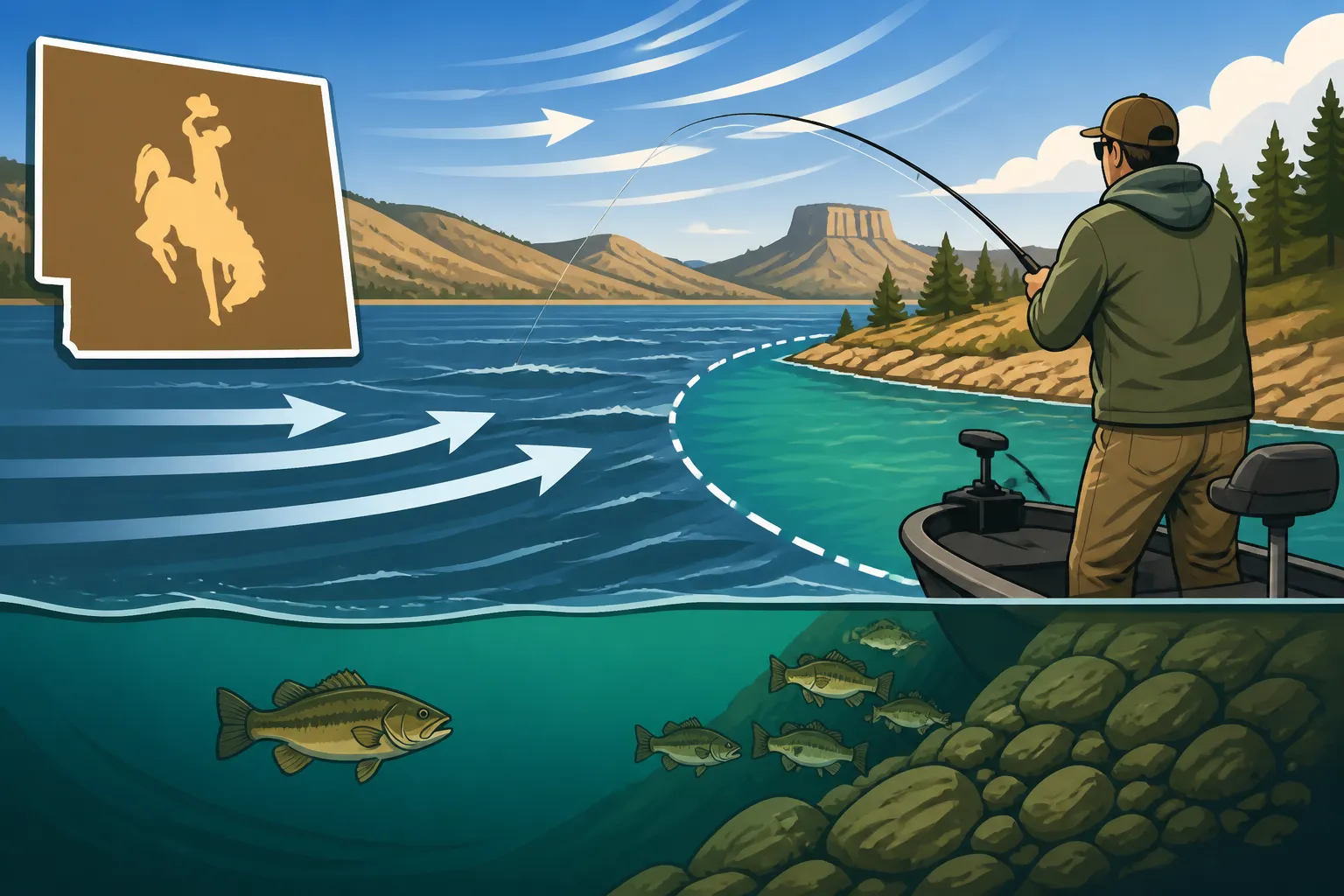
You might think fish just hunker down in a storm, but wind can actually be a good thing, if you know how to leverage it. Strong winds create waves and current, which stir up the water, increasing oxygen levels and dislodging baitfish and insects from the bottom or shoreline. This can trigger a feeding frenzy! However, it also pushes warmer surface water and concentrates bait, which in turn can concentrate predator fish. On the flip side, fish might seek refuge from the turbulence, moving to the calmer, leeward side of islands, points, or deep structure. Understanding these shifts is key to finding them. If you’re curious about the broader picture, check out our piece on how wind affects fishing on Wyoming reservoirs.
Safety Concerns When Navigating Windy Waters
Beyond just making fishing difficult, strong winds on large reservoirs can become a serious safety hazard. Whitecaps can quickly form, making boat travel dangerous and even swamping smaller vessels. Imagine trying to navigate a choppy Flaming Gorge with waves crashing over the bow – it’s not for the faint of heart, or the unprepared. Your boat might get tossed around, making it hard to stand, cast, or even hold your position. Always prioritize safety over catching fish. Know your boat's limits and your own, and don't hesitate to pull off the water if conditions become too dicey.
Essential Gear and Boat Adjustments for Windy Days
Facing down a blustery day requires a bit of foresight and the right tools. It's not about fighting the wind directly, but rather learning to work with it, or at least mitigate its negative effects. A few key adjustments to your gear and boat setup can make a world of difference.
Stabilizing Your Craft
One of the biggest battles on a windy reservoir is keeping your boat where you want it. This is where stabilization tools become your best friend.
- Drift Socks (Sea Anchors): These parachute-like devices are deployed off the bow or stern to slow your drift considerably. They act like a drag chute, giving you more control over your speed and direction, allowing you to effectively work a specific area. If you're drifting too fast over a promising drop-off, a drift sock can keep you in the zone longer. You can find a good range of sizes and brands on Amazon.
- Anchors and Anchoring Systems: For targeting specific structure, a reliable anchor is crucial. Consider heavier anchors or an anchor trolley system that lets you deploy the anchor from different points on your boat. On vast reservoirs like Glendo, where you might be chasing walleye over a specific hump, being able to hold your position is paramount.
- Electric Trolling Motors with Spot-Lock/GPS Functionality: Modern trolling motors with GPS-enabled "spot-lock" or "anchor mode" technology are absolute game-changers for windy conditions. They use GPS to hold your boat in a precise location, even against strong currents or wind, allowing you to fish hands-free. Brands like Minn Kota's Ulterra or MotorGuide's Xi5 are incredibly popular for this reason. This is a significant investment, but for serious reservoir anglers, it's worth every penny, turning a frustrating day into a manageable one.
- Shallow Water Anchors: If you're fishing in shallower areas, power poles or similar shallow water anchors can quickly pin your boat in place, preventing unwanted drift.
Here's a quick comparison of popular boat stabilization methods:
| Method | Best Use Case | Wind Conditions | Pros | Cons |
|---|---|---|---|---|
| Traditional Anchor | Holding precise spots, bank fishing | Light to Moderate | Simple, effective for stationary fishing | Hard to reposition, can drag in strong wind |
| Drift Sock | Slowing drift over large areas, trolling | Moderate to Strong | Excellent for controlled drift, easy to deploy/retrieve | Not for precise spot holding |
| Electric Trolling Motor (GPS/Spot-Lock) | Precision positioning, working structure, hands-free | Light to Strong | Ultimate control, hands-free operation, versatile | Expensive, battery dependent, requires mounting |
| Shallow Water Anchor | Quick stops in shallow water (under 10-15ft) | Light to Moderate/Strong | Instant deployment, quiet, great for specific targets | Depth limited, requires transom or jack plate mounting |
Tackle Choices for Battling the Breeze
Wind isn't just a boat problem; it impacts your fishing line and lure presentation directly. You'll want to make some adjustments here too.
- Heavier Lures and Sinkers: Light lures are easily tossed by the wind and take too long to reach the desired depth. Opt for heavier jigs, spoons, crankbaits, or bottom bouncers that can cut through the wind and get down to the fish quickly. When the wind is whipping across Keyhole Reservoir, a heavier walleye jig is going to outperform a lightweight one every time.
- Braided Line: Braided line has a much smaller diameter than monofilament or fluorocarbon of the same breaking strength, which means less surface area for the wind to catch. It also has virtually no stretch, allowing you to feel even the most subtle bites despite any bow in your line. You can find quality braided line from brands like PowerPro on Amazon.
- Shorter Rods: While longer rods offer better casting distance, they are harder to control in the wind. A slightly shorter rod (e.g., 6'6" to 7' instead of 7'6" or longer) can give you more accuracy and control on your casts, reducing wind knots and tangles.
- Terminal Tackle: Consider using fewer swivels and snaps to reduce potential snag points and wind resistance. Keep your setup as streamlined as possible.
Personal Preparedness: Staying Comfortable and Safe
Don't underestimate the physical and mental toll of fishing in the wind. Being prepared personally is just as important as having the right gear.
- Layered Clothing: Wind amplifies cold, even on sunny days. Dress in layers, including a windproof outer shell. A good quality, waterproof and windproof jacket is a non-negotiable for Wyoming fishing.
- Eye Protection: Wind can whip up spray and debris. Polarized sunglasses are essential for seeing fish and structure, but also for protecting your eyes.
- Sun Protection: Even on cloudy, windy days, UV exposure is high, especially when on the water. Sunscreen, hats, and neck gaiters are a must.
- Hydration and Snacks: Battling the wind can be physically demanding. Keep plenty of water and easy-to-eat snacks on hand to maintain your energy levels.
- Communication: Always let someone know where you're going and when you expect to return. A fully charged phone (in a waterproof case) or a satellite communication device like a Garmin inReach is smart to have, especially in areas with spotty cell service, which is common in many parts of Wyoming.
Mastering Techniques to Catch Fish in the Wind
Now that you're geared up and ready, let's talk tactics. Fishing in the wind isn't just about surviving; it's about adapting your approach to put fish in the boat.
Positioning Your Boat for Success
Where you position your boat is probably the most critical decision you'll make on a windy day.
- Utilize Leeward Sides: The most obvious strategy is to seek out the leeward (downwind) side of islands, points, or large bays. These areas offer some protection from the direct wind, creating calmer water where fish might seek refuge and where you can more easily control your boat and presentation. On a sprawling lake like Pathfinder Reservoir, finding a protected cove can be a sanctuary.
- Work Wind-Blown Shorelines: While the leeward side offers comfort, the windward side (the side the wind is hitting directly) can often be incredibly productive. The waves crashing against the shore dislodge food and create a current that concentrates baitfish. Predator fish, like walleye or brown trout, will often patrol these active zones. Position your boat slightly off the windward shore and cast into the churning water, or drift parallel to it using a drift sock for control.
- Anchor or Spot-Lock on Structure: If you know fish are holding on a specific underwater hump, rock pile, or drop-off, use your anchor or spot-lock trolling motor to hold tight. This allows you to precisely target the structure without being blown off course. Fishing the deep structure for lake trout at Flaming Gorge often requires this kind of precision, especially when they're hugging the bottom.
Effective Lure Presentation
Casting accuracy and lure control become paramount in windy conditions.
- Low Angle Casting: When casting into the wind, keep your rod tip low to the water. This reduces the amount of line exposed to the wind, minimizing that dreaded line belly and improving accuracy. A side-arm cast can also help keep your lure under the wind.
- Jigging and Vertical Presentation: Jigging directly below the boat is an excellent technique for windy days because it eliminates most of the casting issues. Use heavy jigs, spoons, or blade baits to quickly get to the bottom where fish might be holding in the turbulence or seeking structure. This is often a go-to for walleye at Boysen Reservoir when conditions are tough.
- Controlled Drifting: Instead of fighting the wind, embrace a controlled drift. Deploy a drift sock (or two!) to slow your boat to an ideal speed. Cast out ahead of your drift and let your bait or lure "sweep" through the strike zone naturally. This works great for covering large flats or working along deep contours.
- Trolling: Trolling can be very effective in the wind, as your boat's momentum helps keep your line straight and your lures running true. Experiment with different trolling speeds and depths. Sometimes, trolling into the wind or directly with it can provide the best presentation. If you're targeting kokanee salmon at Flaming Gorge, for instance, maintaining a consistent speed for your trolled offerings is crucial, and a drift sock can help with this.
Identifying Productive Water
The wind isn't just a nuisance; it's a dynamic force that reshapes the underwater landscape, creating new opportunities.
- Wind-Blown Points and Shorelines: As mentioned, these can be gold mines. The wind pushes warm water, nutrients, and bait into these areas. Look for visible signs of baitfish activity or crashing waves.
- Current Lines and Eddies: Wind creates surface currents and underwater eddies, especially around points and submerged structures. These current breaks often concentrate bait and provide ambush points for predatory fish.
- Protected Coves and Bays: While the windward side is active, sometimes fish, especially smaller baitfish or weary trout, will retreat to calmer, protected areas to escape the chaos. These can be prime spots for an easier bite.
- Deep Structure: When surface conditions are too rough, fish often move deeper to find more stable water and structure. Focus on bottom contours, ledges, and submerged humps using your sonar. Understanding how to fish deep structure for lake trout is key, and this skill becomes even more valuable on a windy day.
Top Wyoming Reservoirs and Wind Considerations
Wyoming boasts some truly phenomenal reservoirs, each with its own character and challenges when the wind kicks up. Understanding these specific dynamics can give you a significant advantage.
Flaming Gorge and Boysen: Specific Challenges and Strategies
These two titans of Wyoming fishing are notorious for their vastness and exposure to strong winds.
- Flaming Gorge Reservoir: This massive reservoir, shared with Utah, is legendary for its trophy lake trout, kokanee salmon, and smallmouth bass. However, its sheer size means wind can quickly whip up dangerous waves. When fishing Flaming Gorge Reservoir, always keep an eye on the forecast. If the wind is blowing hard from the south, the northern sections around Buckboard Crossing might be a nightmare, while a more protected bay further south could offer relief. For lake trout, focus on deep structure on the leeward side of prominent points or islands. When the wind is really roaring, anchoring up or using your spot-lock on a known underwater hump, then jigging heavy tube jigs for lake trout at Flaming Gorge, can be incredibly effective. Smallmouth bass will often stack up on wind-blown rocky points, so target these areas with crankbaits or tubes.
- Boysen Reservoir: Located near Shoshoni, Boysen is a multi-species powerhouse known for its walleye, sauger, trout, and crappie. Like Flaming Gorge, it's a large, open body of water. Wind often funnels down the valley, creating strong currents and choppy conditions. When jigging for walleye at Boysen Reservoir, heavier jigs or blade baits are your best bet to maintain bottom contact in the wind. Drifting with bottom bouncers and worms or spinner rigs can also be highly productive if you can control your drift speed with a drift sock. Look for walleye congregated on the leeward side of major points or in the slightly more protected bays of the reservoir during heavy winds.
Glendo and Pathfinder: Managing Larger Water Bodies in the Wind
These reservoirs, while perhaps not as globally renowned as Flaming Gorge, are critical fisheries in Wyoming and present similar wind challenges.
- Glendo Reservoir: A popular recreation spot with excellent fishing for walleye, crappie, and even striped bass (though less common). Glendo is long and relatively narrow in parts, meaning wind can really stack up waves. When the wind is whipping across Glendo, consider focusing on the eastern shorelines which often get some protection from westerly winds, or seek out the larger bays and coves. Trolling with heavier crankbaits is a common strategy here, and a good downrigger setup helps maintain depth control in choppy conditions.
- Pathfinder Reservoir: Known for its large trout and kokanee salmon, Pathfinder is another massive, exposed body of water in central Wyoming. Its high elevation and open plains setting make it particularly susceptible to strong, sustained winds. When targeting kokanee salmon in Pathfinder Reservoir on a windy day, precise trolling speed and depth are challenging. Utilize heavier trolling weights and perhaps even a drift sock to stabilize your boat's speed. Look for wind-blown sections of the reservoir that might be concentrating baitfish, as the kokanee won't be far behind. For the big rainbow and brown trout, casting large spoons or heavy Rapalas into wind-swept rocky points can yield results. Accessing some parts of Pathfinder can be rough, so check conditions before you head out.
Remember, every windy day is a learning experience. Don't get discouraged! With the right mindset, gear, and techniques, you can still have incredibly rewarding days on Wyoming's open reservoirs, even when the wind howls.
Disclaimer
The information provided in this guide is for general informational purposes only and does not constitute professional advice. Fishing regulations, conditions, and safety recommendations can change. Always consult the latest Wyoming Game and Fish Department regulations, local weather forecasts, and exercise extreme caution when fishing in windy conditions on open reservoirs. Your safety is your responsibility.