Best Depth for Trolling Lake Trout at Flaming Gorge
Ah, Flaming Gorge! That vast, emerald jewel straddling Wyoming and Utah, famous for its colossal lake trout. If you've spent any time out there, you know the frustration: one day you're hitting lakers left and right, the next, it feels like they've vanished into the abyss. Pinpointing the best depth for trolling these magnificent fish isn't a simple "set it and forget it" task; it's a dynamic puzzle that changes with the seasons, the weather, and even the time of day. This comprehensive guide is here to unravel that mystery, providing actionable insights into finding those deepwater giants.
The Elusive Depths of Flaming Gorge Lake Trout
Lake trout, often affectionately called Mackinaw around here, are incredible fish that thrive in cold, deep, oxygen-rich waters. Flaming Gorge, with its immense size and significant depths (we're talking hundreds of feet in some areas), provides the perfect habitat for them to grow to truly impressive sizes. However, their preference for the cooler, darker reaches means they're not always easy to find, especially for those new to deepwater trolling. Understanding why they choose certain depths is the first step in consistently putting fish in the boat.
Lake Trout's Preferred Environment
Imagine yourself on a hot summer day; you seek shade, cool air, maybe even a refreshing dip. Lake trout operate on a similar principle, but their "comfort zone" is dictated by very specific water temperatures and oxygen levels. They're cold-blooded, meaning their metabolism and activity are directly linked to the water temperature. Optimal temperatures for lake trout typically range from 45 to 55 degrees Fahrenheit. Below this, they become sluggish; above it, they seek deeper, cooler water to avoid stress.
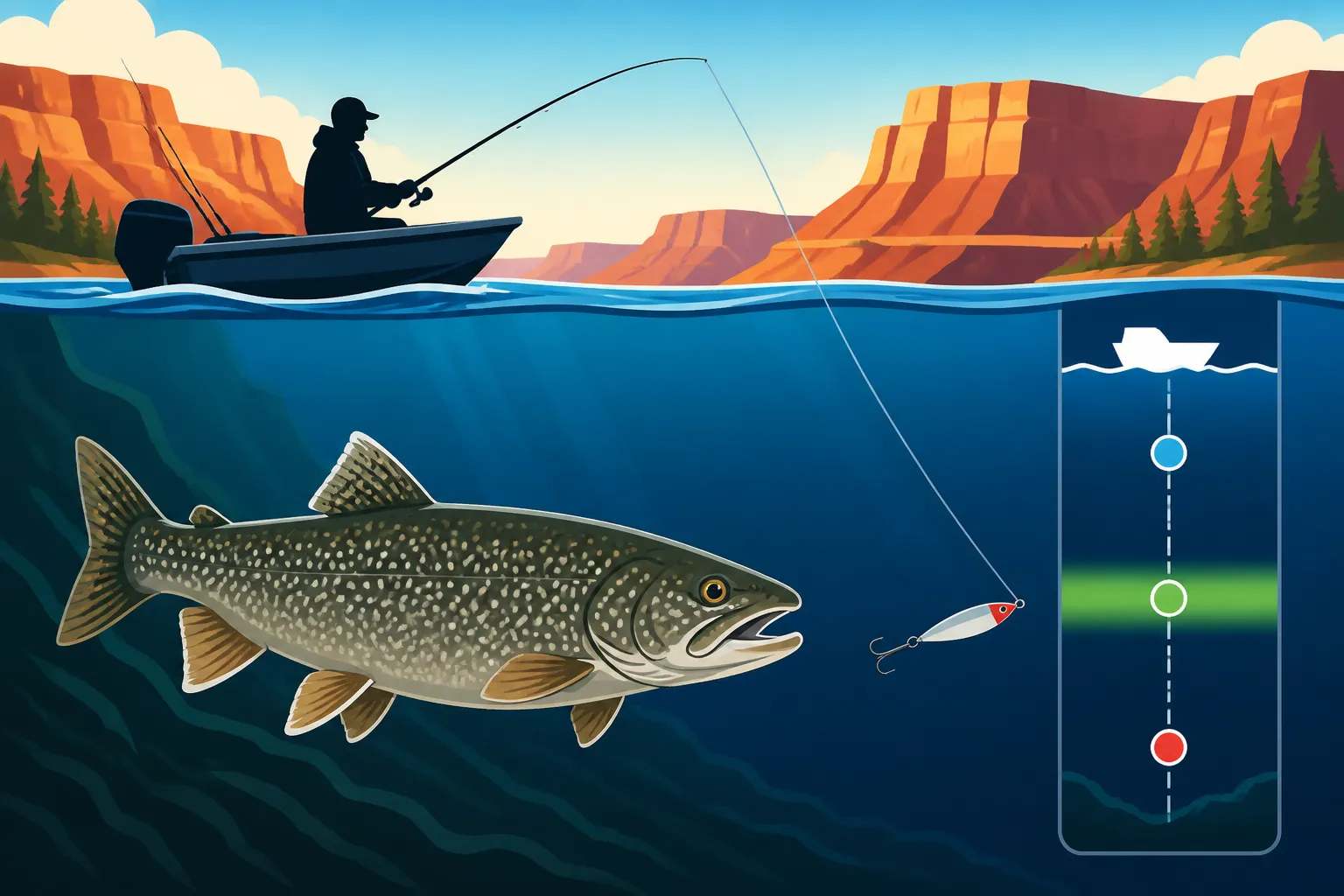
Beyond temperature, oxygen is critical. Deep pockets of water can sometimes become oxygen-depleted, forcing fish to move to shallower, more oxygenated areas, even if the temperature isn't perfectly ideal. This balance of cool temperatures and sufficient oxygen creates a thermal stratification in the reservoir, often referred to as the "thermocline." This distinct layer of rapidly changing temperature is often where lake trout, and their forage, congregate. Understanding these layers is paramount, and your fish finder can be your best friend in locating this sweet spot.
Key Structures and Forage at Depth
Lake trout aren't just swimming aimlessly in the deep; they're associating with structure and following their food sources. Flaming Gorge is a treasure trove of underwater topography, featuring deep ledges, submerged humps, steep drop-offs, and canyon walls. These structures offer ambush points, protection, and act as highways for fish movement. Mackinaw will often patrol these areas, especially along transition lines where shallow water suddenly plunges into the abyss.
Their primary diet at Flaming Gorge often includes kokanee salmon, rainbow trout, and even smaller lake trout. When these baitfish move through certain depths, the lake trout won't be far behind. Learning to identify baitfish schools on your sonar is just as important as spotting the larger fish. If you mark vast schools of kokanee at 80 feet, you can bet the lakers will be lurking just below or within that depth band, ready to strike. Services like FishingBooker often list guides who specialize in these techniques, and they can be a great resource if you're looking for real-time intel on where the baitfish are holding.
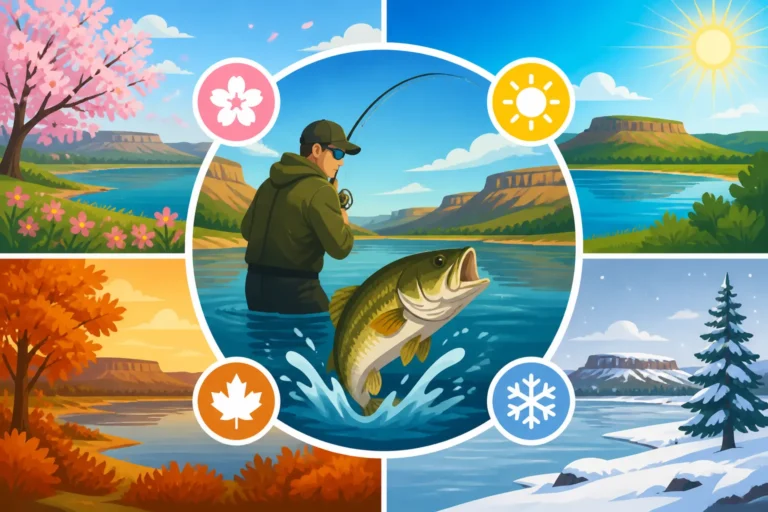
Unlocking Seasonal Depths for Flaming Gorge Mackinaw
The "best depth" for trolling lake trout at Flaming Gorge is not static; it's a constantly evolving target driven by the seasons. What works in spring won't necessarily work in summer or fall. Being able to adjust your strategy throughout the year is key to consistent success. For more general guidance, checking out a full guide on Trolling Techniques for Wyoming Reservoirs can give you a broader overview before diving into the specifics of Flaming Gorge.
Springtime Depths: The Post-Spawn Movement
As the ice recedes and spring arrives (typically late April into May, depending on the year), lake trout in Flaming Gorge are often recovering from their fall spawn. The water column starts to warm, but the deeper sections remain cold. In early spring, you might find lake trout still relatively deep, anywhere from 40 to 80 feet, as they begin to feed aggressively after a long winter. However, as the surface waters warm slightly and baitfish start moving up, lakers might briefly push shallower.
By late spring (May-June), you'll often find them cruising depths between 60 and 120 feet, especially around prominent points, submerged islands, and main lake structures where they can intercept schools of migrating baitfish. This is a fantastic time for aggressive presentations, as the fish are hungry and active. Focus on areas near deeper water access, such as the mouth of the Green River arm or along the main channel, where fish can easily move up or down the water column as conditions change.
Summer Deepwater Tactics: The Thermocline is King
Summertime at Flaming Gorge means heat, and lake trout retreat to the comfort of the cool, stable thermocline. This is when deepwater trolling truly comes into its own. From July through early September, you'll typically find lake trout holding anywhere from 80 to 180 feet, sometimes even deeper on the hottest days. The exact depth will vary based on the depth of the thermocline, which can be pinpointed with your electronics.
During summer, focus your efforts over deep water, particularly around the deepest parts of the main channel, steep underwater cliffs, and large humps that rise out of the abyss. Target depths where you see baitfish congregated. If you're marking kokanee salmon at 100 feet, set your gear to run at 90 to 110 feet to intercept any hungry lakers. The sheer size of Flaming Gorge means you'll want to cover a lot of water, and having a good understanding of where the big ones like to hang out is crucial. Remember, the biggest fish often need the most stable, deepest environments. Many anglers find guides through platforms like FishingBooker specifically for this time of year, as local expertise is invaluable in locating these deep summer fish.
Fall Transition Depths: Pre-Spawn Aggression
As the days shorten and the water temperatures begin to cool in September and October, lake trout in Flaming Gorge undergo a significant transition. This is the pre-spawn period, and many fish will become incredibly active and aggressive as they prepare to move to shallower spawning grounds. You'll see a broader range of depths being productive.
Early fall might still see fish in their summer haunts (80-150 feet), but as the water continues to cool, they will start to move shallower. By late October, you can often find them shallower than any other time of year, sometimes as high as 30-60 feet, especially around traditional spawning areas like rocky points, gravel beds, and ledges. This can be a fantastic time for trophy fish, as they're feeding heavily. However, don't completely abandon the deeper water, as not all fish will move up at the same time. Some of the largest lake trout may linger in depths of 100-120 feet even during the fall transition. Understanding How Big Lake Trout Get in Flaming Gorge during this period can really get your heart pumping!
Winter and Ice Fishing Depths: Stable but Localized
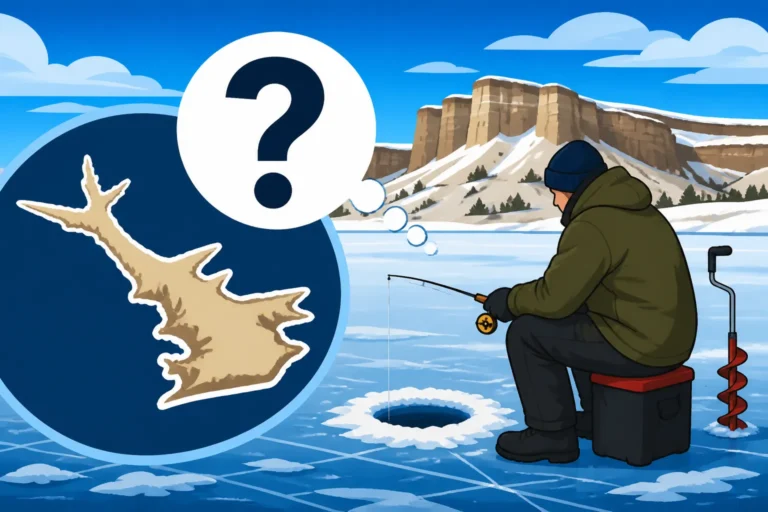
When Flaming Gorge finally freezes over, typically from late December through March, the lake trout settle into more consistent patterns. While ice fishing is a different ballgame than trolling, the underlying principles of depth remain. During winter, lake trout will often be found in depths ranging from 50 to 150 feet. They tend to school up more tightly and will relate closely to structure.
Under the ice, you might find them in 60-90 feet over large, flat areas or just off a main channel drop-off. If you're targeting areas below the dam, be aware of specific regulations. While ice fishing, active jigging is common, but it still requires understanding where the fish are holding. The stable water temperatures under the ice mean less dramatic daily depth changes, but fish will still move based on forage availability.
| Season | Typical Trolling Depth Range (Feet) | Primary Behavior & Notes |
|---|---|---|
| Early Spring | 40 – 80 | Post-spawn recovery, feeding aggressively. May move shallower briefly. |
| Late Spring | 60 – 120 | Following baitfish, active. Relate to main lake points and structures. |
| Summer | 80 – 180+ | Deepest depths, holding to thermocline. Following baitfish schools in cold water. |
| Early Fall | 80 – 150 | Pre-spawn aggression, still deep. Begin to move shallower as water cools. |
| Late Fall | 30 – 120 | Moving to spawning areas (shallower), but large fish may remain deeper. Highly active. |
| Winter (Ice) | 50 – 150 | Stable depths, often schooling over structure. Focus on jigging. |
Essential Gear and Tactics for Precision Deepwater Trolling
Hitting these precise depths isn't something you can do with just any rod and reel. To effectively troll for lake trout at Flaming Gorge, you need specialized gear and a methodical approach.
Downriggers, Dipsy Divers, and Lead Core
Each of these tools serves a distinct purpose in getting your lure to the desired depth:
- Downriggers: These are the most precise tools for deepwater trolling. A downrigger uses a heavy cannonball weight (8-12 lbs) on a steel cable to carry your fishing line down to an exact depth. Your line is attached to the downrigger cable with a release clip. When a fish strikes, the line pops free, allowing you to fight the fish directly without the weight. This precision is invaluable when you've pinpointed a thermocline or a school of baitfish at a specific depth like 105 feet. You can run multiple lines at different depths off a single downrigger setup, making them incredibly versatile. Learning Downrigger Basics for Wyoming Reservoir Trout is a game-changer for deep-water trolling.
- Dipsy Divers (or Jet Divers): These are diving planers that attach directly to your fishing line. They use water resistance to dive, and their depth is controlled by the amount of line you let out and the speed of your troll. While not as precise as downriggers, they can effectively get lures down to 30-80 feet. They also provide a spread to your lines, moving them out to the sides of the boat, which helps cover more water and prevent tangles. Different sizes and settings allow for varying dive depths and sideways spread.
- Lead Core Line: This type of line has a lead core encased in a braided nylon sheath. The lead makes the line heavy, causing it to sink. Lead core is typically color-coded, with each color representing 10 yards of line. You can estimate your depth by how many colors you let out (e.g., 5 colors at a certain speed might get you to 25-30 feet). While less precise than downriggers, it's a relatively simple and effective way to get lures to moderate depths without a lot of extra equipment. It's often used for fish in the 20-60 foot range, but with enough line out and heavy lures, it can go deeper.
For serious lake trout fishing at Flaming Gorge, a combination of downriggers and possibly Dipsy Divers is often the most effective setup. This allows you to target precise depths with your main presentations while covering broader depth ranges or wider spreads with other lines.
Lure Selection and Presentation
Once you've mastered getting your lures to the correct depth, the next step is choosing the right presentation. Lake trout are predators, and they respond well to lures that imitate their natural forage.
- Tubes and Soft Plastics: White, glow, chartreuse, or natural baitfish colors in 4-6 inch tubes are highly effective. Rig them with a heavy jig head (1/2 oz to 1 oz) and either troll them or vertical jig them. The erratic action of a tube jig can be irresistible to lake trout.
- Spoons: Large trolling spoons in silver, copper, or various color patterns (e.g., orange/chartreuse, blue/silver) are excellent for imitating baitfish. Popular brands include Luhr Jensen's Krocadile and Daredevils. Vary your trolling speed to find the right wobble.
- Minnow Imitations (Plugs/Stickbaits): Deep-diving crankbaits or large minnow plugs can also be effective, especially those designed to run deep. These mimic baitfish like kokanee and rainbow trout. Look for lures that have a tight, erratic wiggle.
- Live Bait: While regulations vary and should always be checked, some anglers find success using large shiners or suckers, typically fished on a bottom bouncer or with a downrigger.
The key to presentation is often consistency and covering ground. Troll at speeds between 1.5 to 2.5 miles per hour. Experiment with speed changes, s-turns, and even brief pauses (if using downriggers) to induce strikes. The biggest mistake is assuming a specific lure or color will work every time; be prepared to change lures, colors, and sizes until you find what the fish are keying in on that day. Don't be afraid to try some of the patterns mentioned in Best Wyoming Fly Patterns for Cutthroat Trout adapted for larger trolling flies if you're feeling adventurous, although traditional spoons and jigs are generally more common for lakers.
Reading the Water and Adapting Your Trolling Strategy
Flaming Gorge is a massive body of water, and conditions can change rapidly. Being able to read your electronics and adapt your strategy on the fly will dramatically increase your success rate.
Interpreting Your Electronics
Your fish finder is your most valuable tool for deepwater lake trout. It's not just for marking fish; it's for understanding the underwater world.
- Identify the Thermocline: Most modern fish finders will display the thermocline as a distinct band where temperatures change rapidly. This is your primary target zone during summer.
- Locate Structure: Use your sonar to identify underwater humps, ledges, old river channels, and steep drop-offs. Lake trout will always relate to structure. Mark these points as waypoints on your GPS.
- Spot Baitfish Schools: Look for dense clouds of smaller marks, often suspended in the water column. These are baitfish, and where there's bait, there are predators. If you see bait at 90 feet, set your lures just above, within, or just below that depth.
- Identify Fish Arches: Learn to distinguish between individual large fish (long, strong arches) and smaller fish or debris. If you're consistently marking large arches at a particular depth and over a specific type of structure, you've found a productive zone.
- Bottom Composition: Some advanced units can even give you an idea of bottom composition (hard bottom, soft mud). Lake trout often prefer hard bottom where their forage might also be present.
Don't just drive around; actively interpret what your screen is telling you. If you're not seeing fish at your target depth, adjust. Move deeper, move shallower, or move to different areas of the lake.
Factors Affecting Depth and Activity
Beyond the obvious seasonal changes, several other factors can influence where lake trout are holding and how actively they're feeding:
- Weather and Barometric Pressure: Stable weather with consistent barometric pressure generally leads to more predictable fishing. Rapid changes, like a sudden cold front or a major storm rolling in, can make fish moody and push them deeper or scatter them. Often, fish will feed aggressively right before a major front moves in.
- Light Penetration: On bright, sunny days with clear water, lake trout will often hold deeper to avoid intense light. Overcast days or early morning/late evening low-light conditions might bring them up slightly, especially if the surface temperatures are still cool. This is why a guide often chooses specific times of day for a trip. If you're looking for a good guide, services like FishingBooker can connect you with experienced captains who know how to adapt to these subtle changes.
- Wind and Current: While Flaming Gorge is vast, wind can create current, especially near features like the dam or in narrower channels. Current can stack baitfish or oxygenate certain areas, making them more attractive to lake trout. When the wind is really howling, it can push bait closer to shore or into protected coves, and the lake trout might follow. How Wind Affects Fishing on Wyoming Reservoirs is a critical read if you plan on visiting on a blustery day.
- Fishing Pressure: In heavily fished areas, lake trout can become more skittish and might hold deeper or move to less-pressured parts of the reservoir. If a popular spot isn't producing, don't be afraid to explore new, less-frequented waters or adjust your trolling spread to present something different.
The real secret to consistently catching lake trout at Flaming Gorge, regardless of depth, is continuous learning and adaptation. Each trip is an opportunity to gather more data and refine your strategy. Pay attention to every detail, from the depths where you get strikes to the weather conditions, and you'll slowly start to unravel the mysteries of these incredible deepwater fish.
Disclaimer
Fishing regulations and conditions in Wyoming can change. Always consult the most current Wyoming Game and Fish Department regulations before heading out. Safety first, and be aware of weather conditions and water levels, especially on large bodies of water like Flaming Gorge.