How Wind Affects Fishing on Wyoming Reservoirs
There’s nothing quite like planning a perfect day out on a Wyoming reservoir, envisioning glassy water and calm conditions, only to wake up to gale-force winds whipping across the landscape. We’ve all been there – that gut-sinking feeling that your serene fishing trip might turn into a frustrating battle against the elements. But don't let the wind deter you! This comprehensive guide will break down exactly how wind impacts fishing on Wyoming's vast reservoirs, transforming a potential nuisance into a strategic advantage for those who know how to read and adapt to it.
The Basics of Wind on Wyoming Reservoirs
Wind is more than just a surface disturbance; it's a dynamic force that profoundly influences the entire aquatic ecosystem of a reservoir. In Wyoming, with our wide-open spaces and large bodies of water like Flaming Gorge, Boysen, or Glendo, wind can be a constant companion, and understanding its fundamental effects is the first step to turning a blustery day into a productive one.
Understanding Wind's Impact on Surface Water
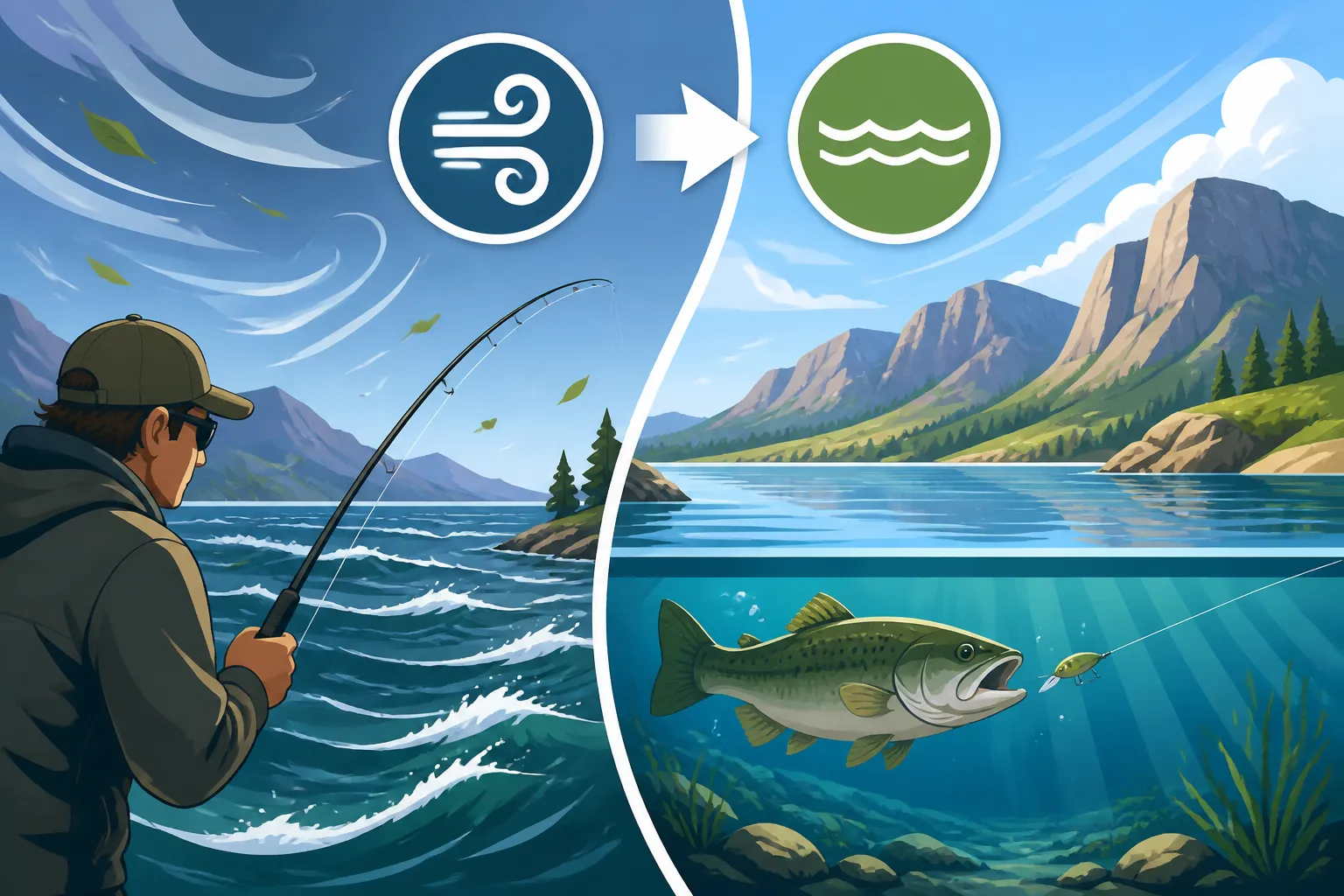
When wind blows across the surface of a reservoir, it doesn't just create ripples and waves. It generates currents, pushing surface water and everything floating in it – including plankton, insects, and even baitfish – across the lake. This phenomenon is particularly pronounced on large, open reservoirs where the wind has a long "fetch," meaning a long distance over which it can act on the water.
These wind-driven currents can create distinct "wind lanes" or "foam lines" on the surface, which are essentially convergence zones where debris, and often baitfish, accumulate. Below the surface, this movement causes a subtle but significant redistribution of nutrients and organisms, which in turn influences where game fish choose to hunt. Think of it like a conveyor belt, bringing food sources to specific areas, making them prime targets for hungry fish.
The Psychological Effect of Wind on Anglers
Let's be honest, fishing in the wind can be flat-out uncomfortable. Casting becomes a chore, maintaining boat position is a constant battle, and the spray can leave you soaked and chilled. This discomfort often leads anglers to avoid windy areas or even stay home altogether. However, what feels unpleasant for us often creates advantageous conditions for the fish.
Many anglers find the frustration of tangles, difficult casts, and the inability to feel subtle bites too much to bear. But understanding that these challenges can lead to better fishing can shift your mindset. Embracing the wind means equipping yourself with the right gear – perhaps a sturdy pair of polarized sunglasses to cut glare, a good windproof jacket (which you can often find on Amazon with quick shipping), and the mental fortitude to adapt your techniques. Overcoming the initial discomfort and learning to "read" the wind can actually reduce fishing pressure in productive areas, leaving more fish for those willing to brave the breeze.
How Wind Positions Fish in Reservoirs
The wind doesn't just make waves; it plays a critical role in shaping the underwater environment, directly influencing where different fish species choose to feed, rest, and congregate. Understanding these dynamics is key to anticipating fish movements and finding them even when conditions seem challenging.
Wind-Driven Currents and Baitfish Concentration
As mentioned earlier, wind creates surface currents that act like a giant broom, sweeping baitfish, plankton, and other food sources towards specific areas. On a windy day, these currents will push water and food towards the windward shore (the side the wind is blowing towards). This creates a veritable buffet line, attracting schools of baitfish, which in turn draws in larger predatory fish like walleye, trout, and bass.
Imagine a large Wyoming reservoir like Boysen, known for its walleye. A strong west wind will push everything towards the eastern shore. Walleye, being opportunistic feeders, will often set up ambush points along these wind-blown banks, waiting for the current to deliver an easy meal. This means that instead of scattered schools, you might find concentrated pockets of feeding fish. The wave action also provides natural cover, making it harder for prey to detect predators, giving the game fish an added advantage.
Oxygenation and Temperature Stratification from Wind
Beyond simply moving food, wind profoundly affects the water itself. Intense wind and wave action introduce dissolved oxygen into the upper layers of the water column. This oxygenation is vital, especially during warmer months when stagnant water can become depleted of oxygen in deeper sections. Fish, particularly active feeders, prefer well-oxygenated water.
Furthermore, wind can disrupt thermal stratification – the layering of water into distinct temperature zones – particularly in shallower areas or smaller reservoirs. By mixing the water, wind can break up or weaken these layers, allowing fish to move more freely throughout the water column rather than being confined to narrow bands. This is particularly relevant for species like rainbow trout, which are highly sensitive to water temperature. A persistent wind can circulate cooler, oxygenated water into areas that might otherwise be too warm or stagnant, creating new, temporary feeding zones. Conversely, strong, cold winds can cool surface temperatures, sometimes driving fish deeper in search of more stable conditions, affecting How Water Temperature Changes Wyoming Trout Behavior.
Adjusting Your Strategy for Windy Conditions
Facing a windy day on a Wyoming reservoir isn't about giving up; it's about changing your approach. Adapting your location, tackle, and boat control can make all the difference between a frustrating outing and a truly rewarding one.
Choosing the Right Location and Approach
When the wind picks up, your first instinct might be to seek sheltered coves or lee shores. While these can offer a reprieve from the chop, they often lack the active feeding zones created by the wind. Instead, consider fishing the wind-blown side of the reservoir. Look for points, submerged humps, or structural elements that intercept the wind-driven currents. These are the highways for baitfish and the ambush points for predators.
However, fishing directly into a strong wind can be incredibly difficult. A smart strategy is to position your boat slightly off the main wind line, perhaps along the edge of a bay or a point that offers a bit of a break, but still allows the wind to push water and food towards you. Sometimes, even the lee side of an island or a large point can be productive if it's creating an eddy or a current seam that concentrates food. Experiment with different depths along these wind-blown structures, as fish might be holding just below the roughest surface water, or slightly deeper to avoid the direct impact of the waves while still benefiting from the pushed food.
Tackle and Presentation Modifications
Wind dictates significant changes to your gear and how you present your bait or lure. Light line, delicate presentations, and even small lures can become almost impossible to control in a stiff breeze. This is where heavier tackle shines.
- Heavier Lures and Baits: Forget those ultralight spinners for a bit. Opt for heavier jigs, spoons, or crankbaits that can cut through the wind and reach your target depth quickly. If you're fishing for walleye, consider bumping up your jig head weight. For casting, a lipless crankbait or a casting spoon can be incredibly effective, as their weight allows for longer, more accurate casts against the wind. You can find a wide range of heavier lures on Amazon, ensuring you’re ready for any condition.
- Line Choice: Monofilament line, with its higher diameter and tendency to "sail" in the wind, can make bite detection difficult. Fluorocarbon, which sinks and has less stretch, or braided line, with its thin diameter and zero stretch, are often superior choices in windy conditions. Braided line, in particular, transmits even the slightest tap, which can be crucial when the wind is making your rod tip dance.
- Presentation Speed: Wind-driven currents naturally add movement to your lure. Sometimes, this means you can slow down your retrieve or jigging motion, letting the current do some of the work. At other times, a slightly faster retrieve might be necessary to keep your lure in the strike zone and prevent it from being swept away too quickly. Adjusting your presentation to account for the wind's natural action is a skill developed over many blustery days. For targeting species like rainbow trout, you might need to adjust your Best Lures for Wyoming Rainbow Trout to heavier options.
Boat Control and Safety in the Wind
Maintaining boat control in windy conditions is paramount, both for effective fishing and for safety. Without proper control, you'll constantly be blown off your spot, making precise presentations nearly impossible.
- Anchoring Systems: A sturdy anchoring system is your best friend. A traditional anchor with plenty of rode (rope) is essential, but a shallow-water anchor system (like a Power-Pole or Talon) can be a game-changer in depths up to 8-10 feet, allowing for quick, silent deployment. For deeper water, a controlled drift using a drift sock or sea anchor can help slow your boat down and keep your bow pointed into the waves, making for a more comfortable and manageable drift.
- Electric Trolling Motors: A high-thrust electric trolling motor, especially one with GPS spot-lock capabilities, can revolutionize your windy-day fishing. Brands like Minn Kota's Ulterra or MotorGuide's Xi5 allow you to hold your boat precisely on a spot or maintain a slow, controlled drift along a contour, even against significant wind and waves. This frees you up to focus on fishing rather than constantly fighting the helm.
- Safety First: Always check the marine forecast before heading out. Strong winds can quickly turn a calm reservoir into a dangerous environment with large, unpredictable waves. Ensure all passengers are wearing properly fitted life jackets, and let someone know your float plan. Understand your boat's capabilities and know when to call it a day. It's never worth risking your safety for a few extra casts. If you're planning a trip to a large body of water, consider consulting How to Fish Around Wind on Open Reservoirs for more specific advice.
Different Wind Strengths and Their Fishing Implications
Not all wind is created equal, and understanding the nuances of different wind strengths can significantly refine your fishing strategy. What works in a light breeze might be disastrous in a gale, and vice-versa.
Light Breeze: Subtle Advantages
A gentle breeze, say 5-10 mph, is often considered ideal by many anglers. It creates a subtle chop on the water's surface, which breaks up the visibility for fish, making them less wary of your presence or boat. This slight disturbance also helps to disperse your scent trail more effectively if you're bait fishing, or add a natural, erratic action to your lures.
In these conditions, fish often feel more secure to roam shallower areas and actively feed. It's enough wind to start pushing some plankton and small baitfish, but not so much that it makes casting or boat control overly difficult. This is when finesse techniques can still shine, but with the added benefit of that crucial surface disturbance. For species like walleye or perch, this light chop can trigger a feeding response, especially in the mornings or evenings. It's often the Best Weather for Fishing a Wyoming Reservoir for comfort and productivity.
Moderate Wind: Prime Fishing Conditions
This is often the sweet spot for many serious reservoir anglers. A moderate wind, typically 10-20 mph, creates significant wave action and strong wind-driven currents. While it presents challenges for boat control and casting, the benefits for fish activity often outweigh the difficulties.
The increased wave action provides excellent cover for predatory fish, allowing them to ambush prey with greater success. The currents aggressively concentrate baitfish, turning specific points, ledges, and breaks into high-traffic feeding lanes. This is when active fish really turn on. You'll want to use heavier baits that can sink quickly and hold their position in the chop. Focus on casting into the wind and allowing your lure to drift back with the current, or positioning your boat to drift parallel to a productive contour. This is a prime time for Trolling Techniques for Wyoming Reservoirs with larger baits, or even aggressive jigging. Anglers who master these conditions often report catching larger, more aggressive fish.
Strong Winds: Challenges and Opportunities
When the wind really howls, reaching gusts of 20 mph and beyond, many anglers head for shore. And often, that's the safest and wisest decision. However, if conditions are manageable and safe, strong winds can still offer unique fishing opportunities, albeit with significant challenges.
The key to fishing strong winds is often finding the "transition zones." These are areas where the brutal wave action meets calmer water, or where the wind creates powerful eddies and backcurrents. Fish will often stage in these slightly calmer pockets, waiting for the intense currents to deliver food right to them. This might be a deeper pocket just off a wind-blown point, or the downwind side of a large submerged island. Heavy jigging spoons, substantial bottom-bouncing rigs, or even Trolling Tube Jigs for Lake Trout at Flaming Gorge in deep water can be effective, as these baits can penetrate the violent surface action. Safety should always be your top priority. Ensure your boat is rated for the conditions, your safety gear is in check, and you're comfortable with the rough water. If you're a seasoned angler, you might find this the perfect time for How to Cast in Windy Conditions to test your skills and be rewarded.
| Wind Speed (mph) | Surface Conditions | Fish Behavior Tendency | Recommended Strategy |
|---|---|---|---|
| 0-5 (Calm) | Glassy, still | Spooky, scattered, deeper during day | Finesse, stealth, light line, low light fishing |
| 5-10 (Light Breeze) | Light chop, ripples | More active, less spooky, nearshore | Finesse with added action, focus on wind lanes |
| 10-20 (Moderate Wind) | Choppy, whitecaps | Highly active, concentrated in feeding lanes | Heavier lures, aggressive retrieve, strong boat control |
| 20+ (Strong Wind) | Rough, large waves | Staging in transition zones, deeper, less active but opportunistic | Very heavy baits, focus on protected current breaks, prioritize safety |
Specific Species Responses to Wind in Wyoming Reservoirs
Different fish species react to wind and its resulting water conditions in varied ways. Understanding these specific behavioral patterns can help you tailor your tactics for maximum success on your favorite Wyoming reservoirs.
Walleye and Perch: Capitalizing on the Chop
Walleye and perch are notoriously light-sensitive, and the surface chop created by wind provides excellent cover from bright sunlight. This is why many experienced walleye anglers actually prefer windy, overcast days. The broken surface diffuses light penetration, allowing these fish to move shallower and become more aggressive feeders during daylight hours than they would on a calm, sunny day.
The wind-driven currents also push baitfish towards specific structures, creating ideal ambush points for walleye. Focus your efforts on the wind-blown side of points, submerged reefs, and rock piles on reservoirs like Boysen or Glendo. Techniques like jigging with heavier jigs tipped with soft plastics or live bait, casting crankbaits that dive into the chop, or even Jigging for Walleye at Boysen Reservoir can be incredibly effective. Perch, often found in the same areas as walleye, will also take advantage of the increased food availability and reduced visibility. The rougher water also helps mask your boat's approach, allowing you to get closer to active fish. For more on this, check out Walleye Behavior in Wyoming Reservoirs.
Lake Trout and Salmon: Deep Water Strategies
While surface wind has a direct impact on shallower-dwelling fish, species like Lake Trout (Mackinaw) and Kokanee Salmon, which typically inhabit deeper parts of Wyoming reservoirs such as Flaming Gorge or Jackson Lake, are affected differently. The direct surface chop might not reach their preferred depths, but the underlying currents and changes in oxygenation can still influence their behavior.
Strong winds can push warmer surface water, causing cooler, oxygenated water to upwell in certain areas. Lake trout, which prefer cold, well-oxygenated environments, might become more active in these zones. Conversely, if strong winds create too much surface disturbance or push warm water into areas they inhabit, they might move even deeper to find stable conditions. Trolling with downriggers, using heavy spoons or tube jigs, is often the most effective way to target these deep-water fish during windy conditions. Pay close attention to your electronics, looking for bait balls pushed by currents or temperature breaks. For targeting these specific fish, reading up on Lake Trout (Mackinaw) Fishing in Wyoming or Trolling Tube Jigs for Lake Trout at Flaming Gorge can provide more detailed insights.
Bass and Panfish: Nearshore Movement
Smallmouth and Largemouth Bass, along with various panfish species (crappie, bluegill, sunfish), often react to wind by moving into the shallows of wind-blown shores or relating closely to cover that intercepts wind-driven currents. The wave action dislodges insects, crustaceans, and small baitfish from submerged vegetation and rocks, making them easy targets.
For bass, the choppy water provides excellent camouflage, making them more confident in attacking lures. Target rocky points, riprap banks, and areas with submerged timber on the windward side of a reservoir. Crankbaits, spinnerbaits, and heavier jigs can be highly effective. Panfish will also be drawn to these agitated areas, feeding on the dislodged food. Casting small jigs or even live bait under a bobber that is allowed to drift with the wind can be a productive method. Just be sure to use enough weight to keep your bait in the strike zone and prevent it from being tossed around too much.
Safety and Practical Tips for Windy Days
While fishing in the wind can be incredibly productive, it's crucial to prioritize safety and prepare adequately. Wyoming's reservoirs can become very dangerous very quickly when the wind picks up, and being unprepared is a recipe for disaster.
Essential Gear for Windy Reservoir Fishing
Having the right equipment extends beyond just your fishing tackle. Proper gear makes your day safer, more comfortable, and ultimately more enjoyable.
- Weather-Appropriate Clothing: Layers are your friend. A good quality windproof and waterproof outer shell is non-negotiable. Look for jackets and pants designed for marine use or severe weather. Brands like Helly Hansen or Simms (though more niche, you can find similar quality options on Amazon) offer excellent protection. Don't forget a warm hat and gloves, even on what seems like a mild day, as the wind chill can be brutal.
- Sun Protection: Even on cloudy, windy days, UV radiation can be intense, especially with reflection off the water. Polarized sunglasses are essential for reducing glare and spotting subtle changes in the water. Sunscreen and a wide-brimmed hat or neck gaiter will protect exposed skin.
- Navigation and Communication: While a powerful trolling motor with GPS is a huge asset, always carry a backup. A handheld GPS, a reliable compass, and paper maps are smart additions, especially on large, unfamiliar reservoirs. A fully charged cell phone is a must, but understand that service can be spotty in remote Wyoming areas. Consider a VHF radio for reliable marine communication, especially on bodies of water like Flaming Gorge, where emergency services monitor marine channels.
- Heavy Tackle & Rigging: As discussed, heavier jigs, sinkers, and lures are critical. Also, consider investing in a high-quality anchor system, perhaps two anchors for really tough conditions, and a drift sock to help slow your boat.
Prioritizing Safety on the Water
Fishing is a passion, but no fish is worth risking your life. Always make safety your primary concern.
- Check the Forecast (and Recheck): Wyoming weather can change on a dime. Before you leave, check the current and projected wind speeds and directions. Pay attention to small craft advisories. During your outing, keep an eye on the sky and watch for rapidly changing conditions. Darkening skies, sudden drops in temperature, or increasing whitecaps are all signs to heed.
- Wear a Life Jacket: This isn't just a suggestion; it's often the law, and it's always smart. Modern inflatable life jackets are comfortable and unobtrusive, making them easy to wear all day. There's no time to put one on when you're unexpectedly in the water.
- Know Your Boat's Limits: Understand what your vessel can safely handle. Pushing a small boat into large, wind-driven waves is dangerous. If in doubt, stay on shore or fish a more protected area.
- Tell Someone Your Plans: Always let a friend or family member know where you're going, when you expect to return, and who is with you. If you don't check in, they'll know to call for help.
- Practice Good Seamanship: Learn how to handle your boat in rough water. Approach waves at an angle, never broadside. Keep your boat clean and free of clutter to prevent trips and falls. Secure all loose gear so it doesn't get tossed overboard. Remember, Wyoming's Wyoming Summer Fishing: Peak Season Tips often coincide with some of the windiest days.
In summary, don't let the wind intimidate you. While it certainly adds a layer of challenge, it also creates incredibly fertile conditions for fish. With the right preparation, gear, and a strategic approach, a windy day on a Wyoming reservoir can easily become one of your most memorable and productive fishing experiences.
Disclaimer
Please note that fishing regulations and conditions in Wyoming can change. Always consult the most current Wyoming Game and Fish Department regulations before heading out on the water. This guide is for informational purposes only and does not supersede official regulations or local advisories. Be aware of your surroundings, practice safe boating, and always prioritize your personal safety.