How Deep Lake Trout Live in Flaming Gorge
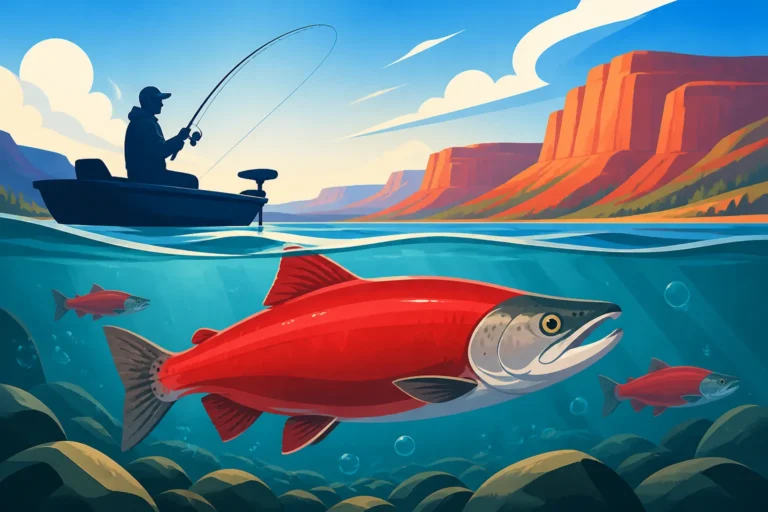
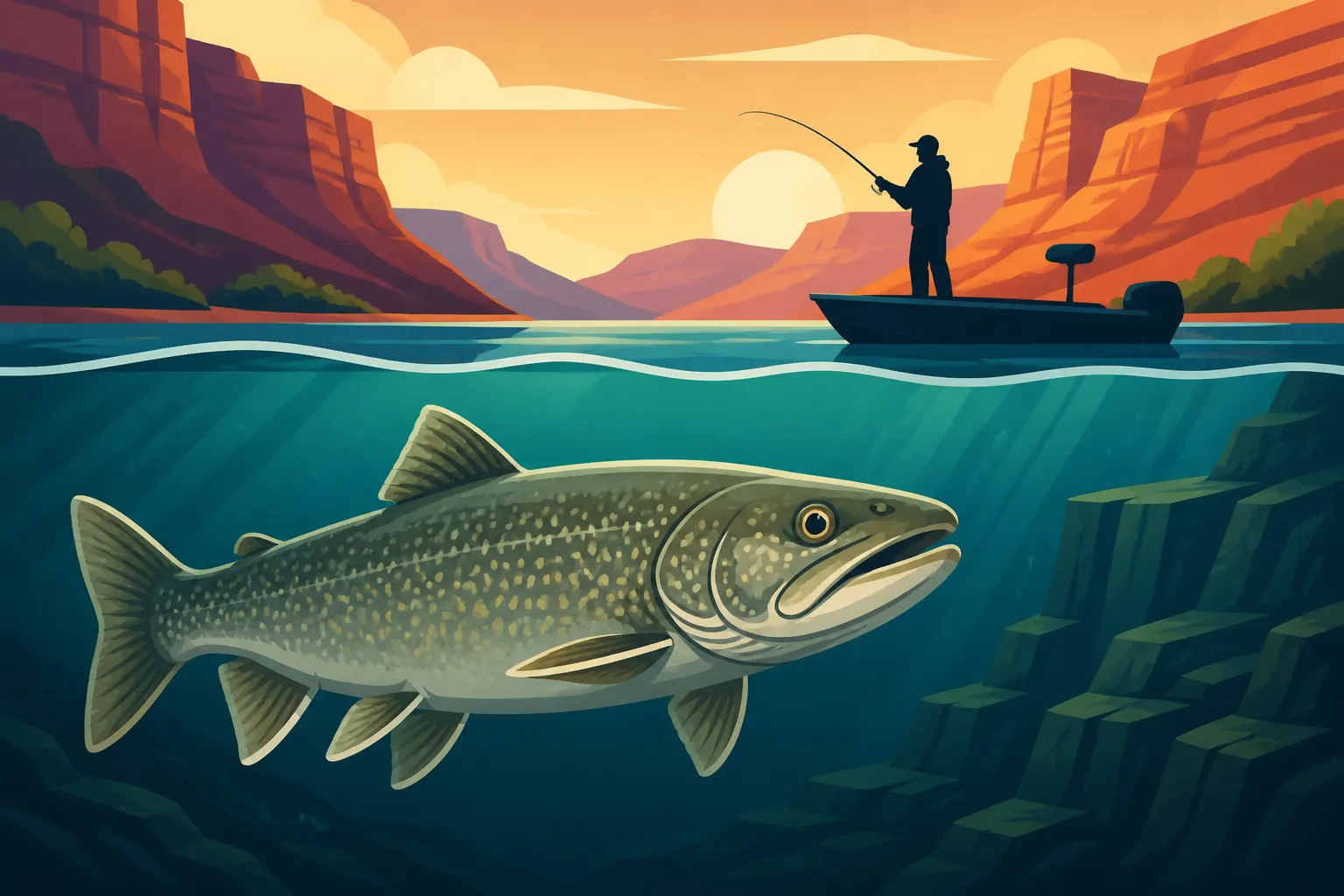
When you're out on the vast, sparkling waters of Flaming Gorge Reservoir, surrounded by those incredible red canyons, one of the biggest questions that probably gnaws at you, especially if you're chasing those legendary lake trout, is: just how deep do these fish live? It's not like they have a flashing neon sign pointing to their favorite hangout spot! The truth is, finding lake trout in such a massive and deep body of water can feel like searching for a needle in a haystack if you don't understand their depth preferences, which, spoiler alert, aren't static. This guide is here to unravel that mystery, giving you a comprehensive look at where these elusive giants hold in Flaming Gorge throughout the year.
The Ever-Changing Depths: Lake Trout Behavior Through the Seasons
It's easy to think that lake trout, being coldwater fish, just stick to the deepest, coldest parts of the reservoir all year long. And while they certainly prefer cooler temperatures, their actual depth can fluctuate dramatically with the seasons. Understanding this seasonal dance is absolutely crucial to putting your lure in front of their noses. Ignoring this means you could be fishing 50 feet above or below them for hours, wondering why nothing's biting.
Spring Turnover and Shallow Opportunities
Ah, spring in Flaming Gorge! After the ice melts (if it freezes over, which isn't always a given on the main lake), the entire water column begins to mix. This is called "turnover." As the surface water warms and the deeper water cools, the oxygen and temperature become more uniform from top to bottom. This mixing phase is a fantastic, albeit often brief, window when lake trout can be found in a much wider range of depths.
During early spring, particularly from April through early June, many lake trout will cruise surprisingly shallow, often in the 20 to 60-foot range. They are actively feeding on baitfish that are also moving into shallower areas to spawn or find warmer water. This is when you might find them near points, ledges, and rocky reefs that transition into deeper water. It's a time when you can have some incredible action without needing to deploy complex deep-water trolling gear immediately. Many anglers will target these fish by casting spoons or jerkbaits, or by slow-trolling with lighter tackle, which is a real treat compared to the deep-water grind of summer. This is also a good time to check out spots like the Antelope Flat area where the fish might be moving up shallower.
Summer Thermocline and Deep Water Retreat
As the Wyoming summer kicks in, the surface waters of Flaming Gorge begin to heat up significantly. This creates a distinct thermal layering effect. The warmer, lighter water stays on top, while the colder, denser water sinks. In between these two layers, you'll find what's known as the "thermocline" – a zone where the water temperature changes rapidly. This is where you'll spend most of your summer efforts if you're after lake trout.
Lake trout are physiologically adapted to cold water, typically preferring temperatures between 40-55 degrees Fahrenheit. As the surface water approaches 60 degrees or higher, they retreat to the cooler, oxygen-rich depths below the thermocline. During mid-summer, from July through early September, it's not uncommon to find Flaming Gorge lake trout holding in the 60 to 120-foot range, and sometimes even deeper, down to 150-200 feet or more in certain areas, particularly during the hottest parts of the day or in the warmest months. This deep retreat is less about avoiding light (though they prefer low light) and more about physiological comfort. If you're not getting your lures down into this cold, dark zone, you're simply not fishing where the fish are.
Fall Turnover and Scattered Fish
Just as spring sees a turnover, fall brings another period of mixing. As the air temperatures drop in late September and October, the surface water cools, becomes denser, and sinks, causing the layers to mix again. This process, known as "fall turnover," can sometimes make fishing a bit challenging because it scatters the fish throughout the water column. However, it also opens up new opportunities.
During fall turnover, lake trout might be found at various depths as they search for comfortable temperatures and available food. This is also a crucial time because it's when many lake trout move to shallower rocky areas to spawn. While the main lake trout spawn happens in late fall, often into November, the fish will start staging in depths of 20 to 60 feet near rocky reefs and ledges in the weeks leading up to it. So, while some fish might still be deep, many will be moving shallower. This transition period requires anglers to be versatile, perhaps starting deep and slowly working their way shallower until they find active fish. You might even find success on big jerkbaits or spoons cast into relatively shallow water.
Winter Ice Fishing Depths
For those brave enough to venture out onto the frozen sections of Flaming Gorge, ice fishing for lake trout is a unique experience. While much of the main lake often remains ice-free, many of the arms and bays, especially on the Wyoming side, offer excellent hard-water opportunities. When the ice forms, the lake trout's depth preferences once again shift.
Under the ice, lake trout typically settle into a fairly consistent depth range, though it can still vary based on the specific location and underwater structure. Generally, you'll find them anywhere from 30 to 80 feet deep. They often relate to submerged points, humps, and drop-offs where they can ambush baitfish. While they are still seeking that cold, stable water, the insulating layer of ice means the surface doesn't get as disturbed, and light penetration is reduced. This means they might cruise a bit shallower under the ice than they would in open water during peak summer. Targeting them through the ice often involves jigging heavy spoons or tube jigs, sometimes tipped with a piece of cut bait. For more detailed insights, you might check out our guide on Ice Fishing in Wyoming: A Complete Guide.
Key Factors Influencing Lake Trout Depth in Flaming Gorge
It's not just the calendar that dictates where lake trout reside. Several environmental and biological factors constantly influence their depth choices. A savvy angler understands these elements and uses them to pinpoint likely holding areas.
Water Temperature and Oxygen Levels
We've touched on this, but it bears repeating: water temperature is perhaps the single most important factor. Lake trout are a species of char, highly adapted to cold, well-oxygenated water. Their ideal temperature range is quite narrow, typically between 40 and 55 degrees Fahrenheit. Anything much warmer starts to stress them, reducing their metabolic efficiency and making them sluggish.
In Flaming Gorge, like many deep reservoirs, the cooler water is found deeper. However, it's not just about temperature; oxygen levels are also crucial. Sometimes, the deepest parts of a lake can become anoxic (lacking oxygen) in certain conditions, even if the temperature is ideal. Lake trout need both. This is why the thermocline, or just below it, is often such a sweet spot in summer. It offers that perfect blend of cool water and sufficient oxygen. Anglers with good electronics can often spot the thermocline and target just above or below it.
Forage Availability
Lake trout are predators, and like any predator, they go where the food is. In Flaming Gorge, the primary forage for lake trout consists of various species, including kokanee salmon, Utah chubs, and some smaller cutthroat trout. The movements and depths of these baitfish heavily influence where the lake trout will be.
If the kokanee salmon are schooled up at 70 feet over a deep basin, you can bet the lake trout will be nearby, either slightly above, below, or within that school. If chubs are holding tight to a rocky ledge at 40 feet in spring, that's where the lake trout will be looking for an easy meal. Experienced anglers often pay attention to their sonar not just for "fish arches" that might be lake trout, but also for large schools of baitfish. Finding the food chain is often the fastest way to find the apex predator. This relationship is critical to understanding What Lake Trout Eat in Wyoming Reservoirs.
Light Penetration
While temperature and oxygen are physiological needs, light penetration is more about comfort and hunting strategy. Lake trout generally prefer low-light conditions. Bright sunlight can drive them deeper, even if the water temperature is adequate shallower. This is why they might be found deeper during the brightest parts of the day or shallower during cloudy weather, dawn, or dusk.
The depth to which light penetrates depends on water clarity. Flaming Gorge is generally quite clear, especially away from major inlets, meaning light can penetrate quite deep. This encourages lake trout to stay in the darker, deeper zones where they feel more secure and their eyes, adapted for low-light hunting, give them an advantage over their prey.
Structure and Cover
Just like any other fish, lake trout love structure. They use it for ambush points, security, and navigation. In Flaming Gorge, this means submerged canyon walls, deep points, humps, ledges, and vast underwater shelves. These features often concentrate baitfish and, consequently, lake trout.
When you're looking at your sonar, don't just look for fish in open water. Pay close attention to how the bottom contour changes. A sharp drop-off from 60 to 120 feet, a deep underwater point extending into a basin, or a large submerged rock pile are all prime lake trout habitat. They might sit right on the structure, or cruise just off its edges. Understanding How Deep Lake Trout Live in Flaming Gorge often means understanding the underwater topography.
Gear and Techniques for Targeting Deep Lake Trout
Successfully reaching lake trout at their preferred depths in Flaming Gorge isn't just about knowing where they are, but how to get your lure down to them. This often requires specialized equipment and techniques that differ greatly from typical shallow-water fishing.
Sonar and Electronics: Your Underwater Eyes
Without a doubt, a good fish finder (sonar) is your most valuable piece of equipment when targeting deep lake trout. It's literally your eyes into the underwater world. Modern units offer incredible detail, allowing you to see the bottom contour, identify submerged structure, mark baitfish schools, and most importantly, pinpoint individual fish arches that could be lake trout.
When buying a unit, look for one with high-frequency capabilities and good screen resolution. Many anglers find combination units with GPS charting to be incredibly useful for marking waypoints on productive spots. Companies like Garmin, Lowrance, and Humminbird offer a range of options, and you can often find great deals and accessories on sites like Amazon. Don't just get a unit; learn how to use it! Experiment with settings, sensitivity, and different display modes. Being able to interpret what your sonar is telling you will drastically improve your success rate.
Trolling with Downriggers and Lead Core
For precise depth control when trolling, downriggers are king. These mechanical devices allow you to set your lure at a specific depth and hold it there, even as your boat moves and the bottom contour changes. A heavy cannonball weight pulls your line down, and a release clip holds your fishing line. When a fish bites, the line pops out of the clip, and you fight the fish directly on your rod. This is the most effective method for targeting specific depths like the summer thermocline. For more on this, check out Trolling Techniques for Wyoming Reservoirs.
Lead core line is another popular method, though less precise than downriggers. This line has a lead core inside a braided sheath, which causes it to sink. The general rule of thumb is that one color (usually 10 yards) of lead core line sinks about 5 feet at a trolling speed of 2 mph, but this varies with line diameter, lure size, and current. You spool out multiple "colors" of lead core to achieve your desired depth. While not as exact as downriggers, it's a great option for those without downriggers, or to cover a wider range of depths.
Jigging Deep Water
Vertical jigging is an effective and engaging method for catching deep lake trout, especially when you've pinpointed fish on your sonar. Once you mark fish, position your boat directly over them, or slightly upwind/upcurrent to allow for drift, and drop a heavy jig straight down. This technique is often used in conjunction with a good fish finder.
Heavy spoons, tube jigs, or even large soft plastic swimbaits on jig heads are excellent for this. The key is to use enough weight to get down quickly and stay vertical. Experiment with different jigging motions: sharp lifts, subtle shakes, or a slow retrieve. Lake trout will often hit on the fall or as you pause the jig. This method is particularly popular during ice fishing season but is highly effective from a boat as well. Look for jigging spoons that have good flash and vibration, easily found on Amazon.
Baits and Lures for Deepwater Lake Trout
When fishing deep, your choice of bait and lure matters. You need lures that have action even at slow trolling speeds, or that present a tempting profile when jigged.
- Spoons: Large, heavy spoons like Gibbs-Delta, Luhr Jensen, or similar brands are excellent for trolling or jigging. Their wobbling action is irresistible to lake trout. Silver, white, blue, and glow-in-the-dark patterns are popular.
- Tube Jigs: These soft plastic lures, often 4-8 inches long, are rigged on heavy jig heads. They mimic baitfish and are incredibly effective for vertical jigging. White, black, and glow colors are staples.
- Swimbaits: Large soft plastic swimbaits with paddle tails can be rigged on heavy jig heads and retrieved or trolled slowly.
- Stickbaits/Plugs: Deep-diving crankbaits or stickbaits, particularly those designed for trolling, can reach impressive depths on their own or when used with downriggers or lead core. Brands like Rapala and Rebel are good choices.
- Cut Bait: Tipping a jig or spoon with a piece of sucker meat, chub, or even a piece of herring can often entice hesitant lake trout. The scent and natural texture are powerful attractors.
Understanding Specific Depths by Season and Location
While the general principles apply, understanding how these depths manifest at Flaming Gorge specifically, and even breaking it down into finer seasonal nuances, can give you a significant edge. Remember, these are general guidelines; always let your electronics and the fish tell you what's happening on any given day.
Early Season (May-June) Depths: Hunting the Edges
As the reservoir shakes off winter, the lake trout in Flaming Gorge become highly active and, for a short window, accessible in shallower water. You'll often find them cruising the edges of major structural features. Think main lake points, submerged islands, and areas where the old Green River channel approaches a prominent shelf.
Depths from 20 to 60 feet are prime during this time. The fish are often shadowing schools of baitfish that are themselves moving into warmer, shallower water. This is when trolling can be highly effective, not necessarily with downriggers set super deep, but perhaps with lead core or diving crankbaits to cover those upper-middle depths. Also, don't overlook casting spoons or large swimbaits into these areas. They're fat and hungry after winter, so it's a great time to target them before they dive deep for summer.
Mid-Summer (July-August) Deepwater Zones: The Thermocline Hold
This is the time when precision fishing really pays off. With surface temperatures soaring, the lake trout will be hugging the thermocline or sitting just below it. In Flaming Gorge, this often means depths from 60 to 120 feet, though some fish might be even deeper in the main channel or during extreme heat waves.
Look for areas with significant deep structure – the steep drops along the old river channel, the sides of submerged plateaus, or the deep basins. Using downriggers to place your lure precisely at 80 feet, for instance, when your sonar is showing arches between 75 and 90 feet, is how you convert marks into bites. This is when knowing the Best Depth for Trolling Lake Trout at Flaming Gorge really comes into play. Focus on subtle presentations and slow trolling speeds (1.5-2.5 mph) to give those deep, colder fish a chance to react. You might even discover that different areas of the reservoir have slightly different thermocline depths due to varying water inflows or solar exposure.
Late Season (September-October) Transition Depths: Pre-Spawn and Cooling Water
As fall arrives, the water column begins to cool and homogenize again. This causes the lake trout to become more mobile and less strictly tied to the deep thermocline. Many will still be found in the 40-100 foot range, but their distribution can be more scattered.
This period is particularly exciting because it leads into the spawn. As October progresses, some of the larger lake trout will start moving towards shallower, rocky spawning grounds. These might be depths of 20-50 feet over gravel and rock shoals. They won't always be there to feed, but a well-presented lure can still trigger a reaction bite. This is a time to be flexible: start by checking those mid-range depths (60-80 feet) and then experiment shallower, particularly around prime spawning structure. Don't be afraid to try some aggressive lure presentations, as fish can be quite territorial before and during the spawn. You might find some real giants during this period!
Winter (December-March) Ice Fishing Depths: Under the Lid
When the ice covers the northern arms and bays of Flaming Gorge, lake trout settle into their winter patterns. While the main body of the lake often doesn't fully freeze over, productive ice fishing spots like the Buckboard Crossing area can yield fantastic laker action. Under the ice, the fish will generally hold in depths ranging from 30 to 80 feet.
They'll often relate to structure like submerged points, humps, and sudden depth changes. They might be a bit shallower during low light hours, or slightly deeper during the bright midday. Jigging heavy spoons or tube jigs, often tipped with a piece of bait, is the go-to technique. It's crucial to have a good ice fishing sonar (flasher or LCD unit) to detect fish and gauge their reactions to your lure. Staying mobile and drilling multiple holes can help you locate active fish in a specific depth band. Remember that safety is paramount when ice fishing, so always check ice thickness thoroughly. You can find essential gear like ice augers and portable shelters on Amazon to enhance your winter experience.
Flaming Gorge is an incredible fishery for lake trout, capable of producing some truly massive fish. But unlocking its secrets, especially regarding the depths at which these magnificent creatures live, requires patience, observation, and the right approach. By understanding their seasonal movements and the environmental factors that drive them, you'll be well on your way to a successful day on the water.
Disclaimer
This article is for general informational purposes only and does not constitute professional advice. Laws, prices and regulations vary by location and change over time. Consult a qualified professional for guidance on your specific situation.