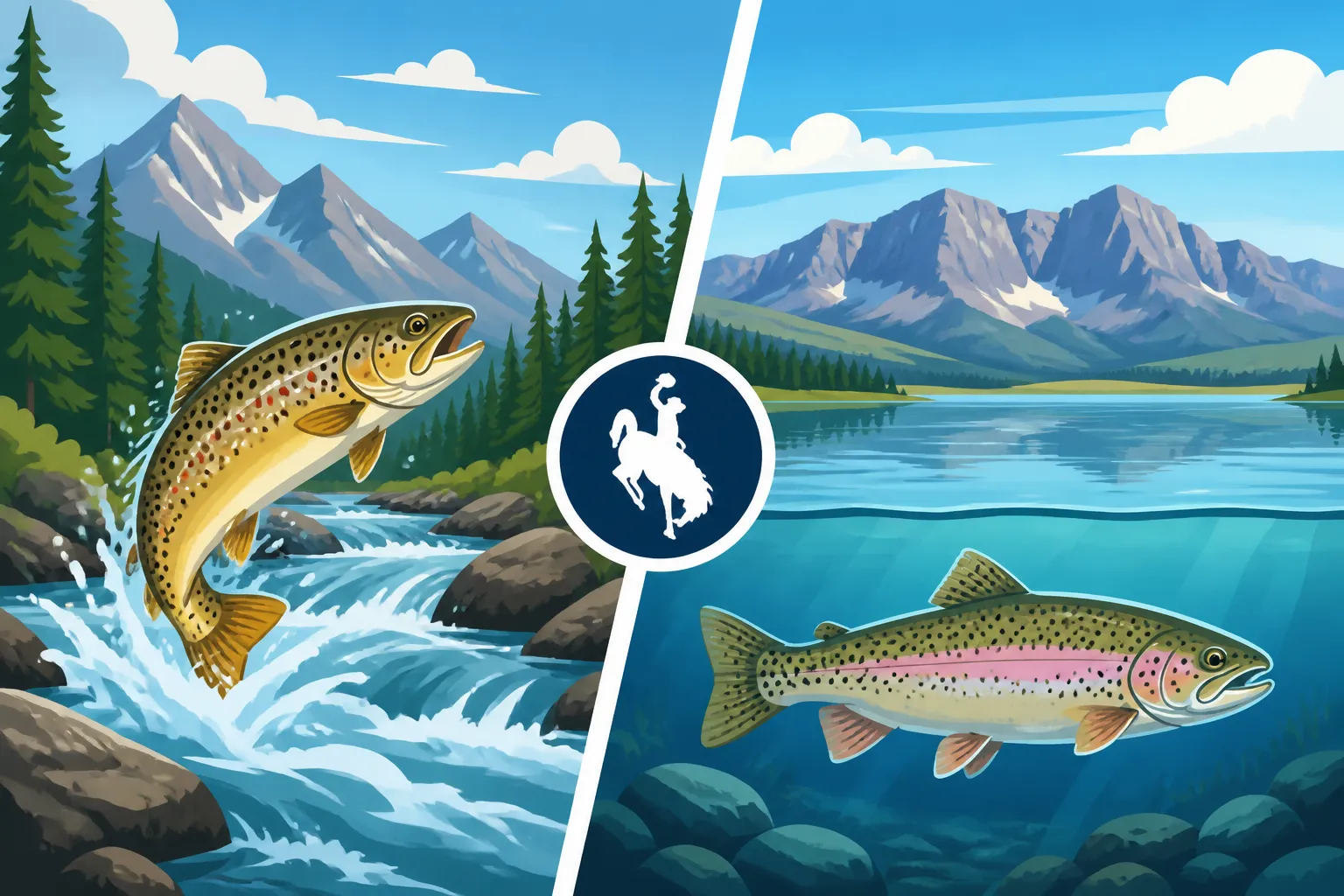
Stream Limits vs Lake Limits for Wyoming Trout
It's incredibly frustrating, isn't it? You spend weeks planning your dream fishing trip to Wyoming, imagining casting your line into pristine waters, only to open the regulations booklet and feel completely overwhelmed. One of the biggest head-scratchers for many anglers, especially those new to the Cowboy State, is figuring out if the rules for keeping trout are the same for a winding river as they are for a vast, glassy lake. The short answer is often "no," and misunderstanding these distinctions can lead to unintentional violations. This comprehensive guide is here to untangle the complexities, explaining the crucial differences between stream and lake trout limits in Wyoming so you can fish confidently and legally.
The Fundamental Split: Streams Versus Lakes
When you're out there, surrounded by Wyoming's breathtaking natural beauty, it's easy to think all water is created equal when it comes to fishing regulations. But the Wyoming Game and Fish Department (WGFD) has a very nuanced approach, and for good reason. The life cycles, food sources, and environmental pressures on trout in a fast-flowing river are often vastly different from those in a deep, still lake. This fundamental difference drives most of the varying regulations you'll encounter.
The Intent Behind the Distinction
Imagine a small, freestone stream winding its way through the mountains. Trout here might be smaller, more numerous, and highly dependent on insect hatches. Now, picture a massive reservoir like Flaming Gorge, where lake trout can grow to impressive sizes over many years, preying on other fish. The WGFD's primary goal is to manage these diverse fisheries sustainably, ensuring healthy populations for future generations of anglers. To do that, they have to tailor regulations to the specific environment and the fish species within it. It wouldn't make sense to apply the same harvest rules to a rapidly reproducing brook trout population in a creek as it would to slow-growing, large lake trout. The intent is always conservation, balanced with providing ample opportunity for anglers to enjoy their sport and, when appropriate, harvest fish.
Typical Stream Regulations
Generally speaking, stream regulations in Wyoming tend to be more restrictive for trout, particularly on blue-ribbon waters or designated "trophy trout" streams. This is often due to the more delicate nature of riverine ecosystems and the desire to protect wild, self-sustaining populations of native trout like the cutthroat. You'll frequently see lower daily bag limits, often two or three trout per day, and sometimes stricter size restrictions. For instance, many popular trout streams might have a "one over 16 inches" rule, meaning you can keep a couple of smaller fish but only one large one, if any at all. These regulations aim to reduce pressure on the larger, spawning-potential fish that contribute most to the health of the population. There might also be tackle restrictions, such as barbless hooks only, on certain stretches, like portions of the North Platte River, further highlighting the focus on catch-and-release and fish survival. Knowing these specific details is paramount for any river angler, and it's covered in depth in resources like the guide on The One-Over-16-Inch Rule on Wyoming Trout Streams.
Typical Lake Regulations
Lakes and reservoirs, on the other hand, often present a different set of challenges and opportunities for fishery managers. Many of Wyoming's larger lakes and reservoirs are home to different species dynamics. You might find a wider variety of trout species, including introduced ones like rainbow and brown trout, alongside native cutthroat or even the colossal lake trout (Mackinaw). Because many reservoirs are part of extensive stocking programs or contain fast-growing populations that can support higher harvest, the daily limits can be more generous. It's not uncommon to see limits of four or six trout per day, and sometimes with fewer, or different, size restrictions. The sheer size of many lakes also means less concentrated angler pressure in some areas, allowing for greater harvest. Furthermore, in certain situations, such as Yellowstone Lake's battle with invasive lake trout, limits are often designed to encourage anglers to keep more fish, actively assisting in management efforts. These are crucial details to grasp when planning your trip, and you can learn more about general regulations in Wyoming by reading How Bag and Possession Limits Work in Wyoming.
The "Why" Behind Diverse Regulations
It's not just arbitrary rule-making; there are compelling ecological and management reasons behind the differing limits. Understanding the why can help you appreciate the thought that goes into these regulations and make you a more informed and responsible angler.
Ecological Factors and Habitat
Streams and lakes offer vastly different habitats, influencing everything from water temperature and oxygen levels to food availability and spawning grounds. A cold, clear mountain stream might be perfect for wild cutthroat trout, but its limited space and food resources mean it can only support so many fish. Over-harvesting in such a delicate ecosystem could quickly deplete the population. Lakes and reservoirs, especially large ones, can often support much larger fish populations and different species due to greater volumes of water, diverse forage bases (like abundant baitfish), and varied depths for different life stages. For instance, deep, cold lakes are ideal for lake trout, which can grow to immense sizes, whereas shallower, weedier sections might hold abundant rainbow trout. The WGFD considers these habitat distinctions and how different species interact with them when setting limits. They aim to protect vulnerable populations in fragile stream habitats while allowing for sustainable harvest in more resilient lake environments.
Population Management and Stocking Efforts
A significant factor in limit differences is how fish populations are sustained. Many Wyoming streams rely heavily on natural reproduction. Here, protecting breeding fish is paramount, leading to more conservative limits. If too many large, spawning-capable trout are removed from a stream, the population could suffer for years. Conversely, many lakes and reservoirs, particularly those near population centers or with high angler pressure, are regularly stocked by the WGFD with various trout species, often rainbows. These stocked fish are specifically intended for harvest, and more liberal limits encourage anglers to catch them, freeing up resources for wild fish or the next batch of stocked fish. For some waters, like certain small fishing ponds or community fisheries, limits might be even higher to maximize angler enjoyment and keep populations at a manageable level. This distinction between wild, naturally reproducing populations and supported, stocked populations is a cornerstone of Wyoming's fishery management.
Angler Pressure and Harvest Goals
Wyoming is a popular destination for anglers, and some waters experience far more fishing pressure than others. The accessibility of a lake or stream plays a huge role. A remote high-alpine lake that requires a long hike might see minimal pressure, allowing for more generous limits, whereas a easily accessible stretch of a renowned river might need stricter rules to distribute the catch among many anglers and maintain a quality fishing experience. The WGFD uses limits as a tool to achieve specific harvest goals. On some waters, the goal is to create a trophy fishery where large fish are abundant, so catch-and-release is often encouraged, if not mandated, through low or zero harvest limits. On others, the goal might be to provide consistent opportunities for anglers to take home a meal, leading to higher bag limits. These goals are constantly re-evaluated based on creel surveys, fish population data, and public input, demonstrating a dynamic approach to managing Wyoming's diverse fisheries.
Decoding Wyoming's General Trout Limits
Alright, let's get down to brass tacks. While it's absolutely crucial to always check the specific regulations for the water you plan to fish, understanding the general statewide rules provides an excellent baseline. Think of these as the default settings before you dive into the water-specific adjustments.
The Standard Daily and Possession Limits
Across much of Wyoming, the general statewide trout limit is a combined total of six (6) trout per day, with a possession limit of twelve (12) trout. This means that when you're actively fishing, you can have up to six trout in your creel or livewell, and at home or in your vehicle, you can possess up to twelve legally caught trout. This applies to various trout species, including rainbow, brown, brook, and cutthroat, unless specific water regulations state otherwise. This is the rule you'll see most often in lakes and reservoirs where conditions support this level of harvest. However, it's vital to remember that "general" doesn't mean "universal." Many of Wyoming's most famous and productive trout waters, especially rivers, will deviate from this general rule, often with lower daily limits and specific size restrictions. For a deeper dive into the overall framework, check out the article on Wyoming Fishing Regulations Every Angler Should Know.
The One-Over-16-Inch Rule: A Stream Specific Detail
Here's where the stream versus lake distinction really comes into play, especially for rivers. Many of Wyoming's premier trout streams and rivers, including sections of the North Platte River and the Snake River, implement what's often referred to as "the one-over-16-inch rule." This regulation typically means that while your total daily limit might be, say, three trout, only one of those three can be 16 inches or longer. The others must be under 16 inches. This rule is a classic example of managing for quality in a stream fishery. It allows anglers to harvest a few smaller, more numerous fish, but places significant protection on the larger, mature trout that are key to the fishery's health and provide those trophy angling experiences. It's a nuanced rule that ensures a sustainable population of larger fish while still allowing for some harvest. Always be sure to carry a measuring tape (you can find reliable ones on Amazon or at any local sporting goods store) and know your fish lengths if you're fishing these waters. The guide on How Many Trout Over 16 Inches You Can Keep in Wyoming offers a detailed explanation.
Combined Possession Limits
Another important concept, and one that anglers sometimes overlook, is the "combined possession limit." This refers to the total number of a specific species or group of species you can have in your possession at any given time, regardless of where they were caught. For trout in Wyoming, the general rule of twelve (12) often applies as a combined possession limit for all trout species. However, certain species or specific waters might have their own possession limits. For example, if you catch lake trout at Flaming Gorge, which has a higher daily limit for that species, those fish might count separately or contribute to a broader combined total. The key takeaway is that you cannot simply catch six trout from one lake, then six from a river with different limits, and possess all twelve if the individual water's regulations or species-specific combined limits don't allow it. It’s all about the total in your cooler or freezer. For a clear understanding, read Wyoming's Combined Possession Limit Explained.
| Aspect | Typical Stream Limits (General) | Typical Lake/Reservoir Limits (General) | Key Differentiators |
|---|---|---|---|
| Daily Bag Limit | Often 2-3 trout | Often 4-6 trout | Lower for streams due to natural reproduction focus, higher for stocked lakes. |
| Possession Limit | Varies, but often tied to daily limit (e.g., 2x daily limit, or 6) | Typically 12 trout (statewide general) | May be more restrictive on streams to protect breeding stock. |
| Size Restrictions | Common, e.g., "one over 16 inches," or slot limits | Less common, but can exist (e.g., for trophy lake trout) | Streams focus on protecting larger, breeding fish. |
| Tackle Restrictions | More common (e.g., artificial flies/lures only, barbless hooks) | Less common, but bait restrictions apply in certain areas | Streams often prioritize catch-and-release success and natural bait ecosystems. |
| Species Focus | Often native cutthroat, wild browns, brook trout | Wider variety including stocked rainbows, lake trout, kokanee salmon | Streams protect delicate wild populations; lakes manage diverse, sometimes introduced species. |
| Management Goal | Quality fishery, natural reproduction, trophy potential | Harvest opportunity, managing stocked populations, diverse angling | Reflects resource vulnerability and management strategy. |
Drilling Down: Water-Specific Regulations
The statewide general limits are a good starting point, but they are by no means the final word. Wyoming is a vast state with incredibly diverse fisheries, and virtually every significant body of water will have specific regulations that supersede the general rules. This is where your homework really pays off, preventing a costly mistake or an awkward conversation with a game warden.
How to Use the Wyoming Fishing Regulations Booklet
Your single most important tool for navigating Wyoming's fishing regulations is the official WGFD Fishing Regulations Booklet. This isn't just a suggestion; it's a necessity. You can pick up a physical copy at virtually any sporting goods store, Walmart, or WGFD office in Wyoming. Many anglers also carry a digital copy on their phone, which is perfectly acceptable as proof of license and knowledge of regulations. The booklet is organized geographically, making it relatively easy to find the specific river, stream, or lake you plan to visit. Each water will have a concise (though sometimes still complex) summary of its unique regulations, including daily and possession limits, size restrictions, tackle restrictions, and season dates. It's a critical document to review thoroughly before each trip, as regulations can change annually. Believe me, taking the time to read this booklet, perhaps even circling key rules for your target waters, will save you a lot of grief. You might even pick up a digital copy or a physical one from a retailer like Amazon, or a local tackle shop before you head out. Understanding how to interpret this document is invaluable, as detailed in Reading the Wyoming Fishing Regulations Booklet.
Checking the Game and Fish Website for Updates
While the printed booklet is updated annually, the WGFD sometimes implements emergency closures or in-season regulation changes due to unforeseen circumstances like drought, disease outbreaks, or extreme weather. For the most up-to-the-minute information, the WGFD's official website is your best friend. They maintain a dedicated section for current fishing regulations and emergency orders. Before you hit the water, especially if you haven't checked the regulations in a while or if conditions seem unusual, a quick visit to the website can ensure you're compliant. It’s also where you can find news releases about stocking efforts, fisheries surveys, and important conservation initiatives. A link to Where to Find Current Wyoming Fishing Regulations is essential for any angler. You definitely don't want to rely on word-of-mouth for critical regulatory information!
Understanding Special Management Areas
Wyoming has a number of designated "Special Management Areas" that often have highly restrictive or unique regulations designed to protect particular fisheries or species. These can include sections of rivers managed for trophy trout, waters where native cutthroat populations are being restored, or even areas with specific bait or lure restrictions. For example, some stretches of the Green River might have artificial flies and lures only rules, while other waters might be catch-and-release only for certain species or during specific times of the year. These special areas are clearly marked in the regulations booklet and often have signage at access points. Fishing in a special management area without knowing the rules is a common way to inadvertently violate regulations. Always pay close attention to the specific body of water you're targeting, not just the general region. This hyper-local focus is what sets successful, responsible anglers apart.
Avoiding Common Pitfalls and Violations
Even with the best intentions, it's easy to make mistakes if you're not vigilant. The WGFD takes its regulations seriously, and violations, even accidental ones, can result in fines, license suspension, or even confiscation of gear. Let's look at some common pitfalls and how to steer clear of them.
Mistaking General Rules for Special Rules
This is perhaps the most common mistake anglers make. They glance at the statewide limits, assume they apply everywhere, and then find themselves fishing a river with a "one trout over 16 inches, artificial flies and lures only" rule when they've been using bait and keeping multiple smaller fish. The key is to never assume. Always, always, always look up the specific rules for the exact body of water you are fishing. Even a few miles up or downstream on the same river can have different regulations, especially if it crosses into a special management area or a different fishing district. A simple rule of thumb: if a water is well-known or particularly productive, chances are it has special regulations. Double-checking takes only a few minutes and saves you a world of trouble. Remember, ignorance of the law is not an excuse. Familiarize yourself with all the details, including those about Fines and Penalties for Common Fishing Violations.
The Importance of Identifying Trout Species Correctly
Wyoming is home to several species and subspecies of trout, and sometimes the regulations differentiate between them. For instance, specific waters might have special limits for native cutthroat trout to aid in their conservation, while allowing more liberal harvest of non-native rainbow trout. Misidentifying a fish, particularly a protected species, can lead to serious violations. Cutthroat trout are identifiable by the distinctive red or orange slash marks under their lower jaw, but their appearance can vary. Knowing how to tell a cutthroat from a rainbow, or a brook trout from a brown, is an essential skill for any angler in Wyoming. If you're unsure, the safest bet is to practice catch and release, or consult a local expert or your regulations booklet, which often includes identification guides. Learning about Identifying a Yellowstone Cutthroat Trout can be a good start.
What to Do If You're Unsure
It happens to the best of us: you're out on the water, you catch a fish, and you're genuinely unsure if you can keep it, what the size limit is, or if your bait is legal. When in doubt, err on the side of caution.
- Release the fish: If you're uncertain about limits, size, or species, immediately and gently release the fish. It's better to let one go than to risk a violation.
- Consult your resources: Have your regulations booklet (digital or physical) handy. Pull it out and look up the specific water.
- Ask a local: If there are other anglers or a WGFD officer nearby, respectfully ask for clarification. Most anglers are happy to share their knowledge, and game wardens would rather you ask than break the law.
- Avoid the temptation: Don't let the excitement of a catch override your judgment. A big fish isn't worth a big fine.
Having a measuring device, readily available on Amazon or at local shops, and a clear understanding of the rules from resources like Wyoming's 2026 Fishing Regulation Changes Explained will put you in a great position.
Smart Planning for Regulation-Compliant Adventures
A little preparation goes a long way in ensuring your Wyoming fishing trip is not only successful but also entirely within the bounds of the law. Think of it as part of the adventure!
Pre-Trip Research Checklist
Before you even pack your bags, make a checklist for regulatory compliance.
- Identify your target waters: Which specific rivers, streams, or lakes do you plan to fish?
- Check the current regulations: Get the latest WGFD Fishing Regulations Booklet or check the website for each of those waters. Pay close attention to daily limits, possession limits, size restrictions (like Wyoming Trout Stream Daily Limit vs. Wyoming Trout Lake Daily Limit), and any special tackle requirements.
- Verify license requirements: Do you have the correct Wyoming fishing license, and if applicable, a conservation stamp? Don't forget to check if you're a Wyoming resident vs nonresident license rules. You can learn more about Wyoming Resident vs Nonresident License Rules.
- Note season dates: Some waters have specific fishing seasons or closures. Make sure your trip aligns with open dates, detailed in Wyoming Fishing Seasons and Water-Specific Closures.
- Understand tribal lands: If you plan to fish on tribal lands, like the Wind River Reservation, remember that state licenses are typically not valid, and you'll need a separate tribal permit.
Gear Considerations for Different Water Types
Your choice of fishing gear should also align with the regulations and the type of water you're fishing.
- Measuring devices: A ruler or tape measure is indispensable, especially on waters with size limits. Clip-on measuring tapes for fishing vests are very handy.
- Barbless hooks: If you're fishing a stream that requires barbless hooks (and many do, especially on popular rivers), make sure your flies and lures are equipped with them. You can pinch down barbs with pliers.
- Bait vs. artificial: Know if your target water allows bait fishing. Many streams are artificial lures and flies only. Having a good selection of various lures and flies, easily purchased from Amazon or a local fly shop, can make a huge difference.
- Fish handling tools: If you're planning on catch and release, invest in a good pair of hemostats or forceps for hook removal and a rubber-meshed net to minimize harm to the fish.
Respecting the Resource and Other Anglers
Ultimately, understanding and following the regulations isn't just about avoiding fines; it's about being a responsible steward of Wyoming's incredible natural resources.
- Practice ethical catch and release: Even if you're allowed to keep fish, consider releasing some, especially large, healthy breeders, to help sustain the fishery.
- Pack it in, pack it out: Leave no trace. Take all your trash, including discarded fishing line, with you.
- Be courteous: Share the water with other anglers, boaters, and wildlife enthusiasts. Respect private property and access points.
- Report violations: If you witness someone intentionally breaking fishing laws, consider discreetly reporting it to the WGFD. This helps protect the resource for everyone.
By taking the time to understand these nuanced differences between stream and lake limits for trout in Wyoming, you'll be well-prepared for a rewarding and legally compliant fishing adventure. Tight lines!
Disclaimer
The information provided in this guide is for general informational purposes only and does not constitute legal advice. Fishing regulations in Wyoming are subject to change. Always consult the most current official Wyoming Game and Fish Department Fishing Regulations Booklet and their website before engaging in any fishing activities.