How to Report a Fishing Violation in Wyoming
It's incredibly frustrating, isn't it? You're out on a beautiful Wyoming stream or lake, soaking in the peace and quiet, and then you see it—someone clearly breaking the rules, disrespecting the resource, or even worse, outright poaching. That knot in your stomach? It’s because you care about Wyoming's incredible fisheries and wildlife. This guide is here to walk you through exactly how to report a fishing violation in Wyoming, ensuring you have the tools and confidence to speak up for our wild places.
Understanding What Constitutes a Fishing Violation in Wyoming
Before you pick up the phone or fill out a form, it's really helpful to have a clear idea of what constitutes a fishing violation. Sometimes things might look suspicious but are actually within the rules, and other times, what seems minor could have significant consequences for our fisheries. Knowing the difference empowers you to report effectively.
Common Offenses Anglers Encounter
When you’re out on the water, there are a few common violations that anglers might witness. These aren't just minor infractions; they directly impact the health and sustainability of our fish populations. One of the most frequent issues is someone fishing without a valid license. Every angler 14 years or older needs to possess a valid Wyoming fishing license, and often a conservation stamp too. It's not just about the state getting its money; those funds directly support fish stocking, habitat improvement, and enforcement. Another common sight is someone exceeding the daily bag or possession limits. You might see someone keeping too many trout from a blue-ribbon stream, or maybe they have more walleye in their cooler than the regulations allow. These limits are carefully set to ensure fish populations remain healthy, so every fish over the limit is a stolen resource.
Beyond limits, using illegal gear or bait is another big one. For instance, some waters in Wyoming, particularly on parts of the North Platte River, have specific rules like requiring barbless hooks to minimize harm to released fish. Similarly, certain types of bait, like live minnows, are prohibited in many waters to prevent the spread of aquatic invasive species. Fishing in closed waters or during a closed season is also a serious offense. This could be anything from fishing a stream that's completely closed for spawning season to fishing a specific section of a river that's under an emergency closure due to low water or high temperatures. If you see someone doing something that just doesn't feel right, chances are it might fall into one of these categories.
Why Even "Small" Violations Matter
It's easy to think, "Oh, it's just one extra fish," or "They probably just forgot their license." But here’s the thing: those "small" violations add up, and they have a cascading effect on our precious resources. Every fish kept over the limit reduces the breeding stock, making it harder for future generations of anglers to enjoy healthy populations. This is especially true for species with specific How Bag and Possession Limits Work in Wyoming that are designed to protect them. Unlicensed fishing means fewer dollars going directly into conservation efforts, impacting everything from habitat restoration to disease management.
Furthermore, illegal fishing practices can introduce invasive species, damage critical habitats, and even contribute to the spread of fish diseases. What looks like a minor transgression can erode the principle of fair chase and create an unfair advantage, diminishing the experience for everyone else who plays by the rules. Ultimately, these violations aren't just against the law; they're a betrayal of the trust placed in us as stewards of Wyoming's natural heritage. Reporting them isn't about being a "tattletale"; it's about protecting what we all love for the long haul.
The Different Avenues for Reporting a Violation
When you’ve witnessed a violation, the first thought might be, "Who do I even call?" Thankfully, Wyoming Game and Fish Department (WGFD) has several clear channels for reporting. Choosing the right one can make all the difference in how quickly and effectively the situation is addressed.
Direct Contact with Wyoming Game and Fish Department
The most direct and often most effective way to report a fishing violation is by contacting the Wyoming Game and Fish Department directly. They have regional offices spread across the state, each staffed with personnel who know the local waters and the specific regulations for that area. If you can, finding the number for the WGFD regional office closest to where you observed the violation can expedite things. For instance, if you're fishing near Cody and see a violation, contacting the Cody regional office directly might be more efficient than a general statewide line, as they’ll have game wardens patrolling that specific area. You can find these numbers on the official WGFD website, usually under their "Contact Us" section.
When you call, you'll want to be prepared with as much detail as possible. Think of yourself as helping a game warden put together a puzzle. The more pieces you can provide – location, time, description of the people, vehicles, and the specific violation – the better. Don't worry if you don't have every single detail perfect; just provide what you observed. Even if you're unsure if it's a violation, a quick call to the WGFD is always a good idea. They are the experts, and they can determine if further investigation is warranted. Remember, these professionals are dedicated to protecting our wildlife, and your call is a crucial part of their work.
Using the Stop Poaching Hotline
For serious violations, especially those involving poaching or immediate danger to wildlife, the "Stop Poaching" Hotline is your go-to. This is a statewide toll-free number specifically designed to receive reports of illegal activity concerning wildlife and fish. The number is 1-877-WGFD-TIP (1-877-943-3847). The beauty of the Stop Poaching Hotline is that it's designed to be completely anonymous if you choose. This is a huge relief for many people who worry about potential retaliation or simply don't want to get directly involved beyond providing information.
When you call this hotline, a trained operator will take your information. You'll be asked similar questions about the location, the nature of the violation, descriptions of individuals and vehicles, and any other pertinent details. You don't have to give your name or contact information, but if you do, it can sometimes help wardens follow up for clarification if needed. However, rest assured that your identity will be protected if you request anonymity. This hotline is a critical tool for fighting serious wildlife crime in Wyoming, and it plays a vital role in protecting species like our Wyoming's State Fish: The Yellowstone Cutthroat. Don't hesitate to use it for anything that feels like a blatant disregard for wildlife laws.
When to Contact Local Law Enforcement
While WGFD and the Stop Poaching Hotline are your primary contacts for fishing violations, there are specific situations where contacting local law enforcement (like the county sheriff or city police) might also be appropriate or even necessary. If you witness a fishing violation that involves other criminal activity, such as property damage, assault, threats, or any behavior that puts public safety at immediate risk, then 911 or your local non-emergency police line should be called without delay.
For instance, if someone is aggressively threatening other anglers while fishing illegally, or if they are causing significant damage to private property to access a stream, those actions fall under the purview of general law enforcement. While the fishing violation itself might still be handled by WGFD, the dangerous or criminal behavior needs immediate attention from law enforcement. Remember, game wardens are law enforcement officers, but for issues outside of wildlife and land management, local police have jurisdiction. It’s always better to err on the side of caution and call if you feel unsafe or witness other serious crimes occurring alongside a fishing violation.
What Information to Gather Before Making Your Report
Making a report can feel a bit daunting, but if you know what details are most helpful to the game wardens, it becomes much easier. Think of it like being a good journalist – objective, factual, and detail-oriented. The more specific information you can provide, the better equipped the WGFD will be to investigate and act.
Crucial Details That Help Game Wardens
When you're ready to make your report, having a clear set of facts is paramount. Game wardens are detectives of the outdoors, and every piece of information you provide is a clue. Here's a breakdown of the crucial details:
- Location, Location, Location: This is arguably the most important detail. Be as specific as possible. Instead of "the North Platte River," say "on the North Platte River, approximately half a mile downstream from the Gray Reef boat launch, on the west bank." Use landmarks, road names, and even GPS coordinates if you have them. If you’re unsure, a general area along with a description of what you saw can still be very helpful.
- Date and Time: Pinpoint exactly when you observed the violation. "Around 2 PM on Tuesday, July 16th" is much more useful than "sometime last week."
- Description of Individuals: Note gender, approximate age, hair color, height, build, and any distinguishing features like tattoos, clothing colors, hats, or glasses. Don’t editorialize or assume; just describe what you saw.
- Vehicle Information: If a vehicle is involved, get the license plate number (state and full number), make, model, color, and any identifying features like bumper stickers, unique dents, or accessories like a boat trailer. This is often the quickest way for wardens to identify suspects.
- Specific Violation: Clearly state what you believe the violation was. "They were keeping five trout, but the limit for this section is three," or "They were using live minnows in a flies-and-lures-only section." If you're unsure of the exact rule, describe the suspicious behavior: "They had several rods out without a two-pole permit."
- What was Taken or Damaged (if applicable): If fish were illegally harvested, how many? What species? If property was damaged, describe it.
Having these details ready makes your report much more actionable for the WGFD.
Capturing Evidence Safely and Legally
In our modern world, nearly everyone has a camera in their pocket, and photographic or video evidence can be incredibly powerful. However, it's absolutely crucial to capture this evidence safely and legally. Never, ever confront individuals you suspect of a violation. This can escalate the situation, put you in danger, and potentially taint any evidence you've gathered. Your safety is paramount.
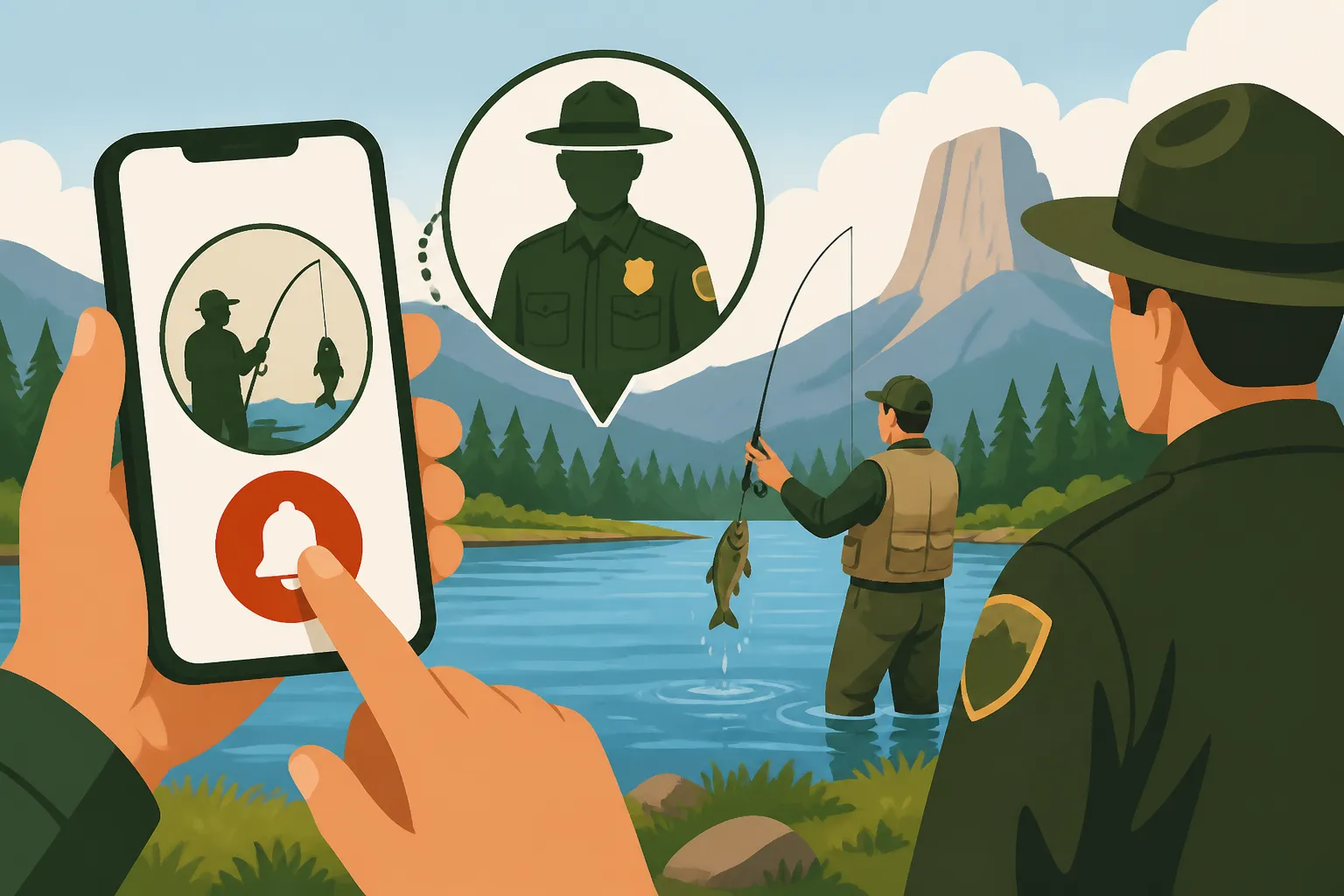
If you can discreetly take photos or videos from a safe distance, do so. Pictures of license plates, the individuals (without putting yourself at risk), the illegal activity itself (like someone using prohibited gear or actively keeping over the limit), or the fish being illegally handled can be very valuable. For instance, a clear shot of a stringer with too many fish, or someone actively casting with bait in a fly-fishing-only area. Many anglers now carry portable power banks, like those you can find on Amazon, to ensure their phones stay charged for emergencies, which includes reporting violations.
It's also a good idea to bring a small notebook and pen on your trips. While your phone is great for photos, quickly jotting down details like a license plate number, a time stamp, or a physical description can be faster and less conspicuous than typing on a phone. Just remember, your role is to observe and report, not to intervene or investigate beyond what you can see and record safely.
The Importance of Accurate Observation
When you report a violation, you become a witness, and the credibility of your report hinges on accurate observation. Avoid making assumptions or exaggerating details. Stick to the facts of what you saw, heard, or smelled. For example, instead of saying, "They were clearly poaching a huge amount of fish," say, "I observed them place six trout into their cooler within an hour, and the daily limit for this water is two."
If you saw something suspicious but couldn't confirm a definite violation, that’s okay too. It's still worth reporting. For example, you might see someone casting with bait in a fly-fishing-only section, but you didn't see them actually catch anything. Report that observation, and let the game warden investigate. They have the authority and expertise to determine if a rule was broken. Having a good pair of binoculars, easily found on Amazon, can also help you make accurate observations from a safe distance without drawing attention to yourself. Remember, your objective account is what truly aids the WGFD in protecting Wyoming's fishing resources.
The Reporting Process Step-by-Step
You've witnessed a violation, gathered your details, and now you're ready to make the report. Don't worry, it's not as complicated as it might seem. Knowing what to expect can help ease any apprehension you might feel.
Initiating Your Report (Phone Call or Online)
The moment you decide to report, whether it's through a direct call to the WGFD or the Stop Poaching Hotline, or even through an online form, is the first step. If you're choosing to call, have your notes handy. When the operator or game warden answers, clearly state that you wish to report a suspected fishing violation. They will then guide you through a series of questions to gather the necessary information. Be calm, concise, and provide the facts as you observed them. Don't feel pressured to have all the answers; simply share what you know. If you are reporting via the Stop Poaching hotline and wish to remain anonymous, make that clear upfront.
Some regional WGFD offices might also offer an online reporting form on their website. This can be a good option for less urgent violations, or if you prefer to type out all the details. However, for anything time-sensitive or involving significant resource damage, a phone call is usually quicker. No matter the method, the goal is to get the information into the hands of the WGFD so they can initiate an investigation.
What Happens After You File a Report
Once you've made your report, the ball is in the WGFD's court. While you might not receive a direct update on the outcome (especially if you report anonymously), rest assured that your report is taken seriously. Here's a general idea of what typically happens:
- Assessment: The WGFD immediately assesses the urgency and severity of the report. If it's an active violation that could still be in progress, they might dispatch a game warden to the location right away.
- Investigation: A game warden will review the details you provided. This could involve visiting the site, attempting to locate the described individuals or vehicle, or checking databases if a license plate was provided. They have the tools and authority to investigate thoroughly.
- Enforcement: If sufficient evidence is found, the game warden will take appropriate enforcement action. This could range from a warning to a citation, significant fines, or even the seizure of illegally obtained fish or gear. Penalties can be quite steep for serious violations, as outlined in guides like Fines and Penalties for Common Fishing Violations.
- Confidentiality: If you provided your contact information, the WGFD will typically keep your identity confidential unless absolutely necessary for legal proceedings (which is rare for a simple witness report). If you chose to be anonymous, your identity will remain unknown.
It's important to understand that law enforcement investigations take time, and they prioritize based on severity and available resources. Don't get discouraged if you don't see immediate action or get a personal follow-up. Your report still contributed to the overall effort of upholding Wyoming's fishing laws.
The Role of Witnesses and Follow-Up
In some cases, especially if you've provided your contact information, a game warden might reach out to you for further clarification. This doesn't mean you did anything wrong; it just means they need a bit more detail to strengthen their case. They might ask for more precise descriptions, specific times, or if you recall any other relevant observations. Your cooperation at this stage can be very helpful.
Remember, as a witness, your job is simply to provide accurate information based on your observations. You are not expected to act as an investigator or confront anyone. The WGFD has highly trained professionals, like those featured in our article on How Wyoming Game and Fish Announces Emergency Closures, who are equipped to handle these situations. By making a clear, detailed report, you've done your part to protect Wyoming's incredible fishing heritage. Every report, no matter how small it may seem, helps the WGFD maintain healthy fish populations and ensure fair sport for all responsible anglers.
Debunking Common Misconceptions About Reporting
There are a few lingering ideas out there that sometimes stop people from reporting violations. Let's tackle these head-on, because understanding the truth can empower you to act when it matters most.
Anonymity and Fear of Retaliation
One of the biggest concerns people have when considering reporting a fishing violation is the fear of retaliation. "What if they find out it was me?" or "I don't want to cause trouble." These are very real and understandable worries. However, it's crucial to remember that the Wyoming Game and Fish Department (WGFD), and especially the Stop Poaching Hotline, prioritizes informant confidentiality.
When you call the Stop Poaching Hotline (1-877-WGFD-TIP), you have the explicit option to remain completely anonymous. You don't have to give your name, phone number, or any identifying information. The WGFD is interested in the facts of the violation, not in who reported it. Even if you choose to provide your contact details for potential follow-up, your identity will be protected and not disclosed to the suspect. Game wardens are highly skilled at gathering additional evidence and building cases without revealing their source. Your safety and privacy are paramount, and the system is designed to protect those who bravely step forward to report.
The Idea That "It's Not Worth Reporting"
Another common misconception is thinking that a particular violation isn't "big enough" to report, or that the WGFD is too busy to care about what seems like a minor infraction. This couldn't be further from the truth. Every single report, regardless of how small it seems to you, is valuable.
Here's why:
- Cumulative Impact: Many "small" violations, like someone keeping one fish over the limit, can have a significant cumulative impact if they go unchecked. Over time, these actions can deplete local fish populations and undermine conservation efforts.
- Pattern Recognition: Your report might be one piece of a larger puzzle. The individual you saw might be a repeat offender. Your report helps the WGFD identify patterns of illegal activity and focus their enforcement efforts on chronic problems or specific areas. For instance, if multiple people report someone fishing without a valid license in a particular area, it alerts wardens to patrol that spot more frequently, helping to ensure compliance with rules like Wyoming Resident vs Nonresident License Rules.
- Resource Allocation: Reports also help the WGFD understand where violations are occurring most frequently. This data helps them allocate resources more effectively, ensuring game wardens are patrolling the areas that need the most attention.
- Deterrence: Even if a direct apprehension isn't made from your specific report, the constant presence and activity of game wardens, spurred by public reporting, acts as a deterrent to others who might consider breaking the law.
Ultimately, by reporting, you're not just reporting a single incident; you're contributing to the overall health and protection of Wyoming's fisheries for everyone, including those who follow rules like How Old You Have to Be to Fish Without a License in Wyoming. Don't ever assume your observation isn't important enough.
Here's a quick summary of the key reporting options and what you'll need:
| Reporting Method | Best For | Anonymity Option? | Key Information to Provide |
|---|---|---|---|
| Stop Poaching Hotline | Serious violations, active poaching, urgent matters | Yes, completely | Location (specific!), date/time, suspect description, vehicle info (LP#), specific violation. |
| WGFD Regional Office (Phone) | Most fishing violations, questions about rules | Yes, can request | Same as above. |
| WGFD Online Form | Non-urgent violations, detailed written reports | Yes, can request | Same as above. |
| Local Law Enforcement (911) | Public safety threat, criminal activity involved | Varies | Details of immediate danger, criminal act, location. |
Remember, your observations are crucial to protecting our waters and the fish that call them home. Whether it's concerns about Are Barbless Hooks Required on the North Platte River? or someone exceeding limits, speaking up makes a difference.
Disclaimer
The information provided in this guide is for general informational purposes only and is not intended as legal advice. Fishing regulations and reporting procedures can change. Always consult the official Wyoming Game and Fish Department regulations booklet or their website for the most current and accurate information. When in doubt, contact the WGFD directly for clarification. Your safety is always the top priority when observing or reporting a violation.