Possession Limits vs Daily Limits in Wyoming
It's incredibly frustrating, isn't it? You head out to one of Wyoming's pristine rivers or stunning reservoirs, you're having a fantastic day, and then the little voice in your head pipes up: "Wait, how many fish am I actually allowed to keep today? And what about the ones I caught yesterday?" The distinction between daily limits and possession limits trips up even seasoned anglers, leading to genuine confusion and, sometimes, accidental violations. This guide is here to untangle that knot, making sure you can focus on the joy of fishing without the nagging worry of whether your cooler is within the law.
Understanding Daily Limits in Wyoming
Let's start with the most common term you'll hear: the daily limit. Simply put, a daily limit is the maximum number of fish of a particular species, or combination of species, that you can legally take from a body of water within a single calendar day. It's about what you harvest from the moment you start fishing until midnight on that same day.
Think of it like this: If the daily limit for trout is four, that means from 12:01 AM until 11:59 PM on Tuesday, you can only keep four trout. Once you've kept those four, for all intents and purposes, your trout-keeping for that specific calendar day is done. You can continue fishing for fun, practicing catch-and-release, but any additional trout you land must be immediately released back into the water unharmed. It's a fundamental conservation tool designed to prevent overharvesting on a day-to-day basis.
What Constitutes a Fishing "Day"
In Wyoming, a "day" for fishing regulations typically refers to a calendar day, running from midnight to midnight. This is important to remember because it's not a rolling 24-hour period from when you started fishing. So, if you hit the water at sunrise, your daily limit resets at midnight, regardless of when you began your angling adventure.
This calendar day definition makes planning multi-day trips a little clearer, at least for the daily take. Each new day gives you a fresh opportunity to keep fish up to the specified limit. However, as we'll soon discover, this doesn't mean you can just stack daily limits indefinitely if you're staying out for a week. That's where the possession limit comes into play. It's about balancing recreational opportunity with sustainable fish populations, ensuring that healthy numbers of fish remain in our waters for everyone to enjoy for years to come.
Species-Specific Daily Limits
Wyoming has a rich diversity of fish species, and their daily limits vary significantly depending on the species and often, the specific water you're fishing. For instance, the general statewide daily limit for trout (which often includes rainbow, brown, brook, and cutthroat) is typically six fish. However, this isn't a hard and fast rule everywhere. Some waters, especially those managed for trophy fish or recovering populations, might have much stricter limits, or even require catch-and-release only.
Walleye and sauger, popular in reservoirs like Boysen Reservoir or Glendo Reservoir, often have different daily limits, sometimes tied to specific size restrictions to protect spawning stock. Kokanee salmon, prized for their delicious meat and hard fighting, also have their own set of daily limits, particularly during their fall spawning runs when they're more vulnerable. Always check the current regulations for the specific species you're targeting and the exact location. A good place to start getting familiar with these specifics is by looking at Understanding Wyoming's Daily Bag Limits by Species in the official Game and Fish Department materials, which you can usually pick up at a local sporting goods store or download from their website. It's your fishing bible, really!
Unpacking Possession Limits in Wyoming
Now, let's talk about the possession limit – this is often where the real confusion and potential for accidental rule-breaking lies, especially for those on extended fishing trips or heading home with a cooler full of fillets. A possession limit is the maximum number of fish of a specific species, or combination of species, that any one person can have in their actual possession at any given time. This includes fish on your person, in your cooler, in your vehicle, at your campsite, in your hotel room, or even in your freezer at home.
The key difference from a daily limit is that the possession limit is cumulative. It's not just what you caught today, but what you have total from all your fishing outings until those fish are consumed or processed in a way that makes them no longer count towards a limit (like gifted to another person, within legal limits). The intent here is clear: prevent anglers from stockpiling large quantities of fish over multiple days, which could bypass the conservation goals of daily limits. Imagine if you could just catch your daily limit every day for a week and then have 42 trout in your freezer – that's not what the regulations are designed for.
Understanding the "Any Time" Rule
The phrase "at any given time" is paramount when it comes to possession limits. It means literally any time a game warden might check your creel, cooler, vehicle, or even your freezer back home, the total number of fish (or their edible parts) cannot exceed your possession limit for each species. This applies even if you caught them legally over several days.
For example, if the daily limit for trout is six, but the possession limit is 12, and you've been fishing for two days:
- Day 1: You catch and keep six trout. Your daily limit is met. Your possession is six.
- Day 2: You go fishing again. You catch and keep another six trout. Your daily limit for Day 2 is met. Your total possession is now 12 trout.
- Day 3: You go fishing again. You cannot keep any more trout if you still have 12 from previous days, because you have reached your possession limit. To keep more fish on Day 3, you would first need to consume or legally gift some of the fish you already possess, bringing your total possession below the limit.
This might sound like a hassle, but it's crucial for the long-term health of our fisheries. It ensures that anglers aren't taking out excessive numbers of fish, especially during peak seasons or from popular waters.
Wyoming's Combined Possession Limit
Adding another layer to the possession limit rule is the concept of a "combined possession limit." While not all states or even all species in Wyoming have this, it's particularly relevant for trout species. Often, the statewide possession limit for trout will be a combined total for all species of trout (e.g., rainbow, brown, brook, cutthroat). This means if the combined possession limit for trout is 12, you can have a mix of these species, but the total number cannot exceed 12.
For instance, you might have four rainbow trout, four brown trout, and four cutthroat trout from different days, totaling 12 fish. That would be legal under a 12-fish combined possession limit. However, if you had six rainbow trout and seven brown trout, your combined total of 13 would exceed the 12-fish limit, even if you hadn't hit the daily limit for each species on the day you caught them.
This detail is incredibly important for anglers exploring different waters or targeting various trout species. It means you can't simply max out on one species and then move on to another for an entirely separate limit; it's a grand total. You can dive deeper into these specifics by checking out Wyoming's Combined Possession Limit Explained. When you're packing up your cooler after a fantastic trip, especially if you've been hitting different streams or lakes, this is the rule you absolutely need to keep in mind to avoid any unpleasant surprises on the drive home.
The Crucial Differences and Why They Cause Confusion
The overlap and distinctions between daily and possession limits are definitely a head-scratcher for many anglers. It’s like trying to understand the difference between how many cookies you can eat in one sitting (daily limit) versus how many cookies you’re allowed to have in your pantry at any time (possession limit). The two concepts, while distinct, are designed to work together to manage fish populations effectively and sustainably.
The reason for the confusion usually stems from the assumption that if you're legally allowed to catch six fish today, you can just keep adding that amount to your freezer every single day you fish. But Wyoming's regulations are more nuanced than that. They account for the reality of multi-day trips and storage, preventing the excessive accumulation of fish over time.
Avoiding "Double Dipping" on Your Catch
The possession limit's primary role is to prevent what anglers sometimes call "double-dipping" or "stockpiling." Without a possession limit, an angler could, in theory, fish a popular trout stream for a week straight, catching and keeping their daily limit of six fish each day. By the end of the week, they'd have 42 trout stored, all legally caught on their respective days, but representing a far greater impact on the fish population than the regulations intend for a single individual.
The possession limit acts as a ceiling. It ensures that even if you're fishing for an extended period, the total number of fish you can hold at any given moment remains within a predefined, sustainable range. This prevents individuals from harvesting an inordinate amount of fish over a short period, which could put undue pressure on localized fish populations. It's a key component of How Bag and Possession Limits Work in Wyoming to balance angler opportunity with conservation needs.
Conservation Goals of Both Limits
Both daily and possession limits are fundamental tools for the Wyoming Game and Fish Department (WGFD) in their efforts to manage and conserve fish populations. They're not just arbitrary numbers; they are carefully determined based on scientific data, population assessments, spawning success rates, and angling pressure.
- Daily Limits primarily regulate the immediate harvest pressure. They ensure that on any single day, the removal of fish from a specific water body doesn't exceed what the population can sustain in the short term. This helps maintain a healthy balance in the ecosystem, allowing fish to grow and reproduce.
- Possession Limits extend that conservation effort over a longer period. They prevent the cumulative impact of multiple days of fishing from becoming unsustainable. By setting a cap on the total amount of fish an individual can hold, WGFD can better control the overall annual harvest and protect against localized depletion.
These limits, especially when combined with water-specific regulations like slot limits (where only fish within a certain size range can be kept) or catch-and-release rules, form a comprehensive strategy for keeping Wyoming's fisheries healthy and vibrant for future generations. It’s a testament to the state’s commitment to responsible angling, ensuring that we all have incredible fishing experiences for years to come.
Real-World Scenarios and Avoiding Costly Mistakes
Understanding the definitions of daily and possession limits is one thing, but applying them in real-world fishing scenarios can still feel tricky. Many anglers find themselves inadvertently in violation not because of malicious intent, but simply due to misinterpretation, especially on multi-day trips or when fishing in a group. Let's walk through some common situations to clarify how these rules actually work on the water and back at camp.
The biggest mistake often comes from people thinking the possession limit is simply a daily limit multiplied by the number of days they're fishing. That's a huge misconception and a quick way to find yourself explaining things to a game warden.
Multi-Day Fishing Trips
This is perhaps the most common scenario for confusion. Let's say you're planning a three-day fishing trip to Flaming Gorge Reservoir, known for its trophy lake trout. The statewide daily limit for lake trout might be, say, 4 fish, and the possession limit is 8 fish.
- Day 1: You head out, have a great day, and keep 4 lake trout. You've hit your daily limit. Your possession count is now 4.
- Day 2: You go back out. You catch and keep another 4 lake trout. You've hit your daily limit for Day 2. Your possession count is now 8 (4 from Day 1 + 4 from Day 2).
- Day 3: You wake up, excited for one last day of fishing. However, you still have 8 lake trout in your cooler or at your campsite. Since the possession limit is 8, you cannot legally keep any more lake trout today. If you want to keep more, you must first reduce your possession below the limit by consuming some fish or legally gifting them. If you do catch fish on Day 3, they must be immediately released.
This example clearly illustrates that the possession limit is a cap on what you can have, regardless of when it was caught. It's not a per-day allowance that stacks up. This is a critical point that many visitors to Wyoming's waters, especially nonresidents, often overlook.
Fishing with Family or Friends
When you're fishing with a group, the rules apply to each individual licensed angler. It's not a "boat limit" or a "group limit" unless specifically stated as such in special regulations. This means each person with a valid fishing license can harvest their own daily and possession limits.
Consider a family of four: two adults with licenses, and two children under 14 who don't require a license (though you should always check Do Kids Need a Fishing License in Wyoming? for current rules). If the daily trout limit is 6 and the possession limit is 12:
- Adult 1: Can keep 6 trout on Day 1, and potentially 6 more on Day 2 if their possession limit allows.
- Adult 2: Same as Adult 1.
- Children: In Wyoming, generally, anglers under 14 years of age do not need a license and are entitled to the same daily bag and possession limits as licensed anglers. So, each child could also possess their own limit.
The crucial part here is that each person must be actively fishing for their own fish. You can't have one person with a license claim all the fish caught by everyone else to fill their limit. And when it comes to possession, each individual is responsible for their own limit. If your group collectively has 30 trout, but only two licensed adults are present, and the possession limit is 12 per person, you could be in violation. Make sure the fish are clearly identified as belonging to the person who caught them, especially when filleted. Many anglers will label their bags of fillets with their name and the date caught.
Transporting Your Catch Legally
Once you've finished fishing and are ready to head home, your possession limit is still in effect. This applies whether you're driving across the state or even across state lines. Game wardens can and do stop vehicles to check for compliance, particularly in areas known for popular fisheries.
When transporting fish, especially if they are filleted, it's essential that:
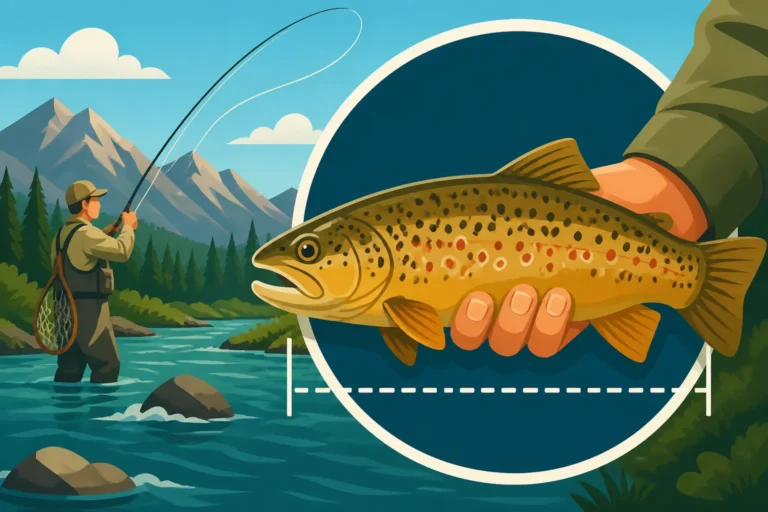
- They are measurable: The regulations often require that "fish with a size limit must remain intact until arrival at final destination or until processed for immediate consumption." This means you can't just fillet everything if there's a length limit, as the warden needs to be able to verify the fish's legal size. Check the regulations for exact requirements.
- They are identifiable: If you've got a mix of species, ensure that each fish or fillet can be readily identified as to species. Sometimes, this means leaving a patch of skin on fillets or keeping whole fish until you're truly at your final destination (home).
- Your total catch doesn't exceed your possession limit: This is where Transporting Your Catch Across State Lines Legally gets complicated. If you're going to another state, you must also be aware of their possession limits and transport rules. It’s always best to be conservative.
Investing in a good cooler, perhaps one you found on Amazon, that can keep your catch fresh for the journey is a smart move. But more importantly, staying educated on the specifics of the regulations is your best defense against potential issues.
Special Regulations and Water-Specific Rules
While Wyoming has statewide daily and possession limits, it's absolutely crucial to understand that these are just the baseline. Many, many waters across the state have their own special regulations that supersede the general rules. This is where things can get incredibly detailed and where relying solely on the general statewide limits will get you into trouble.
These special regulations are put in place for specific conservation goals – protecting native trout species, managing trophy fisheries, or dealing with unique ecological challenges. Ignoring them is not just a risk to your wallet, but a disservice to the resource that makes Wyoming fishing so incredible.
Exceptions and Specific Water Regulations
Wyoming is famous for its diverse fisheries, from high-alpine lakes to world-class rivers. Because of this, the WGFD implements specific rules for individual rivers, lakes, and even sections of rivers. These can include:
- Different Bag & Possession Limits: A stream known for its large brown trout might have a daily limit of 1 fish, over 20 inches, while a nearby lake stocked heavily with rainbow trout might have a 6-fish daily limit. The New Snake River Trout Limits Near Jackson Lake Dam are a perfect example of how specific and localized these changes can be.
- Slot Limits: Instead of a simple "X number of fish" rule, slot limits specify a size range. For example, you might be allowed to keep fish under 12 inches or over 18 inches, but all fish within the 12-18 inch "slot" must be released. This protects prime breeding-size fish. You might encounter The One-Over-16-Inch Rule on Wyoming Trout Streams which permits you to keep one trout over 16 inches as part of your overall limit.
- Tackle Restrictions: Some waters are fly-fishing-only, artificial-lure-only, or require the use of barbless hooks. The North Platte River, for instance, has specific stretches where Are Barbless Hooks Required on the North Platte River? is a definite "yes."
- Seasonal Closures: Certain waters might be closed to fishing entirely during spawning seasons or to protect wintering fish.
- Catch-and-Release Only: Many popular trophy sections of rivers are managed strictly for catch-and-release to foster robust populations of large fish.
The point is, you absolutely cannot assume that what applies on one river applies on the next. Each body of water is managed individually based on its unique ecosystem and fishing pressure.
Reading the Regulations Booklet (Your Best Friend)
Your single most important resource for avoiding violations and understanding Wyoming's fishing rules is the official Wyoming Game and Fish Department (WGFD) Fishing Regulations booklet. This isn't just a suggestion; it's practically a requirement for anyone serious about fishing in the state.
Here’s why it’s your best friend:
- Comprehensive: It contains all the general statewide rules, but more importantly, it has detailed, water-specific regulations organized by drainage and location.
- Up-to-Date: Regulations can change annually, and sometimes even in-season via emergency closures. The current booklet is always the most accurate source.
- Easy to Access: You can pick up a physical copy for free at most sporting goods stores, WGFD offices, or even some local gas stations and convenience stores throughout Wyoming. It's also readily available for download as a PDF from the WGFD website. I keep a digital copy on my phone, usually downloaded and saved so I don't need cell service, which is a lifesaver in some of Wyoming's more remote areas. It's a bit like having a reference book you can always consult, which is much better than trying to remember every single detail.
Before you even tie on your first fly or cast your first lure, take the time to read the specific section for the water you plan to fish. It's not the most thrilling read, perhaps, but it's essential. This proactive step is key to navigating the complexities of Wyoming Fishing Regulations Every Angler Should Know and ensuring your trip is memorable for all the right reasons.
Compliance and Enforcement
Falling afoul of Wyoming's fishing regulations can quickly turn an otherwise fantastic fishing trip into a stressful, expensive ordeal. The Wyoming Game and Fish Department is dedicated to protecting the state's natural resources, and their game wardens are highly trained and committed to enforcing these rules. They're not just there to write tickets; they're there to educate, yes, but also to ensure compliance for the long-term health of our fisheries.
It's easy to think that you're in a remote area and no one will ever check your cooler, but that's a gamble that almost never pays off. Wardens patrol popular fishing spots, boat ramps, and even roads leading out of well-known fishing areas. Their job is to ensure that everyone is playing by the rules, safeguarding the resource for all.
WGFD Enforcement and Inspections
Wyoming Game and Fish Department game wardens have the authority to check your fishing license, inspect your tackle, and examine your creel (cooler, stringer, livewell, etc.) at any time while you are engaged in fishing activities, or in possession of fish. This isn't an invasion of privacy; it's a necessary part of resource management and law enforcement.
When a warden approaches, be courteous and cooperative. Have your license readily accessible, whether it's a physical copy or a digital version on your phone (which, by the way, is legally accepted, but make sure your screen is clear and readable!). If asked to show your catch, do so without hesitation. Trying to hide fish or being evasive will only lead to further scrutiny and potential trouble. Remember, they are often out there to help educate anglers and prevent accidental violations, but they will not hesitate to enforce the law when necessary. They take their role seriously, and so should you.
Fines and Penalties for Violations
Fishing without a license, exceeding daily or possession limits, or violating special regulations can result in significant consequences. The penalties vary depending on the severity of the offense, the number of fish involved, and whether it's a first-time or repeat offense.
Generally, you can expect:
- Fines: These can range from a couple of hundred dollars to well over a thousand, plus court costs and administrative fees. For serious violations or multiple offenses, the fines can be even higher.
- Restitution: In addition to fines, you might be required to pay restitution for the value of the fish illegally taken. This is a separate penalty designed to compensate the state for the loss of wildlife.
- Loss of Privileges: One of the most impactful penalties for avid anglers is the potential loss of fishing privileges. This could mean a suspension of your Wyoming fishing license for a period, or even a ban from fishing in Wyoming for several years. Depending on the violation, this suspension could also be recognized by other states through interstate wildlife compacts, meaning you might lose your fishing privileges across multiple states.
It's just not worth the risk. A quick check of Fines and Penalties for Common Fishing Violations will show you just how costly these mistakes can be. The monetary cost is one thing, but the potential loss of your ability to enjoy Wyoming's amazing fisheries can be truly heartbreaking. Always err on the side of caution, double-check your limits, and if in doubt, release the fish. It's better to go home with fewer fish than to face a game warden with too many.
Disclaimer
The information provided in this guide is for general informational purposes only and is not a substitute for the official Wyoming Game and Fish Department (WGFD) fishing regulations. Regulations can change, and it is every angler's responsibility to consult the most current official WGFD regulations booklet before fishing. Always verify specific rules for the waters you intend to fish.