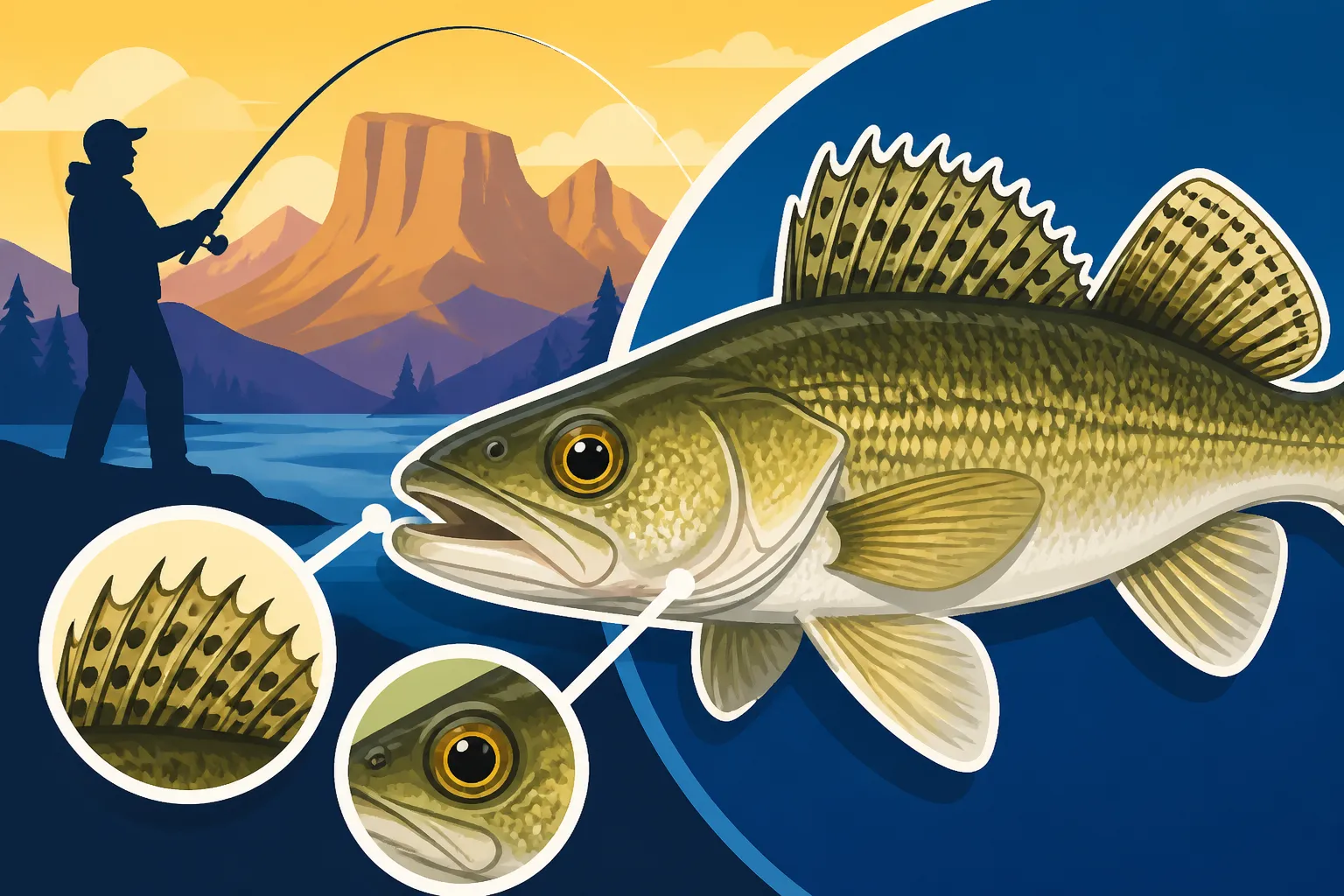
How to Identify a Saugeye
Many anglers in Wyoming have experienced that moment of confusion: you pull in a fish that looks an awful lot like a walleye, but something just seems a little off. You might wonder if it's a juvenile, or perhaps a different species entirely. This guide is here to unravel that mystery and help you confidently identify the elusive saugeye, a fascinating hybrid that calls some of Wyoming's waters home, ensuring you stay within regulations and appreciate your catch for what it truly is.
What Exactly Is a Saugeye? The Hybrid Story
Imagine the best qualities of two popular game fish combined into one hardy, fast-growing package. That's essentially what a saugeye is, and it's why they've gained a loyal following among anglers in states where they're stocked. But to truly understand them, we need to look at their parentage and why this unique hybrid even exists in the first place.
The Hybrid Conundrum: Walleye Meets Sauger
A saugeye isn't some new, naturally evolved species. Instead, it's a hybrid fish, created by crossing a female walleye with a male sauger. This specific cross-breeding is intentional, often done in fish hatcheries, because the resulting saugeye inherits desirable traits from both parents. From the walleye, it gets the potential for larger size and a strong fighting spirit. From the sauger, it gains a hardiness and a tendency to tolerate murkier, warmer water conditions better than a pure walleye might.
Think of it like this: walleye often prefer clear, cooler waters and grow to impressive sizes, making them prized catches. Sauger, on the other hand, are typically smaller but are incredibly tough, thriving in environments that might stress a walleye, particularly in rivers with more current and turbidity. By combining these two, fisheries managers get a fish that grows well, fights hard, and can adapt to a wider range of aquatic habitats, offering excellent fishing opportunities in places where pure walleye or sauger might struggle to thrive. These hatchery-produced fish are then stocked into various reservoirs and rivers, sometimes complementing existing populations of their parent species, and other times introducing a new angling opportunity.
The reason for stocking these hybrids often comes down to improving angler success and diversifying fisheries. A saugeye can sometimes grow faster than a sauger, yet it's often more accessible to catch than a walleye, especially in certain conditions. This makes them an exciting target for many anglers, adding another layer of challenge and reward to a day on the water. However, because they share so many characteristics with their parent species, correctly identifying a saugeye can be a real head-scratcher, which is why paying close attention to specific features is absolutely crucial.
Why Spotting Them Matters in Wyoming
Correctly identifying your catch isn't just about satisfying your curiosity; it's a critical part of being a responsible and legal angler in Wyoming. The Wyoming Game and Fish Department has specific regulations for different fish species, and sometimes these regulations can vary significantly between a walleye, a sauger, and their hybrid offspring, the saugeye. These differences might pertain to bag limits, possession limits, minimum or maximum length restrictions, or even specific seasons.
Imagine you're out on Pathfinder Reservoir, renowned for its walleye, and you've had a fantastic day, keeping a few fish within the walleye limits. But what if one of those fish was actually a saugeye, and the saugeye limit was different? Without proper identification, you could inadvertently be in violation of the regulations, leading to fines or other penalties. This isn't just a hypothetical scenario; it happens to well-meaning anglers every year. Knowing how to tell the difference is your first line of defense against accidental infractions and ensures you're contributing to the sustainable management of Wyoming's precious fish populations.
Beyond the legal aspect, accurate identification plays a role in conservation efforts. Fisheries biologists closely monitor fish populations, and knowing what species anglers are catching helps them make informed decisions about stocking programs, habitat protection, and regulation adjustments. By correctly identifying and reporting your catches, you become an active participant in maintaining healthy and thriving fisheries for future generations. It’s also just plain satisfying to know exactly what you’ve landed, especially if it’s a less common hybrid like the saugeye. If you're ever unsure about the rules for a particular body of water, always consult the current Wyoming Fishing Regulations Every Angler Should Know or the specific section for Reading the Wyoming Fishing Regulations Booklet.
Key Physical Features: The Definitive ID Guide
When you're trying to identify a saugeye, you can't just glance and guess. These fish are masters of disguise, borrowing traits from both walleye and sauger. The trick is to know exactly what to look for, and where. It’s all about the details, especially on certain fins and body markings.
Dorsal Fin Markers: The Most Reliable Clue
If you're going to remember one thing about identifying a saugeye, make it the dorsal fin. This is by far the most reliable indicator and can often help you make a positive ID without having to inspect every other characteristic. You need to look at the first, spiny dorsal fin, which is the one closer to the head.
- Walleye: A pure walleye will have a distinct, solid black spot on the bottom rear (posterior) edge of its spiny dorsal fin. This spot is almost always present and is a hallmark of the species. Aside from this spot, the fin itself is usually quite clear or slightly mottled, but without any prominent bars or rows of spots.
- Sauger: A sauger, in contrast, will not have that distinct black spot. Instead, its spiny dorsal fin will be covered in several rows of small, dark spots, giving it a barred or speckled appearance. Think of it like a leopard print on the fin. There won't be a single, large, prominent black spot; rather, many smaller, more spread-out spots creating a pattern.
- Saugeye: Here’s where the hybrid comes in: a saugeye will display a combination of these features. It will not have the distinct, solid black spot on the dorsal fin like a walleye. However, it will show some spotting or barring, similar to a sauger, but usually less pronounced and sometimes more irregularly distributed than a pure sauger. It's often described as a "diffused" or "blotchy" pattern, a faded version of the sauger's barring, but crucially, without the crisp, singular walleye spot. This absence of the walleye's distinct spot, combined with some degree of mottling or spotting, is your biggest clue.
When you're out on the water, having a clear picture in your mind, or even a waterproof laminated guide (you can find these on Amazon, for example), showing these fin patterns can be incredibly helpful. Hold the fish gently, spread the dorsal fin, and examine it closely under good light. This single feature often provides the quickest and most accurate identification.
Body Shape and Coloration: More Subtle Cues
While the dorsal fin is king for identification, the overall body shape and coloration can offer supporting evidence, though they are often more variable and less definitive. Saugeye tend to blend the body characteristics of their parents, making them somewhat intermediate.
- Walleye: Generally, walleye have a sleeker, more torpedo-shaped body. Their coloration typically ranges from olive green to golden brown on the back, fading to white or cream on the belly. They often have subtle, darker vertical bars or blotches on their sides, but these are often not highly distinct. Their eyes are famously "walleyed"—large and opaque, designed for low-light vision.
- Sauger: Sauger usually have a slightly more slender or elongated body than walleye, and often appear a bit "chunkier" or "blockier" in profile, particularly in larger specimens. Their coloration is often a brassy yellow-brown or gray, with more distinct and irregular dark blotches or saddle patterns across their back and sides. These markings are typically more pronounced than those on a walleye, giving them a more camouflaged appearance.
- Saugeye: Saugeye typically fall somewhere in between. They might be a bit more robust than a sauger but not as sleek as a walleye. Their coloration often reflects this blend, too. You'll likely see the irregular, blotchy patterns of a sauger, but perhaps a bit lighter or less defined, similar to what you'd expect from a walleye. The overall body color might lean more towards the walleye's olive-golden hue, but with the distinct mottling of a sauger. The key is that they often appear as a mix: not quite as distinctly blotchy as a sauger, but definitely more patterned than a walleye. Again, these are more subtle differences, and can vary greatly depending on the specific water body, diet, and individual fish.
Lower Lobe of Caudal Fin and Pyloric Caeca: Expert Level Details
For the truly dedicated angler, or perhaps a fisheries biologist, there are a couple of even finer points of identification that can provide absolute certainty, though they require a bit more invasive inspection.
The lower lobe of the caudal (tail) fin is another good, though slightly less obvious, external indicator.
- Walleye: Pure walleye almost always have a distinct white tip on the lower lobe of their caudal fin. This bright white splash is quite noticeable and contrasts sharply with the darker fin.
- Sauger: Sauger typically lack this white tip entirely. Their tail fin is usually a uniform dark or mottled color, without any prominent white marking.
- Saugeye: The saugeye is, once again, a blend. They will not have the distinct white tip that a walleye does. However, they might have a very faint, cloudy, or somewhat indistinct light area on the lower caudal fin, but it will never be the bright, crisp white seen on a pure walleye. It's a subtle absence rather than a distinct presence.
Finally, for absolutely definitive identification, biologists often examine the pyloric caeca. These are finger-like projections found internally near the stomach, and their shape and number differ significantly between walleye and sauger.
- Walleye: Possess three long pyloric caeca, usually equal to or greater than 1/2 the length of the stomach.
- Sauger: Have 6-9 short pyloric caeca, typically less than 1/4 the length of the stomach.
- Saugeye: Being a hybrid, the saugeye will have an intermediate number and length of pyloric caeca, usually 3-5 that are intermediate in length.
Obviously, examining pyloric caeca isn't something the average angler does, as it requires dissecting the fish. But it's a testament to how complex identification can be and why fisheries professionals rely on such precise biological markers. For most of us, focusing on the dorsal fin and the tail fin's lower lobe, coupled with overall body characteristics, will be sufficient for field identification.
Where You Might Encounter a Saugeye in Wyoming
While saugeye aren't as widespread or native to Wyoming as some other trout species or walleye, they are certainly present in certain fisheries, primarily due to stocking programs. Knowing which waters they might inhabit can help you be prepared for identification challenges when you hook into something that feels and looks a little different.
Wyoming Waters Known for Saugeye
Saugeye are typically stocked in reservoirs and some river systems where the environmental conditions are suitable for their hybrid vigor, or where they can fill a niche not fully utilized by either walleye or sauger. Often, these are waters that might be a bit warmer or murkier than ideal for pure walleye, but still offer plenty of forage and space for growth. While specific stocking programs can change, certain reservoirs and river sections are more likely to have saugeye.
Historically, reservoirs like Keyhole Reservoir in northeastern Wyoming have been known to receive saugeye stockings. These waters can offer excellent conditions for the hybrid fish, providing ample prey species and habitat. Other larger reservoirs that support walleye populations might also be candidates for saugeye stocking, as they can enhance the fishery without directly competing with native species. It's always a good practice to check the specific regulations and stocking reports issued by the Wyoming Game and Fish Department for the particular body of water you plan to fish. Sometimes, these hybrids are introduced to increase the diversity of sport fishing opportunities and to offer anglers a unique challenge. You might find that Wyoming's Annual, Daily and Five-Day License Options have specific implications if you're targeting these unique species.
When you're fishing these waters, especially those with both walleye and sauger present, maintaining an awareness of the potential for saugeye is key. They might bite on similar baits and lures used for walleye or sauger, so don't be surprised if one shows up on your line when you're targeting their parent species. For example, if you're jigging for walleye at Keyhole, be ready to examine your catch closely! This preparedness is part of the fun and challenge of angling in Wyoming's diverse waters.
Fishing for Saugeye: Techniques and Gear Considerations
Since saugeye are a hybrid of walleye and sauger, their feeding habits and preferred habitats often mirror those of their parents. This means that if you're already successfully targeting walleye or sauger, you're likely employing techniques that will also appeal to saugeye. They're often found in similar structure – think rocky points, submerged humps, weed edges, and transition zones where different bottom types meet.
- Trolling: For open water in reservoirs, trolling with crankbaits or spinner rigs is highly effective. Saugeye, like walleye, can be spread out across vast areas, and trolling allows you to cover a lot of water to locate active fish. Depths will vary depending on water temperature, time of day, and forage location, so using a depth finder is invaluable. Many anglers swear by specific colors or wobble patterns in their crankbaits, and a quick search on Amazon for "walleye crankbaits" will show you the immense variety available.
- Jigging: Jigging is a classic and very productive method, especially when saugeye are concentrated in specific areas, such as drop-offs, current breaks, or around submerged timber. Vertical jigging with jigs tipped with live bait (minnows, worms) or soft plastics can entice strikes. A popular technique involves slowly lifting and dropping the jig, letting it flutter and settle near the bottom. This method works well from boats, kayaks, or even from the bank in certain spots.
- Casting: Shore anglers can also find success by casting crankbaits, swimbaits, or jigs from accessible points, particularly during low-light conditions or when fish move shallower to feed. Look for areas with structure or current.
- Live Bait: Live bait, particularly minnows, leeches, or nightcrawlers, can be deadly for saugeye. They often prefer a natural presentation, whether fished under a bobber, on a slip-sinker rig, or tipped onto a jig. Be sure to check Wyoming Fishing Regulations Every Angler Should Know about bait restrictions in specific waters, as not all areas allow live bait or certain types of bait fish.
As for gear, a medium-light to medium-action spinning rod paired with a sensitive reel spooled with 6-10 lb test monofilament or braided line is a versatile setup. Sensitivity is key to feeling those subtle saugeye bites. Remember, they can be finicky eaters, sometimes just "thumping" the bait rather than aggressively striking. Carrying a good pair of needle-nose pliers or a hook remover is always a good idea, especially with toothy species like saugeye, to ensure a safe and quick release if you're not planning to keep your catch.
Common Misidentifications and How to Avoid Them
The biggest challenge with saugeye isn't necessarily catching them, but correctly identifying them once they're on the line. Because they share so many characteristics with their parent species, misidentification is common. Let's break down the key differences again to help you avoid those common traps.
Distinguishing Saugeye from Walleye
This is perhaps the most frequent mistake. A saugeye can look remarkably like a walleye, especially to the untrained eye or in poor lighting. However, remember the golden rule:
- Walleye: Always look for that distinct, solid black spot on the bottom rear (posterior) of the spiny dorsal fin. It's usually very clear and stands out. They also typically have a prominent white tip on the lower lobe of their tail fin. Their bodies are generally sleeker with less pronounced, if any, dark blotches.
- Saugeye: The saugeye will not have that distinct black spot on the dorsal fin. Instead, it will have some degree of spotting or barring on the spiny dorsal, similar to a sauger, but often more mottled than clearly barred. Furthermore, a saugeye will lack the prominent white tip on the lower tail fin, though it might have a faint, cloudy lightness there. Their body often shows more distinct, irregular blotches than a walleye.
The lack of the walleye's iconic dorsal fin spot and white tail tip are the two absolute giveaways for a saugeye. If you see a fish that looks like a walleye but lacks these two features, you've likely caught a saugeye.
Distinguishing Saugeye from Sauger
While less common, some anglers might confuse a saugeye with a sauger, especially if the saugeye's sauger-like characteristics are very pronounced. Again, the fins are your best friends here.
- Sauger: A true sauger will have very distinct, several rows of small, dark spots or bars covering its entire spiny dorsal fin. These patterns are usually quite crisp and well-defined, resembling a true leopard print. They also lack a white tip on the lower tail fin, and their body blotches are usually very distinct and dark.
- Saugeye: A saugeye will also have some spotting or barring on its spiny dorsal fin, but it's typically less organized, more diffused, or "blotchy" compared to the crisp rows on a pure sauger. It won't have the distinct walleye spot, but the sauger's dorsal fin pattern will be much more pronounced and consistently barred. The saugeye's body blotches might be present but often appear less intense than on a sauger.
Think of it as the sauger having a "full pattern" on its dorsal fin, while the saugeye has a "partial or faded pattern." The absence of the walleye spot is key for both, but the intensity and clarity of the dorsal fin markings distinguish saugeye from sauger.
When in Doubt: What to Do
Even with all this knowledge, there might be times when you're still not 100% sure. Fish can vary, lighting can be tricky, and sometimes, a fish just doesn't read the rulebook! When in doubt, it's always best to err on the side of caution.
- Check the Regulations: Have the current Wyoming Fishing Regulations booklet (available from the Wyoming Game and Fish Department, or download the app) handy. Some regulations might explicitly mention saugeye, or specify how to handle fish that are difficult to identify. For example, if walleye have a higher bag limit, and you can't definitively rule out sauger or saugeye, it's safer to assume it's the more restrictive species. This is particularly important for How Bag and Possession Limits Work in Wyoming.
- Take a Photo: A clear photo of the fish, especially highlighting its dorsal fin and tail, can be invaluable. You can then consult with experienced anglers, a local tackle shop employee, or even the Wyoming Game and Fish Department directly. Many wardens are happy to help educate anglers on identification.
- Release the Fish: If you're truly uncertain and the regulations are complex, or if you're close to your limit for one of the species, the safest bet is often to practice catch and release. This ensures you avoid any potential legal issues and contributes to the health of the fishery. Always follow Catch-and-Release Rules on Wyoming Waters to maximize the fish's survival.
By following these guidelines, you'll not only become a more knowledgeable angler but also a more responsible steward of Wyoming's incredible fishing resources.
Here's a quick comparison table to help you in the field:
| Feature | Walleye | Sauger | Saugeye (Hybrid) |
|---|---|---|---|
| Spiny Dorsal Fin | Single, distinct black spot on lower rear | Rows of distinct, dark spots or bars (leopard-like) | No distinct black spot; diffused/blotchy spots or bars |
| Lower Caudal (Tail) Fin | Prominent white tip | No white tip | No prominent white tip; may have faint cloudy lightness |
| Body Markings | Subtle, faint bars/blotches; generally plain | Distinct, irregular dark blotches or saddles | More distinct irregular blotches than walleye, less defined than sauger |
| Overall Shape | Sleek, torpedo-shaped | More slender, often blockier in profile | Intermediate, a blend of both parent species |
| Pyloric Caeca (Internal) | 3 long, finger-like projections | 6-9 short, finger-like projections | 3-5 intermediate length projections |
Disclaimer
This article is for general informational purposes only and does not constitute professional advice. Laws, prices and regulations vary by location and change over time. Consult a qualified professional for guidance on your specific situation.