Cutthroat vs Rainbow Trout: Telling Them Apart
One of the most common head-scratchers for anglers hitting Wyoming's diverse waters is figuring out just what kind of trout they've landed. Is it a native Cutthroat, a vibrant Rainbow, or something in between? This confusion is totally understandable, especially with the way these species overlap in so many of our beautiful rivers and lakes. This guide will walk you through the distinct characteristics, subtle nuances, and even habitat clues to help you confidently identify whether you’re holding a Cutthroat or a Rainbow, and why it even matters.
The Elusive "Cutbow": Why It's So Confusing in Wyoming
Let's be real, sometimes you pull in a fish, and you swear it has a little bit of both. You're not imagining things. Wyoming's waters, while home to pristine native populations, also have a long history of stocking, which has led to some interesting developments in the trout world. The lines can get seriously blurred, making identification a real challenge for even seasoned anglers. This is where the term "cutbow" comes from – a hybrid that often carries characteristics of both its parents, making it a true puzzle in hand.
The Interbreeding Phenomenon
Many of Wyoming's rivers and lakes, particularly those in the western and central parts of the state, were historically home exclusively to various subspecies of Cutthroat trout. Think of the Snake River fine-spotted cutthroat or the Yellowstone cutthroat, beautiful fish that have adapted perfectly to their native environments. However, over the decades, Rainbow trout were introduced into many of these same waters, primarily for sport fishing and to bolster fish populations.
The problem, or perhaps the fascinating biological quirk, is that Rainbow trout and Cutthroat trout are genetically similar enough that they can, and often do, interbreed. When a Rainbow spawns with a Cutthroat, their offspring are these "cutbow" hybrids. These hybrids can exhibit a blend of features from both species, making them incredibly difficult to categorize definitively. You might see a faint cutthroat slash but with the spotting pattern of a rainbow, or a rainbow stripe that's just a bit too orange. It's like trying to tell if a kid inherited mom's eyes or dad's nose when they clearly got a mix of both!
For example, imagine you're fishing a popular stretch of river near Casper, perhaps on the North Platte below one of the reservoirs. This river system has been stocked with Rainbows for years, but also harbors native or introduced Cutthroat. You might catch a gorgeous trout that looks mostly like a Rainbow, but then you notice a tiny, faded orange streak under its jaw. Is it enough to call it a Cutthroat? Or just a Rainbow with some genetic memory? This is the daily reality for many anglers, and it truly highlights why precise identification can be such a frustration, even when you're trying your best.
Genetic Purity and Conservation Efforts
While "cutbows" are interesting from a biological standpoint, their existence poses a significant challenge for the conservation of native Cutthroat trout populations. The pure genetic strains of species like Wyoming's State Fish: The Yellowstone Cutthroat are incredibly important to maintain. These native fish are uniquely adapted to their specific ecosystems and play a crucial role in the biodiversity of Wyoming's waters. Interbreeding dilutes these genetic traits, potentially making native Cutthroat less resilient to environmental changes or diseases over time.
Because of this, Wyoming Game & Fish Department (WGFD) works tirelessly on conservation efforts. They have designated certain waters as "pure strain" Cutthroat fisheries, where the presence of Rainbows or hybrids is actively managed. In other areas, regulations might be designed to protect native Cutthroat, sometimes with different bag limits or rules for "unidentified trout." Understanding the difference between these species, or at least being able to recognize a potential hybrid, helps anglers align with these crucial conservation goals.
Think about fishing in a remote, high-alpine lake in the Wind River Range. You might expect to find pure Cutthroat, perhaps even golden trout. But if someone illegally stocked Rainbows decades ago, now those fish might be interbreeding, and the genetic integrity of that native population could be at risk. This is why knowing what to look for isn't just about satisfying your curiosity; it's about being a responsible steward of Wyoming's precious natural resources. It's a reminder that every fish we handle has a story, and sometimes, a genetic lineage that needs protection.
Key Visual Cues: The Classic Cutthroat Indicators
When you're trying to figure out if you've got a Cutthroat on your line, there are a few tell-tale signs that are usually pretty reliable. These visual cues are what most anglers, and certainly the folks at Wyoming Game & Fish, look for first. Remember, though, that fish coloration and spot patterns can vary slightly depending on the specific water, diet, and even the time of year, so it's always good to look for a combination of factors.
The Signature Red Slash
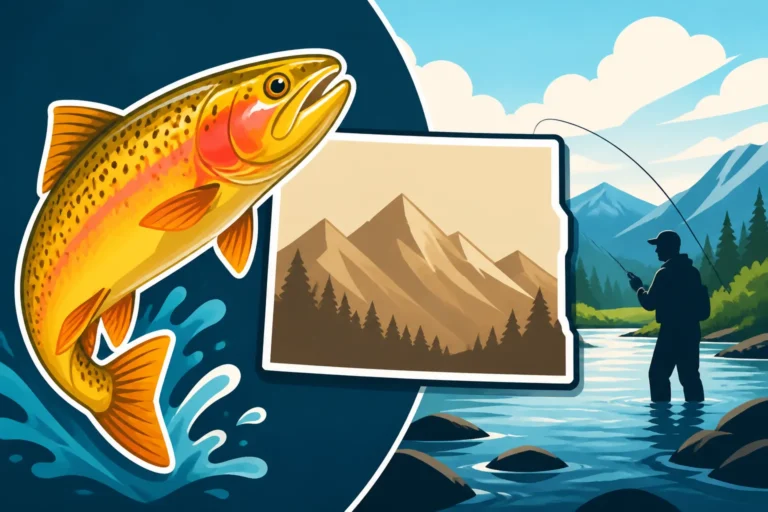
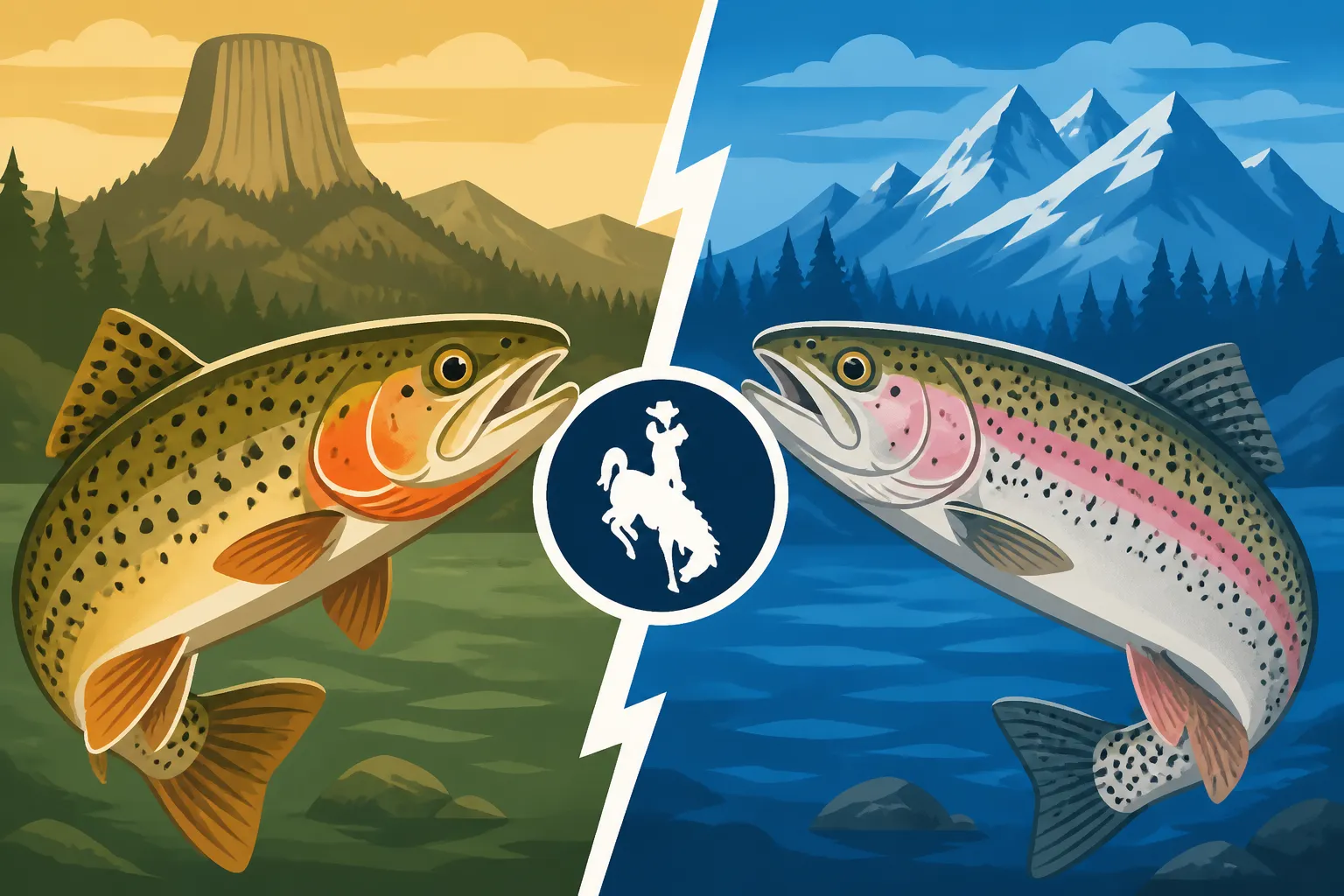
The most iconic and often the most reliable indicator of a Cutthroat trout is the presence of the distinctive red, orange, or sometimes yellow "slash" found in the fold of skin under its lower jaw. This marking is why they're called "Cutthroat" in the first place! It truly looks like a throat has been cut, revealing a splash of color. This mark can range from a vibrant, almost neon red to a faded, dull orange, and its visibility can sometimes depend on the fish's size, age, and even its stress level when caught.
You might pull in a smaller Cutthroat, say 10 inches, and the slash is barely a faint orange smudge. Then, a few casts later, you land a beautiful 18-inch Cutthroat from the same pool, and its slash is a brilliant, undeniable crimson. The key is to carefully look right beneath the chin, where the two gill plates meet. It's not always on the outside of the jawline; sometimes you have to gently lift the lower jaw to see it clearly in the fold of skin. This is a critical first step when identifying. If you see that slash, even a faint one, you're almost certainly holding a Cutthroat or a very strong Cutthroat hybrid.
Body Markings and Coloration
Beyond the throat slash, Cutthroat trout generally have a more irregular spotting pattern compared to Rainbows. Their spots tend to be smaller, more concentrated towards the tail, and often have an uneven, almost blotchy distribution along their flanks. While they can have some spots on their back and dorsal fin, they are typically less numerous and less uniformly spread than on a Rainbow. The overall body coloration of a Cutthroat can also vary widely depending on its subspecies and habitat. For instance, a Yellowstone Cutthroat might have a more olive or golden hue with black spots, while a Snake River fine-spotted cutthroat will have, as its name suggests, very fine, delicate spots.
Imagine you're fishing in a crystal-clear mountain stream in the Gros Ventre Range. You catch a trout that's a beautiful golden-brown, almost iridescent, with sparse, irregular black spots that are definitely heavier towards the tail. You gently check under the jaw, and there's that faint orange slash. This combination of color and spotting pattern points strongly to a native Cutthroat. In contrast, if you caught a fish in the same stream that was silvery-green with an even distribution of spots all over its body, you'd be looking at a different species entirely. Understanding these subtle differences in spotting is crucial when the cutthroat slash isn't immediately obvious.
Fin Characteristics
While not as definitive as the throat slash or spotting pattern, the fins of a Cutthroat trout can sometimes offer additional clues, especially to a keen eye. Generally, Cutthroat fins might appear a bit more rounded or less pointed than those of some Rainbows. The coloration of the fins can also be subtle, often matching the overall body tone or having a slightly amber or yellowish tint, particularly on the pectoral and pelvic fins. Unlike Rainbows, Cutthroat usually don't have heavy spotting on their caudal (tail) fin, or if they do, the spots are much sparser and less distinct.
If you're looking closely at the fins, pay attention to the dorsal fin (on the back) and the caudal fin. On a Cutthroat, the spots on these fins will likely mirror the body spots – fewer, more irregular, and often fading out towards the edges. This contrasts with a Rainbow, where the fins, especially the caudal fin, often have a more uniform peppering of spots right to the very edge. These distinctions, combined with the other visual cues, can help solidify your identification. It's like putting together a puzzle, where each piece, no matter how small, adds to the complete picture.
Key Visual Cues: Spotting a Rainbow Trout
Now, let's flip the script and talk about how to confidently identify a Rainbow trout. While they share some similarities with Cutthroats, particularly in body shape, their distinguishing features are generally quite clear once you know what to look for. These fish are a blast to catch and are widely distributed across Wyoming, often being the most common trout species in many waters, thanks to extensive stocking programs.
The Distinctive Pink Stripe
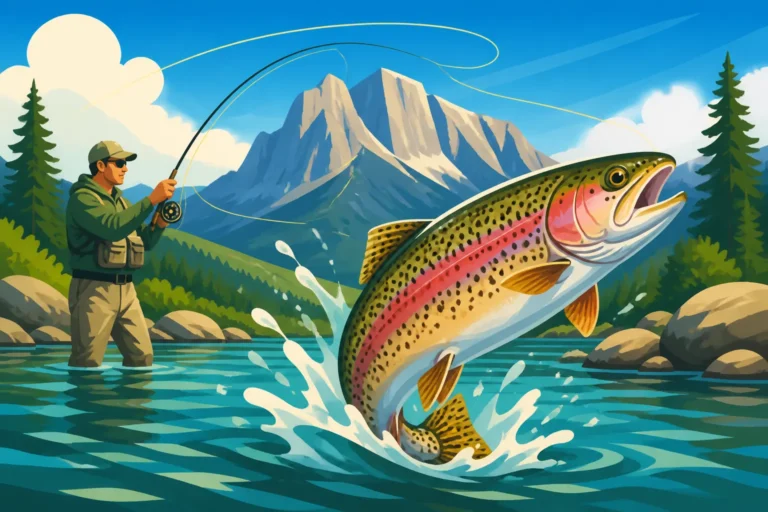
One of the most defining characteristics of a Rainbow trout, and the source of its name, is the iridescent pink or reddish stripe that runs horizontally along its lateral line, from its gill plate all the way to its tail. This stripe can be incredibly vibrant and distinct, especially on healthy, wild-spawning Rainbows or those in prime condition. However, it can also appear quite faded, silvery, or even absent on some fish, particularly those that are stressed, in poor health, or fresh out of a hatchery environment.
This lateral stripe is a key differentiator from the Cutthroat's throat slash. The Rainbow's stripe is on the side of its body, not underneath its jaw. For instance, if you're fishing the Green River below Flaming Gorge and catch a beautiful trout with a prominent, almost glowing pink band along its side, you've almost certainly got a Rainbow. Even if the stripe is faint, its presence along the length of the body is a major clue. It’s important to distinguish this from the red slash; a fish with a side stripe and no visible slash is a Rainbow.
Spotting Patterns Across the Body
Rainbow trout are characterized by numerous small, distinct black spots that are typically evenly distributed over their entire body, head, back, and all their fins, including the dorsal and caudal (tail) fins. These spots are often smaller and more uniform in size compared to the usually larger and more irregular spots found on Cutthroat trout. The spots on a Rainbow truly give them a "peppery" appearance, as if someone took a pepper grinder and went to town on the fish from nose to tail.
Imagine you're on Wyoming's North Platte River Fishing Guide and you land a shimmering trout. You notice tiny, perfectly round black spots scattered everywhere – on its cheeks, its back, its tail fin, even its pectoral fins. This uniform, widespread spotting, especially extending onto the head and fins in such a consistent manner, is a strong indicator of a Rainbow trout. This contrasts sharply with the Cutthroat's tendency to have spots more concentrated towards the tail, with less coverage on the head and often sparser spotting on the fins. This difference in spotting alone can often be enough to make a positive identification.
Mouth and Jaw Structure
While not as immediately obvious as color or spots, experienced anglers might also notice subtle differences in the mouth and jaw structure between the two species. Generally, Rainbow trout tend to have a somewhat smaller, more terminal mouth compared to Cutthroat trout. A terminal mouth means it's located right at the very front of the head, allowing it to feed on insects and small prey directly in front. Cutthroat trout, on the other hand, can sometimes have a slightly larger mouth that extends a bit further back, or a more "sub-terminal" mouth (meaning the upper jaw slightly overhangs the lower jaw), which is adapted for surface feeding on terrestrial insects.
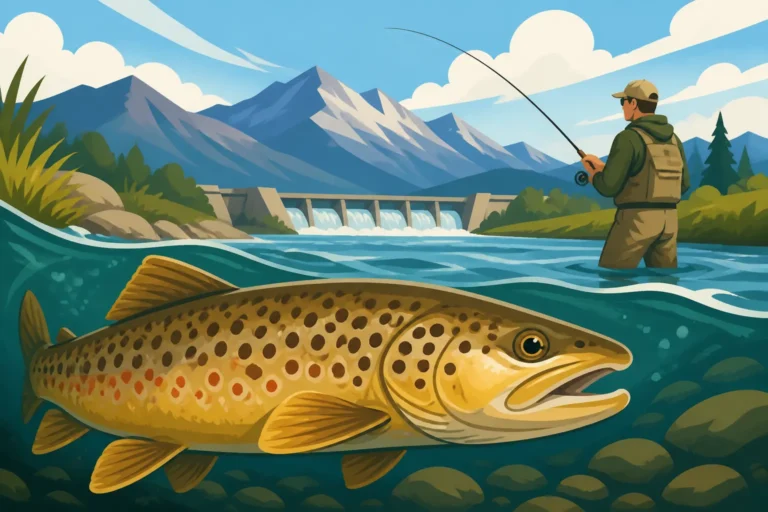
This isn't a hard and fast rule, and it can be difficult to discern in the heat of the moment, especially if you're not used to actively comparing these features. However, with practice, you might notice that when you're targeting fish specifically in a tailwater below a dam, where Rainbows thrive on aquatic insects, their mouth structure seems optimized for that type of feeding. If you're gently handling a fish and taking a moment to observe, these subtle anatomical differences can sometimes add to your confidence in identifying it.
Beyond the Looks: Habitat and Behavior Clues
While visual identification is king, sometimes understanding where you are fishing and how trout behave in different environments can give you a significant edge in distinguishing Cutthroat from Rainbows. Wyoming's vast and varied landscape offers diverse habitats that often favor one species over the other, helping you narrow down the possibilities even before you land a fish.
Native vs. Introduced Waters
Knowing the history of the water you're fishing is an invaluable tool for identification. Cutthroat trout are native to Wyoming, with different subspecies historically inhabiting specific drainages. For instance, the Yellowstone Cutthroat is native to the Snake River and Yellowstone drainages, and Yellowstone Cutthroat Trout Are Native in Wyoming remains a strong point of pride. The Bonneville Cutthroat is found in the Bear River drainage, and so on. These are their ancestral homes. Rainbow trout, conversely, are not native to Wyoming. They were introduced from other regions, primarily for sport fishing, and have been extensively stocked across the state.
This means if you're fishing a truly remote, high-country lake that's difficult to access and has never been stocked (or at least not in living memory), any trout you catch there is almost certainly a native Cutthroat or Golden trout. Conversely, if you're fishing a highly managed reservoir or a popular river section that receives regular stockings from the Wyoming's Stocked Rainbow Trout Program, you're far more likely to encounter Rainbows, or even Cutbow hybrids. For example, if you're at a well-known spot like Fremont Canyon on the North Platte, you'd expect to see plenty of Rainbows. But if you've hiked miles into the Bridger-Teton Wilderness to a pristine alpine tarn, a silvery fish with a strong red slash is a clear indicator of a Cutthroat.
Preferred Habits and Diet
Both Cutthroat and Rainbow trout are opportunistic feeders, but they do show some general preferences that can influence where you find them and what they're willing to bite on. Cutthroat, especially in their native habitats, are often keen surface feeders. They're quite adept at taking terrestrial insects like grasshoppers, beetles, and ants that fall into the water, particularly in stream and river environments. This makes them a favorite target for dry fly anglers. They also feed on aquatic insects, small fish, and crustaceans, but their willingness to rise to the surface is often a defining characteristic.
Rainbow trout, while also enjoying surface action, are frequently found feeding actively on nymphs, larvae, and other aquatic invertebrates below the surface, especially in faster-moving water or in large reservoirs where deep-water foraging is common. They are also known to be more aggressive predators of smaller baitfish. If you're consistently catching fish on deeply presented nymph rigs or streamers, especially in a faster run, and those fish happen to be Rainbows, it reinforces their typical feeding habits. This isn't a foolproof method of identification, but it's another piece of the puzzle that, combined with visual cues, can strengthen your guess.
Spawning Differences
Spawning patterns can also provide some indirect clues, though it's not a direct way to identify a fish in hand. Generally, Cutthroat trout tend to spawn earlier in the spring than Rainbow trout. They often migrate into smaller tributary streams or shallow lake margins as soon as ice-out occurs and water temperatures begin to rise. Their spawning can continue into early summer, depending on elevation and water conditions. Rainbows typically spawn slightly later, often peaking in late spring to early summer.
This difference means that if you're fishing a river in early April, fresh after the ice has come off, and you're catching actively spawning fish that are exhibiting bright colors and a distinct red slash, they are almost certainly Cutthroat. Conversely, if you're fishing a larger river or reservoir in June and seeing fish concentrated in shallow areas, exhibiting spawning behaviors, and they have prominent pink stripes, they are more likely Rainbows. Knowing these general spawning windows and locations, which are often detailed in Wyoming Fishing Seasons and Water-Specific Closures, can help inform your expectations of what species you might encounter during different times of the year.
Practical Identification Tips for Anglers
Alright, so you've got a fish on the line, and you're trying to put all these pieces together. It can still be tough, especially when you're excited or the fish is putting up a fight. But with a few practical tips, you can increase your accuracy and ensure you're fishing responsibly. After all, the rules and limits for different species can sometimes vary, and proper identification helps you stay compliant with Wyoming Fishing Regulations Every Angler Should Know.
Catch and Release Considerations
First and foremost, whether you plan to keep or release your catch, always prioritize the health of the fish. If you're unsure about the species and need to take a closer look, handle the fish as gently and quickly as possible. Use wet hands or a wet, rubberized net to minimize damage to its protective slime coat. Avoid squeezing the fish, especially around its internal organs. If you need to check for the cutthroat slash, do so with minimal handling, and keep the fish in the water as much as possible.
Remember that taking a photo can be incredibly helpful for later identification or for sharing with knowledgeable friends, but don't hold the fish out of the water for extended periods. A quick snap, and then back into the water it goes. For more detailed best practices, familiarize yourself with Catch-and-Release Rules on Wyoming Waters. This practice is especially important for native Cutthroat populations, which are often more sensitive to stress. If you're truly stumped, and especially if you're in a designated Cutthroat recovery area, the most conservation-minded approach is to release the fish quickly and unharmed, without stressing over a definitive ID if it means prolonging its time out of water.
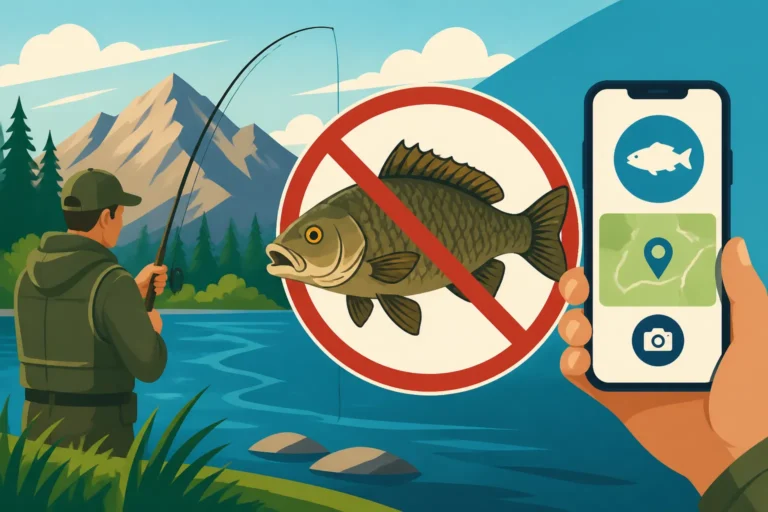
Using a Field Guide or App
One of the best tools an angler can have, especially when exploring new waters or if you're a beginner, is a good waterproof field guide or a reliable fishing identification app on your phone. Many excellent guides specifically cover trout species of the Rocky Mountain West, and you can easily find them on platforms like Amazon. These resources often feature clear illustrations or photographs, highlighting the key differences we've discussed, such as spotting patterns, fin shapes, and mouth structures.
Before your trip, take some time to review the guide, especially sections on Identifying a Yellowstone Cutthroat Trout and other common Wyoming species. Having a visual reference right there with you on the bank can make a huge difference. While you're at it, it's also a good idea to have a copy of Reading the Wyoming Fishing Regulations Booklet with you. This booklet not only outlines the rules but often includes descriptions and illustrations of common fish species in the state, sometimes even noting specific waters where certain species are prevalent or where hybrids are common. Being prepared with these resources can turn a moment of confusion into a confident identification.
| Feature | Cutthroat Trout | Rainbow Trout | Hybrid ("Cutbow") |
|---|---|---|---|
| Throat Mark | Distinctive red/orange/yellow "slash" under lower jaw. | No red/orange slash under the jaw. | May have a faint, faded, or incomplete slash. |
| Lateral Stripe | Typically no prominent lateral stripe. | Usually a prominent pink/red iridescent stripe along the lateral line. | May have a faint pinkish stripe or a blend of colors. |
| Body Spots | Spots usually smaller, irregular, and concentrated towards the tail. Often sparse on head and anterior body. | Spots typically numerous, small, distinct, and uniformly distributed over the entire body, head, and fins. | Variable; a mix of both patterns, often more widespread than pure Cutthroat, but perhaps less uniform than pure Rainbow. |
| Fin Spots | Spots on fins (especially caudal) sparser and less distinct. | Spots prominent and evenly distributed on all fins, including the caudal fin. | Variable; may have more fin spots than Cutthroat, but less distinct than Rainbow. |
| Mouth Position | Often slightly sub-terminal (upper jaw overhangs lower), or terminal. | Terminal (mouth at the very front of the head). | Variable. |
| Native Status | Native to Wyoming's various drainages. | Introduced species in Wyoming. | Result of interbreeding between native and introduced species. |
When in Doubt, Assume Cutthroat
When you're genuinely on the fence about whether you have a Cutthroat or a Rainbow (or a hybrid), especially in waters known to hold native Cutthroat, it's always best to err on the side of caution and treat the fish as if it were a Cutthroat. This conservative approach aligns with conservation goals and helps protect native populations. Regulations, such as Stream Limits vs Lake Limits for Wyoming Trout, can sometimes be more restrictive for native species, so assuming Cutthroat ensures you're not inadvertently violating any rules designed to protect them.
For example, if the regulation states you can keep three Rainbows but only one Cutthroat over 16 inches, and you're unsure what you've caught, releasing it is the safest bet if you've already kept other fish or are approaching your limit. This mindset helps ensure the genetic integrity of Wyoming's native trout persists for future generations to enjoy. It’s about being a responsible angler and a good steward of our incredible natural resources, which is something we all can aspire to, whether we're using the latest gear from Amazon or a trusty old fly rod.
Disclaimer
This article is for general informational purposes only and does not constitute professional advice. Laws, prices and regulations vary by location and change over time. Consult a qualified professional for guidance on your specific situation.