Where Wyoming’s Stocked Rainbow Trout Come From
It's incredibly frustrating when you hear about incredible fishing in Wyoming but aren't quite sure where all those robust rainbow trout come from. You might picture pristine, wild streams, but the reality is, many of the healthy, catchable trout that fill our lakes and rivers have a more humble, yet essential, beginning. This guide is going to pull back the curtain on the journey of Wyoming's stocked rainbow trout, showing you exactly where they originate and the incredible effort that goes into ensuring our waters remain teeming with fish for everyone to enjoy.
The Heart of the Operation: Wyoming's Hatchery System
When we talk about where Wyoming's stocked rainbow trout come from, we're really talking about the amazing work of the Wyoming Game and Fish Department (WGFD) hatchery system. These aren't just glorified fish farms; they are sophisticated biological facilities staffed by dedicated professionals who are passionate about maintaining and enhancing our state's fisheries. They are the unsung heroes ensuring that anglers, from seasoned veterans to excited beginners, have plenty of opportunities to reel in a beautiful rainbow.
A Network of State-Run Facilities
Wyoming is home to a network of state-run fish hatcheries and rearing stations strategically located across the state. Each facility plays a crucial role, often specializing in different stages of fish development or certain species. For instance, you might have hatcheries focused on broodstock — the adult fish kept solely for their eggs and milt — while others are dedicated rearing stations where young fish grow to a suitable size before being released. Imagine a place like the Daniel Fish Hatchery, nestled in the western part of the state, or the Tensleep Fish Hatchery, with its unique aquifer-fed water supply; these are just a couple of examples of the facilities churning out the fish that populate our favorite fishing holes. These operations are vital because not all Wyoming waters can naturally sustain the level of fishing pressure we see, nor do they always possess the ideal spawning habitat for popular species like rainbow trout. Without these hatcheries, many of our most accessible and productive fishing spots would be barren.
The primary purpose of these WGFD hatcheries is to propagate and raise various fish species, with rainbow trout being a significant focus, to supplement wild populations, create new fishing opportunities, and ensure a steady supply of catchable fish. It's a massive undertaking that involves careful management of water resources, feed, and fish health, all to provide a quality experience for anglers. When you cast your line into a local pond or reservoir, there's a good chance the spirited fight on the other end is thanks to the diligent work done at one of these state facilities. It’s all part of the larger initiative covered in Wyoming's Stocked Rainbow Trout Program, aiming to strike a balance between wild fisheries and robust, hatchery-supported angling.
The Dedicated Staff Behind the Scenes
Behind every successful stocking program are the unsung heroes: the hatchery managers and their teams of skilled technicians. These folks aren't just feeding fish; they are true aquatic animal husbandry experts. Their days involve constant monitoring of water quality parameters like temperature, oxygen levels, and pH, which are critical for fish health. They manage feeding schedules, administer preventative health treatments, and meticulously track growth rates. It’s a demanding job that requires a deep understanding of fish biology, water chemistry, and even engineering, to keep the complex systems running smoothly.
Think about the sheer volume of fish they manage. From tiny, almost microscopic fry to robust, catchable-sized trout, each life stage requires different care and attention. The staff are constantly on alert for signs of disease, adjusting diets, and ensuring the fish are healthy and robust enough to thrive once released into the wild. Their expertise in genetics helps ensure the healthiest and most adaptable fish are propagated, contributing to the overall strength of our fisheries. This isn't a 9-to-5 desk job; it often means working weekends, holidays, and being ready to respond to emergencies at any hour to protect the valuable fish stocks under their care. Their dedication ensures that Wyoming continues to be a premier destination for anglers, with waters teeming with species that bring joy to thousands. You can learn more about specific operations in What Wyoming Hatcheries Raise Rainbow Trout.
From Egg to Angler: The Life Cycle of a Stocked Rainbow
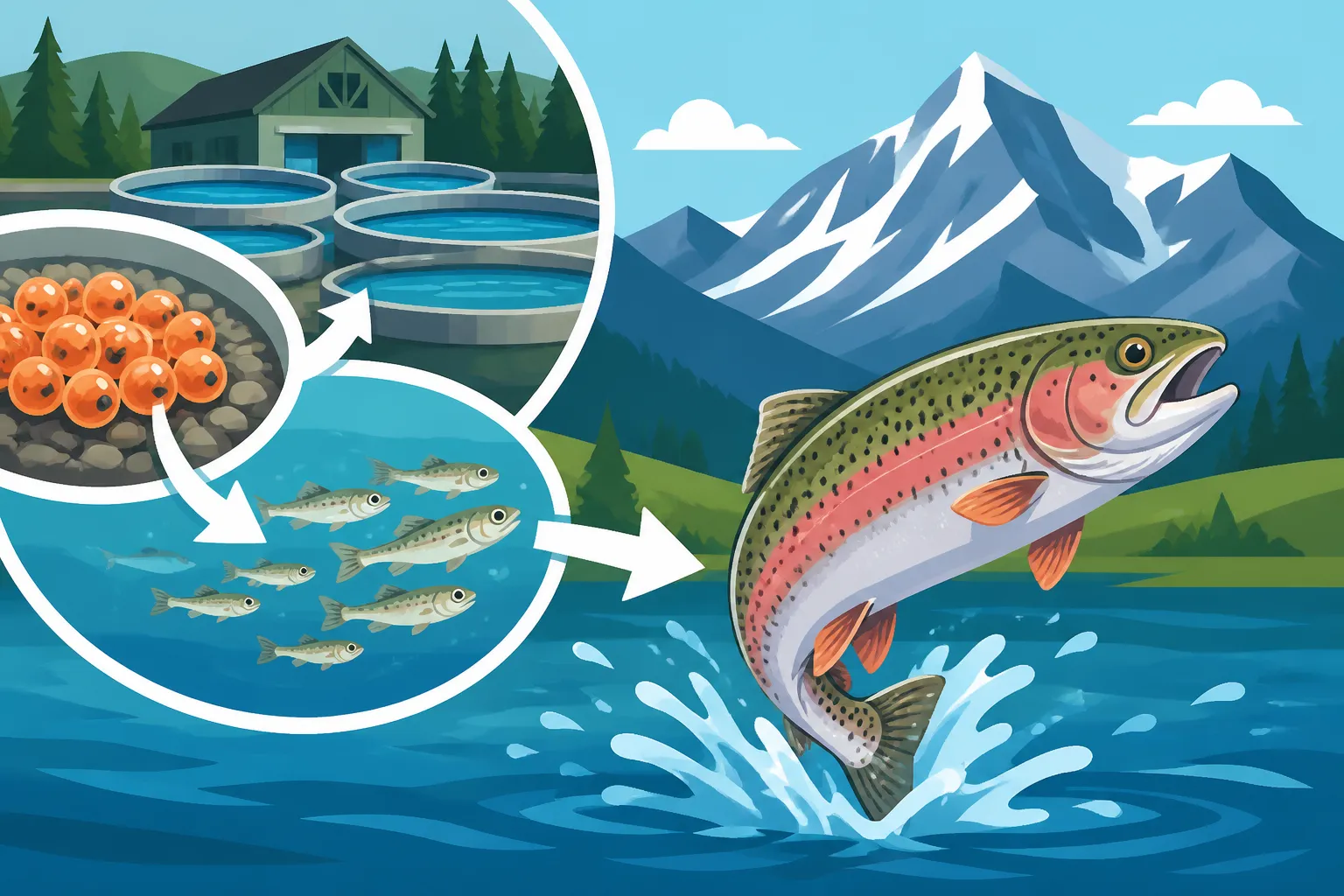
The journey of a stocked rainbow trout from a tiny, almost invisible egg to a feisty, catchable fish in your local lake is a fascinating and carefully managed process. It's a testament to biological science and the hard work of hatchery personnel. This isn't just about throwing a few fish in the water; it's a lifecycle managed with precision and care, ensuring a healthy, thriving population.
The Delicate Start: Spawning and Incubation
The entire process begins with broodstock—adult rainbow trout that are specifically kept for their reproductive capabilities. These fish are carefully selected based on factors like growth rate, disease resistance, and overall health to ensure strong genetics for future generations. When the time is right, usually in the spring, eggs are "stripped" from the female fish and fertilized with milt from the males. This is a delicate procedure, often done by hand, requiring great care to avoid stressing the fish or damaging the eggs.
Once fertilized, the eggs are transferred to specialized incubation trays, often housed in dark, temperature-controlled environments. Water continuously flows over them, providing oxygen and preventing fungal growth. During this vulnerable stage, hatchery staff meticulously monitor the eggs, removing any that don't develop properly or show signs of disease. It's a critical period where a small oversight could lead to significant losses. After a few weeks, depending on water temperature, the tiny fish, called "fry," hatch. These fry initially feed on their yolk sac, a small pouch of nutrients attached to their bellies, before they become free-swimming and ready to start eating commercial fish food. This meticulous beginning is crucial for producing the millions of fish, as discussed in How Many Rainbow Trout Wyoming Stocks Each Year, that will eventually populate Wyoming's waters.
Growing Up: Rearing in Raceways and Ponds
Once the fry have absorbed their yolk sacs and begin actively feeding, they are moved into larger rearing tanks or raceways. These are long, concrete channels with continuous water flow, designed to provide a healthy and stimulating environment for the growing fish. As they grow, they're typically sorted by size to prevent cannibalism and ensure uniform growth. Their diet consists of high-quality commercial fish feed, formulated to provide all the necessary nutrients for rapid and healthy development. Hatchery staff are constantly adjusting feeding rates based on fish size, water temperature, and oxygen levels.
As the fish grow from fry to fingerlings (a few inches long) and then to "catchable" size (often 8-12 inches or more), they are periodically moved to larger raceways or outdoor ponds. This is where they build strength and adapt to more natural conditions, even though they're still in a controlled environment. Throughout this entire rearing process, fish health is paramount. Staff regularly check for any signs of illness, monitor water parameters, and ensure a stress-free environment. This careful management ensures that when these fish are finally released, they are robust, healthy, and ready to provide a thrilling experience for anglers. It's also why you might find some fish with Why Some Wyoming Trout Are Fin-Clipped, a common practice for identifying stocked fish for management purposes.
Why Wyoming Stocks: Boosting Fisheries and Angler Opportunities
You might wonder why, in a state famous for its wild beauty, there's such an emphasis on stocking fish. The truth is, stocking is a cornerstone of responsible fisheries management in Wyoming, serving multiple vital purposes that benefit both the environment and the angling community. It's not just about putting fish in the water; it's about strategic enhancement and providing access for everyone.
Enhancing Natural Populations and Creating New Opportunities
One of the primary reasons Wyoming stocks rainbow trout is to enhance natural populations that might be struggling or to create viable fisheries in waters where natural reproduction is limited or nonexistent. Many lakes, reservoirs, and even some rivers in Wyoming face challenges such as lack of suitable spawning habitat, fluctuating water levels, or heavy fishing pressure that natural populations simply can't keep up with. In these cases, stocked fish fill a crucial void, ensuring these waters remain productive and attractive to anglers.
Beyond supporting existing fisheries, stocking also creates entirely new angling opportunities. Think about urban ponds or smaller lakes near populated areas. These spots often wouldn't have any fish, or certainly not enough to sustain consistent fishing, without regular stocking. These "put-and-take" fisheries are incredibly popular, especially for families and beginners, offering easily accessible and often very productive fishing. They provide a fantastic entry point into the sport, allowing people to experience the joy of catching fish without needing to trek into the backcountry. For those just starting out, learning the ropes in a stocked pond can be far less intimidating. This is particularly relevant when you're looking for Easiest Fish to Catch in Wyoming or Best Beginner Technique for Catching Your First Trout. It truly makes fishing accessible to everyone, from those with limited mobility to parents introducing their children to the outdoors.
Specific Goals: Species Management and Conservation
Stocking isn't just a blanket activity; it's a highly targeted tool for species management and even conservation. For popular game fish like rainbow trout, strategic stocking helps to diversify the angling experience and can relieve pressure on wild populations of native species, such as specific subspecies of cutthroat trout, in other waters. By providing abundant fishing opportunities for stocked rainbows, the WGFD can sometimes implement more restrictive regulations on wild trout streams, giving those native fish a better chance to thrive and reproduce naturally.
Furthermore, stocking can sometimes be used in recovery efforts for native species, by temporarily occupying niche habitats or by providing a buffer population. It's also a way to introduce fish into newly created or rehabilitated waters, jump-starting a fishery. The WGFD constantly evaluates where and when to stock, taking into account ecological factors, water quality, and angler demand. The aim is always a healthy, balanced ecosystem where both wild and stocked populations can flourish, providing sustainable recreation for generations. This careful planning also considers specific angling techniques, ensuring that whether you're fly fishing or spin fishing, there are plenty of targets, a topic thoroughly covered in Fly Fishing vs Spin Fishing on Wyoming Rivers.
Beyond the Hatchery Walls: The Logistics of Stocking
The moment of release, when thousands of eager young rainbow trout are introduced to their new aquatic homes, is the culmination of months, sometimes years, of careful rearing. But getting them there is an art and science in itself, involving specialized equipment and strategic timing to ensure the fish arrive healthy and ready to thrive.
The Journey to the Water: Stocking Vehicles and Methods
Transporting live fish from a hatchery to their designated waterbody is no small feat. It requires specialized trucks equipped with large tanks, aeration systems, and temperature controls to mimic their hatchery environment as closely as possible. These trucks are essentially mobile life support systems for thousands of fish. Hatchery staff carefully load the fish, monitoring oxygen levels and water temperature throughout the journey to minimize stress. A sudden change in temperature or oxygen depletion can be devastating.
Once at the destination, there are several methods for releasing the fish. For easily accessible lakes and reservoirs, fish are often directly released from the truck's tanks via a large hose or chute. This is efficient and allows for rapid distribution. However, for remote high-alpine lakes or hard-to-reach streams, other methods come into play. Bucket stocking, where staff or volunteers carry buckets of fish into more remote areas, is common. And for truly isolated locations, aerial stocking by plane or helicopter is sometimes used, a spectacular sight where thousands of fingerlings rain down into the lake below. Each method is chosen to ensure the best survival rate and distribution for the specific body of water. Having good gear to carry your own tackle, perhaps a rugged tackle box or a comfortable backpack available on Amazon, can make accessing these spots easier, even if you’re not carrying fish!
When and Where: Strategic Placement
The decision of when and where to stock fish is a complex one, driven by scientific data, environmental conditions, and angler feedback. The WGFD meticulously plans stocking schedules, considering factors like water temperature (too warm can be lethal), the presence of existing fish populations, predator pressure, and public access points. Fish are often stocked in batches throughout the spring, summer, and fall, depending on the water and species. Some waters might receive multiple stockings of smaller fish, while others get fewer stockings of larger, "catchable" trout.
Timing is also critical. Stocking before peak angler seasons helps ensure a fresh supply of fish when demand is highest. For waters that might experience winterkill or heavy ice fishing pressure, additional stockings might be planned in the late fall or early spring. The WGFD often publishes stocking reports or updates on their website and social media, letting anglers know where and when fish have been released, which can be incredibly helpful for planning your next outing. Knowing How to Find Recently Stocked Wyoming Waters can give you a real advantage! This strategic placement is what makes so many Wyoming waters consistently productive, allowing anglers to enjoy a vibrant fishing scene year after year.
| Stocking Method | Description | Typical Use Cases | Advantages | Challenges |
|---|---|---|---|---|
| Truck & Hose | Fish are released directly from specialized tanker trucks via a large hose. | Easily accessible lakes, reservoirs, large river sections, ponds. | Efficient, low stress on fish, allows for large volume release. | Limited to road access, requires suitable bank/dock for release. |
| Bucket | Fish are transported in buckets by staff or volunteers to the water's edge. | Remote streams, smaller ponds, areas with limited road access. | Accesses hard-to-reach spots, gentle release method. | Labor-intensive, slower, limited volume per trip. |
| Aerial (Plane/Helo) | Fish are dropped from a low-flying aircraft into the waterbody. | High-alpine lakes, very remote reservoirs, wilderness areas. | Accesses extremely remote locations quickly, can cover large areas. | Can be more stressful on fish, expensive, weather-dependent. |
| Barge/Boat | Fish are transferred to a boat, then spread across a larger waterbody. | Large reservoirs, expansive lakes where even distribution is key. | Even distribution over a wide area, less stress than aerial for large lakes. | Requires boat access and safe launching conditions. |
Disclaimer
This article is for general informational purposes only and does not constitute professional advice. Laws, prices and regulations vary by location and change over time. Consult a qualified professional for guidance on your specific situation.