Boysen Reservoir’s Best Walleye Water
Finding the best walleye spots on a reservoir the size of Boysen can feel like searching for a needle in a haystack, especially when you're facing ever-changing water levels and fish behavior. It's easy to get frustrated casting in all the wrong places. This comprehensive guide is designed to cut through that confusion, pinpointing the most productive walleye waters at Boysen Reservoir and giving you the insights you need to put more fish in your net.
Understanding Boysen Reservoir's Walleye Habitat
Boysen Reservoir, a sprawling body of water in central Wyoming, is renowned for its diverse fishery, but it truly shines as a walleye destination. Understanding why walleye thrive here, and where they prefer to hang out, is the first step to consistent success. This isn't just a big bowl of water; it's a complex ecosystem with varying depths, structures, and forage opportunities that dictate where these elusive predators will be.
The Unique Structure of Boysen
Boysen Reservoir was formed by damming the Wind River, and its origins mean it has a fascinating mix of natural river channel features, inundated structures, and wide-open flats. Unlike some perfectly uniform reservoirs, Boysen boasts steep rock walls in places, expansive mud flats, submerged timber, old creek beds, and numerous points and coves. Walleye, being ambush predators, are intrinsically drawn to structure. They use it for cover, as staging areas to hunt baitfish, and to escape direct sunlight. The old river channel, now submerged, acts as a major highway for fish movement and a prime foraging ground. Knowing where this channel snakes through the reservoir can give you a significant advantage, especially when the walleye are transitioning between shallow and deep water.
The reservoir's bottom composition also varies greatly, from rocky riprap near the dam and along certain shorelines to soft, silty bottoms in shallower bays. Walleye often prefer hard bottoms, especially during spawning, but will also relate to softer, nutrient-rich areas where their prey thrives. The constant inflow from the Wind River also brings nutrients and changes water clarity, influencing where walleye choose to feed.
Water Clarity and Depth Preferences
Walleye are famously light-sensitive, which is why they often feed most actively during low light conditions or in deeper, murkier water. Boysen Reservoir can exhibit a range of water clarities depending on the season, recent precipitation, and inflow from the Wind River. After heavy rains or during spring runoff, the upper end of the reservoir, particularly near the Wind River Delta, can become quite turbid. This isn't necessarily a bad thing for walleye anglers; these areas can concentrate fish as they feel more comfortable feeding in the reduced visibility.
In clearer sections of the reservoir, walleye will often hold deeper or tighter to structure during the day, moving shallower to feed under cloudy skies, at dawn, dusk, or even throughout the night. Their depth preference also changes with water temperature and the location of their primary food sources, like kokanee salmon or perch. During the warmer months, you'll often find them suspended over deeper water or hugging the bottom on main lake points and humps. In cooler seasons, they might move shallower or into specific areas like the Wind River channel. Understanding these nuances, especially by consulting local reports or experienced guides (you might even find some excellent guides on FishingBooker for Boysen), can be key to unlocking their patterns.
Key Areas for Walleye Success: North End & Mid-Lake
The northern and mid-lake sections of Boysen Reservoir offer some of the most consistent and productive walleye fishing. These areas are characterized by a combination of steep drops, submerged rock structures, and access to deep water, providing ideal habitat for walleye throughout much of the year.
The Dam Area and Northern Reefs
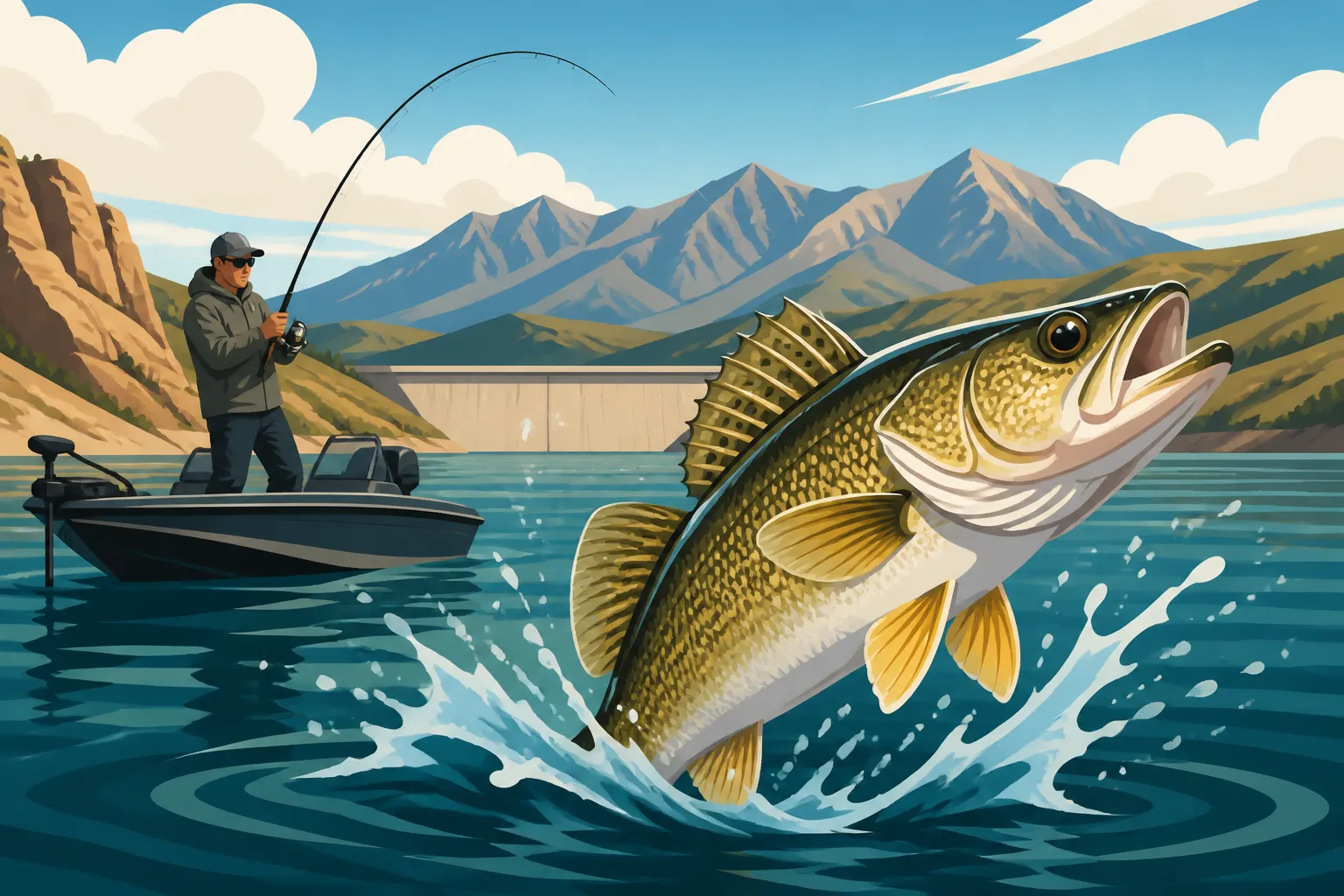
The area immediately surrounding the Boysen Dam is a classic walleye hotspot, and for good reason. The dam's riprap provides excellent foraging opportunities and cover, especially where it transitions into deeper water. Just offshore, you'll find numerous submerged rock reefs and humps that top out anywhere from 10 to 30 feet, dropping off into depths of 50 to 80 feet or more. These reefs are magnets for walleye, drawing them in as they chase baitfish. Early and late in the season, particularly during the spawn, walleye will stage on these hard-bottomed structures.
Anglers often target these areas by trolling crankbaits or by jigging spoons and soft plastics directly over the submerged structure. The currents around the dam, while subtle, can also concentrate baitfish and, consequently, walleye. It's a busy area, but for good reason – the fish are often here. Be sure to check your depth finder diligently to locate these hidden underwater islands and breaks. This is an area where knowing about current regulations, like those covered in Wyoming Fishing Regulations Every Angler Should Know, is particularly important given the proximity to the dam and potential for specific zone rules.
Cottonwood Creek and Mid-Lake Structure
Moving south from the dam, the entrance to Cottonwood Creek Bay presents another fantastic stretch of walleye water. The points and submerged humps leading into and out of this bay create excellent ambush points. Walleye will often patrol the edges of the old creek channel here, especially where it meets main lake structure. The shallower flats inside Cottonwood Creek can be productive during low-light periods or when baitfish move into warmer, shallower water, while the deeper transitions hold fish during the day.
Further out in the mid-lake, there are many unmarked humps and subtle breaks that can hold schools of walleye. These are often overlooked by less experienced anglers but can be incredibly rewarding. Look for areas where the bottom transitions from soft mud to gravel or rock, or where there are subtle changes in depth contour. These "sweet spots" are often relatively small, but when you find them, you can have a banner day. Understanding Walleye Behavior in Wyoming Reservoirs will greatly assist in identifying these often-subtle yet productive areas.
Brannon's Island and Deepwater Access
Brannon's Island, a prominent feature in the central part of Boysen, offers another outstanding complex of walleye habitat. The entire perimeter of the island, especially the points extending offshore, provides excellent structure. The west side of the island drops off steeply into deeper water, making it a prime location for trolling or vertical jigging, particularly during the summer months when walleye seek cooler, oxygenated water.
Around Brannon's Island, you'll also find various submerged points and rocky outcroppings that serve as major congregation areas for walleye. These features are often surrounded by deep water, providing the walleye with easy access to sanctuary when they're not actively feeding. Using your electronics to identify these specific underwater features is critical. Many successful walleye anglers consider this a must-fish zone, often finding that the size of walleye here aligns with expectations for What Size Boysen Reservoir Walleye Are Running. When looking for a guide to explore these deeper waters, remember that platforms like FishingBooker can help you find local experts familiar with Brannon's Island's hidden gems.
South End and River Mouth Walleye Opportunities
While the north and mid-lake areas are popular, the southern end of Boysen Reservoir, particularly near the Wind River inflow, offers a completely different set of conditions and can be incredibly productive for walleye, especially during specific times of the year.
The Wind River Delta
The Wind River is the lifeblood of Boysen Reservoir, and its delta at the south end is a dynamic and nutrient-rich environment that walleye absolutely love. This area is characterized by shallower water, extensive weed beds in some seasons, and the constant flow of the river itself. During the spring, especially pre-spawn and early post-spawn, many walleye congregate here, drawn by the warmer water and abundant forage brought in by the river. The river channel continues under the reservoir surface, providing a distinct contour that walleye will follow.
Anglers targeting the delta often focus on the edges of the submerged river channel, where current breaks and depth changes create ideal ambush points. Casting shallow-diving crankbaits or working jigs through the weed lines can be very effective here. The turbidity that often accompanies the river inflow can also make walleye more aggressive during daylight hours. This area can be particularly fruitful for those willing to explore and adapt to the ever-changing river influence. For more on the river itself, check out Fishing the Wind River Near Boysen Reservoir.
Tough Creek and Hidden Channels
Tough Creek Bay, located on the western side of the reservoir's southern arm, provides yet another excellent walleye haven. This bay, like many others at Boysen, features distinct points and submerged channels that funnel fish movement. The mouth of Tough Creek, where it enters the main body of the reservoir, is an obvious target, but don't overlook the interior structure within the bay itself. Shallow flats quickly transition into deeper water, creating edges that walleye patrol.
Beyond Tough Creek, there are several less-defined channels and submerged rock piles throughout the southern end of the reservoir that can be goldmines for patient anglers. These spots often require good electronics to locate, but once found, they can produce consistent action away from the crowds. Walleye here might be less pressured and more willing to bite. Exploring these "hidden" structures, especially those that provide a distinct break from the surrounding mud flats, can lead to some truly memorable catches. Remember that even in these less-trafficked areas, local knowledge is invaluable, and a guide found through a service like FishingBooker could help you unlock these secrets.
Seasonal Walleye Movements and Hotspots
Walleye at Boysen Reservoir, like most fish, follow distinct seasonal patterns. Knowing these movements is crucial for being in the right place at the right time and adapting your techniques accordingly. What works in spring often won't in summer, and vice versa.
Spring Spawning and Post-Spawn Patterns
As the ice recedes and water temperatures begin to climb into the 40s and 50s Fahrenheit (around 4-10 degrees Celsius), Boysen's walleye embark on their annual spawning migration. They typically seek out hard-bottomed areas, such as rocky points, riprap near the dam, and submerged gravel bars, usually in water from 5 to 20 feet deep. The northern end of the reservoir, particularly around the dam and its associated reefs, becomes a major spawning ground. The Wind River Delta area also sees a strong pre-spawn aggregation as fish move upstream or into shallower, warmer waters before settling on rocky substrates.
After spawning, which usually peaks in April and May, walleye move into a post-spawn recovery phase. They'll often remain relatively shallow, actively feeding to regain energy. They tend to spread out more, relating to newly developing weed beds, main lake points, and the edges of flats where baitfish are abundant. This is an excellent time for casting shallow-running crankbaits, jigging soft plastics, or slowly trolling spinner rigs with live bait. Early mornings and evenings are particularly productive as the fish are very active.
Summer Deepwater Tactics
As Boysen's waters warm further into the 60s and 70s Fahrenheit (15-20+ degrees Celsius) during the peak of summer, walleye generally move deeper to find cooler, more oxygenated water. They'll often suspend over open water or hug the bottom on deep structure, such as offshore humps, ledges, and the main lake basin. Depths of 25 to 60 feet are common. This is when trolling becomes a dominant strategy, using large crankbaits, bottom bouncers with crawler harnesses, or even downriggers to present baits at precise depths.
Key summer hotspots include the deep water around Brannon's Island, the extensive main lake basin, and the deeper edges of the northern reefs. Walleye will also relate to thermoclines if present, often positioning themselves just above or within this temperature break. Understanding How Water Temperature Affects Trout Feeding can also provide clues for walleye, as many predator fish respond similarly to temperature shifts. Focus on detecting schools of baitfish on your electronics; where the bait is, walleye are sure to follow. Night fishing can also be exceptionally productive during summer, as walleye will often move shallower to feed under the cover of darkness.
Fall Feeding Frenzies
Fall is arguably one of the best times to target trophy walleye at Boysen Reservoir. As water temperatures begin to drop in September and October, walleye enter a pre-winter feeding frenzy, bulking up on forage before the long, lean months of winter. They become incredibly aggressive and often move shallower than in summer, relating more to main lake points, rocky shores, and the edges of flats.
This is a fantastic time for casting large crankbaits, jigging heavy spoons, or trolling oversized plugs. The fish are often more spread out but actively hunting. Look for schools of baitfish moving into shallower bays or congregating near prominent points. The browns in particular will also be running, so anglers may also be interested in Fall Fishing for Browns on the Miracle Mile, an indication of aggressive feeding in other trout species. The Wind River Delta and the northern reefs near the dam can both be exceptional during this period. The walleye are often fatter and feistier, making for some truly exciting battles.
Ice Fishing for Walleye
When winter arrives and Boysen Reservoir freezes over, the ice fishing season for walleye kicks into full swing, usually from December through March. If you're wondering Is There Ice Fishing at Boysen Reservoir?, the answer is a resounding yes! Walleye tend to hold in deeper areas during early ice, often around main lake points, humps, and the old river channel. As winter progresses, they might move into shallower bays or flats during low-light periods to feed on perch or other small forage.
Effective ice fishing tactics include jigging spoons, bucktail jigs, or soft plastics tipped with a minnow head. Live minnows fished under tip-ups are also highly effective. Concentrate your efforts on depth transitions, submerged structure, and areas where baitfish are present. Drifting subtly with the currents under the ice, if any exist, can also be beneficial. Always prioritize safety on the ice and check ice thickness regularly.
Tactics for Targeting Boysen Walleye
Now that we've covered where and when to find Boysen walleye, let's talk about the how. Employing the right techniques is just as important as being in the right spot. Walleye can be finicky, and often, it's a subtle change in presentation that makes all the difference.
Jigging and Bottom Bouncing
Jigging is a classic and incredibly effective method for catching walleye, especially when they are relating closely to bottom structure or suspended in specific depth ranges. For Boysen, vertical jigging with a heavy spoon, a soft plastic paddle-tail, or a bucktail jig tipped with a minnow is excellent for fishing over humps, along ledges, and around the dam area. The key is to keep your bait in the strike zone, subtly bouncing it off the bottom or working it just above where you mark fish.
Bottom bouncing, often paired with a spinner rig or a bare hook and live bait (like a crawler or minnow), is another highly productive technique. This method allows you to cover ground slowly while keeping your bait near the bottom. It's particularly effective when walleye are spread out over flats or along the edges of the old river channel. The weight of the bottom bouncer helps keep your offering down, while the spinner or live bait entices strikes. Remember, walleye bites can be incredibly subtle – sometimes it feels like just a slight pressure or a mushy weight on your line, so stay vigilant! If you want to dive deeper into this specific tactic, search for "Jigging for Walleye at Boysen Reservoir" for more detailed instructions.
Trolling Techniques
Trolling is a go-to strategy for covering vast amounts of water and locating active walleye, especially during the summer and fall months when fish are often suspended or spread out. At Boysen, a variety of trolling presentations can be successful.
- Crankbaits: Trolling deep-diving crankbaits is highly effective. Experiment with different colors and sizes until you find what the fish are keying in on. Speed is also crucial; often, a slow, methodical retrieve around 1.5 to 2.5 mph works best, but sometimes a faster presentation can trigger reaction strikes.
- Bottom Bouncers with Crawler Harnesses: This is a deadly combination. The bottom bouncer keeps your crawler harness at the desired depth, while the spinner blades on the harness create flash and vibration. This is especially good for fishing the edges of channels, points, and flats.
- Lead Core and Downriggers: For targeting walleye in very deep water or precisely above a thermocline, lead core line or downriggers offer excellent depth control. This allows you to present baits to fish that might be holding well below the surface.
When trolling, pay close attention to your electronics. If you mark fish or schools of bait, make turns and passes through that area to maximize your chances. Platforms like FishingBooker often feature guides who are experts in these precise trolling methods at Boysen.
Bait Presentation
While artificial lures are incredibly effective, live bait often has an edge, especially when walleye are finicky. Understanding What Walleye Eat in Wyoming Lakes will inform your bait choices.
- Minnows: Live minnows, particularly shiners or fatheads, are hard to beat for walleye. They can be fished on a bare hook under a bobber, on a jig, or behind a bottom bouncer. Their natural movement is often irresistible.
- Nightcrawlers: Whole or half nightcrawlers, usually threaded onto a hook or part of a crawler harness, are another walleye favorite. Their scent and action are excellent attractants.
- Leeches: Live leeches are fantastic, particularly in cooler water. They are hardy baits that stay active on the hook, making them a great choice for slow presentations.
Always check local regulations regarding live bait, as some waters have restrictions. When using live bait, remember that walleye often "mouth" the bait before fully committing, so a slight pause after a bite can result in a better hookset.
Here's a quick comparison of popular walleye techniques at Boysen:
| Technique | Best Season | Best Depth Range (feet) | Ideal Conditions | Key Advantage |
|---|---|---|---|---|
| Vertical Jigging | Spring, Fall, Ice | 10-60 | Structure, deep holes | Precise presentation, targets specific fish |
| Bottom Bouncing | Spring, Summer, Fall | 10-40 | Flats, channel edges | Covers water slowly, keeps bait near bottom |
| Trolling Crankbaits | Summer, Fall | 15-50 | Open water, main lake | Locates active fish, covers large areas quickly |
| Live Bait (Bobber/Jig) | All Seasons | 5-30 | Shallow bays, weed edges | Natural presentation, high conversion rate |
| Ice Jigging | Winter | 15-50 | Humps, points, channels | Effective in cold water, minimal equipment |
Beyond Walleye: Other Species at Boysen
While walleye might be the main attraction, Boysen Reservoir is a diverse fishery that offers opportunities for a variety of other popular game fish. Knowing about these other species can add excitement to your trip and provide alternative targets if the walleye bite is slow.
Sauger and Perch
Boysen Reservoir is home to a healthy population of sauger, a close cousin to the walleye. Often caught by anglers targeting walleye, sauger prefer murkier water and tend to be found in the same areas, particularly in the lower, shallower end of the reservoir and near the Wind River inflow. They share similar diets and habits, often responding to the same lures and baits as walleye. Identifying them correctly is important, as bag limits can differ. For a detailed guide on telling them apart, refer to Sauger vs Walleye: What's the Difference. If you specifically want to target these unique fish, consider Fishing for Sauger at Boysen Reservoir.
Yellow perch are incredibly abundant in Boysen and are a fantastic sport fish, especially for families or beginners. They are also a primary forage base for walleye and sauger, making them important to the ecosystem. Perch are often found in large schools, relating to weed beds, submerged timber, and drop-offs. They readily bite on small jigs, worms, or minnow pieces. Finding a school of perch can provide non-stop action, and they are excellent table fare!
Trout and Ling
Boysen Reservoir also boasts populations of various trout species, primarily rainbow and brown trout, with occasional cutthroat. These fish often prefer the cooler, deeper sections of the reservoir, though they will cruise shallower areas, especially during spring and fall. Trolling spoons or crankbaits designed for trout is a popular method, as is casting spinners or fly fishing in the cooler waters near the dam or river inflow. Many of these trout are stocked, contributing to a robust fishery that anglers of all skill levels can enjoy.
Another intriguing species found in Boysen is the burbot, often called "ling." These eel-like freshwater cod are primarily targeted during the winter months through the ice, and they are known for their unique appearance and surprisingly good taste. Ling are bottom dwellers and are often caught by jigging glow-in-the-dark spoons or baiting with cut fish. If you're looking for a different kind of winter challenge, targeting ling at Boysen can be a lot of fun.
Boysen Reservoir truly offers a complete fishing experience, whether you're laser-focused on its famous walleye or eager to explore the diverse opportunities presented by its other inhabitants. With the right knowledge and tactics, your next trip to this Wyoming gem is sure to be a successful one.
Disclaimer
Fishing conditions and regulations in Wyoming can change. Always check the current Wyoming Game and Fish Department regulations booklet before heading out on the water. This guide is for informational purposes only and does not supersede official regulations. Stay safe and respect our natural resources.