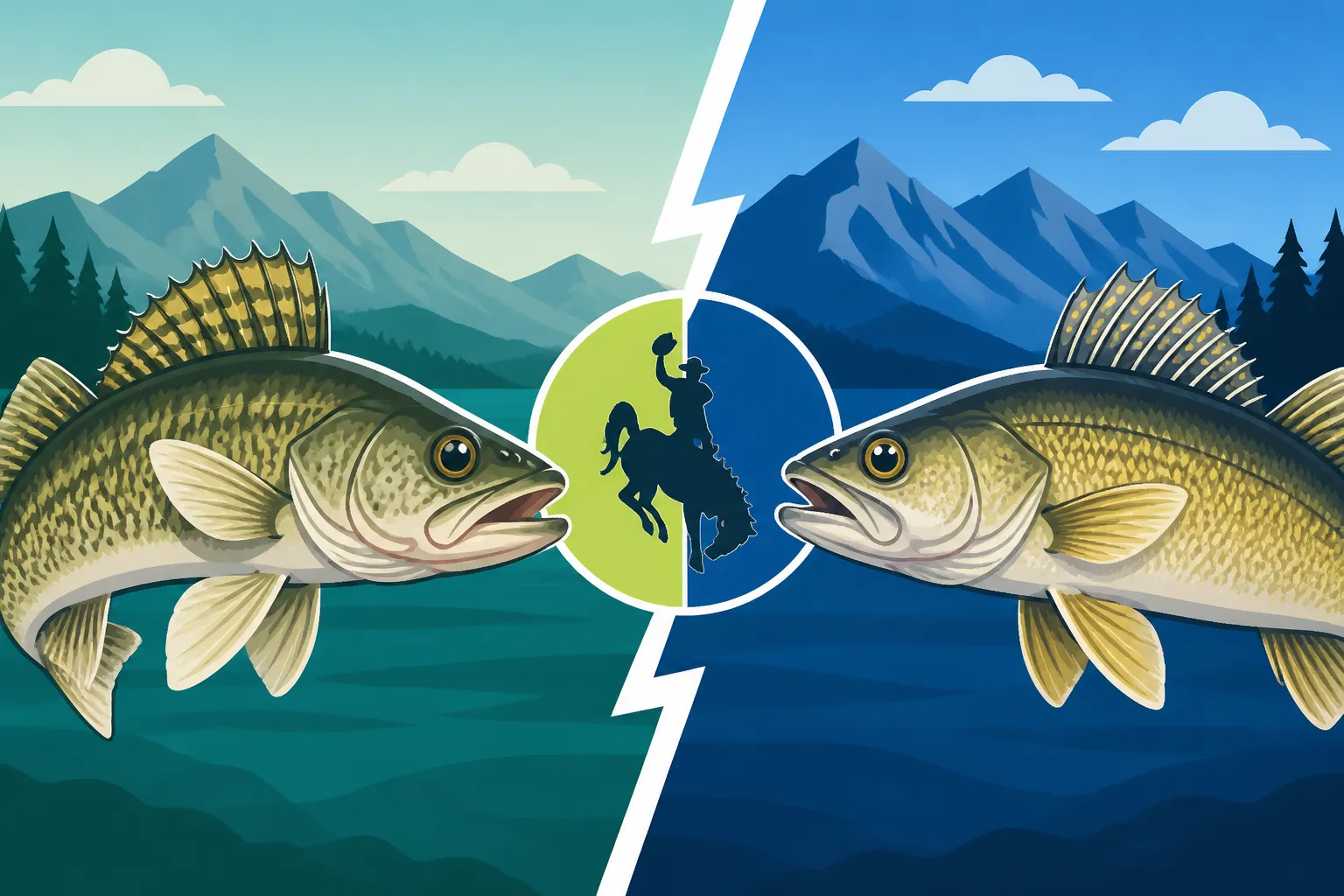
Sauger vs Walleye: What’s the Difference
It's incredibly common to be out on a Wyoming lake or river, reel in a beautiful fish, and then pause, scratching your head. Is it a walleye, or is it a sauger? This isn't just a casual query for bragging rights; knowing the difference between these two coolwater cousins is vital for abiding by regulations and ensuring you're managing your catch responsibly. This guide will walk you through the distinct characteristics and behaviors of sauger and walleye, and even their hybrid offspring, so you can confidently identify your catch in Wyoming's diverse waters.
Understanding Wyoming's Often-Confused Coolwater Fish
Wyoming is home to a fantastic array of fish species, and among the most sought-after coolwater game fish are the walleye and the sauger. They share so many similarities in appearance and habitat that even seasoned anglers can find themselves stumped. However, for those who love to fish our state's rich waters, being able to tell them apart is more than just a fun fact – it's a fundamental skill.
Why Anglers Often Mistake Sauger for Walleye
Imagine you're out on Boysen Reservoir, feeling that distinctive tug, and you bring in a fish with those characteristic pearly eyes. Your first thought might be, "Walleye!" And often, you'd be right. But what if it's a sauger? Both species belong to the same genus, Sander, and they share a torpedo-shaped body, those famous opaque eyes, and a general olive-brown to golden coloration. They both thrive in similar types of aquatic environments, often overlapping in lakes, reservoirs, and rivers across Wyoming. This genetic closeness and shared preference for certain conditions make visual identification a genuine challenge, especially in varying light conditions or when specimens are juvenile.
The confusion is compounded by the fact that they can sometimes be caught in the same fishing spots, particularly in larger reservoirs where tributaries bring in murkier water that sauger prefer, adjacent to clearer sections where walleye might hold. A quick glance might not reveal the subtle differences in their fin patterns or body markings, leading many anglers to simply lump them together under the general "walleye" umbrella. This oversight, while understandable, can sometimes lead to inadvertent regulation violations, especially when specific bag limits or size restrictions apply to one species but not the other.
The Importance of Correct Identification for Anglers
Why does it truly matter if you correctly identify a sauger versus a walleye? Beyond the pride of knowing your fish, there are practical and ethical reasons. First and foremost, fishing regulations in Wyoming often have different bag and possession limits, and sometimes even different size restrictions, for walleye compared to sauger. What might be a legal catch for one could be a violation for the other. Imagine keeping what you believe is a legal walleye, only to find out later it was an undersized sauger, potentially leading to fines or penalties. Understanding these rules starts with accurate identification, as outlined in the Wyoming Fishing Regulations Every Angler Should Know guide.
Furthermore, correct identification plays a crucial role in conservation efforts. Fisheries biologists use angler reports and catch data to monitor populations and manage these species sustainably. If everyone reports sauger as walleye, it skews the data, making it harder to track population trends, health, and distribution for each species individually. As responsible anglers, contributing to accurate data helps ensure that future generations can enjoy fishing for both these fantastic fish. Plus, let's be honest, there's a certain satisfaction in being able to confidently tell your fishing buddies exactly what you've landed, isn't there?
Distinctive Physical Traits: Visual Cues to Spot the Difference
When you've got a fish in hand, there are several key visual indicators that can help you distinguish between a sauger and a walleye. It's all about looking for the subtle patterns and unique features that set them apart, especially their fins and coloration. Don't just go by gut feeling; take a moment to really examine your catch.
Dorsal Fin Markings: The Key Identifier
This is often the most reliable "tell" when trying to differentiate a sauger from a walleye. Both species have two dorsal fins – a spiny anterior dorsal fin and a soft-rayed posterior dorsal fin. The magic happens on that first, spiny dorsal fin.
For a walleye, the spiny dorsal fin will typically be mostly clear or translucent, with a very distinct, dark, often solid blotch or spot at the base of the last few spines. Think of it like a clear window with a prominent ink stain at the very back bottom edge. This spot is almost always present and is a hallmark feature. If you're struggling to see it, try holding the fish up against the sky or a light background.
The sauger, on the other hand, will display a spiny dorsal fin that is noticeably spotted or banded. Instead of one large blotch, you'll see several rows of small, dark spots creating a somewhat striped or mottled appearance across the entire fin. There is no single, prominent black blotch at the rear base. It’s more like a constellation of tiny dots rather than one big star. This difference is usually quite clear once you know what to look for and is the first place I always check. You can even find detailed fish identification charts and posters on Amazon to help you practice your recognition skills at home before you hit the water.
Body Coloration and Pattern: A Closer Look at the Camouflage
While both fish share that general "coolwater" look, there are subtle differences in their overall body coloration and patterning that can further aid in identification. These differences are often linked to their preferred habitats, which we'll discuss later.
Walleye tend to have a more uniform, olive-green to golden-brown body color, often with brassy or yellowish reflections. They usually have faint, often indistinct dark bars or blotches along their sides, but these are generally quite subtle and can sometimes be hard to see, especially on larger, older fish. Their belly is typically a creamy white. The overall impression is one of a sleek, fairly uniformly colored fish, adapted for cruising in clearer waters.
Sauger, in contrast, typically exhibit much more distinct and irregular blotches or saddles along their sides, which are more pronounced and often extend down onto their lighter belly. These blotches give them a somewhat camouflaged or "tiger-striped" appearance. Their overall body color tends to be a bit more mottled, ranging from a darker olive-brown to a grayish-brown. This darker, more patterned look helps them blend in better with the turbid, sometimes rocky, environments they favor. If you see very obvious, dark blotches running down the sides, you're likely holding a sauger.
Scale Patterns and Mouth Structure: Examining the Fine Print
Once you've checked the dorsal fin and body coloration, you can look for even finer details to confirm your identification. These might require a closer inspection but can be definitive.
The walleye has scales that extend all the way to its cheek. If you run your finger along the cheek area, just behind the eye, you'll feel smooth scales. Additionally, the walleye's lower lobe of the tail fin (caudal fin) typically has a milky white tip. This white tip is another classic walleye characteristic that's often overlooked but is quite reliable.
The sauger has a cheek area that is either partially or entirely scaleless, feeling rough or fleshy to the touch. This can be a bit harder to discern than the dorsal fin spots, but it's a good confirmatory sign. Unlike the walleye, the sauger's tail fin lacks that distinctive white tip; it will usually be clear or mottled, matching the rest of the fin. The sauger also tends to have a more pointed snout compared to the walleye's slightly blunter profile, though this can be subjective. Pay attention to these details, and you'll be well on your way to becoming an expert identifier.
Here's a quick reference table to help visualize these differences:
| Feature | Walleye | Sauger |
|---|---|---|
| Spiny Dorsal Fin | One distinct black blotch at the rear base | Numerous small, distinct black spots or bands |
| Body Pattern | Faint, indistinct vertical bars/blotches | More distinct, irregular dark blotches/saddles |
| Overall Color | Olive-green to golden-brown, often brassy | Darker olive-brown to grayish-brown, mottled |
| Tail Fin (Lower Lobe) | Milky white tip usually present | Lacks white tip; clear or mottled |
| Cheeks | Scaled (smooth to touch) | Partially or entirely scaleless (rough/fleshy to touch) |
| Snout | Slightly blunter | Generally more pointed |
Habitat, Behavior, and Life Cycles: Where and How They Thrive
Beyond their physical appearance, sauger and walleye have distinct preferences for where they live, what they eat, and how they reproduce. Understanding these ecological differences can not only help with identification but also significantly improve your chances of catching them. Knowing their natural habits allows you to predict where they might be holding and what they'll be biting on.
Preferred Habitats: Navigating Wyoming's Diverse Waters
While both are coolwater fish, their exact preferences for water conditions often separate them. This is why you might find one species more prevalent in certain Wyoming waterways than another.
Walleye generally prefer larger, clearer lakes and reservoirs with rocky bottoms or gravel shoals. They are quite sensitive to light, which is why they are often most active at dawn, dusk, or during cloudy days, and tend to hold in deeper water or under cover during bright sunlight. Think of those classic walleye lakes like Boysen Reservoir or Glendo Reservoir, where they can find structure and depth. They can tolerate some turbidity, but generally, they thrive in environments with decent water clarity. You'll find them cruising along drop-offs, submerged humps, and points, especially those with good cover.
Sauger, on the other hand, are often referred to as the "river walleye" because of their strong preference for rivers and highly turbid (murky) waters. They are more tolerant of strong currents and muddy conditions than walleye. In reservoirs, they tend to congregate in the more riverine sections, near inflows, or in the deeper, siltier areas. The North Platte River, particularly sections with a bit more flow and churn, might hold sauger more readily than some of the very clear, calm lakes. Their mottled coloration, as we discussed, is perfectly adapted for blending into these less-than-pristine environments. They are less light-sensitive, allowing them to be active throughout the day even in brighter conditions, as long as the water provides enough cover.
Feeding Habits and Preferred Prey: What's on the Menu?
Both walleye and sauger are predatory fish, but their slightly different habitats and body structures lead to some variations in their diets and hunting strategies. Tailoring your bait to their preferences can make all the difference.
Walleye are opportunistic feeders with a diet that primarily consists of smaller fish. They are known to gorge on shiners, minnows, perch, and even juvenile white suckers. Their large, reflective eyes are perfectly adapted for low-light conditions, giving them a significant advantage when ambushing prey at dawn, dusk, or in deeper water. They will also readily consume insect larvae, leeches, and crayfish, especially when juvenile or if fish prey is scarce. Anglers targeting walleye often use jigs, crankbaits, or live bait like nightcrawlers and minnows, mimicking their natural food sources. For deeper water or larger lakes, Trolling Techniques for Wyoming Reservoirs can be very effective for walleye.
Sauger also feed on smaller fish, but their diet might lean more towards bottom-dwelling species or those found in murkier water. They are known to be particularly fond of shad, shiners, and small minnows that frequent riverine environments. Because of their affinity for current and turbid water, they are often less picky about ambush timing and will actively hunt throughout the day. Their excellent lateral line system helps them detect vibrations from prey in murky conditions where sight might be limited. When fishing for sauger, you might find success with baits that create a lot of vibration or scent, such as bright-colored jigs, spinnerbaits, or cut bait, presented close to the bottom in areas with current. You can find a vast selection of these types of lures and baits on Amazon.
Spawning Locations and Timing: The Annual Cycle
Understanding the spawning habits of these fish is not only fascinating from a biological perspective but also informs Wyoming Fishing Seasons Month by Month and potential fishing patterns. Both are spring spawners, but their exact requirements differ.
Walleye typically spawn in the early spring, soon after ice-out, when water temperatures are still quite cold, usually between 40-50°F (4-10°C). They are broadcast spawners, scattering their sticky eggs over gravel shoals, rocky reefs, and riprap in relatively shallow water (usually 1-6 feet deep). They don't build nests or guard their eggs. Males typically arrive first at the spawning grounds, followed by females. Spawning often occurs at night, with multiple males attending a single female. After spawning, adults usually disperse back to deeper waters, though they may remain somewhat active in shallower areas for a period.
Sauger also spawn in the early spring, often a bit earlier than walleye, when water temperatures are slightly cooler, around 37-45°F (3-7°C). However, their preferred spawning habitat is different. Sauger are more likely to spawn in flowing rivers, specifically over gravel and rubble bottoms in areas with moderate current. This preference for moving water and specific substrate is a key distinction from walleye. They, too, are broadcast spawners, scattering their eggs indiscriminately. After spawning, both males and females typically return to deeper, sometimes more turbid, river or reservoir sections. Knowing these cycles can help anglers target concentrations of fish during the pre-spawn and post-spawn periods, though it's important to be mindful of sensitive spawning areas.
Fishing Strategies: Tailoring Your Approach for Each Species
Given their distinct preferences in habitat, diet, and behavior, it only makes sense that effective fishing strategies for sauger and walleye will have some key differences. While there's certainly overlap, fine-tuning your approach can significantly increase your success. It's about thinking like the fish you're targeting.
Lures and Baits: Different Strokes for Different Folks
Choosing the right bait or lure is paramount when targeting specific fish. What might be irresistible to a walleye could be less effective for a sauger, and vice versa.
For walleye, traditional wisdom often points to live bait. Nightcrawlers, leeches, and minnows (especially shiners) fished under a bobber, on a slip-sinker rig, or trolled behind a bottom bouncer, are incredibly effective. Their keen eyesight in low light makes them respond well to subtle movements and natural presentations. When it comes to artificials, jigs tipped with plastics or live bait are phenomenal, especially when worked slowly along the bottom or jigged vertically over structure. Crankbaits, particularly those that dive to appropriate depths and mimic baitfish, are also a top choice for covering water and triggering strikes, especially when trolling. Many anglers swear by particular colors, often chartreuse, firetiger, or pearl white, depending on water clarity and time of day. You can easily stock up on these versatile lures and baits from retailers like Amazon.
Sauger, due to their preference for murkier water and stronger currents, often respond well to baits that create more vibration and scent, or are brightly colored to stand out. Jigs, especially those with soft plastics that have a good thumping tail action, are incredibly productive when bounced along the bottom. Spinnerbaits and blade baits, which create a lot of flash and vibration, can also be very effective in stained water. While live bait like minnows will still work, artificials that actively call out to fish in low visibility conditions often have an edge. Remember, sauger are often found deeper and in more current, so heavier jigs and lures that can get down quickly and stay in the strike zone are crucial.
Locating Them: Depths and Structures
Finding where these fish hold is half the battle. Their preferred habitats dictate their locations, and knowing this helps you narrow down your search.
When targeting walleye, focus on clear to moderately clear waters with good structural elements. Think about large lakes and reservoirs in Wyoming like Flaming Gorge Reservoir or Alcova. Look for points, humps, submerged islands, rock piles, and drop-offs. Walleye will often hug the bottom or suspend just above structure, especially during the day. In brighter conditions, they'll retreat to deeper water, often 20-40 feet or more, but will move shallower during low light. In rivers, they'll seek out current breaks, eddies, and deeper holes where they can ambush prey without fighting the main current too much. A good fish finder is invaluable for identifying these subsurface structures and locating schools of walleye.
For sauger, shift your focus to murkier waters, strong current, and riverine environments. In reservoirs, this means concentrating your efforts near river inlets, dam tailwaters, and the lower, deeper sections of tributary arms where silt and sediment accumulate. On rivers, look for deeper holes, current seams, scour pockets behind obstacles, and areas where the bottom transitions from sand to rock or gravel. Sauger are less particular about light, so they might be found shallower during the day in murky water. They often relate closely to the bottom, so presenting your bait right on or just above the substrate is usually key. Unlike walleye, they are often comfortable directly in moderate current, using it to their advantage when feeding. Fishing the Green River Below Flaming Gorge Dam is a classic sauger spot where current and turbidity play a major role.
Seasonal Tactics: Adjusting to the Time of Year
Like all fish, the behavior of sauger and walleye changes throughout the year, driven by temperature, spawning cycles, and food availability. Adjusting your tactics seasonally is essential for consistent success.
In spring, both species will be relatively shallow, focusing on pre-spawn feeding and then moving to their respective spawning grounds. Post-spawn, they might be a bit lethargic but will quickly resume feeding, often still in shallower areas as water temperatures warm and baitfish become active. This is a great time for jigging and slow-trolling presentations. Anglers often find success near river mouths and shallow, rocky points in early spring.
Summer sees both fish moving deeper in lakes and reservoirs as water temperatures rise, seeking cooler, oxygen-rich water. Walleye will be found on deeper structures, often suspending or tight to the bottom. Sauger might also go deeper but will still gravitate towards current and turbidity in rivers or specific reservoir sections. Night fishing or fishing during low-light conditions becomes particularly effective for walleye during summer, while sauger might remain active throughout the day in their preferred murky hideouts. Jigging for Walleye at Boysen Reservoir can be fantastic in summer once you find the depth they are holding.
Fall brings about a significant change, as both species go on a feeding binge to prepare for winter. Walleye will often move shallower again, becoming more aggressive and responding well to aggressive jigging and crankbait presentations. Sauger will also be very active, particularly in river systems as water temperatures cool. This can be one of the best times of the year to catch trophy-sized fish for both species, making it a prime time for anglers who understand how to read the water and adapt.
Winter, and specifically ice fishing season, sees both species congregating in deeper holes or basins. While walleye are popular ice fishing targets, sauger can also be caught through the ice, often in the same areas or slightly more current-prone sections. Vertical jigging with small spoons or jigs tipped with minnow heads is the go-to technique for ice anglers. Always check ice conditions and be mindful of safety.
Hybrid Anglers: The Case of the Saugeye
Just when you think you've got the hang of distinguishing between a sauger and a walleye, Mother Nature throws a curveball: the saugeye. This fascinating hybrid fish combines traits from both parents, making identification even more challenging but also highlighting the complex interactions within Wyoming's aquatic ecosystems.
What Exactly is a Saugeye?
A saugeye is a fertile hybrid cross between a female walleye and a male sauger. This cross occurs naturally in some waters where both species coexist and spawn in similar areas, but it is also intentionally produced in hatcheries and stocked in various waterways across North America, including some in Wyoming. The goal of stocking saugeye is often to combine the best traits of both parent species: the faster growth rate and larger size potential of the walleye, with the sauger's greater tolerance for turbid water and its more aggressive feeding habits. They are known for their vigorous fight and excellent table fare, making them a popular target where they are present.
Because they are a cross, saugeye display a mix of characteristics from both parents, often making them a true "middle-ground" fish in terms of appearance. They might have some of the distinct spotting on the dorsal fin characteristic of a sauger, but not quite as pronounced, or a faint white tip on the tail fin like a walleye, but again, not as prominent. Their body coloration and pattern can also be a blend, with more defined blotches than a walleye but less regular than a sauger. This variability is what makes them so tricky to identify.
Identifying and Reporting Saugeye in Wyoming
Identifying a saugeye usually requires looking for a combination of the traits we've already discussed. You'll often see elements of both parents, creating a kind of "gray area" fish. For example, the spiny dorsal fin might have some spotting, but also a faint, smudged version of the walleye's dark blotch at the rear base. The tail fin might have a slight whitish tint, but not the crisp, milky white of a pure walleye. Their body patterns tend to be more distinct than a walleye's but less defined than a sauger's, often appearing as wavy, irregular vertical bars or blotches.
Because saugeye can sometimes confuse even experienced anglers, and because they are not always managed with the same regulations as pure walleye or sauger, it's particularly important to be aware of their presence if you're fishing waters known to have them. If you suspect you've caught a saugeye and are unsure, the best practice is to err on the side of caution. Consult the specific regulations for the water body you are fishing, or consider taking a clear photograph of the fish, especially its dorsal fin and tail, to consult with local game and fish officials. The Wyoming Game and Fish Department appreciates reports of unusual catches, as it helps them monitor hybrid populations and manage fisheries effectively. Always remember to handle the fish with care, especially if you plan to release it.
Conservation and Regulations: Fishing Responsibly in Wyoming
Being an ethical and responsible angler in Wyoming means more than just knowing how to catch fish; it means understanding and respecting the rules designed to protect our precious natural resources. This is especially true when dealing with species like walleye and sauger, which are often managed differently due to their distinct biological needs and population dynamics.
Management Philosophies for Walleye and Sauger
The Wyoming Game and Fish Department (WGFD) employs specific management strategies for walleye and sauger, reflecting their roles in different ecosystems across the state. In some reservoirs, walleye are the dominant coolwater predator and are actively managed for sustained angler harvest, with stocking programs and regulations aimed at maintaining healthy populations. These are often waters where walleye have been introduced and thrive, becoming a major draw for anglers. The WGFD might implement length limits, slot limits, or specific daily creel limits to achieve population objectives, such as promoting larger fish or ensuring enough spawners survive. Walleye Fishing in Wyoming is a popular pastime, and the WGFD works hard to keep it that way.
Sauger, being more common in river systems and often having smaller, more scattered populations, might have different management priorities. In some cases, their populations might be less robust, leading to more conservative regulations or focused conservation efforts. The WGFD is constantly monitoring these species, using scientific data to adjust management plans. This could involve habitat improvements, stricter harvest limits, or even special research projects. Understanding that the state has distinct, science-based reasons for these varied approaches helps us appreciate the complexity of fisheries management. You can find detailed information about these strategies in the Reading the Wyoming Fishing Regulations Booklet.
Understanding Bag and Possession Limits
Perhaps the most critical aspect of responsible fishing for walleye and sauger is adhering to the specific bag and possession limits. These limits are not arbitrary; they are carefully determined by the WGFD to ensure sustainable fishing opportunities for everyone. Bag limits refer to the number of fish of a certain species you can keep in a single day, while possession limits refer to the total number of fish you can have in your possession at any given time, including those at your campsite, vehicle, or home. Understanding Wyoming's Daily Bag Limits by Species is essential reading for every angler.
For walleye and sauger, these limits can vary significantly by water body. One lake might have a general walleye limit of six fish, with only one over 20 inches, while a river stretch might have a combined limit for walleye and sauger of two fish, with no size restrictions. And then there's the hybrid saugeye to consider; sometimes they fall under the walleye limit, other times they have their own, or they might even be lumped in with sauger. The key is to always check the current regulations for the specific body of water you intend to fish before you even cast your first line. Ignorance of the law is never an excuse, and game wardens take these regulations very seriously. If you're ever in doubt, practicing catch and release is always a safe and ethical choice. Remember, Wyoming's Combined Possession Limit Explained can be tricky, so read up thoroughly!
Disclaimer
This article is for general informational purposes only and does not constitute professional advice. Laws, prices and regulations vary by location and change over time. Consult a qualified professional for guidance on your specific situation.