How to Fish a Spinner for Rainbow Trout
Trying to figure out the best way to consistently catch rainbow trout in Wyoming can sometimes feel like chasing a phantom, especially when you see other anglers pulling them in with seemingly effortless casts. It's frustrating to know those beautiful, feisty fish are out there, but you just can't quite crack the code. This guide is all about simplifying one of the most effective and universally loved methods for enticing those rainbows: fishing with spinners. We're going to break down everything from choosing the right gear to mastering your retrieve, so you can spend less time guessing and more time experiencing the thrill of a bent rod on Wyoming's gorgeous waters.
Why Spinners Are a Go-To for Wyoming Rainbow Trout
Spinners have been a staple in tackle boxes for generations, and for good reason. When it comes to chasing rainbow trout, especially in a diverse fishery like Wyoming's, they offer an incredible blend of flash, vibration, and ease of use that few other lures can match. Whether you're a seasoned angler or just starting out, a well-presented spinner can often be the ticket to a successful day.
The Irresistible Flash and Vibration
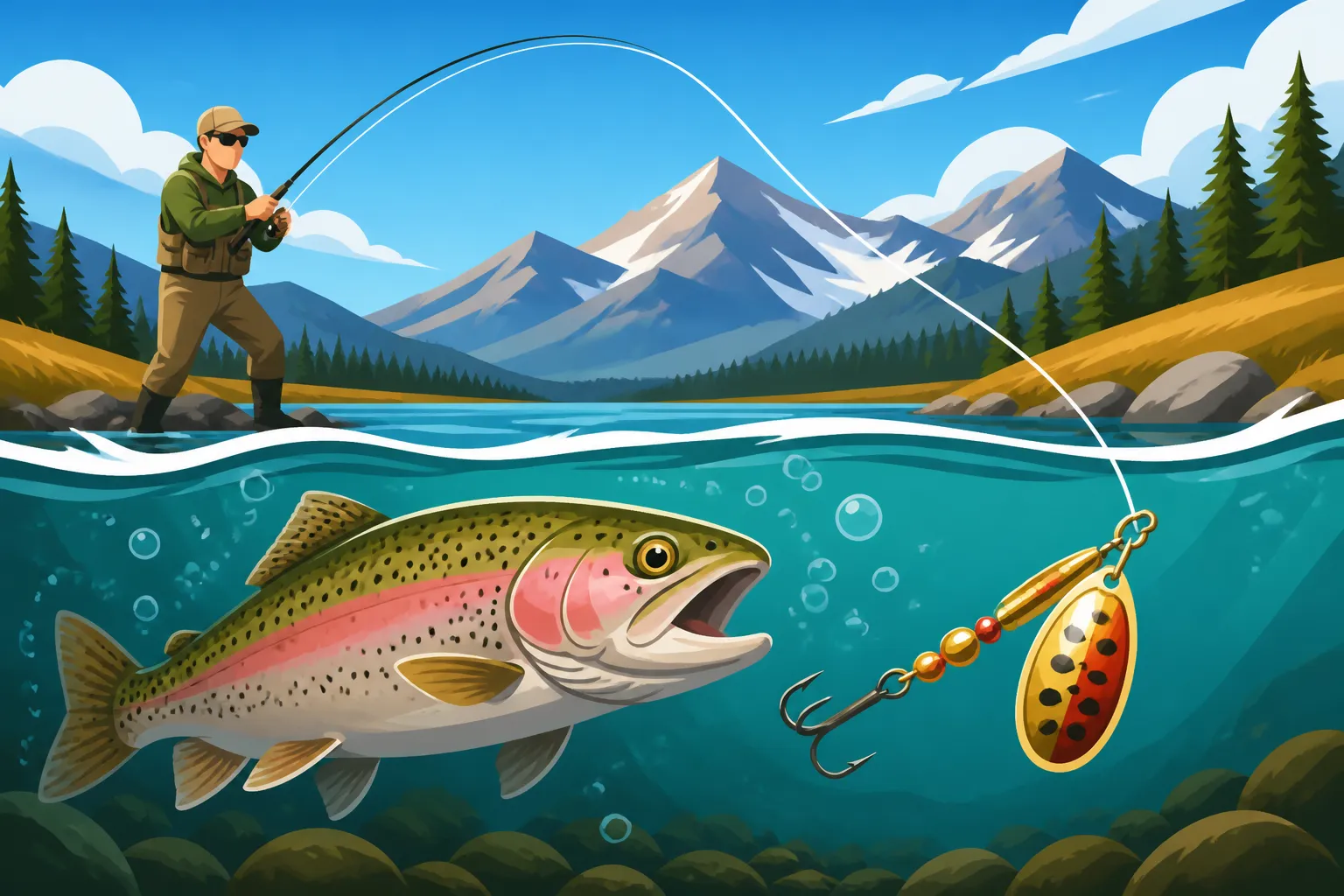
Imagine yourself as a hungry rainbow trout. You're holding in a current, waiting for an easy meal to drift by. Suddenly, something glimmers and twirls, sending out subtle vibrations in the water. That's exactly what a spinner does! The rotating blade, whether it's an inline spinner or a French blade, creates a flash that mimics a fleeing baitfish or an insect struggling in the water. This visual appeal, combined with the hydrodynamic vibrations, triggers a predatory response in trout that's hard for them to ignore. They don't have time to overthink it; their instinct is to strike.
This isn't just about drawing attention in clear water either. In slightly off-color or murky conditions, the vibration becomes even more crucial, allowing trout to locate the lure through their lateral line system. It’s like a beacon calling them in. The consistency of this attraction is why many anglers, myself included, will always have a few reliable spinners in their kit, ready to go. You can find a wide variety of these effective lures on sites like Amazon, making it easy to stock up.
Versatility in Various Wyoming Waters
One of the biggest advantages of spinners is their incredible adaptability across different fishing environments that Wyoming offers. From the roaring currents of the North Platte River to the tranquil depths of high-alpine lakes, a spinner can be adjusted to suit the conditions. Fast-flowing rivers? A heavier spinner can cut through the current and stay in the strike zone. Still water lakes? A lighter, slower-retrieved spinner can mimic a cruising minnow.
You're not limited to just one type of water either. Spinners are fantastic for casting from shore, wading in streams, or even trolling from a boat. This versatility means you don't need a tackle box overflowing with different lure types; a selection of spinners in various weights and colors can cover most scenarios you'll encounter when targeting rainbow trout in Wyoming. It simplifies your gear, allowing you to focus more on presentation and less on constantly switching lures.
Choosing the Right Spinner for Wyoming Rainbows
Stepping into a tackle shop or browsing online for spinners can be overwhelming. There are so many brands, sizes, colors, and blade types! But don't fret. For Wyoming rainbow trout, narrowing down your choices based on a few key factors will dramatically improve your chances of success. It's not about having every spinner under the sun, but having the right spinners for the conditions you're fishing.
Size and Weight Considerations
The size and weight of your spinner are paramount, directly influencing how it performs in the water and how appealing it is to the trout. A spinner that's too heavy for a shallow stream will constantly snag, while one that's too light for a deep reservoir won't get down to where the fish are holding.
For most Wyoming streams and rivers, especially those with moderate current, spinners in the 1/8 to 1/4 ounce range are often ideal. These sizes cast well with light tackle and can be retrieved effectively without getting swept away or sinking too fast. If you're tackling larger, deeper rivers or lakes, you might size up to a 3/8 or even 1/2 ounce to achieve greater casting distance and depth. For smaller creeks or high-alpine lakes where stealth is key, going as light as 1/16 ounce can make a huge difference in enticing finicky fish. Remember that the blade size often correlates with the spinner's overall weight, with larger blades providing more lift and flash. Understanding these nuances will make a big difference in how you approach How to Read Water When Trout Fishing.
Color and Blade Type
Just like fly patterns, spinner colors and blade types have their moments to shine. While trout aren't as discerning as some anglers believe, having a few options can certainly help you adapt to changing conditions and fish preferences.
Color:
- Bright Colors (Fluorescent orange, chartreuse, fire tiger): These are fantastic for stained or murky water, overcast days, or at dawn/dusk when visibility is low. The vibrant hues stand out, drawing attention.
- Natural Colors (Silver, gold, copper, black, brown): These mimic natural baitfish or insects and are often best in clear water or bright, sunny conditions. Silver is a universal favorite, reflecting light brilliantly. Gold can be excellent on sunny days or in waters with a slight tannin stain.
- Darker Colors (Black, purple): Sometimes, especially on bright days or in heavily fished waters, a subtle, darker profile can be more effective. Black, in particular, creates a strong silhouette against a bright sky.
Blade Type:
- Colorado Blades: These are rounder and wider, producing maximum thump and vibration. They spin at a wider angle, making them great for slow retrieves or in situations where you need to generate a lot of disturbance. They're excellent in murky water or when fishing deeper.
- Willowleaf Blades: Long and slender, these blades spin closer to the body of the lure, creating less resistance and more flash. They're ideal for faster retrieves, deeper water, or when fishing through heavy current where you want minimal drag.
- French Blades (e.g., Aglia, Comet): These are a hybrid, often teardrop-shaped, offering a balance of flash and vibration. They're incredibly versatile and a go-to for many anglers in a variety of conditions. Brands like Mepps and Rooster Tail are classic examples that utilize this type of blade, and you can often find great multi-packs of these on Amazon.
A good starting point for Best Lures for Wyoming Rainbow Trout typically includes a mix of silver, gold, and perhaps a bright chartreuse or orange in French or Colorado blades.
Single Hook vs. Treble Hook
Most spinners come equipped with a treble hook, which has three points. While highly effective at hooking fish, treble hooks can cause more damage to a trout, especially if you plan on releasing them. For anglers practicing Catch and Release Best Practices for Trout, switching to a single, barbless hook is a common and highly recommended modification.
Many brands like Blue Fox and Panther Martin offer spinners with trebles, but you can easily snip off two of the points with pliers or replace the treble with an appropriately sized single, barbless hook. This small change significantly reduces harm to the fish, making the release process quicker and less stressful for the trout. It also makes unhooking the fish safer for you, especially when dealing with a feisty rainbow. This simple switch is a testament to the growing ethic of conservation among Wyoming anglers.
Techniques for Success: Casting, Retrieving, and Presenting
Using a spinner effectively isn't just about throwing it out and reeling it in. There's an art to the cast, the retrieve, and how you present that lure to maximize its tantalizing appeal to a hungry rainbow trout. Mastering these techniques will elevate your spinner fishing game considerably.
Precision Casting and Placement
Your cast is the first step in a successful retrieve. Rainbow trout often hold in specific areas, so getting your spinner precisely where you want it is crucial. This is especially true in streams and rivers where fish might be tucked behind rocks, under fallen logs, or along current seams.
- Upstream or Up-and-Across Casting: In rivers, casting upstream or slightly up and across the current allows your spinner to drift naturally downstream, mimicking a dislodged food source. As the current carries it, you can begin your retrieve, allowing the spinner to work its way through prime holding water. This technique also gives the trout a head-on view of the lure first, making it seem less suspicious.
- Accuracy is Key: Aim for structure! Whether it's the edge of a submerged log, the eddy behind a large boulder, or the deeper water along an undercut bank, these are prime ambush points for trout. Practice your casting to place your spinner within inches of these spots. If you're having trouble with accuracy, consider a Best Rod and Reel Combo for a Beginner with a balanced setup and a lighter line, perhaps in the How Much Line Weight to Use for Trout category.
- Stealthy Approach: Rainbows, particularly wild ones, can be quite spooky. Avoid heavy footfalls on the bank or casting shadows over the water. A smooth, quiet cast is always better than a loud splash that sends fish scattering.
Mastering the Retrieve
The retrieve is where the magic happens with a spinner. It's about maintaining the right speed and imparting subtle actions that make your lure come alive. The goal is to keep the blade spinning consistently, but not monotonously.
- Steady Retrieve: For a general approach, a steady retrieve speed that keeps the blade spinning is your baseline. You should feel a slight thrumming in your rod tip as the blade rotates. Adjust your speed based on the current: faster current means a slower retrieve to allow the spinner to sink, while slower water might require a slightly faster retrieve to keep the blade turning.
- Varying Your Speed: Don't just reel it in at one pace. Introduce subtle pauses, quick twitches, or momentary accelerations. These changes in speed can often trigger a strike from a hesitant trout, mimicking an injured baitfish or insect. A brief pause can make the spinner flutter and drop, often provoking a follow-up bite.
- "Lift and Drop" in Deeper Water: When fishing deeper pools or lakes, try a lift-and-drop technique. Cast out, let the spinner sink for a few seconds (counting can help you replicate depth), then lift your rod tip to pull the spinner up and start the blade spinning. As you lower your rod tip, reel in the slack and let the spinner flutter back down. Many strikes occur on the fall.
Depth Control and Presentation Angles
The depth at which your spinner runs and the angle it presents to the fish can be as important as its color or size. Trout often feed in specific layers of the water column, and getting your spinner into that zone is vital.
- Letting it Sink: After casting, especially in deeper water, allow your spinner to sink for a few seconds before beginning your retrieve. This gives it a chance to get down to where the trout are holding. Experiment with different sink times until you find the sweet spot.
- Angle of Approach: When fishing rivers, consider the angle at which your spinner approaches the fish. Casting slightly upstream and allowing the current to sweep the lure downstream can offer a natural, unsuspecting presentation. For Reading Riffles and Runs on Wyoming Trout Streams, understanding how current works with your spinner is key. Casting directly across or slightly downstream can also be effective, especially when you want the spinner to quickly swing into an eddy or slower pocket of water.
- Current Seams and Eddies: These are prime holding areas. Fish will often sit on the edge of a fast current, waiting for food to be swept past. Cast your spinner into the faster water and allow it to drift into the slower, more accessible zone where the trout are waiting. The change in current often imparts an irresistible action to your spinner.
Reading the Water and Finding Rainbow Trout
One of the most valuable skills any angler can develop, especially when fishing for rainbow trout, is the ability to "read the water." This isn't just about knowing where the deepest holes are; it's about understanding how water flows, where fish seek cover, find food, and conserve energy. This skill, honed over countless hours on the water, will help you decide not just where to cast, but how to present your spinner most effectively.
Identifying Prime Holding Water
Rainbow trout are opportunistic feeders, but they're also smart. They want to expend as little energy as possible while maximizing their food intake. This means they'll position themselves in spots that offer a steady supply of food, protection from predators, and a break from strong currents.
- Current Seams and Edges: Look for areas where fast water meets slow water. These "seams" are highways for drifting insects and baitfish. Trout will often hold in the slower water just off the main current, darting out to snatch food. These are fantastic places to cast a spinner, letting it drift along the seam.
- Structure: Submerged rocks, fallen trees, logjams, and undercut banks provide excellent cover and ambush points. Trout feel safe in these areas and will often lie in wait for prey. Cast your spinner as close as you dare to these structures, being mindful of potential snags. The more structure, the more likely fish are present.
- Deep Pools: Especially in smaller streams, deep pools offer trout refuge from predators and warmer temperatures in summer or colder temperatures in winter. These are classic spots for rainbows. Let your spinner sink a bit before starting your retrieve to ensure it gets down into the strike zone.
- Oxygenated Water: Riffles, rapids, and the tailouts of pools are highly oxygenated areas where aquatic insects thrive. While the current can be strong, trout will often position themselves in the calmer pockets within or adjacent to these areas. A well-placed spinner can be deadly here. In many parts of Wyoming, you'll find these elements in rivers like the Green River, a fantastic place to test your skills.
Seasonal and Environmental Influences
Rainbow trout behavior, and therefore the effectiveness of your spinner, can change dramatically with the seasons and environmental conditions. Being aware of these influences can help you adjust your tactics and increase your success.
- Spring: As runoff subsides and waters begin to clear, rainbows become very active. They're recovering from winter and eager to feed. High, clear water often means fish are spread out, and a bright, flashy spinner can help them locate your lure. Keep an eye on Wyoming Fishing Seasons and Water-Specific Closures as spring also brings important spawning activities for various species.
- Summer: During the heat of summer, rainbows will often seek cooler, more oxygenated water. This might mean deeper pools, shaded areas, or higher elevation streams. Early morning and late evening are often the best times to fish with spinners, as trout are more active during cooler periods. Understanding How Water Temperature Affects Trout Feeding is crucial here.
- Fall: This is a prime time for many trout species, including rainbows. As water temperatures drop, trout become more aggressive, feeding heavily before winter. Brown trout also start their spawning runs, and while you're targeting rainbows, you might hook into a bonus brown. Flashy, larger spinners can be very effective in fall.
- Winter: Ice fishing is popular in Wyoming during winter, but open water fishing for rainbows can still be productive on certain tailwaters or spring-fed streams. Fish are often slower, so a very slow retrieve or a jigging motion with your spinner might be more effective.
Table: Spinner Selection for Wyoming Rainbow Trout Conditions
| Condition | Recommended Spinner Size (oz) | Recommended Blade Type | Recommended Colors | Retrieval Tip |
|---|---|---|---|---|
| Clear, Sunny Stream | 1/16 – 1/8 | French, Willowleaf | Silver, Gold, Natural Minnow | Steady, subtle twitches, casting upstream |
| Moderate River Current | 1/8 – 1/4 | French, Colorado | Silver, Gold, Copper | Varied speed, allow to drift into current seams |
| Deep Lake/Reservoir | 1/4 – 3/8 | Colorado, Willowleaf | Silver, Gold, Bright Orange | Lift-and-drop, allow deeper sink time |
| Murky/Overcast Water | 1/8 – 1/4 | Colorado | Chartreuse, Fire Tiger, Black | Slower retrieve, emphasize vibration |
| Small Creek/Shallow | 1/16 – 1/8 | French, Small Colorado | Natural, Brown, Black | Stealthy casts, very slow and steady retrieve |
Utilizing Stocked Waters and Local Knowledge
Wyoming Game and Fish Department does an incredible job of managing and stocking many waters with rainbow trout. These stocked fish are often less wary and can be excellent targets for spinners, especially for beginners or those looking for more consistent action. Learning Where Wyoming Stocks Rainbow Trout and How to Find Recently Stocked Wyoming Waters can point you to some fantastic spinner fishing opportunities.
While wild trout might be more challenging, they also offer immense satisfaction. Don't be afraid to ask local tackle shops or fellow anglers for advice. They often have invaluable insights into current conditions, what's biting, and what colors or sizes are working. Combine this local knowledge with your understanding of spinner mechanics and trout behavior, and you'll be well on your way to a successful day on the water.
Disclaimer
Fishing regulations can change frequently. Always consult the most current Wyoming Game and Fish Department regulations booklet before heading out. This guide is for informational purposes only and does not supersede official regulations.