Reading Riffles and Runs on Wyoming Trout Streams
It's happened to all of us, hasn't it? You arrive at a beautiful Wyoming trout stream, gear in hand, full of anticipation, only to stare at the water and feel completely overwhelmed. Where do you even begin? The water swirls, gurgles, and rushes by, and you just know there are trout in there, but finding them feels like solving a riddle. Trying to blindly cast without understanding where the fish are holding is one of the most frustrating experiences in fishing. This guide is here to demystify the art of reading riffles and runs, helping you unlock the secrets of trout habitat in Wyoming's incredible waterways so you can spend less time guessing and more time catching.
Understanding the Basics of Stream Structure
Before we dive into the nitty-gritty of where fish hide, let's get a handle on the basic vocabulary of a trout stream. Rivers and creeks aren't just uniform channels; they're dynamic environments with distinct features, each offering different conditions that appeal to trout at various times. Learning to recognize these features is the first step in becoming a savvy angler.
What Are Riffles and Runs?
Think of a stream as a series of different rooms in a house, each with its own purpose. Riffles and runs are two of the most common and important "rooms" for trout.
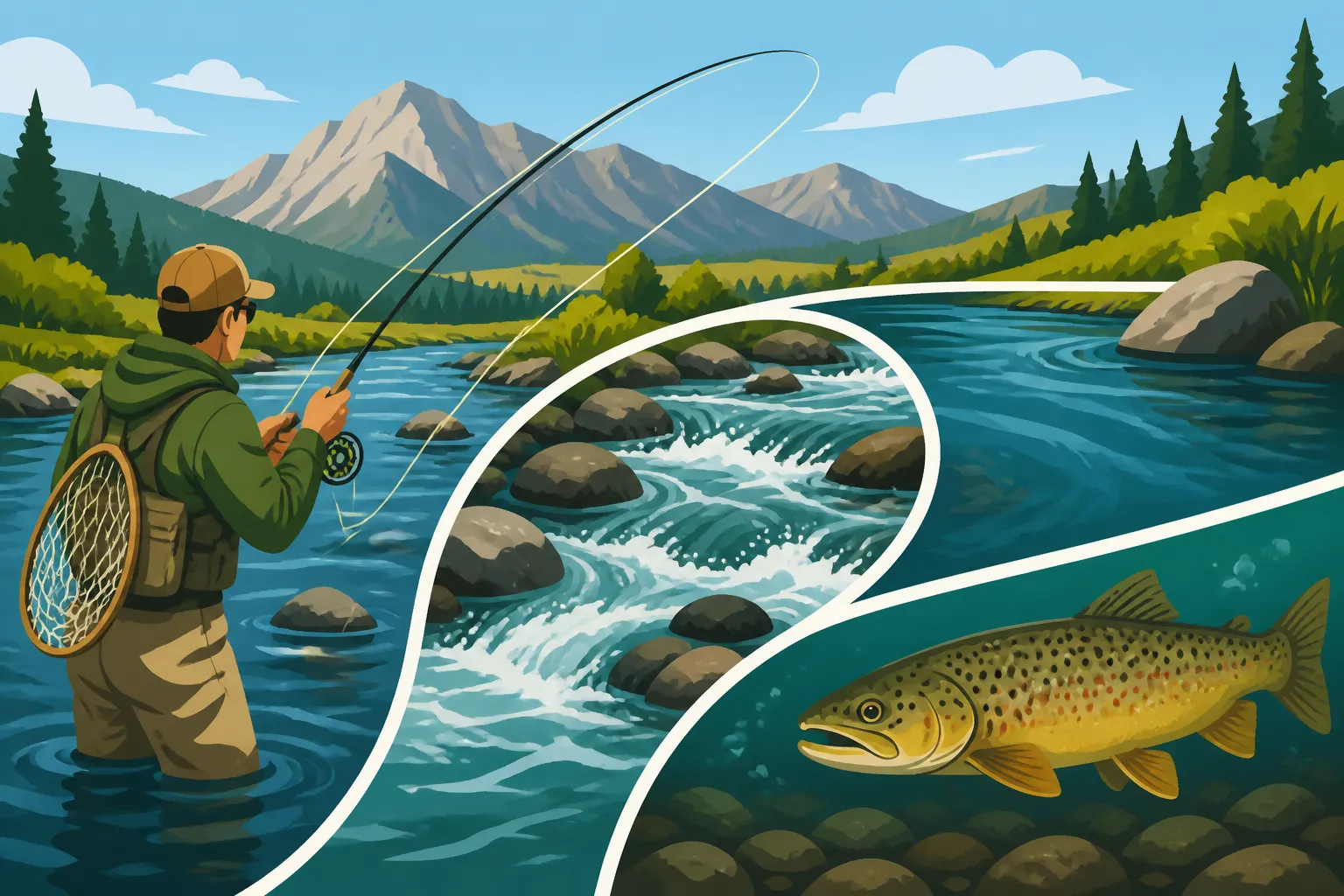
- Riffles: These are the shallow, fast-moving sections of a stream where the water flows over rocks, gravel, and other uneven bottom structures. They're typically characterized by a broken, bubbly surface and often sound like rushing water. Riffles are like the stream's kitchen – bustling with activity and food. The churning water oxygenates the stream, and the disturbance dislodges insects, sending them downstream like a conveyor belt of delicious snacks. While the surface might look chaotic, below it, trout find plenty of places to stage and feed. You might often see insects hatching and drifting right out of these areas, making them incredibly attractive to hungry fish.
- Runs: In contrast, runs are generally deeper, smoother sections of water that follow riffles or pools. The current here is more consistent and less turbulent than in a riffle, but it's still moving purposefully. Imagine a run as the stream's dining room – a place where trout can comfortably position themselves to intercept food drifting from upstream without expending too much energy. They offer a fantastic balance of current, depth, and cover, making them prime habitat for trout, especially larger ones looking for a more relaxed feeding station.
The Importance of Current Speed and Depth
Trout are efficiency experts. They want to find the most food with the least amount of effort, all while staying safe from predators. This means understanding current speed and depth is absolutely critical. A trout won't sit in the fastest current if it means constantly fighting to stay put and burning more calories than it gains. Similarly, it won't linger in water too shallow where it's exposed to overhead predators like ospreys or eagles.
Think about it: the fastest part of the current brings the most food, but it also demands the most energy. Trout will often position themselves just out of the main current, in what we call a "current seam" or "holding lie." These spots offer a slight reprieve from the full force of the flow while still providing a direct line to the buffet. The deeper the water, generally, the safer a trout feels, offering more protection and thermal stability. This is especially true on bright, sunny days or when water temperatures are either too cold or too warm on the surface. Understanding these nuances is key to knowing How Water Temperature Changes Wyoming Trout Behavior and where fish will seek refuge.
Decoding Riffles for Trout
Riffles are often overlooked by novice anglers who see only shallow, turbulent water. However, for those who know how to read them, they are incredibly productive zones, especially during active feeding periods.
Where Trout Hold in Riffles
Despite their appearance, riffles are full of holding water for trout. The key is to look for structure and subtle changes in current.
- Behind and Around Boulders: Any large rock or boulder in a riffle creates a "cushion" of slower water directly upstream and a calm "eddy" downstream. Trout love these spots. They can sit in the slower water, expend minimal energy, and wait for food to drift directly to them. The bigger the rock, the more significant the break in current, and the better the potential holding lie. Smaller rocks and gravel offer similar, albeit smaller, breaks.
- Seams and Current Breaks: As water flows over an uneven bottom, faster currents will run alongside slower currents. The boundary where these two currents meet is called a "current seam." Trout often tuck themselves right into these seams, benefiting from the slower water while still being adjacent to the main food delivery system. Look for subtle lines on the surface where the water changes texture or speed – these are visual clues to productive seams.
- Deeper Channels Within Riffles: Sometimes, a riffle isn't uniformly shallow. There might be slightly deeper depressions or channels carved out by the current. These deeper troughs offer a bit more cover and comfort for trout within the generally shallower riffle environment. They're often identifiable by a darker hue in the water or a smoother flow amidst the chop. A good pair of polarized sunglasses (you can find many effective options on Amazon) can really help you spot these underwater features by cutting the glare.
Fishing Strategies for Riffles
Fishing riffles effectively usually involves presenting your fly or lure in a way that mimics natural drift, getting your offering right into those current breaks.
- Upstream Nymphing: This is a classic and highly effective method for riffles. You cast your weighted nymph rig slightly upstream of where you think trout are holding, allowing it to drift naturally downstream through their feeding lane. The turbulent water helps to mask your line, and the natural drift is irresistible to hungry fish. Learning Nymphing Techniques for Wyoming Tailwaters can significantly boost your success in these areas, as many of the principles apply to general stream nymphing as well.
- Short-Line or High-Sticking: For very broken, shallow riffles, getting a long, drag-free drift can be tough. High-sticking involves keeping most of your fly line off the water, using the rod tip to guide your leader and fly through the productive zones. This minimizes drag and keeps your fly in the feeding zone longer. It's an active, hands-on approach that requires focus but pays off when executed correctly.
- Dry Fly Opportunity: Don't forget dry flies in riffles, especially during an active hatch. The broken surface camouflages any slight drag and the trout are already looking up for emerging insects. If you see trout rising in a riffle, don't hesitate to cast a dry fly pattern that matches the hatch. Sometimes, you'll find them eagerly taking dries even in surprisingly fast water.
Mastering the Runs: Prime Trout Territory
Runs are arguably the most consistent and often most productive parts of a trout stream. They offer a blend of depth, current, and cover that trout, especially larger, more wary individuals, find ideal.
Identifying Productive Runs
Not all runs are created equal. The most productive ones share certain characteristics that savvy anglers learn to spot.
- Long, Uniform Flow with Subtle Structure: The best runs typically have a good length, allowing trout plenty of time to react to drifting food. While the surface might appear smooth, look for subtle depressions, gravel beds, or submerged rocks that break the uniform flow. These are often the key features that concentrate fish. A run that flows into or out of a deeper pool is often highly productive, as trout will move between the two areas.
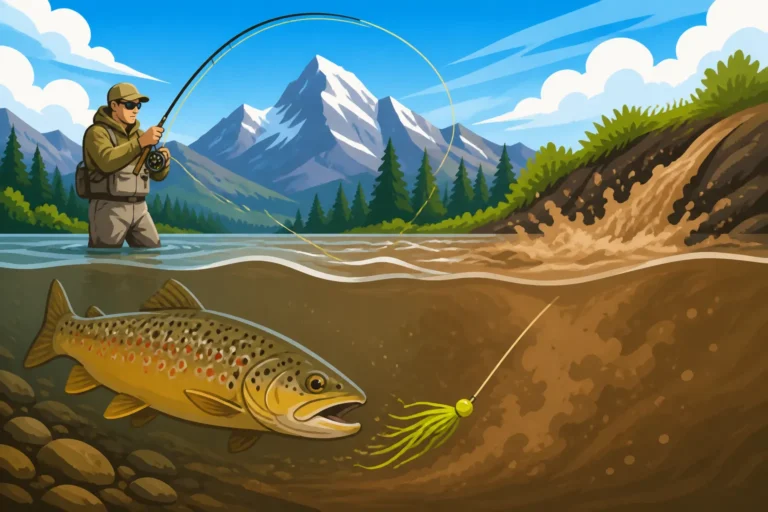
- Undercut Banks and Overhanging Vegetation: Trout absolutely love cover, and undercut banks provide exceptional protection. The current carves out a hollow beneath the bank, offering a dark, safe haven where trout can ambush prey without being seen. Similarly, overhanging willows, grasses, or tree branches create shaded areas and drop insects into the water, making them magnets for trout. These areas also offer excellent thermal refuge on hot summer days. Learning How to Fish an Undercut Bank can dramatically increase your success in these prime spots.
- Confluence of Currents (Seams): Similar to riffles, runs also have current seams. These are often more pronounced where a faster channel merges with a slower one, or where water flows around larger submerged obstacles. Trout will stack up along these seams, patiently waiting for food. You'll often see distinct lines on the water's surface, almost like two different currents are running side-by-side. These visual cues are invaluable.
Fishing Techniques for Runs
Fishing runs effectively requires precision and an understanding of how trout will position themselves to intercept food.
- Swinging Wet Flies or Streamers: This technique is especially good for brown trout in Wyoming, who are known to be aggressive predators. You cast across and slightly downstream, allowing your wet fly or streamer to swing through the run, imitating a baitfish or large aquatic insect moving across the current. This often triggers a territorial strike, especially from larger fish. For an in-depth look at this, check out Streamer Fishing for Wyoming Brown Trout.
- Indicator Nymphing: This is a fantastic way to fish runs, especially if you're targeting fish holding near the bottom. By using a strike indicator, you can precisely control your depth and detect even the most subtle bites. Cast upstream of your target, mend your line to ensure a drag-free drift, and watch that indicator like a hawk. The consistent flow of a run makes it easier to achieve long, drag-free drifts compared to the choppier riffles.
- Dry-Dropper Rigs: When trout are feeding both on the surface and subsurface, a dry-dropper rig can be incredibly effective in runs. The dry fly acts as both your "strike indicator" and a potential target for surface feeders, while the nymph below covers the subsurface feeding lanes. This allows you to explore multiple water columns simultaneously, doubling your chances. Many anglers purchase pre-tied leader and tippet setups on Amazon, which can save time on the water.
Here's a quick comparison of riffles and runs:
| Feature | Riffles | Runs |
|---|---|---|
| Depth | Generally shallow | Generally deeper than riffles |
| Current Speed | Fast, turbulent, broken surface | Moderate, consistent, smoother surface |
| Oxygenation | High (turbulent flow) | Good |
| Food Supply | High (dislodged insects, active hatches) | Consistent (food drifting from upstream) |
| Trout Comfort | Good for active feeding, cover from turbulence | Excellent, good balance of food, current, cover |
| Typical Trout | Actively feeding smaller to medium trout | All sizes, often larger, more wary trout |
| Best Techniques | Upstream nymphing, high-sticking, dry flies | Indicator nymphing, swinging streamers, dry-dropper |
The Hidden Gems: Eddies, Seams, and Pocket Water
While riffles and runs are the main characters, a truly savvy angler knows that the supporting cast of stream features – eddies, seams, and pocket water – can often hold some of the biggest or most concentrated numbers of trout. These are often overlooked or dismissed as too tricky to fish, but with a little practice, they can be incredibly rewarding.
Exploring Eddies and Seams
These aren't just minor features; they are crucial micro-habitats where trout conserve energy and feed opportunistically.
- Eddies: An eddy is a section of water where the current creates a circular or reverse flow, often found behind large obstructions like boulders, log jams, or points of land. Think of it as a calm harbor next to a busy shipping lane. Trout love eddies because they can sit in the still or slow-moving water, facing the main current, and let food literally drift into their mouths. The biggest frustration with eddies is often trying to get a drag-free drift, as the conflicting currents can pull your line in different directions. The key is often to cast upstream of the eddy and let the current naturally sweep your fly into it, or make very short, precise casts.
- Seams: We’ve touched on seams already, but it's worth emphasizing their importance. They are the transition zones where fast water meets slow water. Trout will hold right on the edge of the fast current, darting out to grab food items that are swept past them. These are often visual puzzles, requiring careful observation. A great example of a seam is where a fast riffle spills into a slower, deeper run. The edges of the faster water will be prime feeding lanes. When fishing larger rivers like the North Platte, understanding these seams is critical, especially when considering techniques like Dry Fly Fishing on the North Platte River where precise drifts are paramount.
Navigating Pocket Water
Wyoming has countless mountain streams and smaller freestone rivers that are almost entirely made up of what we call "pocket water." This means the stream is characterized by a series of small, distinct pockets of calmer water interspersed with fast, turbulent flows, usually created by abundant rocks and boulders.
- Targeting Individual Pockets: In pocket water, each small patch of calm behind a rock or in a small depression is its own mini-holding lie. Instead of long drifts, you're making short, precise casts to individual pockets. The goal is to drop your fly or lure into a pocket, allow a very short drift, and then pick it up to cast to the next one. This requires accuracy and speed. Don't spend too much time in any one pocket; if there's a fish, it will usually strike quickly.
- The Element of Surprise: Trout in pocket water often have very limited visibility due to the broken surface, but they are incredibly opportunistic. This means you can often approach closer than in smoother, clearer water. However, stealth is still important. Avoid casting a shadow over the pocket or making unnecessary noise. Often, the biggest fish will be in the deepest, most protected pockets, so always explore those areas. This approach is highly effective for fishing in the more remote regions, often considered part of Fishing Wyoming's Wilderness and Backcountry Lakes once you get above the main rivers.
Factors Influencing Trout Location
Reading the water isn't just about identifying structures; it's also about understanding the dynamic conditions that make a particular spot more or less attractive to trout at any given moment. Trout are creatures of comfort and opportunity, constantly adjusting their positions based on their environment.
Water Temperature and Oxygen Levels
These two factors are inextricably linked and profoundly impact where trout choose to hold.
- Temperature Sensitivity: Trout, especially cold-water species like our beloved cutthroats and rainbows in Wyoming, have preferred temperature ranges. If the water is too warm, they become sluggish and seek out cooler, more oxygenated water, often found in deeper pools, spring creeks, or the shaded sections of runs. Conversely, if the water is too cold (near freezing), they might move into deeper, more stable areas where the water doesn't fluctuate as much, such as the bottom of deep runs or large pools. Understanding How Water Temperature Changes Wyoming Trout Behavior is critical for fishing throughout the seasons.
- Oxygen Requirements: Fast-moving, turbulent water – like riffles and the top of runs – constantly mixes with the air, becoming highly oxygenated. This is why trout are often found in these areas during warmer months when oxygen levels can drop in slower, deeper sections. Conversely, during periods of very low water or stagnant conditions, trout will actively seek out the most oxygenated parts of the stream, even if it means moving into less ideal feeding positions. This is particularly relevant when dealing with varying water flows, such as after heavy rains or during periods of drought.
Food Sources and Cover
These are the primary drivers of where a trout decides to set up its home.
- The Buffet Line: Trout are always looking for the best "buffet line"—places where food is abundant and easily accessible. Riffles and the heads of runs are classic examples, as the current dislodges nymphs and sweeps terrestrial insects into the water. During specific hatches, trout will move into shallower, faster water where insects are emerging. For instance, knowing Matching the Hatch on Wyoming Rivers allows you to anticipate where trout will be feeding during different insect emergences. If a particular riffle consistently produces a strong hatch, trout will congregate there.
- Safety and Comfort: Beyond food, trout need to feel safe. This means proximity to cover is paramount. Cover can be anything that provides shelter from predators (birds, otters, larger fish, or even us!) and offers a break from the main current. This includes:
- Submerged Rocks and Boulders: We've discussed these in riffles and runs; they provide both current breaks and visual protection.
- Undercut Banks: Natural overhangs that create a dark, protected hideaway.
- Log Jams and Fallen Trees: These create complex structure, offering multiple hiding spots and deflecting currents.
- Deep Water: Simply having enough water overhead makes trout feel more secure, which is why deeper pools and runs are so important, especially for larger fish. A good example is understanding How to Fish a Deep Pool for Big Trout, as these often adjoin productive runs.
- Overhanging Vegetation: Provides shade and a visual barrier from above.
Putting It All Together: A River Reading Checklist
Reading a trout stream is an acquired skill, much like learning a new language. It takes practice, patience, and a keen eye. But with a systematic approach, you can significantly improve your ability to locate trout.
Pre-Fishing Observation
Don't just jump into the water and start casting! Take a few minutes, or even longer, to simply observe the water before you make your first cast. This "scouting" phase is often where you gather the most valuable information.
- Observe from a Distance: Before you get too close and potentially spook fish, stand back from the bank and scan the water. Use those polarized sunglasses! Look for subtle rises on the surface, indicating active feeding. Watch for current seams, changes in water color that suggest deeper spots, and any visible structure like large rocks or logs.
- Identify Riffles, Runs, and Pools: Mentally (or even physically, if you're exploring a new stretch) break the river down into its main components. Where are the obvious riffles? How do they transition into runs? Are there any deep pools, and if so, how does the water flow into and out of them? These transitions are often hot spots.
- Look for Natural Food Sources: Are there any insects hatching? Are there grasshoppers or other terrestrials along the banks? Seeing what's available for trout to eat will tell you a lot about where they might be positioned. Sometimes, a quick check of the undersides of rocks in a riffle can reveal what nymphs are present. This kind of detective work is crucial when you're preparing for a day of fishing.
On-the-Water Adjustments
Even the best plan needs to be flexible. Once you start fishing, the river will tell you more, and you need to be ready to adapt.
- Start with the Most Promising Water: Based on your observations and what you've learned about trout behavior, target the most likely holding water first. Often, this means the head of a run just below a riffle, or deep pockets in a riffle. Remember, the areas where current slows but food is still delivered efficiently are typically your best bets.
- Experiment with Presentation and Depth: If you're not getting bites, don't be afraid to change things up. Try different depths with your nymphs by adding or subtracting weight. Vary your retrieve speed with streamers. If you're dry fly fishing, try different patterns or approach angles. Fish can be incredibly particular. Learning How to Read Water When Trout Fishing is an ongoing process that refines with every cast and every observation.
- Move Stealthily and Methodically: Trout are incredibly sensitive to vibrations and shadows. Approach promising water cautiously, staying low and out of sight as much as possible. Work your way upstream if wading (to avoid stirring up sediment that drifts over unfished water) or downstream if fishing from the bank in certain situations. Don't be afraid to move if a spot isn't producing. Often, just a few feet up or downstream can put you on fish. Many experienced anglers invest in high-quality waders and wading boots (readily available on Amazon) to navigate these streams comfortably and safely, allowing them to access the best holding lies.
By dedicating time to understanding these fundamental principles, you’ll transform your approach to Wyoming trout streams from guesswork into a focused, deliberate, and far more rewarding experience. Happy fishing!
Disclaimer
Please remember that fishing regulations in Wyoming can change. Always consult the latest Wyoming Game and Fish Department regulations booklet or their official website before heading out to fish. This guide provides general information and best practices, but specific water closures, bag limits, or special restrictions may apply to certain areas or times of year.