How to Fish Dry Flies on Slow-Moving Water
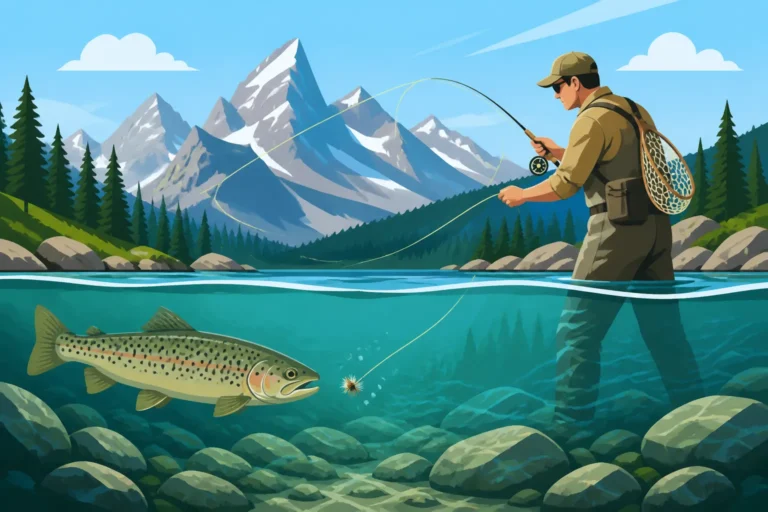
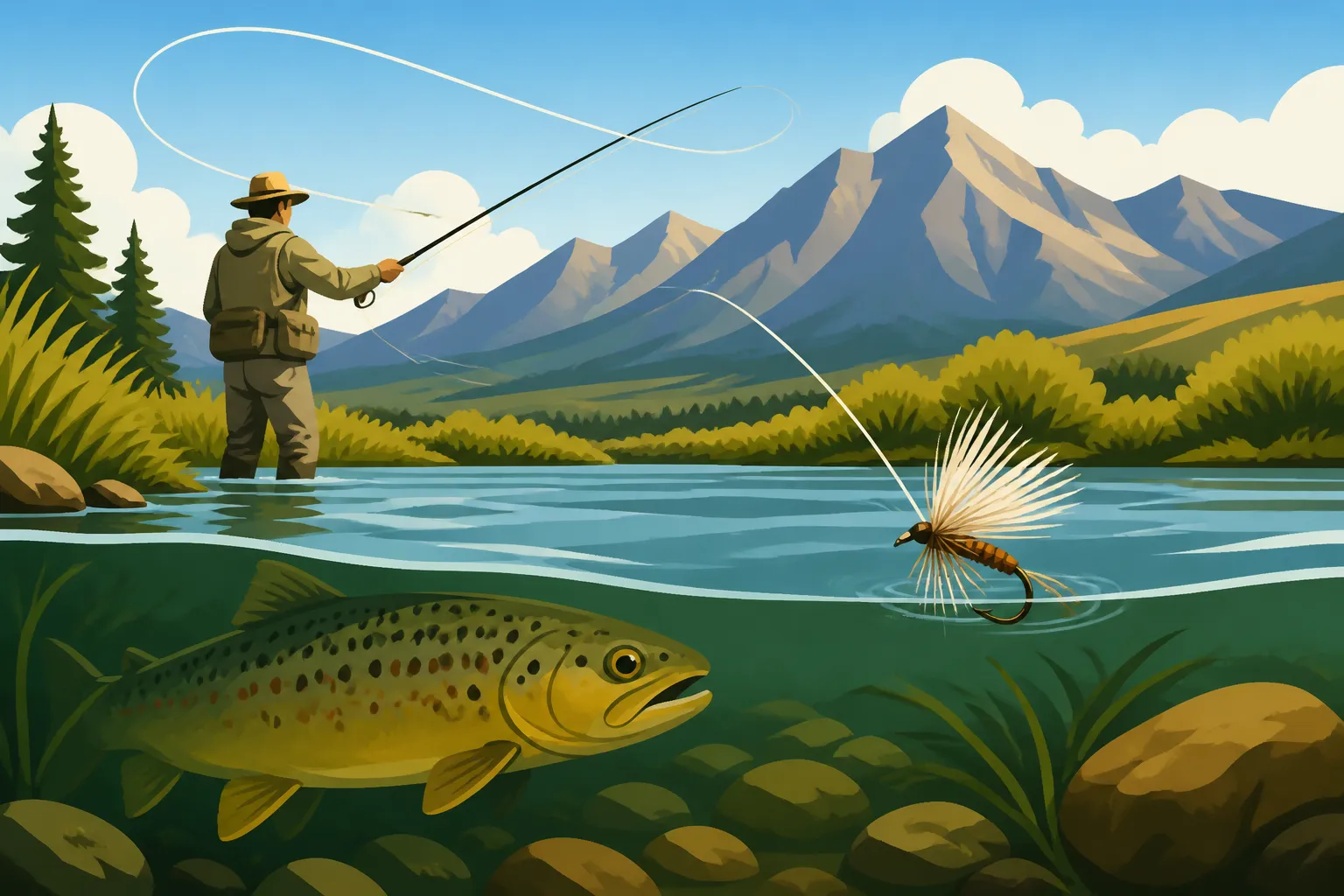
There’s nothing quite like the sight of a trout sipping a dry fly from the surface. It’s the stuff of legends and a truly exhilarating moment for any angler. But let's be honest, trying to present a tiny dry fly on slow, glassy water can be maddeningly frustrating. The fish have all the time in the world to inspect your offering, and even the slightest drag can send them darting away in disgust. If you've ever felt like giving up on dry fly fishing in those conditions, this guide is for you. We're going to break down how to get that perfect, natural drift that makes even the pickiest Wyoming trout commit.
Understanding the Unique Challenges of Slow Water Dry Fly Fishing
Fishing dry flies on slow-moving currents is a completely different ballgame than flicking a Caddis into a riffle. The subtle nature of these waters amplifies every single variable, turning what might be a minor imperfection elsewhere into a glaring red flag for a discerning trout. It's a test of patience, precision, and an almost invisible touch.
The Hyper-Alert Trout and Long Inspection Times
Imagine you're a trout in a slow, clear pool on the Laramie River. Food drifts by at a leisurely pace, giving you plenty of time to analyze it. Is it real? Is it what you're looking for? Now, if a fly comes floating by with an unnatural drag, pulling it slightly against the current, or if the leader is thick and creates a visible disturbance, you're going to notice. This extended inspection window is why trout in slow water are notoriously picky. They aren't in a rush to grab a quick meal before it washes away; they have the luxury of being scrutinizing critics.
This heightened sense of awareness means your fly imitation needs to be spot-on, and your presentation even more so. A trout will often position itself in a way that gives it a clear view of the surface, peering upwards with an almost scientific gaze. If your fly lands with a plop, or if the line visibly pulls the fly just a fraction of an inch faster or slower than the current, that fish is going to shut down instantly. It’s a silent conversation between you and the fish, and your job is to speak its language flawlessly.
The psychological impact on the angler can be just as significant. You see the fish, you know it's there, and you watch it rise to everything but your fly. The anticipation builds, and with each refusal, the pressure mounts. It's easy to get frustrated and start changing flies or casting aggressively, which only exacerbates the problem. The key is to remain calm, observant, and trust in a delicate approach.
The Dreaded Drag and Its Causes
Ah, drag – the arch-nemesis of every dry fly angler, magnified tenfold in slow water. Drag occurs when your fly moves at a different speed or direction than the natural current. Even in seemingly placid pools, there are countless "micro-currents" or different current speeds within inches of each other. The water closer to the bank or around a submerged rock might be slower, while the main channel moves a little faster. If your fly is in one current lane and your line or leader is even slightly in another, drag is inevitable.
This unnatural movement instantly telegraphs to the trout that your fly is a fake. A natural insect doesn't have a fishing line attached to it, pulling it across the surface. It drifts effortlessly, at the mercy of the current. When your fly pulls or skates, it disrupts this natural illusion, making it look like a bug trying to escape a spider web rather than a helpless meal. It's a subtle distinction, but one that trout have evolved to detect instantly.
Think of fishing a slow, flat stretch of the Green River below Flaming Gorge Dam. The water might look uniform, but there are layers of currents. Your fly might be in a smooth film, while a ripple from upstream pushes your leader at a faster pace. The result is a microscopic tug on your fly, distorting its natural drift and often leading to a refusal. Learning to identify these invisible forces and actively counter them is crucial for success. For more on understanding how water moves, check out our guide on how to read water when trout fishing.
Essential Gear and Setup for Slow Water Dry Fly Success
While skill and technique are paramount, having the right tools can make a significant difference. You wouldn't use a sledgehammer to tap in a finishing nail, and similarly, you need refined gear to achieve the delicate presentations required for slow-moving waters. It's all about finding that balance between power for casting and finesse for delivery.
Choosing the Right Rod and Leader/Tippet Combination
When it comes to your rod, you want something that offers a delicate touch and superb line control. A longer, softer rod is often preferred for slow water dry fly fishing. Think a 9 to 10-foot rod in a 3- to 5-weight. The extra length helps you keep more line off the water, manage drag, and make longer, more precise casts without spooking fish. A softer action allows for more gentle presentations, reducing the "plop" of your fly hitting the surface and mimicking a natural insect landing. For advice on pairing a rod with different situations, you might find our article on the best fly rod weight for Wyoming trout streams helpful.
Your leader and tippet setup are equally, if not more, critical. You'll want to extend your leader length considerably. A 10 to 15-foot tapered leader is a great starting point, finished with a fine tippet, typically 5x to 7x. The longer leader helps dissipate casting energy, allowing your fly to land softly. It also keeps your brightly colored fly line further away from the fish, increasing your stealth factor. Using a good quality tapered leader, which you can easily find on Amazon, ensures a smooth transfer of energy and delicate turnover. For tippet, consider a high-quality monofilament, as its buoyancy aids in keeping the dry fly afloat and is less visible than fluorocarbon (which sinks). Some anglers even prefer specialized dry fly tippet material, which has a slightly duller finish to reduce glare.
Selecting the Perfect Dry Fly Pattern
The adage "match the hatch" rings truer than ever on slow water. With ample time for inspection, trout in these conditions are often incredibly selective, keying in on specific insect sizes, shapes, and colors. Your fly choice becomes paramount. Instead of general attractors, focus on precise imitations of the insects currently on or near the water. This might mean tiny Baetis (Blue-Winged Olives), Tricos, small Caddis, or even midges. Knowing your local hatches, perhaps from checking a fishing report or observing the water, is your biggest advantage. For more on this, our guide on matching the hatch on Wyoming rivers offers excellent insights.
Look for patterns that ride low in the water or have delicate profiles. Flies tied with CDC (Cul de Canard) feathers are excellent for this, offering a very natural, airy presentation that often fools wary trout. A well-tied CDC Comparadun or a tiny Griffith's Gnat can be deadly. When the hatch is sparse or difficult to discern, don't be afraid to try a very small, impressionistic dry fly. Sometimes, a simple parachute Adams or an Elk Hair Caddis in a smaller size (18-22) can do the trick, especially if they are designed to land softly and float well.
However, sometimes a highly visible pattern can work if you’re fishing a stretch where fish aren't overly pressured, or if you simply need to see your fly in challenging light. The tradeoff is often that a brighter, bushier fly is less realistic. If you're struggling to track your tiny imitation, sometimes a slightly larger, high-visibility pattern for your first drift can help you locate where fish are rising, then you can switch to a more precise imitation once you have a target.
Mastering the Art of Presentation and Drift
This is where the rubber meets the road, or more accurately, where the fly meets the water. Presentation is everything in slow water. It's not just about getting the fly to the fish; it's about how it gets there, how it behaves once it arrives, and how you manage your line throughout the drift. This requires a level of finesse that takes practice, but the rewards are well worth it.
The Delicate Cast: Landing Your Fly with Finesse
The goal of your cast isn't just distance or accuracy, but delicacy. You want your fly to kiss the water as gently as a natural insect. To achieve this, several specialized casts come into play. The reach cast is fundamental: as your line extends forward on the final presentation, you quickly swing your rod arm upstream or downstream to position your rod tip, laying out a curve in the line on the surface. This curve (or 'mend') prevents immediate drag by giving the current some slack to pull on before it affects your fly.
Another essential technique is the S-cast or parachute cast, which intentionally puts wiggles and curves into your line as it lands. This creates extra slack, allowing your fly to drift naturally for a longer period before the current can pull a straight line taut and induce drag. Practice these casts on the lawn first to get the feel of imparting those S-curves and slack. The idea is to have your fly land first, followed by a series of curves in your leader and line, rather than a straight, tight line that will drag instantly. Remember, in slow water, fish have all day to spot a mistake, so every aspect of your cast counts.
Mending and Manipulating Your Line for a Perfect Drift
Even with a perfect slack-line cast, the currents will eventually try to pull your line and create drag. This is where active line management, or "mending," becomes crucial. Mending is the act of repositioning your line on the water without moving your fly. It's a continuous process throughout your drift, like a subtle dance between you and the current. An upstream mend involves lifting a section of your line and gently tossing it upstream, creating a belly of slack that allows your fly to continue its natural drift. Conversely, a downstream mend can compensate for currents that are pulling your line too quickly downstream.
The key is to mend just enough to maintain a natural drift, and to do it gently. Over-mending can spook fish or pull your fly unnaturally. As your fly floats, constantly observe the current around your line and fly. If your fly begins to accelerate or decelerate unnaturally, or if your leader starts to pull taut, it's time for a subtle mend. Sometimes, you'll need to make aerial mends, where you lift a portion of your line from the water and reposition it in the air before it lands. This is particularly useful when you need to redirect your line significantly without disturbing the water surface near your fly. Mastering these techniques will significantly extend your drag-free drift time, which is critical for enticing wary trout.
The Gentle Hookset and Fighting Fish in Slow Water
After all that delicate casting and mending, the take on a dry fly in slow water is often incredibly subtle. It might be a gentle sip, a dimple, or just the slow disappearance of your fly. Resist the urge to yank the rod back aggressively! This will often pull the fly right out of the fish's mouth or break your fine tippet. Instead, use a gentle, upward sweep of the rod tip, often described as "lifting into the fish." The goal is to set the hook firmly but without excessive force.
Once the hook is set, you'll be fighting a fish on light tippet in typically clear water, which means the fish will likely be quite aware of your presence. Avoid putting too much pressure on the fish, especially initially, as this can easily lead to a broken tippet or pulling the hook. Let the rod do the work, absorbing the shock of runs and head shakes. Keep the rod tip high and maintain a steady, but not overwhelming, pressure. Work the fish slowly and deliberately towards you. If you're fishing a popular area like the North Platte River, particularly the Gray Reef section, these gentle techniques are paramount to successfully landing large trout without stressing them excessively or breaking off your delicate setup. Remember, a long, soft rod helps cushion these runs, protecting your fine tippet.
Strategic Approaches and Troubleshooting
Even with the perfect gear and casting technique, slow water fishing can throw curveballs. It requires a strategic mindset, constant observation, and a willingness to adapt. Sometimes, the problem isn't your cast, but how you're approaching the entire situation.
Approaching the Water and Spotting Difficult Trout
Stealth is your most potent weapon in slow water. Trout in these environments are often more aware of their surroundings. Approach the water slowly and quietly, staying low and out of the fish's direct line of sight. Think like a hunter stalking prey. Avoid casting a shadow over the water where you expect fish to be. Sometimes, it's best to cast from a kneeling position or from further back, maximizing your distance from the wary trout. For help spotting those elusive fish, a good pair of polarized sunglasses is non-negotiable. You can find excellent options on Amazon that cut glare and allow you to see into the water, revealing subtle rises, the flash of a fin, or even the fish itself.
Spotting these "difficult" trout can be a real challenge. They might not be rising aggressively, but rather subtly dimpling the surface, or even just showing a nose or a dorsal fin. Look for these faint disturbances, or for rhythmic rises in a particular area. Once you spot a fish, take a moment to observe its feeding pattern and the current dynamics around it. Note where it's rising, how often, and the general direction of the drift. This observation period, though it might seem like wasted time, is invaluable for planning your approach and making that critical first cast count. Understanding where fish typically hold in slow, flat water – along subtle current seams, in the soft water behind obstacles, or under shaded banks – will also guide your efforts.
Dealing with Wind and Other Environmental Factors
Wind, though a common adversary in all fishing, poses a particular challenge for dry fly anglers on slow water. A stiff breeze can make delicate casting a nightmare, creating unruly loops and causing your fine tippet to tangle. It can also disrupt your fly's natural drift, pushing it faster or slower than the current. When facing wind, try to cast with it rather than against it. A sidearm cast can help cut through the wind and keep your loop tight and low. If the wind is blowing upstream, it might actually help create a natural drag-free drift by putting slack into your line as it pushes your fly.
Other environmental factors like bright sunlight or sudden temperature changes can also affect trout behavior. On bright, sunny days, trout often become even more wary and might move to shaded areas. Overcast days, conversely, can sometimes bring fish out and make them more willing to rise. Understanding how water temperature changes Wyoming trout behavior is also key; colder water generally means less active fish, while ideal temperatures encourage feeding. Adapt your approach based on these conditions, perhaps fishing faster water on a bright day or focusing on deeper holes if the sun is intense.
When to Switch Tactics or Give Up Temporarily
There's an old saying in fishing: "If it ain't working, change something." This holds especially true for challenging dry fly situations on slow water. If you've tried different fly patterns, adjusted your leader, and perfected your cast and mend, and the fish are still refusing, it might be time to switch tactics. Sometimes, fish are simply not looking up, or they might be keying in on emergers just below the surface, or even nymphs drifting deep.
Consider tying on a tiny emerger pattern, like a sparkle dun or a CDC emerger, and fishing it in the surface film. Or, if you suspect fish are feeding subsurface, a small nymph suspended under a tiny strike indicator might be the answer. For different subsurface techniques, our article on nymphing techniques for Wyoming tailwaters might offer some ideas. The important thing is to be observant and flexible. If you spend an hour meticulously fishing a dry fly to rising fish with no success, perhaps they aren't actually eating dry flies. They might be eating the nymph right before it surfaces.
Finally, there are days when the fish are just "off," or the conditions are simply too challenging for dry flies on flat water. It's okay to pack it in for a bit, go explore a different stretch of water, or even switch to another fishing style entirely. Sometimes, a break from the intense focus can clear your head, and you can return later with a fresh perspective. Patience and a willingness to adapt are your best friends in this incredibly rewarding, yet often frustrating, aspect of fly fishing.
| Aspect | Ideal Rod & Line Setup (Slow Water) | Leader/Tippet Characteristics | Fly Pattern Focus (Slow Water) | Presentation Goal |
|---|---|---|---|---|
| Rod | 9-10 ft, 3-5 wt, moderate-fast action | Long (10-15 ft), finely tapered | Match the hatch (small, low-riding) | Gentle, drag-free landing |
| Line | Weight-forward floating line | Monofilament, 5x-7x, dull finish | CDC, Parachute, Comparadun | Natural drift, no unnatural movement |
| Benefits | Delicate casts, line control, shock absorption | Stealth, soft turnover, natural float | Precise imitation, natural profile | Extended drift, minimal spooking |
| Challenges | Requires finesse, can be difficult in wind | Breakage on hookset, tangles | Hard to see, requires specific knowledge | Micro-currents, hyper-alert fish |
Disclaimer
Fishing regulations and conditions in Wyoming can change. Always check the latest Wyoming Game and Fish Department regulations before heading out. Be aware of local conditions and practice safe angling.