How to Fish Small Streams Without Spooking Fish
There's something incredibly special about fishing Wyoming's small streams. They're often tucked away, offering a sense of solitude that you just don't find on larger, more popular rivers. But let's be honest, for all their charm, these intimate waters present a unique challenge: the fish in them are notoriously skittish. One wrong move, one misplaced shadow, and suddenly, that perfect pool that held a beautiful native cutthroat is empty. It can be incredibly frustrating to spend time hiking to a pristine stream, only to spook every fish before you even get a cast in. This guide is here to walk you through the art of stealth, helping you understand how to approach, present, and ultimately, succeed in catching trout from these sensitive, clear, and often shallow environments without sending them darting for cover.
Understanding the Unique Challenges of Small Stream Fishing
Small streams, unlike their larger river counterparts, are often narrower, shallower, and much clearer. This means the trout inhabiting them have a heightened sense of their surroundings. They're not just looking for food; they're constantly on alert for predators, and that includes us, the anglers. It's a dance between human and nature, where one misstep can easily end the performance before it even truly begins.
The Hyper-Awareness of Small Stream Trout
Imagine living in a small apartment versus a sprawling mansion. In the apartment, you hear every creak, every muffled conversation from next door. That's essentially the life of a trout in a small stream. With less water volume and fewer places to hide, these fish are incredibly tuned into their environment. A shadow falling over the water, the vibration of footsteps on the bank, or even the glint of a rod in the sun can send them bolting. They don't have the luxury of deep, wide pools to disappear into, nor the murky turbidity that can sometimes provide cover on bigger rivers. Every movement you make, every sound you create, is amplified in their confined world. This hyper-awareness is why small stream fishing demands a level of deliberate action and quiet confidence that you might not need in other angling situations. It's a real test of patience and observation.
Limited Cover and Clearer Water
The very beauty of small streams—their pristine, gin-clear water and often delicate riparian vegetation—is also what makes them so challenging. There's simply less cover for the fish. On a big river, trout might hold in deep runs, under large boulders, or within complex woody debris piles. In a small stream, their cover might be a single submerged log, a small undercut bank, or a patch of slightly deeper water under a willow. This means that when you approach, your profile against the sky is more easily seen, and your movements are more readily perceived through the transparent water.
Furthermore, the lack of significant current often means that any disturbance you create, whether it's a clunky cast or an accidental splash, lingers longer and travels further downstream, alerting fish in subsequent holding lies. It's a delicate ecosystem where visual and auditory disturbances are magnified. This forces the angler to think like a predator (one that doesn't want to be seen!), constantly assessing how their presence might impact the fish they're hoping to fool. You really have to slow down, take a deep breath, and become part of the landscape rather than an intrusion upon it.
Mastering Your Approach: Stealth and Presentation are Key
Successfully fishing small streams in Wyoming isn't just about what fly you tie on or what lure you cast. It's fundamentally about how you approach the water and how you deliver your offering. Think of it less as casting and more as a carefully choreographed ballet of movement and subtlety.
The "Ninja Walk" and Low Profile
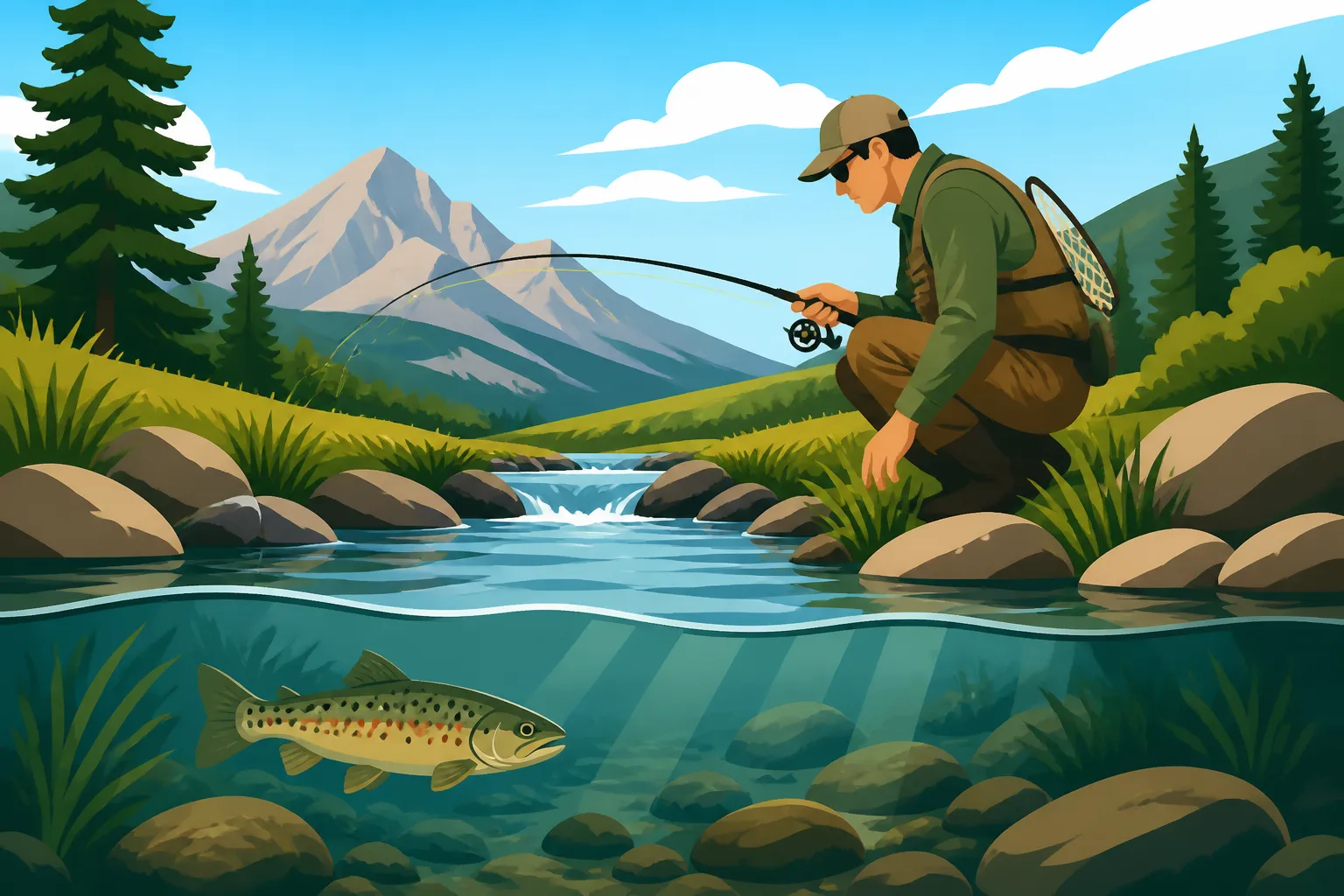
This is probably the single most important technique for small stream success. Forget striding boldly to the water's edge. Instead, adopt what I like to call the "ninja walk." This means approaching the stream slowly, quietly, and from a low profile. Stay well back from the bank, using any natural cover—bushes, trees, tall grass, boulders—to break up your outline. Crouch, kneel, or even crawl if necessary. It might feel a bit silly at first, but it makes an enormous difference.
Move as if you're stalking a wary deer. Place your feet down softly, heel-to-toe, avoiding crunching leaves or dislodging rocks. Many anglers make the mistake of walking right up to the bank and looking down into the water. This projects your shadow and your entire body silhouette directly over the fish, instantly sending them fleeing. Instead, approach from downstream, if possible, casting upstream into likely holding water. Keep the sun at your back, if you can, so your shadow is cast away from the water. Remember, every little bit of concealment helps.
Casting Accuracy and Delicacy
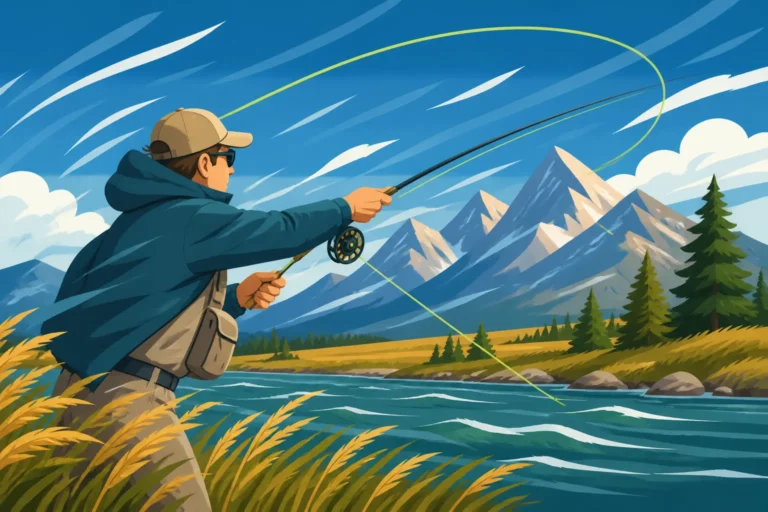
Once you've achieved your stealthy approach, the next critical step is your cast and presentation. A heavy, sloppy cast that splashes down like a cannonball will undo all your careful ninja-walking in an instant. The goal is to present your fly or lure with the utmost delicacy, making it appear as natural as possible. For fly anglers, this often means shorter, more controlled casts, focusing on a soft landing. A longer leader can help here, allowing the fly to settle gently before the heavier fly line touches down.
Spinning anglers should opt for light lines and small lures that create minimal disturbance. Overhand casts that send a lure sailing are fine for larger water, but on a small stream, consider sidearm casts or even roll casts that keep your trajectory low and allow the lure to plop softly onto the surface, rather than smack it. Practicing your casting accuracy can make a huge difference, allowing you to hit those tight pockets and undercut banks without overshooting or creating too much commotion. If you're looking to upgrade your setup for better control, you can find excellent sensitive spinning rods and reels on Amazon that will enhance your delicate presentations.
Reading the Water from a Distance
Before you even make your first cast, you should be diligently "reading the water" from a distance. Don't rush in. Spend a few minutes observing the section of stream you plan to fish. Look for subtle signs of fish activity – rises, shadows moving, or even just ideal holding water. Trout in small streams will often position themselves in predictable places: behind rocks, in the slower water of an eddy, under an undercut bank, or where a log creates a current break.
Learning to identify these spots from a concealed position allows you to plan your cast and approach, ensuring your first presentation is your best shot. Polarized sunglasses are absolutely invaluable for this; they cut glare and allow you to peer into the water, sometimes even spotting the fish before it sees you. Knowing How to Read Water When Trout Fishing is a fundamental skill that pays dividends on these smaller, more unforgiving waters. By observing from afar, you gain an advantage, eliminating the need for exploratory casts that might spook fish and burn a hole.
Gear and Tactics for Minimizing Disturbance
While stealth and approach are paramount, having the right gear and employing specific tactics can further tip the odds in your favor on Wyoming's small streams. It’s not about having the most expensive equipment, but rather choosing tools that complement a subtle, low-impact fishing style.
Long Leaders and Light Tippets/Lines
This is a non-negotiable for small stream fly fishing. A longer leader (typically 9 to 12 feet, sometimes even longer in ultra-clear, calm conditions) allows your fly to drift naturally, detached from the heavier, more visible fly line. It creates a critical buffer zone. Pair this with a light tippet – often 5x, 6x, or even 7x for truly spooky fish – to ensure your presentation is as invisible as possible. The thinner tippet material is less likely to cast a shadow on the water, and its minimal diameter reduces drag, leading to more natural drifts.
For spin fishing, the same principle applies: use the lightest line you can get away with. A 2-4 pound test monofilament or fluorocarbon main line is often ideal, and adding a short leader of fluorocarbon can make your lure or bait virtually invisible. The goal is to connect with the fish without alerting them to the connection to your main fishing line. This kind of finesse setup might not be necessary for every fishing scenario, but it's crucial when you're targeting wary trout in clear, unforgiving water. Many anglers swear by high-quality fluorocarbon leaders which can be easily ordered from Amazon for convenience.
Fly Selection and Natural Baits/Lures
When it comes to your actual offering, think small and natural. Small stream trout often feed on tiny insects and larvae, so your flies or lures should mimic these local food sources. For fly anglers, this means downsizing your dry flies (think sizes 16-22) and selecting subtle nymph patterns that match local aquatic insects. Even attractor patterns should be scaled down. Knowing the Best Fly Patterns for Wyoming Cutthroat Trout can give you a significant advantage, as native cutthroats are often the target in these pristine waters.
Spin anglers should opt for micro-lures: tiny spinners (size 0 or 1), small spoons, or very small soft plastics rigged weedless or on a light jig head. Natural baits like worms or salmon eggs can also be effective, but remember to present them without heavy weights or bobbers that could splash. The key is subtlety – you want your offering to drift or tumble naturally, convincing a wary trout that it’s just another piece of food floating by, not something attached to a line.
Wading Wisely (or Not At All)
Wading can be a huge disturbance on a small stream. Every step sends vibrations through the streambed, and the displacement of water can stir up silt, alerting fish downstream. Therefore, the best policy for small stream fishing is often to wade as little as possible, or not at all. If you can effectively fish a section from the bank, using your "ninja walk" and low profile, do so. This minimizes your footprint and maximizes your stealth.
However, sometimes wading is unavoidable, particularly in streams with dense bankside vegetation. When you must wade, do so with extreme caution. Move slowly, deliberately, and quietly. Shuffle your feet instead of stomping. Avoid kicking rocks or disturbing the streambed unnecessarily. If you're moving upstream, be mindful that you might be pushing a "bow wave" of disturbed water ahead of you, so take your time between spots to let the water settle. It's also vital to always adhere to Catch-and-Release Rules on Wyoming Waters when possible, particularly on fragile small streams, to preserve the fishery for others.
Common Mistakes and How to Avoid Them
Even seasoned anglers can make mistakes on small, intimate streams. The nature of these waters amplifies every error, turning a minor oversight into a missed opportunity. Being aware of these common pitfalls and actively working to avoid them will significantly improve your success rate.
Shadowing and Sudden Movements
This is perhaps the biggest rookie mistake, and it's so easy to do without realizing it. Casting your shadow over the water is like ringing a dinner bell for panic. Trout instantly recognize the silhouette of a predator—whether it's an eagle, a heron, or an angler—and will disappear in a flash. Always be mindful of the sun's position and your own shadow. If you must cast upstream into the sun, consider staying even further back from the bank or using vegetation as a screen.
Similarly, sudden movements are a death knell for stealth. A quick stand-up, a sudden swing of the rod, or a rapid reach for your net can send shockwaves through the fish's world. Think slow, deliberate, and smooth. Every motion should be intentional and unhurried. Imagine you're trying to sneak up on a sleeping cat—you wouldn't suddenly leap into action. The same applies to these hyper-aware trout. Even the subtle act of reaching for something from your fishing vest might be perceived as a threat.
Loud Noises and Vibrations
It's amazing how much sound travels through water. Dropping your forceps on a rock, stomping your feet on the bank, or even talking loudly can send vibrations through the streambed and water column, instantly alerting fish. When you're fishing small streams, it's best to keep conversations to a minimum and in hushed tones. Pay attention to how you move. Avoid clunky footsteps or scraping your boots on rocks. If you need to set down your pack or gear, do so gently.
Sometimes, the simplest things can spook fish. The metallic clang of a tackle box, the rustle of a jacket, or even the splash of your water bottle falling into the stream can be enough. Consider organizing your gear for easy, quiet access. Perhaps some rubber-soled wading boots from Amazon could offer a quieter stride. The idea is to minimize any unnatural sounds or vibrations that could signal your presence to these sensitive creatures. Even a seemingly insignificant sound can carry much further than you'd expect, especially on a still, quiet morning.
Over-Fishing a Spot
One of the beautiful aspects of small stream fishing is the constant discovery of new water. However, it's easy to get fixated on a promising-looking pool, casting repeatedly even after several refusals or a spooked fish. This "over-fishing" rarely yields results and often serves only to educate the remaining fish in that spot, making them even warier. If you've made a few good presentations to a particular lie and haven't gotten a bite, or if you've visibly spooked a fish, it's time to move on.
Small streams often have numerous small pockets, runs, and riffles, each potentially holding a trout or two. Instead of hammering one spot, move stealthily to the next promising section. Think of it as a series of short, focused attempts rather than an endurance challenge in a single location. There are countless promising spots, especially if you're exploring Fishing Wyoming's Wilderness and Backcountry Lakes. A successful small stream angler knows when to call it quits on one spot and quietly move to the next, conserving their energy and maintaining their stealth. Respect the water and its inhabitants by not pressuring them unnecessarily.
Table: Stealthy Approach Techniques vs. Common Mistakes
| Stealthy Approach Techniques | Common Mistakes to Avoid | Impact on Fish |
|---|---|---|
| Move Slowly & Low Profile | Abrupt movements, standing tall | Fish perceive you as a predator. |
| Use Bankside Cover | Walking openly along the bank | Your silhouette is easily seen against the sky. |
| Approach from Downstream | Walking upstream directly to the bank | Fish often face upstream, seeing you directly. |
| Soft, Accurate Casts | Heavy, splashing presentations | Unnatural disturbance signals danger. |
| Long Leader & Light Tippet/Line | Short leader, heavy line | Line is more visible, unnatural drift. |
| Observe & Read Water from a Distance | Rushing into a spot without observation | Missed opportunities, unnecessary spooking. |
| Quiet Footsteps & Minimal Noise | Stomping, dropping gear, loud talking | Vibrations and sounds travel through water, alarming fish. |
| Move On After a Few Casts | Repeatedly casting to a spooked spot | Further educates and pressures fish, reducing future bites. |
Conclusion: Becoming a Ghost on the Water
Fishing small streams in Wyoming is a deeply rewarding experience, but it demands a different mindset and a more refined skill set than fishing larger rivers or lakes. It’s about more than just catching fish; it’s about the quiet pursuit, the delicate dance with nature, and the satisfaction of outsmarting a truly wild and wary opponent. By embracing stealth, mastering your approach, choosing appropriate gear, and diligently avoiding common mistakes, you won't just catch more fish—you'll gain a deeper appreciation for these intimate ecosystems.
Remember, the goal isn't just to not spook the fish, but to fish so subtly that your presence is almost imperceptible. Become a ghost on the water. With patience, practice, and a commitment to these techniques, you'll soon find yourself enjoying the unparalleled magic of Wyoming's small stream fishing, connecting with beautiful trout in some of the most serene and unspoiled corners of our state. Always consult the Wyoming Fishing Regulations Every Angler Should Know to ensure you're fishing legally and ethically, and remember to practice proper How to Handle a Trout to Keep It Alive After Release techniques to ensure these delicate fisheries remain vibrant for generations to come.
Disclaimer
This article is for general informational purposes only and does not constitute professional advice. Laws, prices and regulations vary by location and change over time. Consult a qualified professional for guidance on your specific situation.