How to Handle a Trout to Keep It Alive After Release
There’s nothing quite like the thrill of a trout hitting your line in a crystal-clear Wyoming stream or lake. That initial tug, the frantic fight, and the sheer beauty of the fish as you bring it close—it’s pure magic. But then comes the moment of truth for many of us: the release. We want to do right by these incredible creatures, ensuring they swim away strong and healthy, ready to fight another day. It’s absolutely heartbreaking to see a fish struggle and eventually perish after you’ve let it go, and that feeling can really put a damper on your whole trip. This guide is all about giving you the practical, real-world advice you need to handle trout with care, ensuring they thrive after being released back into Wyoming's breathtaking waters.
Understanding Why Trout Die After Release
It’s easy to think that if a fish swims away, everything’s fine. Unfortunately, that’s not always the case. Trout are delicate creatures, and the act of being caught, handled, and released puts immense stress on their bodies. Understanding why they might not make it is the first step in preventing those tragic post-release mortalities.
The Stress Factors: What Harms a Trout?
When a trout takes your fly or lure, it’s instantly in a fight for its life, and its body reacts accordingly. This isn't just a mental thing for the fish; it's a profound physiological ordeal.
First, there's the physiological stress. Just like an Olympic sprinter, a fighting fish pushes its muscles to the limit, causing a rapid buildup of lactic acid. This changes the pH in its blood, making it difficult for the fish to regulate its bodily functions. Coupled with this, the prolonged struggle can lead to oxygen deprivation. Trout need a continuous flow of oxygenated water over their gills to breathe. When they’re fighting hard, thrashing on the bank, or held out of the water, that vital oxygen flow is interrupted. Imagine trying to run a marathon while holding your breath—that's kind of what a trout experiences during a long fight. The longer the fight, the more exhausted the fish becomes, and the harder it is for its system to recover.
Then we have the physical damage. This is often what anglers think of first. A hook can cause significant injury, especially if it’s swallowed deep or tears sensitive tissue. But it's not just the hook. Rough handling can strip away a trout's protective slime coat, which acts as its first line of defense against parasites and bacteria. Lost scales can create open wounds, leaving the fish vulnerable to infection. Even worse, squeezing a fish too hard, especially around its belly, can damage its internal organs. And, of course, direct contact with the gills, which are incredibly fragile, can severely impair its ability to breathe, even if it's back in the water. We've all seen a fish with a torn mouth or a bloodied gill, and it just makes you wince.
Finally, temperature shock and air exposure play critical roles. If you pull a cold-water trout from a chilly stream and expose it to warm air for too long, or even place it in a warmer creel, it can suffer severe shock. And air exposure, even for a few seconds, can be devastating. Those gills, designed to extract oxygen from water, collapse in the air, much like our lungs wouldn't work underwater. The longer a fish is out of its element, the higher its chances of not surviving. It’s why those quick hero shots can be so detrimental if not done correctly.
The Ethical Angler's Dilemma
For many of us who cherish Wyoming's wild fisheries, fishing isn't just about catching fish; it's about the experience, the connection to nature, and the challenge. We respect these fish, and we want to ensure their populations remain robust for future generations. This is where the ethical angler's dilemma comes in. We want to enjoy our sport, but we also have a responsibility to minimize our impact on the resource.
Wyoming is home to some truly incredible native trout species, like the Yellowstone Cutthroat Trout, and pristine waters that hold healthy populations of wild browns and rainbows. Preserving these fisheries is paramount. Every fish we release has the potential to spawn, to grow, and to provide sport for another angler. When a released fish dies, it's a loss to the ecosystem and a loss to the angling community. It challenges our understanding of conservation, reminding us that simply adhering to How Bag and Possession Limits Work in Wyoming isn't enough; we also need to practice responsible angling techniques. It's about consciously choosing to be a steward of the environment, making those small but significant efforts to ensure our passion doesn't inadvertently harm what we love.
The Golden Rules of Catch-and-Release for Trout
Okay, so we know why trout sometimes don't make it. Now, let's talk about the practical steps we can take to dramatically increase their chances of survival. These aren't just suggestions; they're truly the golden rules for anyone serious about ethical angling in Wyoming.
Gear Up for Success: Minimize Harm from the Start
Your approach to catch-and-release actually begins before you even cast your line. Having the right tools on hand can make all the difference in a trout's survival.
First up, let's talk about hooks. Barbless hooks are your best friend when it comes to catch-and-release. They slide out cleanly and quickly with minimal damage to the fish's mouth, reducing stress and injury. Many of us crimp down the barbs on our regular hooks with a pair of pliers, which works just as well. Some waters, like certain stretches of the North Platte River, even have specific regulations requiring them, so it's always good to check if Are Barbless Hooks Required on the North Platte River? on your chosen water. If you're buying new flies or lures, look for barbless options or plan to flatten those barbs before you hit the water. It’s a simple act that makes a huge impact.
Next, a proper net selection is crucial. Ditch those old knotted nylon nets that can strip scales and damage fins. Instead, invest in a rubberized, knotless landing net. These nets cradle the fish gently, protect their delicate slime coat, and prevent fins from getting tangled. They're a game-changer for quick, safe landing and handling. You can find excellent options on online retailers like Amazon, and they come in various sizes to suit the fish you're targeting.
Finally, always carry a good pair of forceps or long-nosed pliers. These are indispensable for quick and efficient hook removal, especially when a fish has swallowed the hook a little deeper than you'd like. Trying to wrestle a hook out with your fingers while a fish is thrashing is a recipe for disaster for both you and the trout. Again, Amazon has a huge selection of fishing-specific tools that are perfect for this job. Having these tools easily accessible—clipped to your vest or wading belt—means you can act fast when every second counts.
The Fight: Landing Your Trout Swiftly and Gently
The moment a fish is hooked, the clock starts ticking. Your goal should be to land the fish as quickly and efficiently as possible without completely exhausting it.
Avoid overplaying the fish. While it might be tempting to enjoy a long, drawn-out battle, this is detrimental to the trout. A prolonged fight drains the fish's energy reserves, leading to that lactic acid buildup and oxygen debt we talked about earlier. Use tackle that's appropriate for the size of fish you're targeting. Don't try to land a 20-inch brown trout on an ultralight setup if you plan to release it. Heavier gear allows you to bring the fish in more quickly.
When you're fighting a fish, try your best to keep the fish in the water as much as possible. This maintains that vital oxygen flow over its gills. If you’re wading, try to maneuver the fish into shallower, calmer water where you can net it without lifting it clear. If you're fishing from a boat, guide it alongside and into the net swiftly. Don't let it bounce on the surface or drag behind the boat. Focus on maintaining steady pressure and reeling in line when the fish isn't running. Learning How to Set the Hook on a Trout Without Losing It is part of this equation, as a solid hook set means less chance of a prolonged battle from a poorly hooked fish.
Handling with Care: Wet Hands, Less Damage
This is perhaps the most critical part of the entire catch-and-release process. How you physically interact with the trout can determine its fate.
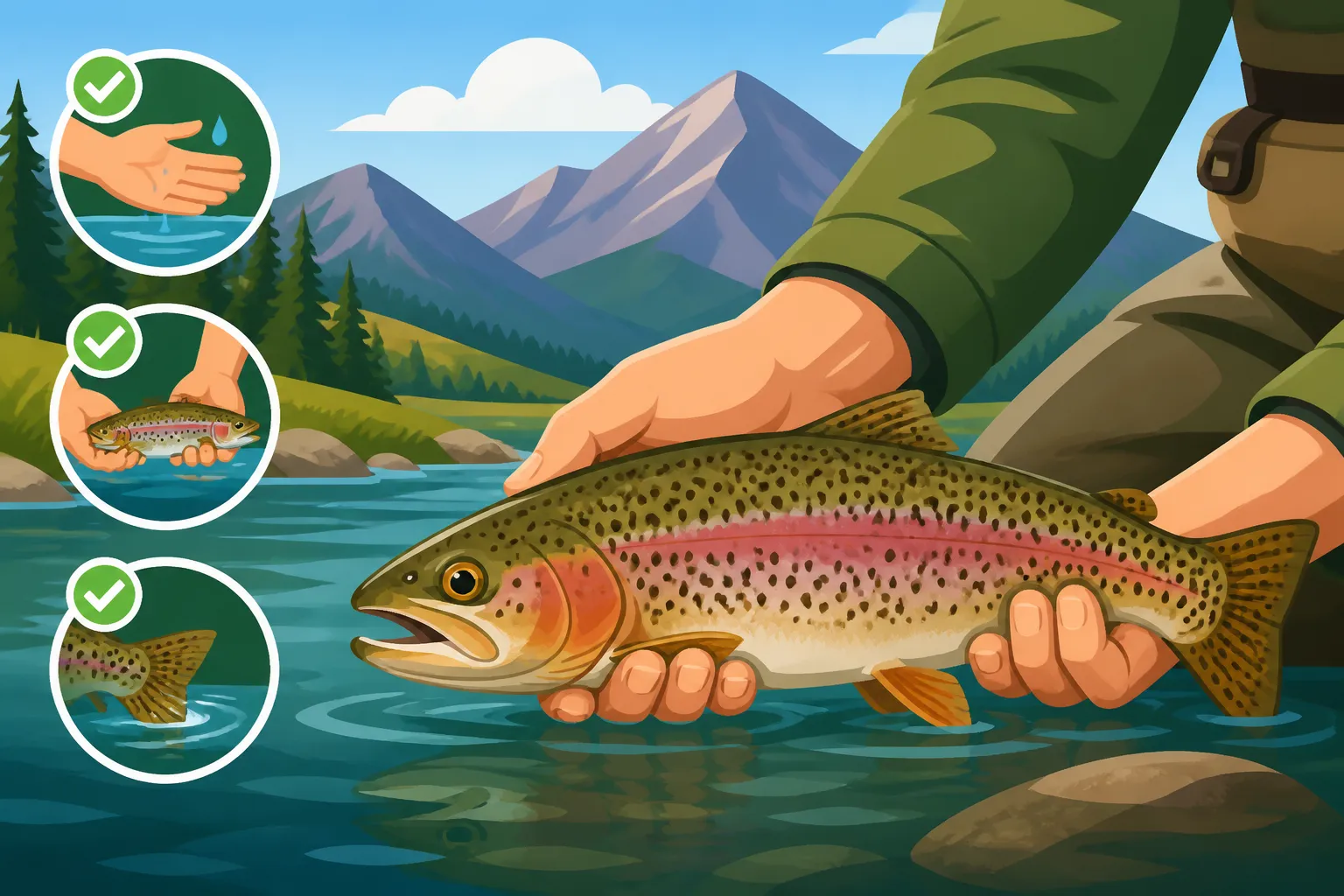
The number one rule: always wet your hands before touching a trout. I can't stress this enough. A trout's body is covered in a delicate slime coat, which is its first line of defense against disease and infection. Dry hands, especially warm ones, can strip this protective layer right off, leaving the fish vulnerable. Just a quick dip in the water before you reach for the fish makes all the difference.
When you do handle the fish, support its belly gently. Never hold a fish suspended by its jaw or gill plate, especially larger fish, as this can cause internal damage to its organs or spine. Instead, cup one hand under its belly, just behind the pectoral fins, and if necessary, use your other hand to gently steady its tail. Keep the fish horizontal and low, ideally still partially submerged in the water or just barely out of it.
Avoid squeezing or touching the gills at all costs. The gills are incredibly fragile and vital for the fish's survival. Any damage here can lead to rapid mortality. If a fish is thrashing, keep your grip firm but gentle, and try to calm it down while keeping it wet.
And finally, brief air exposure is key. While we aim to keep the fish in the water as much as possible, sometimes a quick lift for hook removal or a photo is unavoidable. The absolute maximum time a trout should be out of the water is about 5-10 seconds, but aiming for less is always better. Think of it like holding your breath: a few seconds is manageable, but anything more starts to become dangerous. Be ready with your net, forceps, and camera before you even attempt to lift the fish.
Hook Removal and The Release: A Gentle Farewell
You’ve fought the fish well, you’ve landed it gently, and you’ve kept your hands wet. Now comes the moment to remove the hook and send your trout back into the currents. This stage requires precision and patience.
Quick and Clean Hook Removal
This is where those trusty forceps or pliers really shine. With the fish still in the net and largely submerged, or with your wet hands gently cradling it in the water, take a moment to assess the hook.
If the hook is in the lip or corner of the mouth, which is ideal, use your forceps or pliers to firmly grasp the hook shank and twist it out gently. Remember, with barbless hooks, this should be a breeze. A quick, decisive twist is often more effective and less traumatic than a slow, fumbling pull. The goal is to get that hook out in a matter of seconds.
What if the hook is swallowed deep? This is the tough scenario, and it happens to even the most careful anglers. If the hook is deeply embedded in the throat or gills, trying to extract it can cause far more damage than leaving it in. In these situations, the best course of action is to cut the line as close to the hook as possible. The hook, especially if it’s barbless, will often corrode and fall out naturally over time. It's a hard call to make, but it significantly increases the fish's chances of survival compared to ripping internal organs. This is a common practice among experienced catch-and-release anglers when faced with a deeply hooked fish.
Throughout this process, keep the fish submerged as much as you can. A quick glimpse of the hook, a moment to maneuver your tool, and then back under the surface for the actual extraction. Every second out of water counts.
Reviving the Trout: Don't Rush It!
Once the hook is out, your job isn't quite done. Many anglers make the mistake of simply tossing the fish back into the water, hoping for the best. Instead, take the time to properly revive it. This is especially important for fish that have fought hard or have been out of the water longer than ideal.
Gently hold the fish upright in the water, preferably in a current, with its head facing upstream. This allows oxygenated water to flow naturally over its gills. Avoid moving the fish back and forth, as this can force water in the wrong direction and actually hinder recovery. Just hold it steady and let the current do the work.
You’ll start to notice signs of recovery: the fish's gills will begin to move rhythmically, indicating it's breathing more strongly. It might start to gently fan its fins, and you'll feel a strong kick or struggle as it regains its strength. Don't release the fish until you feel a definitive, strong kick, indicating it's ready to swim away under its own power. Sometimes this takes a few seconds, sometimes a minute or two. Be patient; it's worth it. When it feels ready, simply open your hand and let them swim away on their own. Don't toss them or push them, just allow them to glide off when they're truly strong enough.
Situational Awareness: When to Adapt Your Approach
While the general rules apply, there are times when you need to be extra mindful of your catch-and-release practices.
Consider cold versus warm water conditions. As a general rule, trout are more robust in colder water because it holds more dissolved oxygen. In warmer water, oxygen levels drop, and fish are already under more environmental stress. This means they'll tire faster, recover slower, and are more susceptible to post-release mortality. If you're fishing during warmer periods, say in July or August in lower-elevation rivers or shallow lakes, be extra vigilant with your handling. Fish quickly, keep them wet, and revive them thoroughly. Sometimes, when water temperatures get too high (e.g., above 68-70 degrees Fahrenheit for extended periods), it’s actually better for the fish to just stop fishing for trout altogether. Understanding How Water Temperature Changes Wyoming Trout Behavior is crucial for responsible angling.
Another factor is fishing during spawning season. While many areas have closures during spawning, some don't. Fish that are actively spawning are already under immense physical stress. If you catch a fish full of eggs or milt, handle it with even greater care, aiming for minimal contact and the quickest possible release. These fish represent the future of the fishery, and their survival is paramount.
Specific Scenarios and Advanced Tips
Beyond the golden rules, there are a few specific situations and advanced considerations that can further improve your catch-and-release success.
Photographing Your Catch Responsibly
We all love a good photo of that trophy trout or a beautiful fish from a memorable day on the water. Social media is full of them! But remember, your photo op should never compromise the fish’s survival.
The key here is quick photos with minimal air exposure. If you absolutely want a picture, have your camera ready, pre-focused if possible. Wet your hands, gently lift the fish horizontally, just above the water surface, supporting its belly. Snap one or two quick shots, then immediately return the fish to the water for revival. Aim for no more than 3-5 seconds out of the water. Many anglers now advocate for "grip and grin" photos where the fish is never fully removed from the water, or even underwater photos. These are fantastic alternatives that completely eliminate air exposure.
Always ensure your hands are wet, and the fish itself is kept as wet as possible. If it's a particularly large fish, it might be better to get a photo of it still in the net, or completely submerged, rather than risking spinal damage or a prolonged struggle out of water. Remember, the fish’s health comes first, the photo second.
When to Keep vs. When to Release
Most of the time, our intention is to release fish unharmed. However, there are scenarios where keeping a fish is the more ethical choice, or even a requirement.
Firstly, always be intimately familiar with Wyoming Fishing Regulations Every Angler Should Know and the specific regulations for the water you're fishing, including How Bag and Possession Limits Work in Wyoming. If a fish falls within the legal size and bag limit, and you intend to eat it, then keeping it is perfectly fine. That’s what many fisheries are managed for!
However, if a fish is severely injured—say, deeply hooked in the gills and bleeding profusely, or clearly mortally wounded—it's often more humane to dispatch it quickly and keep it (if legal) rather than releasing it to slowly die. While it's sad, it's a realistic part of fishing. Don't feel guilty; you've done your best, and minimizing suffering is a compassionate choice.
Another important exception involves invasive species. In some Wyoming waters, certain species like Lake Trout in Yellowstone Lake are considered invasive and are actively managed for removal. In these specific cases, if you catch one, the regulations often stipulate that you are required to keep it. This is a conservation effort to protect native species like the Yellowstone Cutthroat Trout. Always check the regulations for any water-specific rules regarding invasive species.
Post-Release Monitoring and What to Do If a Fish Appears Struggling
Even after a careful release, it's a good idea to take a moment and briefly observe the fish. Does it swim away strongly, or does it seem disoriented? Does it sink to the bottom or drift lifelessly?
If a fish you've just released appears to be struggling, rolls over, or isn't swimming away with purpose, don't give up immediately. Gently net it again, or carefully pick it up with wet hands, and return it to the revival position in the current. Sometimes, a second, longer revival period is all it takes for the fish to regain its bearings and swim off confidently. Repeat the process, ensuring water flows over its gills, until it truly gives that strong kick.
Ultimately, despite our best efforts, some fish will not survive. This is an unfortunate reality of catch-and-release fishing, but it shouldn't deter us from practicing the best techniques possible. By continually learning and refining our approach, we minimize these losses and contribute to the health and sustainability of Wyoming's incredible fisheries. Every time you consciously apply these tips, you're making a positive impact on our precious wild trout.
Here’s a quick summary to help you remember the key dos and don’ts:
| Aspect | Do | Don't |
|---|---|---|
| Gear | Use barbless hooks. | Use barbed hooks without crimping. |
| Use rubberized, knotless landing nets. | Use knotted nylon nets. | |
| Carry forceps or long-nosed pliers. | Rely on fingers for hook removal. | |
| Use appropriate tackle for fish size. | Overplay fish with ultralight gear. | |
| Fighting & Landing | Land fish swiftly and gently. | Prolong the fight. |
| Keep the fish in the water as much as possible. | Drag fish on the bank or boat. | |
| Handling | Wet your hands thoroughly before touching the fish. | Touch fish with dry hands. |
| Support the fish horizontally under its belly. | Hold fish vertically by jaw or gills. | |
| Keep air exposure to an absolute minimum (under 5-10 seconds). | Keep fish out of water for extended periods. | |
| Avoid squeezing or touching the gills. | Squeeze the fish or touch its gills. | |
| Hook Removal | Use forceps/pliers for quick, clean removal of lip hooks. | Rip or tear out deeply embedded hooks. |
| Cut the line if hook is swallowed deep. | Attempt to dig out deeply swallowed hooks. | |
| Revival & Release | Gently hold fish upright in current, facing upstream. | Move fish back and forth forcefully to revive. |
| Release only when the fish gives a strong kick and swims off on its own. | Toss fish back before it's fully revived. | |
| Photography | Prepare camera, wet hands, take quick shots close to water. | Keep fish out of water for multiple, long photo sessions. |
| Awareness | Adapt techniques to warmer water conditions. | Fish during high water temperatures without extra care. |
| Understand Catch-and-Release Best Practices for Trout. | Disregard signs of fish stress. |
Disclaimer
This article is for general informational purposes only and does not constitute professional advice. Laws, prices and regulations vary by location and change over time. Consult a qualified professional for guidance on your specific situation.