How to Cook Fresh-Caught Trout Over a Campfire
There’s a unique satisfaction that comes from catching your own dinner, especially when you’re out amidst the breathtaking scenery of Wyoming. But for many, the moment of truth isn’t just landing the fish; it’s figuring out how to cook that beautiful trout over an open campfire without burning it to a crisp or having it stick to the grate. If you’ve ever felt a pang of anxiety wondering if you can truly do justice to your fresh catch with just a few coals and a flickering flame, you're not alone. This guide will walk you through everything you need to know to transform your fresh-caught trout into an unforgettable campfire meal.
From Stream to Skillet: Prepping Your Trout for the Fire
The journey to a delicious campfire trout begins long before the fire is even lit. Proper preparation, right from the moment you land your fish, is absolutely crucial for both taste and safety. This isn't just about getting the guts out; it's about respecting the fish and ensuring a quality meal.
Cleaning Your Catch at the Waterside
After you’ve successfully reeled in your trout, the very first step, ideally right there by the water, is to clean it. This immediate action is incredibly important for maintaining the fish's quality and flavor. When you’re out in the wild, you typically have two main options for preparing your fish: gutting it whole or filleting it. For campfire cooking, especially if you're working with smaller to medium-sized trout, gutting it whole and cooking it with the skin on is often the simplest and most flavorful approach. It helps keep the flesh moist and provides a protective barrier against the heat of the fire.
To gut your trout, start by making a shallow cut along the belly from the anal vent up to the gills. Be careful not to cut too deep, as you don't want to puncture the internal organs. Once the belly is open, reach in and remove all the entrails. You’ll want to scrape out the dark bloodline along the spine with your thumbnail or the tip of your knife; this helps remove any lingering "fishy" taste. Give the cavity a good rinse with fresh, cold water, if available, or wipe it thoroughly with grass or a clean cloth. For a more in-depth look at this process, you might find our guide on How to Fillet a Trout for the First Time helpful, even if you decide to cook it whole. Remember, responsible disposal of fish entrails is vital for the ecosystem and fellow campers, often requiring deep burial away from water sources. While some might consider a full fillet, leaving the skin on and bones in (especially the backbone) provides structure and moisture when cooking over an open flame, which can be less forgiving than a kitchen oven.
Keeping Your Trout Fresh Until Mealtime
Once your trout is cleaned, the next challenge in the backcountry is keeping it fresh until it’s time to cook. Warm temperatures are the enemy of fresh fish, and letting your catch sit out too long will quickly degrade its quality and pose a food safety risk. You want that firm, sweet flesh to shine, not to be tainted by improper storage. This isn't just about taste; it's about enjoying your outdoor adventure without an unwelcome surprise later.
The best way to preserve your trout's freshness is to keep it as cool as possible. If you’re lucky enough to have a cooler with ice, that's ideal. Simply place your cleaned fish directly on ice. If you’re backpacking or on a more minimalist trip where a cooler isn’t practical, consider using a traditional creel lined with wet grass or leaves. A wet cloth or bandana wrapped around the fish can also provide some evaporative cooling. The goal is to lower its temperature and protect it from direct sunlight. The sooner you cook it after catching and cleaning, the better the flavor and texture will be. If you're practicing Catch and Release Best Practices for Trout, you understand the importance of immediate, careful handling, and similar care should be extended to fish destined for the plate.
Basic Seasoning for Campfire Perfection
You’ve got a beautifully cleaned and chilled trout, ready for the heat. Now comes the flavor! When you’re cooking fresh-caught trout over a campfire, the beauty often lies in simplicity. You don't need a pantry full of exotic spices to make it sing. The natural, delicate flavor of fresh trout, especially species like the ones found in Wyoming, is remarkable on its own. The goal here is to enhance, not overpower.
Start with the absolute basics: good quality salt and freshly ground black pepper. Rub a little olive oil or melted butter inside and outside the fish before seasoning; this not only helps the seasoning adhere but also adds moisture and prevents sticking, especially if you're grilling directly. From there, you can layer on simple aromatics. Fresh dill or parsley sprigs tucked into the body cavity with a few thin slices of lemon and a smashed garlic clove will infuse the fish with incredible flavor as it cooks. You can also sprinkle a little paprika for color and a touch of smoky flavor, or a pinch of garlic powder. The key is to be generous enough to season the entire fish without creating a thick crust of spices that might burn over the open flame. When choosing a fish to keep, consider that many anglers agree the trout found in these high-country waters are among the Best-Tasting Fish to Keep From Wyoming Waters.
Mastering Campfire Cooking Techniques for Trout
Cooking over a campfire is an art form, a blend of patience, observation, and a little bit of improvisation. There's no fancy thermostat, just you and the fire. But with a few tried-and-true methods, you can turn your fresh trout into a culinary triumph, smelling of woodsmoke and pure deliciousness.
The Classic Foil Packet Method
If you're new to campfire cooking or simply want the easiest cleanup with guaranteed moist results, the foil packet method is your best friend. This technique essentially steams the fish within its own juices and seasonings, making it incredibly forgiving. It's especially good when you're targeting fish during various periods, like those listed in Wyoming Fishing Seasons Month by Month, and want a consistent cooking method regardless of the weather. All you need is some heavy-duty aluminum foil, which you can easily find online through retailers like Amazon, and a few basic ingredients.
Start with a large piece of heavy-duty aluminum foil, enough to completely encase your fish. For extra protection against tearing and hot ash, I often double-wrap. Lay your cleaned and seasoned trout in the center. Inside the fish's cavity, you can add those lemon slices, herbs, and a pat of butter. Around the fish, you can add quick-cooking vegetables like sliced onions, bell peppers, thin potato rounds, or corn on the cob cut into chunks. Drizzle with a little more olive oil or add another pat of butter. Now, bring the edges of the foil together over the fish and fold them tightly, creating a sealed packet. Ensure there are no gaps for steam to escape or ash to get in. Place the packet directly on hot coals, not in direct flame. Depending on the heat of your coals and the size of your fish, it will likely cook in 15-25 minutes. Flip it halfway through. To check for doneness, carefully open one packet (it will be steamy!) and see if the fish flakes easily with a fork.
Searing Trout in a Cast Iron Pan
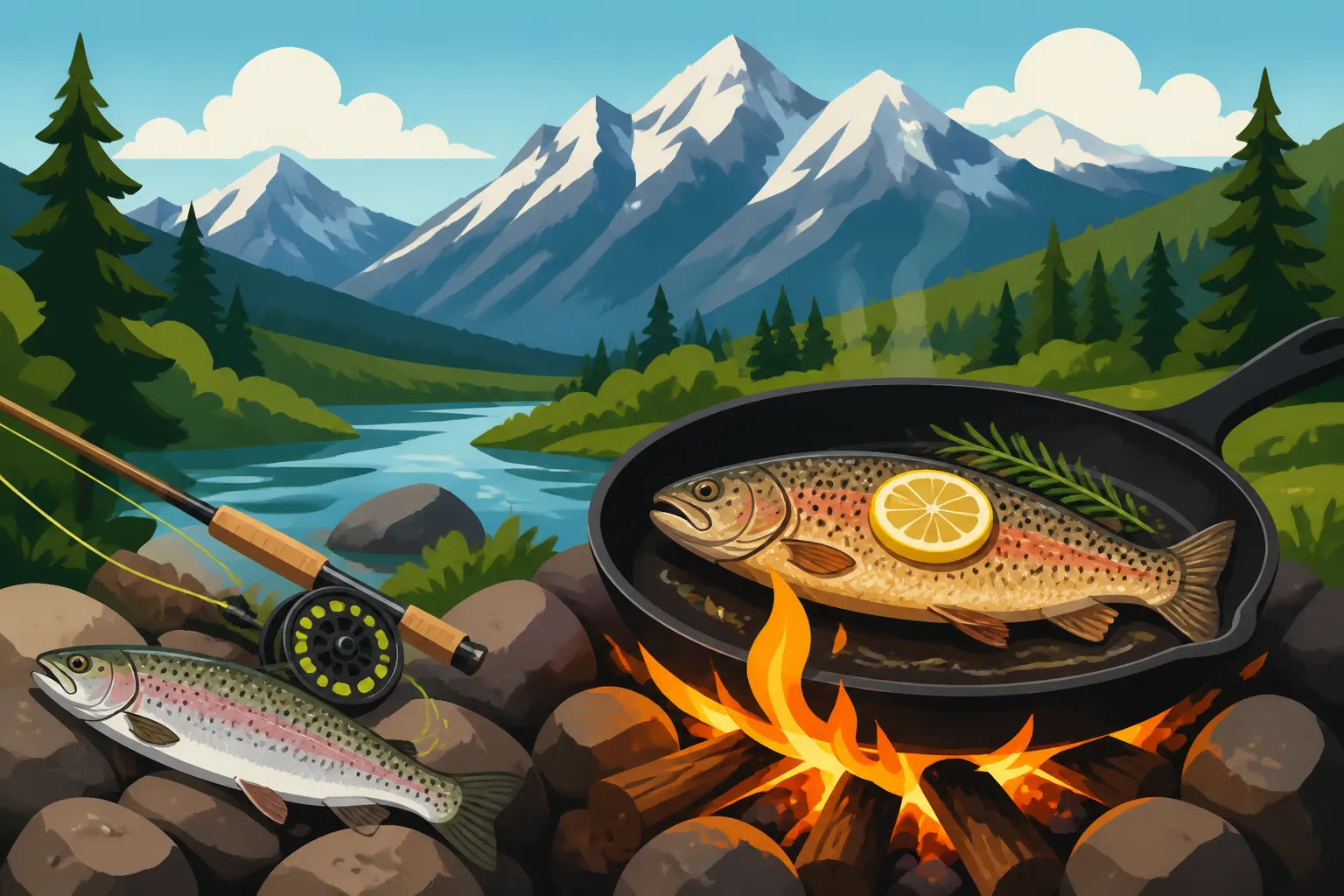
For those who love a crispy skin and a more direct cooking experience, a cast iron pan is indispensable for campfire cooking. The even heat distribution and ability to hold high temperatures make it perfect for searing. A good quality cast iron skillet, like those available on Amazon, will last a lifetime and perform beautifully over a campfire. This method is fantastic if you've caught a few bigger fish while enjoying a day at Wyoming's Yellowstone Lake Fishing Guide or similar larger waters.
First, you need a good bed of hot coals, not roaring flames, to provide consistent heat. Place your cast iron skillet directly on the coals or on a grate over them and let it heat up for several minutes until it’s sizzling hot. Add a generous amount of cooking oil (vegetable oil, canola oil, or even butter for flavor) to coat the bottom of the pan. Once the oil shimmers, carefully place your whole, seasoned trout into the hot pan. If you've kept the skin on, place it skin-side down first. This is where the magic happens: the hot pan will create a beautiful, crispy skin. Listen to that sizzle! Let it cook undisturbed for about 4-6 minutes, or until the skin is golden brown and releases easily from the pan. Then, carefully flip the fish and cook on the other side for another 4-6 minutes, or until the flesh is opaque and flakes easily with a fork. Avoid overcooking, as trout can dry out quickly.
Grilling Trout Over an Open Flame
Grilling offers that quintessential smoky flavor and beautiful char marks that scream "campfire cooking." It’s a bit more challenging than the foil packet, requiring more attention to heat and a deft hand when flipping, but the rewards are well worth it. This method works especially well for medium to larger trout that have a bit more structural integrity, perhaps from a day spent on Wyoming's North Platte River Fishing Guide.
Before placing anything on the grill, make sure your grate is super clean and thoroughly oiled to prevent sticking—a common pitfall when grilling fish. You can do this by rubbing a paper towel soaked in cooking oil over the hot grate using tongs. Again, you want a bed of hot embers, not direct flames that will char the outside before the inside cooks. Place your seasoned trout directly on the hot grate. For easier handling and to prevent the fish from breaking apart when flipping, consider using a fish grilling basket. These handy tools essentially clamp the fish securely, allowing you to flip it without worry, and are readily available online.
Grill the trout for about 5-8 minutes per side, depending on its thickness and the heat of your coals. Look for the skin to become crispy and slightly charred, and for the flesh to turn opaque. Resist the urge to constantly poke and prod the fish; let it cook undisturbed to develop a good sear. When it's ready to flip, it should release fairly easily from the grate. The same doneness indicators apply: flaky flesh, opaque color. The smoky flavor infused into the fish from the direct heat is truly something special.
Essential Tips for Campfire Trout Success
Beyond just the cooking method, there are some overarching principles that will elevate your campfire trout from "edible" to "exceptional." These are the little nuggets of wisdom that veteran outdoorsmen and women swear by, gained through trial and error under starry Wyoming skies.
Fire Management: The Key to Even Cooking
This is, perhaps, the single most critical aspect of successful campfire cooking. You aren't baking in an oven with a precise temperature gauge; you're working with the raw power of fire. Many beginners make the mistake of trying to cook over roaring flames, which will quickly burn the outside of your food while leaving the inside raw. The secret to even cooking is coals, not flames. When you're planning your What Gear to Pack for a Backcountry Fishing Trip, remember that fire tools are essential.
Build your fire at least 30-45 minutes before you plan to cook to allow the wood to burn down to a good bed of glowing embers. You want a mix of red-hot coals and a few smaller, smoldering logs. If you're cooking with a pan or foil packets, you can rake a pile of coals to one side, creating a hot zone, and a smaller, less intense pile for a cooler zone where you can move your food if it's cooking too fast. For grilling, you’ll need a consistent layer of coals directly beneath your grate. Learn to "read" your fire – if the coals are bright red and glowing intensely, that’s high heat. If they're covered in a layer of white ash, it's moderate. Keep a few pieces of unburnt wood nearby to add to the fire if you need to maintain or increase the heat over a longer cooking period. Mastering this subtle dance with the flames is what separates a good campfire cook from a great one.
Doneness: Knowing When Your Trout is Perfect
Undercooked fish is unappetizing, but overcooked fish is dry and disappointing. Finding that sweet spot, especially without the help of kitchen tools, requires a keen eye and a bit of practice. The texture and color changes in trout are your best indicators. When you're out Fishing Wyoming's High-Alpine Lakes, you're often far from civilization, making it all the more important to get this right.
The most reliable sign that your trout is cooked through is when the flesh becomes opaque and flakes easily with a fork. If you insert a fork into the thickest part of the fish and gently twist, the layers should separate without resistance. The flesh will change from a translucent, raw pink to an opaque white or off-white. If you happen to carry a small, instant-read thermometer (a great addition to any camp kitchen gear from Amazon), the internal temperature should reach 145°F (63°C). Trust your senses: a perfectly cooked trout will be moist, tender, and incredibly flavorful. If it feels rubbery or resistant to the fork, it needs a little more time. If it’s falling apart into mush, you might have gone a touch too long, but it will still be delicious! Knowing Is Lake Trout Good to Eat? or if certain trout types are better for eating will guide your approach.
Pairing and Presentation in the Wild
Part of the magic of a campfire meal is its simplicity, but that doesn't mean you can't make it feel special. A few thoughtful additions can transform a simple trout into a gourmet experience, even miles from the nearest town. Remember, the presentation here isn't about fancy plating; it's about making the most of the moment and the incredible surroundings.
While your trout is cooking, you can easily prepare some simple side dishes over the same fire. Potatoes sliced thin and wrapped in foil with butter and herbs, or corn on the cob tossed directly onto the coals, cook beautifully alongside your fish. Even a quick salad made from pre-chopped greens and a small bottle of dressing can feel luxurious. Once your trout is cooked, slide it onto a plate (or even a clean piece of foil if you're truly roughing it). A final squeeze of fresh lemon, if you packed one, and a sprinkle of any fresh herbs you brought along will brighten the flavors immensely. The best accompaniment, of course, is the crisp Wyoming air, the crackle of the fire, and the company of good friends or the peaceful solitude of nature.
Safety, Cleanup, and Leaving No Trace
Enjoying a meal in the wilderness comes with responsibilities. Cooking outdoors means being mindful of food safety, fire safety, and your impact on the environment. These steps ensure that your unforgettable meal doesn't leave an unwelcome mark on the beautiful landscapes you've come to enjoy.
Food Safety in the Backcountry
Out in the wilderness, without the comforts of a fully stocked kitchen, food safety takes on an even greater importance. Preventing foodborne illness ensures your fishing trip remains memorable for all the right reasons. Proper handling from the moment you catch your fish to the moment you take your last bite is crucial. Even when considering How Water Temperature Affects Trout Feeding, remember that water temperature also affects how quickly fish spoil after being caught.
Always prioritize keeping your fish chilled before cooking, as discussed earlier. Once it's time to cook, ensure your trout reaches that internal temperature of 145°F (63°C) to kill any potential bacteria. This is especially important if you've been fishing in warmer waters. Handle raw fish separately from any other food items to prevent cross-contamination. Use different cutting boards (or clean surfaces) and utensils for raw fish and cooked food. If you're reusing a knife or cutting surface, give it a thorough wash with hot, soapy water and rinse before using it for anything else. A small bottle of biodegradable camp soap and a scrub brush are great additions to your camp kitchen.
Campfire Safety Protocols
Cooking over an open fire is an incredible experience, but it demands respect and vigilance. A moment of carelessness can have devastating consequences, especially in the dry conditions often found in Wyoming. Your camp kitchen setup should always prioritize fire safety.
Always build your fire in an established fire ring, if available, or construct one yourself away from overhanging branches, dry grass, or other flammable materials. Clear a wide area around the fire ring down to mineral soil. Keep a bucket of water or a shovel nearby at all times – water to douse sparks, and a shovel to smother flames or contain embers. Never, under any circumstances, leave a campfire unattended, even for a moment. Before you even start your fire, be aware of any local fire restrictions or bans, which are common during dry seasons. When you’re finished cooking and ready to extinguish your fire, do so thoroughly. Douse the coals with water, stir them, and then add more water until all embers are cold to the touch. It's better to use too much water than not enough.
Responsible Cleanup and Waste Management
One of the core tenets of enjoying the outdoors is "Leave No Trace." This principle guides all our activities, including cooking and cleanup. Your goal should be to leave your campsite as clean, or cleaner, than you found it, preserving the pristine beauty of Wyoming for all who follow.
After your delicious trout meal, gather all food scraps, including any leftover fish, and pack them out. This includes aluminum foil, food wrappers, and any other trash. Fish entrails, if not immediately disposed of responsibly at the waterside, should be buried deeply in a cathole at least 200 feet from water sources, trails, and campsites. When washing dishes, use biodegradable soap sparingly and carry your wash water at least 200 feet from any water source before dispersing it widely over land, allowing the soil to filter out pollutants. A small, collapsible sink and a bottle of multi-purpose camp soap, readily available on Amazon, can make this process much easier. Ensure all remnants of your meal are either packed out or properly disposed of, leaving absolutely no trace that you were there.
Disclaimer
This article is for general informational purposes only and does not constitute professional advice. Laws, prices and regulations vary by location and change over time. Consult a qualified professional for guidance on your specific situation.