Best Season to Avoid Crowds on Popular Wyoming Rivers
Oh, the dream of a peaceful day on a Wyoming river, fly casting in solitude, the only sound the whisper of the wind and the gurgle of the water. We've all pictured it, right? But then you arrive at your favorite "secret" spot, only to find three drift boats already anchored and half a dozen anglers wading shoulder-to-shoulder. It's enough to make you sigh deeply and wonder if true solitude on Wyoming's famous waters is even possible anymore. If you're tired of battling the crowds for a prime fishing lie, this guide is for you. We're going to dive deep into understanding Wyoming's fishing seasons and uncovering the best times to find those moments of quiet serenity on our popular rivers.
The Popularity Paradox: Why Crowds Are a Real Thing on Wyoming Rivers
Wyoming's rivers, particularly the blue-ribbon trout streams, are legendary. We're talking about places like the North Platte River, the Snake River, and sections of the Green River below Flaming Gorge. Anglers travel from all over the world just to experience these waters. And for good reason! The fishing can be absolutely phenomenal. But with that kind of reputation comes a bittersweet reality: popularity attracts people, and people, well, they create crowds.
The Allure of Blue-Ribbon Waters and the Draw of Legend
Let's be honest, those names—Miracle Mile, Gray Reef, the Snake River in Jackson Hole—they carry a certain mystique. They conjure images of enormous trout, incredible scenery, and stories of epic battles with fish. News spreads fast when a river is consistently producing trophy-sized fish, or when a particular hatch is going off. Folks hear these tales, see the stunning photos online, and naturally, they want a piece of that action. It's a testament to the quality of our fisheries, but it means that during prime times, these stretches can feel more like a highway than a tranquil escape. You often find yourself strategizing not just how to catch fish, but how to navigate around other anglers, which can really dampen the spirit of a fishing trip.
The Impact of Social Media and Easy Accessibility
In today's interconnected world, a "secret spot" rarely stays secret for long. A stunning photo shared on Instagram with a vague location tag can still bring dozens of anglers to the general area, all hoping to replicate that perfect shot or catch that same fish. Add to that the ever-improving accessibility—more detailed maps, online fishing reports, and even apps that pinpoint access points—and it becomes easier than ever for everyone to find the "best" spots. This ease of access, while great for new anglers, undeniably contributes to the congregation of people on our most talked-about stretches of river. It's a double-edged sword, where sharing the beauty of Wyoming also means sharing it with more people than ever before. If you're trying to figure out which stretches are easily accessible, a quick search on Amazon for local fishing maps can sometimes highlight popular spots.
The Frustration of Shared Space and Compromised Experience
There's a fundamental conflict here. Many of us come to Wyoming to fish because we crave that connection with nature, the peace, the quiet, the feeling of being truly out there. When you're constantly dodging another angler's backcast, or watching a drift boat motor right through the run you were about to fish, it strips away that magic. It turns what should be a serene experience into something more akin to a competitive sport, and that's just not what many of us signed up for. It can feel disrespectful, even though everyone has a right to public water. But the reality is, the more people, the less "wild" it feels, and the more stressed the fish become, often making them harder to catch for everyone involved. Sometimes you just want to find Least Crowded Trout Water in Wyoming to avoid all the commotion.
Understanding Wyoming's Fishing Seasons: Peak vs. Shoulder vs. Off-Season
To truly avoid the crowds, you first need to understand when those crowds are most likely to appear. Wyoming's fishing seasons are largely dictated by weather, water conditions, and fish behavior. By learning these patterns, you can strategize your trips to hit those sweet spots between prime fishing and peak human traffic. For a broader overview, take a look at our Wyoming Fishing Seasons Month by Month guide.
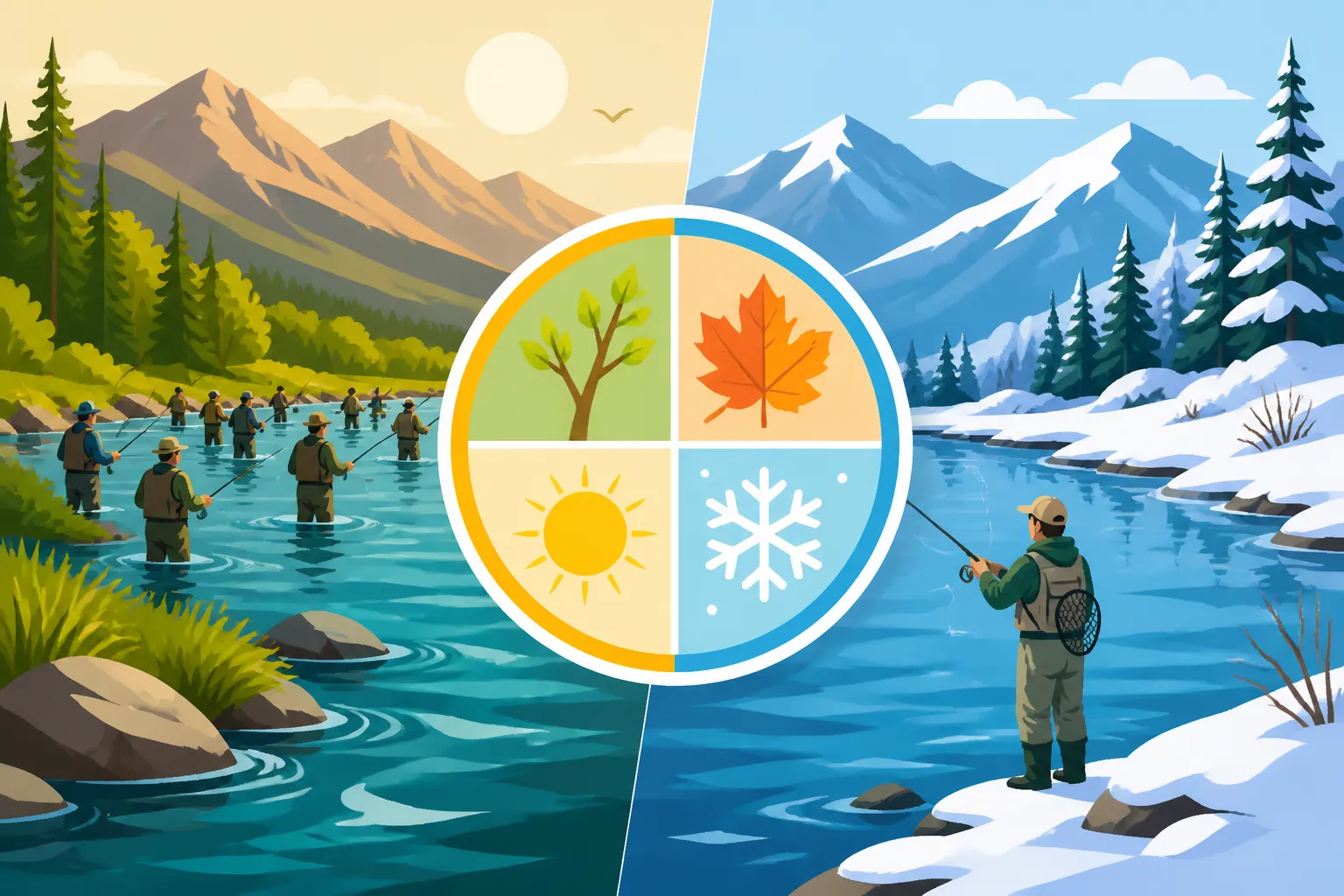
Summer: The Ultimate Crowding Season
Ah, summer in Wyoming. Warm sun, long days, hatches popping, and the kids are out of school. It's absolutely gorgeous, and for many, it's the only time they can plan a trip. This makes summer, particularly July and August, the undisputed peak season for fishing pressure on most popular rivers. The weather is stable, access is generally easy as roads are clear, and the fish are actively feeding. You'll see more guides, more private boats, and more waders in the water than at any other time of year. While the fishing can be fantastic, you often have to work harder to find open water or settle for less-than-ideal spots. If you're committed to fishing in the summer, checking out Wyoming Summer Fishing: Peak Season Tips can help you make the most of it, but prepare for company.
Spring: Runoff and Opportunity
Spring in Wyoming is a mixed bag, and that's precisely why it can offer some relief from the crowds. Late April and May often bring the dreaded (or beloved, depending on your perspective) runoff. As the snow melts in the high country, rivers swell, turn muddy, and often become unfishable for traditional fly or spin fishing for a period. This, understandably, deters many anglers. However, savvy anglers know that certain tailwaters (rivers flowing out of dams, like the North Platte below Alcova Reservoir) often remain clear and fishable, or even excel, during runoff because the dam acts as a filter. This period, roughly late May into early June, can offer fantastic fishing with significantly fewer people. The challenge is that water levels can be unpredictable, and access might be limited in some areas. If you're wondering if you should venture out during this time, consider Is Runoff Season a Bad Time to Fish Wyoming Rivers?. You might be surprised at the opportunities!
Fall: The Golden Window (and its increasing popularity)
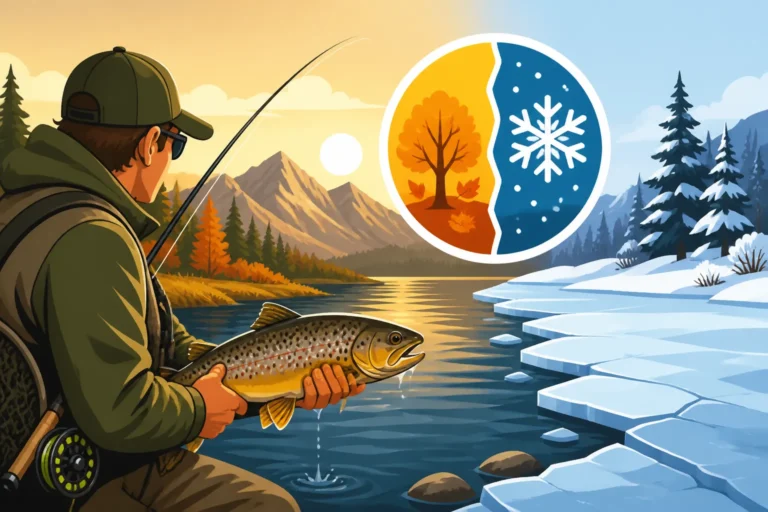
Many consider autumn, especially September and October, to be the best time to fish in Wyoming. The weather is often crisp and beautiful, the leaves are changing, and big brown trout start their pre-spawn migration, becoming aggressive and truly magnificent targets. The fish are often fat and feisty, gorging themselves before winter. For years, fall offered a fantastic blend of great fishing and diminished crowds compared to summer. However, the secret is out, and fall has become increasingly popular. While you won't typically see the same sheer numbers as mid-summer, popular sections of rivers can still be quite busy, especially on weekends when the brown trout are running. If you're looking to target these beauties, our guide on Wyoming Fall Fishing for Migrating Browns has great information, but be ready to share the water, particularly on renowned stretches like the Miracle Mile.
Winter: True Solitude (but with its own demands)
If absolute solitude is your primary goal, then winter is your season. From November through March, the fishing pressure drops dramatically on most open waters. The cold, snow, and ice keep all but the most dedicated (or insane, depending on your perspective) anglers at home. Tailwaters that remain ice-free, like the North Platte, can offer incredible fishing for big, sluggish trout that are congregated in predictable deep runs. You'll encounter challenging conditions – freezing guides, numb fingers, and slippery banks – but the reward is often having entire stretches of river to yourself. This isn't for the faint of heart, but for those who brave the elements, the peace and quiet are unparalleled. Just remember to bundle up and be prepared for true winter conditions. If you're hardy enough, Best Off-Season Fishing Opportunities in Wyoming will give you some ideas.
Here's a quick comparison of the seasons and what to expect:
| Season | Typical Months | Crowd Level (Popular Rivers) | Fishing Outlook (General) | Key Challenges |
|---|---|---|---|---|
| Summer | June – August | High (Peak) | Excellent (various species, hatches) | High pressure, competition for spots, some warmer water |
| Fall | Sept – Oct | Moderate to High | Excellent (big browns, active trout) | Increasing popularity, unpredictable weather |
| Winter | Nov – March | Low (Minimal) | Good (deep runs, specific techniques) | Cold, ice, limited access, short days |
| Spring | April – May | Low (Runoff dependent) | Variable (tailwaters good, freestones muddy) | Runoff, cold, unpredictable weather |
Strategies for Finding Solitude: When and Where to Go
Now that we understand the seasonal ebb and flow of crowds, let's talk strategy. It's not just about when you go, but how you approach your trip. Finding that quiet corner often requires a little more planning, a willingness to adapt, and sometimes, a bit more effort.
Timing Your Trip: Weekdays, Early Mornings, Late Evenings
This might sound obvious, but it's the most effective first step. Weekends, especially during summer and fall, are universally the busiest times on any popular river. If you have the flexibility, plan your trips for Tuesday, Wednesday, or Thursday. You'll instantly cut down on the number of anglers you encounter.
Beyond the day of the week, consider the time of day. Most anglers hit the water mid-morning after breakfast and leave in the late afternoon. This creates prime opportunities for those willing to embrace the extremes:
- First Light: Getting on the water right as the sun touches the peaks means you often have the best runs to yourself for the first hour or two. Fish are often actively feeding after a night of rest. Plus, watching the sunrise over a quiet river is an experience in itself.
- Last Light: Fishing into dusk can also be highly productive and less crowded. Many anglers pack up as the shadows lengthen. The "witching hour" as the light fades can bring out some of the biggest fish. Just make sure you have a headlamp and know your way back to your vehicle!
This strategy is especially true for popular stretches like The Miracle Mile Stretch of Wyoming's North Platte River. Arriving at dawn can make all the difference.
Targeting Shoulder Seasons for Less Pressure
We touched on this in the seasonal breakdown, but let's reiterate: the shoulder seasons are your best friends for avoiding crowds.
- Late Spring (Post-Runoff, Pre-Summer Heat): This window, usually mid-June, after the major runoff has subsided but before the summer tourist rush, can be magical. Rivers are dropping and clearing, fish are active, and the crowds haven't fully descended. It's a sweet spot where conditions are often ideal, and you're not fighting for every casting lane.
- Late Fall (Post-Peak Brown Run, Pre-Deep Winter): Early November, after the main brown trout spawn is over and many fair-weather anglers have hung up their rods, can still offer great fishing with minimal pressure. The fish are often recovering and still feeding, and you might experience some stunning winter-like scenery without the full brunt of deep winter cold. Remember, How Water Temperature Changes Wyoming Trout Behavior is a key factor here; colder water means fish might be less active but also less pressured.
Exploring Lesser-Known or Harder-to-Access Waters
This is where the real adventure often begins. While the big-name rivers draw the most attention, Wyoming is absolutely full of incredible, less-pressured fisheries.
- Smaller Feeder Streams and Tributaries: Instead of the main stem of a famous river, look at its smaller tributaries. These often hold healthy populations of native trout, especially cutthroats or brook trout, and see far fewer anglers. They might require more bushwhacking or smaller presentations, but the reward of solitude is often worth it.
- High-Alpine Lakes: For the adventurous soul, Wyoming's high country is dotted with thousands of pristine alpine lakes. These often require a hike, sometimes a significant one, to reach. But once you're there, you're truly alone, surrounded by breathtaking wilderness. The fish in these lakes are often eager biters, and the experience is unbeatable. Our guide to Fishing Wyoming's High-Alpine Lakes is a great place to start planning such an adventure.
- Walk-In Access Areas: Many rivers have designated walk-in areas, or sections where vehicle access is limited. These often require a longer hike in, which deters many anglers. But for those willing to put in the legwork, these stretches can offer incredible seclusion and often less pressured fish. Always check the Wyoming Game and Fish Department maps for public access points and easements.
- Less Popular Reservoirs or Rivers: While places like Flaming Gorge and Boysen Reservoir are fantastic, there are other, smaller reservoirs and rivers across the state that don't get as much attention but can offer excellent fishing opportunities for a variety of species. Do your research, consult local fly shops, and don't be afraid to explore. Sometimes, the best spots aren't the ones you see plastered all over social media.
Consider Guided Trips for Access to Private or Remote Waters
While the goal is often solitude, sometimes a guided trip can actually help you find it, paradoxically. Many experienced guides have access to private waters or know specific, remote public access points that are difficult for the average angler to find or navigate. They also know the river intimately, understanding How to Read a Wyoming Stream for Holding Water and where the fish are likely to be hiding, even on pressured days. While you'll be with your guide, they can put you on fish in locations far from the maddening crowds, providing an almost private experience. This can be especially valuable if you're targeting specific fish or conditions. A quick search on Amazon for local Wyoming fishing guides might give you some starting points for reputable outfitters.
Beyond the Calendar: Other Factors Influencing Crowds
While seasons are a huge factor, they aren't the only thing that drives angler density. A few other elements can significantly impact how many people you'll encounter on the water.
Weather and Water Conditions
Believe it or not, "bad" weather can be your best friend when it comes to avoiding crowds. A sudden cold front, a rainy day, or even a bit of wind can send many anglers packing. While these conditions might make fishing a bit more challenging or less comfortable, they often mean you'll have more water to yourself. Fish still need to eat, and sometimes, those tough-weather days can be incredibly productive if you're dressed for it and adapt your techniques. Keep an eye on the forecast; a day with a chance of showers might just be the day you find your solitude. Similarly, during high-water events or off-color conditions, many anglers stay home, creating opportunities for those who know How to Fish Muddy Water During Runoff or high flows.
Major Hatch Events
Everyone loves a good hatch, and trout certainly do too! When news of a major caddis, mayfly, or stonefly hatch breaks, especially on a famous river, anglers flock to the water. These events can concentrate both fish and fishermen in specific areas. While participating in a big hatch can be an amazing experience, it's also a surefire way to find yourself amidst a large crowd. If solitude is your aim, you might consider fishing before or after the peak of a widely publicized hatch, or targeting waters that aren't famous for specific insect emergences.
Holiday Weekends and Local Events
This might seem like common sense, but it's worth reiterating. Any major holiday weekend (Memorial Day, Fourth of July, Labor Day) is going to bring out the masses, not just to fish, but to camp, hike, and recreate. Avoid popular rivers and lakes during these times if you're seeking peace and quiet. Similarly, check local event calendars. Sometimes, small towns near popular fishing spots will have festivals or events that draw extra people to the area, indirectly increasing pressure on nearby waters. Even checking Amazon for local events or tourism guides might give you a heads-up on busy times. If possible, plan your trips for mid-week, non-holiday periods to dramatically increase your chances of finding that coveted solitude.
Ultimately, finding uncrowded waters in Wyoming often comes down to a willingness to be flexible, to explore beyond the well-trodden paths, and sometimes, to brave less-than-perfect conditions. The rewards, however, are immense: the peace of mind, the beauty of unspoiled nature, and often, some truly unforgettable fishing experiences. So next time you're planning a trip, think outside the box, and you might just find that quiet stretch of river you've been dreaming of.
Disclaimer
This article is for general informational purposes only and does not constitute professional advice. Laws, prices and regulations vary by location and change over time. Consult a qualified professional for guidance on your specific situation.