Fines and Penalties for Common Fishing Violations
It's a familiar scenario: you've spent weeks planning that perfect Wyoming fishing trip, the sun is shining, the fish are biting, and then, out of nowhere, a Wyoming Game and Fish warden appears. Suddenly, the serene day turns stressful as you realize you might have unknowingly crossed a line, leading to a citation, a fine, and a whole lot of hassle. No one wants their peaceful day on the water to end with a legal headache, and the thought of facing penalties for what could be an honest mistake is truly frustrating. This guide is here to unravel the complexities of fishing violations in Wyoming, outlining the common infractions, what fines and penalties you can expect, and most importantly, how to navigate the waters of regulation to ensure your next outing is memorable for all the right reasons, not the wrong ones.
Understanding Wyoming's Fishing Enforcement System
Wyoming is serious about protecting its incredible fisheries, and that means enforcing the rules. It's not about spoiling your fun, but about maintaining healthy fish populations and equitable access for all anglers. Understanding who enforces these rules and what happens if you're found in violation can demystify the process and help you avoid problems.
The Role of Game Wardens and Their Authority
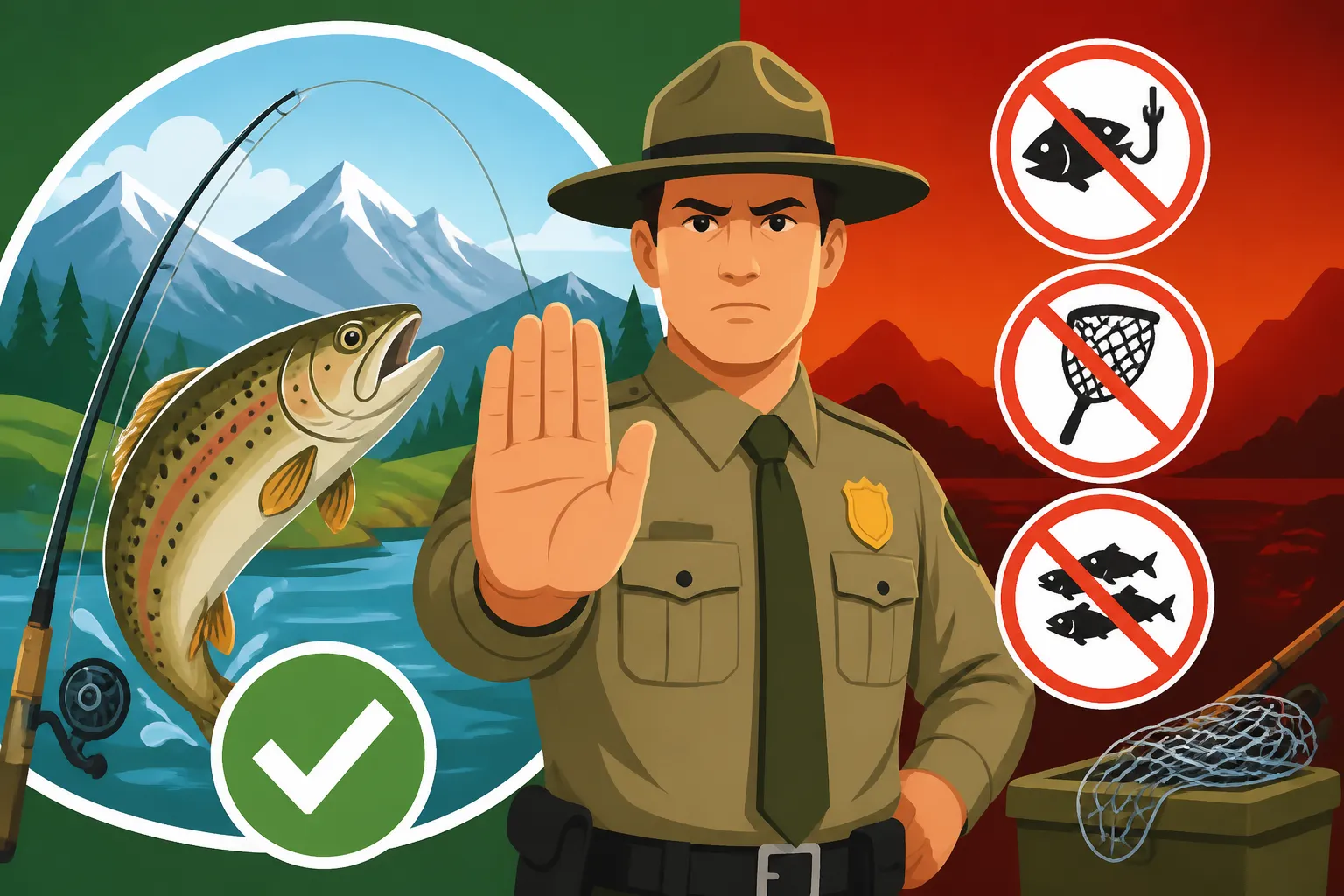
Think of a Wyoming Game and Fish warden not just as a law enforcer, but as a guardian of the state's natural resources. These dedicated men and women are highly trained peace officers with extensive knowledge of wildlife, fisheries, and all related regulations. They patrol vast areas, from bustling reservoirs to remote high-country streams, ensuring that everyone adheres to the rules.
When a game warden approaches you on the water or at a boat ramp, it's typically a professional and routine interaction. They have the authority to check your fishing license, inspect your catch, examine your gear, and verify that you're in compliance with all state and water-specific regulations. This means they can ask to see your valid Carrying Your Wyoming Fishing License in the Field, your The Wyoming Conservation Stamp and What It Covers, and even look inside your cooler to count and measure fish. It's important to remember that they are doing their job, and cooperating respectfully can go a long way. Resisting or obstructing a warden can lead to additional, more severe charges. Their goal isn't usually to "get" someone, but to educate and enforce, ensuring the health of Wyoming's fishing heritage.
The Legal Framework: From Field Citation to Court
If a game warden observes a violation, the process typically starts with a field citation, which is essentially a ticket. This citation will detail the specific violation, the statute or regulation broken, and often, a pre-set fine amount. For minor infractions, you might have the option to simply pay the fine by mail or online, essentially pleading guilty and resolving the issue without a court appearance. This is common for things like a simple "no license in possession" if you truly have one but left it at home.
However, for more serious violations, or if you choose to contest the citation, the process escalates. The citation will then serve as a summons to appear in a justice of the peace or circuit court. At court, you'll have the opportunity to plead guilty, not guilty, or no contest. Pleading not guilty means you'll have a trial where both sides present their case. A judge will then determine guilt or innocence and levy appropriate penalties, which can include fines, restitution (paying for the value of illegally taken wildlife), court costs, and even the suspension or revocation of your fishing privileges. Understanding this progression is crucial, as what might seem like a minor oversight can sometimes lead to a much larger legal situation if not handled properly.
Common Fishing Violations and Their Consequences
Many anglers, even seasoned ones, can inadvertently fall foul of regulations. Sometimes it's a genuine mistake, other times it's a lapse in judgment. Knowing the most common violations is the first step in avoiding them.
Fishing Without a License: The Most Basic Offense
This is perhaps the most frequent violation, and it's completely avoidable. In Wyoming, almost everyone over the age of 14 needs a valid fishing license. This applies to residents and nonresidents alike. Even if you're just dipping a line for fun, if you're not exempt, you need a license. For nonresidents, this also includes the Wyoming Fishing License Guide for Nonresidents as well as the Wyoming Conservation Stamp Cost. While there are exceptions, such as Do Kids Need a Fishing License in Wyoming? if they are under 14, or specific Free Fishing Day in Wyoming: What It Covers, these are limited.
The penalties for fishing without a license can vary, but they are never cheap. You'll typically face a fine that can range from a couple of hundred dollars to significantly more, depending on whether it's your first offense and if you were also taking fish illegally. Crucially, even if you planned to practice catch-and-release, the act of fishing without a license is still a violation. It’s also important to note that the fine for fishing without a license often far exceeds the actual Wyoming Nonresident Fishing License Cost or Wyoming Resident Fishing License Cost. It's a costly oversight that can easily be avoided by purchasing your license online through the WGFD website or from one of the many license vendors across the state. You can also find useful accessories like waterproof license holders, readily available on Amazon, to ensure your physical license is always protected and easily accessible.
Bag and Possession Limit Infractions: Keeping Too Many Fish
Wyoming implements strict Understanding Wyoming's Daily Bag Limits by Species and Possession Limits vs Daily Limits in Wyoming to manage fish populations and ensure sustainable fishing for everyone. A daily limit refers to the number of fish of a certain species you can keep in a 24-hour period, while a possession limit is the total number of fish you can have in your possession at any given time, regardless of when they were caught. This becomes especially important on multi-day trips or if you're bringing fish home from different outings.
Violating these limits can be a significant offense. For example, if the daily limit for trout is six, and you're caught with eight in your creel, you've exceeded the daily limit. If you have six from today and six from yesterday in your cooler at camp, and the possession limit is also six, you've exceeded the possession limit. The fines for over-limit violations can be substantial, often calculated per fish over the limit, plus additional administrative fees. For species like trophy trout, these fines can be particularly high, sometimes including restitution for the value of the fish.
It's absolutely essential to consult How to Read Wyoming's Fishing Regulations Booklet for the specific waters you plan to fish. Limits can vary greatly between rivers, lakes, and even sections of the same waterway. Don't assume the statewide limit applies everywhere. Carrying a small, reliable measuring tape, which you can easily pick up on Amazon, is also a simple way to ensure your fish meet any minimum or maximum size requirements.
Violating Specific Waterway Regulations: Hooks, Bait, and Seasons
Beyond licenses and limits, many specific regulations apply to particular bodies of water in Wyoming. These rules are put in place to protect sensitive fisheries, especially native species or those under conservation efforts.
- Bait Restrictions: Many of Wyoming's premier trout streams, particularly designated "trophy trout" waters, are restricted to artificial flies and lures only, and often mandate Are Live Minnows Legal Bait in Wyoming?. Waters like sections of the North Platte River are famous for their fly-fishing-only regulations. Using live bait or bait-scented lures in these areas can result in a citation.
- Hook Type: Some waters, notably sections of the North Platte River, require Barbless Hook Requirements on the North Platte River. This regulation is designed to minimize harm to fish caught and released, increasing their survival rates. Using barbed hooks where barbless are required is a clear violation. You can easily find tools on Amazon to crimp barbs on your hooks if you forget to buy barbless ones.
- Seasons and Closures: Certain waters, or sections of waters, may have Wyoming Fishing Seasons and Water-Specific Closures to protect spawning fish or for other management reasons. Fishing in a closed area, or during a closed season, is a serious violation. This also includes How Wyoming Sets In-Season Emergency Closures which can happen unexpectedly due to environmental conditions. Always check the most current regulations before heading out.
- Two-Pole Rules: While Wyoming does allow anglers to fish with two rods, it often requires a specific Can You Use Two Rods at Once in Wyoming? stamp on your license. Fishing with multiple rods without this stamp is a violation.
Penalties for these specific waterway violations can include significant fines and potentially lead to confiscation of fishing gear. Ignorance of the rules is rarely accepted as an excuse in court, making it paramount to check the current Where to Find Current Wyoming Fishing Regulations document before each trip.
Other Significant Violations: Illegal Methods and Protected Species
While less common, some violations carry very severe penalties due to their impact on fish populations and the integrity of the sport.
- Illegal Methods: This category includes activities like snagging (intentionally hooking fish in any part of the body other than the mouth), using explosives or chemicals to stun fish, or fishing with more lines than permitted (beyond the two-pole rule). These methods are considered highly unethical and destructive. Snagging, for instance, can result in substantial fines and even criminal charges, as it's viewed as poaching.
- Taking Protected Species: Wyoming has a diverse array of fish, and some species are protected or have very specific regulations due to their conservation status. Mistakenly keeping a protected fish, or one that is out of season, can lead to serious fines and restitution costs. An example might be taking a fish during a catch-and-release only season, which is effectively deemed illegal harvest. It's crucial to be able to identify your catch accurately before deciding to keep it.
These violations typically incur the highest fines and can also lead to the suspension or permanent revocation of your fishing license, making it impossible to legally fish in Wyoming for a period of time, or even indefinitely.
The Financial Impact of Fishing Fines in Wyoming
The immediate disappointment of a citation is often compounded by the financial sting. Wyoming fishing violations aren't just a slap on the wrist; they can hit your wallet hard, and the costs often extend beyond the initial fine.
Average Fine Amounts for Minor vs. Major Infractions
The actual dollar amount of a fine can vary based on the specific offense, the location, the number of fish involved, and whether it's a first or repeat offense. However, we can provide some general ranges to give you an idea:
| Violation Category | Description | Average Fine Range (First Offense) | Potential Additional Penalties |
|---|---|---|---|
| No Valid License | Fishing without any required license or stamp | $100 – $400 | License suspension, court costs |
| Over Bag/Possession Limit | Keeping more fish than allowed | $50 – $100 per fish over limit | Restitution (value of fish), license suspension, court costs |
| Bait/Hook Restriction | Using illegal bait or barbed hooks where prohibited | $150 – $300 | Confiscation of gear, court costs |
| Closed Season/Area | Fishing during a closed season or in a closed water | $200 – $500 | Restitution, license suspension, court costs, potential jail time |
| Illegal Method (Snagging) | Intentionally snagging fish | $500 – $1,000+ | Restitution, felony charges, license revocation, jail time |
| False Statement | Providing false info to a warden | $200 – $500 | License suspension, criminal charges, court costs |
| Obstructing Warden | Refusing cooperation with a game warden | $300 – $750+ | Criminal charges, potential jail time |
Note: These are average ranges and can change based on specific circumstances, district court policies, and legislative updates. Always refer to the current WGFD regulations for precise penalty schedules.
As you can see, even a minor oversight can easily cost you several hundred dollars. For comparison, a Total Cost of a Wyoming Nonresident Annual License and Stamp is a fraction of what a single violation can cost. It truly pays to be prepared.
Additional Costs Beyond the Fine: Court Fees, Restitution, and Lost Privileges
The actual fine is often just the beginning. If your case goes to court, you'll likely incur court costs, which can add another $50 to $150 or more to your total bill. For serious violations involving the illegal harvest of fish, particularly large or trophy-sized specimens, you may also be assessed restitution. This is an additional payment designed to compensate the state for the ecological and recreational value of the illegally taken wildlife. For a trophy fish, this could add hundreds, even thousands, of dollars to your penalty.
Perhaps the most impactful, non-monetary cost is the potential loss of your fishing privileges. A judge or the Wyoming Game and Fish Commission can suspend or revoke your fishing license, meaning you won't be allowed to fish in Wyoming for a set period. This can range from a few months to several years, or even permanently for repeat or very severe offenses. For passionate anglers, this loss of access to Wyoming's incredible waters can be far more devastating than any fine.
How Repeat Offenses Escalate Penalties
Wyoming's legal system, like most, takes repeat offenses much more seriously. If you're cited for the same or a similar violation multiple times, the penalties will almost certainly increase. Fines will be significantly higher, license suspensions will be longer, and the likelihood of more severe legal consequences, including potential jail time, becomes a very real possibility.
A pattern of violations can indicate a disregard for wildlife laws, and the courts and WGFD are less lenient on those who repeatedly break the rules. It’s not just about a bad day on the water; repeat violations can lead to a criminal record and a permanent black mark on your angling history.
Avoiding Penalties: Being a Responsible Angler
The best way to deal with fines and penalties is to avoid them altogether. Thankfully, being a responsible angler in Wyoming is straightforward and highly rewarding.
Always Have Your License and Conservation Stamp on Hand
This might sound obvious, but it's the number one preventable mistake. Before you even think about casting a line, ensure you have a valid Wyoming fishing license for your age and residency status, along with the necessary Who Needs Wyoming's Conservation Stamp. The WGFD allows you to carry a digital copy on your phone, but it’s always wise to have a physical copy or a printout as a backup, especially in remote areas with no cell service.
Don't assume your license from last year is still valid. Is a Wyoming Fishing License Valid for 12 Months or a Calendar Year? (It's typically a calendar year, from January 1st to December 31st). Always double-check the dates. Keep your license in a waterproof wallet or a dedicated fishing vest pocket. You can find excellent, durable options for these on Amazon, designed to protect your important documents from the elements.
Know the Regulations for Your Specific Fishing Spot
This is where many anglers get tripped up. While statewide regulations provide a baseline, specific waters often have unique rules. The North Platte River, for example, has different rules for different sections. A lake might have a slot limit for certain species, meaning you can only keep fish within a specific size range, while a nearby stream has a simple numeric limit.
Before every trip, or even when moving to a different section of a river, take a few minutes to review the regulations for that exact location in the Wyoming Fishing Regulations Every Angler Should Know booklet. The WGFD website also offers a "Where to Fish" tool that can help you find water-specific rules. Don't rely on word-of-mouth; verify the information yourself.
Double-Checking Your Catch: Measuring and Identifying Species
It's easy to get excited when the fish are biting, but before you put a fish on the stringer or in the cooler, take a moment to confirm it meets all regulations.
- Species Identification: Be confident in identifying the fish you've caught. If you're targeting cutthroat trout but accidentally catch a protected species, know how to safely release it. Guides like those you can find on Amazon can be invaluable for learning fish identification specific to Wyoming.
- Measurement: If there are size limits, measure your fish carefully from the tip of the snout to the tip of the tail. Don't guess. A small, retractable measuring tape is an essential piece of gear.
- Counting: Keep an accurate count of your catch throughout the day. If you're fishing with family or friends, ensure everyone understands the individual limits and that you don't collectively exceed any boat or group limits that might apply in certain areas.
If there's any doubt about a fish meeting the legal requirements, err on the side of caution and release it gently. It’s always better to release a legal fish than to keep an illegal one.
Leveraging Resources and Technology to Stay Informed
The Wyoming Game and Fish Department makes a tremendous effort to provide clear, accessible information. Don't be shy about using these resources.
- The WGFD Website: The official website (wgfd.wyo.gov) is a treasure trove of information. You can find digital copies of the current regulations, maps of fishing areas, emergency closures, and even purchase or renew your license.
- Regulation Booklets: Pick up a physical copy of the Wyoming Fishing Regulations booklet at any WGFD office, license vendor, or even many sporting goods stores. It's designed to be user-friendly and breaks down the rules by drainage and specific water bodies. Many anglers like to highlight key sections for their favorite spots. While the actual WGFD regulation booklet isn't sold on Amazon, you can find various supplementary guidebooks for Wyoming fishing there, which often summarize regulations or help with species identification, providing an extra layer of preparation.
- WGFD App: Many state game and fish departments are developing mobile apps that put regulations, maps, and reporting tools right on your phone. Check if WGFD has a current app that can help you stay updated in the field.
- Contacting WGFD: If you have any specific questions about a particular water body or regulation, don't hesitate to call your local WGFD office. Their staff are usually happy to clarify any confusing points.
By proactively educating yourself and using the tools available, you can spend less time worrying about fines and more time enjoying the incredible fishing Wyoming has to offer.
What to Do If You Receive a Citation
Even the most careful angler can find themselves in a situation where they receive a citation. If this happens, knowing how to react can significantly impact the outcome.
Interacting with a Game Warden: Remaining Calm and Respectful
If a game warden issues you a citation, the most crucial thing is to remain calm, courteous, and respectful. Do not argue, become defensive, or try to bribe the warden. This will only escalate the situation and could lead to additional, more serious charges, such as obstruction of a peace officer.
Listen carefully to what the warden says, and ask questions if you don't understand the violation or the next steps. Provide your identification and fishing license when requested. Remember, the warden is simply performing their duty to uphold the law. Being cooperative, even if you disagree with the citation, is always the best approach. You'll have an opportunity to present your side of the story later if you choose to contest the ticket. Your interaction in the field is being observed, and your behavior can be noted.
Understanding Your Rights and Options: Pleading Guilty, Not Guilty, or No Contest
Once you receive a citation, you typically have a few options for how to proceed, usually outlined on the ticket itself:
- Pleading Guilty: For minor infractions with a pre-set fine, you can often simply pay the fine by mail or online before the court date. This means you admit to the violation and accept the penalty. The case is then closed. This is often the quickest and least complicated route for minor, undeniable infractions.
- Pleading Not Guilty: If you believe you did not commit the violation, or that there were extenuating circumstances not accounted for, you can plead not guilty. This will require you to appear in court for a trial. During the trial, you'll have the opportunity to present your defense, call witnesses, and cross-examine the warden. The judge will then make a ruling based on the evidence presented.
- Pleading No Contest (Nolo Contendere): This plea means you neither admit nor deny guilt. You are telling the court you are not going to fight the charges, and you accept the penalties as if you were found guilty. This can sometimes be a strategic choice in situations where there might be civil liability issues, as a no-contest plea usually cannot be used as an admission of guilt in a separate civil lawsuit. However, for most fishing violations, it results in the same outcome as a guilty plea: paying the fine and accepting any other penalties.
Carefully consider your options, especially if the fine is substantial or if your fishing privileges are at risk.
The Appeal Process and Legal Counsel
If you plead not guilty and are still found guilty in court, you might have the option to appeal the decision to a higher court. The appeal process is complex and often requires legal expertise.
For any serious fishing violation—especially those involving high fines, restitution, license suspension, or potential jail time—it is highly advisable to seek legal counsel from an attorney experienced in environmental or wildlife law. A lawyer can help you understand the charges, navigate the legal system, negotiate with prosecutors, and represent your best interests in court. While it's an additional expense, legal representation can sometimes lead to reduced penalties or even dismissal of charges, particularly if there are procedural errors or a strong defense. Don't underestimate the potential long-term consequences of a wildlife violation on your record or your ability to enjoy fishing in the future.
Disclaimer
The information provided in this guide is for general informational purposes only and does not constitute legal advice. Fishing regulations and associated penalties in Wyoming are subject to change. Always consult the official Wyoming Game and Fish Department regulations booklet and website for the most current and specific information. If you receive a citation, seeking advice from a qualified legal professional is recommended.