Average Fine for Fishing Without a License in Wyoming
Oh, the sinking feeling when a Game and Fish warden approaches and you realize you might have overlooked something crucial. It’s a common worry for many anglers, whether you’re a seasoned local or just visiting our beautiful state: what happens if you’re caught fishing in Wyoming without the proper license? The anxiety of not knowing the exact repercussions can be a real damper on what should be a relaxing day on the water. This guide is here to shed some light on the average fine for fishing without a license in Wyoming, delving into the costs and other serious consequences you might face, so you can avoid that gut-wrenching moment.
Understanding the Severity of Fishing Without a License in Wyoming
Let's be clear from the get-go: fishing without a valid license in Wyoming isn't just a minor oversight. It's a serious violation that the Wyoming Game and Fish Department (WGFD) takes very seriously. They're dedicated to protecting our wildlife resources, and licenses are a critical part of how they fund conservation efforts, fish stocking, and enforcement. So, when you fish without one, you're not just breaking a rule; you're undermining the system designed to keep Wyoming's fisheries healthy and thriving for everyone.
Is It a Misdemeanor or a Felony?
Generally speaking, fishing without a license in Wyoming is classified as a misdemeanor. This means it's a criminal offense, though typically less severe than a felony. Don't let the word "misdemeanor" fool you into thinking it's not a big deal, though. A misdemeanor can still carry significant financial penalties, potential jail time (though rare for a first-time, simple license violation), and a mark on your record that could affect future hunting and fishing privileges. It's not the kind of thing you want to just shrug off.
The actual classification and severity can sometimes depend on the specific circumstances. For instance, if you're found to be intentionally evading license requirements, or combining this violation with other, more serious offenses like exceeding bag limits, poaching, or trespassing, the charges can escalate quickly. This is why it’s so vital to not only have your license but also to thoroughly understand all the other rules in the Wyoming Fishing Regulations Every Angler Should Know to avoid compounding mistakes.
The Immediate Consequences: Field Citations and Confiscation
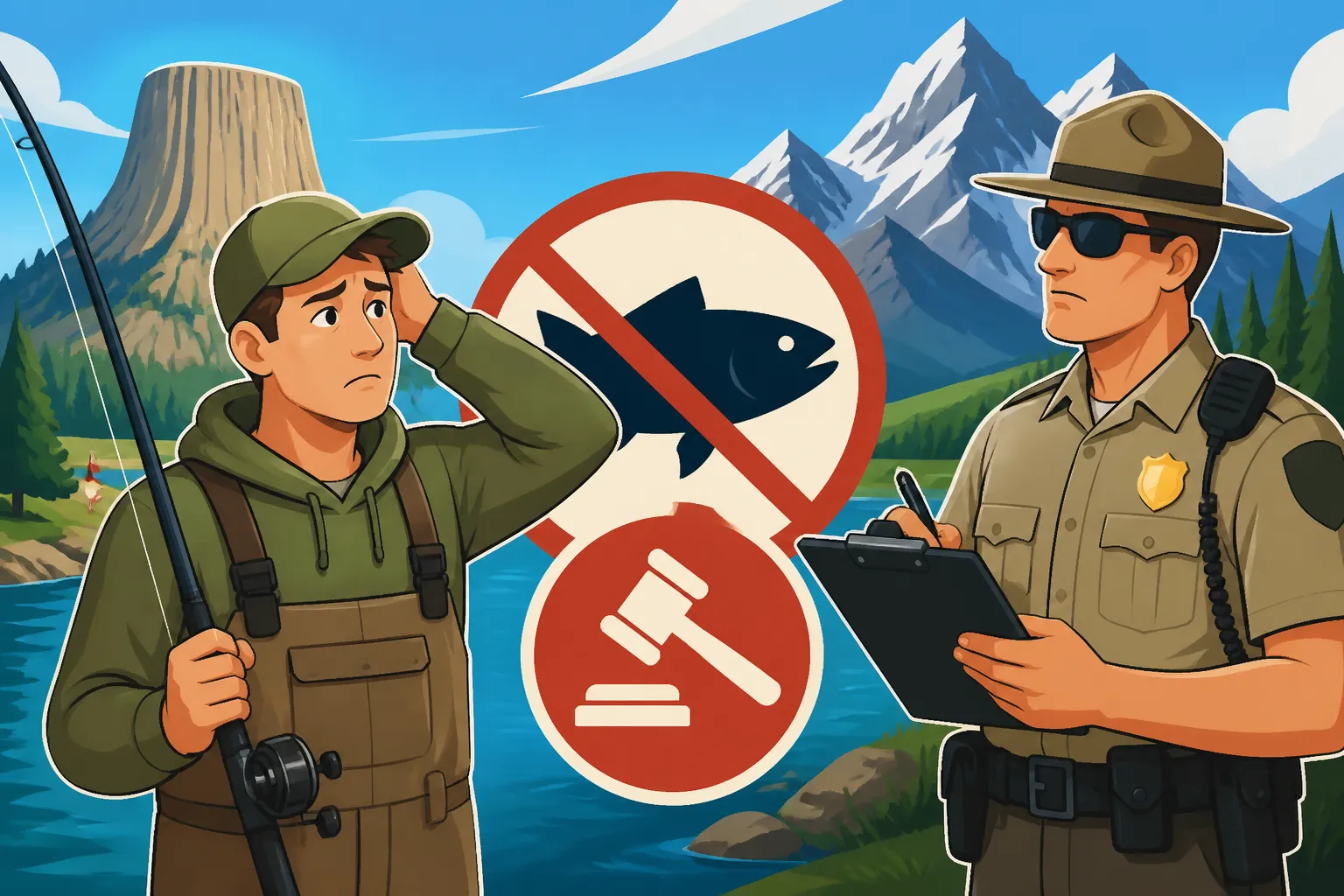
When a Game and Fish warden encounters you fishing without a license, the first and most immediate consequence will likely be a field citation. This is essentially a ticket, much like a traffic ticket, informing you of the violation and directing you to appear in court or pay a fine. The warden will typically ask for your identification, verify your lack of a valid license (they have databases to check instantly), and then issue the citation.
Beyond the ticket itself, wardens have the authority to confiscate your fishing equipment. Imagine losing your favorite rod and reel, that trusty tackle box you've built up over years, or even the fish you've already caught. This can be a particularly painful consequence, as it not only adds to the financial loss but also removes your ability to continue fishing for the day, or even longer if your gear isn't returned promptly. It's a stark reminder that these aren't just polite suggestions; they are enforceable laws with tangible repercussions right there on the bank or boat.
Breaking Down the Average Fine for Fishing Without a License
Now, let's get to the brass tacks: what kind of financial hit are we talking about? It's not always a single, fixed amount, which can be frustrating when you're just trying to figure out what you're up against. The "average fine" can be influenced by several factors, including the specific court, the judge, whether it's a first offense, and any aggravating circumstances.
Typical Monetary Penalties
Based on information from the Wyoming Game and Fish Department, a basic first-time offense for fishing without a license can result in a fine of up to $750. However, most initial fines tend to fall in the range of $200 to $450. This figure is often a base amount set by the courts or a predetermined schedule for minor violations. For example, some judicial districts might have a standard fine of $320 for this particular offense, while others might be slightly higher or lower.
It's important to remember that this "average" fine can fluctuate. If you've had previous violations with the WGFD, even for something seemingly unrelated like a hunting infraction, the judge might impose a higher penalty. The goal is to deter future violations, and repeat offenders often face stiffer consequences. Always ensure you have your Wyoming Fishing License Guide for Nonresidents or resident license handy, or have purchased the correct Wyoming Resident Fishing License Cost or Wyoming Nonresident Fishing License Cost option.
Additional Costs: Court Fees and Restitution
The fine itself is rarely the total cost. When you receive a citation and are required to appear in court, you'll almost certainly incur additional court fees and surcharges. These can easily add another $100 to $200 (or more) to your total bill. These fees cover administrative costs, judicial services, and sometimes even fund victim compensation programs, depending on the state and local statutes. So, that $300 fine could quickly become a $500 payout once all the extraneous costs are tallied up.
In some cases, especially if you've harvested fish without a license, the court might also order you to pay restitution. Restitution is meant to compensate the state for the value of the wildlife taken illegally. The WGFD has established monetary values for different fish species, particularly for game fish like trout or walleye. This means if you caught and kept a few trout without a license, you could be ordered to pay additional funds beyond the standard fine and court costs, effectively paying for the fish you took from public resources without proper authorization. It adds another layer of financial impact to the violation.
The Wyoming Game and Fish Department's Role in Enforcement
The Wyoming Game and Fish Department plays a pivotal role not just in setting regulations but also in actively enforcing them. Their wardens are highly trained professionals who patrol our vast lands and waters, from the most popular spots like the North Platte River to remote high-alpine lakes. They are the eyes and ears on the ground, ensuring everyone adheres to the rules. They don't just sit in an office; they are out there, often undercover or in plain sight, ensuring fair play and conservation.
It's their job to educate anglers, but also to issue citations when violations occur. They use various methods, including checking licenses directly, observing fishing activity, and responding to reports from concerned citizens. Their commitment to managing and protecting Wyoming's wildlife means they are often quite visible in popular fishing areas, especially during peak seasons. They're not there to ruin your day, but to ensure that everyone is playing by the rules, preserving the resource for future generations, and often, preventing more egregious violations. Understanding their role helps appreciate why seemingly minor offenses are still met with serious enforcement.
Beyond the Fine: Other Ramifications and How to Avoid Them
While the monetary fine is usually the first thing people think about, the consequences of fishing without a license can extend far beyond a hit to your wallet. These additional ramifications can be just as, if not more, impactful on your ability to enjoy Wyoming's outdoor opportunities in the future.
License Suspension and Future Restrictions
One of the most significant non-monetary consequences is the potential suspension or revocation of your fishing privileges. A judge, or the Wyoming Game and Fish Department directly, can suspend your ability to purchase a Wyoming fishing license for a period of time, often one to five years for a first offense. This means that even if you wanted to do things correctly the next season, you might be legally barred from doing so. This can be a huge blow for anyone who loves to fish our magnificent waters.
Furthermore, a violation in Wyoming could impact your ability to obtain hunting or fishing licenses in other states. Wyoming is part of the Interstate Wildlife Violator Compact, an agreement among many states to recognize each other's license suspensions and revocations. So, if your fishing license is suspended in Wyoming, you might find yourself unable to buy a license in neighboring Montana, Colorado, or even states hundreds of miles away. It's a widespread network designed to prevent individuals from simply moving to another state to continue their illegal activities. This adds a critical layer of importance to ensuring you're compliant with Wyoming Resident vs Nonresident License Rules.
The Importance of Carrying Your License
It might seem obvious, but simply having your license on you can prevent a lot of headaches. Many anglers accidentally leave their physical license at home or forget to print the digital version. While wardens can often look up your license in their system, it's not a guarantee, especially in remote areas with limited cell service. And even if they can look it up, the time it takes can be a nuisance for both you and the warden, potentially turning a quick check into a more drawn-out interaction.
The WGFD actually encourages carrying a physical copy or having it readily accessible on your mobile device. Many anglers find it convenient to store a digital copy on their phone, perhaps in a dedicated folder or an easily accessible app. You can also print a spare and keep it laminated in your tackle box, wallet, or in the glove compartment of your vehicle. Some anglers even purchase small, waterproof pouches from places like Amazon to protect their physical license from the elements while out on the water. This small step ensures compliance and can save you from a potential citation for simply not being able to present your license, even if you technically purchased one. Details on this can be found in Carrying Your Wyoming Fishing License in the Field.
Simple Steps to Ensure Compliance
Avoiding fines and other penalties is surprisingly easy with a bit of planning. The first step is always to purchase the correct license. You can do this conveniently online through the WGFD website, or visit one of the many authorized vendors across the state. Whether you need a daily, five-day, or annual license, make sure you understand the difference between Wyoming's Annual, Daily and Five-Day License Options and purchase the one that fits your trip. Remember that most adult licenses also require the purchase of a The Wyoming Conservation Stamp and What It Covers, so don't forget that crucial addition!
Beyond the license, it’s vital to familiarize yourself with the current regulations. The WGFD publishes a new regulation booklet annually, and it’s available online or at most license vendors. You can also pick up a physical copy at many outdoor retailers, or even find versions that simplify certain sections on sites like Amazon. Don't rely on what you remember from last year, or assume the rules are the same in every waterbody. Specific rivers and lakes often have unique rules regarding bait, bag limits, and seasons. Taking a few minutes to read through How to Read Wyoming's Fishing Regulations Booklet before you head out can save you a world of trouble and ensure your fishing trip is both enjoyable and legal.
What to Do If You're Cited for Fishing Without a License
Even with the best intentions, mistakes happen. Maybe you genuinely forgot, or perhaps you misunderstood a complex regulation. If you find yourself in the unfortunate position of being cited for fishing without a license, it’s important to know how to proceed. Panic won't help, but understanding your options will.
Your Rights and Obligations
First and foremost, when approached by a Game and Fish warden, remain calm and cooperative. They are performing their duties, and being confrontational or argumentative will only make the situation worse. You have the right to remain silent regarding self-incriminating statements, but you are generally obligated to provide identification and present your fishing license if requested. If you don't have it, be polite and explain the situation.
Once cited, you’ll receive paperwork outlining the charge, the court date, and options for resolving the citation. Carefully read all the information provided. It will specify whether you need to appear in court or if you can simply pay the fine by mail or online before a certain deadline. Missing a court date or failing to address the citation can lead to further legal complications, including a warrant for your arrest or additional, more severe penalties.
Contesting a Citation vs. Paying the Fine
After receiving a citation, you essentially have two main paths: either pay the fine as directed or contest the citation in court. If you believe the citation was issued in error, or if you have a valid defense (e.g., you actually did have a valid license, or there was a misunderstanding of a rule), you have the right to plead not guilty and present your case to a judge. This might involve gathering evidence, such as proof of your license purchase or witness statements.
However, contesting a citation can be a time-consuming and potentially costly process. You might need to take time off work, travel to the courthouse, and possibly even hire legal counsel, especially if the situation is complex or if there are other charges involved. For a straightforward "no license" violation, many individuals opt to simply pay the fine to avoid the hassle, especially if they know they were in violation. Weigh the costs and benefits carefully. Sometimes, admitting the mistake and taking the hit is the most practical solution. For more details, you might consider articles like What Happens If You Fish Without a License in Wyoming.
Learning from the Mistake
Regardless of whether you pay the fine or contest it, the most important outcome is to learn from the experience. A citation for fishing without a license is a costly lesson, but it’s one that can help you become a more responsible and compliant angler. Use it as an opportunity to review the Wyoming Fishing Regulations Every Angler Should Know more closely, set up a reminder system for license renewals, and ensure you always double-check your gear before heading out.
The Game and Fish Department also offers resources and information online, including guides on Where to Find Current Wyoming Fishing Regulations and how to purchase licenses. Many local fishing shops and sporting goods stores, including larger retailers or online options like Amazon for equipment, also keep up-to-date on regulations and can be good resources for quick questions. The ultimate goal is to enjoy Wyoming's incredible fishing opportunities legally and responsibly, protecting these precious resources for everyone.
| Violation Type | Typical First Offense Fine Range | Court Fees (Est.) | Potential Other Penalties |
|---|---|---|---|
| Fishing Without Valid License | $200 – $450 | $100 – $200 | License suspension, equipment confiscation, restitution |
| Fishing With Expired License | $150 – $350 | $100 – $150 | License suspension, equipment confiscation |
| Not Carrying License (But Have One) | $50 – $150 (often dismissed) | $50 – $100 | Warning, sometimes a small administrative fee |
| Exceeding Bag/Possession Limits | $300 – $750+ | $100 – $200+ | License suspension, restitution (high), equipment conf. |
| Using Prohibited Bait | $150 – $400 | $100 – $150 | Equipment confiscation, license suspension |
Note: These figures are estimates and can vary significantly based on county, specific circumstances, and judicial discretion. Always refer to official WGFD guidelines and court rulings.
Disclaimer
Please note that the information provided in this guide is for general informational purposes only and does not constitute legal advice. Fishing regulations and associated penalties in Wyoming can change. It is always the angler's responsibility to consult the most current Wyoming Game and Fish Department regulations and obtain appropriate licenses before fishing. If you receive a citation, seeking advice from a legal professional is recommended.