How to Tell a Cutthroat From a Rainbow Trout
It's happened to all of us: you're out on a beautiful Wyoming stream or lake, you land a gorgeous trout, and then you start to wonder, "Is this a cutthroat or a rainbow?" The truth is, telling these two common and beloved trout species apart can be genuinely confusing, especially here in Wyoming where they often share waters and even, at times, their genes. This guide is here to demystify the subtle (and sometimes not-so-subtle) differences, helping you confidently identify your catch.
The Angler's Dilemma: Why Cutthroat and Rainbows Are So Hard to Distinguish
Many anglers, even seasoned ones, find themselves scratching their heads when trying to differentiate between a cutthroat and a rainbow trout. They both possess that classic torpedo shape, vibrant colors, and strong fighting spirit that makes them such a joy to catch. But beyond the superficial, there are crucial distinctions, and understanding them is not just about bragging rights; it can sometimes be important for following specific regulations on certain waters.
Shared Habitats and Similar Appearances
One of the primary reasons for the confusion is that cutthroat and rainbow trout frequently coexist in the same rivers, streams, and lakes across Wyoming. You might be fishing the North Platte River, for instance, and pull out both species within minutes of each other. To make matters even trickier, young fish of both species can look remarkably similar, with muted colors and less defined markings than their adult counterparts.
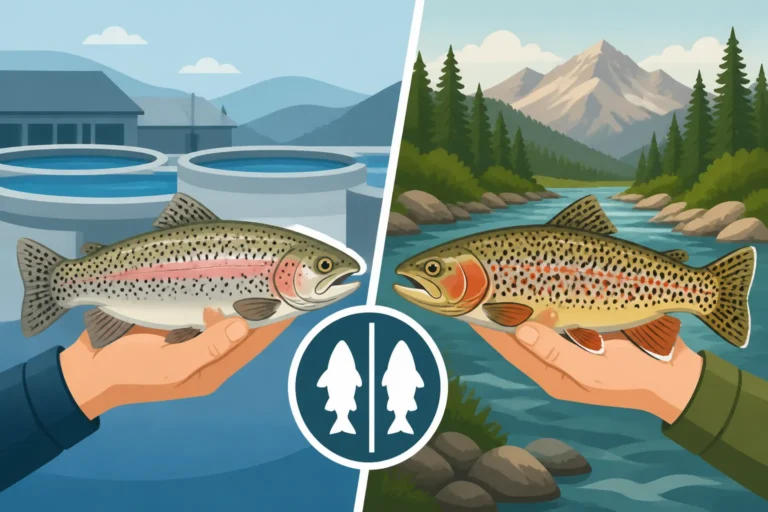
The environment also plays a huge role in a trout's appearance. Water clarity, diet, sunlight exposure, and even the time of year can dramatically alter a fish's coloration. A cutthroat from a dark, tannin-stained mountain lake might appear much darker and less vibrant than one from a clear, rocky stream. The same goes for rainbows; a wild rainbow feeding on abundant insects in a pristine river might be brilliantly colored, while a stocked rainbow from a pond could be much paler. These natural variations add layers of complexity to identification, often making us question what we think we know.
It's easy to get frustrated when you're trying your best to follow the rules, but the fish just aren't cooperating with clear identification markers. Don't worry, you're not alone in feeling this way. It's a common challenge that makes trout fishing in Wyoming both exciting and a bit of a detective game.
The "Cutbow" Conundrum
Perhaps the biggest curveball in Wyoming's trout identification game is the presence of "cutbows." These are hybrid trout, a cross between a rainbow trout and a cutthroat trout. Given that these two species are closely related and often inhabit the same waters, natural hybridization can occur. However, the Wyoming Game and Fish Department also occasionally stocks cutbows in certain waters, particularly where the goal is to provide a robust sport fishery without introducing a purely non-native species that might outcompete native cutthroat populations entirely.
Cutbows often exhibit a confusing mix of characteristics from both parent species. You might see a faint red slash under the jaw, characteristic of a cutthroat, but combined with the more evenly distributed spotting of a rainbow, or even a hint of the rainbow's pink lateral stripe. They are the ultimate genetic melting pot, making a definitive ID almost impossible without genetic testing.
For many anglers, if you catch a fish that looks like a rainbow but has a subtle or broken red slash, it's probably a cutbow. These hybrids can be incredibly strong fighters and grow to impressive sizes, offering a unique angling experience. Just remember that their mixed heritage means they don't always fit neatly into either the "cutthroat" or "rainbow" box, adding to the delightful mystery of Wyoming's waters. Understanding What Are Cutbow Trout? is key to appreciating this unique blend.
Key Distinguishing Features for Spotting a True Cutthroat
Despite the challenges, there are reliable ways to lean towards a positive identification for a pure cutthroat trout. It often comes down to looking at a combination of several features, rather than relying on just one. Think of it like a checklist where you're accumulating evidence.
The Iconic Red Slash
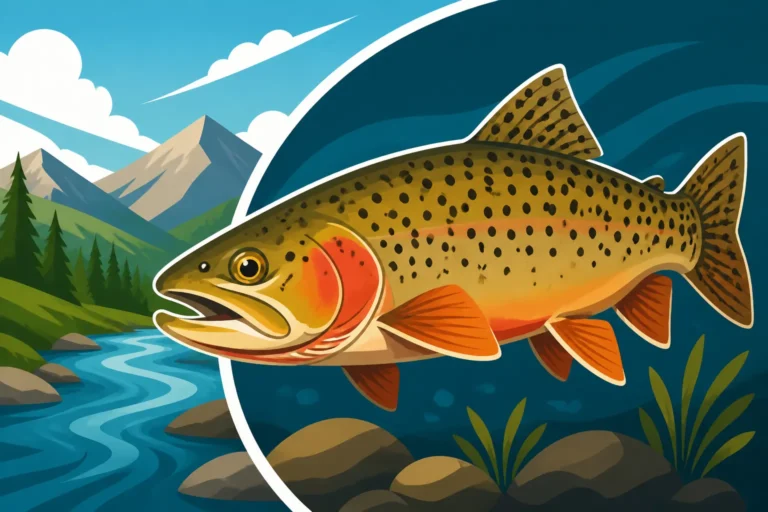
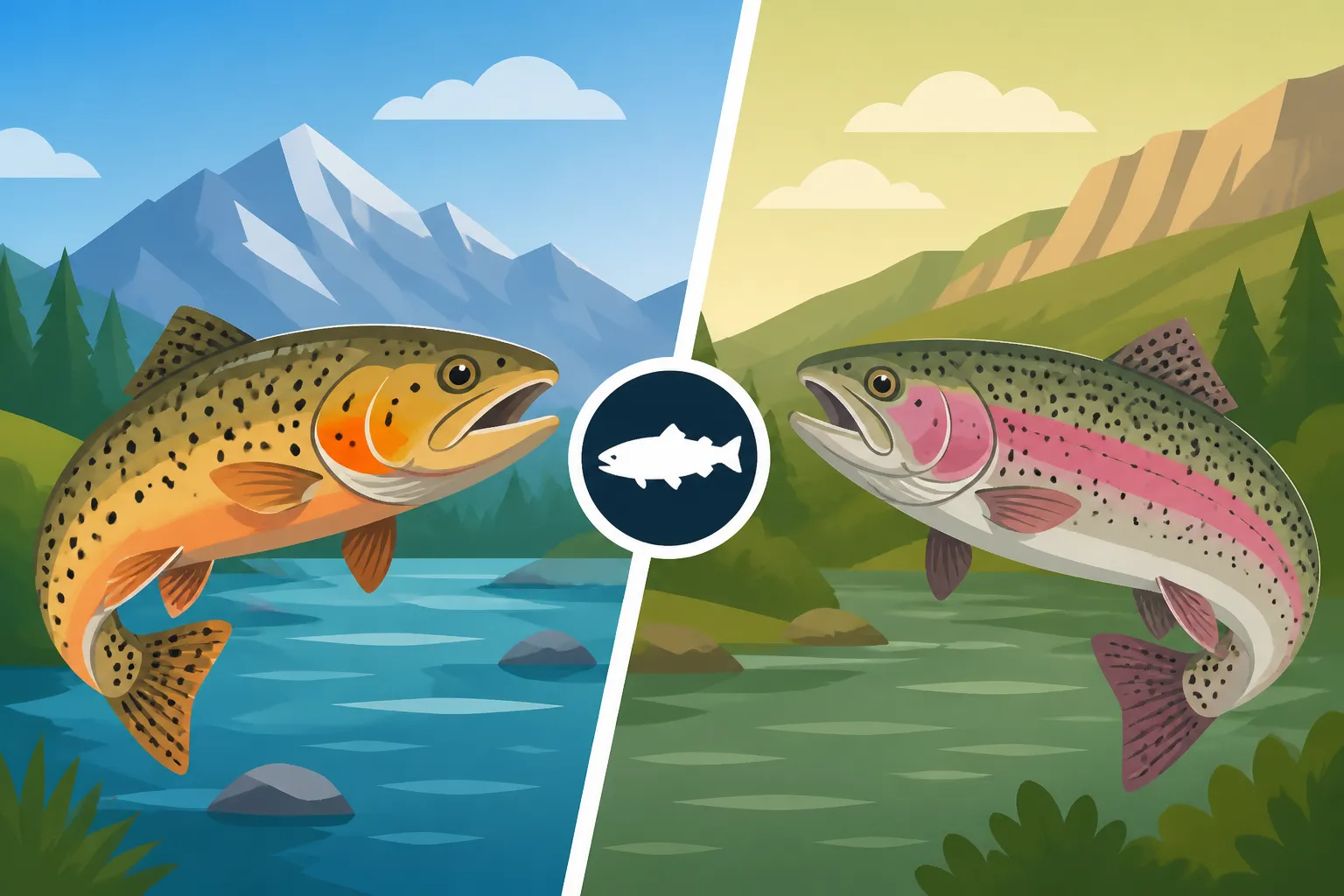
The most famous and often the most reliable identifying feature of a cutthroat trout is its characteristic "cutthroat slash" or "mandibular stripe." This is a distinctive red, orange, or sometimes yellowish marking found in the folds of skin on the underside of the jaw, just below the gill plate. It literally looks like a cut or a slash, hence the name.
However, here's where it gets tricky: this slash isn't always bright red, vivid, or even fully formed. In some fish, especially those in poorer condition, it might be a pale orange, a faint yellow, or even appear as just two small, broken marks. Water conditions, diet, and the specific subspecies of cutthroat (Wyoming has several native ones, like the Identifying a Yellowstone Cutthroat Trout) can all influence the intensity and prominence of this mark. Always check closely, gently lifting the jaw if needed, but remember it's just one piece of the puzzle.
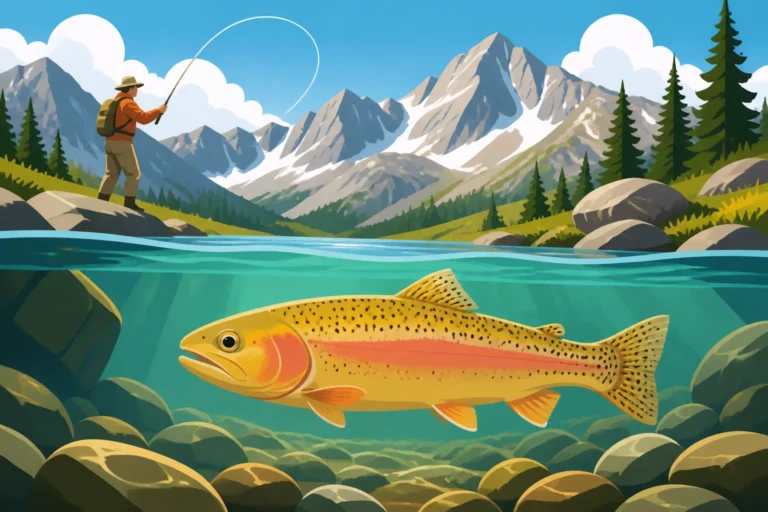
When you're fishing a Wyoming stream known for its native cutthroat populations, like many high-country creeks in the Wind River Range, seeing this vibrant red slash is a moment of pure joy, signaling you've caught a true native beauty. Keep an eye out for it!
Mouth and Jaw Structure
Beyond the slash, the overall shape and structure of a cutthroat's mouth and jaw can offer clues. Generally, cutthroat trout tend to have a more pointed snout and a smaller mouth compared to rainbow trout. The upper jaw (maxilla) typically extends to about the middle of the eye, or sometimes slightly past it, but usually not significantly beyond the back edge of the eye.
This more refined mouth structure is often an adaptation to their diet, which might consist of smaller insects, nymphs, and terrestrial bugs. It's not a hard-and-fast rule, as larger cutthroat can certainly develop more robust jaws, but it's a general guideline that can help when you're looking at the fish. Try to get a profile view of the fish's head if possible, and compare it to mental images or photos you've seen of known cutthroats.
Of course, a feisty fish on the hook might make a detailed mouth inspection a challenge. Always prioritize the fish's well-being over a perfect photo or identification. A quick glance at the jawline can often be enough to inform your best guess.
Spots: Small, Dark, and Tail-Focused
While both cutthroat and rainbow trout are spotted, the pattern and size of these spots differ significantly. Cutthroat trout typically have smaller, often more numerous, and irregularly shaped spots. Crucially, these spots are usually concentrated more heavily towards the tail, gradually becoming sparser or even absent towards the head and front of the body. You might see some spots on the dorsal fin, but they won't typically be as prevalent on the head or gill plates as they are on a rainbow.
Different subspecies of cutthroat can have variations in spotting, too. For example, the Yellowstone Cutthroat Trout, Wyoming's state fish, is famous for its very fine, pepper-like spots that are indeed more concentrated towards the tail. In contrast, the Snake River Fine-Spotted Cutthroat (a subspecies found in the Snake River drainage) has even finer, almost dusty spots.
So, when you land a fish, take a moment to observe the distribution and size of its spots. If they're predominantly on the back half of the fish and seem smaller and more irregular, you're likely holding a cutthroat. It's a reliable indicator that, when combined with the presence of a slash, can strongly point you in the right direction.
Recognizing a Rainbow Trout: Distinctive Marks
Rainbow trout, while equally beautiful, have their own set of unique markers that differentiate them from their cutthroat cousins. Once you know what to look for, these features can really stand out and help you quickly make an identification.
The Lateral Line and Gill Plate
One of the most defining characteristics of a rainbow trout is the prominent, often brilliant, pink or red band that runs horizontally along its lateral line, from the gill plate all the way to the tail. This "rainbow" stripe is where they get their name, and it can be incredibly vivid, especially in healthy, mature fish or during spawning season. While some cutthroat might have a faint, reddish tint on their sides, it's rarely as distinct or as strip-like as on a rainbow.
In addition to the lateral stripe, rainbow trout often exhibit a reddish or pinkish blush on their gill plates. This coloration, combined with the lateral band, creates a striking appearance that is distinctly rainbow. Think of a perfect arc of color spanning the length of the fish – that's often your clearest sign.
However, just like with cutthroats, environmental factors can mute this color. A rainbow from turbid water or one that's been in a hatchery pond for a long time might have a much fainter stripe. Still, even a subtle hint of that lateral band should direct your thoughts toward a rainbow or a cutbow.
Spots: Evenly Distributed and Often Larger
Unlike the cutthroat's tail-focused, fine spots, rainbow trout generally feature more evenly distributed spots across their entire body. You'll find them on the head, gill plates, dorsal fin, caudal (tail) fin, and running down the sides all the way to the anal fin. These spots also tend to be larger, rounder, and more uniformly distributed, giving the fish a speckled appearance all over.
Imagine throwing pepper on a tablecloth versus sprinkling it just on one end. Rainbows are more like the entire tablecloth peppered evenly. This all-over spotting is a consistent marker, and even if the lateral stripe is faint, the spot pattern can still provide a strong clue. This consistent spotting is one of the key indicators when How to Tell a Cutthroat From a Rainbow Trout becomes a challenge.
When you're comparing a fish that has spots running uniformly from nose to tail with another that has spots primarily on its back half, this difference alone can be a powerful identifier. This is especially true for the fins; if you see prominent spots on the dorsal, adipose, and caudal fins, it's a strong indicator of a rainbow.
Mouth and Tail Shape
The mouth of a rainbow trout typically extends slightly further back than a cutthroat's, often reaching noticeably beyond the eye. Their jaws can also appear a bit more robust or blunt compared to the more pointed snout of a cutthroat. This larger gape might allow them to consume a wider variety of prey, from larger insects to small fish.
Regarding the tail, rainbow trout usually have a squarer or less deeply forked tail than cutthroat trout, which often have a slightly more defined fork. This isn't always obvious, especially in smaller fish or if the tail has been damaged, but when present, it can be another helpful characteristic. Think of a rainbow's tail as being somewhat flat at the end, while a cutthroat's might have a subtle "V" shape.
Together, the larger mouth, the broader, more evenly spotted body, and the potential for a squarer tail, coupled with that signature pink stripe, paint a clear picture of a rainbow trout. When you're standing streamside, trying to make an identification, run through these points in your head.
When It's a "Cutbow" or You're Still Unsure
Let's be honest, sometimes you're going to catch a fish that just doesn't fit perfectly into either category. That's usually where the "cutbow" comes into play, or it's simply a testament to how tricky fish identification can be in the wild.
Hybrid Characteristics: The Blurry Line
When a cutthroat and a rainbow trout successfully interbreed, their offspring, the cutbow, will possess a fascinating blend of traits from both parents. This means you might see a faint, broken, or ambiguous red slash under the jaw, making you question if it's truly there or just a trick of the light. Alongside this, the fish might have a faint pinkish lateral band, but it won't be as vibrant or distinct as on a pure rainbow.
The spotting pattern on a cutbow can be equally confusing. It might be more spread out than a typical cutthroat's, but not quite as uniform or heavy as a rainbow's. They're often described as having "some spots everywhere." Essentially, if you're looking at a trout and finding yourself saying, "It has a bit of both…" then you've likely encountered a cutbow. It's truly a genetic mash-up, blurring those distinct lines we often rely on.
These hybrids are common in many Wyoming rivers, especially those where both species are present, like parts of the Wyoming's North Platte River Fishing Guide or the Wind River drainage. They are robust, aggressive, and often grow to impressive sizes, making them fantastic sport fish, even if they pose a challenge for strict identification.
Why Identification Matters (and When It Doesn't)
You might be thinking, "Who cares? It's a trout!" And for many recreational anglers focused on the sheer joy of fishing, you're absolutely right. However, there are times when knowing the difference between a cutthroat and a rainbow, or even a cutbow, is genuinely important.
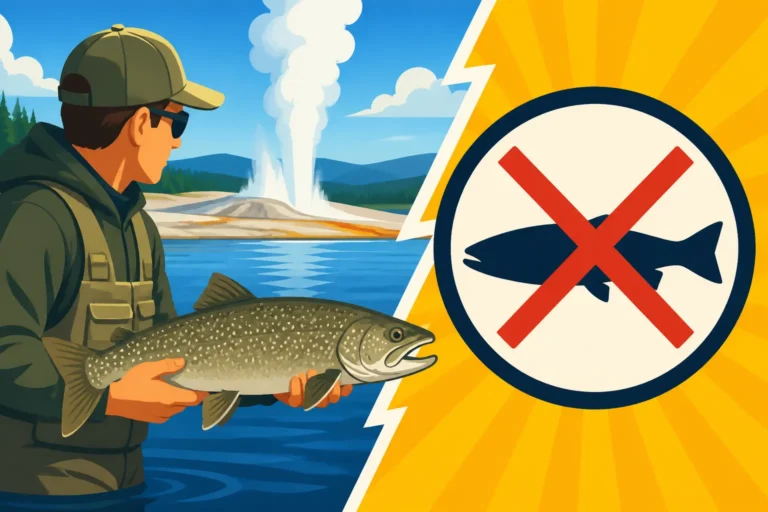
The main reason is often regulatory. The Wyoming Game and Fish Department (WGFD) has specific regulations for different species, particularly for native cutthroat trout. For instance, some waters might have a lower bag limit for cutthroat to protect their populations, while rainbows or cutbows might have a more generous limit. In some areas, there might be catch-and-release rules specific to native cutthroat subspecies. For example, understanding How Bag and Possession Limits Work in Wyoming often requires knowing your species. Misidentifying your catch could, inadvertently, lead to a violation.
For conservationists and fisheries managers, precise identification is critical. They track populations of native cutthroat subspecies, monitor their health, and assess the impact of non-native species (like rainbows, which can outcompete cutthroat or hybridize with them). So, while you might not always need to know for your personal enjoyment, it’s worth being aware of the broader ecological implications. For the most part, if you're keeping a few fish for dinner, and there's no specific species regulation on your chosen water, a general "trout" identification might suffice. However, always consult the local regulations.
Practical Tips for Anglers
Alright, so you're on the water, you've landed a fish, and you're trying to figure it out. Here are some practical tips to help you make the call:
First, look at multiple features. Don't just rely on the slash. Check for the slash, the lateral line, the spot distribution, and the mouth shape. The more features that align with one species, the more confident you can be in your identification. If it's a mix, lean towards cutbow.
Second, take a quick, clear photo. If you're practicing catch and release, do this quickly and gently while the fish is still in the water or held briefly over a net. A good photo allows you to consult a field guide or even ask experienced anglers later. Some anglers even carry waterproof ID cards or laminated guides you can find on Amazon right in their vest or tackle box.
Third, consult the local regulations. Before you even hit the water, always check the current Wyoming Fishing Regulations Every Angler Should Know booklet for the specific water you'll be fishing. It will tell you if there are special rules for cutthroat, rainbow, or other species, and sometimes even offers identification tips for that particular area.
Finally, when in doubt, err on the side of caution. If you're truly unsure and the regulations impose stricter limits or catch-and-release rules on one species (usually native cutthroat), it's best to treat the fish as the more protected species. This ensures you're always acting responsibly and doing your part to conserve Wyoming's incredible fisheries.
Here's a quick comparison table to help you keep these points straight:
| Feature | Cutthroat Trout | Rainbow Trout | Cutbow Trout |
|---|---|---|---|
| Red Slash | Present, distinct (red/orange/yellow), sometimes faint | Absent | May be faint, broken, or ambiguous |
| Lateral Stripe | Usually absent or very faint pinkish wash | Often prominent pink/red stripe from gill to tail | May have a faint or broken pinkish stripe |
| Spot Distribution | Smaller, more concentrated towards tail, sparse on head | Larger, more evenly distributed over entire body/fins | Mix of both, often scattered but less uniform than rainbow |
| Mouth/Snout | Generally more pointed snout, jaw extends to mid-eye | Often more blunt snout, jaw extends past eye | Varies, can be intermediate |
| Tail Shape | Often slightly forked | Usually squarer, less forked | Varies |
| Gill Plate Color | Typically no distinct pink/red flush | Often has a pink or reddish flush | May have a faint blush |
Remember, identifying trout is part of the fun and challenge of fishing in Wyoming. With a little practice and attention to these key features, you'll be distinguishing your cutthroats from your rainbows like a pro in no time!
Disclaimer
This article is for general informational purposes only and does not constitute professional advice. Laws, prices and regulations vary by location and change over time. Consult a qualified professional for guidance on your specific situation.