Identifying a Yellowstone Cutthroat Trout
It can be incredibly frustrating to be out on a beautiful Wyoming stream, reeling in a gorgeous trout, and then find yourself staring at it, scratching your head. Is this the native Yellowstone Cutthroat you’ve been hoping to catch, or is it a common rainbow? The confusion is real, and it’s not just about bragging rights; knowing the difference is vital for respecting our local ecosystems and following specific fishing regulations. This guide is dedicated to helping you confidently identify a Yellowstone Cutthroat Trout, so you can fish responsibly and appreciate this truly special fish.
The Iconic Yellowstone Cutthroat Trout: Why Identification Matters
There’s something truly magical about catching a Yellowstone Cutthroat Trout in its native habitat. These fish aren’t just another species; they are a living symbol of the pristine wilderness that makes Wyoming so special. But their unique status also comes with a responsibility: to protect them. This starts with knowing exactly what you’ve caught.
A Native Treasure of Wyoming's Waters
The Yellowstone Cutthroat Trout (Oncorhynchus clarkii bouvieri) isn't just a fish in Wyoming; it's a piece of our state's natural heritage. These fish are true natives, having thrived in the cold, clear waters of the Yellowstone River drainage, the Snake River system, and numerous high-alpine lakes and streams for millennia. Their presence is a sign of a healthy, intact ecosystem, acting as a crucial indicator species. They’re deeply woven into the fabric of the West, supporting a vast array of wildlife, from bears and eagles to otters and other fish. When you see a vibrant Yellowstone Cutthroat, you're looking at a fish that has adapted and endured in these rugged landscapes long before anglers ever cast a line.
Their historical range is quite specific, primarily encompassing the Yellowstone River basin, including Yellowstone Lake itself, and extending into parts of the Snake River drainage. Understanding Where Yellowstone Cutthroat Trout Are Native in Wyoming helps you narrow down possibilities when you're fishing. If you're casting in, say, the Wind River Range, you might encounter other cutthroat subspecies or brook trout, making identification a nuanced but important skill. It’s this deep connection to specific watersheds that makes their conservation so vital – they belong here, and their health reflects the health of these precious aquatic environments.
Conservation and Regulations: The Real-World Impact of Misidentification
Beyond the sheer joy of identifying a native species, there's a serious side to knowing your fish: conservation. Yellowstone Cutthroat Trout populations have faced significant challenges over the years, from habitat degradation to the introduction of non-native species like lake trout and rainbow trout, which compete for resources and can hybridize. Because of these threats, specific regulations are often put in place to protect Yellowstone Cutthroat populations. You might find waters with special slot limits, catch-and-release rules, or even bait restrictions that apply only to native cutthroats.
Imagine you're fishing a blue-ribbon stream, and you catch a beautiful trout. If you mistakenly identify a rainbow trout as a Yellowstone Cutthroat, you might inadvertently release a fish that local management hopes anglers will remove to protect the native population. Conversely, if you keep a native Yellowstone Cutthroat in a catch-and-release area because you thought it was a rainbow, you could be violating regulations and undermining critical conservation efforts. The Wyoming Game and Fish Department works tirelessly to manage these fisheries, and angler participation in proper identification is a cornerstone of their success. Knowing the species helps you play your part in protecting Is the Yellowstone Cutthroat Trout Endangered?, ensuring these fish continue to thrive for future generations. It’s not just a rule, it’s a commitment to the wild places we cherish.
The Hallmarks of a Yellowstone Cutthroat: Key Physical Features
Okay, let's get down to the nitty-gritty – what does a Yellowstone Cutthroat actually look like? When you've got a fish in hand (or better yet, gently in the water net), there are a few tell-tale signs that will help you confidently make that identification. It’s all about looking at the details.
The Distinctive "Cutthroat Slash"
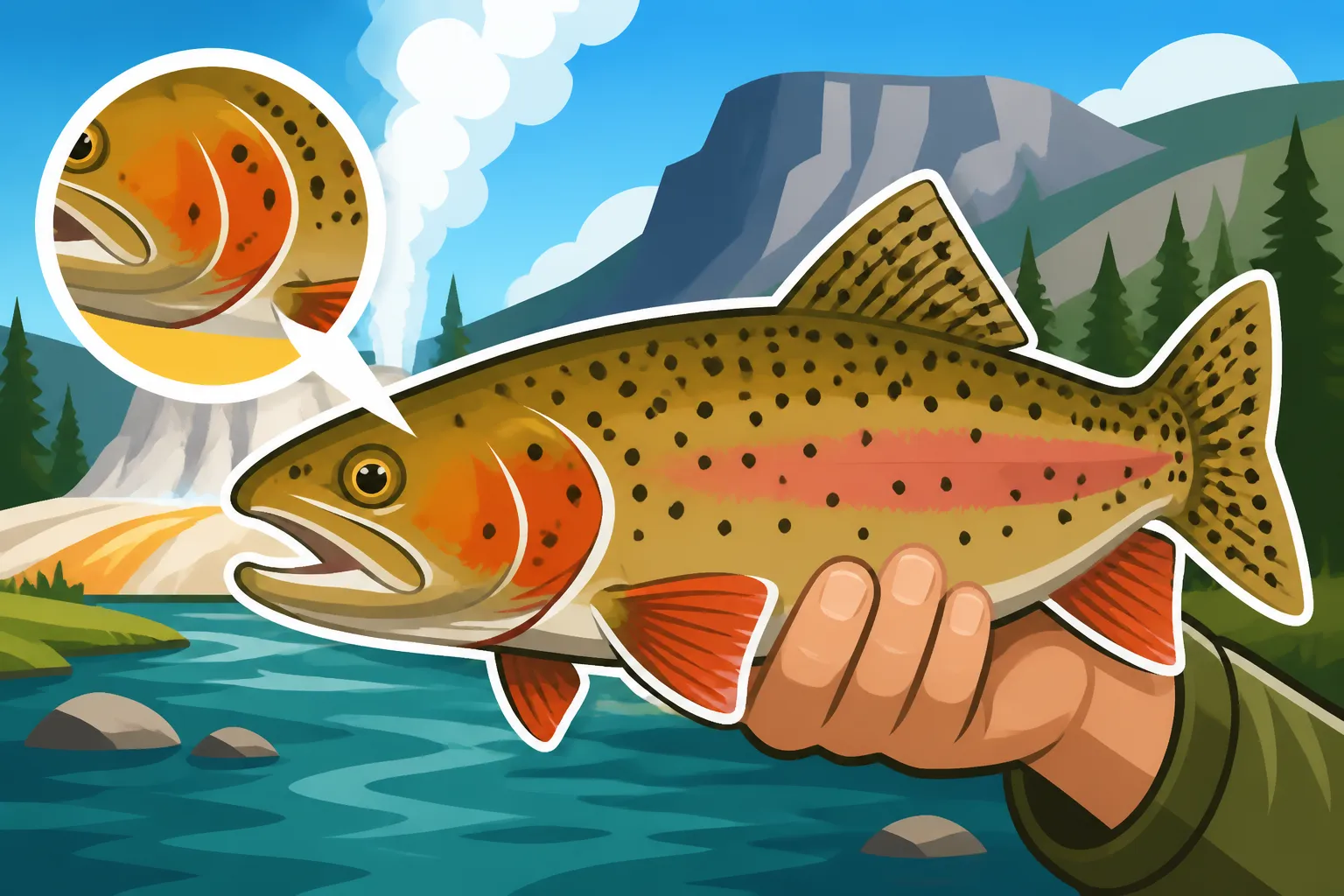
This is perhaps the most famous and definitive characteristic of any cutthroat trout, and the Yellowstone Cutthroat is no exception. Look directly underneath the lower jaw, right in that soft membrane between the two halves of the jawbone. You'll often see a vibrant, often salmon-pink, orange, or even deep red slash mark. It looks like someone took a small, sharp blade and gently "cut" the throat, leaving that distinct color. This mark can vary greatly in intensity; some fish will have a very bold, unmistakable slash, while others might have a fainter, more subtle hint of color that you have to look closely to find.
Sometimes, especially in younger fish or those in certain water conditions, this "slash" might be very light or even almost absent, which can certainly throw you off. Don't rely solely on this one feature, but it's usually the first place to check. It's a genetic trait, unique to cutthroat subspecies, differentiating them from rainbow trout, which lack this coloration. If you're having trouble seeing it, sometimes gently lifting the gill plate just slightly can help expose the area, but remember to keep the fish submerged as much as possible for its health. This "cutthroat" mark is truly their namesake for a reason, but it's not the only piece of the puzzle.
Body Coloration and Markings
Now, let's talk about the rest of the fish's canvas. Yellowstone Cutthroats typically display a beautiful array of colors, often leaning towards olive greens, brassy golds, and coppery browns along their backs, fading into lighter, often creamy or yellowish sides, and a white or off-white belly. These colors can be incredibly varied depending on the specific water the fish lives in, its diet, and even the time of year. Fish from clear, rocky streams might have brighter, more vibrant hues, while those from muddier or more tannin-stained waters might appear darker or duller.
The spotting pattern is another critical identifier. Yellowstone Cutthroats are characterized by numerous, relatively small, and often irregular spots. Crucially, these spots are typically concentrated towards the tail end of the fish, often extending onto the caudal (tail) fin, and becoming sparser or even absent towards the head and pectoral fins. Unlike rainbow trout, which tend to have spots evenly distributed all over their body, including the gill plate and head, the Yellowstone Cutthroat's spots tend to "grow" in density as you move towards the tail. Imagine a pepper shaker – the spots are sprinkled heaviest on the tail section. Paying close attention to this distribution and size of spots can be incredibly helpful in making a confident identification in the field, even if you can't see the cutthroat slash clearly.
Fin Characteristics and Shape
The fins of a Yellowstone Cutthroat also offer subtle clues to their identity. Generally, their fins will complement their body coloration, often displaying the same olive, gold, or brownish hues. The pectoral, pelvic, and anal fins may have a slight yellowish or even faint orange tint, though usually not as pronounced as the red/orange of the cutthroat slash. You won't typically see the bright, stark white leading edges on their fins that are characteristic of brook trout, for example.
The shape of their fins is also worth noting, though it's often more subtle than coloration or spotting. Their caudal fin (tail fin) is typically broad and somewhat squared off, or only very slightly forked. Compare this to the deeply forked tail of a lake trout, and you'll see a noticeable difference. While not as unique as the cutthroat slash or spotting pattern, observing the overall fin appearance, including their condition (wild fish often have pristine, undamaged fins), contributes to a complete identification picture. It's all about putting these visual pieces together to form a clear image of the fish you're holding.
Spotting the Difference: Yellowstone Cutthroat vs. Lookalikes
One of the biggest challenges in identifying a Yellowstone Cutthroat is that they often share water with other trout species, some of which bear a striking resemblance. It's like trying to pick out a specific breed of dog from a lineup when several breeds have similar markings. But with a keen eye for detail, you can learn to tell them apart.
Yellowstone Cutthroat vs. Rainbow Trout (and Cutbows)
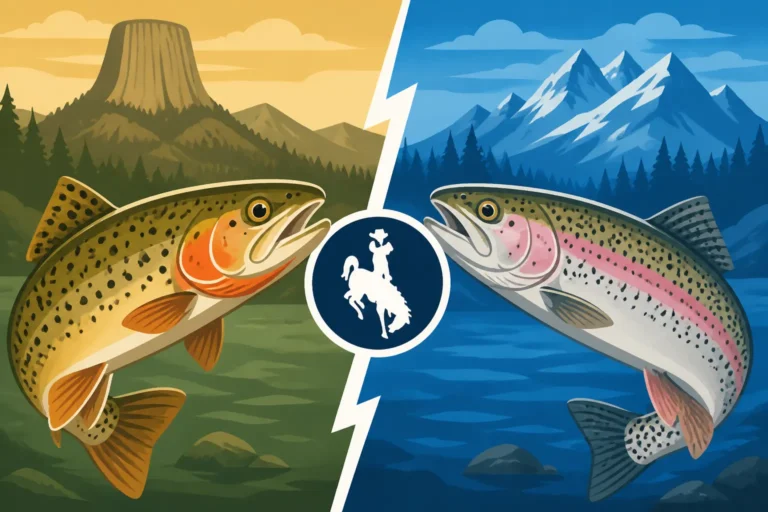
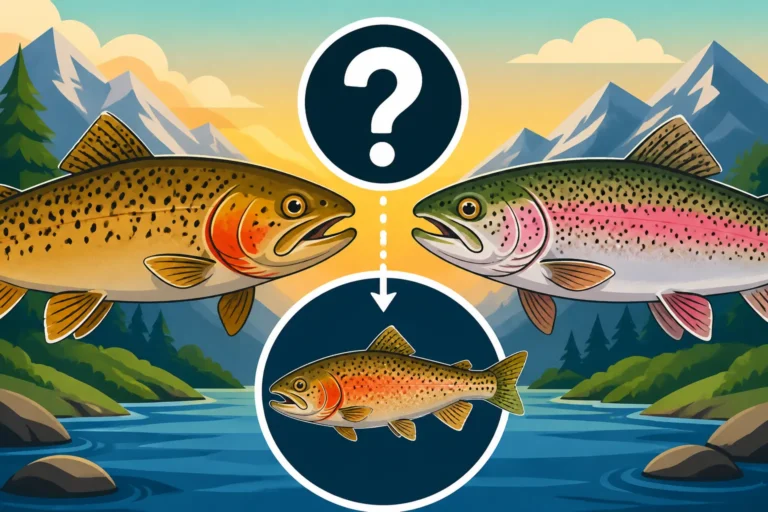
This is probably the most common point of confusion for anglers in Wyoming. Rainbow trout (Oncorhynchus mykiss) are widely stocked and have naturalized in many of the same waters where cutthroats reside. The key differences lie in a few critical areas. Firstly, the "cutthroat slash" is absent on a pure rainbow trout. That vibrant red or orange mark under the jaw is your number one differentiator. If it’s not there, it's not a pure cutthroat. Secondly, look at the spots. Rainbows typically have smaller, more numerous, and more uniformly distributed spots covering their entire body, including their head, gill plates, and often all fins. They tend to have a distinct, iridescent pink or red stripe along their lateral line, which is how they get their "rainbow" name. Yellowstone Cutthroats, as we discussed, have spots concentrated towards the tail and lack that prominent lateral stripe.
Now, for the real curveball: cutbows. These are hybrids, a cross between a cutthroat and a rainbow trout, and they are incredibly tricky to identify. They can exhibit characteristics of both species in varying degrees. A cutbow might have a faint cutthroat slash and a lateral rainbow stripe, or spots that are more spread out than a pure cutthroat but not quite as dense as a pure rainbow. They are often a mix-and-match of traits, which makes them very difficult to definitively identify in the field. When in doubt with a fish that has mixed characteristics, it's often safer to assume it's a cutbow or rainbow for regulatory purposes, especially if conservation of pure cutthroats is a priority in that specific area. For a deeper dive, check out Cutthroat vs Rainbow Trout: Telling Them Apart and What Are Cutbow Trout?. The challenge of cutbows really highlights why close observation of all features is so important, not just one.
Yellowstone Cutthroat vs. Snake River Fine-Spotted Cutthroat
Even within the cutthroat family, there are subspecies that can be tough to differentiate. The Snake River Fine-Spotted Cutthroat (Oncorhynchus clarkii behnkei) is another native subspecies found in Wyoming, primarily in the Snake River drainage, as its name implies. From a casual glance, they look very similar to Yellowstone Cutthroats, and they both possess that distinctive red "slash" under the jaw. The primary difference, and it's a subtle one, lies in the spotting pattern.
As their name suggests, Snake River Fine-Spotted Cutthroats tend to have even smaller and more numerous spots than Yellowstone Cutthroats. These spots are also more evenly distributed across their body, often extending well onto their head and gill plates, almost resembling a "fine spray" of pepper across the fish. In contrast, the Yellowstone Cutthroat's spots, while numerous, are generally larger and more concentrated towards the tail. This distinction can be incredibly difficult to make without a side-by-side comparison or a very experienced eye, and often requires careful attention to the density and size of the spots across the entire body. If you're fishing in the Snake River system, understanding Snake River Fine-Spotted Cutthroat Trout and the nuances of their identification becomes particularly relevant, as both subspecies are treasured natives but may have slightly different management considerations in specific locales.
Other Wyoming Trout: Brown, Brook, and Lake Trout
While Yellowstone Cutthroat identification mostly focuses on distinguishing them from rainbows and other cutthroat subspecies, it’s also good to have a general idea of how they differ from other common Wyoming trout, just to rule out any distant cousins. These are generally easier to tell apart.
Brown Trout (Salmo trutta) are distinguished by their larger, often circular dark spots with light halos, mixed with reddish-orange spots, and a typically more golden or brownish body coloration. They lack the cutthroat slash entirely. Brook Trout (Salvelinus fontinalis), which are actually a char, are perhaps the easiest to differentiate with their distinctive worm-like (vermiculated) patterns on their backs, vivid white leading edges on their lower fins, and often bright red spots with blue halos on their sides. And then there's the formidable Lake Trout (Salvelinus namaycush), also a char, which are usually much larger, have pale spots on a dark body, a deeply forked tail, and again, no cutthroat slash. While these comparisons might seem basic, it's a good mental checklist to run through, especially if you're a newer angler learning the ropes. For a comprehensive overview, checking out How to Identify Every Trout Species Found in Wyoming can be incredibly helpful for your angling education.
Here's a quick comparison table to help visualize the key differences:
| Feature | Yellowstone Cutthroat Trout | Rainbow Trout | Snake River Fine-Spotted Cutthroat Trout |
|---|---|---|---|
| Cutthroat Slash | Present, often vivid red/orange | Absent (pure rainbows) | Present, typically distinct |
| Lateral Line | No distinct colored stripe | Often has a pink/red iridescent stripe | No distinct colored stripe |
| Spotting | Numerous, small, irregular; concentrated on tail | Numerous, small, uniform; distributed body/head | Very numerous, very fine; distributed body/head |
| Gill Plate | Few to no spots | Spotted | Often finely spotted |
| Body Color | Olive, gold, copper hues; light sides | Silver, green-blue; iridescent lateral band | Similar to YSCT, often more silvery |
| Tail Fin | Broad, slightly forked or squared; spotted | Spotted, moderately forked | Spotted, moderately forked |
Habitat and Behavior Clues
Beyond the visual cues on the fish itself, where and how a fish lives can give you strong hints about its identity. Yellowstone Cutthroat Trout, like all creatures, have preferences, and knowing those preferences can guide your identification, even before you see the fish.
Preferred Waters and Geographic Range
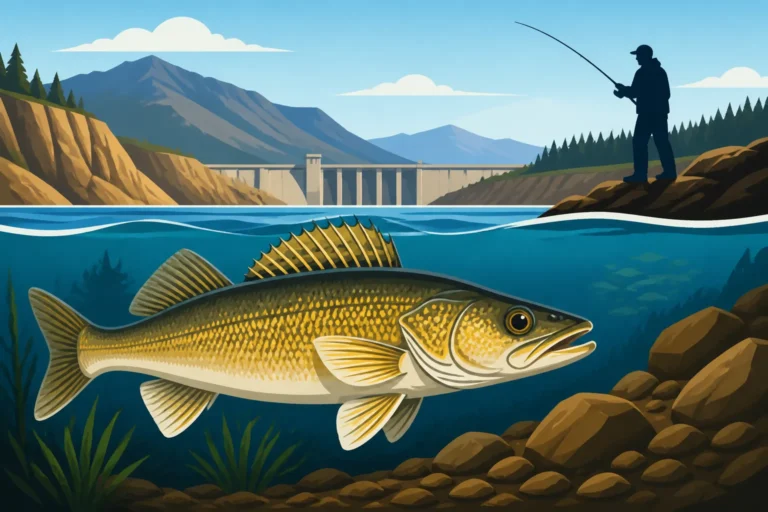
Yellowstone Cutthroat Trout are coldwater specialists. They thrive in pristine, oxygen-rich waters, often found in high-elevation mountain streams, crystal-clear rivers, and deep, cold lakes. Think about the iconic waters of Yellowstone National Park, like Yellowstone Lake itself, and the upper reaches of the Snake River. Their native range helps tremendously in initial identification. If you're fishing a small, pristine mountain creek in the Teton Wilderness that feeds into the Snake River, the chances of hooking a native cutthroat are much higher than if you're in a warm, slower-moving reservoir in central Wyoming known for walleye.
They prefer areas with ample cover, such as undercut banks, submerged logs, and large rocks, which provide refuge from predators and strong currents. These aren't typically fish you'll find in murky, silty rivers. So, when you're casting your line, consider the environment. Is it the kind of clear, cool, high-country water that screams "native trout"? This ecological context can significantly boost your confidence in identifying a Yellowstone Cutthroat. If you want to know more about What Fish Are in Yellowstone Lake, it provides a perfect example of their natural stronghold. Remember, their presence is often an indicator of excellent water quality, which is why protecting their Where Yellowstone Cutthroat Trout Are Native in Wyoming is so critical for the entire watershed.
Feeding Habits and Diet
The diet and feeding habits of a Yellowstone Cutthroat Trout are also quite characteristic, often reflecting the abundance of aquatic insects in their preferred habitats. They are primarily opportunistic feeders, consuming a wide variety of prey depending on what's available. Their diet typically consists of aquatic insects (mayflies, caddisflies, stoneflies in nymph and adult stages), terrestrial insects (grasshoppers, beetles, ants that fall into the water), small crustaceans, and even smaller baitfish or eggs. This diverse diet is why fly anglers often have success with a wide range of patterns, from dry flies during hatches to nymphs and streamers fished subsurface.
Their opportunistic nature means you'll find them actively feeding in riffles, runs, and the edges of pools where insects are abundant or washed downstream. They often rise to the surface to take dry flies, making for exciting visual strikes. Knowing What Yellowstone Cutthroat Trout Eat can help you not only catch them but also observe their behavior patterns, which indirectly aids in identification. For instance, if you're consistently catching fish on small dry flies in a clear, high-elevation stream, and those fish exhibit some cutthroat characteristics, their feeding behavior in that environment further supports the idea that you're dealing with a native species. It’s another puzzle piece in the overall picture of identification.
Practical Tips for Anglers in the Field
Identifying a Yellowstone Cutthroat Trout isn't just an academic exercise; it's something you do in the moment, often with a live fish in your hands. Here are some practical tips to make the process smoother, more accurate, and most importantly, safe for the fish.
Best Practices for Catch-and-Release Identification
When you’re trying to identify a fish for conservation purposes, especially if regulations call for catch-and-release, the well-being of the fish is paramount. The absolute best practice is to keep the fish in the water as much as possible. A quick moment of observation is usually all you need. Use a rubber mesh net to minimize slime coat damage, and keep the fish submerged while you look for the cutthroat slash, spot patterns, and fin characteristics. Avoid squeezing the fish or laying it on dry ground, as this removes its protective slime layer, making it vulnerable to disease.
If you’re genuinely unsure, gently hold the fish with wet hands, supporting its belly, and take a quick, clear photo. Many anglers use waterproof phone cases or rugged cameras, which can be invaluable for documenting your catch without harming the fish. You can then review the photo later or even share it with local experts or the Wyoming Game and Fish Department for verification. Remember, the goal is a quick, decisive identification, followed by a gentle release. Knowing Catch and Release Best Practices for Trout is not just good sportsmanship; it's vital for the health of our fisheries and ensures that beautiful Yellowstone Cutthroat can swim another day.
Tools and Resources for Confident ID
You don't have to be a ichthyologist to identify fish, but having the right tools can certainly help. A small, waterproof field guide specifically focused on trout species of the Rocky Mountains or Wyoming can be an invaluable asset. These guides often have clear illustrations or photographs, pointing out the key identifying features. You can often find these at local fly shops, bookstores, or even on Amazon. Having a guide that you can quickly reference while streamside can prevent mistakes and bolster your confidence.
Beyond physical guides, the Wyoming Game and Fish Department (WGFD) is your ultimate resource. They publish detailed fishing regulations booklets annually, which often include illustrations or descriptions of common species, as well as specific rules for certain waters and species. Before you head out, download or pick up the latest copy of the regulations. Websites and mobile apps from WGFD or other reputable fishing organizations can also offer species identification sections. Always cross-reference with official state resources, especially when regulations are species-specific. Familiarizing yourself with Reading the Wyoming Fishing Regulations Booklet and knowing Where to Find Current Wyoming Fishing Regulations is not just about avoiding fines; it’s about becoming a more informed and responsible angler.
Understanding the Role of Hatcheries and Stocking
When we talk about native fish like the Yellowstone Cutthroat, the conversation often touches on hatcheries and stocking programs. It's important to understand how these programs fit into the bigger picture of fish management in Wyoming.
Hatchery Contributions to Cutthroat Management
While our focus is on identifying wild, native Yellowstone Cutthroat Trout, hatcheries play a complex but vital role in the overall management of cutthroat populations. In some instances, hatcheries are used to raise pure-strain Yellowstone Cutthroat for stocking into waters within their historical range where populations have declined due to habitat loss, competition from non-native species, or other factors. These efforts aim to restore or bolster native populations, ensuring genetic integrity. It's a delicate balance, as managers must ensure that any stocked fish are genetically appropriate for the specific watershed and do not introduce unintended consequences.
The goal with Yellowstone Cutthroat stocking is often to support conservation and recovery, rather than just increasing angling opportunities, which is a common reason for stocking species like rainbow trout. By maintaining genetic diversity and providing fish for reintroduction, hatcheries become a tool in the broader conservation strategy, working to preserve the species' future. So, while you might encounter a Yellowstone Cutthroat that originated from a hatchery, the primary goal for anglers is still to correctly identify the species to adhere to regulations that protect these unique fish, regardless of their immediate origin.
Identifying Wild vs. Stocked Fish
Distinguishing between a truly wild Yellowstone Cutthroat and one that might have been stocked from a hatchery can be challenging, as hatchery-raised fish of the same strain will still possess the key identifying features. However, there are some general clues that can help. Wild trout often have impeccable fins – sharp, undamaged edges, and perfectly formed. Hatchery-reared fish, particularly those raised in crowded concrete raceways, might have some fin erosion, especially on their dorsal and caudal fins, making them appear rounded or frayed.
Another common method for distinguishing stocked fish is the presence of an adipose fin clip. This tiny, fleshy fin on the back of the fish between the dorsal and caudal fins is often removed (clipped) from hatchery fish as a permanent marker before release. While not all stocked fish are clipped, and not all unclipped fish are wild, it's a very strong indicator. For Yellowstone Cutthroat specifically, if they are part of a restoration or research project, they might be clipped, but generally, the focus is on distinguishing them from non-native species. Understanding How to Tell a Stocked Trout From a Wild Trout can be fascinating, and knowing Why Some Wyoming Trout Are Fin-Clipped gives you insight into the science behind our fisheries management. It’s another layer of appreciation for the fish you encounter.
Disclaimer
This article is for general informational purposes only and does not constitute professional advice. Laws, prices and regulations vary by location and change over time. Consult a qualified professional for guidance on your specific situation.