How to Identify a Brook Trout
One of the most exciting, yet sometimes confusing, parts of fishing in Wyoming is trying to identify exactly what kind of trout you've just landed. With so many beautiful species swimming in our cold, clear waters, it's easy to mistake one for another, especially when the fish are young or their colors are muted. This guide is here to cut through that confusion, giving you clear, actionable tips to confidently identify a brook trout, so you always know what you've got on the end of your line.
The Distinctive Look of a Brook Trout: Key Visual Cues
Brook trout, or "brookies" as they are affectionately known, are stunning fish that can sometimes be mistaken for other trout species, particularly browns. However, once you know what to look for, their unique characteristics make them quite distinguishable. They might not always be the biggest fish in the river, but their vibrant colors and intricate patterns certainly make them stand out.
Coloration and Body Shape
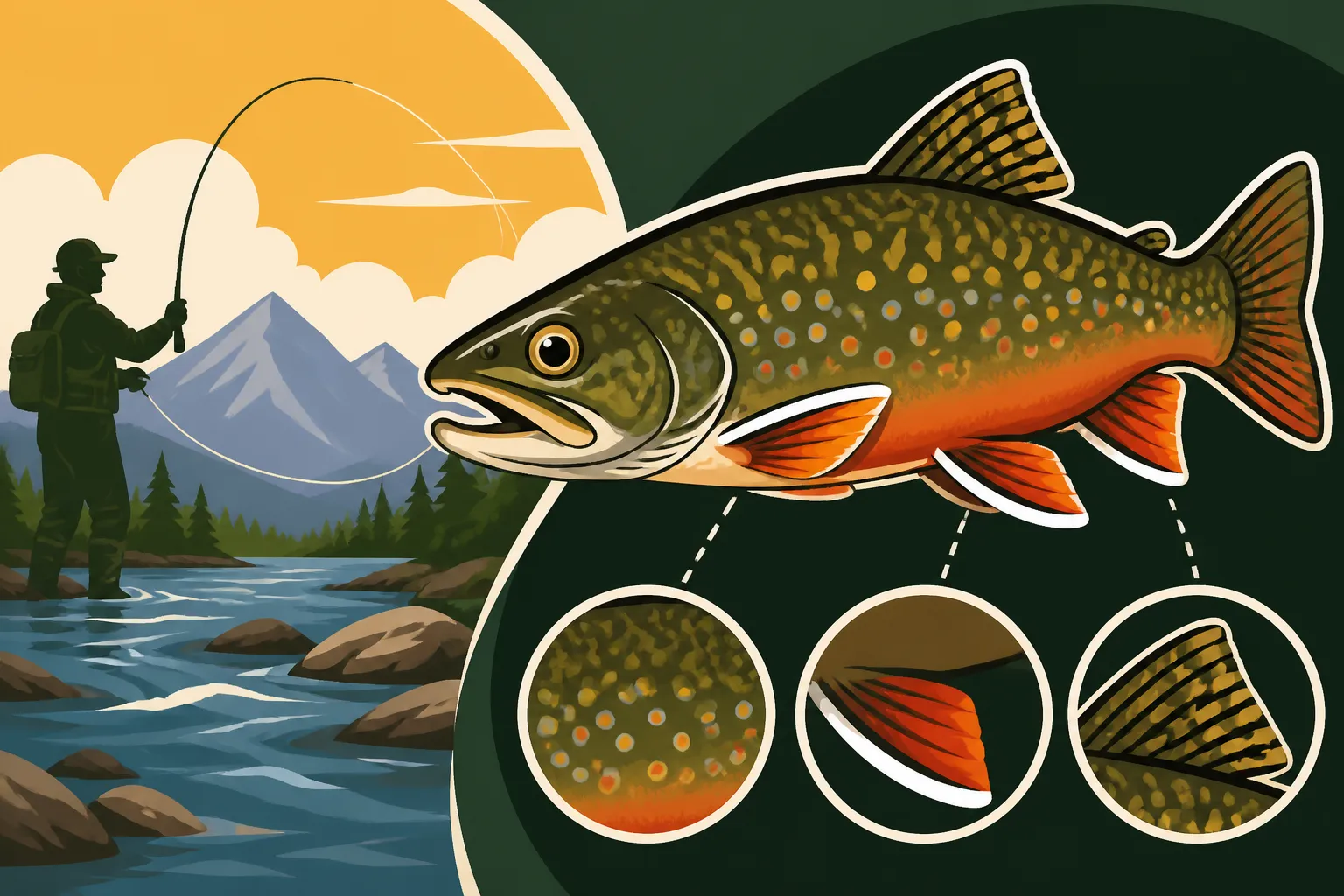
When you first see a brook trout, especially a wild one from a cold mountain stream, you'll likely be struck by its incredible kaleidoscope of colors. The back and upper sides of a brook trout are typically a dark, mottled olive green to black, adorned with distinctive, wavy, worm-like markings that anglers often call "vermiculations." These markings are usually a lighter green or yellowish color and are a dead giveaway. You won't see these intricate patterns on other common trout species.
Moving down the sides, you'll notice a scattering of vibrant red spots, often surrounded by small, bluish halos. This combination of red spots and blue halos is another crucial identifier. The belly can range from white to a deep, fiery orange or red, especially pronounced in males during spawning season. The overall body shape is generally more streamlined and torpedo-like than, say, a stockier brown trout, perfectly suited for darting through cold, rocky stream beds. Their slender profile is part of what makes them such agile swimmers in swift currents.
Fin Characteristics and Spotting Patterns
The fins of a brook trout offer some of the most reliable identification markers. Pay close attention to the lower fins – the pectoral, pelvic, and anal fins. These fins almost invariably feature a striking white leading edge, often backed by a thin, dark, almost black stripe, before transitioning into a reddish-orange color. This white-black-red/orange sequence on the lower fins is a hallmark of the brook trout and is rarely, if ever, seen with such clarity on other trout species found in Wyoming. It's a bit like a neon sign for "brook trout" once you learn to recognize it.
Beyond the fins, the spotting pattern, as mentioned, is crucial. Remember, the red spots often come with those distinctive blue halos. Contrast this with brown trout, which typically have dark spots (sometimes with light halos but rarely blue) and fewer, if any, red spots. Rainbow trout, on the other hand, have more uniform black spots spread across their body and tail, and usually lack the red spots with blue halos entirely. A good field guide, perhaps one you picked up from a local shop or ordered from Amazon, can be a huge help in visually comparing these patterns side-by-side while you're out on the water.
Distinguishing Brook Trout from Other Wyoming Species
Wyoming is home to several incredible trout species, and it's easy to get them mixed up, especially for newer anglers. Knowing the subtle differences can help you properly identify your catch and adhere to specific regulations, as limits often vary by species. Let's compare brook trout to their most common cousins.
Brook Trout vs. Brown Trout
This is perhaps the most frequent mix-up. Both brook and brown trout can have a mottled appearance and spots, but their differences are quite distinct once you know what to look for. As discussed, brook trout have those unique worm-like vermiculations on their backs and upper sides. Brown trout, however, generally have a more uniform olive-brown to golden-brown back, with prominent dark spots (often appearing as Xs or halos) that extend onto their gill covers. While brown trout can have red or orange spots, these spots typically lack the bright blue halos that are characteristic of brook trout. Their tail is also typically square or slightly forked, whereas brown trout often have a noticeably less forked or even somewhat rounded tail. You can dive even deeper into this specific comparison with our guide on Identifying Brook Trout vs Brown Trout.
Another subtle difference is the head shape. Brown trout often have a larger head and a more pronounced jawline, especially older, larger individuals, compared to the generally more delicate head of a brook trout. When you hold them side-by-side, or even just look at them carefully, these distinctions become much clearer. Always double-check those lower fins for the white leading edges – a feature browns almost never possess.
Brook Trout vs. Rainbow Trout
Rainbow trout are characterized by a broad, pink or reddish stripe running horizontally along their sides, from gill cover to tail. This iridescent stripe is a key identifier and is completely absent on brook trout. Additionally, rainbow trout are named for their silvery, iridescent sheen and are covered in numerous small, dark spots that extend all the way onto their caudal (tail) fin. These spots are typically uniform in size and color, lacking the red-with-blue-halo spots or the worm-like markings of the brook trout.
The tail of a rainbow trout is usually moderately forked, and those spots on the tail are a very reliable indicator – brook trout tails are typically less spotted, or have no spots at all, and are usually square or only slightly notched. When you're trying to tell them apart, look for that tell-tale pink stripe and the uniform tail spots on the rainbow, and the vermiculations and white-edged fins on the brook trout. If you're comparing a cutthroat and a rainbow, those distinctions are covered in Cutthroat vs Rainbow Trout: Telling Them Apart.
Brook Trout vs. Cutthroat Trout
Cutthroat trout are Wyoming's native pride, and they have one unmistakable feature that immediately sets them apart: the distinct red, orange, or sometimes yellow "slash" marks found under the lower jaw, resembling a cut throat. Brook trout completely lack these slashes. While cutthroats can also have colorful bodies, often with an olive or bronze hue, and dark spots that become more concentrated towards the tail, they will not have the worm-like markings on their back or the white leading edges on their lower fins.
The spotting pattern is also different; cutthroats tend to have more irregular, sometimes larger, black spots, particularly on the posterior half of their body and tail. These spots don't usually have blue halos like the brook trout's red spots. Truly knowing your cutthroats, especially the native strains, is a badge of honor for Wyoming anglers. Our guide on Identifying a Yellowstone Cutthroat Trout can help you recognize this iconic fish.
Here's a quick comparison table for clarity:
| Feature | Brook Trout | Brown Trout | Rainbow Trout | Cutthroat Trout |
|---|---|---|---|---|
| Back/Upper Body | Dark olive/black with distinct worm-like (vermiculation) patterns | Olive-brown to golden-brown, less distinct markings, sometimes mottled | Silvery-green to blue-green, covered in small dark spots | Olive to bronze, dark spots, often concentrated near tail |
| Side Stripe | Absent | Absent | Prominent pink/red iridescent stripe | Absent |
| Body Spots | Red with blue halos, scattered on sides; no spots on tail | Dark spots (X's/halos), some red/orange spots without blue halos | Numerous small black spots, extending onto tail | Irregular dark spots, concentrated on tail, no blue halos |
| Lower Fins | White leading edge, then dark stripe, then red/orange | No white leading edge; usually yellowish-orange/brown | No white leading edge; grayish to yellowish | No white leading edge; yellowish to reddish |
| Under Jaw | No slash marks | No slash marks | No slash marks | Distinct red/orange/yellow "slash" marks |
| Tail Shape | Square or slightly notched | Square or slightly rounded, less forked than rainbow | Moderately forked, heavily spotted | Moderately forked, spotted |
Habitat and Size Clues for Identification
Sometimes, just knowing where you caught a fish can give you a strong hint about its identity. Brook trout have specific preferences when it comes to their environment, and their typical size also offers a clue.
Where Brook Trout Live in Wyoming
Brook trout are primarily found in the cold, clear, headwater streams and small mountain lakes of Wyoming. They absolutely thrive in environments where water temperatures rarely exceed 65 degrees Fahrenheit. You'll often find them in high-elevation drainages, tucked away in pristine, oxygen-rich waters that tumble down from the mountains. Think of those small creeks with plenty of undercut banks, fallen logs, and rocky bottom structures – that's prime brook trout habitat. Because of their preference for these smaller, colder waters, catching a brook trout can often signify you're in a more remote, untouched part of Wyoming's wilderness.
While they are generally prolific in these areas, their numbers can sometimes be so high that they become stunted due to overpopulation and limited food resources. This is why you might catch many small brookies in some high-country streams. However, in lakes or larger stream sections with more food and less competition, they can grow to respectable sizes. Learning more about their typical haunts can be a game-changer for your fishing success; check out Brook Trout in Wyoming's Mountain Streams for more specific locations.
Typical Size and Growth Patterns
Brook trout are generally considered one of the smaller trout species in Wyoming, especially in those classic high-mountain stream environments. A typical brook trout from a small stream might only be 6 to 10 inches long. They tend to reach a maximum size of around 12-15 inches in most smaller waters. This smaller stature can itself be an identification clue: if you've hooked a monster brown or lake trout, it's highly unlikely to be a brook trout.
However, don't let their average size fool you. In certain nutrient-rich lakes, or where food is abundant and competition is less, brook trout can grow significantly larger, occasionally reaching 18-20 inches, or even more. These larger brookies are often caught in the fall as they prepare to spawn, sporting their most intense colors. Knowing How Big Brook Trout Get in Wyoming can help you manage your expectations and even refine your fishing strategy for these beautiful fish. If you're consistently catching small, vibrant trout with those tell-tale white-edged fins, chances are high you're in a brook trout haven.
Practical Tips for Anglers in the Field
Being able to identify your catch quickly and accurately is not just about bragging rights; it's essential for following regulations and practicing responsible angling, especially when it comes to catch-and-release.
What to Look for When You Have a Fish in Hand
When you land a fish, try to handle it gently and quickly. For identification, start by observing its overall body color and shape. Is it dark and mottled on the back? Then, move your gaze to the back and upper sides for those distinct, wavy, worm-like markings (vermiculations). If they are present and clear, you're likely holding a brook trout.
Next, examine the lower fins. Do they have bright white leading edges, followed by a dark stripe, then an orange or reddish color? This is a definitive brook trout characteristic. Finally, look closely at the spots on its sides. Are there red spots, and do any of them have a faint blue halo around them? If you've ticked off all these boxes, you can be fairly confident you've caught a brook trout. Remember, quick and gentle handling is paramount, especially if you plan to release the fish. Wet your hands before touching the fish to protect its protective slime coat, and try to keep it in the water as much as possible for photos and release. Our guide on Catch-and-Release Best Practices for Trout offers more detailed advice.
Common Misconceptions and Tricky Situations
Nature is rarely perfectly uniform, and brook trout can sometimes present challenges to identification. Their colors can vary significantly based on their diet, water clarity, genetic strain, and especially their spawning stage. During spawning season, brook trout, particularly males, can become incredibly vibrant, with their bellies turning a deep, fiery orange or red, making their other features even more pronounced. In very clear, cold water, their colors might be brighter and more distinct, while in murkier or warmer water, they might appear duller.
Another tricky situation can arise with hybrids. While not extremely common, brook trout can sometimes hybridize with other char species, such as lake trout (creating a "splake"), or even rarely with brown trout (creating a "tiger trout"). These hybrids often display a mix of characteristics from both parent species, making identification much harder. For instance, a splake might have some vermiculations but also a more forked tail and larger overall size more typical of a lake trout. These situations are rare, but if you catch something truly unusual that doesn't quite fit the description, it might be a hybrid. In most everyday angling scenarios, however, focusing on those key features like vermiculations, white-edged fins, and red-with-blue-halo spots will serve you well. Even if you're using something like a spinner from Amazon for general trout fishing, knowing what species you're reeling in adds to the enjoyment and responsibility of the sport.
Disclaimer
This article is for general informational purposes only and does not constitute professional advice. Laws, prices and regulations vary by location and change over time. Consult a qualified professional for guidance on your specific situation.