Kokanee Salmon in Pathfinder Reservoir
There's a special thrill that comes with chasing Kokanee salmon in Wyoming, and Pathfinder Reservoir truly stands out as a premier destination for these feisty, landlocked sockeye. Many anglers, especially those new to Kokanee, can feel overwhelmed by the specific techniques required, or struggle to pinpoint exactly where these schooling fish might be hiding in such a vast body of water. This comprehensive guide is designed to demystify Kokanee fishing at Pathfinder, offering you the insights and strategies needed to successfully target and enjoy this fantastic fishery, from understanding the fish itself to the best ways to get them into your net.
Understanding Kokanee Salmon in Wyoming
Kokanee salmon aren't your typical trout, and understanding what makes them unique is the first step to becoming a successful Kokanee angler. They're a species all their own, bringing a vibrant splash of color and a distinct challenge to Wyoming's waters.
What Exactly Is a Kokanee Salmon?
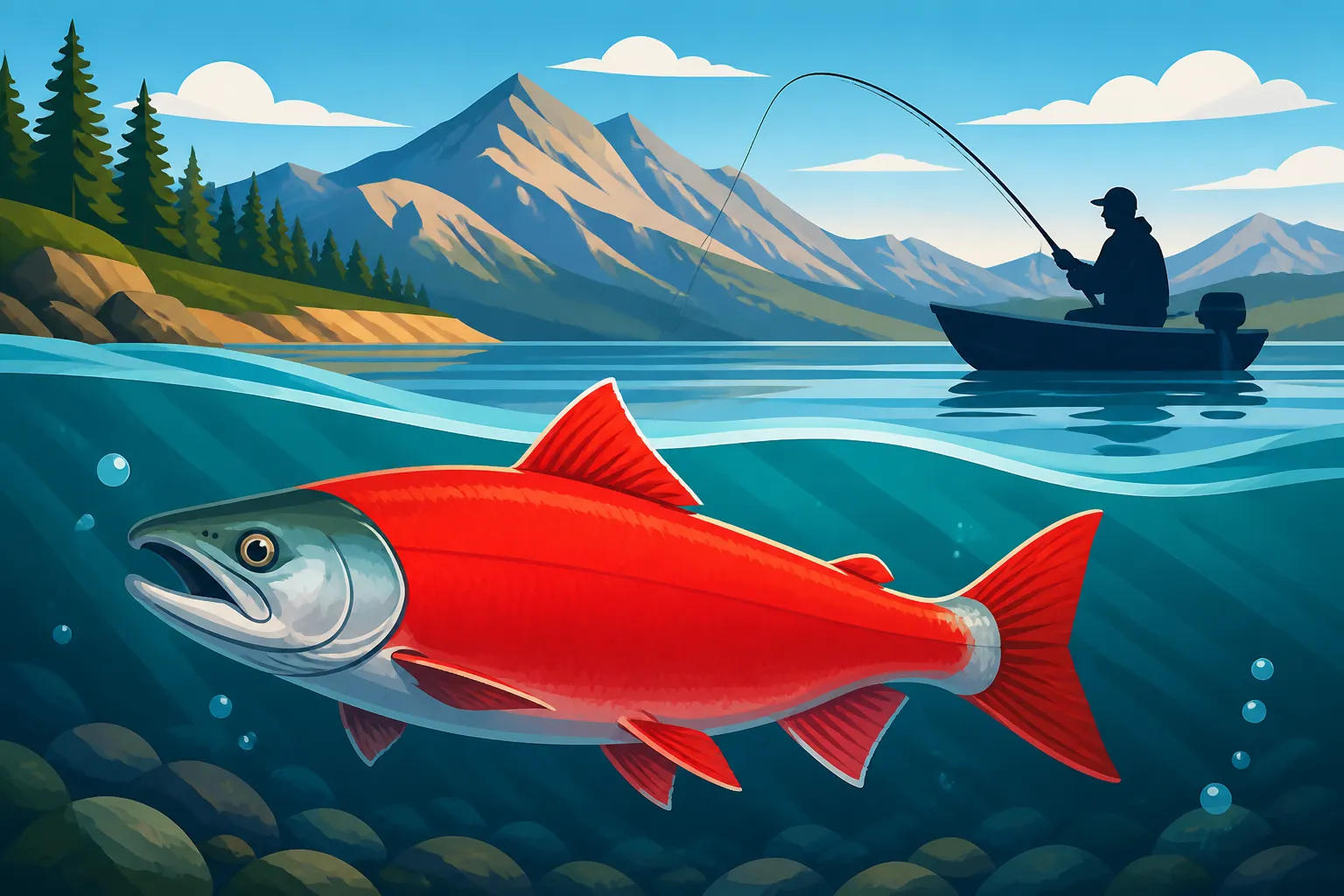
First off, let's clear up some confusion: a Kokanee salmon isn't a trout, though they share some similarities. These incredible fish are actually the landlocked form of the sockeye salmon. Imagine a fish that instinctively wants to migrate to the ocean, but instead, it finds itself born and raised, living its entire life cycle, within the confines of a freshwater lake or reservoir. That's a Kokanee. They're typically much smaller than their ocean-going cousins, usually ranging from 12 to 18 inches in Wyoming, though you can certainly hook into bigger ones. Their flesh is a beautiful, rich orange-red, thanks to their diet of zooplankton and small crustaceans, making them an absolutely delicious table fare. They have distinct silver sides when they're in their feeding phase, but come spawning season, they undergo a dramatic transformation, turning brilliant red with a humped back and a hooked jaw, particularly the males.
What truly sets them apart is their dedication to schooling. Unlike many trout species that might be more solitary, Kokanee are almost always found in large groups, sometimes numbering in the hundreds or thousands. This schooling behavior is key to how we target them. They're also filter feeders for much of their lives, primarily consuming zooplankton, which means they're not chasing large baitfish in the same way a big lake trout might. This dietary preference dictates the types of lures and baits that prove most effective for enticing a strike from these shy but aggressive feeders.
A Brief History of Kokanee in Wyoming
Kokanee salmon aren't native to Wyoming's waters; they're an introduced species, brought in to create new sportfishing opportunities and to utilize the vast zooplankton resources available in many of our deep, cold reservoirs. Their journey to places like Pathfinder Reservoir began with deliberate stocking efforts by the Wyoming Game and Fish Department. The idea was to establish a forage base for larger predatory fish, but they quickly became a prized game fish in their own right due to their fighting spirit and excellent table quality. Pathfinder, with its cold, deep waters and abundant zooplankton, proved to be an ideal habitat, allowing these fish to not only survive but thrive.
Over the years, the management of Kokanee populations has involved careful balancing acts. It's not just about stocking numbers, but also about ensuring a healthy ecosystem for them, managing predator populations, and setting appropriate fishing regulations. Kokanee Salmon Fishing in Wyoming has become a significant draw for anglers, adding another dimension to the state's diverse fishing portfolio. These fish contribute to a vibrant fishery, offering a unique challenge and a rewarding experience for those willing to learn their habits. The success of Kokanee in reservoirs like Pathfinder has cemented their place as a favorite among many Wyoming anglers.
Kokanee Life Cycle and Behavior
The life cycle of a Kokanee salmon is fascinating and incredibly predictable, which helps us as anglers understand their movements and behavior throughout the year. Most Kokanee in Wyoming have a four-year life cycle, meaning they'll spend roughly four years growing in the reservoir before they reach maturity. For much of that time, they are pelagic, meaning they live in the open water column, constantly moving in large schools and feeding on microscopic zooplankton. They are highly sensitive to light and temperature, which influences their depth preferences. On bright, sunny days, they tend to drop deeper to avoid intense light, while on overcast days or during low light conditions (dawn and dusk), they might move shallower.
As they approach maturity in their fourth year, typically in late summer and early fall, a remarkable change begins. Their silver bodies start to transform, and they take on those vibrant red, olive, and orange hues. Males develop a pronounced humped back and a kype (hooked jaw), while females also change color but less dramatically. This is all in preparation for their final act: spawning. Once they reach maturity and begin their spawning run, they cease feeding. They migrate from the open waters of the reservoir into the shallow tributary streams or sometimes even the gravelly shorelines within the reservoir itself to lay their eggs. After the strenuous act of spawning, just like their ocean-run sockeye relatives, the adult Kokanee salmon die. This terminal spawn means that the fish you catch during the pre-spawn staging are at their peak physical condition and culinary quality. It also highlights the importance of understanding bag limits and conservation efforts to ensure future generations of these amazing fish. If you're curious about this, you can read more about it in Do Kokanee Salmon Die After Spawning?.
Pathfinder Reservoir: A Kokanee Hotspot
Pathfinder Reservoir isn't just a body of water; it's a dynamic ecosystem that offers a unique home for Kokanee salmon. Understanding its characteristics is crucial to successfully locating and catching these elusive fish.
Why Pathfinder Reservoir Is Ideal for Kokanee
Pathfinder Reservoir, nestled in central Wyoming, provides an almost perfect environment for Kokanee salmon. First and foremost, its sheer size and depth are key. Kokanee prefer large, deep, and cold bodies of water, and Pathfinder delivers on all counts. The reservoir's significant depth ensures there's always a cold water column available, even during the peak of summer, which is vital for a cold-water species like Kokanee. These deep, cool zones are where the fish can find refuge and comfort.
Beyond temperature and depth, the reservoir boasts an abundant zooplankton population. As primary plankton feeders, Kokanee rely heavily on this microscopic food source. Pathfinder's nutrient-rich waters support a thriving zooplankton community, which translates directly into healthy, fast-growing Kokanee. The reservoir's structure, with its large open areas and varying depths, also allows Kokanee to school effectively and move freely in search of these food sources. The inflow from the North Platte River contributes to the reservoir's productivity, bringing in nutrients that sustain the lower food chain. All these factors combine to make Pathfinder one of the Best Reservoirs in Wyoming for Kokanee Salmon, drawing anglers from across the region specifically for this exciting fishery.
Key Areas and Access Points on Pathfinder
Pathfinder Reservoir is vast, and knowing where to focus your efforts can make a huge difference. While Kokanee are pelagic and can be anywhere, certain areas tend to be more productive or offer better access. The main body of the reservoir, particularly the deeper channels and broader expanses, is where you'll find the largest schools of feeding Kokanee throughout much of the year. Specific points of interest often include areas near major submerged structures, old river channels, or prominent points that extend into the main lake. These features can concentrate zooplankton and, consequently, Kokanee.
Access to Pathfinder is primarily through boat ramps. The Cottonwood Bay and Cardwell ramps are popular choices, offering good launch facilities for various boat sizes. From these points, anglers can quickly access the main fishing grounds. Shore fishing for Kokanee is generally less productive due to their preference for deeper, open water, but during the pre-spawn and spawn, you might find them closer to shore or in the mouths of tributaries. However, for consistent success, a boat equipped with sonar is almost essential for covering water and locating schools. Always check with the Wyoming Game and Fish Department for the latest conditions and access information, as water levels can fluctuate, impacting ramp usability.
Seasonal Movements of Kokanee in Pathfinder
Understanding the seasonal movements of Kokanee in Pathfinder is like having a secret map to their whereabouts. These fish are creatures of habit, largely dictated by water temperature, light penetration, and their biological drive to spawn. In spring, after ice-out, Kokanee will often be found in the upper water column (15-30 feet), feeding actively as the water begins to warm. They are dispersed throughout the reservoir, but often gravitate towards areas with good zooplankton blooms. This is a great time for fast action.
As summer progresses and surface temperatures rise, Kokanee will retreat to deeper, cooler waters. You'll often find them suspended in the thermocline, which is the layer where water temperature changes rapidly. This could be anywhere from 30 to 70 feet deep, or even deeper, depending on the day and conditions. How Water Temperature Changes Wyoming Trout Behavior is highly relevant here, as even a few degrees can make a difference. Early mornings and late evenings might see them rise slightly, but generally, summer Kokanee fishing is a deep-water game.
Fall is arguably the most exciting, and visually dramatic, time for Kokanee anglers. This is when the fish begin their pre-spawn staging and transformation. They school up in massive numbers, often moving towards the shallower, gravelly areas near the mouths of their spawning tributaries or along certain reservoir shorelines. Their colors become brilliant, and their fighting spirit is at its peak. However, as they get closer to spawning, they will stop feeding, making them harder to catch. Targeting them during this pre-spawn window, before they shut down, is key to success. Later in the fall, once they've spawned, these fish will die, completing their life cycle.
Gear and Techniques for Pathfinder Kokanee
Targeting Kokanee salmon requires a specific approach and specialized gear. You can't just throw out a standard trout setup and expect consistent results. These fish are particular, and matching your equipment and technique to their preferences is paramount.
Essential Gear for Kokanee Fishing
To effectively pursue Kokanee salmon at Pathfinder, you'll want to assemble a dedicated setup. First, let's talk rods and reels. A light to medium-light action rod, around 7 to 8.5 feet long, with a sensitive tip is ideal. This sensitivity helps detect the often subtle Kokanee bite. Pair this with a small spinning reel or a level-wind trolling reel spooled with 8-10 pound monofilament or fluorocarbon line. Many experienced Kokanee anglers prefer low-stretch braid with a fluorocarbon leader for better bite detection and hooksets at depth. You can find excellent options for specialized Kokanee rods and reels, as well as line, on sites like Amazon.
Next, downriggers or lead core line are almost non-negotiable for consistently reaching the depths where Kokanee suspend. Downriggers allow you to precisely control your lure's depth and quickly adjust as fish move. A good quality fishfinder (sonar) is also absolutely critical. Being able to mark schools of Kokanee and identify their depth is the single most important tool for success. Don't skimp on your electronics – they'll pay dividends. Lastly, a long-handled net is essential for landing these acrobatic fish, which are prone to throwing hooks at the boat. Having a net ready when the fish surfaces will greatly increase your landing rate.
Popular Lures and Baits
Kokanee are attracted by flash, vibration, and scent. This is where dodgers and flashers come into play. These are not lures themselves, but attractors that are rigged ahead of your actual lure. They wobble and flash, mimicking a school of baitfish and creating vibrations that draw Kokanee in. Popular dodger colors include silver, pink, chartreuse, and sometimes a combination of these. Brands like Shasta Tackle, Rocky Mountain Tackle, and Vance's are highly regarded, and you can often find a wide selection of dodgers and flashers on Amazon.
Behind the dodger or flasher, you'll attach your actual lure. Wedding rings, small spinners, and hoochies (small plastic squids) are perennial favorites. The key here is small and bright. Colors like pink, orange, chartreuse, and sometimes purple, often with glitter or UV enhancement, are very effective. The action of these lures is usually subtle, just enough to entice a strike. To complete the presentation, it's almost always necessary to tip your lure with bait. Canned shoepeg corn, treated with various scents (like Anise, Krill, or Garlic), or small maggots are the go-to choices. The corn adds scent, visual appeal, and a bit of buoyancy, helping the lure ride correctly. Experiment with different scent combinations and colors to see what the Kokanee are keying in on that day.
Effective Trolling Strategies
Trolling is the primary method for catching Kokanee in Pathfinder, and doing it effectively involves more than just dragging a lure behind the boat. Speed is critical; Kokanee typically prefer slower trolling speeds, often in the range of 1.0 to 1.8 miles per hour. However, this can vary, so experiment with small adjustments. Sometimes a slight increase or decrease can make all the difference. Best Trolling Speed for Kokanee Salmon will highlight how even subtle changes can impact your success.
Depth control, as mentioned, is paramount. Use your downriggers to place your lures precisely within the feeding zone you've identified on your sonar. Kokanee often stack up in a narrow band, so being just a few feet off can mean the difference between constant action and a slow day. When you mark fish, drop your lures right to their depth, or slightly above them. Many anglers run multiple rods at different depths to find the active zone.
Finally, don't just troll in a straight line. Incorporate S-curves or gentle turns into your trolling pattern. When your boat turns, your lures on the inside of the turn slow down, and those on the outside speed up. This change in speed and action often triggers strikes from hesitant fish. Watch your rod tips closely during these turns! Pay attention to your fishfinder; if you're marking fish but not getting bites, try adjusting your speed, depth, or even the length of your leader behind your dodger. Consistency and methodical adjustments are the hallmarks of successful Kokanee trolling. For broader information on this technique, check out Trolling Techniques for Wyoming Reservoirs.
The Art of Catching Pathfinder Kokanee
Catching Kokanee salmon is often described as an "art" because it requires a combination of precise technique, keen observation, and patience. It’s not just about getting a bite, but about successfully bringing that fish to the net.
Locating Kokanee Schools
The most critical step in catching Kokanee is finding them. These are schooling fish, so you're not looking for individual marks on your fishfinder, but rather large, dense clouds or arches. Your sonar unit is your best friend here. Learn to interpret what you see on the screen. Kokanee often appear as a dense cloud of "speckles" or tightly packed arches, sometimes extending for many feet vertically. They'll typically be suspended over deep water, not hugging the bottom. Mark the depth you see them at.
Beyond electronics, keep an eye out for surface activity. On calm mornings, you might occasionally see "boils" on the surface as schools of Kokanee feed on zooplankton, or even jump. While not as common as marking them on sonar, it's a visual cue that can lead you to fish. Another subtle indicator can be bird activity. Gulls and other diving birds often feed on the same baitfish and zooplankton that Kokanee are targeting. If you see birds actively feeding in a concentrated area over open water, it might be worth investigating with your boat and sonar. Remember that Kokanee are constantly on the move, so once you find a school, be prepared to adjust your trolling path to stay with them.
Presenting Your Lure at the Right Depth
Once you've located a school of Kokanee, the challenge shifts to presenting your lure directly in their strike zone. This is where downriggers truly shine. They allow you to drop your lure to within a foot or two of the marked depth, which is often crucial for these finicky fish. If the fish are at 45 feet, your downrigger ball should be at 45 feet, with your lure trailing back a specific distance. Many anglers experiment with "leader lengths" – the distance between the downrigger release clip and the lure, or between the dodger and the lure – ranging from 10 to 30 feet to find what the fish prefer.
If you're using lead core line, the process is a bit more manual. Each color of lead core line (usually 10 yards) sinks to a specific depth at a given speed. You'll need to deploy enough colors to reach the fish, making adjustments based on your trolling speed and current. For instance, if you're marking fish at 50 feet, you might need to let out 5-6 colors of lead core, depending on the line's rating and your speed. Pay close attention to your rod tip as you troll; even slight variations in your boat's speed or turns can alter the depth of your lure, so maintaining a consistent speed is important. The more precise you are with your depth, the more strikes you'll elicit.
Mastering the Kokanee Bite and Hookset
The Kokanee bite can be incredibly subtle, often described as a light tap, a brief pause in the rod tip's vibration, or a slight bend in the rod. It's rarely the violent strike you might expect from a large trout or bass. Because they have soft mouths, a gentle but firm hookset is key. Many anglers struggle with this initially, either setting too hard and tearing the hook out, or too softly and losing the fish.
When you feel that tell-tale tap, resist the urge to violently yank the rod. Instead, make a smooth, steady sweep upwards with your rod tip. This allows the small, sharp hook to penetrate without tearing the delicate mouth tissue. Once hooked, Kokanee are known for their strong, head-shaking runs and aerial acrobatics. Keep constant pressure on the fish, and let your rod and reel's drag do the work. Avoid horsing them in, especially as they get close to the boat. They'll often make a final, frantic dash right at the net. Be ready with your net, scoop them quickly, and minimize their time out of water if you plan to release any. Practice this technique, and you'll convert more of those subtle bites into landed fish.
Spawning Season and Special Considerations
The Kokanee salmon's life culminates in a spectacular, yet bittersweet, spawning ritual. Understanding this critical phase, along with the regulations surrounding it, is vital for any angler pursuing these fish in Pathfinder.
The Fall Spawning Run at Pathfinder
As late summer transitions into fall, Pathfinder Reservoir witnesses a dramatic event: the Kokanee spawning run. This is when the fish undergo their incredible color transformation, turning from brilliant silver to vibrant shades of red, orange, and olive. The males develop their characteristic humped back and hooked jaw, all in preparation for reproduction. They begin to stage in large schools, often moving closer to the mouths of the North Platte River or other smaller tributaries flowing into Pathfinder, or congregating over specific gravelly areas within the reservoir itself.
During this pre-spawn staging, they are still catchable and are often at their peak size and color. This is a truly special time to target them, but as they get closer to actually spawning, they cease feeding and become much harder to entice. Once they enter the shallow spawning grounds, their focus is entirely on perpetuating the species, and they rarely bite. Fishing regulations often have specific rules during this period to protect the spawning fish. Many anglers enjoy simply observing this natural spectacle, marveling at the sheer number and vibrant colors of the salmon in their final act. The entire process of Fall Fishing for Browns on the Miracle Mile and other species that also spawn in the fall shares some behavioral parallels, though the Kokanee transformation is perhaps the most dramatic.
Handling Your Catch and Regulations
Responsible angling includes proper handling of your catch, whether you plan to keep it or release it. Kokanee, with their soft mouths, need to be handled carefully. If you're keeping them, dispatch them quickly and humanely. Placing them on ice immediately is crucial to preserving their excellent meat quality. Their rich, red flesh makes them a prized table fish, often compared to their ocean-run sockeye cousins.
However, anglers must always be aware of the specific bag and possession limits set by the Wyoming Game and Fish Department for Kokanee salmon in Pathfinder Reservoir. These limits are subject to change and are in place to ensure the sustainability of the fishery. Before you head out, always consult the most current Wyoming Fishing Regulations Every Angler Should Know booklet, available online or at license vendors. This booklet will detail daily limits (how many you can keep per day) and possession limits (how many you can have in your possession at any given time, including at home). Sometimes, there are specific length limits or slot limits, though for Kokanee, it's typically a straight numerical limit. Violating these regulations can result in fines and penalties, so always be informed and fish legally.
Conservation and Sustainable Fishing Practices
As anglers, we all share a responsibility to protect the resources we enjoy. For Kokanee salmon, this means practicing sustainable fishing. One of the best ways to do this is by knowing the regulations and adhering to them strictly. Don't push the limits, and consider practicing catch-and-release, especially if you've already filled your cooler or if you catch a fish that looks particularly stressed or small. When releasing fish, handle them gently with wet hands, minimize their time out of the water, and revive them properly before letting them go.
Beyond individual actions, supporting conservation efforts is important. The Wyoming Game and Fish Department works tirelessly to manage fisheries like Pathfinder. This includes ongoing surveys, stocking programs, and habitat improvements. By purchasing your fishing license and conservation stamp, you contribute directly to these efforts. Remember to leave no trace: pack out all your trash, avoid disturbing sensitive spawning areas, and always be respectful of other anglers and the environment. Keeping our waters clean and healthy ensures that future generations can experience the thrill of catching Kokanee salmon in Pathfinder, just as we do today.
Beyond the Catch: Enjoying Your Kokanee
Catching Kokanee salmon is an exciting endeavor, but for many, the true reward comes after the fishing is done. Their delicious, vibrant red flesh makes them a culinary delight, and preparing them fresh from Pathfinder is an experience in itself.
Preparing Your Kokanee for the Table
Once you've successfully landed your Kokanee and decided to keep it, proper handling immediately after the catch is paramount to ensure the best possible flavor and texture. The most crucial step is to get your fish on ice as quickly as possible. This chills the fish rapidly, slowing down spoilage and firming up the flesh. An insulated cooler with plenty of ice is a must-have on any Kokanee trip to Pathfinder.
When you're ready to clean them, a sharp fillet knife is your best friend. Kokanee are relatively easy to clean due to their moderate size. Many anglers choose to fillet them, yielding two beautiful, boneless pieces of bright red meat. You can also simply gut them and cook them whole, especially the smaller ones. Be sure to rinse the fillets or whole fish thoroughly under cold water to remove any blood or scales, then pat them dry. For storage, if you're not cooking them immediately, wrap the fillets tightly in plastic wrap or vacuum seal them to prevent freezer burn. Properly stored, frozen Kokanee can maintain their quality for several months, allowing you to savor the taste of Pathfinder long after your trip. For a general guide on preparing fish, consider How to Fillet a Trout for the First Time, which offers transferable skills.
Delicious Kokanee Recipes
The rich, savory, and slightly sweet flavor of Kokanee salmon lends itself to a variety of cooking methods. Because their flesh is naturally high in beneficial oils, they remain moist and flavorful no matter how you prepare them.
Simple Baked Kokanee: This is a classic for a reason. Preheat your oven to around 375-400°F (190-200°C). Place your Kokanee fillets, skin-side down (if you left the skin on), on a lightly oiled baking sheet. Drizzle with a little olive oil or melted butter, season generously with salt, black pepper, a squeeze of lemon juice, and fresh dill or parsley. Bake for 12-15 minutes, or until the fish flakes easily with a fork. It’s a healthy, quick, and incredibly tasty way to enjoy your catch.
Grilled Kokanee with Herb Butter: For those who love the smoky flavor of the grill, Kokanee are fantastic cooked over coals or a gas grill. Prepare a compound butter with fresh herbs like rosemary, thyme, and garlic. Grill the fillets directly on medium-high heat, skin-side down first if applicable, for about 4-6 minutes per side, brushing with the herb butter as you go. The skin crisps up beautifully, and the herb butter infuses the fish with incredible aroma and flavor.
Pan-Seared Kokanee: A quick pan-sear is perfect for a weeknight meal. Heat a tablespoon of olive oil or butter in a skillet over medium-high heat. Season your Kokanee fillets with salt and pepper. Sear for 3-4 minutes per side until golden brown and cooked through. Serve with a side of roasted vegetables or a fresh salad for a complete meal. The options are truly endless, and you'll find that Kokanee are a versatile and forgiving fish in the kitchen.
A Year-Round Pursuit
While the fall spawning run is a highlight for many, chasing Kokanee salmon at Pathfinder isn't just a seasonal affair. These fish offer angling opportunities throughout much of the year, provided you adjust your tactics. In the spring, as the ice recedes and waters begin to warm, Kokanee become highly active and can be found shallower than in the summer, offering some fast-paced trolling action. This time of year often sees anglers using lighter gear and perhaps slightly faster trolling speeds as the fish actively feed after a long winter.
Summer brings the challenge of finding them deeper, often suspended in the thermocline. This is when downriggers and advanced electronics are absolutely critical for precise depth control. It's a game of patience and precision, but the reward of a hard-fighting Kokanee from the depths is well worth the effort. And, of course, the fall pre-spawn period is a spectacle of color and aggressive strikes, before they enter their final non-feeding spawning phase. While less common, in years with thick, safe ice, some dedicated anglers even pursue Kokanee through the ice in winter, although this requires very specialized techniques and knowledge of their deep-water habits. No matter the season, Pathfinder Reservoir holds the promise of an exciting Kokanee adventure, making it a truly year-round pursuit for those dedicated to cracking the code of these remarkable fish.
Disclaimer
This article is for general informational purposes only and does not constitute professional advice. Laws, prices and regulations vary by location and change over time. Consult a qualified professional for guidance on your specific situation.