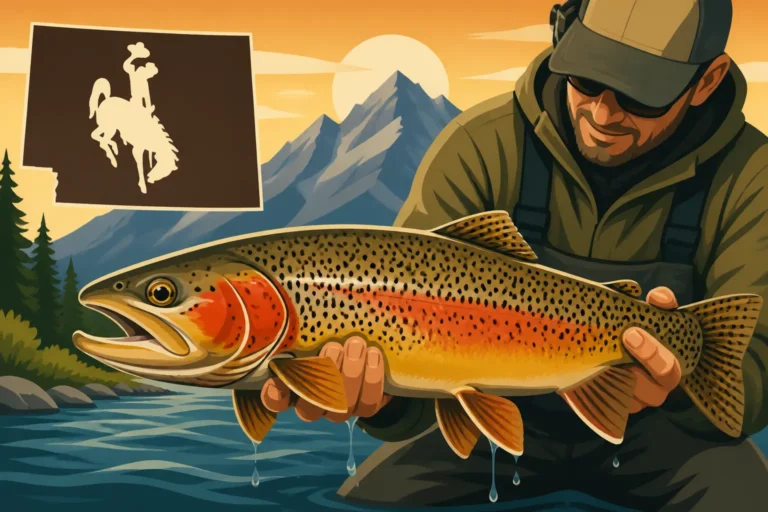
Are Tiger Muskie Stocked in Wyoming?
It's a question I hear often, especially from anglers who love a good challenge: "Are there really tiger muskie in Wyoming?" For many, the idea of chasing these elusive, toothy predators conjures images of northern states, but the truth might surprise you. This guide will dive deep into Wyoming's relationship with the tiger muskie, exploring why these fascinating hybrids are sometimes stocked in our waters, what makes them such a sought-after catch, and how you might actually hook into one of your own.
Understanding the Elusive Tiger Muskie
Before we talk about where they might be lurking in Wyoming, let's get a handle on what a tiger muskie actually is. It's not just a fancy name; it's a very specific fish with a unique story, and understanding that story is key to appreciating their role in our state's fisheries.
What Exactly Is a Tiger Muskie?
A tiger muskie isn't a naturally occurring species you'll find spawning in a river. Instead, it's a sterile hybrid, a cross between a true muskellunge (often called a "muskie") and a northern pike. Think of it like a mule in the animal kingdom—a powerful, impressive creature that can't reproduce on its own. These hybrids are almost exclusively produced in hatcheries and then stocked into specific waters for particular management goals.
What makes them a "tiger"? Their distinctive pattern! They have dark, irregular, vertical bars or spots over a lighter background, often described as tiger stripes, which can vary in intensity. They typically have the long, slender body shape of a pike but can grow to the impressive sizes more often associated with pure muskellunge, reaching lengths well over 30 or even 40 inches and substantial weights. Their mouths are truly formidable, armed with rows of sharp, backward-pointing teeth designed for ambushing and holding onto prey. When you hear about the "fish of a thousand casts," it's often these guys or their purebred muskie cousins people are talking about – they're notoriously hard to fool!
Why Anglers Seek Out Tiger Muskie
So, why would anyone go to such lengths for a fish that's so hard to catch? The answer lies in the sheer thrill and challenge. For many serious anglers, the tiger muskie represents the pinnacle of freshwater fishing. They are apex predators, incredibly aggressive when they decide to strike, and they put up an absolutely epic fight. Imagine the adrenaline rush of seeing a fish that size follow your lure right to the boat, making a last-second lunge!
Beyond the fight, it's the intelligence and elusiveness that draw people in. Tiger muskie are incredibly wary. They learn quickly, and catching one often feels less like luck and more like a hard-earned victory that involved careful strategy, patience, and persistence. Anglers who specialize in muskie fishing develop a unique dedication, often spending countless hours on the water, meticulously selecting lures and perfecting retrieves. The reward isn't just the fish itself, but the battle of wits and the ultimate validation of skill. It's a true trophy fish, not just in size, but in the effort it takes to land one.
The Rarity of Pure Muskie and Pike in Wyoming
While tiger muskie are hybrids of muskellunge and northern pike, it's worth noting that pure muskellunge are not native to Wyoming and are very rarely, if ever, found in our waters. Northern pike, on the other hand, are present in some Wyoming fisheries, sometimes introduced, and often managed carefully due to their own predatory nature and potential impact on native trout populations. The choice to stock the sterile tiger muskie is often a deliberate one by game and fish agencies to harness the predatory benefits without the risk of an unmanaged, reproducing population of a non-native species. This distinction is crucial for understanding why tiger muskie might be found here while their parent species are largely absent or highly controlled.
Wyoming's Relationship with Tiger Muskie Stocking
It's common to assume that a fish as distinctive as the tiger muskie would be a widespread target, but in Wyoming, their presence is quite specific. This isn't by accident; it's part of a carefully managed strategy.
The "Are They Stocked?" Answer: Yes, but Selectively and Sparingly
The straightforward answer is yes, tiger muskie have been and are sometimes stocked in Wyoming. However, this isn't a statewide program, nor are they put into every lake and reservoir. The Wyoming Game and Fish Department (WGFD) employs tiger muskie in a very targeted way, usually for specific biological and recreational management goals in particular waters.
You won't find them in every tackle shop's "what's biting" report across the state. Their stocking is typically limited to a handful of reservoirs where their unique characteristics serve a purpose. This scarcity adds to their mystique and makes finding one an even greater achievement. The WGFD's approach is deliberate: use these powerful predators where they can do the most good, without disrupting the delicate balance of other fisheries, especially those focused on our beloved trout. This careful management means anglers need to do their homework to discover if a particular water holds these magnificent fish. Wyoming Fishing Regulations Every Angler Should Know outlines how the WGFD manages various species.
Historical Context of Tiger Muskie in Wyoming
The history of tiger muskie in Wyoming isn't a long one, but it's an interesting chapter in the state's fishery management. The decision to introduce tiger muskie into certain waters wasn't made lightly. It typically began as a strategy to address overpopulation issues with less desirable or overabundant species, like various suckers or carp, that can outcompete more desirable game fish. Instead of using chemical treatments or intensive netting, the idea was to introduce a natural predator that would thin out these populations, creating a healthier ecosystem for the target species, often trout or walleye, to thrive.
Initial stockings were experimental, assessing how well the tiger muskie would adapt to Wyoming's aquatic environments and if they would indeed serve their intended purpose. Over time, biologists have learned which waters are suitable and what population densities work best to achieve those specific management objectives without creating new problems. This historical context helps explain why their presence is so localized and why it's not a common fish across the state.
Specific Waters Where Tiger Muskie Might Be Found
Because stocking programs can change, it's not wise to list specific lakes by name and promise tiger muskie will always be there. However, generally speaking, tiger muskie stockings have occurred in reservoirs that are large enough to support them, often those with a healthy population of forage fish (like suckers or perch) that they can help control. These are typically waters where the primary fishery might be for other species like Walleye Fishing in Wyoming or even larger trout, and the muskie are introduced as a secondary, specialized attraction or as a biological tool.
Anglers serious about targeting tiger muskie in Wyoming should always consult the most current regulations and stocking reports directly from the Wyoming Game and Fish Department. These resources are the best way to get up-to-date information on which waters might currently hold these unique fish. It's a bit like a treasure hunt, and the first step is always checking the official maps and guidelines. You might find clues in sections like How to Find a New Fishing Spot Using Wyoming Game and Fish Maps.
Why Wyoming Chooses Tiger Muskie for Specific Fisheries
The decision to introduce any non-native species, even a sterile hybrid, into a state's waters is a complex one, weighed with ecological considerations and management goals. For Wyoming, tiger muskie are chosen for very specific reasons that benefit the broader fishery.
Managing Undesirable Species
One of the primary drivers behind stocking tiger muskie is their exceptional predatory nature. They are voracious eaters, and this appetite can be strategically harnessed to control populations of less desirable or overabundant fish species. For instance, in some reservoirs, common carp or various species of suckers can proliferate, consuming resources that would otherwise go to game fish like trout, walleye, or bass. These "rough fish" can degrade habitat and make it harder for other species to thrive.
Enter the tiger muskie. As large, efficient predators, they act as a biological control, preying heavily on these abundant, easy-to-catch forage fish. This natural predation helps to rebalance the ecosystem, reducing competition and often leading to healthier populations of more sought-after game fish. It's an elegant solution that often avoids more intrusive management techniques.
Creating Unique Trophy Fisheries
Beyond ecological management, tiger muskie also offer a fantastic recreational opportunity. By stocking them, the WGFD can create a unique, specialized trophy fishery that attracts a dedicated niche of anglers. While our state is famous for Cutthroat Trout Fishing in Wyoming and Lake Trout (Mackinaw) Fishing in Wyoming, adding a species like the tiger muskie provides diversity and a completely different kind of challenge.
For many, the opportunity to tangle with a fish that can easily exceed three feet in length and weighs in the double digits is an irresistible draw. It adds an element of excitement and potential for a truly memorable catch that might not be available otherwise. These fisheries become destinations for those looking for the ultimate freshwater predator experience, diversifying Wyoming's already incredible fishing landscape.
Sterile Hybrids: The Management Advantage
Perhaps the most significant reason for choosing tiger muskie over pure muskellunge or northern pike is their sterile nature. Because they cannot reproduce, their populations are entirely controlled by stocking efforts. This gives fishery managers immense flexibility and power.
- No Unintended Spreading: There's no risk of a stocked population growing unchecked or spreading into adjacent waters, potentially disrupting native ecosystems or competing with existing fish populations. This is a critical concern with many introduced species.
- Precise Population Control: The WGFD can decide exactly how many tiger muskie are in a given water body by controlling the number of fish stocked. If the management goal is met (e.g., suckers are reduced), stocking can be paused or reduced. If more predators are needed, stocking can be increased.
- Focus on Growth: Since they don't expend energy on reproduction, tiger muskie often put more energy into growth, leading to larger, healthier fish. This enhances their appeal as trophy fish.
This controlled environment means that when you do encounter a tiger muskie in Wyoming, it's there by design, serving a specific, beneficial purpose, and represents a carefully managed piece of our state's aquatic puzzle.
Tips for Anglers Hoping to Catch a Wyoming Tiger Muskie
So, you're intrigued and thinking about trying your hand at catching one of these magnificent fish? Be warned: it's not for the faint of heart, but the rewards are immense. Here's what you'll need to know.
Essential Gear for Tiger Muskie
Chasing tiger muskie isn't like casting for your average rainbow trout. These fish are big, powerful, and have mouths full of razor-sharp teeth. Your gear needs to be up to the task.
- Heavy Rod and Reel: You'll want a heavy-action baitcasting rod, typically 7 to 9 feet long, capable of handling large lures and powerful fish. Pair this with a robust baitcasting reel designed for heavy line and big fish, with a good drag system. Think something you might use for saltwater fishing, not light stream trout!
- Strong Line: Braided line is almost a must, usually in the 60-100 lb test range. It has minimal stretch, allowing for solid hooksets and the power needed to battle a large fish.
- Wire Leaders: This is non-negotiable. Their teeth will slice through fluorocarbon or monofilament like butter. A strong steel or titanium leader, at least 12-18 inches long, is absolutely essential. You can find quality options at any reputable outdoor retailer or on platforms like Amazon.
- Large Lures: Forget tiny spinners. Muskie eat big prey, so you need big lures. This includes large crankbaits, bucktails (spinnerbaits with big skirts), jerkbaits, glide baits, and soft plastic swimbaits, often ranging from 6 to 12 inches or more. These aren't cheap, so having a good selection is key. Check out what's available on Amazon or specialty tackle shops for Best Lures for Wyoming Rainbow Trout to get an idea of the scale difference.
- Landing Gear: A very large, long-handled landing net with a rubberized, knotless mesh is crucial for safely landing and handling these fish. You'll also need long-nosed pliers or jaw spreaders and bolt cutters (in case a hook is deeply embedded and needs to be cut for the fish's safety).
- Gloves: Heavy-duty fishing gloves can protect your hands from teeth, gill plates, and sharp fins during handling.
Remember, this gear is an investment, but it's vital for your success and the safety of the fish.
Best Times and Techniques
Tiger muskie fishing is often described as a "grind" for a reason. You might cast all day for just one follow, or one strike.
- Seasons: While muskie can be caught year-round in open water, spring and fall are often considered prime times. In spring, they are recovering from winter and actively feeding. In fall, they are bulking up for winter, often making them more aggressive. They'll be found in shallower waters during these cooler periods. Summer can be productive, but they often move to deeper, cooler water.
- Time of Day: Early morning and late evening, when light levels are lower and other boat traffic is minimal, can be productive. Overcast days can also be excellent.
- Techniques:
- Casting and Retrieving: This is the bread and butter. Cast your large lures parallel to weed lines, submerged timber, rock piles, and drop-offs. Use a variety of retrieve speeds and incorporate pauses and jerks to mimic wounded prey. The "figure-8" at the boat is critical: as your lure approaches the boat, sweep it in a wide figure-8 pattern under the water. Many strikes happen right at the boat!
- Trolling: On larger reservoirs, trolling massive crankbaits or swimbaits at specific depths and speeds can be effective, especially during hotter summer months when fish are holding deeper.
- Structure Fishing: Muskie are ambush predators. They love to hide near cover – weed beds, fallen trees, rocky points, old submerged roadbeds. Focus your efforts on these areas.
- Patience and Persistence: These are your most important tools. Don't get discouraged by hours without action. Every cast is an opportunity, and the one that connects makes all the others worth it.
Catch and Release Best Practices
Because tiger muskie are often part of specialized, managed fisheries, and because they are relatively rare and important for control, catch and release is highly encouraged, if not mandatory, in many areas. Their survival after release depends heavily on proper handling. Here are some key points:
- Minimize Fight Time: Use appropriate heavy tackle to land the fish as quickly as possible, reducing stress.
- Keep Them Wet: Try to keep the fish in the water as much as possible. If you must bring it aboard for a quick photo, do so quickly and gently. Never drag a muskie onto dry land or rocks.
- Use the Right Tools: Use your long-nosed pliers or hook removers to carefully dislodge hooks. If a hook is deeply embedded, use bolt cutters to snip the hook, leaving the barb in the fish. This is often less damaging than trying to rip it out.
- Support the Fish: When lifting for a photo, support the entire body, especially the belly. Never hold a large muskie vertically by the jaw alone; this can severely damage its internal organs and spine.
- Revive Carefully: If the fish seems lethargic, hold it upright in the water by the tail and gently move it back and forth to force water over its gills until it's strong enough to swim away on its own. Watch it swim off before letting go entirely.
- Know the Rules: Always double-check the current Catch-and-Release Rules on Wyoming Waters for the specific body of water you're fishing.
Proper catch and release ensures that these incredible fish can continue to grow, fulfill their ecological role, and provide future angling opportunities for others.
Tiger Muskie vs. Other Popular Wyoming Game Fish
To put the tiger muskie's characteristics into perspective, let's look at how they compare to some of Wyoming's more commonly targeted fish species.
| Feature | Tiger Muskie | Rainbow Trout | Walleye | Lake Trout (Mackinaw) |
|---|---|---|---|---|
| Average Size (Wyoming) | 28-40+ inches, 5-20+ lbs | 12-20 inches, 1-3 lbs | 15-25 inches, 1.5-6 lbs | 20-40+ inches, 5-30+ lbs |
| Diet | Primarily fish (suckers, carp, perch, minnows) | Insects, small fish, crustaceans, worms | Minnows, insects, crayfish, leeches | Deepwater fish (cisco, kokanee, whitefish) |
| Habitat | Mid-size to large reservoirs, often around structure | Rivers, streams, lakes, reservoirs | Reservoirs, larger lakes, slow rivers | Deep, cold lakes/reservoirs |
| Fight Style | Explosive runs, head shakes, aerial jumps, long battles | Strong runs, acrobatic jumps | Deep, powerful head shakes, bottom-hugging | Deep, stubborn pulls, incredible stamina |
| Difficulty to Catch | High (the "fish of a thousand casts") | Moderate (can be finicky) | Moderate (light-sensitive, schooling) | Moderate to High (deep water, specialized gear) |
| Typical Gear | Heavy baitcasting, wire leader, large lures | Light to medium spinning/fly, small lures | Medium spinning/jigging, minnows/jigs | Heavy spinning/trolling, downriggers |
| Management Role | Biological control (rough fish), trophy fishery | Sport fishing, stocking for recreation | Food fish, sport fishing | Trophy fishing, sport fishing, some control |
This table really highlights how unique the tiger muskie is in the Wyoming fishing scene. They are in a league of their own when it comes to the gear required and the sheer challenge they present, often rivaling the largest Lake Trout (Mackinaw) Fishing in Wyoming for sheer size, but with a more aggressive, surface-oriented fight.
So, while Wyoming might not be the first state that comes to mind for muskie fishing, these incredible hybrids certainly have a place in our diverse fisheries. They represent a unique challenge and a testament to the innovative ways our Game and Fish Department manages our precious aquatic resources. Tight lines, and may your next cast be the one!
Disclaimer
This article is for general informational purposes only and does not constitute professional advice. Laws, prices and regulations vary by location and change over time. Consult a qualified professional for guidance on your specific situation.