How Many People Fit in a Guide’s Drift Boat
Planning a fantastic fishing trip to Wyoming often involves picturing yourself floating down a beautiful river, casting lines into prime trout water. But as soon as you start thinking about bringing friends or family along, a common question pops up: just how many people can really fit comfortably in a guide's drift boat while still having a productive and enjoyable fishing experience? It's a real concern, because a crowded boat can quickly turn a dream trip into a cramped struggle. This guide will walk you through the practical realities of drift boat capacity, ensuring you know what to expect and how to plan for your group.
Understanding the Standard Drift Boat Setup for Fishing
When we talk about a "drift boat" in the context of Wyoming fishing, we're usually picturing a specific type of craft: a McKenzie-style boat or a similar river dory designed for navigating rivers with currents and rapids. These boats are built to be rowed or sometimes motored by a guide, allowing for silent approaches to prime fishing spots and easy maneuvering. They're definitely not party barges, and their design dictates how many people can truly fish effectively.
Angler Positions and Comfort
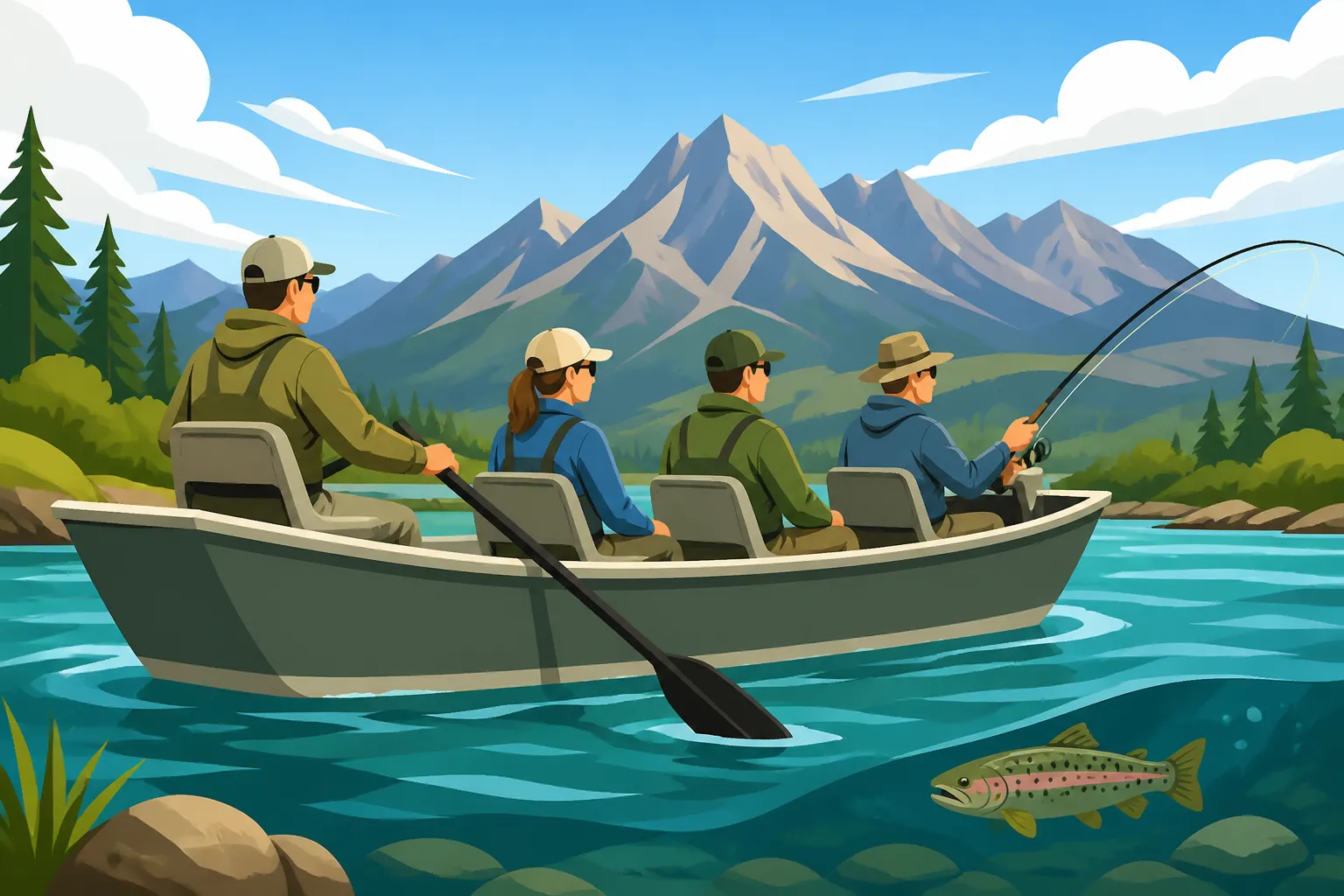
Typically, a standard guide's drift boat is designed to comfortably fish two anglers at a time, plus the guide. These two anglers will usually occupy swivel seats, one forward and one in the middle, facing either side of the boat or slightly forward. This setup allows each person ample room to cast without tangling lines or hitting each other with backcasts, especially important in fly fishing where long, unhindered casts are crucial. There's also space for tackle, a small cooler, and personal bags.
Imagine being on the North Platte River, trying to present a delicate dry fly to a rising trout. If you have too many people in the boat, every cast becomes a calculated risk, a dance to avoid someone else's line or rod tip. The joy of a free, unencumbered cast is a huge part of the experience, and that's often compromised with more than two anglers trying to fish simultaneously from a drift boat. Even for spin fishing, where casting might be less expansive, the act of retrieving, setting the hook, and landing a fish still requires room to move freely and quickly.
The Guide's Role and Space
Let's not forget the unsung hero of the drift boat: the guide. They sit or stand on a raised platform in the middle of the boat, typically operating oars or a motor. Their space isn't just for sitting; it's a dynamic workspace. They're constantly rowing to position the boat perfectly for your casts, holding you steady in a seam, or expertly navigating rapids. This requires a full range of motion, clear sightlines, and quick reflexes. Float Trips on Wyoming's Snake River are a prime example where a guide's skill and unimpeded movement are paramount to both safety and fishing success.
The guide's station also typically holds safety gear, extra rods, a net, and other essential tools. This equipment needs to be easily accessible, not buried under extra bags or jostled by too many people. Crowding this area not only makes the guide's job harder but can also compromise safety, particularly in swift currents or when maneuvering around obstacles. A good guide knows how to make the most of the space, but there's a limit to how much they can adapt to an overfilled boat.
Factors Influencing Practical Drift Boat Capacity
While a boat might physically hold a certain number of bodies, the practical capacity for a quality fishing experience is often much lower. Several elements beyond just the number of seats come into play.
Fishing Style and Technique
The kind of fishing you're doing dramatically impacts how many people can effectively fish from a single drift boat.
- Fly Fishing: This is where space becomes a premium. The wide, sweeping motions of a fly cast, especially for beginners or those tackling tricky currents, require significant clear space around each angler. Trying to cast a 9-foot fly rod with another person too close is an exercise in frustration and potential injury. Many guides will strictly adhere to a two-angler limit for dedicated fly fishing trips because anything more simply isn't productive or safe. Fly Fishing Techniques for Wyoming Trout Streams demand precision and room.
- Spin Fishing: While less demanding on casting space than fly fishing, spin fishing still requires room for comfortable casting, retrieving, and fighting fish. If two spin anglers are side-by-side, they might manage, but adding a third person into the mix usually means one angler is consistently sacrificing their ideal casting angle or getting in the way.
- Wade Fishing Trips: Sometimes, a drift boat is primarily used as transportation to access prime wade-fishing spots. In these scenarios, the boat acts more like a shuttle. You might have three or even four people in the boat during transit, but once you arrive at a promising stretch of river, everyone (or at least most people) will disembark and fish from the bank or by wading. The boat then waits, or the guide rows it ahead to the next pick-up point. If you're mainly looking for Wade Trips vs Float Trips in Jackson Hole, Wyoming, boat capacity during transit might be slightly more flexible, but the actual fishing will still be limited to shore.
Gear and Personal Belongings
Let's be realistic: a fishing trip involves a lot of stuff! Each angler usually brings:
- A rod (or two, or three, if you're like me and can't decide!)
- A tackle box or bag
- Waders and wading boots (which take up surprising space when not being worn)
- A jacket, rain gear, and extra layers
- A water bottle and snacks
- A camera or phone
- Sunscreen, hats, sunglasses
Multiply that by three or four people, plus the guide's substantial array of gear (net, anchor, first aid, extra flies/lures, safety equipment, perhaps a cooler for drinks and lunch), and you quickly run out of square footage. A cluttered boat is a safety hazard and makes it harder to move around, fish, and enjoy the scenery. Many outfitters specify What to Bring on a Guided Wyoming Fishing Trip to manage expectations about gear.
Comfort vs. Crowding: The Experience Factor
This is perhaps the most important consideration. A boat can physically hold three adult anglers in a pinch. But can three adults comfortably fish all day long without feeling cramped, constantly apologizing for bumping elbows, or waiting for turns to cast? Usually not. The distinction between physical capacity and a truly comfortable, productive, and enjoyable fishing experience is vast.
For a memorable day on the water, especially when you're paying for a guided experience, you want space to move, cast freely, and savor the moment without feeling like you're in a sardine can. Many anglers opt for a second boat even with a group of three just to ensure everyone has a prime fishing position and the comfort they expect from a Guided Fly Fishing Trips in Jackson Hole, Wyoming.
Common Scenarios and Recommendations for Group Sizes
Knowing the typical setup helps you plan. Here's a look at common group sizes and what to consider.
Ideal Group Sizes for Optimal Experience
For the best possible guided fishing experience in a drift boat, whether on a pristine section of the Snake River or the legendary North Platte, the consensus among guides and seasoned anglers alike is that one to two anglers per boat is ideal.
- One Angler: This is the pinnacle of guided fishing. You get the guide's undivided attention, prime access to every fishing spot, and maximum casting freedom. It's an immersive, personalized experience, perfect for learning or targeting specific fish.
- Two Anglers: This is the most common and highly recommended setup for a pair of friends, a couple, or parent-child duos. Each angler gets a dedicated fishing station, usually one at the front and one mid-boat, allowing for simultaneous fishing with plenty of room. The guide can easily assist both, net fish, and keep the boat in prime position. The shared experience is fantastic, and the cost is often more manageable than a solo trip.
While some outfitters might offer a "three-person drift boat" option, it's critical to understand what that entails. Often, the third person is less actively fishing, perhaps sitting in the back or rotating turns. It rarely offers the same quality of experience as two dedicated fishing spots. This is a crucial question to ask when you're Hiring a Fishing Guide in Wyoming.
When a Second Boat is the Best Option
If your group includes three or more dedicated anglers who all want to actively fish throughout the day, the best solution is almost always to book a second boat. I know, it's an extra cost, and that can feel like a pinch, but trust me, the difference in the quality of the experience is usually worth every penny.
Consider a family of four: two parents and two teenagers. Putting all four in one drift boat (plus the guide) would be chaotic and frustrating. Even if the boat could physically hold five people, actual fishing would be limited to one or two people at a time. By splitting into two boats (two anglers and a guide in each), everyone gets a front-row seat to the action, personal attention from a guide, and the space to cast and enjoy their day. This also allows for different fishing preferences – maybe one boat wants to focus on Streamer Fishing for Wyoming Brown Trout while the other prefers dry flies. It makes logistics easier and significantly enhances satisfaction.
When booking through platforms like FishingBooker, you can often specify your group size and they'll help you coordinate multiple guides and boats if needed. Don't be shy about asking about options for larger groups; reputable outfitters want you to have a good time.
Booking Considerations and What to Ask Your Guide
Understanding drift boat capacity is just the first step. The next is making sure your booking aligns with your expectations.
Communicating Your Group's Needs
Before you even commit to a booking, have an open and honest conversation with the outfitter or guide service. This is your chance to clarify everything and ensure there are no surprises on the day of your trip. Here are some key questions to ask:
- "We have [X number] of people in our group. How many anglers can actively fish at one time from a single drift boat?"
- "If we have three anglers, what does the fishing setup typically look like? Will someone be rotating, or will all three be casting simultaneously?"
- "What is your recommended maximum number of anglers for a comfortable fly fishing trip in a drift boat?"
- "If we book two boats for our group of four, will both guides coordinate their routes to keep us somewhat together, or will we be on separate sections of the river?" (This is great for planning lunch breaks or sharing stories.)
- "What is included in a guided trip regarding gear and equipment for our group size?"
- "Are there any additional fees for extra people in the boat, even if they aren't actively fishing?"
Being upfront about your group's size and expectations helps the outfitter match you with the right number of guides and boats, ensuring everyone has a positive experience. Remember, a What a Guided Wyoming Fishing Trip Costs can vary significantly based on the number of anglers and boats.
Utilizing Booking Platforms Like FishingBooker
Platforms like FishingBooker can be incredibly helpful for researching and booking guided trips. They often provide detailed descriptions of the boats guides use, including photos and stated capacities. While these capacities generally refer to the maximum number of passengers the boat can legally carry, the description or customer reviews might give you a better sense of the fishing capacity.
When browsing on FishingBooker, pay close attention to the "Max Anglers" or "Capacity" fields, and don't hesitate to use their messaging system to directly ask the guide about the comfort level for your specific group size and preferred fishing style. Many guides will be very transparent about the optimal number of anglers for their specific vessel and type of trip. They want happy clients who will come back or recommend them! Don't forget to check if the guide is offering different types of trips, like a dedicated Beginner-Friendly Wyoming Fishing Guides option, which might involve more instruction and less intense fishing, potentially allowing for slightly more flexibility in numbers if people are taking turns.
When it comes to drift boat fishing in Wyoming, less is often more. While a boat might fit a few people, the true measure of a great trip lies in the comfort, space, and quality of the fishing experience. Prioritizing two anglers per boat generally guarantees the best outcome, allowing everyone to fully immerse themselves in the stunning Wyoming scenery and the thrill of the catch.
Disclaimer
This article is for general informational purposes only and does not constitute professional advice. Laws, prices and regulations vary by location and change over time. Consult a qualified professional for guidance on your specific situation.