Where to Find Water-Specific Rules for a Wyoming Lake
It's incredibly frustrating to spend hours planning a fishing trip to a beautiful Wyoming lake, only to arrive and realize you're not entirely sure about the specific regulations for that exact waterbody. General state rules are one thing, but many lakes have unique stipulations that can catch even seasoned anglers off guard. This guide is here to untangle that confusion, showing you precisely where to find the crucial water-specific rules for any Wyoming lake, ensuring your fishing adventures are always compliant and enjoyable.
Why Each Lake Can Have Its Own Rules
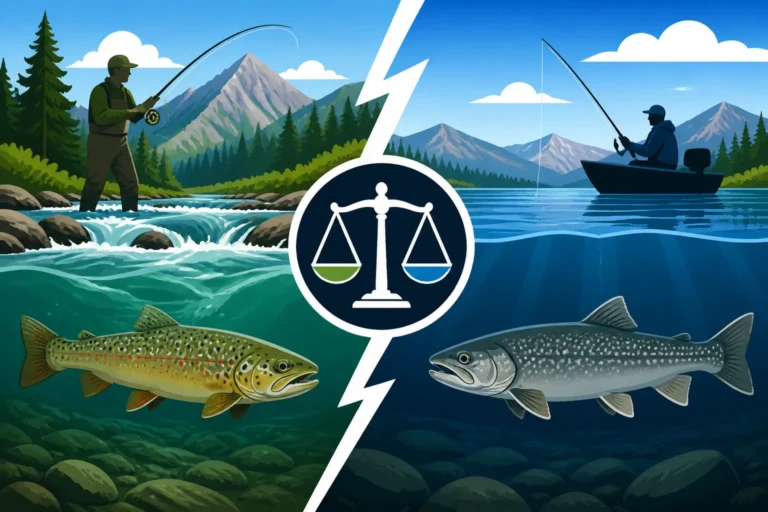
You might wonder why, with all the general statewide regulations, individual lakes and reservoirs in Wyoming often have their own distinct sets of rules. It's not just to make things complicated, I promise! There are very good reasons for these water-specific stipulations, and understanding them helps you appreciate their importance.
Protecting Unique Fisheries and Ecosystems
Wyoming is home to an incredible diversity of aquatic environments, from vast high-desert reservoirs like Flaming Gorge to pristine high-alpine lakes tucked away in the Wind River Range. Each of these environments supports different fish populations and delicate ecosystems. Water-specific rules are designed to protect these unique areas. For example, a lake might have a thriving population of native Yellowstone Cutthroat Trout that requires special management, while another might be battling an invasive species like Lake Trout (Mackinaw) that needs to be actively harvested.
Imagine a situation where a particular lake is critical spawning habitat for a specific species. The Wyoming Game and Fish Department (WGFD) might implement a seasonal closure or restrict certain fishing methods during that sensitive period to ensure the fish can reproduce successfully. Without these localized efforts, some of our most cherished fisheries could face serious decline. It’s all about maintaining that delicate balance and ensuring healthy fish populations for generations to come.
Common Types of Water-Specific Rules You'll Encounter
When you dive into the regulations for specific lakes, you'll find a variety of rules that go beyond the statewide general limits. These can include anything from bait restrictions to unique bag and possession limits.
One of the most common variations you'll see are slot limits or size restrictions. For instance, some lakes might have a rule that you can only keep fish under a certain size, or over a certain size, with a "slot" in the middle that must be released. This is often done to protect the prime breeding stock. For example, a lake might stipulate that all trout between 16 and 20 inches must be released to ensure those larger, more productive fish stay in the water. Conversely, some waters might have a rule like "The One-Over-16-Inch Rule on Wyoming Trout Streams" meaning you can only keep one fish over 16 inches.
Bait and gear restrictions are also very common. Many sensitive trout waters, particularly those known for their wild populations, might be designated "artificial flies and lures only" to minimize harm to fish and prevent the introduction of diseases or invasive species. Other lakes might explicitly prohibit live minnows or even corn as bait. On some rivers, like certain stretches of the North Platte, you'll even find "Barbless Hook Requirements on the North Platte River" to further protect fish during catch-and-release. Always check if "Are Live Minnows Legal Bait in Wyoming?" before you bring your bait bucket.
Finally, you'll often encounter different bag and possession limits for specific species on particular lakes. While statewide limits give you a general idea, a certain lake might have a reduced limit for Walleye, or perhaps a higher limit for an overpopulated species like Lake Trout in an effort to manage their numbers. It’s always critical to know "How Bag and Possession Limits Work in Wyoming" and then double-check the water-specific rule. For example, a general trout lake might have a limit of 6 trout, but a specific, heavily managed lake might only allow 2 trout. Understanding these nuances is key to responsible angling.
Your Primary Resource: The Wyoming Game and Fish Regulations Booklet
When it comes to definitive and reliable information about Wyoming's fishing rules, your absolute best friend is the Wyoming Game and Fish Department (WGFD) Regulations Booklet. This isn't just a suggestion; it's an essential tool for every angler.
The Official Fishing Regulations Booklet Physical Copy
I can't stress this enough: always have a physical copy of the current year's Wyoming Fishing Regulations Booklet. Even in our digital age, this printed guide is indispensable. You can pick one up at almost any Wyoming sporting goods store, tackle shop, Walmart, or any official WGFD office. It's often free, or at most, a very nominal fee. If you're planning ahead or can't make it to a physical store, you can sometimes find the current booklet for purchase on online retailers like Amazon, especially if you're looking to get a copy before your trip.
This booklet contains all the statewide regulations, but more importantly for our topic, it includes a comprehensive "Water-Specific Regulations" section. This section is usually organized alphabetically by waterbody name, making it relatively easy to navigate. Each entry will clearly list any deviations from the general statewide rules for that specific lake, reservoir, or river. Make it a habit to sit down with your booklet and read the relevant pages before you even pack your bags. Knowing "Reading the Wyoming Fishing Regulations Booklet" is a skill that will save you a lot of headaches.
The beauty of the physical booklet is that it works anywhere, regardless of cell service. Out in the backcountry, far from any signal tower, that paper copy is your only legal reference. I've been in plenty of situations where I swore I remembered a rule, but a quick flip through the booklet clarified things immediately.
The Wyoming Game and Fish Website Digital Hub
While the physical booklet is a must-have, the WGFD website is an incredibly powerful digital resource, especially for getting the absolute most up-to-date information. The WGFD website, specifically the fishing regulations section, mirrors the content of the printed booklet and often includes real-time updates or emergency closures that might not yet be in print. You can find their official regulations page easily, and it's organized similarly to the booklet, often with a searchable database or interactive map. This makes it super convenient to look up rules for individual waters.
Navigating to the water-specific rules on the WGFD site usually involves selecting the "Fishing Regulations" tab and then looking for a link that says "Water Specific Regulations" or "Exceptions to General Regulations." From there, you can often use a search bar to type in the name of your target lake, like "Flaming Gorge Reservoir" or "Jackson Lake." The digital version is fantastic for pre-trip planning, especially if you're trying to compare rules across several potential fishing spots. I often use both; the digital site for initial research and the physical book for a final check in the field, just in case my memory or connection fails me. Remember, the online version is where you'll find the most current data, including any "Wyoming's 2026 Fishing Regulation Changes Explained" or in-season adjustments. It’s truly your best bet for "Where to Find Current Wyoming Fishing Regulations".
Diving Deeper into Water-Specific Rules and Exceptions
Even with the official booklet and website, there are layers to Wyoming's fishing regulations that require a bit more attention. Some areas have unique designations, and rules can even change on a dime due to environmental factors.
Understanding Special Management Areas
Wyoming has many special management areas, and often these include lakes that are treated differently due to their ecological significance, unique fish populations, or specific conservation goals. These aren't just random designations; they're carefully considered efforts to preserve the quality of our fisheries.
A prime example might be waters designated for "Wild Trout Management." These lakes are managed to promote natural reproduction and often come with stricter regulations, such as catch-and-release only rules or limitations on gear type. Other lakes might be part of a "Native Species Restoration" program, where efforts are made to protect or reintroduce species like certain subspecies of cutthroat trout. This often translates to very specific harvest restrictions or even complete closures during certain times.
Consider a popular spot like "Jackson Lake" in Grand Teton National Park. This lake might have different rules from other state-managed waters, not just because it's in a national park (which adds another layer of complexity, as you can read in "Do You Need a Wyoming License to Fish in Grand Teton National Park?"), but also because of specific management plans for its Lake Trout and Cutthroat populations. Changes like "New Snake River Trout Limits Near Jackson Lake Dam" are direct results of these focused management efforts. Even seemingly simple things, like whether "Is Jackson Lake Open for Fishing in October Now?" can be a water-specific detail that deviates from general seasonal norms. These special areas are usually clearly marked in the regulations booklet and on the WGFD website.
Seasonal and Emergency Closures
It's crucial to understand that fishing regulations, even for specific lakes, are not always static. Nature has a way of throwing curveballs, and the WGFD is prepared to respond with timely adjustments, sometimes on very short notice. These can include seasonal closures that are different from general statewide seasons, or in-season emergency closures due to environmental factors.
Seasonal variations are common. While many Wyoming waters have general open seasons, some lakes might have unique opening or closing dates due to spawning seasons, ice conditions, or other localized factors. For example, a high-mountain lake might open later in the season due to prolonged ice cover, or close earlier to protect spawning fish. It's always worth checking the "Wyoming Fishing Seasons and Water-Specific Closures" section of the regulations before planning your trip, especially if you're targeting a specific time of year.
Emergency closures are perhaps the most unpredictable but vital aspect to monitor. These can happen for a multitude of reasons:
- Disease outbreaks: A sudden discovery of a fish disease in a particular waterbody can lead to immediate closures to prevent its spread.
- Low water/high temperatures: During drought years or extreme heat waves, certain lakes might experience critically low water levels or dangerously high water temperatures, stressing fish populations. The WGFD might implement "hoot owl" restrictions, requiring anglers to stop fishing by a certain time of day, or close the water entirely to protect the fish.
- Wildfires or other natural disasters: Access to lakes might be closed due to nearby wildfires, mudslides, or other natural events that pose a safety risk or impact water quality.
The WGFD does its best to publicize these emergency closures quickly, often through their website, social media channels, and local media alerts. Always check the WGFD website or call a local office before you head out, especially if conditions have been unusual. Even if you've done your homework and bought your license (check out "Where and How to Buy a Wyoming Fishing License") and stamp (read up on "The Wyoming Conservation Stamp and What It Covers"), an unexpected closure can ruin your plans if you're not vigilant.
Tools and Habits for Responsible Angling
Staying on top of water-specific regulations might seem like a lot of work, but with the right tools and habits, it becomes second nature. It’s all about being a responsible angler and respecting the resources we love.
Leveraging Technology and Apps
While nothing replaces the official WGFD booklet and website, technology can certainly assist you. Many anglers use fishing apps on their smartphones that integrate regulation data. While you should always cross-reference with official WGFD sources, some apps can offer a quick look at general rules, species information, and even map public access points for specific lakes. Just be mindful that third-party apps might not always have the very latest emergency closures or hyper-specific details, so consider them a supplementary tool.
Another great use of technology is simply knowing how to access the WGFD website quickly on your mobile device. Bookmark the fishing regulations page on your phone's browser so you can pull it up instantly if you have a signal on the water. Even taking screenshots of key regulation pages for the lakes you plan to visit can be a smart move, ensuring you have access to the rules even without cell service. Think of it like a digital version of your printed booklet. If you're looking for a quick reference while browsing for new gear on Amazon, you might even stumble upon user-generated fishing guides that contain condensed versions of regulations (though always, always verify with official sources!).
The Value of Local Knowledge and Observation
Don't underestimate the power of old-fashioned local knowledge! Before hitting a new lake, or even a familiar one, consider stopping by a local tackle shop. The folks working there are often avid anglers themselves and are usually a goldmine of information about local conditions, recent catches, and, crucially, any subtle changes or highly specific interpretations of the rules. They can often tell you, for example, if "Wyoming Trout Lake Daily Limit" is actually different on a particular lake.
Similarly, if you've hired a local fishing guide, they are legally obligated to know the rules inside and out and can offer invaluable insights. Just observing other anglers on the water can also provide clues, though you should never rely solely on someone else's behavior as an indication of legality.
Finally, always keep an eye out for on-site signage at boat ramps, fishing access points, and campgrounds. Many times, special regulations for a particular lake will be posted on large signs, serving as a final reminder of what you need to know. These signs are there for a reason, so take a moment to read them, even if you think you know the rules by heart.
Here's a quick comparison of reliable sources for Wyoming fishing regulations:
| Source of Information | Pros | Cons | Best Use Case |
|---|---|---|---|
| WGFD Regulations Booklet | Comprehensive, reliable, no internet needed, legal proof | Can be bulky, yearly updates mean old copies are invalid | Planning trips, areas with no cell service, in-field reference |
| WGFD Website / Online Map | Always most current, searchable, accessible, real-time alerts | Requires internet access, can be complex to navigate initially | Real-time checks, detailed research, pre-trip planning, emergency updates |
| Local Tackle Shops / Guides | Hyper-local insights, real-time conditions, specific tips | Information can be anecdotal, might miss nuances, not official | Last-minute checks, specific local fishing tips, gear advice |
| On-Site Signage | Direct, immediate relevance upon arrival, hard to miss | Not always comprehensive, only visible at access points | Verifying rules upon arrival, quick reminders |
By combining these methods – carrying your physical booklet, checking the WGFD website, consulting local experts, and paying attention to signage – you'll be well-equipped to navigate the water-specific rules for any Wyoming lake. This diligence not only keeps you legal but also contributes to the conservation efforts that make Wyoming a truly special place to fish. Happy angling!
Disclaimer
Please note that fishing regulations are subject to change. While every effort has been made to provide accurate and up-to-date information, it is the angler's responsibility to consult the most current Wyoming Game and Fish Department regulations before fishing. This guide is for informational purposes only and does not constitute legal advice.