Barbless Hook Requirements on the North Platte River
There's nothing quite like the rush of a Wyoming trout hitting your line on the legendary North Platte River. But that incredible experience comes with a responsibility to our precious fisheries, and sometimes, keeping up with all the specific regulations can feel like trying to tie a tiny fly with numb fingers in a cold wind. One of the most common questions and sources of confusion for anglers, both seasoned and new, revolves around barbless hook requirements. It’s easy to wonder, "Do I really need them, and if so, where?" This guide is here to clear up that confusion, explaining not just what the rules are, but why they matter, especially on the North Platte.
Why Barbless Hooks Are Essential for Wyoming's Fisheries
Many anglers might wonder what the big deal is about a tiny barb. After all, it seems so small! But when you're talking about the health and survival of countless fish, especially in highly pressured, world-class fisheries like those found on the North Platte, those small barbs can make a massive difference. The push for barbless hooks stems from a deep commitment to conservation and ensuring these waters remain vibrant for generations to come.
Minimizing Fish Mortality
When a fish strikes your lure or fly, that hook often penetrates the delicate tissues of its mouth, gill plates, or even deeper. A barbed hook, by its very design, is made to hold fast. While this is great for landing fish, it significantly complicates the unhooking process, especially if the fish has swallowed the hook deeply or is thrashing wildly. The extra time and force required to remove a barbed hook can cause severe tissue damage, bleeding, and immense stress to the fish. Even if a fish swims away, internal injuries or exhaustion can lead to delayed mortality hours or days later.
With a barbless hook, the removal process is often swift and clean. Once the line goes slack or a bit of pressure is applied in reverse, the hook slides out much more easily, reducing the physical trauma and minimizing the "out of water" time for the fish. This directly translates to higher survival rates for released fish, which is absolutely critical for maintaining healthy, self-sustaining populations, particularly for species like the sensitive cutthroat trout. Think of it this way: a quick, clean release ensures that trout is back in the water, recovering, and ready to fight another day, contributing to the overall health of the ecosystem.
Easier and Quicker Release
Beyond the biological impact, barbless hooks also make life a lot easier for the angler. We've all been there: a beautiful trout comes to the net, and you're fumbling with pliers or forceps, trying to dislodge a deeply set barbed hook while the fish wriggles, gills flared, quickly losing energy. It's stressful for everyone involved.
Barbless hooks streamline the entire catch-and-release process. Often, with a simple twist of your forceps, or even just by hand if you know what you're doing and the hook isn't too deep, the hook comes right out. This allows you to get that fish back into the cool river water within seconds, rather than minutes. It's not just about protecting the fish; it's about making your fishing experience more efficient and less impactful, reducing the chance of dropping a fish or causing unnecessary harm. For rivers known for high catch rates, like sections of the North Platte, this efficiency is paramount. When you're releasing dozens of fish in a day, every second saved in the unhooking process adds up to a huge benefit for the fishery. This commitment to easy release is a core part of effective Catch-and-Release Rules on Wyoming Waters.
Specific North Platte Sections Requiring Barbless Hooks
Wyoming's North Platte River is a vast and varied system, with different regulations applying to different stretches. It's crucial not to assume that what's legal in one spot is legal everywhere else. The Wyoming Game and Fish Department (WGFD) has specifically identified certain blue-ribbon sections of the North Platte where the angling pressure is high and the trout populations warrant special protection, leading to mandatory barbless hook rules. Ignoring these rules isn't just a risk of a fine; it undermines the very health of these world-famous fisheries.
The Famous Gray Reef Section
Perhaps the most well-known section requiring barbless hooks is the celebrated Gray Reef. This tailwater fishery, flowing below Gray Reef Dam southwest of Casper, is renowned for its prolific numbers of large rainbow and brown trout. It's truly a special place, attracting anglers from all over the globe, and its health is safeguarded by strict regulations.
Specifically, the North Platte River from Gray Reef Dam downstream to the Bessemer Bend property (Bureau of Land Management launch site) is designated as "flies and lures only, with a single-point barbless hook." This stretch is characterized by its consistent flows and nutrient-rich waters, creating an ideal habitat for trout to thrive and grow to impressive sizes. The "flies and lures only" rule is a further measure to protect fish, as it generally results in less deep hooking compared to bait fishing. Anglers targeting this segment need to be meticulous about their tackle. If you're wading or floating this section, every fly or lure you tie on must comply. Even if your buddy caught a monster on a barbed spinner upstream, using it here could land you a citation and, more importantly, put the fish at unnecessary risk. This particular stretch is detailed in guides like the Fishing Gray Reef on Wyoming's North Platte River.
The Miracle Mile and Beyond
Moving further upstream on the North Platte, another legendary stretch, often called the "Miracle Mile," also carries specific barbless hook requirements, though they can sometimes be more nuanced. The Miracle Mile, located between Seminoe and Pathfinder Reservoirs, is famous for its wild, remote feel and aggressive brown and rainbow trout.
The North Platte River from Seminoe Dam downstream to the headwaters of Pathfinder Reservoir (the Miracle Mile) typically requires "flies and lures only, with a single-point barbless hook." This regulation applies consistently throughout this highly productive, often windy, and rugged section. Like Gray Reef, the combination of "flies and lures only" and "single-point barbless hook" is designed to ensure that the exceptional trout fishing experience here is sustainable. The remoteness of the Miracle Mile means that every fish released successfully is a testament to the effectiveness of these conservation-oriented rules. For more details on this specific area, check out resources like The Miracle Mile Stretch of Wyoming's North Platte River.
It's also worth noting that while these are the primary stretches with blanket barbless rules, anglers should always consult the current Wyoming Fishing Regulations booklet when planning a trip to any part of the North Platte. Regulations can change, and localized, smaller sections might have special provisions. A good example of this kind of vigilance is seen in articles like Where to Find Current Wyoming Fishing Regulations to ensure you're always up-to-date.
Here's a quick summary of the key North Platte River sections and their general barbless hook requirements:
| North Platte River Section | Barbless Hook Requirement | Other Key Regulations | Common Target Species |
|---|---|---|---|
| Gray Reef Dam to Bessemer Bend | Mandatory single-point barbless hooks | Flies and lures only | Rainbow Trout, Brown Trout |
| Seminoe Dam to Pathfinder Reservoir (Miracle Mile) | Mandatory single-point barbless hooks | Flies and lures only | Brown Trout, Rainbow Trout |
| Other Major North Platte Sections (e.g., lower river near Casper, Fremont Canyon) | Generally not required, but always check current WGFD regulations | Varies by section, bait often allowed, general statewide limits apply | Rainbow Trout, Brown Trout, Cutthroat Trout, Walleye, Catfish |
What Exactly is a Barbless Hook?
It might sound overly simplistic, but truly understanding what constitutes a "barbless" hook is fundamental. It's not just about removing the barb; it's about ensuring the hook performs its function – catching fish – while still adhering to the conservation goals. A misconception here can lead to unintended violations or, worse, harm to fish.
Understanding the Definition
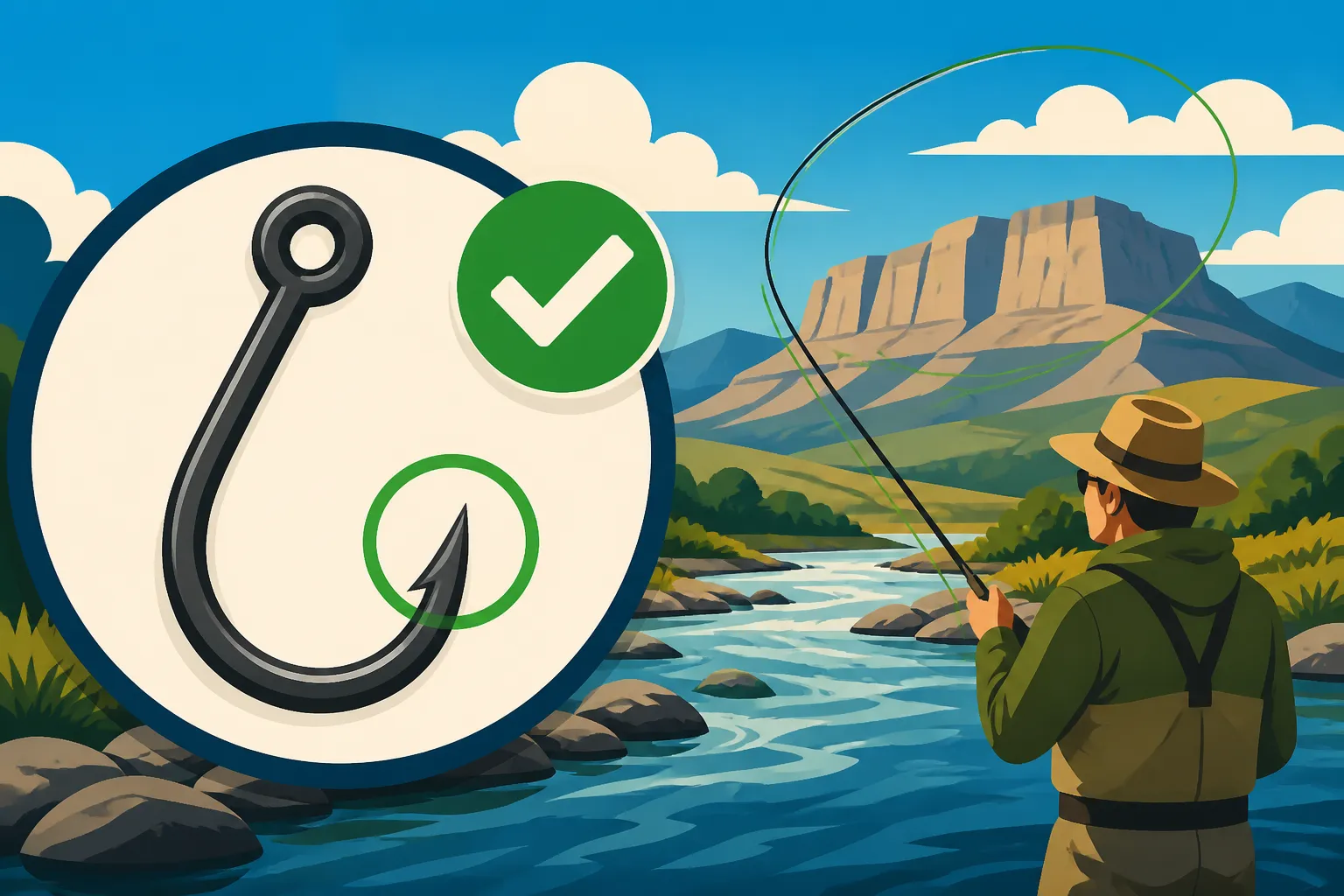
A "barbless hook" is precisely what it sounds like: a hook that lacks the small, pointed projection (the barb) typically found near the point of the hook. This barb's purpose is to prevent the hook from easily dislodging once it has penetrated. Without it, the hook can slide in and out with minimal resistance.
The critical aspect is that the hook must be truly barbless. This means the barb should be completely crushed flat against the hook shank, or ideally, removed entirely. A barb that is merely bent slightly or partially crushed is still considered a barbed hook in the eyes of game wardens and, more importantly, in its effect on a fish. The intent is to allow for the easiest possible extraction. Many manufacturers now produce hooks that are "barbless" right out of the package, which is a great option for convenience and compliance. You can find a vast selection of these on sites like Amazon, ready to go for your next North Platte adventure.
How to Convert a Barbed Hook
Don't panic if your favorite fly or lure comes with a barb! You don't necessarily have to throw out all your existing tackle. Converting a barbed hook to a barbless one is a simple process that takes mere seconds with the right tool.
The most common method involves using a pair of hemostats or pliers (long-nose pliers, specifically fly-fishing pliers, or even household needle-nose pliers can work). Here's how to do it:
- Locate the Barb: Identify the small barb just behind the point of the hook.
- Grip Firmly: Place the jaws of your pliers or hemostats firmly around the barb.
- Crush It Flat: Squeeze down hard and crush the barb flat against the hook shank. Ensure it's completely flattened and doesn't protrude at all. You can run your finger over it gently (be careful not to poke yourself!) to confirm it's smooth.
- Inspect: Visually inspect the hook from all angles. If you can still see or feel any part of the barb, crush it again.
It's a good habit to check all your hooks, even those you think are barbless, before you hit the water. Sometimes a factory barbless hook might have a tiny nub, or a previously crushed barb could have slightly reformed. Taking a moment to do this streamside can save you a headache later. Many anglers carry a small pair of crimping pliers in their vest or tackle box specifically for this purpose, a handy item you can easily pick up from sporting goods stores or online retailers like Amazon.
Gear Considerations for Barbless Fishing
Switching to or exclusively using barbless hooks for North Platte River fishing isn't just about the hook itself; it often means making slight adjustments to your overall angling approach and the rest of your tackle. While the change might seem minor, being prepared with the right gear and mindset will significantly enhance your success and, more importantly, your contribution to conservation.
Flies, Lures, and Terminal Tackle
When it comes to your flies and lures, the key is consistency. If a specific section of the North Platte requires barbless hooks, every fly, every spinner, every spoon, and every soft plastic jig head must be barbless.
- Flies: For fly anglers, this means either purchasing flies tied on barbless hooks (many reputable fly shops and online retailers like Amazon offer these) or taking the time to crimp the barbs on all your existing flies. It’s a tedious but necessary task, and many dedicated anglers will spend an evening before a trip going through their fly boxes. Remember, a single barbed fly in your box can quickly become a problem if you tie it on by mistake.
- Lures: Spin anglers using lures have similar responsibilities. Check the treble hooks or single hooks on your favorite Panther Martin spinners, Rapala minnows, or any other lure. Treble hooks are particularly problematic because they have six barbs to crush. Many anglers will replace treble hooks on lures with single barbless hooks to make compliance easier and reduce fish damage. You can find replacement single barbless hooks specifically designed for lures in various sizes. Again, Amazon is a good resource for these, offering a wide array of sizes and brands like Mustad or Gamakatsu.
- Terminal Tackle: While the hooks are the primary concern, ensuring the rest of your terminal tackle is appropriate for the conditions and the fish you're targeting is still important. Strong, quality leader and tippet lines, appropriate split shot, and robust swivels still play a role in landing fish efficiently, reducing fight time, and ultimately making the release smoother.
Rod and Reel Setup and Fish Handling
Beyond the hook, your rod, reel, and how you handle fish also become more critical when using barbless hooks. Because there's no barb to "lock" the hook in place, you need to maintain constant tension on the line, and your fish handling skills need to be top-notch.
- Rod and Reel: Using a rod with a bit more "give" or flex (a softer action) can help prevent hooks from pulling out, as it absorbs head shakes and surges from the fish. Your drag system should be set correctly and smoothly functioning to allow the fish to run without snapping the line or pulling the hook. Over-fighting a fish can cause the hook to tear out, while under-fighting it can prolong the battle unnecessarily, exhausting the fish.
- Fish Handling: This is where the real art of barbless fishing comes in.
- Keep the Fish Wet: Minimize the time a fish spends out of the water. This is a golden rule for all catch-and-release, but even more important with barbless hooks.
- Netting: A good rubberized landing net is invaluable. It protects the fish's delicate slime coat, fins, and scales. Once in the net, the fish is secure, allowing you to quickly and safely remove the barbless hook.
- Use Forceps: Always have a pair of forceps or needle-nose pliers readily available. These are essential for grasping the hook and twisting it out, especially if it's set in a tougher part of the mouth.
- Support the Fish: If you must take the fish out of the water for a quick photo, support its full body weight horizontally. Never hold a large fish vertically by its jaw or tail alone, as this can cause severe internal organ damage. Get the shot quickly and get the fish back into the water.
- Revival: If a fish seems sluggish after release, gently hold it upright in the current, facing upstream, allowing water to flow over its gills. Release it only when it's strong enough to swim away on its own.
Practicing excellent fish handling techniques not only ensures the survival of the trout you catch and release but also demonstrates a deep respect for the resource. This is why learning How to Handle a Trout to Keep It Alive After Release is so vital for every angler in Wyoming.
The "Why" Behind Changing Regulations
Regulations, especially those that dictate specific tackle types, aren't conjured out of thin air. They evolve over time, driven by scientific research, angler input, and the changing dynamics of the fishery itself. Understanding the bigger picture helps contextualize why rules like mandatory barbless hooks come into play on the North Platte.
Protecting Prized Fisheries
The North Platte River, particularly sections like the Gray Reef and Miracle Mile, has earned a reputation as a world-class trout fishery. This fame, while wonderful for tourism and local economies, also means immense angling pressure. Thousands of anglers visit these stretches annually, hoping to catch trophy-sized rainbow and brown trout.
When you have such high recreational value and intense pressure, every effort must be made to sustain the resource. Barbless hook requirements, along with "flies and lures only" rules and specific Wyoming Trout Stream Daily Limit regulations, are direct responses to this pressure. They are scientifically proven methods to reduce fish mortality rates in catch-and-release scenarios. The goal isn't to make fishing harder; it's to ensure that the fish populations can withstand the popularity of these waters, allowing future generations to experience the same incredible fishing. Without these protective measures, the quality and quantity of fish could rapidly decline, eroding the very thing that makes these rivers so special.
Evolution of Conservation Efforts
Conservation is an ongoing process, constantly adapting to new information and challenges. What was considered acceptable practice decades ago might not be sustainable today. The evolution of regulations on the North Platte reflects a broader trend in fisheries management towards more proactive and protective measures.
In the past, regulations might have focused primarily on harvest limits. However, as catch-and-release fishing became more prevalent and its impacts better understood, managers realized that even released fish could suffer significant mortality. Research into hook types, fight times, water temperatures, and handling techniques has informed current best practices. The WGFD, like other state agencies, continually monitors fish populations, angler success, and environmental factors to fine-tune these rules.
This adaptive management means that regulations are not static. What applies today might be updated next season based on the health of the fishery. This is why staying informed is crucial, and resources like Wyoming's 2026 Fishing Regulation Changes Explained are so important for anglers to review regularly. The shift to barbless hooks is a testament to this evolving understanding – a realization that even small changes in angling practice can have profound positive effects on the long-term health and vitality of a prized fishery.
Staying Informed About Regulations
As discussed, fishing regulations in Wyoming, especially on specific, highly managed waters like the North Platte River, are not set in stone. They can change annually, and sometimes even in-season, due to environmental factors, fish population dynamics, or emergency closures. Taking personal responsibility for knowing the current rules is part of being a good steward of the resource. Ignorance of the law is never an excuse, and a quick check can save you a fine and, more importantly, contribute to the health of the fishery.
Utilizing Wyoming Game and Fish Department Resources
The Wyoming Game and Fish Department (WGFD) is your authoritative source for all fishing regulations. They go to great lengths to provide clear, comprehensive information, and it's up to us, as anglers, to access and understand it.
- Official Website: The WGFD website (wgfd.wyo.gov) is an invaluable, up-to-date resource. You can usually find the most current fishing regulations booklet available for download as a PDF, along with specific news releases about emergency closures, regulation changes, and stocking reports. Look for sections dedicated to "Fishing" or "Regulations." This is often the quickest way to confirm details before you head out.
- Regulations Booklet: Obtain a physical copy of the Wyoming Fishing Regulations Booklet. These are typically available free of charge at WGFD offices, sporting goods stores, tackle shops, and some convenience stores throughout Wyoming. This booklet contains all the general statewide regulations, as well as specific rules for individual waters, often organized by drainage or region. It's designed to be portable and easy to reference while in the field. Learning to navigate and understand Reading the Wyoming Fishing Regulations Booklet is a key skill for any Wyoming angler.
- Mobile Apps: Many state fish and game agencies now offer mobile applications that provide easy access to regulations, licensing information, and even real-time updates. Check if the WGFD has a current app that can be downloaded to your smartphone. This can be incredibly convenient when you're already out on the water and need to quickly verify a specific rule.
- WGFD Offices and Personnel: Don't hesitate to call or visit a local WGFD office if you have questions or need clarification on a specific regulation. Their staff are knowledgeable and happy to help anglers understand the rules. They can provide insights that you might not find explicitly written in the booklet.
Importance of Annual Review and Local Knowledge
Regulations are often updated annually, typically around January 1st, but special conditions can lead to in-season changes. This means that relying on last year's knowledge, or even a booklet from a few seasons ago, can lead to violations. Make it a routine to review the regulations every year before your first fishing trip.
Beyond the official channels, local knowledge can also be a valuable supplement. Talk to the staff at local fly shops in Casper or Saratoga, or wherever you might be fishing near the North Platte. These individuals are often on the water daily or interacting with anglers who are, and they can provide excellent, up-to-the-minute information about local conditions, specific nuances of regulations, and even changes that might not yet be widely publicized. They are often the first to know about things like localized barbless hook rules, which stretches are fishing well, or how specific parts of the river differ from the general rules for a broader area. However, always double-check any anecdotal information with official WGFD resources, as interpretations can sometimes vary. Understanding nuances like those highlighted in Wyoming Resident vs Nonresident License Rules further emphasizes the need for comprehensive review.
Ultimately, by embracing the simple practice of using barbless hooks in designated areas, staying informed, and practicing responsible fish handling, we all contribute to the continued legacy of the North Platte River as one of North America's premier trout fishing destinations.
Disclaimer
Please remember that fishing regulations can change. Always consult the most current Wyoming Game and Fish Department regulations booklet or website before you go fishing. This article provides general information and should not be considered a substitute for official WGFD publications.