Best Technique for Sight-Fishing Clear Mountain Lakes
There's nothing quite like the breathtaking beauty of Wyoming's clear mountain lakes – but as stunning as they are, fishing them can be incredibly frustrating. The crystal-clear water, while gorgeous, also means the trout can spot you a mile away, making them notoriously spooky and challenging to catch. This guide will walk you through the precise techniques needed to effectively sight-fish these wary trout, transforming your high-country adventures into successful angling experiences.
Understanding Why Clear Mountain Lakes Are Different (and Challenging)
Imagine standing on the shore of a high-alpine lake in the Wind River Range, the water so clear you can count the rocks on the bottom in twenty feet of water. It's an incredible sight, but it's also your biggest adversary. These pristine environments demand a completely different approach than a murky river or a heavily stocked pond. The fish here are often wild, wary, and accustomed to avoiding predators, making them incredibly sensitive to any disturbance.
The Crystal Clarity: A Double-Edged Sword
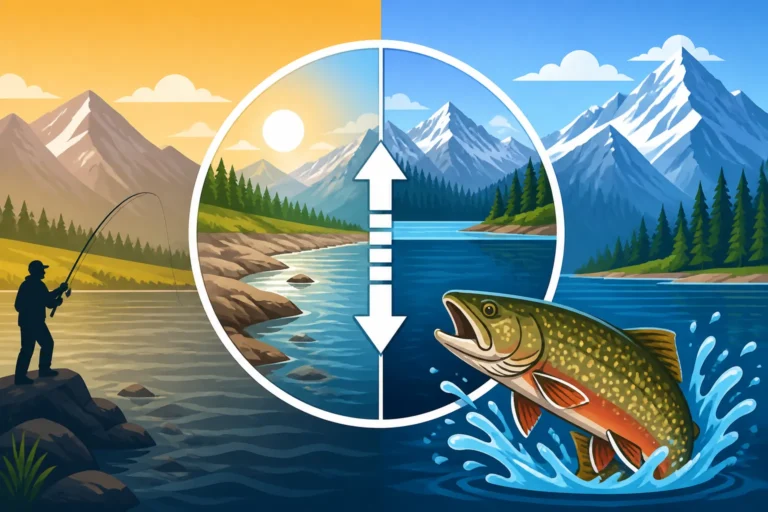
That gin-clear water is both a blessing and a curse. On one hand, it allows you to literally see the fish, sometimes even watching them inspect your offering, which is the very essence of sight-fishing. This direct visual feedback is invaluable for learning fish behavior and refining your presentation. You can observe how they react to different flies or lures, how they move, and where they hold.
However, the downside is equally significant: those fish can see you just as clearly. Your shadow, your brightly colored jacket, even the movement of your rod tip can send them bolting for cover. This heightened visibility for both angler and fish means that every move you make must be deliberate, slow, and steeped in stealth. It's a constant game of cat and mouse, where the mouse has eyes like a hawk. Mastering this dynamic is key to success on these challenging waters.
Spooky Trout and Sparse Cover
The trout in these high-mountain lakes, whether they are native Yellowstone Cutthroat, feisty Brook Trout, or elusive Golden Trout, have evolved in environments where predators are common and cover is often sparse. Unlike a meandering river with deep cut banks and overhanging vegetation, many alpine lakes feature open shorelines with minimal structure. This lack of hiding spots makes the fish inherently more skittish.
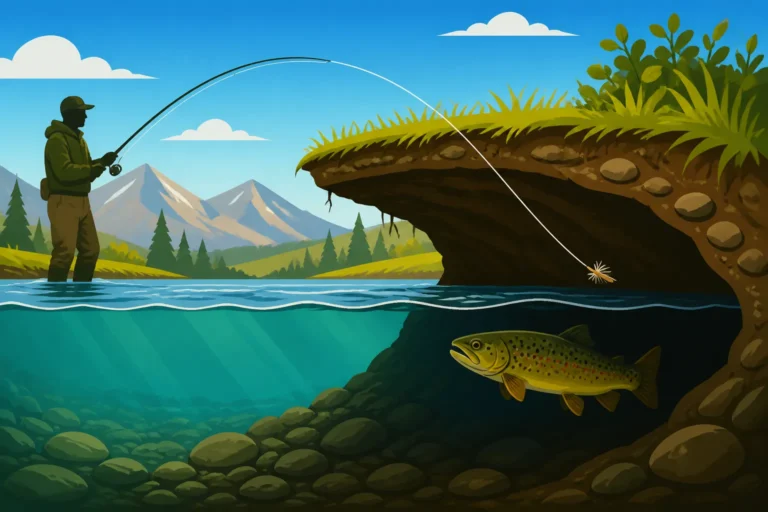
When a fish is spooked, it doesn't just swim away; it often communicates that alarm to other fish in the area, creating a chain reaction that can shut down a bite entirely. You might see a school of fish scatter with a single careless step, and then struggle to find them again for a long time. This means your approach must be measured and quiet, almost as if you're stalking big game. Avoiding rapid movements and keeping a low profile are paramount to getting close enough for a cast. For more insights on this, read up on How to Approach Spooky Trout in Clear Water.
High-Altitude Conditions and Fish Behavior
Wyoming's high-alpine lakes are not just clear; they're also cold, often deep, and situated at elevations where the air is thinner. These factors profoundly influence fish behavior. Trout in these waters tend to be more opportunistic feeders, taking advantage of hatches or food sources when they appear, but they aren't always actively cruising for a meal. The colder water means their metabolism is slower, so they might not chase a fly as aggressively as trout in warmer, lower-elevation rivers.
Furthermore, the sunlight at high altitudes can be intense, penetrating deeply into the water and affecting where fish choose to hold. They might seek deeper water during the brightest parts of the day or congregate around any available structure, no matter how small, to find shade or ambush points. Understanding these nuanced behavioral patterns is crucial for knowing where to look for fish and when they might be most receptive to your presentation. This deeper understanding will greatly inform your efforts, similar to How Water Temperature Affects Trout Feeding explains the impact of temperature on fish behavior.
Essential Gear for Successful Sight-Fishing
When you're sight-fishing clear mountain lakes, your gear isn't just about catching fish; it's about seeing them and remaining undetected. Every item from your rod to your sunglasses plays a critical role in your ability to spot, stalk, and successfully present to wary trout. Skimping on quality here can mean the difference between a memorable day of watching fish eat your fly and a frustrating day of watching them flee.
The Right Rod, Reel, and Line Setup
For the delicate presentations required in clear water, a lighter rod is usually your best friend. A 3-weight or 4-weight fly rod, typically between 8 and 9 feet long, offers the sensitivity and delicate touch needed to cast small flies with precision. Pair this with a lightweight fly reel that balances the rod well, ensuring comfortable casting throughout the day. Your fly line should be a weight-forward floating line, designed for accurate casting and soft landings.
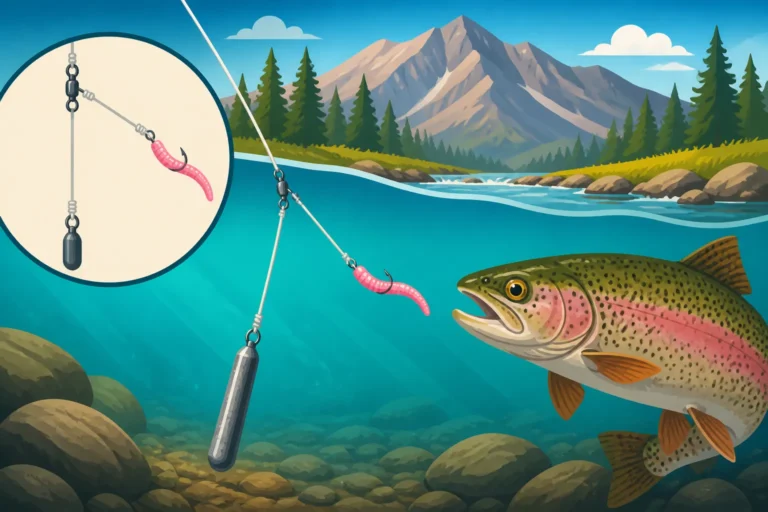
Perhaps the most critical component, however, is your leader and tippet. In ultra-clear water, fish can easily see thick, heavy line. You'll want a long, tapered leader, often 9 to 12 feet, and sometimes even longer, which allows your fly to drift naturally without being influenced by the heavier fly line. For tippet, fluorocarbon is often preferred over monofilament because it has a lower refractive index, making it virtually invisible underwater. Using a tippet as light as 5x or 6x, or even 7x for truly spooky fish, is common. If you want to dive deeper into this specific setup, check out Best Leader Length for Clear Water Fishing. You can find a fantastic selection of fluorocarbon tippet and tapered leaders on platforms like Amazon, making it easy to stock up before your trip.
Crucial Eyewear and Apparel
This might sound simple, but your choice of eyewear is arguably the single most important piece of gear for sight-fishing. High-quality polarized sunglasses are non-negotiable. They cut the glare off the water's surface, allowing you to penetrate the reflections and actually see into the water column. Look for lenses with a brown, amber, or copper tint, which enhance contrast and work well in varying light conditions common in the mountains. Different light conditions can affect visibility, so having a reliable pair is paramount.
Your apparel also plays a significant role in stealth. Avoid bright, unnatural colors like neon green or blazing orange. Instead, opt for muted, earthy tones—greys, greens, browns, and tans—that blend into the natural surroundings. Long sleeves and pants are also a good idea, not just for sun protection but to break up your human silhouette. A wide-brimmed hat helps reduce glare from above and can help conceal your face from wary fish. Remember, even a slight flash of color or movement can betray your presence to a keen-eyed trout.
Minimalist Tackle for Maximum Stealth
When you're hiking into high-alpine lakes, every ounce counts, and a minimalist approach to your tackle box also aids in stealth. You don't need dozens of fly boxes. Focus on a curated selection of flies that imitate common aquatic insects and terrestrial bugs found in mountain environments. Think small nymphs, emergers, dry flies like caddis and mayflies, and a few small streamers or terrestrials like ants or beetles. For instance, a basic fly box with a variety of sizes of Parachute Adams, Pheasant Tail Nymphs, Elk Hair Caddis, and small Woolly Buggers will cover most situations.
Beyond flies, pack only the essentials: nippers, forceps, extra leader and tippet spools, and perhaps a small indicator for nymphing. A small, lightweight backpack that won't snag on brush and allows for quick access to gear is perfect. Consider looking on Amazon for compact, multi-tool fishing accessories to keep your kit streamlined. The less gear you're fumbling with, the quieter and more focused you can be on spotting and catching fish. This ties into the broader advice on What Gear to Pack for a Backcountry Fishing Trip.
Mastering the Art of Spotting Fish
Sight-fishing isn't just about throwing a line; it's a careful dance of observation, positioning, and patience. Many anglers rush to cast when they first arrive at a lake, but the most successful sight-fishers spend significant time simply observing before making a single presentation. This initial scouting phase is where you gain crucial intel on where the fish are holding, how they're moving, and what they might be eating.
Positioning for Success: Sun, Wind, and Angle
Your position relative to the sun, wind, and the fish itself is paramount. Always try to approach with the sun at your back or to your side. This illuminates the water in front of you, cuts down on surface glare, and allows your polarized sunglasses to work their magic. If the sun is in front of you, you'll be staring into a blinding reflection, making it nearly impossible to spot anything subsurface.
The wind also plays a critical role. A ripple on the water's surface can break up your silhouette and give you a huge advantage by camouflaging your movements. However, a strong wind can also make casting difficult and stir up sediment, reducing visibility. You'll want to experiment with different angles to the wind, finding that sweet spot where you have just enough ripple to hide, but not so much that casting becomes impossible. Remember to use the landscape, like rocks or trees, to break up your outline further. When you're fishing a Wyoming high lake, every bit of natural cover helps.
Training Your Eyes to See Through the Glare
Spotting fish in clear water isn't always as simple as seeing a big, dark shape. Often, it's about picking up subtle clues. Start by scanning the water slowly, looking for movement, flashes of color, or even shadows that don't quite belong. Sometimes you'll only see a slight twitch of a tail, a subtle shift in color against the bottom, or the tell-tale "ghosting" effect of a fish hovering near the rocks. It takes practice to discern these details from the natural distortions and reflections of the water.
Train your eyes by focusing on one small section of water at a time, then slowly moving your gaze. Don't stare at a single spot for too long without blinking, as this can cause eye strain and make you miss things. Look for irregularities: a rock that's slightly darker, a patch of gravel that moves, or a sudden glint. Often, you'll spot a fish by its shadow on the bottom before you see the fish itself. For specific species, learning to identify them by subtle signs can be helpful, whether you're targeting Golden Trout Fishing in Wyoming or Cutthroat Trout Fishing in Wyoming.
Interpreting Fish Behavior
Once you've spotted a fish, your next task is to interpret its behavior. Is it cruising purposefully, actively feeding, or holding still near a structure? A fish that is actively cruising or rising to the surface is a prime target, indicating it's in a feeding mood. A fish holding still, especially near a dark rock or in deeper water, might be resting or waiting to ambush prey. These fish might be harder to entice.
Observe the direction it's moving, its speed, and whether it's looking up, down, or straight ahead. This tells you where to place your cast and what type of presentation it might respond to. For example, a fish slowly moving upstream in a shallow current (even if a lake has a subtle current) might be interested in a nymph drifting into its feeding lane. A fish rising to eat bugs off the surface, common When Wyoming's Alpine Lakes Usually Thaw, signals it's time for a dry fly. Understanding these cues helps you match your technique to the fish's current activity level.
Presenting Your Fly or Lure with Finesse
You've spotted the fish, you've understood its behavior, and now comes the moment of truth: the presentation. This is where the culmination of all your careful planning and stealth comes into play. In clear mountain lakes, a perfect cast that lands softly and naturally is far more important than sheer distance. One bad cast can blow your chances, but a well-executed one can result in a strike you'll never forget.
The Delicacy of the Approach
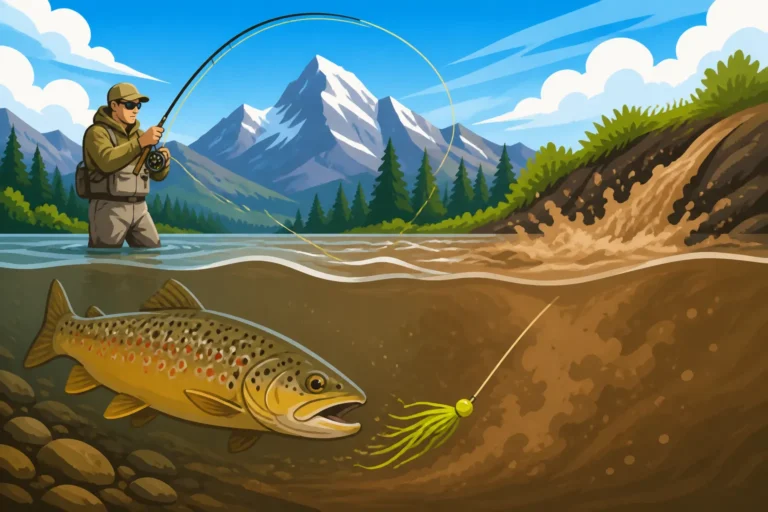
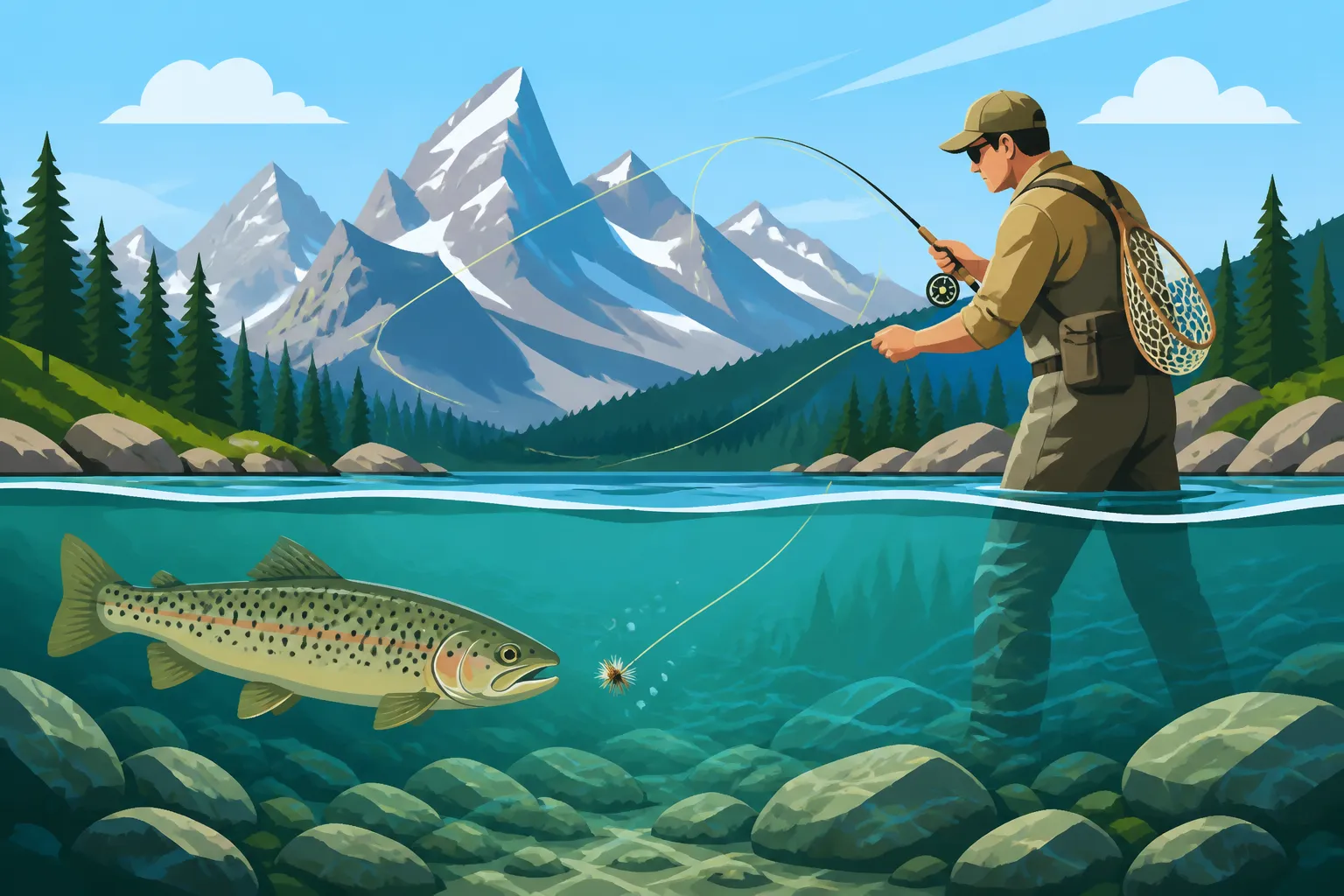
When presenting to a sighted fish, think "soft and subtle." Your cast should be smooth and controlled, avoiding any loud splashes or sudden movements of your fly line that could spook the fish. Often, this means making shorter casts, even if you could cast further, to ensure accuracy and a gentle landing. Try to lead the fish slightly, casting a few feet in front of its path, so your fly settles naturally before the fish arrives. This is especially true for delicate dry fly presentations.
Consider the angle of your cast carefully. Casting directly over a fish can be alarming, as the fly line might cast a shadow or land too heavily. Instead, try to cast slightly upstream or to the side, allowing your fly to drift into the fish's feeding zone as naturally as possible. This approach is similar to what's described in How to Fish Small Streams Without Spooking Fish, though adapted for the unique characteristics of lake fishing. Your goal is for the fly to appear as an easy, natural meal, not a strange object attached to a visible line.
Reading the Fish's Reaction
Once your fly is in the water, keep your eyes glued to the fish. Its reaction will tell you everything you need to know. Does it turn its head? Does it accelerate towards the fly? Or does it ignore it completely, perhaps even spooking? A subtle turn of the head or a slight shift in body position often indicates interest. If the fish follows but doesn't commit, it might be inspecting the fly, or it might be slightly wary.
Sometimes, a fish will simply flare its fins, indicating it's seen the fly but isn't interested, or perhaps has even been alarmed. This immediate feedback loop is invaluable. It teaches you what presentations work and which ones don't, allowing you to adjust quickly. Don't be discouraged by refusals; even a fish that follows and turns away has given you information. This real-time observation is a cornerstone of effective sight-fishing, whether you're after Brook Trout Fishing in Wyoming or trying for a trophy.
Adjusting Your Presentation
If your initial cast doesn't elicit a strike, don't give up! This is where thoughtful adjustment comes into play. First, consider the placement. Was it too far, too close, or off to the side? Try adjusting your casting distance or angle on the next attempt. Next, think about your fly choice. If the fish ignored a dry fly, perhaps switch to a small nymph, or vice versa. Maybe the size is wrong, or the color isn't quite right. Keep a diverse selection of flies available, easily accessible from your minimalist tackle kit.
You might also consider the retrieve. For dry flies, often no retrieve is best – let it drift naturally. For nymphs, a subtle twitch or slow retrieve can sometimes mimic natural insect movement. For streamers, a varied strip-and-pause retrieve can be effective. If the fish consistently spooks, it's time for more stealth. Lengthen your leader, drop down a tippet size, or try a different approach vector entirely. Remember, persistence and intelligent adaptation are the hallmarks of a successful sight-fisher in Wyoming's stunning, yet challenging, high mountain lakes. For those planning an epic adventure, consider checking out guides on How to Hike In and Fish a Backcountry Lake to get all the details on accessing these pristine waters.
Disclaimer
This article is for general informational purposes only and does not constitute professional advice. Laws, prices and regulations vary by location and change over time. Consult a qualified professional for guidance on your specific situation.