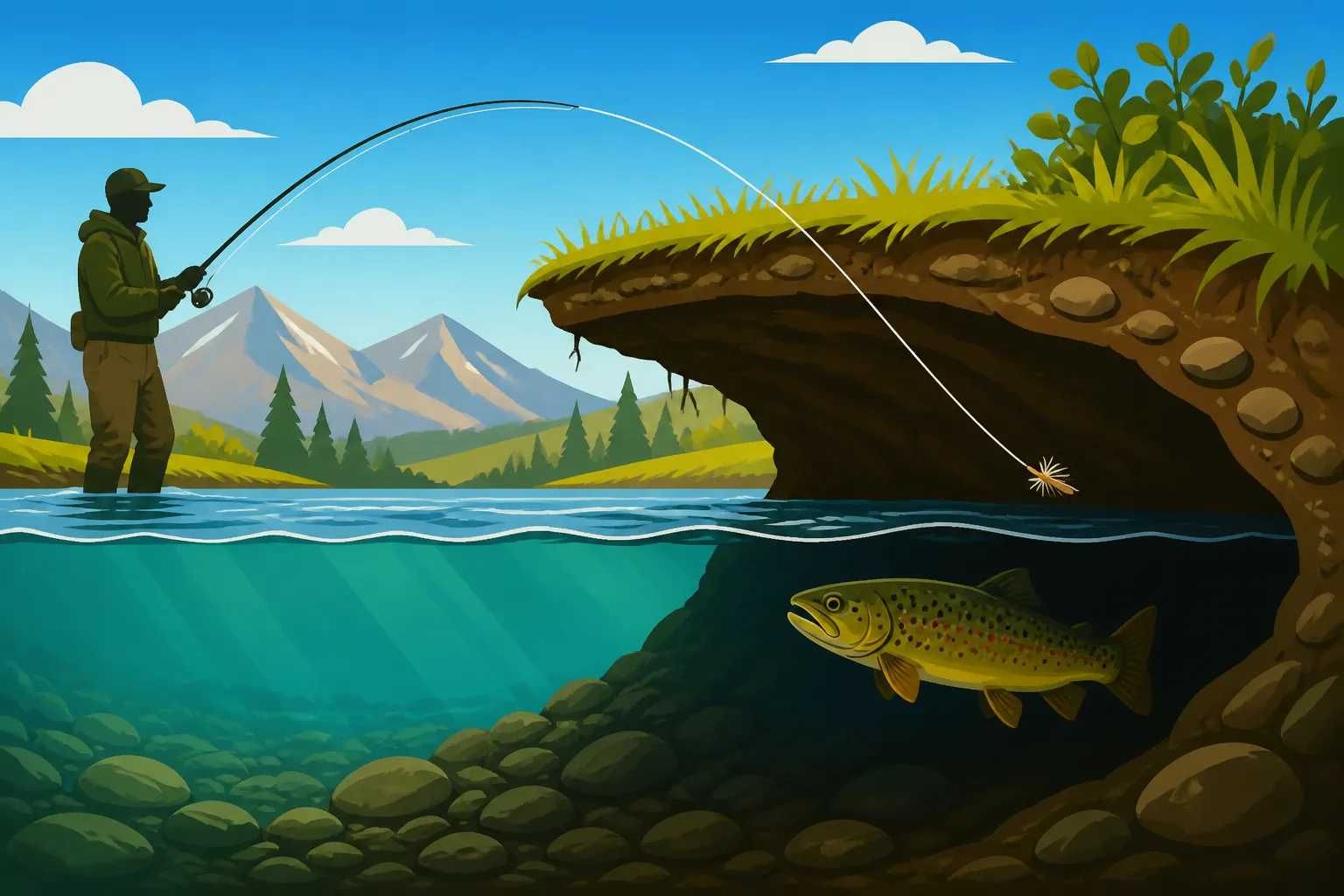
How to Fish an Undercut Bank
Oh, the elusive undercut bank! If you've spent any time fishing Wyoming's stunning rivers and streams, you've probably cast a hopeful line near one, only to come up empty, or worse, get hopelessly snagged. It's a common frustration, isn't it? Those shadowy hideouts look like perfect spots for a big trout, but actually getting your offering into the strike zone and extracting a fish can feel like cracking a secret code. This guide is here to decode those mysteries, giving you the insider tips and techniques to confidently and effectively fish undercut banks, turning those tricky spots into your most productive ones.
Understanding Why Undercut Banks Are Trout Havens
Let's be real, fish aren't just swimming around willy-nilly in the middle of a river, waiting to be caught. They're smart, and they're looking for prime real estate that offers comfort, safety, and a steady supply of food. Undercut banks provide all of this in spades, making them absolute magnets for trout, especially those bigger, wiser ones that have seen a few seasons go by. You see them along the North Platte River Fishing Guide or the quieter stretches of the Green River, beckoning you.
Shelter from Predators and Current
Imagine being a fish. You've got ospreys circling above, eagles perched in riverside cottonwoods, and maybe even a curious human shadow passing overhead. It's a dangerous world out there! An undercut bank offers crucial overhead cover, acting like a natural bunker. It's their safe space, a dark ceiling protecting them from aerial threats. They can sit just a few inches under the bank's edge and feel completely hidden.
Beyond predators, there's the relentless current. Fighting a strong current all day long is exhausting, and fish, like all creatures, are pretty energy-efficient. Undercut banks often create pockets of slower water directly underneath or just adjacent to the main flow. This provides a perfect ambush point where trout can hold comfortably with minimal effort, waiting for food to drift by. They can dash out into the current for a morsel and then slip right back into their calm, protected lair. It’s like a five-star hotel with room service for a trout. This is one of the key reasons that understanding How to Read Water When Trout Fishing is so vital, helping you spot these subtle current breaks.
A Buffet Line for Bugs
Now, let's talk about food. Undercut banks are culinary hotspots for trout. Think about it: the bank itself is teeming with life. Grasshoppers, ants, beetles, worms, and countless other terrestrial insects live in the soil and vegetation right above the water. A gust of wind, a clumsy step from a deer, or even just gravity can send these juicy morsels tumbling directly into the water, often right into the mouth of a waiting trout. It’s an easy meal, delivered right to their doorstep, without having to chase anything down in the fast current.
But it’s not just terrestrials. Undercuts also provide ideal habitat for aquatic insects. Nymphs, larvae, and scuds cling to the root systems and submerged structure beneath the bank, offering a continuous supply of protein. This combination of "drift-in" food from above and "resident" food from below means a trout in an undercut rarely goes hungry.
Thermal Regulation and Oxygen
Water temperature and oxygen levels are critical for trout survival, and undercuts can play a significant role in both. In the scorching Wyoming summer, when river temperatures can climb uncomfortably high, deeper undercuts often hold cooler water. The shade from the bank and the depth of the pocket act as a natural refrigerator, providing a welcome thermal refuge. Trout will gravitate to these cooler spots to avoid heat stress. This is particularly important on warmer days when you're fishing during Wyoming Summer Fishing: Peak Season Tips.
Conversely, in winter, a deeper undercut might offer slightly warmer water than the exposed main channel, especially if there's any groundwater seepage. The bank's structure, often reinforced by intricate root systems, can also create localized areas of higher oxygenation, another benefit for fish. It’s all about finding that optimal comfort zone, and undercut banks often fit the bill perfectly.
Essential Gear and Rigging for Undercut Bank Success
Fishing undercuts can be a delicate dance between precision and power. You need to be able to present your fly or lure accurately into a tight space, but also have the muscle to quickly bring a fish out before it can wrap you around submerged roots or snags. Having the right setup can make all the difference, transforming a frustrating experience into a rewarding one.
Rod, Reel, and Line Considerations
When it comes to fishing undercut banks, your rod length can be a critical factor. For general fly fishing on smaller, brushier streams, a shorter rod (say, 7.5 to 8.5 feet) might offer more maneuverability when casting in tight quarters with overhanging branches. However, on larger rivers like the Snake River, a longer rod (9 to 10 feet) can provide the extra reach needed for a good The Reach Cast and Roll Cast for Precision or to mend line effectively over complex currents, keeping your fly drifting naturally under the bank. My personal preference for most Wyoming trout streams is usually a 9-foot, 5-weight rod, which is a fantastic all-around option, but sometimes a 6-weight offers a bit more backbone for larger fish or heavier flies. If you're wondering about your specific setup, consider the Best Fly Rod Weight for Wyoming Trout Streams.
Your reel should be reliable with a smooth drag system, ready for those quick bursts of energy a hooked trout will inevitably make as it tries to dive back into its sanctuary. As for line, if you're fly fishing, a weight-forward floating line is versatile for most presentations. However, if you're deep nymphing or swinging streamers, a sink-tip leader or even a full sink-tip line might be more effective to get your offering down quickly and keep it there. For spin fishing, a sensitive medium-light rod paired with a good spinning reel spooled with 6-8 lb test monofilament or fluorocarbon is a great choice. The thinner diameter of fluorocarbon can also be less visible to spooky trout.
Lure and Fly Selection for Undercuts
The key to choosing the right lure or fly for an undercut bank is to mimic what the fish are already expecting to eat. This means thinking about terrestrials, nymphs, and small baitfish.
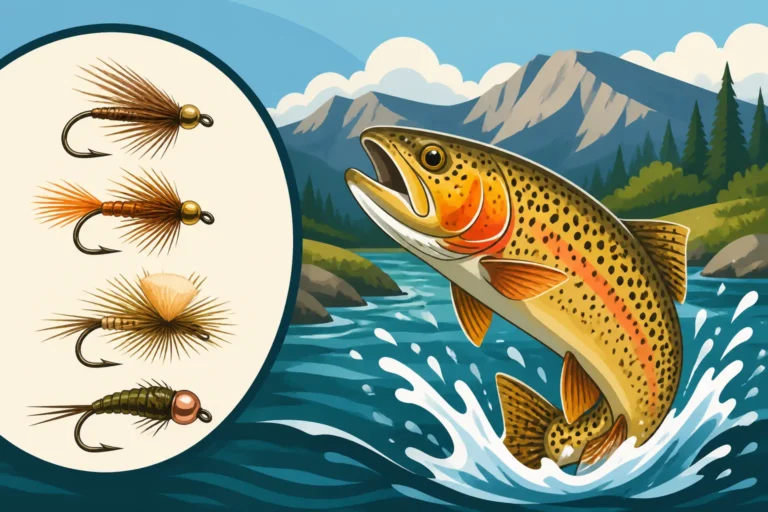
For fly anglers, a good general strategy is to start with a versatile nymph like a Pat's Rubber Legs, a Hare's Ear, a Prince Nymph, or a Copper John. These patterns imitate a wide variety of aquatic insects that reside in the river bottom and get dislodged into the current. If you're fishing a tailwater, specialized patterns described in Nymphing Techniques for Wyoming Tailwaters might be more effective. When terrestrials are active (especially mid-summer through fall), don't hesitate to tie on a foam hopper, beetle, or ant pattern. These are perfect for casting tight to the bank, as they naturally float, mimicking a bug that's just fallen in. For larger, aggressive trout, especially brown trout looking for a meal, a Streamer Fishing for Wyoming Brown Trout or a smaller Woolly Bugger in olive, black, or brown can be incredibly effective when stripped or swung through the dark recesses of an undercut. Remember, often the Best Wyoming Fly Patterns for Cutthroat Trout are ones that mimic the natural food sources.
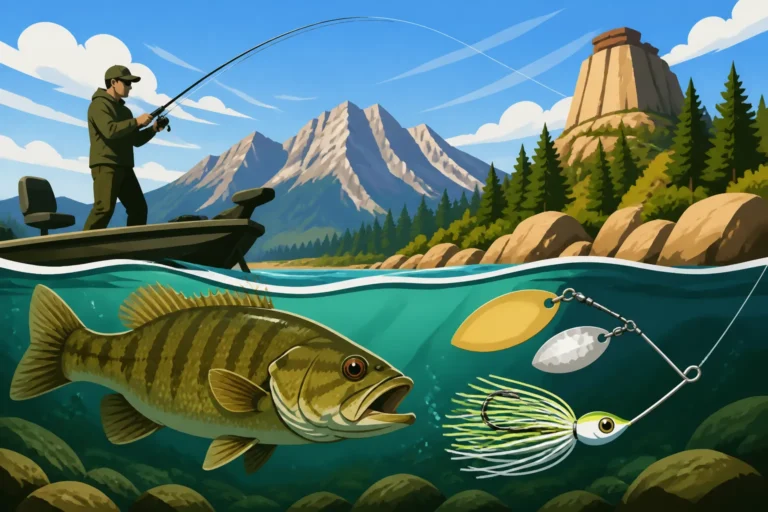
Spin anglers have a similar playbook. Small inline spinners (like Panther Martins or Mepps Aglias) in natural colors (gold, silver, black, brown) or those mimicking crawfish or minnows are excellent. Small jigs tipped with a grub or Gulp! worm, worked slowly, can also be deadly. Again, focus on presenting something that looks like an easy, natural meal that has either fallen in or is swimming along the bank. Small crankbaits that dive only a foot or two can also be very effective, especially those with a tight wobbling action.
Wading and Approach Strategies
Stealth is your superpower when fishing undercut banks. Trout in these spots are often wary, used to safety, and easily spooked. Your approach needs to be as subtle as possible.
- Approach from Downstream: Whenever possible, approach the undercut from downstream. This allows you to wade or walk upstream, presenting your fly or lure ahead of you. Fish naturally face upstream, so your approach from behind is less likely to spook them.
- Stay Low and Use Cover: Keep a low profile. Crouch, kneel, or use bankside vegetation (bushes, tall grass, boulders) to break up your silhouette. Avoid standing silhouetted against the skyline, especially if the sun is behind you, casting a long shadow over the water.
- Wade Softly: If you're wading, move slowly and deliberately. Shuffle your feet rather than stomping. Sudden vibrations travel surprisingly far through the water and can put fish down immediately.
- Consider the Current: The current can be your friend. In faster water, your presence might be masked by the natural noise and disturbance of the river. In slower, clearer water, you'll need to be even more cautious.
- Position for the Cast: Before you even cast, think about your position. You want to be able to make a precise, often short cast, and then manage your line effectively. This might mean getting into a slightly uncomfortable position, but it will pay off when you're putting your offering exactly where it needs to be. For example, if you're trying to fish an undercut bank on a particular river, check out maps or resources like How to Find a New Fishing Spot Using Wyoming Game and Fish Maps to scout out good access points.
Remember, the goal is to get your presentation into the fish's living room without them ever knowing you're there until it's too late.
Techniques for Presenting Your Bait, Lure, or Fly
This is where the rubber meets the road. Getting your offering into the tight, often turbulent, zone of an undercut bank requires specific casting and presentation techniques. It's not always about bombarding the water; often, it's about finessing your way in.
Upstream Approach: The Gentle Drift
The upstream approach is often the most effective and natural way to present to an undercut bank. You're essentially letting the current do the work for you, mimicking a natural food item drifting downstream.
Here's how it generally works:
- Position Yourself: Stand downstream and slightly out from the undercut you want to fish. You need to be far enough away not to spook the fish, but close enough to make an accurate cast.
- Cast Upstream and Across: Cast your fly or lure upstream and across the current, aiming to land it a few feet above the upstream edge of the undercut.
- Allow a Natural Drift: As your offering drifts downstream, let the current carry it naturally towards and then under the bank.
- Mend Your Line: This is crucial, especially for fly fishing. As the fly drifts, the different current speeds between your fly and your line can cause "drag," making your fly move unnaturally. Perform an upstream mend (a flip of the wrist to throw a loop of line upstream) to keep your fly drifting at the same speed as the current, maintaining a natural presentation. For spin fishing, carefully manage your retrieve to match the current speed, keeping just enough tension to feel a strike without pulling your lure unnaturally.
- Watch for the Take: Keep your eyes peeled for any subtle movement of your indicator (if fly fishing), a twitch in your line, or the slightest hesitation. Strikes under an undercut can be very soft, but they can also be explosive! Be ready to set the hook quickly.
This method is fantastic because it presents your offering to the fish from their natural feeding direction, making it much less suspicious.
Downstream Presentation: Tucking It In
While the upstream approach is often preferred, sometimes conditions or obstacles (like dense bankside brush) make a downstream presentation necessary or even advantageous. This method can be a bit trickier, as you're presenting to fish that are typically facing away from you, but it allows for very precise placement.
- Positioning: Stand upstream and slightly out from the undercut. You'll likely need to be a bit further away than with an upstream cast to avoid spooking fish.
- The Drop and Drift: Cast your fly or lure just beyond the downstream edge of the undercut, or even directly into the main current just above it. Allow the current to sweep your offering back towards the undercut, guiding it under the bank. This often works best with heavier nymphs or streamers that can sink quickly.
- Tucking It In: For spin fishing, you might make a short, precise cast directly at the opening of the undercut, letting your lure sink and then retrieving it slowly along the bottom of the bank. For fly fishing, you might use a roll cast or a specific "tuck cast" to get your fly under the bank with minimal line disturbance.
- Line Management: Keeping slack out of your line is paramount here. You need to feel the fish immediately if it strikes. Since the current is pushing your line away, constant micro-mends or slight tension with your rod tip are important.
This method can be especially good for fishing Where Trout Hide in Fast-Moving Water where they might be less likely to see you from downstream.
The Reach Cast and Roll Cast for Precision
These two casting techniques are invaluable when targeting undercut banks, especially in challenging environments.
-
The Reach Cast: This is a fly fishing cast designed to extend your drift and control line drag. Instead of letting your line fall straight onto the water, after your forward cast, you "reach" or sweep your rod upstream (or downstream, depending on the current) just before the fly lands. This puts a curve or S-bend in your line on the water, giving your fly a longer, drag-free drift. For undercuts, a reach cast allows your fly to drift naturally under the bank while the bulk of your line lands further out in slower water, buying you precious seconds of uninterrupted drift. Mastering this cast will drastically improve your success rate in complex currents around undercuts.
-
The Roll Cast: The roll cast is a lifesaver when you're fishing in tight quarters with limited backcasting room, which is often the case with heavily vegetated riverbanks and undercuts. Instead of a traditional backcast, you use the water tension to load your rod. You sweep your rod up and forward in a fluid motion, letting the loop of line roll forward over the water, propelling your fly to its target. It's perfect for sneaking a nymph or small streamer under a low-hanging branch or tight into the opening of an undercut where an overhead cast would be impossible. Many anglers learn this cast for Fly Fishing Techniques for Wyoming Trout Streams where trees and brush are common.
Common Challenges and Troubleshooting
Even with the best techniques, fishing undercut banks comes with its own set of frustrations. The very structure that makes them so attractive to fish also makes them difficult to fish. But don't despair! With a little patience and a few tricks, you can overcome these hurdles.
Snags and How to Avoid Them
Let’s be honest, snags are inevitable when fishing undercuts. The tangled root systems, fallen branches, and rocky bottoms that create these havens are also notorious fly and lure eaters. It’s part of the game. However, you can significantly reduce the frequency of snags.
- Keep Your Rod Tip High: Especially when drifting nymphs or lures, keeping your rod tip elevated can help lift your line and lure just enough to clear minor submerged obstacles.
- Quick Hook Sets: If you feel anything that isn't a fish, immediately lift your rod straight up. Sometimes you can "pop" your lure or fly free before it gets truly stuck.
- Use Weedless Options: For spin fishing, consider using weedless hooks on jigs or Texas-rigging soft plastics. This greatly reduces the chances of hooks catching on submerged wood.
- Lighten Up Your Weight (Sometimes): If you're constantly snagging on the bottom with nymphs, try using less weight or smaller split shot. The goal is to get your fly near the bottom, not necessarily bouncing on it.
- Angle of Attack: Consider the angle at which your line enters the undercut. If it’s too direct, you might be hitting the very back of the structure. A slightly more angled approach might allow your lure to skim past the snags.
- Expect to Lose Some Gear: The biggest troubleshooting tip? Accept that you will lose flies and lures. It's the cost of doing business in these highly productive, yet snag-filled, areas. Think of each lost fly as a tuition payment for catching that next trophy trout. It's often better to lose a fly trying to get into the fish's living room than to never get it there at all. For best practices when retrieving fish near snags, remember Catch-and-Release Best Practices for Trout.
Reading the Water for Hidden Undercuts
Not all undercuts scream "fish here!" Some are subtle, almost invisible unless you know what to look for. Becoming a keen observer of the water will help you spot these less obvious but potentially highly productive spots.
- Darker Water: A darker patch of water right along the bank, especially next to a lighter, faster current, often indicates deeper water or an overhead structure.
- Lack of Surface Disturbance: If the main current is choppy but a section right along the bank is unnaturally calm, it's a strong indicator of an undercut providing shelter from the flow.
- Overhanging Vegetation: Look for banks where grass, bushes, or tree roots extend horizontally over the water. This provides shade and cover, and often means there's a corresponding undercut beneath.
- Eroded Banks: Rivers constantly carve away at their banks. Look for sections where the bank appears to have been eroded underneath, leaving an overhang. This is particularly true in areas with softer soil or clay banks.
- Eddies and Swirls: Small eddies or subtle swirls right along the bank can indicate a current seam where water is flowing under a bank, creating a current break that fish love.
- Past Experience: Once you've found and fished a few undercuts, you'll start to develop an eye for them. Pay attention to the type of bank, vegetation, and current characteristics where you find fish, and look for similar spots elsewhere. Learning to identify these spots will help you fish How to Fish a Deep Pool for Big Trout more effectively, too.
When to Move On
It's tempting to pound a beautiful-looking undercut for an hour, convinced that a monster fish must be hiding there. But sometimes, even the most perfect-looking spot is empty, or the fish just aren't active. One of the most important lessons in fishing is knowing when to move on.
- Limit Your Casts: Fish an undercut thoroughly, but don't overdo it. A dozen well-placed casts or drifts are usually enough to determine if a fish is present and willing to strike.
- Vary Your Presentation: Before moving on, try varying your retrieve, the depth of your lure, or the fly pattern. Sometimes a slight change is all it takes to trigger a strike.
- Look for Other Signs: Are there any rises? Are other anglers catching fish nearby? What does the river generally look like? If the conditions don't seem right, even for a prime spot, it might be better to keep moving.
- Cover Water: True success often comes from covering a lot of water and efficiently fishing the active spots, rather than spending too much time on a single, unproductive hole. If an undercut isn't producing after a good effort, chalk it up to experience and find another one. Wyoming has countless miles of river, many of which hold incredible opportunities, so don't get hung up on just one spot!
Remember, fishing is as much about persistence and observation as it is about skill. By understanding why undercuts are prime habitat, choosing the right gear, mastering your presentation, and knowing how to troubleshoot, you'll be well on your way to unlocking the secrets of these fantastic fishing spots.
Here's a quick comparison of popular casting techniques for getting into those tricky spots:
| Casting Technique | Best Use Case | Key Advantage | Potential Drawback |
|---|---|---|---|
| Upstream Drift | Natural presentation into current breaks | Mimics natural food, less likely to spook fish | Requires good line mend, potential for drag |
| Downstream Tuck | Tight, low undercuts with limited upstream access | Allows precise placement in hard-to-reach spots | Fish are facing away, can be less natural-looking drift |
| Reach Cast | Extending drag-free drifts around complex currents | Maximizes drift time in tricky water | Requires good timing and coordination |
| Roll Cast | Overhanging trees/brush, no backcasting room | Excellent for tight quarters, efficient | Limited distance, primarily for fly fishing |
| Skipping/Slingshot | Very low overhangs, often with spinning gear | Gets lure deep under banks quickly | Can be inaccurate, risk of snags or hitting bank |
Disclaimer
This article is for general informational purposes only and does not constitute professional advice. Laws, prices and regulations vary by location and change over time. Consult a qualified professional for guidance on your specific situation.