Golden Trout Fishing in Wyoming
There's a certain magic to the idea of pulling a shimmering, vibrant gold fish from a crystal-clear, high-alpine lake. For many anglers, the elusive golden trout of Wyoming represents the pinnacle of high-country fishing, a quest that demands dedication, preparation, and a deep appreciation for wilderness. This guide aims to demystify the pursuit of this stunning species, offering insights into its habitat, identification, and the specialized techniques needed to successfully connect with these mountain gems.
The Allure of Wyoming's Golden Trout
For generations, the golden trout has held a near-mythical status among anglers. It's not just another fish; it's a living jewel, a reward for those willing to venture far beyond the beaten path. Its striking appearance and the arduous journey required to reach its secluded domain combine to create an angling experience unlike any other in the Cowboy State.
Why Golden Trout Capture Anglers' Hearts
Imagine casting a delicate fly onto a perfectly still, sapphire-blue lake nestled high in the mountains, the only sounds being the gentle whisper of the wind and the occasional splash of a rising fish. Then, a flash of brilliant orange and gold erupts from the water, a truly breathtaking creature. This is the experience of the golden trout. Their iridescent scales, often described as a sunrise caught in liquid, make them arguably one of the most beautiful fish in North America. Unlike the more commonly encountered rainbow or brown trout, which can be found in a wide variety of waters, golden trout thrive only in the most pristine, oxygen-rich, and incredibly cold environments. This extreme habitat makes them rare and deeply challenging to pursue, turning each successful catch into a profound memory. The sheer effort of reaching these remote lakes and streams, often involving multi-day backpacking trips through rugged terrain, imbues the experience with a sense of accomplishment that a roadside catch simply cannot match. It’s an adventure, a wilderness immersion, and a fishing trip all rolled into one unforgettable journey.
Their elusive nature also plays a huge role in their mystique. These fish aren't found in your local bait shop's pond or the easily accessible stretches of major rivers. They inhabit waters that often require significant physical exertion and navigational skill to reach. This inherent difficulty weeds out casual anglers, ensuring that those who do pursue golden trout are often the most dedicated and respectful stewards of the wilderness. The sense of discovery, of finding a hidden gem in an untouched landscape, adds another layer to their appeal. It's a testament to the wild beauty of Wyoming's backcountry, where such rare treasures still exist for those patient and determined enough to seek them out.
A Glimpse into Their Natural History and Origins
The story of how golden trout came to Wyoming is a fascinating tale of transplantation and adaptation. Native primarily to the high Sierra Nevada mountains of California, these distinct trout species were introduced to Wyoming's high-altitude waters through stocking efforts many decades ago. The initial introductions aimed to establish new game fish populations in waters that were otherwise barren of fish, due to natural barriers preventing native species from colonizing these remote, isolated lakes and streams. The success of these early stocking programs was largely due to the remarkable adaptability of golden trout to the cold, clear, and nutrient-poor conditions found in Wyoming's highest elevations. They found a perfect niche, thriving in environments that closely mimicked their native Californian ranges.
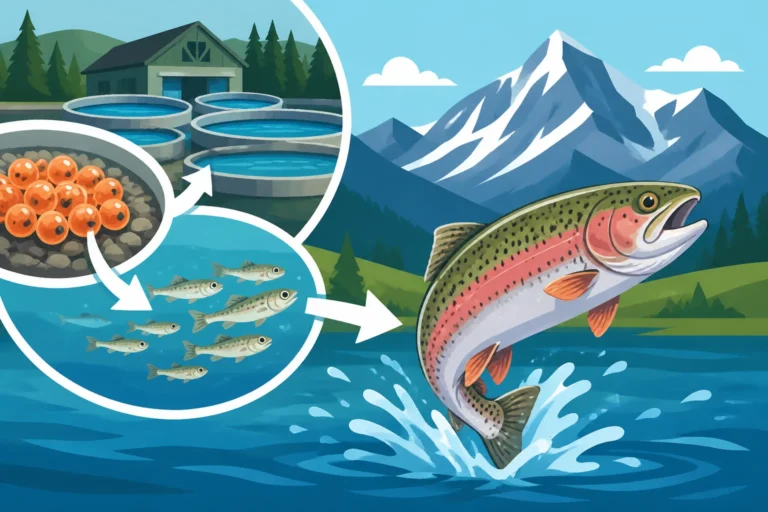
Today, many of Wyoming's golden trout populations are maintained through continued, albeit selective, stocking by the Wyoming Game and Fish Department, often involving incredible efforts like aerial stocking into some of the most inaccessible lakes. Other populations have become self-sustaining, reproducing naturally within their isolated drainages. This dual approach helps maintain a healthy distribution of golden trout while ensuring the genetic integrity of these unique populations. Understanding this history is crucial because it highlights the fragility of their existence in Wyoming; they are not native to these waters, and their continued presence relies on careful management and conservation. Their very existence in Wyoming's rugged landscape is a testament to both their resilience and the foresight of those who introduced them to these pristine, high-country havens.
Identifying Wyoming's Golden Trout
Before you head into the mountains, it’s important to know what you’re looking for. Wyoming is home to a diverse array of trout species, and while many are beautiful, none quite compare to the distinct visual flair of a true golden trout. Misidentification is common, especially with other trout that share similar habitats or colorations.
Key Physical Characteristics to Look For
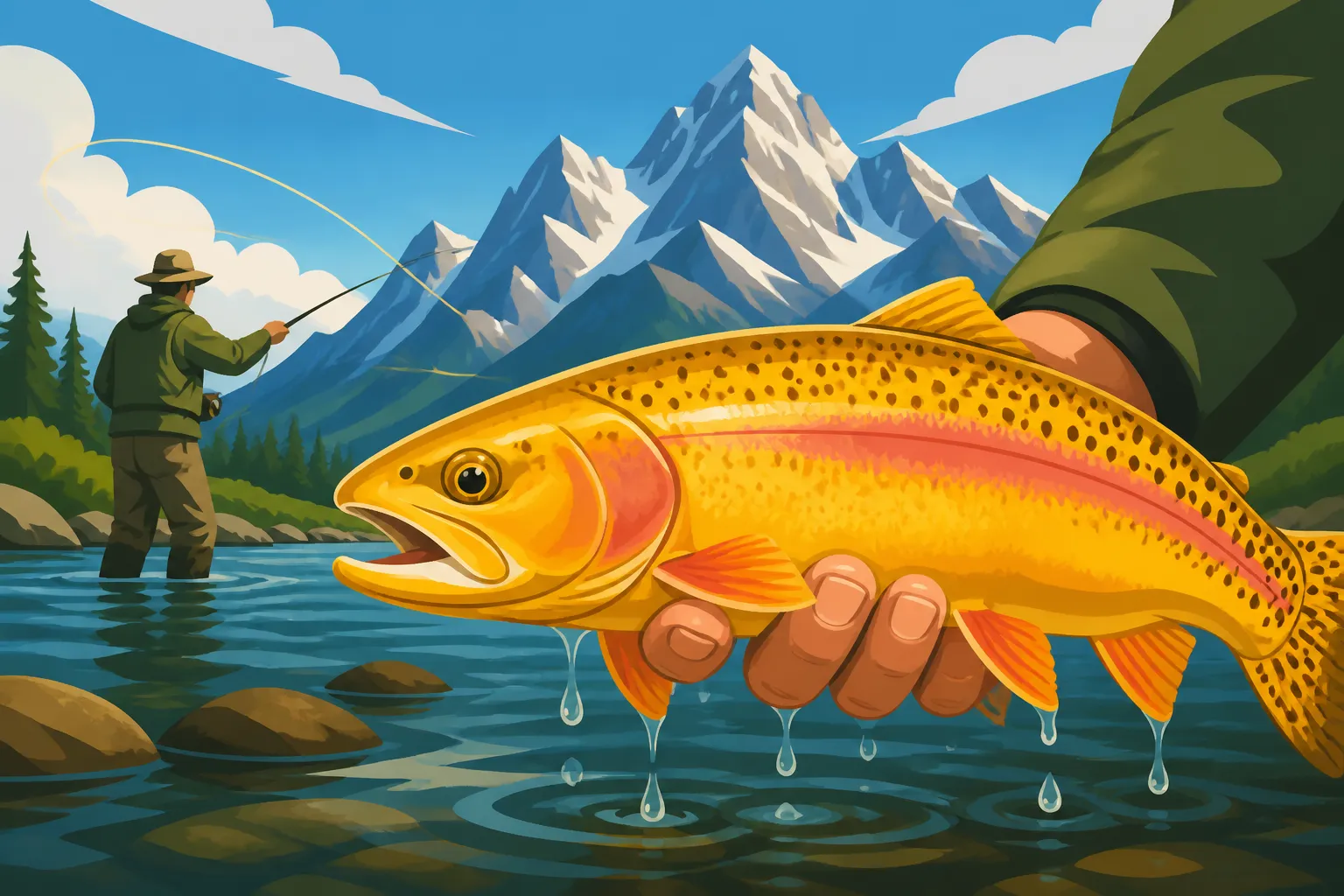
When you finally land a golden trout, you’ll know it instantly by its unparalleled beauty. The most striking feature is, of course, its vibrant coloration. The flanks are typically a brilliant golden yellow to a deep, burnished copper, often fading to a paler gold or creamy white on the belly. Along the lateral line, a vivid, crimson-red band usually runs from gill to tail, intensifying towards the operculum (gill cover) and often breaking into vertical parr marks, even in adult fish. These parr marks, which are dark, oval spots typically seen in juvenile trout, persist in adult golden trout, offering a key identification marker. The dorsal fin and tail often have a soft, olive-green hue, sometimes speckled with dark spots, and the lower fins (pelvic and anal) are frequently edged with white or orange.
Another subtle but important characteristic is their scales. Golden trout have incredibly small, almost imperceptible scales, which gives their skin a smooth, velvety appearance compared to the larger-scaled rainbow or cutthroat trout. Their head is relatively small, and the mouth does not extend beyond the eye. While they might resemble a rainbow trout at first glance due to the lateral band, the intensity of the golden-orange coloration, the persistent parr marks, and those tiny scales are definitive indicators. Taking a moment to appreciate these intricate details is part of the joy of catching such a special fish.
Golden Trout vs. Other Wyoming Trout Species
Distinguishing golden trout from other species you might encounter in Wyoming's high country is essential, not only for identification purposes but also for respecting specific regulations or conservation efforts. Anglers often confuse them with rainbow trout, which share a red lateral stripe, or even cutthroat trout, especially if the cutthroat exhibits unusually bright colors. However, several key differences set the golden trout apart.
Rainbow trout, while sporting a pink or red lateral band, typically lack the intense, uniform golden-yellow body coloration of a true golden. Their scales are also noticeably larger, and adult rainbow trout generally do not retain prominent parr marks. Cutthroat trout, Wyoming's native state fish, are best identified by the distinctive red or orange slash marks under their jaw, which golden trout completely lack. While some cutthroat subspecies, like the Yellowstone cutthroat, can have quite vibrant colors, they rarely achieve the specific golden hue and are often more olive or bronze. Brook trout, another species found in high-altitude waters, are much darker, with distinct worm-like patterns (vermiculations) on their backs and square tail, along with white leading edges on their lower fins, which contrast sharply with the golden's appearance. By paying close attention to these details, you can confidently identify your catch.
Here’s a quick comparison table to help you differentiate:
| Feature | Golden Trout | Rainbow Trout | Cutthroat Trout | Brook Trout |
|---|---|---|---|---|
| Body Color | Brilliant golden-yellow to copper | Silvery, often with pinkish sheen | Olive-green, bronze, or yellowish | Dark olive to black, mottled |
| Lateral Band | Vivid crimson-red, often strong | Pink to red, less intense gold | Absent or faint | Absent |
| Parr Marks | Often present, even in adults | Usually absent in adults | Usually absent in adults | Absent |
| Jaw Slash | Absent | Absent | Present (red/orange under jaw) | Absent |
| Scales | Very small, almost imperceptible | Larger, clearly visible | Medium-sized | Very small |
| Dorsal/Tail | Often olive, some spots | Heavily spotted, clear tail | Variable spotting, often on tail | Vermiculated (worm-like) patterns |
| Lower Fins | Yellowish, sometimes white-edged | Clear or faint, no distinct edge | Clear or faint | White leading edge, often orange/red |
| Habitat Focus | High-alpine lakes/streams (Wyoming) | Rivers, lakes, streams | Rivers, lakes, streams (native) | Cold, clear mountain streams/lakes |
Where Wyoming's Golden Trout Call Home
If you’re looking to find golden trout in Wyoming, you need to set your sights high—literally. These remarkable fish are not found in roadside ponds or easily accessible river stretches. Their very existence is tied to the most remote and pristine corners of the state’s mountainous wilderness. Understanding their preferred environment is the first step in planning your expedition.
The Exclusive High-Alpine Habitat
Golden trout are true specialists when it comes to habitat. They thrive in environments that would be considered extreme for most other fish species. Their strong preference is for high-alpine lakes and streams, typically found at elevations well above 9,000 feet, and often closer to 10,000 or even 11,000 feet. These waters are characterized by their exceptional clarity, frigid temperatures year-round, and often limited nutrient availability. The short growing season at these altitudes means that food sources, primarily aquatic insects and some terrestrial insects that fall into the water, can be sparse. This explains why golden trout, while vibrant, rarely grow to monstrous sizes, with a foot-long fish often considered a respectable trophy. Their adaptation to these harsh conditions is a testament to their resilience and unique evolutionary path.
The isolation of these waters is also a critical factor. Many golden trout lakes are nestled in cirques, carved out by glaciers, and are often situated above natural barriers like waterfalls that prevent other fish species from migrating upstream. This isolation helps maintain the genetic purity of golden trout populations by limiting hybridization with other trout, particularly rainbow trout, which can lead to "cutbows" or other mixed strains. Without this natural separation, the distinct characteristics of golden trout could be diluted. The pristine nature of their environment is also key; these waters are typically far from any human development, meaning they are free from pollution and habitat degradation, preserving the delicate balance these fish require. It's a true wilderness experience to fish for them, and the journey itself becomes as much a part of the reward as the fish you hope to catch.
Key Mountain Ranges and Wilderness Areas
When you think of golden trout in Wyoming, your mind should immediately turn to the state's most rugged and highest mountain ranges. The Wind River Range stands out as perhaps the premier destination. This vast and dramatic range, largely encompassed by designated wilderness areas like the Bridger-Teton National Forest and Shoshone National Forest, is dotted with thousands of lakes, many of which are perfect golden trout habitat. Here, the sheer scale of the wilderness means that while some lakes are well-known, countless others remain largely unfished, waiting for the adventurous angler. Backpacking into the Wind Rivers often requires multi-day excursions, and careful planning for navigation and supplies. Wyoming's High-Alpine Lakes Worth the Hike are predominantly found in these remote areas.
Beyond the Wind Rivers, other ranges also hold golden trout populations, though perhaps in fewer numbers or less widespread distribution. The Absaroka Range, particularly its northern sections bordering Yellowstone National Park, and portions of the Gros Ventre Range can also be productive. These areas share the common characteristics of high elevation, challenging access, and pristine water quality. It's crucial to remember that precise locations for golden trout are often closely guarded secrets by those who find them. Part of the adventure is the research and exploration involved in identifying potential waters. Consulting detailed topographic maps, talking with experienced backpackers (if you can find them!), and studying the Wyoming Game and Fish Department's stocking records (though these are often generalized to protect specific spots) are all part of the detective work. Always be prepared for demanding hikes and sudden weather changes when venturing into these majestic, yet unforgiving, landscapes.
Specific Lakes and Drainages (General Examples)
While giving away exact, secret golden trout locations would be against the spirit of the pursuit (and probably earn me some serious side-eye from seasoned high-country anglers!), I can speak to the types of places where you'll have success. Think of the highest lake basins in the Wind River Range, where the treeline begins to give way to tundra and barren rock. Many of the lakes in the Bridger Wilderness and Popo Agie Wilderness areas are prime candidates. Look for names that suggest high elevations or remote access, often requiring trails that gain thousands of feet in elevation over several miles. Lakes that are the headwaters of major drainages, fed by snowmelt and small, unnamed rivulets, are often ideal.
Specific drainages within these mountain ranges, like those feeding the upper portions of the Green River or the Wind River, contain numerous high-alpine lakes that have been historically stocked with golden trout. You’ll find them in those classic, bowl-shaped glacial cirques, often with depths that can surprise you given their seemingly small surface area. Sometimes, a series of lakes connected by short, steep streams will contain golden trout, offering opportunities to fish multiple spots in a single drainage. It's not uncommon to find a deep sapphire lake nestled against a glacier-carved granite wall, completely devoid of other anglers, where the golden trout thrive in solitude. Remember, the journey to these spots is often half the adventure, and arriving at a pristine, uncrowded lake after a challenging hike is an unparalleled experience in itself.
Preparing for Your Golden Trout Expedition
Embarking on a golden trout expedition isn't like a casual drive to a local fishing hole. It’s a serious undertaking that requires meticulous planning, the right gear, and a solid understanding of wilderness ethics. You're heading into some of the most remote and challenging environments Wyoming has to offer, and being unprepared can turn an adventure into a dangerous situation.
Essential Gear for Backcountry Fishing
When packing for a golden trout trip, every ounce counts. You’ll likely be carrying everything on your back for days, so lightweight, versatile gear is paramount. For fishing, a lightweight fly rod (a 2-weight to 4-weight is ideal) with a matching reel and floating line is perfect for delicate presentations. If you prefer spin fishing, an ultra-light spinning rod and reel combo, spooled with 4-6lb test line, will serve you well. A small selection of specialized flies or micro-lures is crucial – leave the heavy tackle box at home! Beyond the fishing gear, your backpacking essentials are just as vital. This includes a high-quality, lightweight tent or shelter, a sleeping bag rated for cold mountain nights (even in summer!), and a compact cooking stove with fuel. Food should be calorie-dense and lightweight, like dehydrated meals. Don't forget a reliable water filter or purification tablets, as you'll be relying on natural water sources.
Beyond the basics, think about navigation and safety. A GPS device or a smartphone with downloaded offline maps (plus a power bank), coupled with traditional topographic maps and a compass, are non-negotiable. Headlamps, a first-aid kit, a multi-tool, and a bear canister or bear bag system for food storage are also essential. Layers of clothing are a must, as mountain weather can change dramatically in minutes. Think moisture-wicking base layers, insulating mid-layers, and a waterproof/windproof outer shell. Ordering a reliable water filter or a new pair of wading boots from Amazon before your trip can save you a lot of hassle. Remember, the goal is to be comfortable and safe enough to enjoy the fishing, not to be weighed down by unnecessary items. For a more detailed look at what to bring, check out What Gear to Pack for a Backcountry Fishing Trip.
Permits, Regulations, and Conservation
Before you even think about lacing up your hiking boots, you need to make sure you're legally prepared. Every angler in Wyoming, resident or nonresident, needs a valid Wyoming fishing license. This isn't just a formality; it's what funds the conservation efforts that keep these fisheries healthy. Nonresidents have various options, from annual licenses to multi-day permits, so choose what best fits your trip length. It's worth looking into Wyoming Fishing License Guide for Nonresidents and Wyoming's Annual, Daily and Five-Day License Options to understand your choices. Beyond the fishing license, if you plan to enter a designated wilderness area, you might need a specific wilderness permit, typically obtained from the local Forest Service or Bureau of Land Management office. These permits are usually free but serve to track usage and sometimes limit numbers to protect fragile ecosystems. Always check with the specific ranger district for the area you plan to visit.
Understanding and adhering to the Wyoming Fishing Regulations Every Angler Should Know is paramount, especially in sensitive high-alpine environments. Many golden trout waters are managed under special regulations, often requiring catch-and-release only or specific lure/bait restrictions (e.g., artificial flies and lures only, barbless hooks). The goal of these rules is to protect these unique and often slow-growing populations. Fishing Wyoming's Wilderness and Backcountry Lakes provides additional context. More than just following the law, embracing a strong conservation ethic is vital. This means practicing "Leave No Trace" principles: pack out everything you pack in, minimize your impact on vegetation, dispose of human waste properly, and respect wildlife. Golden trout depend on pristine environments, and it's our responsibility as anglers to keep them that way for future generations.
Physical Preparation and Safety Considerations
A golden trout trip is as much a physical challenge as it is an angling adventure. Many of the prime golden trout lakes require strenuous hiking, often involving significant elevation gain over uneven, rocky, or snow-covered terrain. If you're planning a multi-day trip, you'll be carrying a heavy pack at high altitudes, where the air is thinner. Therefore, a good level of physical fitness is not just recommended, it's essential. Start a training regimen well in advance: hiking with a weighted pack, cardiovascular exercise, and strength training will make your trip far more enjoyable and safer. Ignoring this can lead to exhaustion, injury, and a miserable experience instead of a memorable one.
Safety in the backcountry extends beyond physical fitness. Mountain weather is notoriously unpredictable. A sunny morning can quickly turn into a thunder and lightning storm, complete with hail or even snow, even in the middle of summer. Always check the forecast before you go, but be prepared for anything. Proper layering of clothing is your best defense against rapidly changing conditions. Wildlife encounters are also a possibility; you’ll be in bear country, so know how to store your food, carry bear spray, and understand how to use it. Finally, emergency planning is critical. Let someone know your detailed itinerary, including your planned route and return date. Have a way to communicate in an emergency, such as a satellite messenger, as cell service is non-existent in much of Wyoming's high country. A twisted ankle 10 miles into the wilderness can become a life-threatening situation without proper planning and communication.
Masterful Techniques for Alpine Goldens
Golden trout, given their unique habitat and often wary nature, require a more nuanced approach than your average stocked rainbow. Their diet largely consists of terrestrial insects, small aquatic invertebrates, and zooplankton, which should guide your fly and lure selection. Stealth and presentation are key in the crystal-clear, shallow waters they often inhabit.
Fly Fishing Strategies for Alpine Lakes
Fly fishing is arguably the most rewarding and often the most effective method for golden trout in their high-alpine homes. These fish are generally not very selective when presented with a natural-looking offering, but your presentation needs to be spot-on. A lightweight fly rod (2-weight to 4-weight) allows for delicate casts and makes even a modest-sized golden trout feel like a true fighter. For flies, focus on patterns that imitate the food sources available in these environments. Small dry flies are often excellent, especially during calm periods or when you observe fish rising. Think ants, beetles, small grasshoppers (terrestrials), or tiny caddis and mayfly patterns. A size 16-20 Adams or a small parachute ant can be deadly. These fish spend a lot of time looking up, particularly after an evening hatch or when winds blow insects onto the water surface.
When fish aren't rising, nymphs and emergers fished just below the surface or deeper can be highly effective. Patterns like a zebra midge, small prince nymph, or a tiny pheasant tail nymph in sizes 18-22 are usually a good bet. Try a dry-dropper rig, using a buoyant dry fly to suspend a small nymph beneath it; this allows you to cover multiple depths simultaneously. In deeper sections or around structure, a small streamer, like a size 12-16 Woolly Bugger in black or olive, can entice larger, more aggressive fish. Always approach the water stealthily, as the clear water and lack of cover make golden trout incredibly wary. Cast with accuracy, allowing your fly to drift naturally without drag. Often, the fish are holding near drop-offs, submerged rocks, or the inlets/outlets of the lake. For a deeper dive into general tactics, you can explore Fly Fishing Techniques for Wyoming Trout Streams, many principles of which apply to stillwater golden trout as well.
Spin Fishing Approaches for High-Elevation Waters
For those who prefer spin fishing, an ultra-light setup is crucial for golden trout. A rod in the 5-foot to 6-foot range, paired with a small spinning reel spooled with 2-4 pound monofilament or fluorocarbon line, will give you the necessary finesse and casting distance. Heavy lures will spook these fish and are generally too aggressive for their delicate feeding habits. Instead, opt for small spinners (like a Mepps Aglia or Panther Martin in sizes 0-2), tiny spoons (such as a 1/16 oz or 1/8 oz Kastmaster or Little Cleo), or micro-jigs. Colors that mimic natural insect larvae or small baitfish, like silver, gold, black, or olive, tend to be most effective. Many of these specialized small lures can be found on Amazon, making it easy to stock up before your trip.
Presentation is key here, just as it is with fly fishing. Cast accurately towards likely holding spots—drop-offs, rocky points, submerged structure, or areas where stream inlets bring in fresh water and food. Retrieve your lure slowly and steadily, giving it just enough action to entice a strike without appearing unnatural. Sometimes, a stop-and-go retrieve can trigger a反應from wary fish. In very clear water, consider adding a small fluorocarbon leader (4-6 lb test) to your main line to make your presentation even more subtle. Remember that golden trout are not power-feeders; they often inspect an offering before committing. If you're getting short strikes or follows without hook-ups, try downsizing your lure or slowing your retrieve even further. A good pair of polarized sunglasses will help you spot cruising fish and identify underwater structure, giving you a distinct advantage.
Reading the Water in Mountain Environments
Successfully finding golden trout often comes down to your ability to "read" the water. In high-alpine lakes and streams, this means understanding where fish are likely to hold, feed, and find refuge. The incredibly clear water is both a blessing and a curse: you can often see the fish, but they can definitely see you. Start by looking for structure. Rocky points, submerged boulders, and fallen logs offer ambush points and protection from predators. Drop-offs where shallow water suddenly plunges into deeper sections are prime locations, as fish can quickly move between feeding zones and safety. The inlets and outlets of a lake are also critical, as moving water often concentrates food and provides higher oxygen levels.
Wind-blown shores can be surprisingly productive. The wind pushes terrestrial insects, like ants and beetles, off the surrounding banks and into the water, creating a natural buffet line for trout. Observing the water for surface activity is paramount; if you see fish rising, it’s a clear indication they are feeding on insects at the surface, and dry flies will be your best bet. If there's no visible activity, assume they are feeding subsurface. Look for subtle movements near the bottom or along underwater ledges. Pay attention to how the light hits the water; early morning and late evening often provide the best conditions for both sight-fishing and trout activity. Knowing how to interpret these subtle cues will dramatically increase your chances of success. To hone your skills further, take a look at How to Read Water When Trout Fishing for general principles that are highly applicable to these unique high-country settings.
Timing Your High-Country Golden Trout Quest
Successfully targeting golden trout in Wyoming is heavily dependent on timing. Their high-altitude habitat means they are subject to extreme seasonal changes, and the window of opportunity for accessible, productive fishing is often much shorter than for other trout species in lower elevations. Getting the timing right can make all the difference between an epic trip and a frustrating trek.
The Short Window of Opportunity
The most significant factor influencing when you can fish for golden trout is the snowpack and ice-out schedule in the high country. These lakes are typically locked under several feet of ice and snow for much of the year, from late fall through late spring, and sometimes even into early summer. The prime season for golden trout fishing generally begins after ice-out, which can occur anywhere from late June to mid-July, depending on the elevation of the lake and the severity of the winter's snowpack. In years with heavy snow, trails to these lakes might not even be passable until late July. Once the ice is gone, the season usually extends through September, before the first heavy snows of autumn begin to close off access again. This gives you a relatively short, often 2-3 month, window to plan your adventure.
Early season (just after ice-out) can be fantastic, as the fish are often very hungry after a long winter and can be less wary. However, access can be challenging due to residual snowdrifts and muddy, wet trails. Mid-summer (August) offers the most reliable weather and easier access, but the fish might be a bit more selective as they've seen more angling pressure. Late season (September) can be a magical time, with crisp air, changing leaves, and often fewer crowds, but you run a higher risk of encountering early winter storms. Always check current conditions and forecasts for the specific mountain range you plan to visit, as conditions can vary wildly year to year and even within different drainages of the same range. For a broader overview of seasonal fishing, you might find insights in Wyoming Fishing Seasons Month by Month, though remember to factor in the extreme elevation for golden trout.
Daily Patterns and Weather Impacts
Even within the short summer season, daily patterns and local weather conditions significantly influence golden trout activity. Generally, the early morning and late evening hours tend to be the most productive. During these times, the intense high-altitude sun is less direct, water temperatures are often cooler, and insect activity (especially terrestrial insects and midge hatches) is at its peak. As the sun climbs high and warms the shallow water, golden trout tend to retreat to deeper, cooler sections of the lake or seek refuge in the shade of rocks and undercut banks. Fishing during the midday can still yield results, especially if you focus on these deeper areas with nymphs or small streamers, but the bite often slows considerably.
Weather fronts can also play a major role. A low-pressure system moving in, often accompanied by cloud cover or light rain, can sometimes trigger increased feeding activity. Conversely, a strong cold front or a sudden drop in temperature can temporarily shut down the bite. Thunderstorms are a common occurrence in the mountains during summer afternoons, and while they can sometimes precede a good bite, they also pose a significant safety risk. Always be prepared to seek shelter if lightning is in the forecast. High winds can make casting challenging, but they can also blow terrestrial insects onto the water, creating excellent dry fly opportunities on the downwind shore. Pay attention to the subtle changes in weather and light; these are often the cues that dictate when golden trout will be most active. Just like with fishing Yellowstone Lake, Best Time of Day to Fish Yellowstone Lake, similar principles of dawn and dusk apply to golden trout in the high country.
Preserving Wyoming's Golden Trout Legacy
The opportunity to pursue golden trout in Wyoming's pristine backcountry is a privilege, and with that privilege comes a profound responsibility to protect these unique fish and their fragile habitats. The future of golden trout fishing relies entirely on thoughtful conservation efforts and a commitment to ethical angling practices by everyone who ventures into their domain.
Conservation Efforts and Challenges
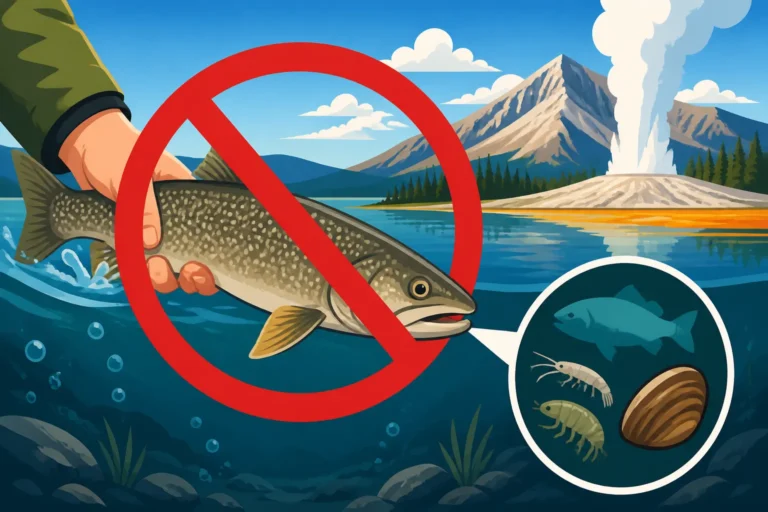
Wyoming's golden trout populations face a unique set of conservation challenges. Because they are not native to these waters, their genetic purity can be threatened by hybridization with other introduced trout species, particularly rainbow trout, if those species are inadvertently or illegally introduced into golden trout waters. This hybridization can dilute the distinct genetic traits that define the golden trout, leading to a loss of a truly unique fish. Climate change also poses a long-term threat. As temperatures rise, even marginally, the cold, oxygen-rich waters that golden trout depend on could become less suitable, potentially shrinking their available habitat. Additionally, while most golden trout waters are remote, increased recreational use of the backcountry can lead to localized habitat degradation if not managed carefully.
The Wyoming Game and Fish Department plays a crucial role in mitigating these challenges. They actively manage golden trout populations through selective stocking programs, often collecting brood stock from existing pure populations and then meticulously stocking new or existing high-alpine lakes. This involves incredible logistical efforts, sometimes using helicopters to reach the most inaccessible locations, ensuring new populations are established in suitable, isolated waters. They also implement specific fishing regulations, such as special bag limits (often catch-and-release) and tackle restrictions (artificial flies and lures only), to protect these sensitive fisheries from overfishing. Supporting these efforts, whether through purchasing your license or adhering to regulations, is vital for the continued existence of this magnificent species in Wyoming.
Ethical Angling and Sustainable Practices
As anglers, our individual actions have a direct impact on the health and sustainability of golden trout populations. Practicing catch-and-release is perhaps the single most important ethical consideration when fishing for golden trout. While keeping a fish for a meal is often part of the angling experience, given the slow growth rates and often fragile nature of these high-altitude populations, releasing them unharmed ensures they can reproduce and contribute to the fishery for years to come. When practicing catch-and-release, it's essential to use barbless hooks to minimize injury, and to handle the fish as little as possible. Keep the fish in the water, use wet hands if you must touch it, and release it gently, allowing it to recover before swimming away. This is covered in more detail in Catch and Release Best Practices for Trout.
Beyond handling fish, adhering strictly to Leave No Trace principles is fundamental to preserving the golden trout's pristine habitat. This means packing out all trash, including discarded fishing line and leader material. Minimize your impact on vegetation by staying on established trails and campsites. Dispose of human waste and fish entrails properly, well away from water sources and trails. Respect wildlife by observing from a distance and never feeding animals. By being a responsible and ethical angler, you contribute directly to the long-term health of Wyoming's golden trout fisheries and ensure that future generations can experience the same profound joy of connecting with these golden gems in their spectacular mountain homes. The wilderness experience itself is enhanced when we leave no trace of our passage.
Disclaimer
This article is for general informational purposes only and does not constitute professional advice. Laws, prices and regulations vary by location and change over time. Consult a qualified professional for guidance on your specific situation.