Fly Fishing vs Spin Fishing on Wyoming Rivers
One of the biggest head-scratchers for anyone looking to fish Wyoming's incredible rivers, especially if you're new to the scene or trying a different approach, is deciding between fly fishing and spin fishing. Both methods have passionate advocates and their own unique learning curves and rewards. This guide aims to cut through the confusion, helping you understand the fundamental differences, practicalities, and optimal scenarios for each, so you can make the best choice for your next river adventure.
Understanding the Fundamentals of River Fishing
Before we dive into the nitty-gritty of each method, it's really helpful to grasp what sets them apart at a foundational level. Many folks assume it's just about the type of bait or lure, but it's much more about the technique of presenting that bait or lure, and how the entire system of your rod, reel, and line works together to achieve that presentation. This distinction deeply impacts your approach to a river, the fish you target, and even the "feel" of the experience.
The Core Difference: Weight and Presentation
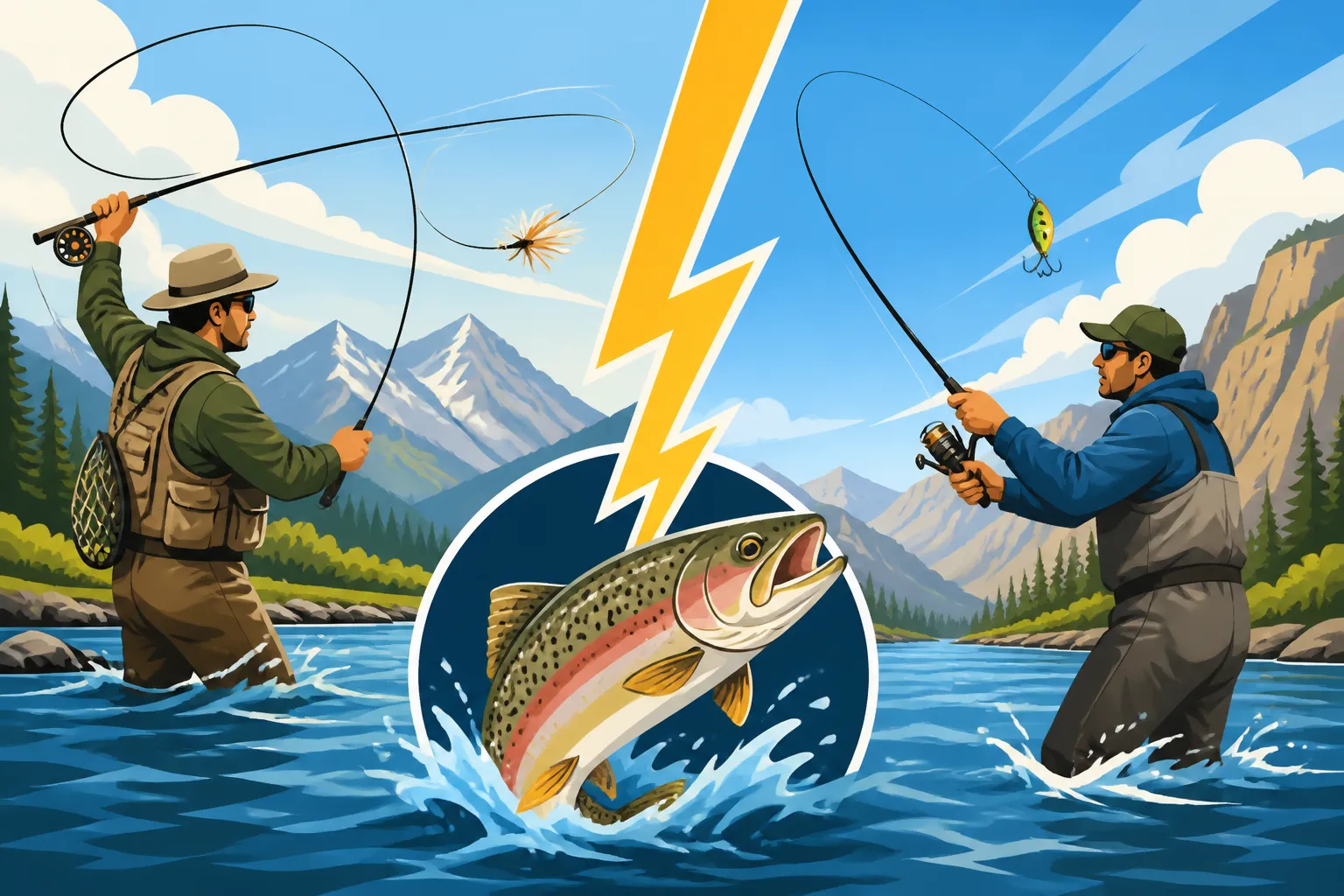
At its heart, the primary difference between fly fishing and spin fishing boils down to where the weight is in your casting system and how that weight is used to present your offering to the fish. In spin fishing, the weight is typically built into the lure or bait itself. You cast a heavy object, and the light fishing line simply follows. This makes for straightforward casting, often allowing for significant distance and ease of use, especially for beginners. It's a very direct approach.
Fly fishing, on the other hand, is a whole different ballgame. Here, the "lure" – the fly itself – is virtually weightless. Think about it: a tiny feather and hook wouldn't cast far on its own. So, the weight actually comes from the specialized, heavy fly line. You're not casting the fly; you're casting the line, and the fly just goes along for the ride. This creates a much more delicate, nuanced presentation, mimicking natural insects on the water or small baitfish with incredible precision. This fundamental difference shapes everything from your gear choices to your casting motion and how you "read" the water.
Why Technique Matters on Wyoming Rivers
Wyoming's rivers are incredibly diverse, from the wide-open, slow-moving stretches of the North Platte to the fast-flowing, boulder-strewn sections of the Snake River. This varied landscape means that a "one-size-fits-all" approach rarely yields consistent results. Understanding the underlying mechanics of fly fishing and spin fishing allows you to adapt. For instance, in a crystal-clear, slow-moving spring creek, a delicate fly presentation is often paramount to avoid spooking wary trout. Conversely, when you need to cover a lot of water quickly or get a heavier lure down to deep-holding fish in a turbid river, spin fishing might be the more effective tool.
Beyond just catching fish, the choice of technique also influences your interaction with the environment. Fly fishing is often seen as a more immersive experience, demanding a deeper understanding of entomology and aquatic ecosystems. Spin fishing, while perhaps more straightforward mechanically, still requires keen observation of fish behavior and habitat. Both methods, when practiced thoughtfully, foster a profound connection with Wyoming's wild places. It's not just about what you use, but how you engage with the river itself.
The Art of Fly Fishing
Fly fishing often conjures images of graceful casts and serene mountain streams. While it certainly embodies an aesthetic, it's also a highly effective and deeply engaging method for catching trout and other species in Wyoming's rivers. It's a journey, not just a technique, requiring patience, observation, and a willingness to learn.
The Learning Curve and Initial Frustrations
Let's be real, fly fishing can feel utterly frustrating at first. The casting motion is counter-intuitive for many, requiring a smooth, rhythmic action that's more like painting with a brush than throwing a rock. You'll likely spend a good amount of time with your fly line tangled in bushes behind you, or watching your fly land with an unceremonious splat, spooking every fish within a twenty-foot radius. It's a rite of passage for every fly angler!
However, don't let those initial struggles deter you. Every expert fly caster started exactly where you are. There are countless resources available, from local fly shops offering lessons to online tutorials. Many anglers find that hiring a guide for a day, particularly for a wade trip, can drastically accelerate the learning process, offering immediate feedback on your cast and presentation. The key is persistence and a sense of humor about your inevitable "trout salad" (a tangled mess of line and leader). The reward for overcoming this initial hurdle is a profound sense of accomplishment and a unique connection to the river.
Why Fly Fishing Excels in Specific Scenarios
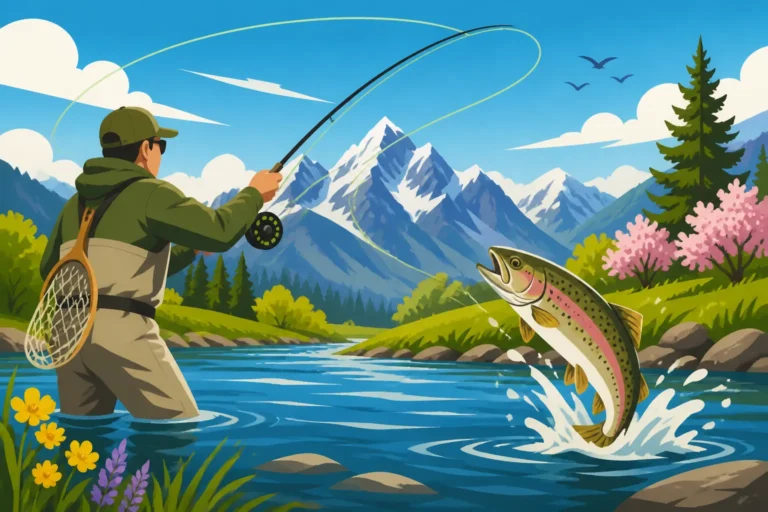
Fly fishing truly shines in situations where a delicate presentation is key, mimicking the natural food sources that trout primarily feed on. This makes it incredibly effective in clear, slow-moving waters or during specific insect hatches. Imagine a trout gently sipping mayflies off the surface of a placid stretch of the Green River; a fly angler can present a tiny, weightless dry fly that perfectly imitates that insect, often eliciting an immediate, subtle take.
Beyond dry fly fishing, fly fishing also excels at presenting subsurface offerings like nymphs and streamers. Nymphing techniques, where you drift an imitation of an aquatic insect larva along the riverbed, can be deadly effective when trout are feeding on the bottom. Similarly, streamer fishing, which involves stripping larger, baitfish-imitating flies through the water, is fantastic for targeting aggressive, larger brown trout that are looking for a substantial meal. The ability to control the depth, speed, and subtle movements of these weightless flies with precision is a major advantage for the fly angler. If you're looking to match the hatch on rivers like the North Platte or target wary fish in a clear mountain stream, fly fishing often gives you an edge. You can learn more about specific techniques in our guide, Fly Fishing Techniques for Wyoming Trout Streams.
The Diverse World of Fly Patterns
One of the most captivating aspects of fly fishing is the sheer variety and artistry of fly patterns. These aren't just random bits of feather and fur; each fly is designed to imitate a specific insect, baitfish, or aquatic organism at a particular life stage. From the tiny, delicate Parachute Adams that mimics an adult mayfly to the bulky, articulated streamers designed to look like a fleeing minnow, the options are endless.
Understanding the local entomology – what bugs are hatching, when, and where – is a huge part of the fly fishing puzzle. This "matching the hatch" approach can be incredibly rewarding. For instance, when the giant salmonflies are hatching on the Yellowstone River, throwing a large, bushy imitation can lead to explosive strikes. But even without a specific hatch, general attractor patterns or nymphs can be highly effective. The learning never stops, and every new river or season brings new patterns to discover and master. You might find yourself researching local hatches, tying your own flies, or debating the merits of a size 18 Baetis nymph versus a size 20 during your next trip to the local fly shop. To get started, you might check out Best Wyoming Fly Patterns for Cutthroat Trout.
The Versatility of Spin Fishing
While fly fishing often gets the romanticized spotlight, spin fishing is arguably the most common and versatile method for anglers hitting Wyoming's rivers. It's accessible, effective, and can be incredibly rewarding, making it a fantastic choice for anglers of all skill levels.
Ease of Entry and Immediate Success
One of the biggest advantages of spin fishing is its relative ease of entry. The casting motion is straightforward, generally intuitive, and requires less coordination than fly casting. Most beginners can pick up a spin rod and be casting a lure or bait a decent distance within minutes, leading to immediate success. This makes it an excellent option for families, young anglers, or anyone looking to enjoy a casual day on the water without the steep learning curve associated with fly fishing.
You don't need to understand complex entomology or master intricate knots right out of the gate. Simple baits like worms, PowerBait, or basic spinner lures are readily available and highly effective for a wide range of species, especially stocker trout in accessible areas. This accessibility means you can spend less time fumbling with gear and more time actually fishing and enjoying the stunning scenery of places like the Encampment River or the shores of Alcova Reservoir. For those new to the sport, our guide to Spin Fishing Techniques for Beginners offers some great starting points.
Advantages in Challenging Conditions
Spin fishing truly shines when conditions are less than ideal for delicate fly presentations. Think strong winds that make fly casting a nightmare, or muddy, high water during runoff season. When you need to cast a heavy lure against the wind to reach a distant seam, or get a weighted spinner deep into a churning current, a spin setup is often superior. The weight of the lure itself allows for precise targeting and depth control in ways that can be difficult with a lightweight fly.
It's also incredibly effective for covering large expanses of water quickly, particularly when you're searching for active fish. You can cast further, retrieve faster, and experiment with a wider array of lures to provoke strikes. In situations where fish are holding deep, perhaps in cold water or during bright daylight, a spin angler can use jigs, spoons, or crankbaits that rapidly sink to the strike zone, something that can be challenging to achieve with many fly fishing setups without specialized techniques or weighted lines. This makes it a great choice for targeting species like walleye or sauger in the Wind River near Boysen Reservoir, in addition to trout.
A Diverse Arsenal of Lures and Baits
The variety of lures and baits available to spin anglers is staggering, offering incredible versatility to adapt to different species, water conditions, and fish moods. From flashy spinners and spoons that imitate baitfish to soft plastic jigs that mimic crawfish or worms, there's a lure for almost every situation. Brands like Rapala and Mepps offer classic, effective options that have caught countless fish over the years. You can pick up a handful of different options from a local tackle shop or an online retailer like Amazon, building a varied tackle box.
Using natural bait, such as nightcrawlers or salmon eggs, is also a highly effective spin fishing technique, particularly for trout in rivers and streams. The scent and natural movement can be irresistible to fish, especially during periods when they are less actively feeding on insects. This adaptability means that a spin angler can quickly change tactics and offerings if one approach isn't working, keeping them engaged and increasing their chances of success throughout the day. You might find our resource on Best Lures for Wyoming Rainbow Trout helpful for selecting the right tackle.
Comparing the Experience on Wyoming Rivers
It's not just about the gear; it's about the entire experience. Choosing between fly fishing and spin fishing often comes down to personal preference, the type of challenge you're seeking, and what kind of connection you want to forge with the river and its inhabitants.
The Nuances of the Cast and Retrieve
The casting motion is perhaps the most immediate and defining difference between the two techniques. Fly casting is an art form, a dance between angler, rod, and line. It's often described as a "presentation" rather than a "cast," focusing on delicacy and accuracy, especially with a dry fly. The loop of the fly line unrolling overhead, the subtle mend to achieve a drag-free drift – these are satisfying elements that define the fly fishing experience. When it comes together, it feels incredibly fluid and natural, allowing for precise placements in challenging spots on rivers like the Snake.
Spin casting, by contrast, is a more direct, powerful motion. You whip the lure out, let it sink, and retrieve it. The focus is often on covering water, working different depths, and feeling the subtle vibrations of your lure or the tap of a strike. While less visually complex than fly casting, mastering the nuances of retrieve speed, lure action, and target accuracy with a spin rod is still a skill developed over time. Both offer their own unique challenges and satisfactions, and a truly skilled angler in either discipline is a joy to watch.
Sensitivity and Strike Detection
When it comes to feeling a fish take your offering, both methods offer a different kind of sensitivity. In fly fishing, especially with lighter rods and delicate leaders, you often detect strikes visually (watching your indicator or the flash of a fish) or through a very subtle "tick" in your line as a fish inhales a fly. It requires keen observation and a light touch. Many times, you’ll barely feel the fish until it's already hooked, which adds to the thrill.
Spin fishing often provides a more direct, tactile connection. As you retrieve your lure, you can feel its action, bumps on the bottom, and the distinct thud or jerk when a fish strikes. This direct feedback can be very satisfying and helps anglers understand what their lure is doing under the water. With braided lines, the sensitivity is further enhanced, allowing you to detect even the most tentative bites. Ultimately, both methods demand focus and the ability to interpret subtle cues, making the moment of a successful hookset incredibly rewarding regardless of your chosen gear.
Target Species and River Types
While both methods can catch almost any fish in any river, each tends to excel for certain species or in particular river environments. Fly fishing is often considered the purist's choice for trout in classic Western rivers, especially where delicate presentations are needed for wary fish feeding on insects. Rivers like the North Platte, with its famous Gray Reef and Miracle Mile sections, are renowned fly fishing destinations where trout are accustomed to seeing natural insect imitations. In our extensive guide on Reading Riffles and Runs on Wyoming Trout Streams, you can explore how to find prime fish holding spots regardless of your tackle.
Spin fishing offers broader versatility across a wider range of species and conditions. While excellent for trout, it's also highly effective for bass, walleye, pike, and other warm-water species found in some of Wyoming's larger rivers and reservoirs with riverine characteristics. For covering large, fast-flowing rivers or casting into deep holes, it can be incredibly efficient. Imagine fishing the lower Green River for smallmouth bass or targeting walleye in the Wind River section of Boysen Reservoir; spin gear often makes those tasks easier and more productive. It's less about which one is "better" and more about which one is "better suited" for your specific target and environment.
Gear Essentials and Costs
Regardless of whether you choose to fly fish or spin fish, investing in quality gear appropriate for Wyoming's conditions is crucial. While both can be done on a budget, it’s also easy to spend a small fortune. Understanding what you truly need versus what's nice to have will help you get started without breaking the bank.
Rods, Reels, and Lines: The Core Setup
For fly fishing, your core setup consists of a fly rod, a fly reel, and fly line.
- Rods: For most Wyoming river trout fishing, a 9-foot, 5-weight or 6-weight fly rod is a fantastic all-around choice. This length and weight provides enough backbone for casting in the wind and fighting good-sized trout, while still being delicate enough for smaller presentations. Brands like Orvis, Redington, and Sage are popular, but there are many affordable options for beginners.
- Reels: The reel in fly fishing is primarily a storage device for your line and for fighting larger fish; it's not used for casting in the same way a spin reel is. A simple, reliable disc drag reel that balances your rod is sufficient to start.
- Lines: This is critical. You'll need a weight-forward floating fly line that matches your rod's weight rating. Add a leader and tippet, and you're good to go. You can often find decent beginner combos that include all three from retailers like Amazon.
For spin fishing, your setup includes a spinning rod, a spinning reel, and fishing line.
- Rods: A medium-light or medium action spinning rod, 6 to 7 feet long, is a versatile choice for Wyoming rivers. It's sensitive enough for trout but can handle larger fish if you encounter them. Brands like Ugly Stik and Fenwick offer durable, popular options.
- Reels: A 2000-3000 size spinning reel, known for smooth drag and easy casting, will serve you well. Shimano and Daiwa are reputable names, but there are many budget-friendly options available.
- Lines: Monofilament line in 4-8 pound test is a great all-around choice for rivers. Braided line offers superior sensitivity and strength, though it's often paired with a fluorocarbon leader.
Here's a quick comparison of essential gear:
| Gear Type | Fly Fishing Essentials | Spin Fishing Essentials |
|---|---|---|
| Rod | 9-foot, 5-6 weight (e.g., Orvis Clearwater) | 6-7 foot, medium-light to medium action (e.g., Ugly Stik Elite) |
| Reel | Large arbor, disc drag, matched to rod weight | 2000-3000 series, smooth drag (e.g., Shimano Sedona) |
| Line | Weight-forward floating fly line, matching rod weight | 4-8 lb monofilament or braided with fluorocarbon leader |
| Terminal Tackle | Leaders, tippet, fly patterns | Lures, hooks, weights, swivels, natural bait |
| Accessories | Waders, wading boots, net, nippers, floatant, indicator | Pliers, net, tackle box |
Additional Gear and Budget Considerations
Beyond the core rod, reel, and line, there are other items you'll want to consider. Waders and wading boots are practically essential for navigating Wyoming's rivers safely and comfortably, allowing you to access prime fishing spots. A good fishing vest or pack to carry your flies, leaders, tools, and water is also invaluable. Don't forget a net, preferably a rubber-mesh catch-and-release net, to safely land your fish.
When it comes to cost, a basic, functional fly fishing setup (rod, reel, line) can start around $200-$300, plus another $200-$400 for decent waders and boots. Lures and flies can add up, but a starter selection might be $50-$100. Spin fishing can be slightly less expensive to get started, with a decent rod and reel combo often available for under $150, and basic lures and bait being quite affordable. However, both hobbies can quickly become expensive if you fall down the rabbit hole of high-end gear, custom rods, or extensive fly/lure collections. Remember, your Wyoming Fishing License Guide for Nonresidents or Wyoming Resident Fishing License Cost will be an additional, but mandatory, expense.
Mastering Both Techniques
Many anglers eventually find themselves dabbling in both fly fishing and spin fishing, recognizing that each offers distinct advantages depending on the day, the water, and the target species. There's no rule saying you have to pick just one!
Integrating Both Methods for Maximum Success
Thinking of fly fishing and spin fishing as complementary tools in your angling toolbox, rather than mutually exclusive methods, can open up a whole new world of possibilities. Imagine starting your day on the North Platte River with a fly rod, delicately presenting dry flies to rising trout in a morning hatch. As the sun gets higher and the fish move to deeper, faster water, you might switch to a spin rod and throw a weighted spinner or a jig to cover those deeper pockets more effectively.
This integration is particularly useful in dynamic environments or when targeting multiple species. You might use a spin rod to quickly explore a new stretch of river, identifying active areas, and then switch to a fly rod for a more precise, nuanced presentation once you've located fish. This flexible approach allows you to adapt to changing conditions and fish behavior throughout the day, maximizing your chances of success and enjoyment. It’s about being a versatile angler, ready for whatever Wyoming throws at you. For tips on how to effectively analyze the water, our guide on How to Read Water When Trout Fishing can be invaluable for both disciplines.
When to Carry Both on a River Trip
There are definitely times when carrying both a fly rod and a spin rod makes perfect sense. If you're planning a multi-day trip to a remote area like the Wind River Mountains, where you might encounter high-alpine lakes (perfect for spin fishing for brookies or golden trout) and feeder streams (ideal for fly fishing cutthroat), having both options is a game-changer. Similarly, on larger rivers like the Green River, you might find yourself switching between trying to match a hatch on the surface and then wanting to probe deeper runs for bigger fish with a heavier lure.
The key is assessing your likely targets and the conditions. If you're focused purely on a specific dry fly hatch on a particular stretch of river, one rod might be sufficient. But if you anticipate varied conditions, multiple species, or simply want the flexibility to try different approaches, packing both could be beneficial. Many anglers will keep a spin rod rigged and ready in the vehicle, using it to scout or fish less "fly-friendly" spots before committing to a full fly fishing setup. Remember to respect Catch-and-Release Rules on Wyoming Waters no matter your chosen method.
The Pure Joy of the Catch
Ultimately, whether you're fly fishing or spin fishing, the pure joy of the catch remains the same. The adrenaline rush as a fish strikes, the tension on the line as you fight it, and the satisfaction of bringing a beautiful wild trout to hand are universal experiences for anglers. Both methods offer unique challenges and equally rewarding moments. Some anglers are drawn to the meditative rhythm of fly casting, while others prefer the direct power and versatility of spin fishing.
The most important thing is to get out there, enjoy Wyoming's stunning natural beauty, and connect with the incredible fisheries it offers. Experiment, learn, and don't be afraid to try both. You might find that some days call for the delicate touch of a dry fly on a small creek, while others demand the robust action of a spinning rod on a big river. Embrace the journey, and the fish will follow.
Disclaimer
The information provided in this guide is for general informational purposes only and is not intended as legal advice regarding fishing regulations. Wyoming Game and Fish Department regulations can change frequently. Always consult the most current official Wyoming Game and Fish Department regulations booklet or website before heading out to fish. Responsible angling also means practicing proper catch-and-release techniques and respecting private property and public access laws.