Wyoming’s Combined Possession Limit for Trout
It’s a tale as old as time, or at least as old as your last fishing trip to Wyoming: you’ve had an incredible day on the water, your cooler is looking promising, and suddenly that nagging thought creeps in. "Wait, how many fish am I actually allowed to have right now? Does that big brown count the same as those brookies? What about the fish I caught yesterday?" The rules around Wyoming's combined possession limit for trout can feel like navigating a maze, especially when you're trying to enjoy the stunning scenery. This guide is here to untangle that confusion, explaining exactly what the combined possession limit means, why it exists, and how to stay compliant on your next adventure.
Unraveling Wyoming's Trout Possession Limit Puzzle
Wyoming boasts some of the most spectacular trout fishing in the West, with a diverse array of species thriving in its rivers and lakes. But with that diversity comes a crucial set of regulations designed to protect these precious resources. Among the most misunderstood is the "combined possession limit," a rule that often trips up even seasoned anglers.
What "Possession Limit" Actually Means
First, let's get down to basics. What exactly is a possession limit? It's not just about what you catch in a single day. The possession limit refers to the total number of fish of a particular species or group of species that you are allowed to have in your control at any given time. This includes fish in your cooler, in your freezer back at camp, or even those you're transporting home. It's a cumulative total, not a daily reset.
Many anglers mistakenly believe that if they catch their daily limit, go back to camp, eat some fish, and then head out again, they can catch another full daily limit. That's a huge misunderstanding that can land you in hot water with a game warden. While the daily limit dictates how many fish you can harvest in one 24-hour period, the possession limit is your overarching cap. Think of it as your total inventory. You can find a deep dive into this topic in our article, How Bag and Possession Limits Work in Wyoming.
For example, if the daily limit is six trout and the possession limit is also six, and you catch and keep six trout on Monday, you cannot go fishing on Tuesday and keep any more trout until some of your previously caught fish are consumed or legally gifted away, bringing your total possessed fish below the limit. This rule is crucial for protecting fish populations from excessive harvesting, especially during multi-day fishing trips.
The "Combined" Aspect for Trout Species
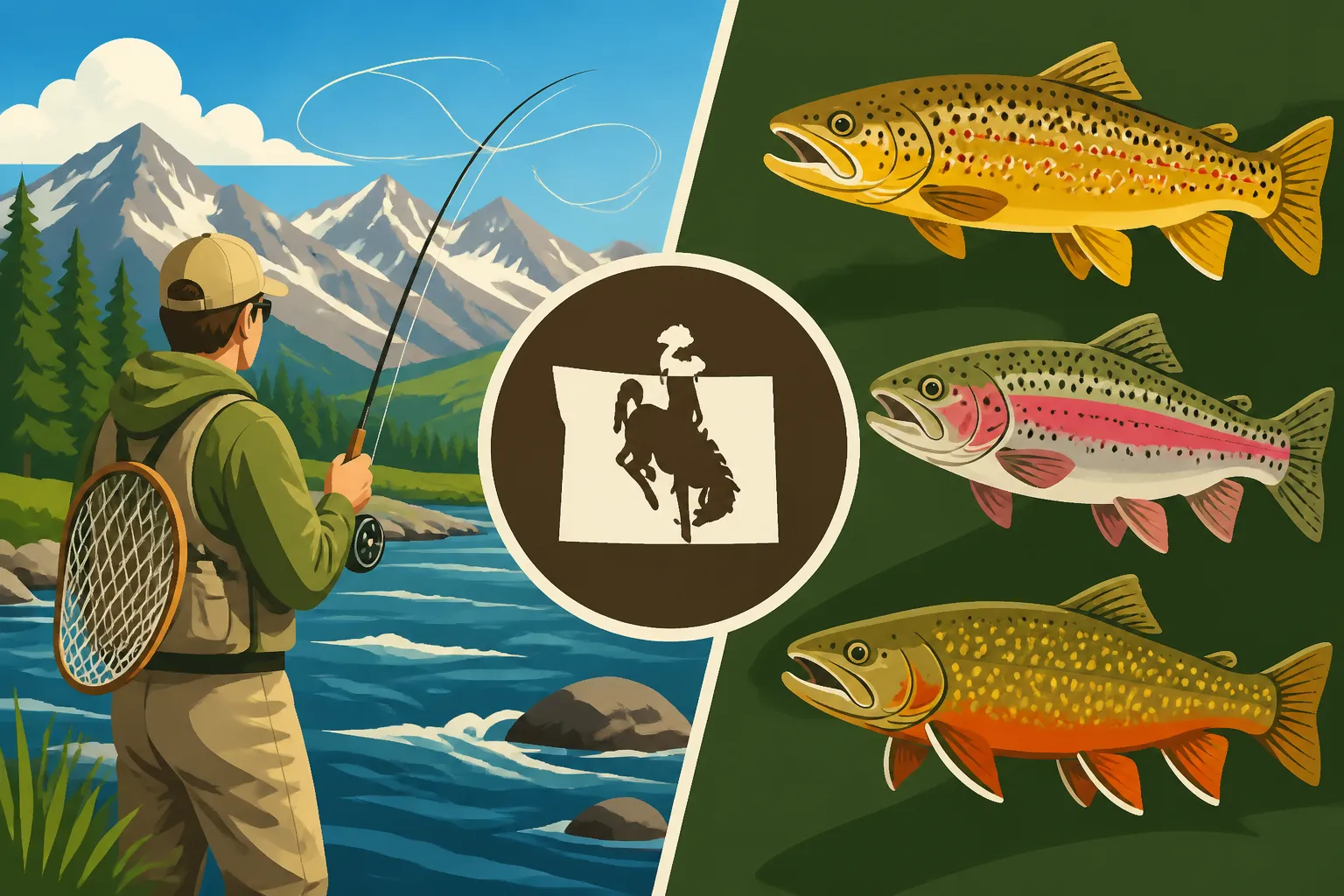
Now, let's talk about the "combined" part, which is where things often get a bit murky for anglers. For most of Wyoming's popular trout species, the possession limit isn't broken down by individual species, but rather applied to them as a collective group. This typically includes Cutthroat Trout, Rainbow Trout, Brown Trout, Brook Trout, Golden Trout, and any hybrids of these species.
So, if the general statewide combined possession limit for trout is six fish, you can have a mix of these species totaling no more than six fish in your possession. You might have two Cutthroat Trout, three Rainbow Trout, and one Brown Trout, for a total of six. It doesn't mean you get six of each! This is a common point of confusion, and one that the Wyoming Game and Fish Department (WGFD) is very clear about in their regulations booklet.
However, there's a vital nuance: Lake Trout (also known as Mackinaw) are often treated differently and have their own specific limits, which can vary wildly by waterbody. For instance, on some lakes, you might have a high possession limit for Lake Trout because they are considered an invasive species impacting native populations (as is the case in Yellowstone Lake). Always, and I mean always, check the specific regulations for the water you plan to fish. You can learn more about Lake Trout (Mackinaw) Fishing in Wyoming in our detailed guide.
Another layer to the combined limit is the size restriction. Beyond the total number of trout, Wyoming often has rules like "no more than one (1) trout over 16 inches" within that combined limit. This ensures that a reasonable number of larger, breeding fish remain in the system. So, while you might have six trout, only one of them can exceed that 16-inch mark if that specific regulation applies to your chosen water. This is why reading The One-Over-16-Inch Rule on Wyoming Trout Streams is so important.
Why Wyoming Has a Combined Possession Limit
Understanding the logic behind regulations can make them easier to follow. The combined possession limit for trout isn't arbitrary; it's a carefully crafted rule designed to achieve several critical conservation and management goals.
Conservation and Management Goals
Wyoming's fisheries are a precious resource, and the WGFD works tirelessly to ensure their sustainability for future generations. A combined possession limit plays a significant role in this effort. By lumping several trout species together under one umbrella limit, the WGFD can prevent the overharvesting of specific, more vulnerable species.
Imagine if each species had its own separate limit. An angler might legally keep six Cutthroat Trout, six Rainbow Trout, six Brown Trout, and six Brook Trout in their possession, totaling 24 fish. While that sounds like a fantastic haul, it could quickly deplete local populations, especially in smaller, more sensitive streams. The combined limit simplifies the management challenge, providing a reasonable overall harvest quota that protects the genetic diversity and population health of all common trout species. This approach also acknowledges that many anglers aren't specifically targeting one species over another; they're simply "trout fishing." Our comprehensive guide, Wyoming Fishing Regulations Every Angler Should Know, delves into the broader regulatory framework.
Simplifying Enforcement for Wardens
From a practical standpoint, the combined possession limit also makes the job of game wardens much more straightforward. Imagine a warden encountering an angler with a cooler full of fish. If each trout species had a separate possession limit, the warden would have to meticulously identify each fish, count each species, and then cross-reference those counts with multiple individual limits. This would be a time-consuming and often ambiguous process, prone to error and debate.
With a combined limit, the warden simply needs to identify that the fish are "trout" (excluding specific exceptions like Lake Trout, which are easily identifiable by distinct features) and then count the total number. This streamlines enforcement, making it easier to identify and address violations quickly and efficiently. It reduces the opportunity for anglers to exploit loopholes or claim confusion about species identification, ensuring that the rules are applied fairly and effectively across the state. This helps the WGFD focus on more critical aspects of conservation and enforcement.
Practical Scenarios and Common Questions
Even with a clear understanding of the rules, real-world fishing situations can throw curveballs. Let's look at some common scenarios and questions that arise when dealing with Wyoming's combined possession limit for trout.
Keeping Track of Your Catch
One of the biggest challenges on a multi-day trip is accurately keeping track of your possessed fish. It's easy to lose count, especially if you're staying at a cabin or camp for several days. My best advice? Treat your possession limit like a running tally, not a daily slate.
Here are a few tips:
- The "One Cooler In, One Cooler Out" Rule: If you plan to keep fish from day to day, designate a specific cooler at your camp for your total possession. Every fish you keep goes into that cooler. When you head out for a new day, you know exactly how many fish you already have.
- Logbook or Notepad: A simple waterproof notepad and pencil, or even an app on your phone, can be your best friend. Jot down the date, species, and number of fish kept each day. This provides a clear, undeniable record. You can often find small, waterproof field notebooks on Amazon that are perfect for this.
- Visual Cues: Some anglers prefer to fillet their fish each evening and then freeze or pack them. If you do this, ensure that you still have a way to account for the number of fish, especially if certain rules require a skin patch or keeping the fish whole until you reach your final destination. Wyoming does allow filleting, but there are rules about how to transport them, which we'll cover later.
- Know Your Target Water's Rules: Before you even cast a line, consult Where to Find Current Wyoming Fishing Regulations or pick up the latest WGFD regulations booklet. It's available at most license vendors and online. The rules can be hyper-local, with different streams and lakes having variations on the general statewide limit. Don't assume.
Remember, the responsibility for staying within the possession limit rests entirely with the angler. Ignorance of the law is not an excuse.
Special Regulations and Exemptions
While the "combined possession limit for trout" is a general rule, Wyoming is also famous for its incredibly diverse and often very specific water-specific regulations. These can supersede or add layers to the statewide rule. It's critical to understand how these special regulations interact with the combined limit.
- Catch-and-Release Waters: Some of Wyoming's most pristine and productive waters, particularly blue-ribbon trout streams, are designated as catch-and-release only. On these waters, the possession limit is, effectively, zero. You cannot keep any fish. Our guide on Catch-and-Release Rules on Wyoming Waters explains this in detail.
- Slot Limits: Certain waters might implement slot limits, meaning you can only keep fish within a specific size range, and often only a limited number of those. For example, a river might have a daily limit of two trout, only one of which can be between 10 and 16 inches, with all other fish required to be released. These specific rules always trump the general combined limit for that particular body of water.
- Lake Trout Management: As mentioned, Lake Trout have a unique status. In some waters, like Jackson Lake, they are managed to protect native Cutthroat Trout, and you might have a very generous daily and possession limit for them (or even be encouraged to keep all you catch, as in Yellowstone Lake, where they are actively trying to reduce their population). These specific Lake Trout limits do not typically count towards your general combined trout possession limit. For instance, you could be allowed to keep a high number of Lake Trout plus your combined limit of other trout species, as long as you follow the specific rules for each. Always consult the WGFD regulations for the specific lake.
- Different Limits for Streams vs. Lakes: Often, you'll find different limits for streams compared to lakes, even for the same species. For example, some rivers might have a lower possession limit for trout than a nearby reservoir. Our article, Stream Limits vs Lake Limits for Wyoming Trout, explores these variations.
The key takeaway here is simple: never assume the general statewide rule applies to every single fishing spot. The WGFD's annual regulations booklet is your Bible. Carry it with you, or at least have a digital copy accessible on your phone, and consult it frequently.
Navigating Multi-Day Trips and Transporting Your Catch
Extended fishing trips are one of the best ways to experience Wyoming's vast angling opportunities. However, they also present unique challenges when it comes to managing your possession limit and ensuring your catch makes it home legally.
What Happens After Your First Day of Fishing?
This is where the distinction between daily and possession limits becomes absolutely critical. The combined possession limit applies to all fish you have on hand, regardless of how many days it took you to catch them. It is not a "daily allowance" that resets every morning.
Let's use a hypothetical: The general combined possession limit for trout is six.
- Day 1: You fish the North Platte River and keep four beautiful Rainbow Trout. You now possess four trout. You can legally fish again tomorrow.
- Day 2: You fish a mountain stream and keep two Brook Trout. Your total possession is now six trout (four Rainbow + two Brook). You have reached your combined possession limit.
- Day 3: You cannot legally keep any more trout until some of your six possessed fish are consumed, gifted, or processed and accounted for in a way that reduces your active possession count. If you went out and kept one more trout on Day 3, you'd be over the limit (seven fish), even if you only caught one fish that day.
This continuous count is a cornerstone of responsible fishery management. It prevents anglers from stockpiling large quantities of fish over multiple days, which could put undue pressure on local fish populations. This is why understanding Possession Limits vs Daily Limits in Wyoming is so vital.
Legal Transport and Storage of Your Fish
You’ve had a successful trip, meticulously kept track of your limits, and now it’s time to head home. How you transport and store your catch is just as important as how you caught it. Wyoming has clear regulations to prevent misidentification of species or over-limit possession during transport.
- Whole Fish vs. Fillets: Generally, if you're transporting fish within Wyoming, they need to be readily identifiable. This means if you fillet them, you usually need to leave a patch of skin with the identifying features on each fillet until you reach your final destination (usually your home). This allows game wardens to verify the species and ensure compliance with size and bag limits if they inspect your cooler. Always check the current regulations for exact requirements, as these can change. Some anglers prefer to keep fish whole until they get home, as this completely avoids any ambiguity.
- Freezing: If you're going to freeze your fish for later consumption, it’s a good idea to package them in a way that clearly indicates the date caught and the species. This isn't strictly a WGFD requirement for possession but is a good practice for your own record-keeping, especially if you have multiple fishing trips or different species.
- Crossing State Lines: Transporting your catch across state lines requires extra vigilance. While Wyoming's regulations govern what you can harvest in Wyoming, the laws of the state you're traveling into (and through) also apply. Many states have rules about importing fish, especially if they are whole or unprocessed. It's always best to check the regulations of any state you plan to enter or pass through. Our guide on Transporting Your Catch Across State Lines Legally offers more detailed advice.
- Proper Cooling: Regardless of your destination, proper cooling is essential to maintain the quality of your catch. Good quality coolers, like those from popular outdoor brands or even a well-insulated basic cooler purchased on Amazon, packed with plenty of ice, will keep your trout fresh and delicious.
By understanding and adhering to Wyoming's combined possession limit for trout, you're not just avoiding a potential fine; you're actively contributing to the conservation of one of the West's most cherished natural resources. Always fish responsibly, respect the regulations, and enjoy the incredible angling opportunities that the Cowboy State offers!
Disclaimer
The information provided in this guide is intended for general informational purposes only and does not constitute legal advice. Fishing regulations in Wyoming are subject to change by the Wyoming Game and Fish Department (WGFD). While we strive to provide accurate and up-to-date information, it is the sole responsibility of the angler to consult the most current official WGFD regulations booklet or website before engaging in any fishing activity. Non-compliance with fishing regulations can result in fines and penalties.