Perch Fishing in Wyoming
When most folks think about fishing in Wyoming, their minds immediately jump to big, beautiful trout—rainbows, browns, cutthroat, you name it. And while those majestic fish certainly deserve their fame, it's easy to overlook a true gem that offers incredible action, delicious table fare, and a fantastic experience for anglers of all skill levels: the humble yet prolific yellow perch. This guide is here to change that perception, diving deep into everything you need to know to successfully target and enjoy perch fishing across our great state.
The Underrated Delight: Why Target Perch in Wyoming?
Let's be honest, perch don't get the same glamour as a leaping rainbow or a powerful brown trout. But overlooking them means missing out on some seriously fun fishing, especially if you're looking for consistent action or a tasty meal. Perch are schooling fish, which means if you find one, you've likely found a whole pile of them. This makes for exciting, fast-paced fishing, perfect for keeping kids engaged or for a relaxing day where you just want to feel a tug on your line. Plus, they are genuinely one of the best-eating freshwater fish, offering flaky, white meat with a mild flavor.
The appeal of perch isn't just about the numbers or the taste. They're accessible! You don't always need a fancy drift boat or specialized gear to catch them. Many of Wyoming's reservoirs and lakes offer fantastic shore access, and perch are often willing biters on simple tackle. This makes them an ideal target for beginners, families, or anyone looking to enjoy the quiet solitude of a Wyoming morning without the intense focus sometimes required for other species. They also offer a fantastic opportunity to extend your fishing season well into the colder months, as ice fishing for perch is incredibly popular and productive.
Accessibility and Fun for All Ages
One of the greatest joys of perch fishing is its universal appeal. Think about it: you want to introduce a child to fishing, or perhaps get a friend hooked on the sport? Perch are your answer. Their schooling nature means more bites, fewer long waits, and a higher chance of success, which is critical for maintaining interest. I've spent countless afternoons on reservoirs like Boysen or Glendo, watching kids light up as they reel in perch after perch, often just a stone's throw from shore. The sheer excitement of a bent rod and a fish at the end of the line is a powerful motivator, and perch deliver that in spades.
Furthermore, you don't need to be an expert fly caster or have years of experience reading complicated river currents. A simple spinning rod, a few small jigs or baits, and a patient attitude are often all it takes. This low barrier to entry fosters a welcoming environment for new anglers. Perch fishing can be a wonderfully social activity too; setting up camp chairs on the bank, swapping stories, and reeling in fish with friends and family creates memories that last a lifetime. It’s a truly approachable and rewarding experience for anyone who loves the outdoors.
Culinary Delights from Wyoming Waters
And then there's the table fare. If you've never eaten fresh Wyoming perch, you are truly missing out. Their flesh is firm, white, and sweet, with a delicate flavor that stands up well to various cooking methods. Fried perch fillets are a classic for a reason – a light breading and a quick crisp in hot oil make for an unforgettable meal. Many anglers find them superior to some other more sought-after species when it comes to taste, and they're often less "fishy" than certain trout varieties.
Beyond simple frying, perch fillets can be baked, grilled, or even incorporated into fish tacos. Because they're smaller, you often catch enough to make a substantial meal, and the process of cleaning and filleting them, while a bit more tedious than a larger fish, becomes quick and efficient with practice. It's a great way to truly connect with your catch, from the initial tug on the line to the final delicious bite at the dinner table. Having a freezer full of perch fillets from a successful outing is a wonderful bonus to a fun day on the water.
Where to Find Perch in Wyoming
Wyoming is a vast state, and while its rivers are famous for trout, many of its larger reservoirs and some smaller lakes are prime habitats for yellow perch. They tend to prefer cooler, deeper water with plenty of structure, but also venture into shallower bays and flats, especially during warmer months or when spawning. Knowing where to start your search is half the battle, and thankfully, there are some well-known hotspots. You might be asking, Are Perch Common in Wyoming Reservoirs?, and the answer is a resounding yes in many cases.
You're generally looking for waters that offer a good mix of submerged vegetation, drop-offs, and rocky bottom structures. These areas provide cover from predators, ambush points for feeding, and ideal spawning grounds. Think about areas where small feeder creeks enter a reservoir, or where the main body of water transitions from a steep bank to a shallower flat. Pay attention to contour maps if you're on a boat, or look for obvious structural changes if you're fishing from shore.
Wyoming's Prime Perch Reservoirs
When it comes to consistent perch action, a few Wyoming reservoirs really stand out. These larger bodies of water provide the ideal habitat for perch to thrive, often growing to impressive sizes for the species.
- Boysen Reservoir: Located near Shoshoni, Boysen is probably one of the most famous perch fisheries in Wyoming. It’s a massive body of water with diverse structure, from rocky points to sandy bays and extensive weed beds. Perch here can reach respectable sizes, and the numbers can be incredible. During the open water season, you’ll find them in bays with vegetation, around submerged structures, and along drop-offs. Come winter, Is There Ice Fishing at Boysen Reservoir? – absolutely, and it’s a premier destination for ice anglers targeting perch. You can often find them suspended over deeper water or tight to bottom structure.
- Glendo Reservoir: In southeastern Wyoming, Glendo is another fantastic option. While known for its walleye and other species, Glendo's perch population is robust and provides great fishing. Look for them in areas with flooded timber, along the main channel edges, and near the numerous coves and points. Similar to Boysen, Glendo offers excellent shore access in many areas, making it convenient for a casual outing.
- Keyhole Reservoir: Up in northeastern Wyoming, near Moorcroft, Keyhole Reservoir is a popular spot for a variety of species, including some very healthy perch. The reservoir features numerous submerged trees and brush piles, creating excellent cover for perch. Focus on these areas, especially where they meet deeper water.
- Guernsey Reservoir: Just downstream from Glendo, Guernsey also holds a good population of perch, though perhaps not in the same abundance as its larger neighbor. It’s a shallower, river-run reservoir, so focus your efforts around deeper channels and any available structure. Guernsey Reservoir Fishing Access in Wyoming offers several points to try your luck.
- Pathfinder Reservoir: This large central Wyoming reservoir, west of Alcova, can produce some impressive perch, though they might require a bit more searching. It's a deeper, rockier reservoir, so focus on ledges, humps, and submerged points. Persistence often pays off here with larger specimens.
These reservoirs are often bustling with activity, especially on weekends, but their sheer size means there’s usually plenty of room for everyone. Local bait shops near these waters are always a great source for up-to-date information on where the perch are biting.
Smaller Ponds and Lesser-Known Spots
While the big reservoirs get most of the attention, don't overlook Wyoming's smaller lakes, ponds, and even some slower-moving river backwaters. Many of these lesser-known spots, particularly those managed by Wyoming Game and Fish Department, are stocked or naturally hold populations of yellow perch. These can offer a more intimate fishing experience, often with less pressure.
These smaller waters are usually shallower and warm up faster in the spring, making for earlier action. They might not hold the trophy-sized perch of the big reservoirs, but they can offer incredibly consistent numbers. Look for community fishing ponds near towns – often these are stocked with various species and perch can thrive there. Private ponds, with landowner permission, can also be hidden gems. Always check local regulations, as smaller waters can sometimes have unique rules. The key to these spots is often exploration; a quick stop at a local convenience store or asking around can sometimes reveal a fantastic, uncrowded perch haven.
Identifying Wyoming Perch
To successfully target perch, it’s helpful to know what you’re looking for! The yellow perch (Perca flavescens) is a distinctive and easily recognizable fish. While there are other perch-like species, the yellow perch is the primary one you'll encounter in Wyoming, and it certainly has a look all its own.
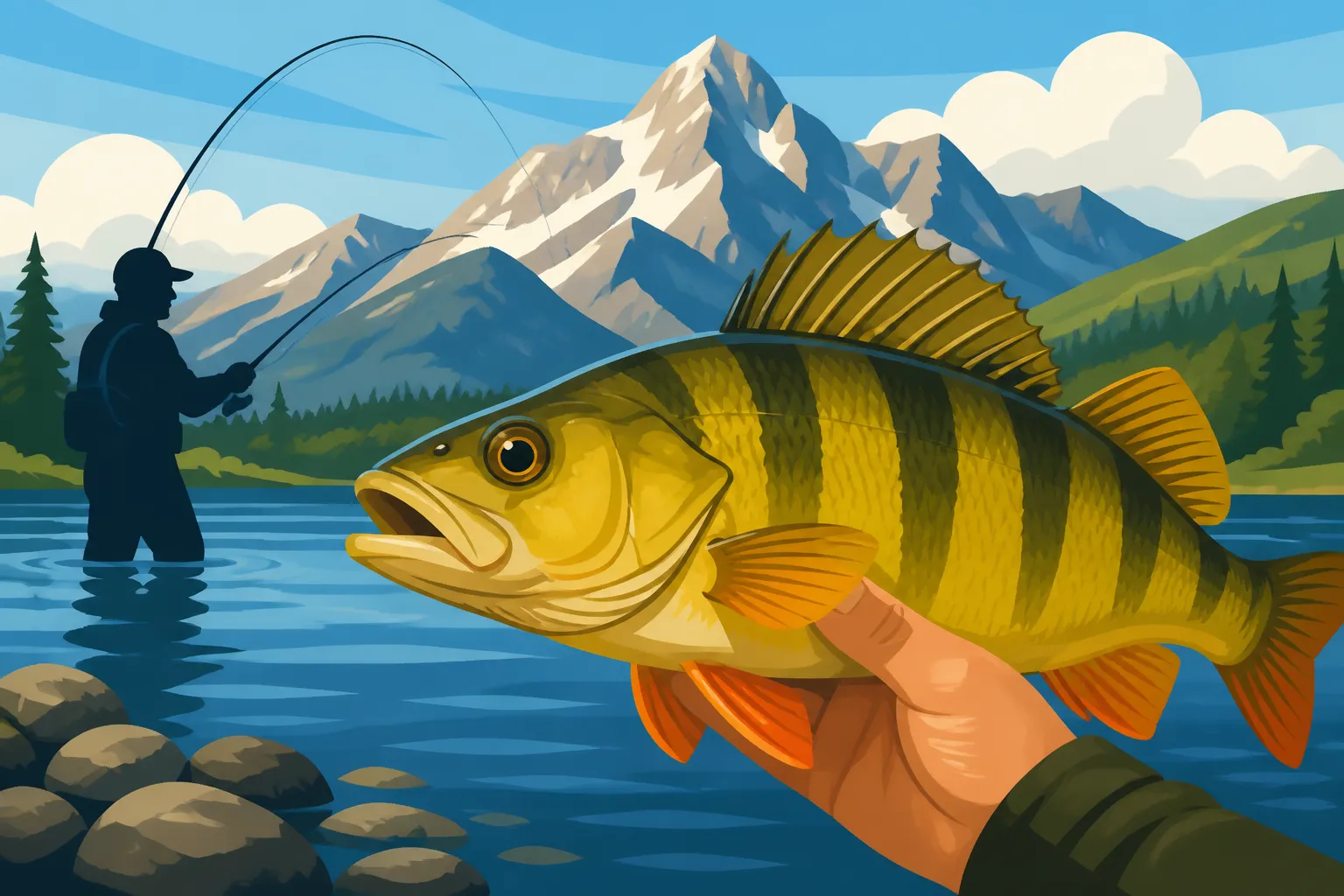
Recognizing a yellow perch is usually pretty straightforward. They have a relatively deep, compressed body, meaning they're taller than they are wide. Their most striking feature is their coloration: typically bright yellow to brassy green sides, marked with 6-8 distinct, dark vertical bars that extend from their back down to their belly. Their belly is usually white or pale yellow. Their fins often have a reddish or orange tint, especially the pectoral, pelvic, and anal fins, which can be quite vibrant. They also have two dorsal fins; the first is spiny, and the second is soft-rayed.
Yellow Perch Characteristics
Beyond the obvious stripes, yellow perch have several other key features that help in identification. Their scales are rough to the touch, and they have a moderately large mouth that extends back to just below the eye. The two dorsal fins are clearly separate, a key differentiator from some other species. The first dorsal fin is notably spiny, with 12-14 sharp rays, while the second is composed of softer, flexible rays. This combination of color, pattern, and fin structure makes them fairly unmistakable once you've seen a few.
Their body shape is also indicative of their behavior. The deep, compressed body allows them to navigate through aquatic vegetation with ease, which is a common habitat for them. Their spiny dorsal fin and sharp gill plates offer a good defense against predators. Understanding these physical traits not only helps with identification but also gives you clues about their preferred environment and how they interact with it.
| Feature | Yellow Perch Description |
|---|---|
| Body Shape | Deep, compressed (taller than wide) |
| Coloration | Bright yellow to brassy green sides, white belly |
| Markings | 6-8 distinct, dark vertical bars extending from back to belly |
| Fin Color | Often reddish or orange on pectoral, pelvic, and anal fins |
| Dorsal Fins | Two separate fins: first spiny (12-14 rays), second soft-rayed |
| Mouth | Moderately large, extends to just below the eye |
| Scales | Rough to the touch |
| Average Size | 6-10 inches, occasionally up to 14 inches in Wyoming |
| Typical Weight | 0.25 – 1.5 lbs, larger individuals up to 2 lbs+ |
This table provides a quick reference to help you confirm you've got a yellow perch on your line. Knowing these details can be especially helpful when you're fishing in a new area and encountering various species.
Size and Growth in Wyoming Waters
The size of yellow perch in Wyoming can vary quite a bit depending on the specific water body, food availability, and population density. In many reservoirs, perch typically range from 6 to 10 inches, making them perfect panfish. However, in waters with less competition and abundant food sources, you can definitely find "jumbo" perch pushing 12 to 14 inches or even larger, especially in prime habitats like Boysen Reservoir. These larger specimens offer a more substantial fight and yield excellent fillets.
Wyoming Game and Fish manages populations to promote healthy growth, and in some waters, harvest of smaller perch is encouraged to reduce competition and allow the remaining fish to grow bigger. Perch are relatively fast growers in good conditions, reaching catchable size within a couple of years. Their prolific spawning habits mean populations can rebound quickly, ensuring a sustainable fishery for anglers who enjoy filling their coolers. It’s always a good idea to check local regulations for any specific size limits, though statewide, perch often have generous or no size restrictions, allowing anglers to keep a good number for the frying pan.
Best Times for Perch Fishing in Wyoming
Like any fish, yellow perch have their preferred times to feed and their seasonal patterns. Understanding these can significantly increase your success rate, whether you're casting from the shore of a reservoir or hunkered down over an ice hole. Perch are generally active year-round, but certain seasons and times of day will be more productive. Knowing Wyoming Fishing Seasons Month by Month can help you plan, but let's dive into the specifics for perch.
Spring, particularly late spring as water temperatures begin to rise, is a fantastic time as perch become more active and move into shallower areas to spawn. Early summer continues this trend, with perch aggressively feeding. As summer progresses and water temperatures peak, perch often move to deeper, cooler waters, making them a bit harder to locate but still catchable. Fall sees them return to shallower feeding grounds as temperatures drop, building up reserves for winter. And of course, winter ice fishing is a huge draw for perch anglers, with excellent catch rates often found beneath the ice.
Seasonal Patterns
Each season in Wyoming brings unique opportunities for perch anglers, and adapting your approach to these patterns is key.
- Spring (April – May): This is prime time! As the ice retreats and water temperatures climb into the 40s and 50s Fahrenheit, perch move into shallow bays and coves, often around submerged vegetation and structure, to spawn. They are aggressive feeders during this pre-spawn and post-spawn period, making them relatively easy to catch. Focus on depths of 5-15 feet. Small jigs, worms, and minnows fished under a bobber or slowly retrieved are deadly.
- Summer (June – August): As water temperatures rise into the 60s and 70s, perch will often retreat to deeper, cooler water. You'll find them concentrating around main lake points, submerged humps, and deep weed lines, usually in 15-30 feet of water, sometimes even deeper. Trolling with small crankbaits or fishing with slip bobbers over structure can be effective. Early mornings and late evenings are often the best times in the heat of summer.
- Fall (September – November): This is another fantastic time for perch, especially as water temperatures begin to cool down. Perch will move back into shallower areas, mirroring their spring patterns, to feed heavily before winter sets in. Look for them around remaining green weed beds, rocky points, and channel edges in 10-25 feet of water. Vertical jigging with spoons or small minnows becomes very effective.
- Winter (December – March): Wyoming's long winters make for excellent ice fishing. Perch remain active under the ice, often schooled up in distinct locations. They can be found in a variety of depths, from shallow bays with vegetation to deeper flats and points. Using small ice jigs tipped with a grub or a piece of perch eye, along with a sensitive rod, is the ticket. Ice Fishing in Wyoming: A Complete Guide can provide even more in-depth information for this popular season.
Daily Habits and Bite Windows
Beyond the seasons, perch also have daily rhythms that influence their feeding. Generally, like many fish, they tend to be most active during periods of low light and stable weather.
- First Light and Dusk: These are often the most productive times, especially during the warmer months. As the sun rises or sets, light levels are lower, making perch feel more secure and encouraging them to move into shallower feeding grounds. Fish will often be more aggressive during these windows.
- Mid-Day: In spring and fall, mid-day can still be very productive, particularly if the weather is overcast or mild. In summer, perch usually retreat to deeper, cooler water during the brightest parts of the day, requiring a different approach to find them.
- Weather and Pressure: Stable weather, with consistent barometric pressure, often leads to better fishing. A sudden drop in pressure before a storm can sometimes trigger a feeding frenzy, but rapidly changing conditions or cold fronts usually slow the bite. Pay attention to fronts moving through; perch can get finicky when the weather shifts dramatically.
- Finding the Schools: Remember, perch are schooling fish. If you catch one, mark the spot mentally or with a GPS, and work that area thoroughly. Often, the entire school will be concentrated there. If the bite slows, it might be time to move a short distance and search again. A good fish finder can be invaluable for locating these schools, especially in deeper water.
Understanding these seasonal and daily patterns, and adjusting your tactics accordingly, will give you a significant advantage in pursuing Wyoming's abundant yellow perch.
Essential Gear and Techniques for Wyoming Perch
One of the great things about perch fishing is that it doesn't require a massive investment in specialized gear. A basic setup can be incredibly effective, making it accessible for beginners. However, like any type of fishing, having the right tools and knowing how to use them can make a big difference in your success and enjoyment. And if you're looking for gear, Amazon is a great place to start researching options, from rods to tackle boxes.
Whether you're fishing open water or through the ice, the principles remain similar: light tackle, small baits, and a focus on presentation. Perch have relatively small mouths, so using appropriately sized hooks and lures is crucial. They also aren't known for blistering runs, but they can put up a spirited fight on light gear, making it a blast to reel them in.
Rods, Reels, and Line for Perch
For perch, the mantra is "light and sensitive." You want a setup that allows you to feel the often subtle bites of these panfish.
- Rods: A light to ultralight spinning rod, typically 5 to 7 feet long, is ideal. Look for a rod with a fast or extra-fast action, meaning the tip bends easily but the rest of the rod remains stiff. This provides excellent sensitivity for detecting those light taps and quick hook sets. For ice fishing, specialized ultralight ice rods, often 24-36 inches long, are perfect, offering extreme sensitivity to detect even the slightest movement in your line.
- Reels: A small spinning reel (size 500 or 1000) that balances well with your ultralight rod is all you need. The retrieve speed isn't as critical as smoothness and a reliable drag system, although perch rarely test a drag to its limits.
- Line: Opt for light line. 2-4 pound test monofilament or fluorocarbon is perfect for open water. Monofilament offers a bit of stretch, which can be forgiving, while fluorocarbon is nearly invisible underwater and has less stretch for increased sensitivity. Many anglers also use 4-6 pound braided line with a fluorocarbon leader (2-4 pound test) for ultimate sensitivity and strength, especially when fishing around abrasive structure. For ice fishing, 2-3 pound test fluorocarbon or monofilament designed for cold weather is typically used, as you're often fishing in clear water conditions.
Having a balanced setup means you'll feel more bites and have more fun fighting even smaller perch. You can find a wide array of options for these setups on Amazon, often bundled as combos for convenience.
Best Baits and Lures for Perch
Perch aren't overly picky eaters, but they definitely have preferences. Offering them something they can easily swallow and that appeals to their foraging instincts is key.
- Live Bait: This is often the undisputed king for perch.
- Worms: Small pieces of nightcrawlers or red wigglers are incredibly effective. A small piece threaded onto a tiny hook is irresistible.
- Minnows: Small live minnows (shiners, fatheads, crappie minnows) are fantastic, especially for larger perch. Hook them lightly through the lips or just behind the dorsal fin.
- Grubs/Maggots: These are staples for ice fishing and can also work well in open water. A few grubs on a small jig or bare hook are very enticing.
- Perch Eye: A slightly gruesome but highly effective ice fishing trick is to use the eye of a previously caught perch on your jig. It’s tough, stays on the hook, and perch seem to love it.
- Artificial Lures:
- Jigs: Small jigs (1/32 to 1/8 ounce) are incredibly versatile. Tipped with a small piece of worm, a grub, or a soft plastic grub imitation, they can be fished under a bobber, vertically jigged, or cast and retrieved slowly. Colors like chartreuse, white, pink, and glow-in-the-dark are often very effective.
- Spoons: Small jigging spoons (1/16 to 1/8 ounce) are excellent for vertical jigging, especially for ice fishing or deeper open water. Flutter spoons that imitate injured baitfish are particularly good. Brands like Northland and VMC make excellent options.
- Small Crankbaits/Blade Baits: For trolling or casting in shallower areas, very small crankbaits or blade baits that imitate minnows can draw strikes from aggressive perch.
- Soft Plastics: Tiny soft plastic grubs, tubes, or fry imitations on a small jig head can be deadly. The key is to keep them small – think 1 to 2 inches.
When fishing with live bait, a simple split shot weight a foot or so above a small hook (size 8-12) is often all you need. For lures, experiment with colors and retrieval speeds until you find what the fish are responding to on a given day. And remember, perch often feed near the bottom, so ensure your bait or lure is getting down to their strike zone. Many of these baits and lures can be easily found and stocked up on via Amazon before your next trip.
Ice Fishing for Perch in Wyoming
Wyoming's winter landscape transforms many of its reservoirs into premier ice fishing destinations, and perch are a top target. Ice Fishing in Wyoming: A Complete Guide will offer even more detailed tactics, but here's a general overview for perch.
Gear Specifics: As mentioned, ultralight ice rods are key. A small, sensitive jigging reel or even a simple fly reel can work. An ice auger is, of course, essential for drilling holes. A portable ice shelter can make a cold day much more comfortable. A flasher or an ice fishing sonar unit is incredibly helpful for locating perch schools and seeing how they react to your presentation.
Techniques:
- Hole Hopping: Perch are often schooled up, so mobility is crucial. Drill a series of holes in promising areas (near drop-offs, submerged humps, weed lines) and fish each hole for 5-10 minutes. If you don't get a bite, move on to the next. Once you find a school, you can often catch multiple fish from one hole.
- Vertical Jigging: This is the most common and effective method. Use small ice jigs (tungsten jigs are popular for their heavy weight in a small profile) tipped with a grub, wax worm, or a small minnow head. Slowly lower the jig to the bottom, then lift it a few inches and gently jiggle or quiver it. Watch your line for any subtle taps or pauses, which often indicate a bite.
- Tip-Ups: While less active, tip-ups set with a live minnow can be very effective, especially for larger perch. They allow you to cover more water while you're actively jigging another hole.
Remember to dress in layers for warmth, bring a bucket or sled to carry your gear, and always prioritize safety on the ice. Perch fishing through the ice can be one of the most exciting and productive ways to enjoy winter in Wyoming.
Regulations and Limits for Perch in Wyoming
While perch are generally abundant and often have generous limits, it's absolutely crucial to understand the fishing regulations set by the Wyoming Game and Fish Department. Failing to do so can result in hefty fines and a ruined fishing trip. The general rule of thumb is always to carry a copy of the current regulations booklet, which you can typically pick up wherever you purchase your fishing license or view online. For general rules, check out Wyoming Fishing Regulations Every Angler Should Know.
Wyoming’s fishing regulations are designed to maintain healthy fish populations and ensure sustainable angling opportunities. While perch are not typically managed with the same strictness as, say, native trout species, there can still be specific rules in place for certain waters or situations. Always verify the rules for the specific body of water you intend to fish, as state-wide regulations can sometimes be overridden by local, water-specific rules.
Statewide Regulations for Perch
For the most part, yellow perch in Wyoming fall under general panfish regulations, which tend to be quite liberal. Often, there is no daily creel limit or possession limit on yellow perch in most waters, or a very high limit (e.g., 25 or 50 fish per day). This is because perch are prolific spawners, and in many reservoirs, they can actually overpopulate, leading to stunted growth. Encouraging harvest helps keep populations in balance, allowing the remaining fish to grow larger.
However, this is not a guarantee, and regulations can change annually. It is your responsibility to check the most current regulations booklet from the Wyoming Game and Fish Department before you head out. Never assume the rules are the same as last year or the same for every body of water. Pay particular attention to general regulations regarding legal fishing methods, bait restrictions (some waters have "no baitfish" rules), and the requirement to possess a valid Wyoming fishing license and conservation stamp, which you can read more about here: Wyoming Fishing License Guide for Nonresidents and The Wyoming Conservation Stamp and What It Covers.
Water-Specific Nuances and Special Rules
Even if the statewide limit for perch is generous, always double-check the specific regulations for the lake or reservoir you plan to fish. Wyoming Game and Fish often implements specific rules for individual water bodies to manage particular fish populations or habitats.
For instance, a particular reservoir might have a special regulation for perch, such as a reduced daily limit, or a slot limit (where you can only keep fish within a certain size range, or outside of it), if the management objective is to grow larger perch or to protect a certain size class. These special rules are always listed in the regulations booklet under the specific water body's section. They override the general statewide regulations.
It's also important to remember that some waters have bait restrictions. While live worms are almost universally legal, live minnows may be prohibited in certain waters to prevent the introduction of invasive species or to protect specific fisheries. Always consult the bait restriction section of the regulations. For example, some blue-ribbon trout streams might have barbless hook requirements or fly-and-lure-only rules that would implicitly exclude bait fishing for perch, though perch are less common in such habitats. Taking a few moments to read through the specific details for your chosen fishing spot can save you from an unintentional violation and ensures you're fishing responsibly.
Cleaning and Enjoying Your Wyoming Perch Catch
There's nothing quite like the satisfaction of cooking and eating fish you've caught yourself, and perch are truly a top-tier choice for the dinner table. Their firm, flaky, white meat is mild and delicious, making them a favorite among anglers. But before you can savor that meal, there's a small but essential step: cleaning and filleting your catch. Don't worry, it's a straightforward process, and with a little practice, you'll be a pro in no time. If you've never filleted a fish before, our guide How to Fillet a Trout for the First Time offers similar principles that apply to perch.
Proper care of your catch begins the moment you reel it in. If you plan to keep your perch, get them on ice as quickly as possible. This chills the fish, preserving their quality and making the cleaning process easier and more pleasant. A cooler with ice is your best friend when you’re out on the water. This also helps with the texture and flavor of the meat, ensuring it's at its peak when it hits your plate.
Cleaning and Filleting Perch
Cleaning perch is a bit different from larger, round-bodied fish, mainly due to their spiny fins and relatively small size. Many anglers opt to fillet perch rather than scaling and gutting them whole, as the fillets are boneless and easy to cook. You’ll need a sharp fillet knife, a sturdy cutting board, and access to water.
Step-by-Step Filleting Process:
- Rinse and Prepare: Give the fish a quick rinse to remove any loose debris. Place the fish on its side on the cutting board, holding it firmly by the head.
- Make the First Cut (Behind the Gills): With your sharp fillet knife, make a cut behind the pectoral fin and gill plate, going down to the backbone. Don't cut through the backbone.
- Cut Along the Backbone: Turn your knife flat and carefully slide it along the backbone, all the way to the tail. Keep the knife blade as close to the bones as possible to maximize meat yield.
- Remove the Rib Cage: Once the fillet is mostly separated, you’ll encounter the rib cage. You can either cut over the top of the ribs (leaving them on the carcass) or carefully angle your knife to cut under them. For perch, it's often easiest to cut over them, especially if you’re new to filleting.
- Remove the Skin: Lay the fillet skin-side down on the cutting board. Hold the tail end firmly with your non-knife hand. Angle your knife slightly downward, almost parallel to the board, and carefully saw back and forth, separating the meat from the skin. Keep your knife slightly angled to avoid leaving meat on the skin.
- Repeat for the Other Side: Flip the fish over and repeat the entire process for the second fillet.
- Final Touches: Inspect your fillets for any remaining bones (a few small pin bones might be present in larger perch, but usually not an issue with yellow perch) or dark red meat, which can be trimmed away for a cleaner taste. Rinse your fillets thoroughly in cold water and pat dry.
With practice, you can fillet a dozen perch in surprisingly short order. And if you're not planning to cook them immediately, place the fillets in an airtight freezer bag, possibly with a little water to prevent freezer burn, and freeze them for later enjoyment.
Simple and Delicious Perch Recipes
Now for the best part – cooking! Perch are incredibly versatile in the kitchen, but a simple pan-fry is a classic for a reason.
Classic Pan-Fried Perch: This recipe brings out the best in perch fillets.
- Ingredients:
- Perch fillets (as many as you caught!)
- All-purpose flour or cornmeal mix (e.g., Shore Lunch, Zatarain's, or a blend of flour, cornmeal, salt, pepper, garlic powder, and paprika)
- Egg wash (1-2 eggs beaten with a splash of milk or water)
- Cooking oil (vegetable, canola, or peanut oil)
- Salt and pepper to taste
- Lemon wedges for serving
- Instructions:
- Pat your perch fillets dry with a paper towel. This helps the breading adhere better.
- Set up a dredging station: one shallow dish with the egg wash, and another with your seasoned flour or cornmeal mix.
- Dip each fillet first into the egg wash, letting any excess drip off, then transfer to the flour/cornmeal mix, pressing gently to ensure an even coating.
- Heat about 1/2 inch of oil in a large skillet over medium-high heat until shimmering (around 350-375°F).
- Carefully place the breaded fillets into the hot oil, being careful not to overcrowd the pan. Cook for 2-4 minutes per side, depending on thickness, until golden brown and cooked through. The fish should flake easily with a fork.
- Remove the cooked fillets and place them on a wire rack over paper towels to drain excess oil. Season immediately with a sprinkle of salt.
- Serve hot with fresh lemon wedges, tartar sauce, and your favorite side dishes like coleslaw or french fries.
Perch fillets are also fantastic in fish tacos, baked with butter and herbs, or even lightly grilled. Experiment and find your favorite way to enjoy these delicious Wyoming panfish. Nothing beats a meal that started with a tug on your line!
Disclaimer
This article is for general informational purposes only and does not constitute professional advice. Laws, prices and regulations vary by location and change over time. Consult a qualified professional for guidance on your specific situation.