What Are Cutbow Trout?
It's an age-old question for anglers exploring Wyoming's diverse waters: "What was that fish I just caught?" Sometimes, especially when you're targeting trout, you reel in something that looks almost like a rainbow, but has those tell-tale red slashes under the jaw, or a fish that's clearly a cutthroat but sports brilliant rainbow-like colors and a smaller head. You're not seeing things; you've likely just encountered a cutbow trout, a fascinating hybrid that presents unique challenges and rewards for those of us who love to cast a line in the Cowboy State. This guide will help you understand these intriguing fish, where they come from, how to identify them, and how to successfully target them in Wyoming's rivers and lakes.
Understanding the Hybrid: What Exactly is a Cutbow Trout?
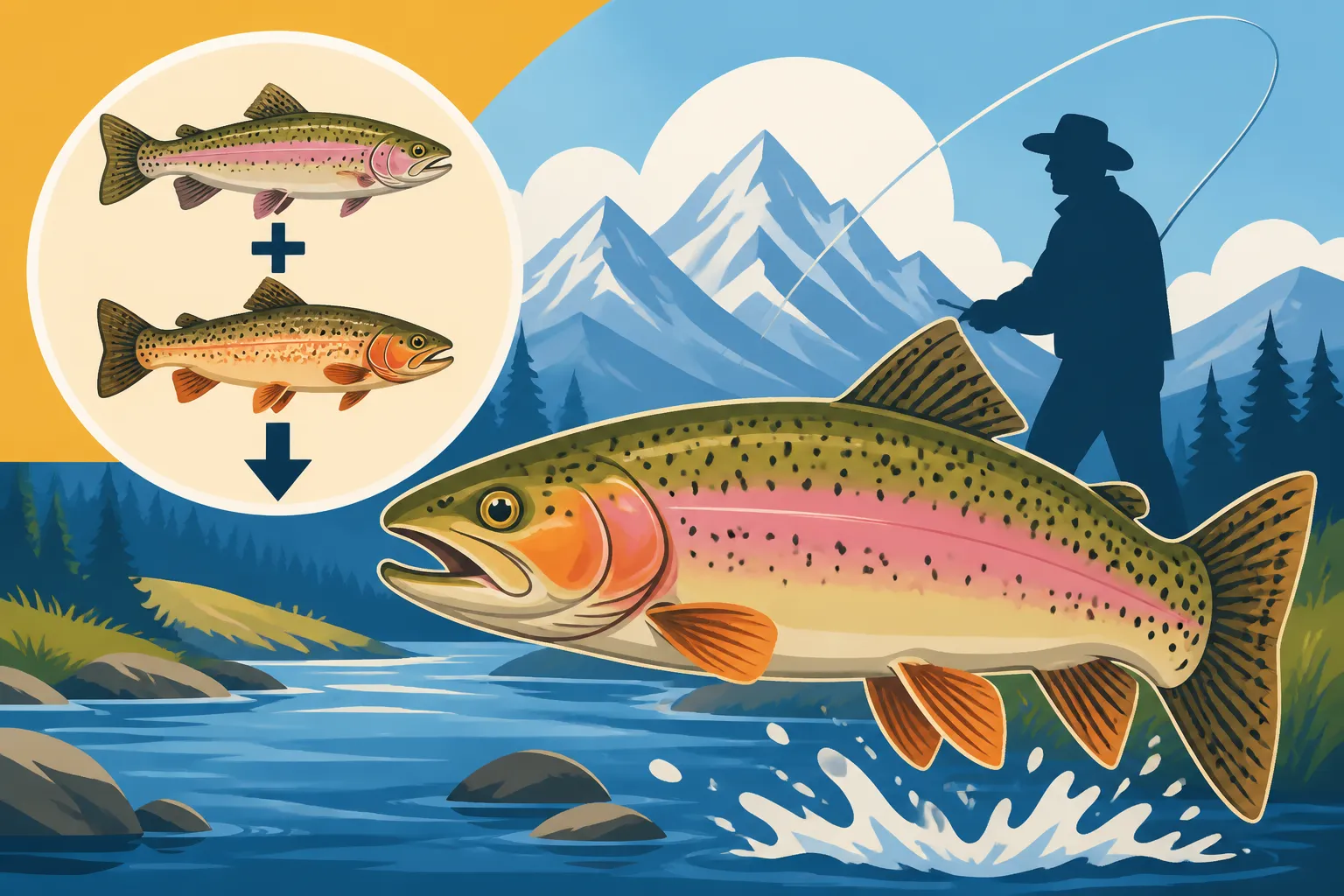
The term "cutbow" isn't some fancy scientific name; it's a wonderfully descriptive nickname anglers came up with to identify a hybrid trout that results from the cross-breeding of a cutthroat trout and a rainbow trout. Think of it as nature's mash-up, bringing together traits from two of the most beloved trout species in North America.
The Parent Species: Cutthroat and Rainbow Trout
To truly appreciate a cutbow, it helps to understand its parents.
-
Cutthroat Trout: These are Wyoming's native pride and joy, especially the Yellowstone Cutthroat Trout, which is the state fish. They're recognized by the distinctive red, orange, or yellow "slash" marks under their lower jaw – hence the name "cutthroat." They typically have smaller, more numerous spots, often concentrated towards the tail, and their overall coloration can range from olive green to yellowish-brown, sometimes with hints of red on their flanks. Historically, cutthroat trout were the dominant salmonid species in much of Wyoming. You can learn more about them in Cutthroat Trout Fishing in Wyoming.
-
Rainbow Trout: Known for their striking iridescent band along their lateral line (which can vary from faint to brilliantly red or pink), rainbow trout are a Pacific salmonid that has been widely introduced across the continent, including Wyoming. They generally have smaller, more evenly distributed black spots over their entire body, including the head, fins, and tail. Their overall body shape tends to be a bit more streamlined than a cutthroat, and they are often considered more aggressive fighters, especially when hooked. Our guide to Rainbow Trout Fishing in Wyoming has all the details on these feisty fish.
How Cutbows Are Formed
Cutbows primarily occur in one of two ways:
-
Natural Hybridization: This happens when rainbow trout are introduced into waters that already hold native cutthroat populations. If the spawning grounds and timing overlap, and genetic compatibility exists, the two species can interbreed. Over generations, especially in smaller, isolated systems, this can lead to a significant portion of the trout population displaying hybrid characteristics. This natural interbreeding is often a concern for conservationists working to protect pure native cutthroat strains, as it can dilute the genetic integrity of the native fish.
-
Hatchery Stocking: In some cases, fish hatcheries intentionally cross-breed rainbow and cutthroat trout to produce a hybrid. This is usually done to combine desirable traits from both parents, such as the hardiness and faster growth rate of a rainbow with the unique coloration or fighting spirit of a cutthroat. These hatchery-reared cutbows are then stocked into public waters. You might find some of these stocked fish, particularly in lakes or ponds, offering a fun angling experience.
It's important to remember that these hybrids aren't sterile like a mule (a cross between a horse and a donkey). Cutbows can reproduce, and they can also breed back with either parent species, creating a complex genetic mix in a given watershed. This makes precise identification even trickier for anglers and a fascinating challenge for fishery managers.
Where and Why You'll Find Cutbows in Wyoming
Wyoming is a vast state with an incredible diversity of fisheries, from high-alpine lakes to broad prairie rivers. This diversity, combined with historical stocking practices and natural fish migration, creates many opportunities to encounter cutbows.
Common Habitats for Cutbows
You're most likely to find cutbows in waters where both cutthroat and rainbow trout populations either coexist or have coexisted in the past.
- Rivers and Streams with Introduced Rainbows: Many of Wyoming's famous trout rivers, while historically cutthroat territory, have seen rainbow trout introduced over the decades. The North Platte River system, for example, is renowned for its large brown trout and rainbows, but you'll also find cutthroat, and therefore, their cutbow offspring. Waters in the Bighorn Mountains or parts of the Wind River Range that have received rainbow stockings alongside native cutthroat can also host these hybrids.
- Reservoirs and Larger Lakes: Many of Wyoming's large reservoirs are regularly stocked with rainbow trout, and often hold resident populations of cutthroat or have cutthroat entering from tributary streams. Lakes like Flaming Gorge Reservoir, Boysen Reservoir, or Glendo Reservoir might surprise you with a cutbow. These larger bodies of water provide ample habitat for both species to thrive and interbreed. Wyoming's Flaming Gorge Reservoir Fishing Guide is a great resource if you're exploring that area, and cutbows are certainly a possibility.
- Transition Zones: Look for cutbows in areas where different types of water meet. For instance, where a tributary stream (potentially holding cutthroat) flows into a larger river or reservoir (which might have a strong rainbow presence), the chances of encountering a hybrid increase. These "transition zones" create natural mixing bowls for fish populations.
The Role of Stocking Programs
Historically, and even sometimes today, stocking programs have played a significant role in the prevalence of cutbows. When fish and game departments introduce rainbow trout into waters, even if accidentally, where cutthroat trout are already established, the potential for hybridization immediately increases.
In some areas, fisheries managers have worked diligently to protect pure strains of native cutthroat trout, even going to great lengths to remove non-native species or establish barriers to prevent genetic mixing. However, in other waters where the conservation of pure native cutthroat isn't the primary management goal, the presence of cutbows is simply part of the diverse fishery. Understanding Wyoming's Stocked Rainbow Trout Program can shed light on why certain waters have a mix of species, including these hybrids.
Identifying a Cutbow: The Best of Both Worlds
Spotting a cutbow can be tricky because they often display a mosaic of features from both parents. It's rarely a 50/50 split; one parent's traits might be more dominant. However, there are some key indicators you can look for to help make an educated guess.
Key Visual Cues to Look For
When you pull a trout from the water, take a moment to observe these characteristics:
- The "Cut" Marks: The most defining feature of a pure cutthroat is the red, orange, or yellow slash under its jaw. A cutbow will often display these slashes, but they might be fainter, broken, or less intensely colored than on a pure cutthroat. Sometimes, they might only appear on one side, or be more like a faint blush.
- The Rainbow Stripe: Conversely, a pure rainbow trout has a vibrant, often iridescent pink or red stripe running horizontally along its side. A cutbow might show this stripe, but again, it could be less pronounced, shorter, or more muted than on a full-blooded rainbow.
- Spotting Pattern: This is where it gets really interesting. Rainbows typically have small, evenly distributed spots all over their body, including the head, gill plates, and fins. Cutthroats often have larger, more irregular spots, usually concentrated towards the tail end of the body. A cutbow might have a mix: some spots near the head like a rainbow, but also a heavier concentration near the tail like a cutthroat. The spot size and distribution can be a major clue.
- Coloration: Cutbows tend to be more brightly colored than many pure cutthroat strains, often exhibiting the silvery sheen or bluish-green back of a rainbow, combined with some of the yellowish or olive tones of a cutthroat. The combination can be stunning.
- Mouth and Head Shape: Rainbow trout generally have a more pointed snout and a terminal mouth (meaning the mouth opens at the very front of the head). Cutthroats often have a slightly broader head and a more maxillary mouth (the upper jaw extends slightly beyond the lower). A cutbow might have an intermediate head shape.
Remember, identifying these fish is part art, part science. There's a wide spectrum of appearances, and some fish are simply harder to categorize than others. If you're really into fish identification, you might even consider picking up a regional fish identification guide, many of which are available through retailers like Amazon. This will help you discern subtle differences between species.
Comparison Table: Cutthroat vs. Rainbow vs. Cutbow
To help visualize these differences, here's a quick comparison of the key traits:
| Feature | Cutthroat Trout | Rainbow Trout | Cutbow Trout (Hybrid) |
|---|---|---|---|
| Jaw Slashes | Distinct red, orange, or yellow markings | Absent | Present, but often faint, broken, or muted |
| Lateral Stripe | Absent or very faint, subtle pink | Pronounced, iridescent pink/red band | Present, but may be less vibrant or complete |
| Spots | Irregular, larger, concentrated on tail | Small, numerous, evenly distributed over body/head | Variable; mix of both patterns, can be confusing |
| Overall Color | Olive green, yellowish, brownish; often darker | Silvery, bluish-green back, white belly | Brighter than cutthroat, more varied than rainbow |
| Head Shape | Broader head, sometimes slightly upturned snout | More streamlined, pointed snout | Intermediate; can lean either way |
| Native/Introduced | Native to Wyoming (various subspecies) | Introduced to Wyoming (widely stocked) | Hybrid; occurs naturally or via stocking where both coexist |
This table should give you a good starting point when you're admiring your catch. You can delve deeper into How to Tell a Cutthroat From a Rainbow Trout to refine your identification skills.
Fishing for Cutbows: Strategies and Considerations
Fishing for cutbows is essentially fishing for trout, but knowing you might encounter this hybrid allows you to adjust your approach to maximize your chances and appreciate the catch even more. Since they are a mix, techniques that work for both parent species are often effective.
Tackle and Techniques
Cutbows will respond to a wide array of trout fishing techniques, mirroring the preferences of their parent species.
- Fly Fishing: If you're fly fishing, patterns that are effective for both rainbows and cutthroats will do the trick. Think attractor patterns, nymphs, and dry flies. For nymphs, consider familiar patterns like Hare's Ears, Pheasant Tails, or Prince Nymphs. Streamers can also be deadly, especially for larger cutbows, which inherit some of the aggressive tendencies of rainbows. You might find a wide variety of specific flies or lures on Amazon that are known to tempt both cutthroat and rainbow trout. For more specific advice, check out Best Wyoming Fly Patterns for Cutthroat Trout.
- Spin Fishing: Spin anglers will have success with classic trout lures such as small spinners (Mepps, Panther Martin), spoons (Kastmasters, Dardevles), and small crankbaits. Soft plastics and bait fishing (where allowed) with worms, powerbait, or salmon eggs can also be highly effective, particularly in lakes or slower-moving sections of rivers. The Best Lures for Wyoming Rainbow Trout guide provides excellent ideas that will cross over well for cutbows.
- Trolling: In larger reservoirs, trolling with spoons, Rapalas, or even wedding ring spinners tipped with a worm can be a fantastic way to locate and catch cutbows, especially when they're feeding in the water column like their lake-dwelling rainbow relatives. Techniques detailed in Trolling Techniques for Wyoming Reservoirs will be highly applicable.
Best Times and Conditions
Like other trout, cutbows are often most active during cooler parts of the day, particularly in summer.
- Spring and Fall: These shoulder seasons often offer the most consistent fishing, with mild temperatures and active fish. Spring often means fish are hungry after winter, and fall can bring on aggressive feeding before the cold sets in. You might even find cutbows making spawning runs in tributaries in spring, much like rainbow trout.
- Summer: In summer, focus on early mornings, late evenings, or fishing during overcast days. Look for deeper, cooler water in rivers (pools, undercut banks) and thermoclines in lakes.
- Water Conditions: Clear, stable water conditions are generally best. However, cutbows can also be caught during periods of slightly off-color water, especially if they are feeding aggressively on subsurface insects or baitfish. Understanding How Water Temperature Changes Wyoming Trout Behavior is key to successful year-round fishing.
Regulations and Conservation
It's crucial to always check the specific regulations for the water you're fishing. Wyoming's fishing regulations can be quite complex, with water-specific rules that dictate bag limits, tackle restrictions, and even catch-and-release requirements. While there generally aren't specific regulations for cutbows, they will fall under the general trout regulations for that particular water body. If you're in a specific stream managed for native cutthroat, even hybrid cutbows might be subject to stricter rules, as they represent a form of genetic introgression. Always consult Wyoming Fishing Regulations Every Angler Should Know before heading out.
The presence of cutbows highlights the dynamic nature of Wyoming's fisheries. While they offer a unique and often beautiful angling experience, their existence also reminds us of the ongoing efforts to manage and conserve Wyoming's native fish populations. Practices like Catch-and-Release Best Practices for Trout are always encouraged, especially when you're unsure of the exact species or if you're in a sensitive fishery.
Ultimately, catching a cutbow trout is a special experience, a chance to appreciate the incredible adaptability and beauty of these fish. Whether it's a vibrant, heavily spotted specimen with a faint slash, or a brightly striped fish with a distinct red mark, each cutbow tells a story of Wyoming's rich and sometimes complex aquatic ecosystems.
Disclaimer
This article is for general informational purposes only and does not constitute professional advice. Laws, prices and regulations vary by location and change over time. Consult a qualified professional for guidance on your specific situation.