How Big Brook Trout Get in Wyoming
One of the most satisfying things about fishing Wyoming's incredible waters is the sheer variety of trout you can encounter. When you're dreaming of a day on a picturesque mountain stream or a quiet high-alpine lake, brook trout often come to mind. But if you're like most anglers, you might wonder just how big these beautiful, speckled fish actually get here in the Cowboy State. It’s a common question, because while brookies are abundant, true giants are rare, and this guide will help set your expectations and point you toward those elusive bigger fish.
The Realistic Expectations for Wyoming Brook Trout Size
Let's be real for a moment: if you're coming to Wyoming hoping to pull out 20-inch brook trout on every cast, you might be a little disappointed. While those unicorns do exist, they are far from the norm. Wyoming's brook trout fisheries are typically known for their abundance rather than their individual fish size. These prolific spawners often overpopulate smaller streams and high-elevation lakes, leading to a large number of smaller, albeit incredibly feisty and beautiful, fish.
Think of it this way: a healthy brook trout stream might hold hundreds or even thousands of fish per mile, but the trade-off for that population density is often slower growth rates due to intense competition for food. It’s a classic ecological balancing act. When resources are spread thin, each individual fish gets less, and therefore grows less. This doesn't mean the fishing isn't phenomenal; it just means you're more likely to catch many 8-12 inch fish rather than a few monsters. It’s a quality-over-quantity situation in a different sense – the quality of the experience, the scenery, and the sheer number of bites often makes up for the lack of enormous fish.
Average Size in Different Habitats: Streams vs. Lakes
The size of a brook trout you might encounter in Wyoming is heavily dependent on where you're casting your line. There's a noticeable difference between the average size you'll find in a small, freestone mountain stream and a larger, more nutrient-rich high-alpine lake.
In the smaller, colder streams that crisscross much of Wyoming's backcountry, brook trout typically range from 6 to 10 inches. A 12-inch brook trout from one of these trickling tributaries is genuinely a fantastic catch and will fight with surprising vigor for its size. These stream-dwelling brookies are often lean, feisty, and display incredibly vibrant colors, especially the males during spawning season. They're a joy to catch on light tackle and provide endless action. The challenge here isn't necessarily finding them, but rather navigating the tight quarters and often dense streamside vegetation to present your offering effectively. These are the kinds of places where a quick cast with a tiny spinner or a perfectly drifted dry fly can yield continuous bites, making for a truly memorable day, even if the fish aren't huge.
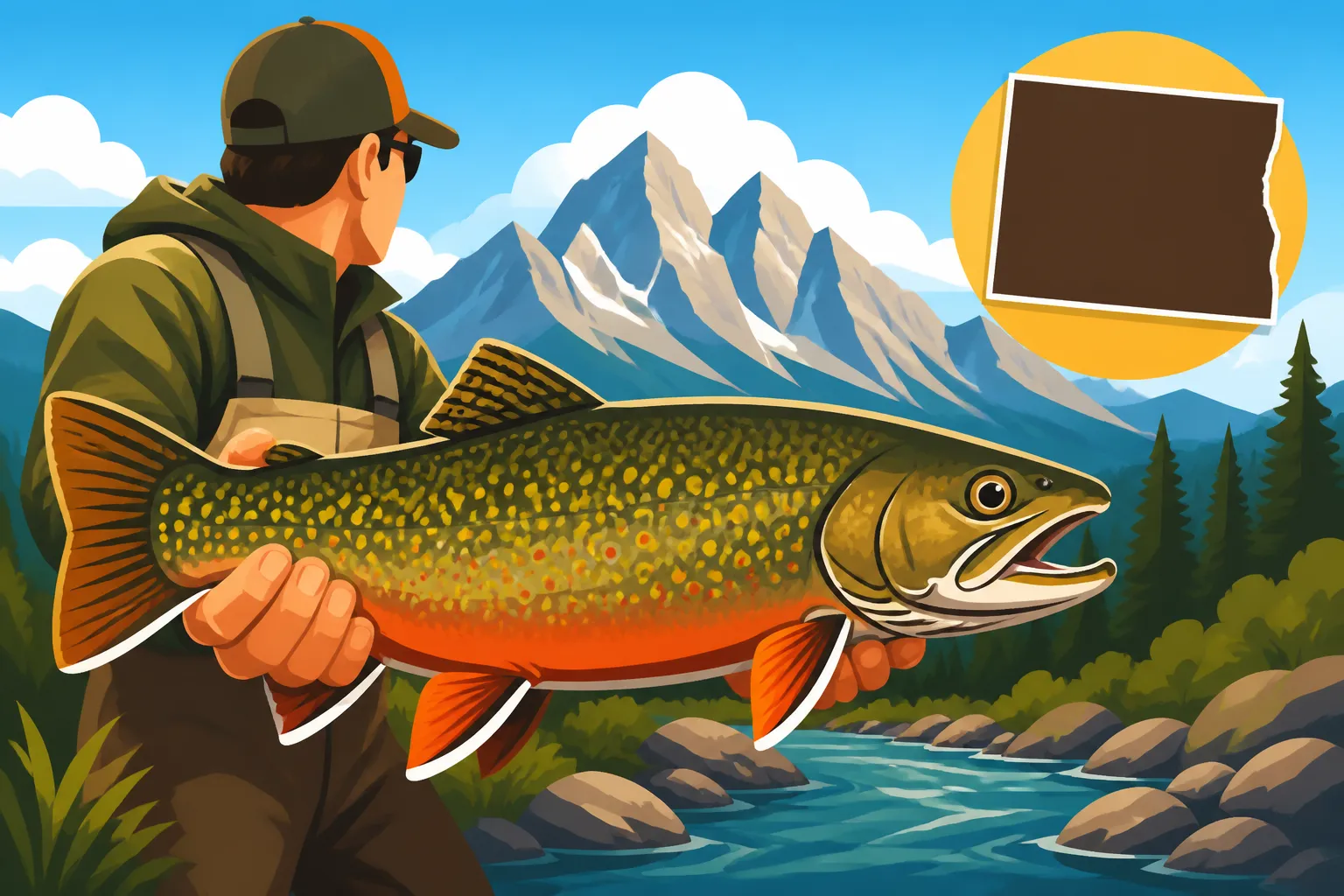
When you venture into Wyoming's high-alpine lakes, particularly those with deeper water and a more stable food supply, that's where the potential for larger brook trout really starts to increase. In these lakes, where competition might still be present but food sources like scuds, leeches, and aquatic insects are more plentiful, brook trout can sometimes push into the 14 to 18-inch range. A 16-inch brook trout from a remote mountain lake is considered a legitimate trophy in Wyoming. These bigger lake fish are often much fatter and more robust than their stream counterparts, boasting a broader shoulders and a deep belly. They'll put a significant bend in your rod and often make powerful runs, especially in the cold, oxygen-rich waters of their lake habitats. How Big Brook Trout Get in Wyoming is a common question, and these lake specimens represent the upper end of the spectrum for most anglers.
Factors Influencing Growth: Food, Water Temp, and Competition
Several key environmental factors play a huge role in how large a brook trout can grow in any given Wyoming waterbody. Understanding these can help you identify potential spots for bigger fish or simply appreciate why certain areas consistently produce smaller ones.
First up is food availability. This is arguably the biggest driver of growth for any fish. Waters with an abundant and diverse food base – think prolific insect hatches, a healthy population of scuds or small baitfish – will naturally produce larger, healthier brook trout. Lakes often have a more stable and diverse food chain than small streams, which explains why they tend to yield bigger fish. If a stream is very productive but also has a relatively low fish density, you might find some real bruisers there too. Conversely, in heavily populated waters with limited food, even if the individual fish are beautiful, they'll remain on the smaller side. They simply can't get enough calories to pack on serious weight.
Water temperature is another critical factor. Brook trout thrive in cold, clean water, typically preferring temperatures between 45 and 65 degrees Fahrenheit. While they can tolerate slightly warmer water for short periods, extended exposure to high temperatures stresses them and slows their metabolism and growth. Cold water holds more oxygen, which is vital for active fish. This is why high-elevation streams and lakes, fed by snowmelt, are prime brook trout habitat. However, if the water is too cold for too long, like in some extreme high-alpine environments, growth can also be stunted because the fish spend more energy just staying alive and less on actively feeding and growing. The ideal is a balance: consistently cold, but not frigid, water. How Water Temperature Changes Wyoming Trout Behavior can really impact your success.
Finally, inter-species and intra-species competition significantly impacts growth. Brook trout are prolific spawners, and in many Wyoming waters, they are the dominant or sole fish species. If a stream or lake becomes overpopulated with brook trout, they end up competing fiercely with each other for every morsel of food. This self-regulation often leads to stunted growth for the entire population. You'll catch dozens of small fish, but very few, if any, will break that 10-12 inch mark. On the flip side, in waters where brook trout share habitat with other species like rainbow or cutthroat trout, competition can be even higher, although if the habitat is particularly rich, it might support a diverse and healthy population of all species. Sometimes, the larger, more aggressive trout species can outcompete brook trout for prime feeding lies, pushing them into less desirable areas where growth is slower. Understanding these dynamics is part of the art of Wyoming fishing.
Where to Find Larger Brook Trout in Wyoming
If you're specifically chasing after those bigger brook trout, your strategy needs to shift a bit from simply finding any brook trout water. While the smaller ones are always a blast, targeting larger specimens means looking for specific conditions and locations. It often involves a bit more effort, like hiking into more remote areas or exploring less-traveled waters, but the reward of a chunky brook trout is often worth every step. Best High-Alpine Lakes Worth the Hike are often prime targets for this pursuit.
One of the best pieces of advice I can give is to study topographic maps and look for larger, deeper lakes at higher elevations. These are often the places that support a more robust food chain and allow brook trout to grow to impressive sizes.
High-Altitude Lakes and Wilderness Areas
The gold standard for finding larger brook trout in Wyoming often lies hidden within its vast wilderness areas and high-altitude mountain ranges. We're talking about places like the Wind River Range, the Bighorn Mountains, and the Wyoming Range, where lakes sit at 9,000 to 11,000 feet or more. These lakes are typically characterized by crystal-clear, intensely cold water and are often only accessible via strenuous hikes or horseback trips.
Why are these remote lakes so good for larger brookies? Several reasons. Firstly, their isolation often means less fishing pressure. While word might get out about a particular lake, many anglers aren't willing or able to make the multi-mile hike with significant elevation gain. Less pressure means more fish survive to an older age, allowing them more time to grow. Secondly, these lakes, while cold, can be surprisingly productive. They often have stable populations of aquatic insects, scuds, and even sometimes smaller baitfish or insect larva that provide a consistent food source. The deeper water also offers thermal refuge in summer and a stable environment year-round, which contributes to overall fish health and growth. Many of these lakes are stocked periodically by helicopter, but even wild populations can thrive. Fishing Wyoming's Wilderness and Backcountry Lakes can be a truly rewarding experience, especially when you find one of these gems holding larger brookies.
Another factor is the sheer depth some of these lakes possess. Deeper lakes tend to have more diverse habitat, offering fish opportunities to escape predation from birds of prey and adapt to different thermal layers throughout the seasons. This complexity allows for a more stable ecosystem and often, larger fish. It takes dedication, careful planning, and sometimes an overnight stay, but landing a 14-inch brook trout with vibrant colors against a backdrop of snow-capped peaks is an experience that truly defines Wyoming fishing.
Less-Pressured Streams and Tributaries
While high-alpine lakes get a lot of attention for big brookies, don't completely discount streams. The trick here is to find those less-pressured streams or, more specifically, the less-pressured sections of streams and their often-overlooked tributaries.
Many of Wyoming's brook trout streams are relatively easy to access, which means they get hit hard by anglers, leading to the smaller average size we discussed. However, if you're willing to bushwhack a bit, cross some private land (with permission, of course!), or simply hike further upstream from popular access points, you might find pockets of larger brook trout. These areas often have natural barriers like waterfalls or dense logjams that limit fish movement and, crucially, angler access. In these more isolated sections, brook trout might have less competition and more consistent food sources, allowing them to grow a bit bigger. Look for stretches of water with deeper pools, more complex structure (like downed trees or large rocks), and consistent cold water flow. These features provide prime lies where larger fish can ambush prey and feel secure. Reading Riffles and Runs on Wyoming Trout Streams will help you identify these prime spots.
Tributaries, especially those flowing into larger, more popular rivers, are often overlooked gems. These smaller creeks might seem insignificant, but they can hold surprisingly large brook trout, particularly during seasonal migrations for spawning or seeking thermal refuge. While the fish may not be quite as large as those found in the best high-alpine lakes, these less-pressured stream sections can produce brook trout in the 10-14 inch range, which for stream-caught brookies, is absolutely fantastic. They require a stealthy approach, careful casting, and an adventurous spirit, but the reward of a strikingly colored brook trout from a secluded mountain stream is a true testament to Wyoming's wild beauty.
The Thrill of a "Trophy" Brook Trout (Wyoming Style)
When we talk about "trophy" fish, our minds often jump to massive brown trout or huge lake trout. But for brook trout, the definition of a trophy is a little different, especially in Wyoming. It's less about breaking state records and more about appreciating the unique challenge and beauty of these fish in their native or naturalized habitats.
For many, catching a brook trout that pushes the 14-inch mark is an accomplishment worth celebrating. These fish are often the result of significant effort, whether it's a long hike into the backcountry or persistent fishing in a less-accessible stream. They represent a wildness and resilience that is uniquely Wyoming. The vibrant colors – the intricate vermiculations on their back, the red and orange spots haloed with blue, the bright white leading edge on their fins – become even more pronounced on a larger specimen. It's a fish that truly embodies the spirit of cold, clear mountain waters.
What Constitutes a "Trophy" Brook Trout in Wyoming
Defining a "trophy" for brook trout in Wyoming is really a matter of perspective, but generally, anything over 12 inches is considered an excellent fish, and once you hit 14 inches, you're in true trophy territory for this species in the state. Fish exceeding 16 inches are rare and usually come from specific, highly productive high-alpine lake environments.
Consider the context: if you're pulling a 12-inch brook trout out of a tiny, trickling mountain stream, that's an absolute giant for that habitat. It means that particular fish managed to out-compete its siblings, find enough food, and evade predators for several years to reach that size. The struggle to survive and thrive in such an environment makes it a "trophy" in its own right. On the other hand, if you're fishing a well-known, productive high-alpine lake, a 14-inch brook trout might be your target, and anything beyond that is a true exceptional catch.
Here’s a general guideline for what anglers often consider a trophy, recognizing that it’s somewhat subjective and dependent on the water you're fishing:
| Size Range (Inches) | Description in Wyoming | Typical Habitat |
|---|---|---|
| 6-10 | Common, abundant | Small streams, overpopulated lakes |
| 10-12 | Excellent catch, healthy | Productive streams, mid-sized lakes |
| 12-14 | Trophy-worthy | Less-pressured streams, deeper high-alpine lakes |
| 14-16 | Exceptional, rare | Highly productive, remote high-alpine lakes |
| 16+ | Giant, once-in-a-lifetime | Specific, unpressured large high-alpine lakes |
These are not hard and fast rules, of course, but rather a way to appreciate the size and effort involved. The beauty of the brook trout is that even a small one is a vibrant, stunning creature, but landing one on the larger end of this scale provides a truly memorable fishing story. How to Identify a Brook Trout will help you appreciate their unique markings.
The Experience Over the Size
While chasing big brook trout is a thrill, it's crucial to remember that the true value of fishing in Wyoming, especially for brook trout, often lies in the experience itself. The journey to those remote lakes or secluded stream sections, the crisp mountain air, the stunning scenery, and the solitude are often as rewarding as the fish you catch.
Imagine hiking for miles through a pristine wilderness, crossing rocky passes, and finally arriving at a turquoise lake nestled beneath towering peaks. Setting up camp, brewing some coffee, and then casting your line into untouched waters – that's the real prize. The brook trout you eventually hook, regardless of its size, becomes a symbol of that adventure. It's the wildness of it all, the feeling of connecting with nature in its purest form, that makes Wyoming brook trout fishing so special. You might hook a 10-inch fish that fights like a demon, or a chunky 14-incher that makes your heart pound. Both are victories.
This perspective also allows you to enjoy the smaller, more accessible streams without feeling like you're missing out. A day spent catching dozens of 8-inch brook trout on a dry fly in a beautiful meadow stream is incredibly fun and therapeutic. It's about the continuous action, the perfect cast, the splashy rise, and the sheer joy of being outdoors. While the quest for a trophy brook trout is certainly a worthy one, don't let it overshadow the simpler, equally profound joys of fishing in Wyoming.
Gear and Techniques for Pursuing Bigger Brook Trout
Targeting larger brook trout, especially in their preferred high-alpine lake and less-pressured stream habitats, often requires a slightly different approach than simply throwing a worm on a hook. While brookies aren't typically known for being exceptionally picky, presenting the right offering in the right way can significantly increase your chances of hooking into those bigger, more cautious fish.
The key is often stealth, understanding their habitat, and matching your presentation to the available food sources. This might mean adjusting your fly patterns, selecting specific lures, or even changing your retrieve. It also means being prepared for the conditions of the high country, where weather can change rapidly.
Recommended Tackle and Lures
For brook trout, especially those in the 10-16 inch range, light tackle is generally the most effective and certainly the most fun. A lighter rod allows you to feel the subtle takes and enjoy the fight from even a modest-sized fish.
- Rods and Reels: A lightweight spinning rod, perhaps a 5'6" to 6'6" ultra-light or light action, paired with a small spinning reel spooled with 4-6 lb test monofilament or fluorocarbon line, is ideal. For fly anglers, a 2 to 4-weight fly rod, 7 to 8.5 feet long, with a floating line and a 7.5 to 9-foot leader tapering down to 5x or 6x tippet, will give you plenty of finesse. You can find excellent options for both spinning and fly fishing gear on Amazon, with a wide range of brands to suit any budget.
- Lures for Spin Fishing:
- Small Spinners: Classic Mepps Aglia, Panther Martin, or Rooster Tail spinners in sizes #0 to #2 are deadly for brook trout. Gold, silver, copper, or black blades with dressed trebles or single hooks are all effective. These mimic small baitfish or larger insects.
- Small Spoons: Tiny Kastmaster or Daredevil spoons, often in the 1/16 to 1/8 ounce range, can be very effective, especially in deeper lake environments where they imitate scuds or injured baitfish.
- Micro Jigs: Small marabou jigs or plastic grub jigs, tipped with a piece of worm or scented bait, can be fantastic. These are especially good for probing deeper pockets or when fish are less active.
- Flies for Fly Fishing:
- Dry Flies: When brookies are rising, small attractor patterns like Parachute Adams, Royal Wulff, or Elk Hair Caddis in sizes #14-18 are usually irresistible. They're often opportunistic feeders.
- Nymphs: When fish aren't rising, nymphs are key. Patterns like Prince Nymph, Pheasant Tail Nymph, Hare's Ear Nymph, or a simple Copper John in sizes #14-18 are consistent producers. Dead-drifted under an indicator or tight-lined, they imitate the aquatic insects that make up a large portion of a brook trout's diet. How to Fish a Nymph Rig Under an Indicator is a great skill to develop.
- Streamers: For targeting those truly larger brook trout, especially in lakes, small streamers can be highly effective. Patterns like a Woolly Bugger (black, olive, or brown) or a small sculpin imitation in sizes #8-12 can entice an aggressive strike from a bigger fish looking for a substantial meal. You can find a vast array of fly patterns and fly tying materials on Amazon if you're looking to tie your own.
Strategies for Targeting Larger Fish
Catching bigger brook trout is often more about strategy and persistence than pure luck. Here are some techniques to improve your odds:
- Fish the "Edges" and Structure: Larger fish, being more wary, will often hold in areas that provide cover and ambush points. This means fishing near downed logs, undercut banks, large rocks, submerged vegetation, or where a drop-off meets shallower water. These spots offer safety and a place to wait for food to drift by. For instance, in a high-alpine lake, focus on rocky points, areas where streams flow in or out, or where you see noticeable changes in depth. In streams, target the deeper pools, the seams where faster water meets slower water, and undercut banks.
- Early Morning and Late Evening: Just like many other trout species, brook trout are often most active during the low-light periods of dawn and dusk. This is when they feel most comfortable moving into shallower, more exposed areas to feed. If you're backpacking, plan your fishing around these times. Even a few hours of dedicated fishing during these windows can yield disproportionately better results.
- Stealth and Presentation: Especially in the clear, often shallow waters that brook trout inhabit, stealth is paramount. Avoid heavy footsteps on the bank, bright clothing, and casting shadows over the water. A soft, accurate cast that presents your lure or fly naturally is far more effective than a long, splashy one. If you're fly fishing, focus on a good dead drift for nymphs and dry flies, or a realistic retrieve for streamers. For spin fishing, vary your retrieve speed and depth until you find what triggers a strike. A quiet approach and a well-executed cast from Amazon-purchased gear can make all the difference.
- Explore Remote Waters: As mentioned, the most consistent way to find larger brook trout is to go where others don't. This means hiking further, taking the less-traveled trail, or even venturing into areas that require some bushwhacking. The effort acts as a filter, ensuring that the fish in these remote waters have seen less pressure and have a better chance to grow larger. Always be prepared for backcountry travel, including carrying a good map, compass or GPS, and essential safety gear.
- Look for Less Competition: Sometimes, finding a lake or stream that isn't overpopulated with brook trout can lead to bigger fish. These are harder to pinpoint without local knowledge, but if you're consistently catching dozens of small fish, moving to a different spot with fewer but potentially larger fish might be a good strategy. Over-crowding usually means stunted growth, so a less densely populated fishery is often a sign of better growth potential.
Ultimately, catching a truly big brook trout in Wyoming is a special experience. It's a combination of knowledge, effort, and a little bit of luck. But even if the giants elude you, the beauty of the fish and the grandeur of the landscape will make any Wyoming brook trout adventure unforgettable.
Disclaimer
This article is for general informational purposes only and does not constitute professional advice. Laws, prices and regulations vary by location and change over time. Consult a qualified professional for guidance on your specific situation.