How to Fish a Nymph Rig Under an Indicator
It’s a common frustration for anglers in Wyoming: you know the trout are down there, feeding on nymphs, but you just can't feel those subtle takes or get your flies to the right depth in the river's swift currents. Many days can turn into a guessing game, wondering if that slight bump was a rock or a hungry fish, often leading to missed opportunities. This comprehensive guide is designed to take the guesswork out of subsurface fishing by breaking down how to effectively fish a nymph rig under an indicator, a technique that is not only incredibly versatile but also dramatically increases your chances of detecting strikes and bringing more trout to the net in Wyoming's amazing waters.
Why Nymphing Under an Indicator is a Game Changer in Wyoming
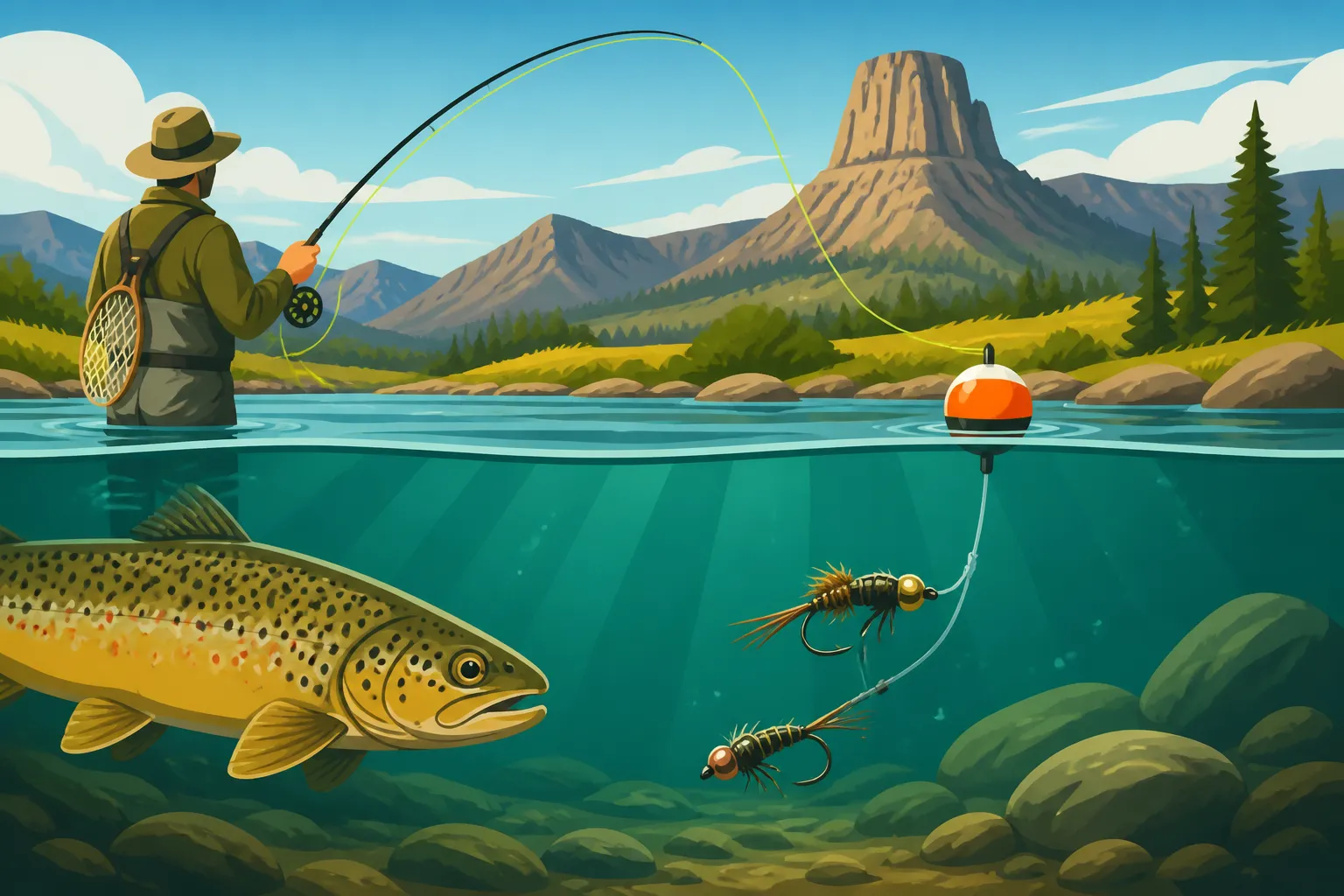
Fishing under an indicator, sometimes called "bobber fishing" by those who haven't embraced its true finesse, is one of the most productive ways to catch trout. It essentially gives you "eyes" underwater, allowing you to see exactly what your flies are doing and, more importantly, when a fish takes them.
Understanding Trout Feeding Behavior
Trout are opportunistic feeders, and the vast majority of their diet consists of aquatic insects in their nymphal or larval stages, as well as small crustaceans and baitfish, all found beneath the water's surface. They spend far more time looking for an easy meal drifting along the bottom or suspended in the water column than they do waiting for a perfectly presented dry fly to float by. Think about a juicy stonefly nymph or a caddis larva tumbling along—it's a much more consistent food source than a sporadic adult mayfly hatch.
When water temperatures drop, or during periods of high flows, trout tend to conserve energy, hugging the bottom where currents are often slower and food is concentrated. This behavior is particularly prevalent in Wyoming's colder months, or in the deep pools and runs of renowned rivers like the North Platte. Trying to fish a weighted nymph without an indicator in these conditions is incredibly challenging. You'll likely miss most of the subtle bumps, hesitations, or downstream movements that signal a fish has taken your fly. The indicator becomes your crucial visual cue, translating those otherwise invisible takes into clear, actionable signals.
When to Choose This Method in Wyoming
Nymphing under an indicator truly shines across a wide spectrum of Wyoming fishing conditions, making it an indispensable technique for any angler. It's often your primary method during the spring runoff season, when rivers swell, currents become powerful, and water clarity decreases. In these conditions, trout retreat to the bottom, seeking refuge from the strong currents and waiting for dislodged food to drift by. An indicator rig allows you to get your flies down to them efficiently.
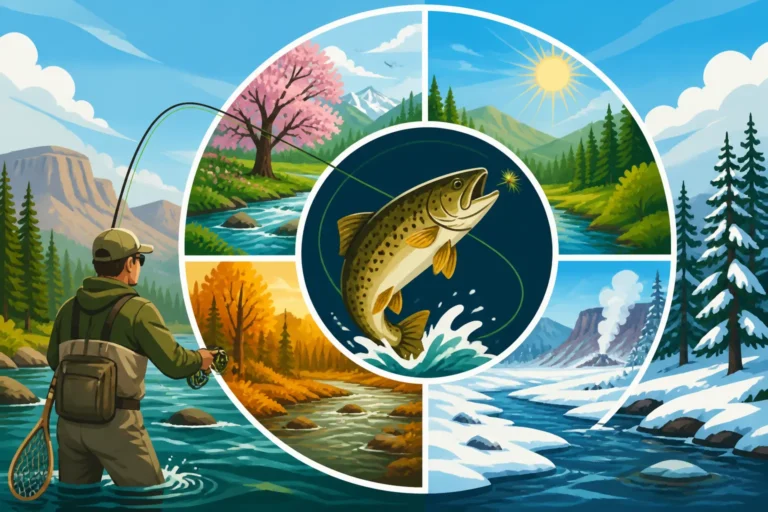
Furthermore, this method is exceptionally effective during the cooler months of fall, winter, and early spring when natural insect hatches are minimal, and trout are less inclined to rise to surface presentations. On iconic Wyoming rivers like the Snake River or the Green River, where powerful currents can make feeling a strike almost impossible with traditional tight-line nymphing, an indicator provides that crucial visual reference. It removes the guesswork and helps you consistently connect with fish that are feeding deep.
This technique is also superb for systematically exploring various depths in diverse water types. Whether you're targeting trout holding in the swift riffles, deep seams, or languid pools of a Wyoming trout stream, an indicator allows you to precisely position your nymphs at the exact depth where fish are actively feeding. It's incredibly adaptable, forgiving for beginners, and consistently effective, solidifying its place as a staple technique for both new and seasoned anglers aiming for consistent success. If you plan on year-round angling success on Wyoming’s waters, mastering this method is a must. For a broader understanding of how this fits into your fishing calendar, check out Wyoming Fishing Seasons Month by Month.
The Essential Components of Your Nymph Rig
Building an effective nymph rig is all about selecting the right components and assembling them thoughtfully. Each part plays a critical role in presentation and strike detection.
Choosing the Right Indicator
Your indicator isn't just a bobber; it's a finely tuned sensor, and selecting the appropriate type is paramount for detecting even the most subtle takes. Several styles are popular, each offering distinct advantages depending on the conditions.
- Foam Indicators (e.g., Thingamabobber, Air-Lock Strike Indicators): These are incredibly popular for their high buoyancy, exceptional visibility, and ease of adjustment. Many attach to your leader with a small O-ring or a unique screw-lock mechanism, allowing you to slide them up or down the leader to change depth without kinking your line. They float high on the water, making them easy to spot in turbulent currents, and are particularly effective for deep nymphing in large rivers like the North Platte. You can find a wide selection of these buoyant, durable options readily available on Amazon.
- Yarn Indicators: Many experienced fly anglers prefer yarn indicators for their soft landing, minimal drag, and superior sensitivity. They often attach to the leader with a small piece of rubber tubing or by twisting the leader into the yarn itself. Yarn readily absorbs floatant, ensuring it rides high, and its subtle presence is less likely to spook wary trout, especially in clear, calm water. While slightly less convenient to adjust depth, their natural presentation can be a game-changer.
- Strike Putty: This unique, moldable, clay-like material can be shaped and pressed directly onto your leader. Its primary advantages are extreme stealth and infinite adjustability; you can make it as small or large as needed and position it anywhere without kinking the leader. It's excellent for very finicky fish or precise depth tuning, though it might require more frequent reapplication of floatant and can be a bit messier to handle.
The ideal indicator choice balances sufficient buoyancy to support your nymphs and split shot with a size that won't spook fish or create excessive drag. On smaller, clearer streams, a more subdued indicator is often best. Conversely, for larger, faster rivers, a more robust and highly visible indicator will be more practical.
Leader and Tippet Considerations
The leader and tippet form the critical, often invisible, connection between your fly line and your nymphs. Their construction directly impacts how naturally your flies drift and how effectively you hook fish. A standard tapered leader, typically 7.5 to 9 feet long with a 4X to 5X butt section, serves as an excellent foundation. To the end of this tapered leader, you'll then attach your tippet material.
When selecting tippet, it's essential to consider factors like water clarity, current velocity, and the size and wariness of the trout you're targeting. For most nymphing applications in Wyoming, 4X to 6X fluorocarbon tippet is the preferred choice. Fluorocarbon boasts a refractive index very close to water, making it significantly less visible underwater compared to traditional monofilament. Crucially, it also sinks, which aids in getting your nymphs down to the feeding zone quickly. Furthermore, fluorocarbon is generally more abrasion-resistant, a significant advantage when your nymphs are bouncing along rocky river bottoms. Ensure you always carry a spool of your chosen tippet, which you can easily purchase from online retailers like Amazon, as you'll find yourself needing to re-tie and replace sections frequently throughout your fishing day.
Selecting Your Nymphs and Weight
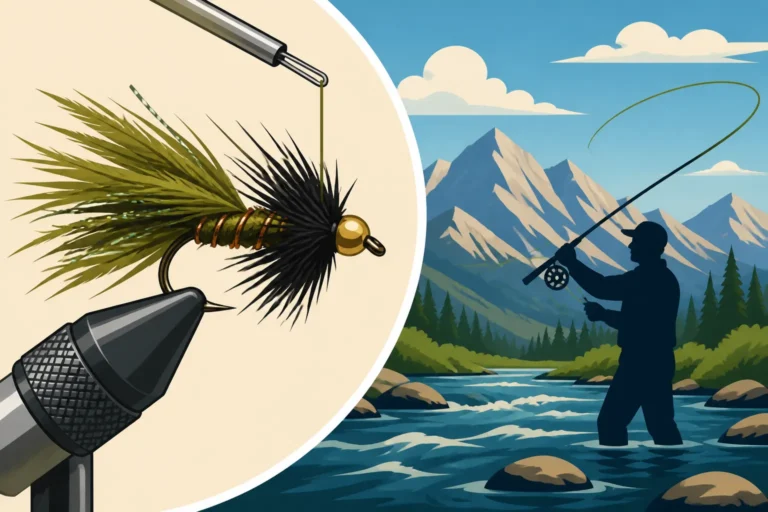
This is where your understanding of aquatic entomology and local conditions truly comes into play. Choosing the correct nymphs depends on what insects are present in the water, the specific conditions, and the species of fish you're hoping to entice. Some perennial Wyoming nymph patterns that often produce results include:
- Stonefly Nymphs: Patterns like Pat's Rubber Legs, the Twenty Incher, or the Girdle Bug are excellent choices, especially for larger trout in strong, deep currents.
- Caddis Nymphs: Designs such as the Green Rock Worm or LaFontaine's Sparkle Pupa are particularly effective when caddis hatches are active or imminent.
- Mayfly Nymphs: Versatile patterns like the Pheasant Tail, Hare's Ear, and Prince Nymph are year-round producers, imitating a wide array of mayfly species.
- Midge Larvae/Pupae: Tiny patterns like the Zebra Midge or Blood Midge are critical, especially during colder months or when fishing tailwaters where midges are a primary food source.
- Worms/Eggs: Patterns such as the San Juan Worm or Glo-Bug can be incredibly effective, particularly after rain events, during periods of high flows, or when fish are spawning.
Often, you'll fish a "tandem" or "dropper" rig, employing two or even three nymphs simultaneously to imitate different insect stages and increase your chances. A common strategy is to position a heavier, larger "point fly" at the bottom of your rig to help anchor it and get it down, with a smaller, lighter "dropper" nymph tied above it.
Weight (Split Shot): When the natural weight of your nymphs isn't enough to reach the desired depth and maintain a proper drift, you'll need to add split shot. Always opt for non-toxic lead alternatives. Position your split shot about 6-12 inches above your lead nymph. The goal is to use just enough weight to allow your flies to occasionally "tick" the bottom without constantly snagging. If you're constantly getting hung up, you have too much weight or your indicator is set too deep. Conversely, if your indicator is riding high and you're not getting any strikes in a deep area, you likely need to add more weight. Finding this perfect balance is absolutely essential for consistent success on challenging rivers like the Miracle Mile.
Here's a quick comparison of common indicator types:
| Indicator Type | Pros | Cons | Best Use Case |
|---|---|---|---|
| Foam (Airlock) | High buoyancy, highly visible, easy to adjust without kinking leader, durable. | Can be less subtle on impact, larger sizes might spook very wary fish. | Fast, turbulent water; deep nymphing; beginners; large rivers like the North Platte. |
| Yarn | Very sensitive, soft landing, minimal drag, subtle presentation. | Can get waterlogged if not treated with floatant, harder to adjust depth, less visible in glare. | Clear, slow water; spooky fish; shallow nymphing; experienced anglers. |
| Strike Putty | Highly adjustable size/shape, no leader kink, very stealthy. | Can slip on fine leader, may need reapplication of floatant, can be messy. | Very wary fish; precise depth adjustments; light tippets. |
Setting Up Your Perfect Nymph Rig
Properly assembling your nymph rig is key to its performance. Each step, from attaching your indicator to adding your flies and weight, contributes to the overall effectiveness of your presentation.
Attaching the Indicator for Optimal Performance
Once you've made your indicator choice, securing it correctly on your leader is the very first step toward a successful setup. For popular foam indicators, such as the Thingamabobber or Air-Lock Strike Indicator, they typically feature a small, flexible O-ring or a threaded post mechanism. You simply thread your leader through this, then secure it in place. The significant advantage of these designs is their leader-friendly nature; they won't damage or kink your line, and they can be easily slid up or down the leader to adjust your fishing depth without requiring you to re-tie anything. This ease of adjustment is invaluable when you're quickly trying to locate the precise feeding depth of trout.
If you opt for a yarn indicator, the process usually involves threading a small piece of rubber tubing onto your leader, then inserting the yarn into that tubing. Some yarn indicators also come with a pre-formed loop or a twist-on system. While yarn indicators excel in sensitivity, they can sometimes be more cumbersome to adjust depth on the fly compared to the quick-slide foam models. It's often a good idea to experiment with both types to determine which you prefer for Wyoming’s diverse and often unpredictable water conditions.
Building Your Leader and Tippet Section
To begin, attach your tapered leader—for instance, a 9-foot, 5X leader—to your main fly line using a loop-to-loop connection or a nail knot. Then, to the very end of this tapered leader, you will connect your tippet section. A practical starting length for your tippet is generally between 18 and 36 inches, though this length will be significantly adjusted based on the specific depth of the water you are fishing.
When joining your leader to your tippet, use a strong, dependable knot such as a double surgeon's knot or a blood knot. If you plan to fish a multiple-nymph rig, you'll tie your first nymph, often called the "point fly," to the very end of this primary tippet section. Subsequently, from the bend of the hook of your point fly, you will tie another segment of tippet—typically 12 to 24 inches long—to which you'll attach your second nymph, known as the "dropper." Some experienced anglers prefer an alternative method where the dropper is tied directly off a small tag end from a blood knot within the main tippet, which can often reduce frustrating tangles. Always having a reliable supply of fluorocarbon tippet is crucial, and many anglers stock up on trusted brands like Seaguar or Rio from convenient retailers like Amazon.
Adding Split Shot and Nymphs Strategically
The precise placement and correct amount of split shot are absolutely critical for getting your nymphs into the strike zone and achieving a natural drift. Begin by attaching one or two small split shot approximately 6 to 12 inches above your first, typically heaviest, nymph. This strategic placement allows your nymphs to tumble naturally along the stream bottom, mimicking dislodged insects, rather than being unnaturally dragged down directly by the weight.
Your primary objective is to use just enough weight to allow your flies to occasionally "tick" the bottom of the streambed without constantly snagging. If you find your rig getting hung up frequently, it’s a clear indication that you're using too much weight or that your indicator is set too deep. Conversely, if your indicator is riding high and you're not getting any strikes in a known deep spot, you most likely need to add more weight. Don't be afraid to experiment with different sizes and quantities of split shot! You should also factor in the inherent density of your chosen nymphs; some, like heavily weighted Pat's Rubber Legs, might require less additional split shot. Mastering the subtleties of Nymphing Techniques for Wyoming Tailwaters will undoubtedly enhance your proficiency in this area.
Mastering the Art of Fishing Your Nymph Rig
Once your rig is set up, the real fun—and skill—begins. Mastering the art of casting, drifting, and strike detection is what truly makes indicator nymphing so effective.
Casting and Presentation Techniques
Casting a weighted nymph rig under an indicator isn't like the delicate, tight-looped casts you use for dry flies. Instead, it requires a more open, lob-like casting stroke. Visualize loading your fly rod with the combined weight of your flies, split shot, and indicator, then gently pushing them forward rather than attempting a sharp, snappy cast. A common error beginners make is trying to force a tight loop, which almost inevitably leads to frustrating tangles. For heavier rigs or when fishing in confined spaces, a roll cast or a modified roll cast can be incredibly efficient and effective, allowing for short, precise presentations without needing much back-cast room.
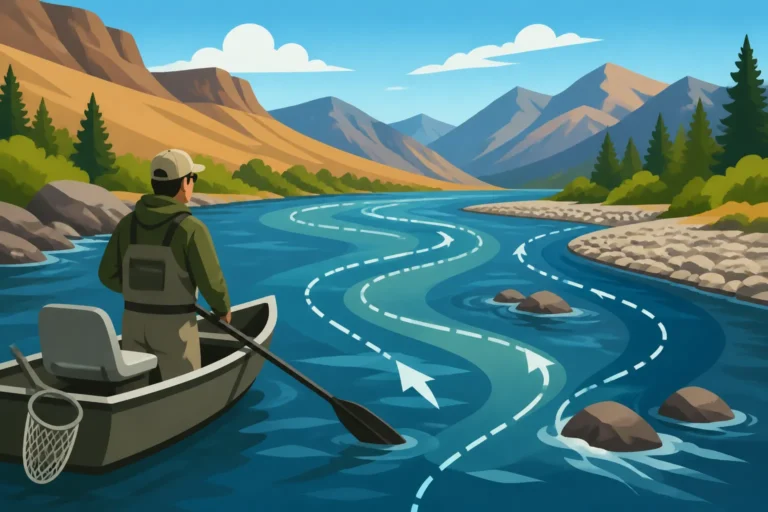
The absolute cornerstone of successful nymphing is achieving a natural, drag-free drift. Your indicator should float downstream at precisely the same speed as the surrounding current, never pulling ahead or lagging behind. To maintain this crucial drag-free drift, "mending" your line is essential. Mending involves making small, calculated adjustments to your fly line on the water to ensure it remains upstream of your indicator. As your rig drifts, continuously observe your indicator’s movement. If you notice it moving unnaturally, quickly mend your line by lifting it off the water and repositioning it upstream, feeding just enough slack to match the current's speed. This technique requires practice but is absolutely fundamental for convincing wary trout that your nymphs are genuine, unattached food. Developing your ability to read the water effectively, as detailed in How to Read Water When Trout Fishing, will significantly enhance your presentation skills.
Reading Your Indicator and Setting the Hook
This is arguably the most exciting part of indicator nymphing—the moment of truth when your indicator signals a fish has taken your fly. Your indicator is your direct window into the underwater world, so unwavering attention to its movement is paramount. Pay extremely close attention to any unnatural behavior:
- A Subtle Stop or Pause: The indicator suddenly halts or dramatically slows down in a current that should be moving it consistently.
- A Downstream Dart or Sideways Movement: The indicator makes an uncharacteristic dart slightly downstream or moves abruptly sideways.
- A Subtle Dip or Quiver: A slight bob, dip, or quiver, even if the indicator quickly resurfaces.
- Goes Completely Under: The most unmistakable sign; the indicator disappears entirely beneath the surface.
When you observe any of these signals, don't hesitate—set the hook immediately! A quick, sharp, upstream or sideways sweep of the rod tip is typically all that's needed. Many novice anglers make the mistake of waiting too long, mistaking a take for a snag, and end up missing fish. Remember, it's always better to set the hook on a rock than to miss a trout!
Mastery here comes with experience. The more you practice indicator nymphing, the better you’ll become at distinguishing a genuine fish take from merely bumping the bottom. Trout can have incredibly subtle mouths, so trusting your indicator is key.
Adjusting Your Rig for Different Conditions
Wyoming's dynamic weather and water conditions can shift rapidly, and a successful nymphing strategy demands constant adaptability. Your rig needs to be as flexible as the environment.
- Depth Adjustment: This is perhaps the most frequent adjustment you'll make. If your nymphs aren't occasionally ticking the bottom, slide your indicator further up your leader to increase your fishing depth. Conversely, if you're constantly getting snagged, slide it down to reduce your depth. A good rule of thumb is to set your indicator so your flies are drifting at roughly 1.5 to 2 times the actual depth of the water you're fishing. So, in 3 feet of water, your indicator might be positioned 4.5 to 6 feet above your lead fly.
- Weight Adjustment: If you've optimized your depth adjustment but still aren't getting your flies into the strike zone effectively, it's time to add more split shot. If you find your rig too heavy, simply remove some. Always keep a variety of split shot sizes handy in your vest or pack.
- Fly Selection: Sometimes, the issue isn't depth or weight, but the fly itself. If fish aren't responding, experiment with changing your nymph patterns. Try going smaller, larger, altering colors, or switching to a different silhouette. A diverse fly box stocked with patterns representing various insect stages and sizes is invaluable.
- Current Speed: In faster currents, you may need a heavier point fly or additional split shot to ensure your nymphs sink quickly enough. In slower, gentler flows, you can often get away with lighter setups and smaller, more subtle indicators. On expansive, wide rivers, utilizing a heavier fly rod (such as a 6-weight, which is also useful for Best Fly Rod Weight for Wyoming Trout Streams) can greatly assist in casting those heavier rigs more efficiently.
Always be observing the water and making adjustments. The trout will communicate what they want if you pay close enough attention.
Advanced Tips for Nymphing Success
Once you've got the basics down, there are a few advanced techniques that can really elevate your nymphing game and help you catch even more fish in challenging situations.
Mending and Stack Mending
We touched on basic mending earlier, but let's delve a little deeper into its nuances. Mending is the intentional act of repositioning your fly line on the water to achieve a completely drag-free drift for your nymphs. When your indicator begins to pull ahead or lag unnaturally due to conflicting current speeds on your line, you need to "mend" by lifting your fly line off the water and repositioning it upstream (if drifting downstream) or downstream (if drifting upstream) of your indicator. The ultimate goal is to create a soft, U-shaped belly of slack line between your rod tip and your indicator, allowing your nymphs to tumble and drift as naturally as possible.
Stack mending is a more sophisticated technique often employed in highly complex or turbulent currents. It involves throwing a series of small, consecutive upstream mends as your rig drifts downstream, effectively "stacking" coils of slack line upstream of your indicator. This method provides an extended period of drag-free drift in difficult water and is exceptionally effective for covering long, productive runs where trout might be dispersed. While it requires considerable practice and coordination, mastering stack mending can significantly increase your strike rate, especially on those famous Wyoming blue-ribbon streams where the trout are notoriously finicky and wary.
High-Sticking and Short-Line Nymphing
While indicator nymphing often involves making moderate-to-long casts, there are specific situations where a shorter, more direct approach proves far superior. High-sticking involves holding your rod tip extremely high, often nearly vertical, to minimize the amount of fly line that touches the water. This technique allows for remarkably precise, drag-free drifts in very turbulent pocket water, or in areas where conventional casting would result in immediate, unavoidable drag. You are essentially leading your nymphs downstream with your rod tip, maintaining almost direct contact with your indicator and, by extension, your flies.
Short-line nymphing, which is frequently used in conjunction with high-sticking, takes this concept a step further. In this scenario, you might be fishing with only your leader and a very short section of fly line extending beyond your rod tip, with the indicator positioned just a rod-length or two away from you. This method is incredibly effective for fishing tight seams, targeting fish in plunge pools, or when you can wade close to individual trout in smaller streams. It offers unparalleled control and sensitivity, especially when you're able to sight-fish to specific trout holding in clear water. It also helps to prevent snagging on the often-dense, rocky bottom structures commonly found in many of Wyoming's freestone rivers.
Post-Catch Care and Environmental Responsibility
As you hone your nymphing prowess and enjoy the thrill of catching more fish, it's absolutely vital to remember your responsibility to the precious aquatic resources of Wyoming. Many of Wyoming's exceptional trout fisheries operate under strict catch-and-release regulations, or implement specific slot limits. Always be thoroughly aware of and comply with the most current local regulations, particularly as they are subject to change (for detailed information, refer to Wyoming Fishing Regulations Every Angler Should Know).
When you do catch a fish, handle it with the utmost gentleness and aim for a swift release. Always wet your hands thoroughly before touching a fish, minimize its time out of the water, and gently revive it in the current until it swims away vigorously on its own power. If you choose to keep fish within the legal limits, ensure you dispatch them humanely and keep them cool to preserve their quality. Embrace good stewardship by packing out all your trash, avoiding the trampling of delicate riparian vegetation, and being respectful of wildlife. Protecting these incredible fisheries ensures they remain healthy, vibrant, and productive for future generations of anglers to enjoy.
Learning to fish a nymph rig under an indicator is a cornerstone technique for any serious trout angler, especially when navigating the diverse and often challenging waters of Wyoming. It demands a bit of practice, but with the correct setup, keen observation, and a willingness to constantly adjust, you'll soon be confidently detecting those subtle subsurface takes and enjoying much greater success on your Wyoming fishing adventures.
Disclaimer
Fishing conditions and regulations in Wyoming can change frequently. Always consult the most current Wyoming Game and Fish Department regulations before heading out. This guide is for informational purposes only and does not supersede official regulations.