When Brown Trout Spawn in Wyoming
It can be incredibly frustrating to hit the river expecting a banner day, only to find the trout aren't biting, or worse, that you're accidentally disturbing critical wildlife behavior. If you've ever wondered why those elusive brown trout seem to vanish or change their habits come autumn, it’s all tied into their amazing reproductive cycle. This guide will walk you through precisely when brown trout typically spawn in Wyoming, helping you understand their seasonal movements and how to be a more effective and responsible angler.
The Seasonal Rhythm: When Brown Trout Begin Their Spawning Journey
Brown trout in Wyoming operate on a very distinct biological calendar, and understanding this rhythm is key to both finding them and respecting their vital life stages. Unlike some other trout species that spawn in spring, brown trout are primarily fall spawners. This means their most crucial reproductive activities happen when the air gets crisp, the leaves turn golden, and water temperatures begin their steady decline from summer highs.
The Peak Spawning Window in Wyoming
Generally, you can expect brown trout spawning activity to kick into high gear across much of Wyoming from late September through November. However, this isn't a hard and fast rule set in stone; it's more like a broad brushstroke on nature's canvas. The exact timing can shift based on a few critical environmental factors that dictate when the fish feel it's just right to start their ancient ritual. Think of it as a biological alarm clock that's finely tuned to the conditions of their specific river or lake.
In high-elevation streams or those fed by snowmelt that cool faster, you might see fish staging for the spawn as early as mid-September. Conversely, in larger reservoirs or lower-elevation rivers that retain their warmth longer into the fall, the peak might lean more towards late October and even into early December. It's a localized dance with the weather and water, making it a constant puzzle for even the most seasoned angler. Knowing this general window, however, gives you a huge advantage in predicting their movements and protecting these incredible fish. For a deeper dive into their yearly cycle, check out Wyoming Fall Fishing for Migrating Browns.
Water Temperature as the Primary Cue
If you want to get truly specific about predicting the brown trout spawn, you need to become a bit of a water temperature detective. This is arguably the most critical environmental trigger for their reproductive cycle. As summer fades and autumn arrives, water temperatures gradually drop, signaling to the brown trout that it's time to start their migration upstream into shallower, gravelly areas to find suitable spawning beds, known as redds.
Brown trout typically initiate their spawning migrations and activities when water temperatures fall within a range of about 42 to 55 degrees Fahrenheit (5.5 to 13 degrees Celsius). Once the water consistently dips into the low 50s and then into the 40s, that internal switch flips. You’ll notice an increased sense of urgency in their movements, and their vibrant fall colors will intensify as they prepare for the rigors of spawning. This is why a sudden cold snap in late September can kick off activity earlier than a warm, drawn-out October might. Keeping an eye on local water temperatures, often reported by fly shops or available through various online resources, can give you real-time insight into what the trout are up to.
The Spawning Grounds: Where Wyoming Browns Make Their Redds
Once the biological clock starts ticking and water temperatures hit that sweet spot, brown trout begin their journey to very specific habitats to create and lay eggs in their redds. These aren't random spots; they're carefully chosen, often ancestral grounds that offer the best chance for their offspring to survive.
Identifying Spawning Locations
Brown trout seek out areas with clean, relatively small gravel in moving water. On rivers and streams, this usually means shallow riffles, the tails of pools, or the gravel bars at the confluence of smaller tributaries. The moving water is absolutely essential for bringing oxygen to the eggs and carrying away waste, which is why stagnant water is never a good spawning site for them. If you're walking a river in late fall, keep an eye out for these tell-tale signs:
- Cleaned-out patches of gravel: Redds often appear as lighter-colored, oval-shaped depressions in the stream bed, typically 2-4 feet long, where the female has vigorously fanned away algae, silt, and debris with her tail. These clean spots contrast sharply with the darker, algae-covered surrounding riverbed.
- Active fish: You might see large brown trout, often a pair, actively defending a specific area. The male will often be larger and more aggressive, chasing off other fish, while the female focuses on digging.
- Shallow water: While they need enough depth to cover their backs, redds are usually in surprisingly shallow water, making them vulnerable to disturbance.
In lakes and reservoirs, brown trout will often migrate into the feeder streams and rivers to spawn, seeking those same gravelly riffles. However, some lake-dwelling populations will utilize gravelly shoals or shoreline areas with adequate water flow and suitable substrate. Understanding Brown Trout Fishing in Wyoming means knowing these critical locations.
The Act of Spawning and Redds
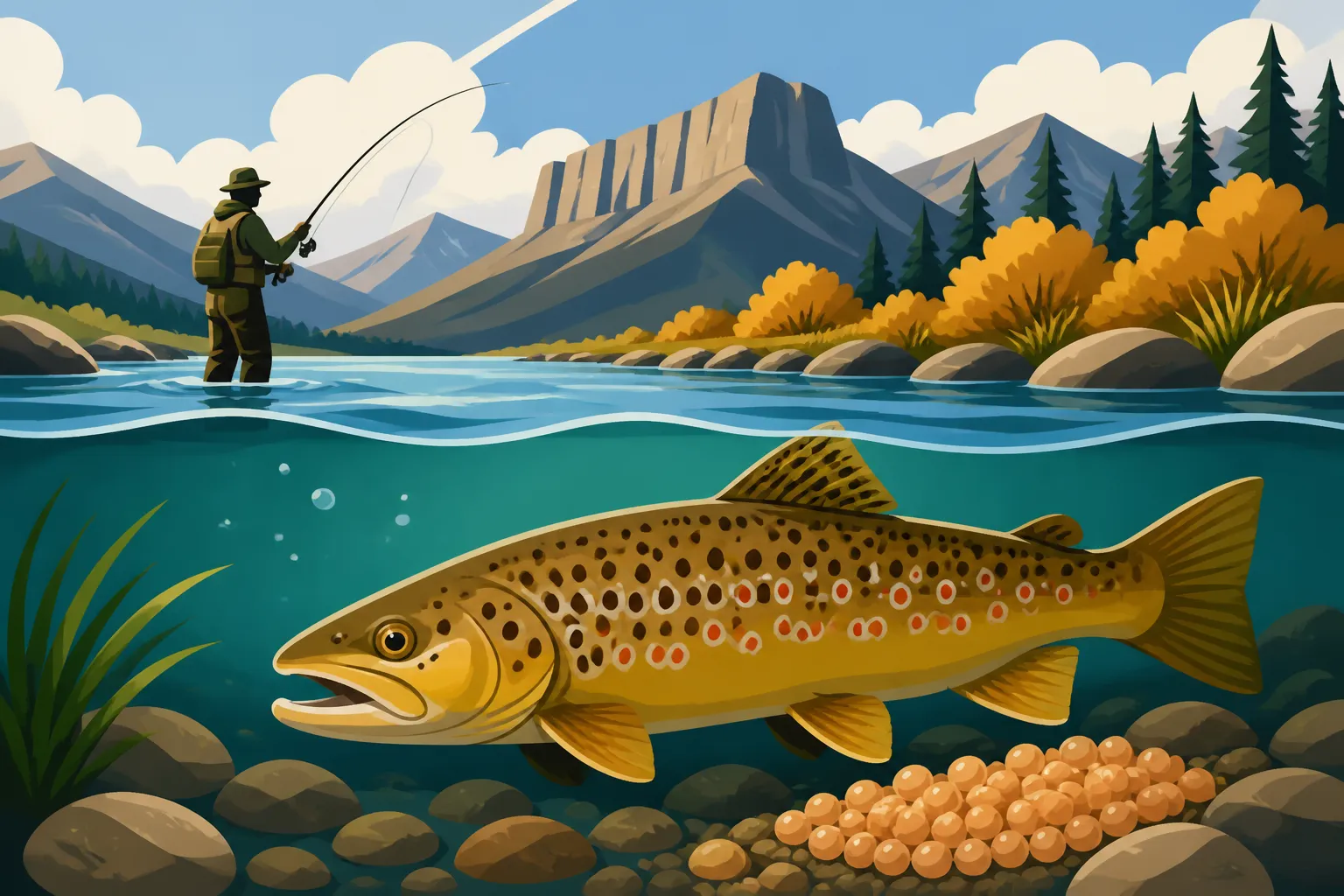
The spawning process itself is a fascinating display of nature's precision. A female brown trout, after selecting her ideal spot, will use her powerful tail to fan out a depression in the gravel. This is her redd. She then deposits her eggs into this depression, often with a male nearby, who then fertilizes them. This process can be repeated multiple times, with the female digging several pockets within the main redd, laying a few hundred to a few thousand eggs in total, depending on her size and health.
After fertilization, the female will move upstream slightly and fan gravel back over the eggs, burying them to protect them from predators and the current. This newly covered area becomes the "superstructure" of the redd, creating a protective dome of gravel. The eggs will then incubate through the winter, slowly developing in the cold water. It's during this entire process that the fish are incredibly vulnerable and stressed, making responsible angling practices even more crucial. You might find a good selection of specialized flies and fishing accessories perfect for specific brown trout scenarios on sites like Amazon, helping you adapt your approach responsibly.
Fishing During the Spawn: Ethics and Strategy
Fishing during the brown trout spawn is a topic that often sparks debate among anglers. While it's not illegal in all waters to fish for brown trout during this time, there are significant ethical considerations and strategic adjustments to be made. Disturbing spawning fish can have serious long-term impacts on the health of the fishery.
Ethical Angling During Spawning Season
The golden rule here is simple: Do not target spawning fish on redds. While it might be tempting to cast to a large, colorful brown trout clearly visible on its redd, doing so can disrupt the spawning process, stress the fish, and potentially damage the redd, dislodging or crushing eggs. Even if you catch and release the fish, the interruption can cause them to abandon their redd or prevent successful fertilization. We owe it to these fish to give them space during this vital time.
Here's how to practice responsible angling:
- Identify Redds and Avoid Them: Actively look for those clean patches of gravel. If you see one, steer clear. Don't wade through them or cast directly onto them.
- Target Non-Spawning Areas: Fish deeper runs, pools, or areas of the river where trout are holding before or after their spawning efforts. Many brown trout will be staging in deeper water, waiting for their turn, or recovering from their strenuous efforts.
- Catch and Release with Care: If you do hook a brown trout during this time, handle it with extreme care. Keep it in the water as much as possible, minimize handling, and release it quickly. This is especially true for the larger, more vulnerable fish. Always be sure to check Catch-and-Release Best Practices for Trout.
Strategic Adjustments for Fall Fishing
While targeting fish on redds is a no-go, fall can still offer some incredible brown trout fishing, especially for larger, pre-spawn fish that are bulking up or post-spawn fish that are recovering. These fish are often very aggressive as they prepare for or recuperate from the rigors of reproduction.
- Pre-Spawn Aggression: Before they move onto the redds, brown trout are often actively feeding, trying to pack on calories for the energy-intensive spawning process. This is a fantastic time to target them with larger streamers that imitate baitfish, or nymphing rigs that mimic the aquatic insects they're still feeding on. The Miracle Mile Stretch of Wyoming's North Platte River is legendary for its large brown trout.
- Post-Spawn Recovery: After spawning, brown trout are typically exhausted and can be somewhat lethargic. However, they'll eventually begin feeding again to regain lost weight and energy. This can be another good time to target them, often with similar patterns as pre-spawn, but perhaps with a slightly slower presentation.
- Focus on Migratory Paths: Look for fish moving between larger pools and potential spawning areas. They'll often hold in deeper troughs or under cut banks along these migration routes. This is where you might find some of the biggest browns of the year.
Remember, patience and observation are your best friends. Take the time to watch the water, identify what the fish are doing, and adjust your tactics accordingly. You might even find some useful gear for colder weather or specific fly patterns on Amazon to aid your fall fishing efforts.
Beyond the Spawn: What Happens Next
The brown trout spawning season isn't just about the act itself; it's also about the long incubation period of the eggs and the recovery of the adult fish. Understanding this entire cycle provides a complete picture of their vulnerability and resilience.
Egg Incubation and Hatching
Once laid and covered, the brown trout eggs will remain in the gravel throughout the winter. The cold water slows their development, a natural adaptation that ensures the fry hatch when conditions are more favorable in early spring. This incubation period can last anywhere from 40 to over 100 days, depending on the constant water temperature. Colder water means a longer incubation time.
During this time, the eggs are incredibly delicate. Siltation from bank erosion, heavy foot traffic through redds, or extreme fluctuations in water flow can all damage or kill the developing embryos. This is another crucial reason to respect these areas long after the adult fish have moved on. The future of the fishery literally lies buried in that gravel. If you're wondering about the timing of these events, Wyoming Fishing Seasons Month by Month offers a broader perspective.
Post-Spawn Recovery and Winter Habits
After the exhausting process of spawning, adult brown trout are often in a weakened state. Males, in particular, can be quite beat up from defending redds and battling rivals. Their focus shifts from reproduction to survival, meaning they need to find food and conserve energy.
As winter settles in, brown trout will often move to deeper, slower pools or large runs, seeking refuge from swift currents and predatory birds. They become less active, their metabolism slowing in the cold water. They'll still feed, but often less frequently and with less aggression. This is when deep nymphing or slowly retrieved streamers can be effective, targeting their winter lies. Many waters remain open for Ice Fishing in Wyoming: A Complete Guide, but knowing brown trout behavior in winter is key.
Here's a quick summary of brown trout behavior throughout the fall/early winter period:
| Stage | Approximate Water Temperature | Brown Trout Behavior | Angling Implication |
|---|---|---|---|
| Pre-Spawn | 50-55°F (10-13°C) | Active feeding, bulking up for energy expenditure. Starting upstream migration. | Aggressive takes on streamers, large nymphs. Target deeper runs and migratory paths. |
| Peak Spawn | 42-50°F (5.5-10°C) | Actively digging and defending redds, highly focused on reproduction. Vulnerable. | AVOID targeting fish on redds. Fish adjacent, deeper holding water. Practice extreme caution and release. |
| Post-Spawn | 40-45°F (4.5-7°C) | Exhausted, recovering, seeking food to regain strength. Less aggressive. | Slower presentations, deep nymphing, smaller streamers. Target recovery areas like deeper pools and slow runs. |
| Winter Holds | <40°F (<4.5°C) | Less active, conserving energy, holding in deep, slow water. Feeding opportunistically. | Very slow presentations, deep nymphing, minimal retrieve on streamers. Focus on bottom structure and deep holes. |
By understanding these stages and respecting the brown trout's natural cycle, we can ensure that these magnificent fish continue to thrive in Wyoming's waters for generations to come.
Disclaimer
This article is for general informational purposes only and does not constitute professional advice. Laws, prices and regulations vary by location and change over time. Consult a qualified professional for guidance on your specific situation.