What Fish Are Illegal to Keep in Wyoming
It's incredibly frustrating when you're out on the water, having a great time, and then you land a fish that leaves you scratching your head. You might be wondering, "Can I keep this one?" or "Is this a protected species?" Wyoming's fishing regulations, while designed for conservation and sustainability, can sometimes feel like a labyrinth, especially when it comes to understanding exactly which fish you can't legally keep. This guide aims to cut through that confusion, giving you a clear picture of the types of fish and situations that mean you'll need to carefully release your catch back to the water.
The General Principle: When in Doubt, Let It Go
There's an old angler's adage that rings especially true in Wyoming: "When in doubt, let it go." This isn't just about playing it safe; it's about respecting the delicate ecosystems we're privileged to fish. The Cowboy State is home to a magnificent array of fish, some of which are vital to the health of our rivers and lakes, or are undergoing special conservation efforts. Making an incorrect decision can lead to serious consequences, not just for you but for the fishery itself.
Imagine you're fishing a remote stream in the Wind River Range, far from any cell signal or quick access to a regulations booklet. You pull in a beautiful trout, and something about its markings seems a little different. Is it a native species? Is it protected? In these moments, releasing the fish unharmed is always the most responsible choice. It ensures you won't accidentally violate a regulation, and more importantly, it helps preserve Wyoming's incredible natural resources for future generations.
It's tempting to want to show off a unique catch or bring home a trophy, but the long-term health of our fisheries depends on anglers making informed and conservative choices. The regulations are in place for a reason, often to protect vulnerable populations or manage specific fisheries for optimal health. A little caution goes a long way in ensuring these waters remain vibrant and productive for years to come.
Species-Specific Protections and Moratoriums
Wyoming's diverse waters support a variety of fish, and not all of them are created equal in the eyes of conservation. Certain species, particularly native trout like the Yellowstone Cutthroat, are subject to very specific protections because they are either threatened, endangered, or critical to the genetic integrity of local populations. These rules aren't arbitrary; they're based on scientific assessments of fish health and population dynamics.
For example, you might encounter specific streams or lakes where certain native trout are designated as "catch-and-release only." This means that while you can enjoy the thrill of hooking one, you absolutely cannot remove it from the water to keep. The goal here is to allow these populations to thrive and reproduce without additional pressure from angling harvest. It’s a privilege to fish for these creatures, and that privilege comes with a responsibility to ensure their survival.
Beyond native species, there might also be temporary moratoriums or emergency closures on certain fisheries due to environmental factors like drought, disease outbreaks, or extreme water temperatures. These are usually announced by the Wyoming Game and Fish Department (WGFD) and can change quickly. Always consult the most current regulations, which you can often find in the annual Wyoming Fishing Regulations Every Angler Should Know booklet or online, to avoid inadvertently breaking a rule.
Understanding "Prohibited" vs. "Catch-and-Release Only"
The terms "prohibited" and "catch-and-release only" might sound similar, but they carry distinct legal implications that every Wyoming angler needs to understand. When a fish is "prohibited" from being kept, it means you cannot possess that fish, period. This often applies to protected species where any harvest is detrimental, or to cases where an accidental catch must be immediately returned to the water with the utmost care. It's a clear line in the sand: you simply cannot take it home.
"Catch-and-release only," on the other hand, means that while you are allowed to target and catch a specific species in a designated area, you are legally obligated to release it immediately and unharmed. This distinction is crucial because it allows for recreational fishing enjoyment while still providing maximum protection for the fish population. You might be using specific flies or lures to target these fish, but the outcome of the catch is predetermined: it goes back in the water.
The intent behind both regulations is conservation, but the practical application differs. For "prohibited" species, even an accidental catch can be a sticky situation if not handled correctly (i.e., immediate, careful release). For "catch-and-release only" waters, the expectation is that anglers are prepared with proper release tools, such as forceps or dehookers, to minimize harm to the fish. Products like a good set of long-nose pliers or a fish-friendly measuring board, often found on Amazon, can make this process much smoother and safer for the fish.
Specific Fish Species You Cannot Legally Keep in Wyoming
Wyoming is renowned for its trout fishing, but not all trout, or all fish for that matter, are destined for the stringer. Anglers must be keenly aware of species-specific rules that dictate what can and cannot be kept. These rules are usually clearly laid out in the official WGFD regulations booklet, which is your bible on the water.
Sometimes these rules are statewide, but more often, they are specific to certain drainages, rivers, or lakes. This makes reading the water-specific regulations absolutely critical. What's legal to keep in one spot might be highly illegal just a few miles down the road or on an adjacent body of water.
The complexity can be a bit overwhelming, but taking the time to research your specific fishing destination before you go is paramount. Don't rely on general knowledge; always consult the up-to-date, localized rules. This is where the official WGFD resources truly shine, providing detailed maps and regulations for nearly every fishable water body in the state.
Protected Native Trout Subspecies
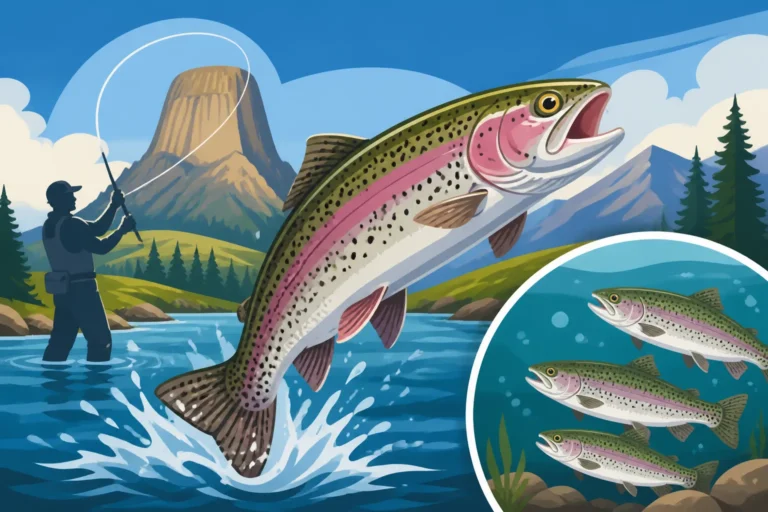
Wyoming is the native home to several subspecies of cutthroat trout, including the Yellowstone Cutthroat and the Snake River Fine-Spotted Cutthroat. These fish are not just game fish; they are living symbols of Wyoming's natural heritage and are foundational to their respective ecosystems. Consequently, they often come with stringent protection, meaning in many areas, they are illegal to keep.
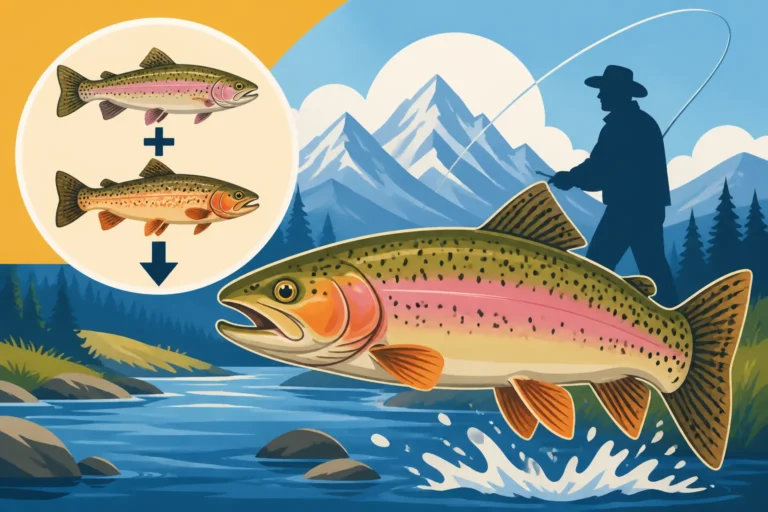
The Yellowstone Cutthroat Trout, Wyoming's state fish, faces conservation challenges from habitat degradation and hybridization with non-native rainbow trout. Because of this, many waters within their native range, particularly in the Yellowstone River drainage and parts of western Wyoming, have regulations that prohibit keeping them or severely restrict harvest to ensure their genetic purity and population health. Being able to identify a Identifying a Yellowstone Cutthroat Trout is an essential skill for any angler in these areas.
Similarly, the Snake River Fine-Spotted Cutthroat Trout, found in the Snake River drainage, also has specific management strategies. While some areas might allow limited harvest, many stretches are designated catch-and-release only. These targeted protections are vital for maintaining the unique characteristics and ecological role of these iconic fish. Always check the local regulations for the specific stretch of river you intend to fish.
Certain Life Stages or Sizes of Fish
It's not always about the species itself; sometimes it's about the individual fish. Wyoming regulations often include length limits and slot limits, which dictate that fish below or above a certain size, or within a specific size "slot," must be immediately released. This is a common conservation tool used to protect juvenile fish until they've had a chance to spawn, or to safeguard large, mature fish that are important for genetic diversity and prolific breeding.
A classic example of this is the "one over 16 inches" rule on many of Wyoming's blue-ribbon trout streams, particularly for brown trout and rainbow trout. This rule means that while you might be allowed to keep a certain number of smaller fish, you can only keep one fish that exceeds 16 inches in length per day, if any at all. It's designed to protect the bigger, trophy-sized fish that contribute significantly to the fishery's overall health and desirability. Understanding The One-Over-16-Inch Rule on Wyoming Trout Streams is key to staying legal on many of our most popular waters.
Slot limits work similarly but define a range of sizes that must be released. For instance, a slot limit might state that all fish between 12 and 18 inches must be released, allowing anglers to keep fish under 12 inches or over 18 inches. These nuanced rules require anglers to be equipped with a reliable measuring device and the discipline to release fish that fall within the protected range. Carrying a simple, clear measuring tape or a fish ruler (like those available on Amazon) is crucial.
Invasive Species Where Release is Prohibited
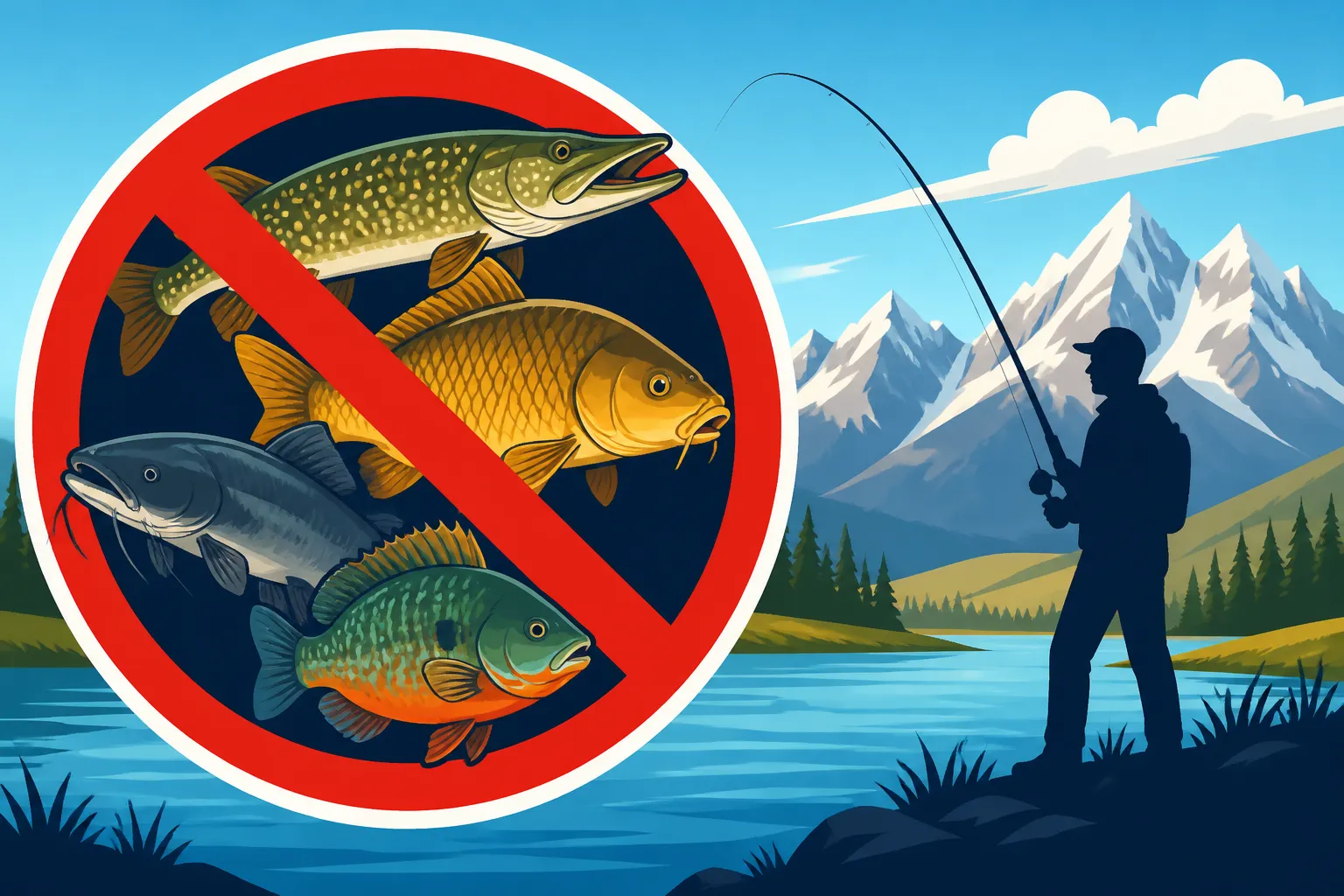
Here's a twist: sometimes, it's illegal to release a fish you catch! This applies to certain invasive or non-native species in specific waters where their presence is detrimental to the ecosystem. The most prominent example in Wyoming is the Lake Trout (Mackinaw) in Yellowstone Lake. While Lake Trout are a prized game fish in many other Wyoming reservoirs like Flaming Gorge, they are considered an invasive threat to the native Yellowstone Cutthroat Trout in Yellowstone Lake.
Because Lake Trout prey heavily on the native cutthroat, Yellowstone National Park regulations (which largely mirror Wyoming's efforts on surrounding lands) mandate that all Lake Trout caught in Yellowstone Lake must be immediately killed and cannot be returned to the water. This is a critical conservation effort to protect the dwindling native cutthroat populations. Understanding Why Lake Trout Are Considered a Problem in Yellowstone Lake is important context for this unique regulation.
This regulation flips the script: instead of being illegal to keep, it becomes illegal not to keep (i.e., release) these specific fish in these specific locations. It’s a powerful reminder that "conservation" can sometimes mean removing a species to protect another. Always check local regulations, especially when fishing within national parks or areas with known invasive species concerns, as rules can vary drastically from state-level norms.
Situational Prohibitions: Beyond Just the Species
Sometimes, a fish that would ordinarily be legal to keep becomes illegal due to the circumstances of its capture or possession. These situational prohibitions are just as important to understand as species-specific rules, as they cover everything from how many fish you have to where and when you caught them. Overlooking these details can lead to just as many problems as misidentifying a protected species.
It's easy to get caught up in the excitement of a successful fishing trip, but every angler has a responsibility to maintain awareness of their surroundings and the rules governing their actions. These regulations are designed to manage fish populations sustainably, ensuring that everyone can continue to enjoy Wyoming's incredible fishing opportunities for years to come. Thinking ahead and preparing correctly can prevent a simple oversight from becoming a significant issue.
Carrying a copy of the regulations, either a physical booklet or a digital version on your phone, is your best defense against accidental violations. Many anglers even go a step further, highlighting key sections for the waters they plan to visit. This proactive approach shows respect for the resource and the laws designed to protect it.
Exceeding Bag and Possession Limits
You might have caught a perfectly legal fish, but if you've already kept your daily limit for that species, then any subsequent fish of that type become illegal to keep. This is where the concepts of "daily bag limit" and "possession limit" come into play, and they are not always the same. Understanding these limits is critical to avoid violating regulations.
A daily bag limit is the maximum number of a specific species you can harvest and keep in a 24-hour period. Once you hit that number, any additional fish of that species must be released. A possession limit, however, is the maximum number of fish you can have in your possession at any given time, regardless of when or where they were caught. This includes fish in your cooler, at your campsite, or at home. Often, the possession limit is two or three times the daily bag limit, allowing for multi-day trips. How Bag and Possession Limits Work in Wyoming is a foundational article that every angler should read.
For example, if the daily limit for trout is 6, and the possession limit is 12, you can keep 6 trout on Monday and 6 more on Tuesday, accumulating 12. But if you already have 12 trout in your possession, you cannot keep any more until some have been consumed or gifted. Exceeding either of these limits, even by a single fish, makes the entire overage illegal. The WGFD regulations booklet, often available as a handy, pocket-sized guide, clearly outlines these limits for each species and specific waters. A good cooler, like those found on Amazon, is essential for properly storing your catch within these limits.
Let's look at a simplified example for trout:
| Fish Type | Daily Bag Limit (per 24 hrs) | Possession Limit (total) | Common Location | Notes |
|---|---|---|---|---|
| Trout | 3-6 (water specific) | 6-12 (water specific) | Most streams & lakes | Often includes species-specific sub-limits (e.g., only 1 over 16 inches). See Wyoming's Combined Possession Limit Explained. |
| Walleye | 3-6 (water specific) | 6-12 (water specific) | Reservoirs like Boysen | Sometimes includes length limits to protect spawning stock. |
| Crappie | 10-25 (water specific) | 20-50 (water specific) | Warmwater reservoirs | Generous limits often due to prolific breeding. |
Note: These are illustrative examples; always consult the current WGFD regulations for exact figures and water-specific rules.
Fishing in Closed Waters or Seasons
Even if a fish species is generally legal to keep, catching and keeping it in waters that are temporarily closed, or during a specific closed season, renders the act illegal. Wyoming's waters operate on various seasonal schedules and some areas are permanently off-limits to fishing to protect spawning fish, critical habitat, or private property.
Many rivers and streams, especially those with significant trout populations, may have "closed seasons" during certain times of the year, particularly during fall spawning runs for brown trout or spring spawning for rainbow trout. These closures allow fish to reproduce without disturbance, which is crucial for maintaining healthy populations. Similarly, specific sections of rivers, around dams, or within designated wildlife sanctuaries might be permanently closed to angling. Always check Wyoming Fishing Seasons and Water-Specific Closures before heading out.
Furthermore, the WGFD has the authority to implement emergency closures due to unforeseen circumstances like severe drought, disease outbreaks, or extreme heat causing dangerously low water levels and high water temperatures. Fishing in these conditions can be highly stressful and lethal to fish, so closures are enacted to protect the resource. Ignoring such a closure, even if you were unaware, means any fish caught and kept are illegally taken. It's your responsibility as an angler to check current conditions and closures before wetting a line.
Improper Handling and Waste of Fish
Beyond the act of catching and keeping, the way you handle and utilize your catch can also lead to legal issues. Wyoming has regulations against wanton waste of game fish. This means if you keep a fish, you have a legal and ethical obligation to properly care for it and utilize its edible portions. Leaving a fish to spoil, or discarding edible parts, can be considered wanton waste and is illegal.
This regulation emphasizes responsible harvest and respect for the fish you've caught. It means that once you decide to keep a fish, you should be prepared to clean it promptly and store it properly, whether on ice in a cooler or by heading directly home to process it. Don't let your catch go to waste simply because you weren't prepared with proper storage or didn't have a plan for its consumption. Using a good quality cooler and ice is not just about keeping your fish fresh, but also about staying within the law.
Proper handling also extends to catch-and-release practices. If you're fishing in a catch-and-release only water, or if you plan to release fish that are under or over specific size limits, you must do so in a manner that maximizes the fish's survival. This means minimizing air exposure, using wet hands, and using appropriate tools to remove hooks. Fish that are stressed or injured during improper release are less likely to survive, and while not directly "illegal to keep," it goes against the spirit of conservation that these regulations uphold. Reviewing Catch-and-Release Rules on Wyoming Waters can help you improve your technique.
The Importance of Knowing the Regulations and Doing Your Part
Fishing in Wyoming is an absolute privilege, offering some of the most stunning scenery and incredible angling opportunities anywhere. But with that privilege comes a significant responsibility: knowing and abiding by the rules. The regulations aren't there to make your life difficult; they're meticulously crafted by wildlife biologists and conservationists to protect and sustain our precious fish populations for generations to come.
Imagine the frustration of receiving a hefty fine or even losing your fishing privileges simply because you weren't aware of a specific rule. It happens more often than you'd think, and in the eyes of the law, ignorance is rarely an acceptable excuse. Taking the time to educate yourself is not just about avoiding penalties; it's about being a responsible steward of Wyoming's natural wonders. Every angler plays a role in conservation, and the first step is understanding the playing field.
Ultimately, by actively engaging with the regulations and understanding their purpose, you contribute to a culture of responsible angling. You become part of the solution, helping to ensure that the thrill of hooking a native cutthroat in a pristine mountain stream or battling a trophy lake trout in a deep reservoir remains a possibility for everyone who seeks it. It's a small investment of your time that pays enormous dividends for our state's incredible fisheries.
How to Stay Informed About Wyoming's Fishing Regulations
Staying informed about Wyoming's fishing regulations is not just a recommendation; it's a necessity. The rules can be complex and are subject to change, especially with emergency closures or annual updates. The single most important resource is the official Wyoming Game and Fish Department (WGFD) website and their annual fishing regulations booklet. This isn't light reading, but it's essential homework for any serious angler.
Each year, the WGFD publishes a comprehensive booklet detailing statewide regulations, species-specific rules, and crucial water-specific exceptions. You can pick up a physical copy at most WGFD offices, license vendors, or even download a PDF version directly from their website. I always recommend having a physical copy in my fishing pack, and a digital one saved on my phone for quick reference, especially since cell service can be spotty in the backcountry. Reading the Wyoming Fishing Regulations Booklet can feel daunting, but it's worth the effort.
Beyond the annual booklet, regularly checking the WGFD website for news releases and emergency orders is paramount. Water conditions, disease outbreaks, or even habitat restoration projects can lead to rapid, in-season changes. Subscribing to their email alerts or following their social media channels can also help you stay abreast of the latest updates. A quick search on Amazon might even reveal waterproof versions of regulation summaries or specific fish identification guides to keep handy.
Consequences of Violating Fishing Laws
The repercussions of violating Wyoming's fishing laws can range from inconvenient to severe, and they are designed to be a deterrent to illegal angling and a means of protecting our natural resources. It’s not just a slap on the wrist; these are serious offenses that can have lasting impacts on your ability to enjoy fishing in the future. Game wardens in Wyoming are highly dedicated and patrol popular fishing spots diligently.
A common violation, like fishing without a license or exceeding bag limits, can result in significant fines. These fines are often tiered, meaning repeated offenses or more egregious violations carry higher penalties. Furthermore, many violations can lead to the suspension or revocation of your fishing privileges, not just in Wyoming, but potentially across multiple states through interstate compacts. Imagine not being able to fish for a year or more because of an oversight – it's a sobering thought. Fines and Penalties for Common Fishing Violations are no joke.
In addition to fines and license suspension, violations can also lead to the confiscation of fishing gear, boats, and even vehicles involved in the illegal activity. In the case of severe offenses, criminal charges are a possibility. It's a stark reminder that the conservation laws of Wyoming are taken very seriously, and proper adherence is expected of every angler. Understanding What Happens If You Fish Without a License in Wyoming should underscore the importance of playing by the rules.
Disclaimer
This article is for general informational purposes only and does not constitute professional advice. Laws, prices and regulations vary by location and change over time. Consult a qualified professional for guidance on your specific situation.