How Wyoming’s Fishing Regulations Differ From Montana’s
There’s a unique thrill that comes with fishing the vast, wild landscapes of the Mountain West, and for many anglers, that dream often includes hitting the storied waters of both Montana and Wyoming. It’s easy to think that since these states share a border and similar trout streams, their fishing regulations would be pretty much interchangeable. However, that assumption can lead to a world of confusion – and potentially a hefty fine – if you don’t understand the distinct differences. This guide will help you untangle the distinct regulatory approaches in Wyoming and Montana, ensuring your multi-state fishing adventure is nothing but smooth sailing.
Understanding Basic License Structures
One of the first and most critical differences you'll encounter when planning a fishing trip to both Wyoming and Montana is how each state structures its fishing licenses. It’s not just about the cost; it's about the very components you need to be legally compliant on the water.
Residency Definitions and License Types
It’s a common scenario: you might spend part of the year in Montana and part in Wyoming, or perhaps you live in a neighboring state and plan to visit both. The definition of what makes you a "resident" can be surprisingly nuanced and differs enough between Wyoming and Montana to warrant careful attention. Just because you meet residency criteria in one state doesn't automatically qualify you in the other.
In Wyoming, to qualify as a resident, you generally need to have physically resided in the state for at least one full year immediately preceding your application for a license, and you must intend to make Wyoming your home. This includes holding a valid Wyoming driver's license and not claiming residency in any other state or jurisdiction for any other purpose. For those who don't meet these requirements, Wyoming offers a clear array of non-resident options, including annual licenses, shorter Wyoming Daily Fishing License Cost options, and the convenient Wyoming 5-Day Nonresident Fishing License Cost for those just passing through. It's crucial to correctly identify your residency status, as the price difference between resident and non-resident licenses is significant. For a deeper dive, you can explore the specifics of Wyoming Resident vs Nonresident License Rules.
Montana, while having similar general requirements for residency (typically 180 consecutive days immediately prior to applying for a license, among other factors), structures its licenses a bit differently for non-residents. Instead of a single "fishing license" with various durations, non-residents usually start by purchasing a Conservation License, which is essentially a base permit. On top of this, you then add a Fishing Endorsement. This multi-layered approach means you can’t just grab a "fishing license" off the shelf; you have to build your permit piece by piece. Both states emphasize that having your license on your person, whether a physical copy or a digital one, is mandatory while fishing. Many anglers wisely print an extra copy and keep it in a waterproof case alongside their tackle, especially if they've stocked up on essentials from Amazon.
The Role of Conservation Stamps and Additional Endorsements
Beyond the basic fishing license, both states require additional stamps or endorsements that contribute to conservation efforts, but again, their implementation varies. Missing one of these can render your primary license invalid, leading to potential fines.
Wyoming mandates a Who Needs Wyoming's Conservation Stamp for nearly all fishing licenses, both resident and non-resident. This stamp is a foundational component, directly funding wildlife management and habitat conservation across the state. It's usually purchased alongside your fishing license and is generally a one-time annual fee, regardless of how many fishing licenses you buy for different seasons. There are very few exceptions to this rule, so it's best to assume you'll need one. Understanding The Wyoming Conservation Stamp and What It Covers is vital for any angler planning a trip to the Cowboy State.
Montana also requires a Conservation License as the first step for all recreational licenses, including fishing, hunting, and trapping. Beyond this base, however, anglers must also purchase an Aquatic Invasive Species (AIS) Prevention Pass. This pass is critical, funding programs designed to prevent the spread of devastating invasive species like zebra mussels, which can wreak havoc on native fisheries. While Wyoming also has robust AIS inspection stations, particularly for watercraft entering the state, Montana integrates the prevention fee directly into its licensing structure. Furthermore, Montana frequently has various endorsements depending on specific activities or species, requiring careful review of their regulations booklet to ensure you're covered for your intended fishing. This contrast highlights that while both states prioritize conservation, they use different administrative paths to achieve it, a distinction that often catches unsuspecting anglers off guard.
Navigating Bag Limits, Possession Limits, and Special Regulations
Once you're properly licensed, the next big hurdle is understanding what you can actually keep – and how – which is where bag and possession limits, along with specific tackle rules, truly diverge between Wyoming and Montana.
Species-Specific Limits and Trout Rules
The number and size of fish you can legally keep are never universal, especially when crossing state lines. Both Wyoming and Montana manage their fisheries with specific regulations tailored to each water body and species, reflecting local biological needs and angling pressure.
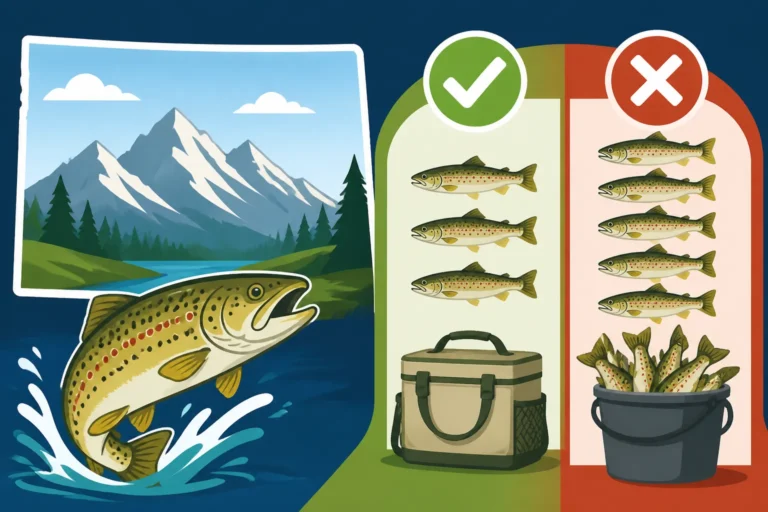
In Wyoming, trout regulations can be quite detailed. For many streams and rivers, the general trout daily limit might be six, but then you'll often encounter a very specific rule: "only one trout over 16 inches." This particular rule, often seen on popular waters like sections of the North Platte River, is designed to protect larger, breeding fish while still allowing anglers to harvest some smaller trout. This "one over 16 inches" is a hallmark of Wyoming trout management and is crucial to remember. Additionally, some specific lakes or reservoirs might have entirely different limits for species like lake trout (mackinaw) or walleye, often with bonus limits for certain invasive species in an effort to control their populations. You can learn more about Wyoming Trout Stream Daily Limit and Wyoming Trout Lake Daily Limit to understand the nuances.
Montana also employs species-specific limits, but its regulations can feel even more granular, with many rivers and even specific stretches of rivers having unique rules. For example, a river might have a general trout limit, but then a particular section, perhaps a highly pressured blue-ribbon fishery, could be designated "catch-and-release only" or have a very restrictive "slot limit" where only fish within a certain size range can be kept. Montana is well-known for its aggressive management of wild trout populations, and their regulations often reflect a strong emphasis on protecting those native species. The best advice for both states is identical here: always consult the current year's regulations booklet for the specific water you plan to fish, as rules can change annually and vary wildly from one stream to the next.
Tackle, Bait, and Gear Restrictions
Beyond how many fish you can keep, how you catch them is also subject to different rules. What's perfectly legal tackle in one state might be banned in the other.
Wyoming has fairly liberal bait regulations in many waters, allowing the use of live baitfish in certain designated reservoirs and ponds, though restrictions apply on many trout streams and high-alpine lakes. However, rules like Are Live Minnows Legal Bait in Wyoming? clearly lay out where you can and cannot use them to prevent the introduction of invasive species. Hook requirements are also important; while not universal, some notable waters like stretches of the North Platte River now require Barbless Hook Requirements on the North Platte River to promote catch-and-release survival. For anglers using multiple rods, Wyoming generally allows the use of two fishing poles, provided you purchase a two-pole stamp or endorsement if required for your license type. This is another area where checking the current regulations is key, as rules can vary.
Montana tends to have stricter bait restrictions on many of its premier trout streams, often limiting anglers to artificial lures and flies only. The use of live baitfish is generally prohibited in trout waters to prevent the spread of disease and invasive species. Furthermore, Montana was one of the first states to implement a statewide ban on felt-soled waders, replacing them with rubber-soled alternatives to combat the spread of aquatic invasive species. While Wyoming doesn't have a blanket ban on felt soles, the industry has largely shifted away from them due to similar environmental concerns. Both states are diligent about preventing invasive species, and while their specific tactics differ, the underlying message is clear: clean, drain, and dry your gear, and be mindful of where certain baits and tackle are permitted. Anglers often purchase specialized tackle boxes and cleaning supplies from Amazon to ensure their gear is always compliant and ready for inspection.
Navigating Water-Specific Rules and Access
Even with your license and general understanding of limits in hand, the intricacies of where you can fish and what specific rules apply to certain bodies of water often present the biggest challenges when moving between Wyoming and Montana.
River and Lake-Specific Regulations
It’s never enough to just know the statewide rules; every major river system, lake, and even smaller tributary might have its own unique set of regulations designed by local biologists. This is where the real homework begins for multi-state anglers.
In Wyoming, key fisheries like the Wyoming's North Platte River Fishing Guide or Wyoming's Snake River Fishing Guide each have specific rules that supersede general statewide regulations. For instance, specific stretches of the North Platte, such as the famous Miracle Mile or Gray Reef, will have distinct daily limits, size restrictions, and potentially even tackle requirements that differ from another section of the same river or a nearby lake. Similarly, larger bodies of water like Wyoming's Flaming Gorge Reservoir Fishing Guide or Wyoming's Jackson Lake Fishing Guide will have specific limits for their primary game species, like lake trout or kokanee salmon, often with different seasons or regulations for ice fishing versus open water. These water-specific regulations are critical and are always found clearly detailed in the back of the Wyoming Game and Fish Department's fishing regulations booklet.
Montana also heavily relies on water-specific regulations, often more so than Wyoming in its fine-grained detail. Their regulations booklet is typically broken down by drainage basin, and within each basin, specific rivers, creeks, and lakes will have their own unique set of rules regarding bag limits, tackle restrictions, and even special seasons. For example, the famed Madison River might have different limits and tackle restrictions on its upper versus lower sections, or a particular tributary might be closed to fishing during certain spawning periods. This hyper-local approach means that relying on general knowledge or even rules from a nearby stream is a recipe for trouble. Both states expect anglers to have consulted the current year's regulations before wetting a line in any specific body of water.
Public Versus Private Land Access
Access to fishing waters is a contentious and often confusing issue in the American West, and the legal frameworks in Wyoming and Montana present significantly different realities for anglers. This distinction is perhaps one of the most glaring and impactful differences between the two states.
Montana is famous for its robust Stream Access Law, a legislative gem that grants public access to any stream or river capable of being used for recreational purposes, up to the ordinary high-water mark, regardless of whether the streambed is privately owned. This means that if you can access a river without trespassing to get to the water, you can wade or float that river, even if the adjacent land is private. This law has been fiercely defended and makes many of Montana's world-class rivers widely accessible to anglers, provided they enter from public bridge crossings or public access sites. It's a huge boon for fly anglers who love to wade.
Wyoming, on the other hand, has a much more restrictive legal framework regarding stream access across private lands. While streams and rivers themselves are often considered public water, access to them can be significantly limited if the adjacent land is private. In Wyoming, floating a stream over private property is generally legal, but stepping out of your boat onto the streambed (even if below the high-water mark) can be considered trespassing unless you have permission from the landowner or are on a public easement. This can make wading very challenging and effectively closes off many otherwise fishable stretches of water. This difference means that while you might freely wade miles of river in Montana, you'll need to be far more vigilant about property lines and public easements in Wyoming, often relying on designated public access points or focusing on waters entirely within public land boundaries like national forests or BLM land. Many anglers traveling to Wyoming invest in detailed maps or GPS apps from Amazon that clearly mark public and private land boundaries to avoid accidental trespassing.
Keeping Up-to-Date on Regulations
Regulations aren't static; they evolve based on scientific data, conservation needs, and public input. Staying informed is paramount, especially when fishing in multiple states.
How Regulations Change and Are Communicated
Both state wildlife agencies are continuously monitoring fish populations and habitats, leading to necessary adjustments in regulations. What was legal last year might not be this year, or even next month.
The Wyoming Game and Fish Department (WGFD) typically updates its full fishing regulations annually, usually effective January 1st. However, they also have the authority to implement in-season emergency closures or special regulations due to environmental factors like low water levels, disease outbreaks, or extreme heat. These emergency changes are often announced through press releases, their website, and social media channels. Anglers need to proactively check the WGFD website, especially the "Current Fishing Conditions" and "Emergency Closures" sections, before each trip. For more on this, you can refer to How Wyoming Sets In-Season Emergency Closures. It’s not uncommon to see temporary bait restrictions or reduced limits on certain waters if conditions warrant it, making real-time checks essential.
Montana Fish, Wildlife & Parks (FWP) also publishes a comprehensive regulations booklet annually, usually with a season running from March 1st to the end of February of the following year. Like Wyoming, FWP also issues emergency closures or temporary regulations. They primarily disseminate this information through their website, local FWP offices, and official press releases. It's worth noting that due to the sheer volume of specific water body rules, Montana's regulations booklet can be quite dense and requires careful reading. Both states offer digital versions of their booklets online, which are incredibly convenient for searching specific waters on your phone while on the go. Having a physical copy of both states' current regulations, perhaps in a durable waterproof bag also sourced from Amazon, is always a good backup, especially in areas with spotty cell service.
Penalties for Violations
Fishing without the correct license or violating specific regulations can result in significant penalties in both Wyoming and Montana. These aren't just minor slaps on the wrist; they can range from substantial fines to loss of fishing privileges.
In Wyoming, fishing without a license, exceeding bag limits, or using illegal tackle are all serious offenses. Fines can vary depending on the severity of the violation, the number of fish involved, and whether it's a first offense. For example, a violation could easily incur a fine in the hundreds of dollars, and repeated offenses can lead to the suspension of your fishing license in Wyoming. Game wardens in Wyoming are highly visible on popular fishing waters and are diligent about enforcing regulations, so ignorance of the law is never an excuse. You can learn about What Happens If You Fish Without a License in Wyoming.
Montana's penalties for fishing violations are similarly stringent. Depending on the infraction, fines can also be significant, often accompanied by court costs and potentially restitution for illegally harvested fish. Like Wyoming, Montana can also revoke or suspend fishing privileges, which can impact your ability to purchase licenses in future seasons. Both states participate in the Interstate Wildlife Violator Compact, meaning that a license suspension or revocation in one state can lead to the loss of privileges in all other member states. This underscores the importance of not only understanding but also strictly adhering to the regulations of both Wyoming and Montana when you're enjoying their incredible fisheries. Always be respectful to game wardens and be prepared to present your license and answer questions about your catch.
| Feature / Aspect | Wyoming Fishing Regulations | Montana Fishing Regulations |
|---|---|---|
| Base License Structure | Annual, 5-day, or Daily Fishing License + Conservation Stamp | Conservation License + Fishing Endorsement + AIS Pass (Non-resident) |
| Residency Definition | 1-year continuous physical residency, WY Driver's License | 180 consecutive days physical residency, MT Driver's License |
| Conservation Fee | Required Wyoming Conservation Stamp Cost for most licenses | Conservation License (base) + AIS Prevention Pass |
| Trout Daily Limits | Often general limit (e.g., 6), with "one over 16 inches" rule on specific waters | Highly water/section-specific; often includes slot limits, C&R zones |
| Bait Regulations | Live minnows allowed in some reservoirs; restrictions on trout streams | Generally stricter on trout waters; live baitfish often prohibited |
| Hook Requirements | Barbless hooks required on specific rivers (e.g., North Platte sections) | Barbless hooks often required on many blue-ribbon trout streams |
| Felt-Soled Waders | No statewide ban (check local rules for specific waters) | Statewide ban in effect to prevent AIS spread |
| Stream Access Law | Public floating over private land often legal; wading often considered trespass without permission | Strong Stream Access Law: Public access up to ordinary high-water mark |
| Regulation Updates | Annually (January 1st); in-season emergency closures | Annually (March 1st); in-season emergency closures |
| Enforcement Compact | Member of Interstate Wildlife Violator Compact | Member of Interstate Wildlife Violator Compact |
Disclaimer
Please remember that fishing regulations are subject to change. This guide provides a general overview and highlights common differences but is not a substitute for reviewing the official, current regulations from the Wyoming Game and Fish Department and Montana Fish, Wildlife & Parks before you head out. Always consult the official state publications for the most accurate and up-to-date information.