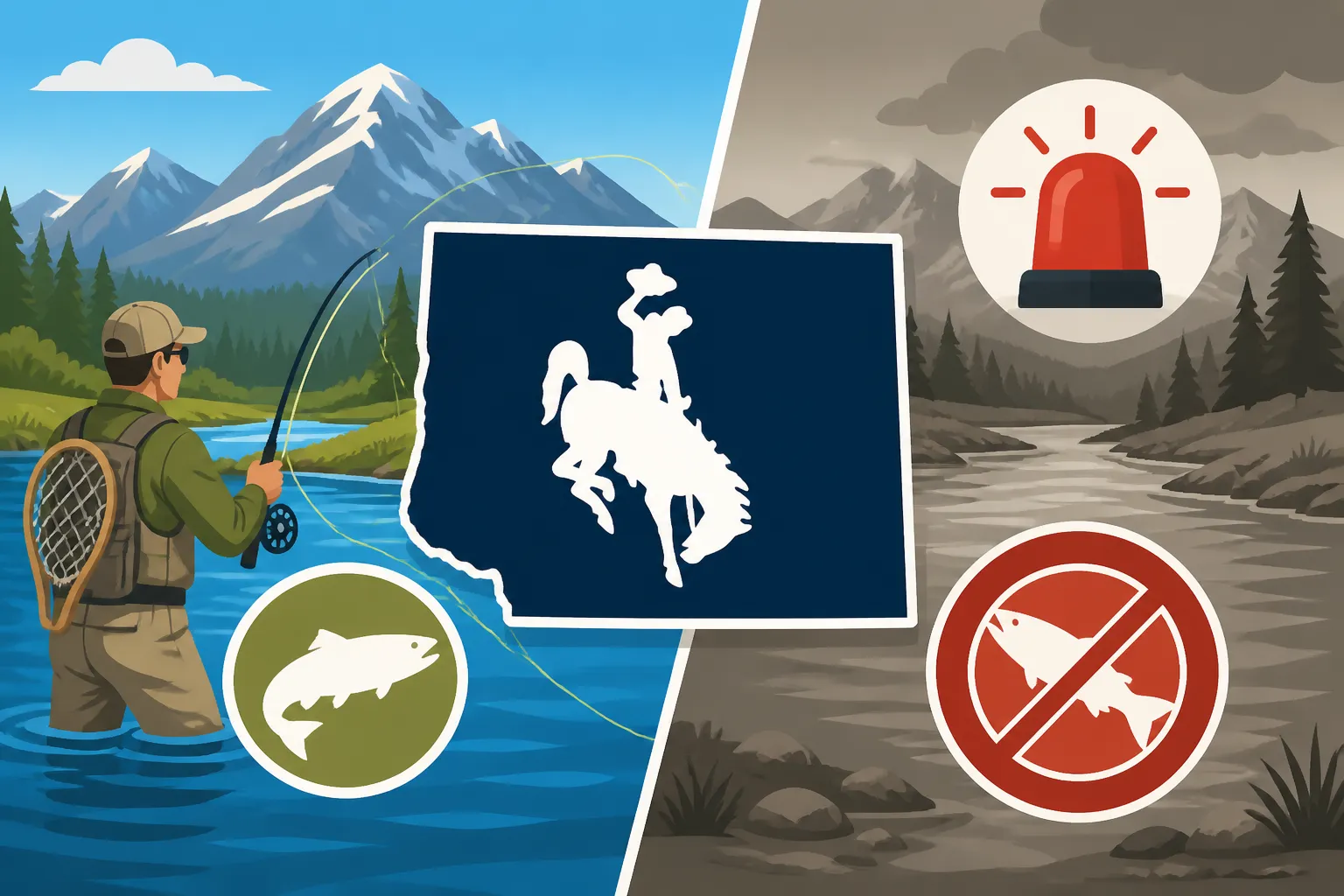
How Wyoming Sets In-Season Emergency Closures
There's nothing quite like planning a long-anticipated fishing trip, poring over maps, checking gear, and maybe even tying a few flies, only to arrive at your favorite stream or lake and find it suddenly closed. That sinking feeling of disappointment and frustration is something many of us have experienced. Unexpected events, from scorching heatwaves to devastating wildfires, can force wildlife agencies to take swift action. This guide will walk you through how the Wyoming Game and Fish Department makes these tough decisions, what factors trigger in-season emergency closures, and how you can stay informed so your next outing isn't a surprise bust.
Why Emergency Fishing Closures Become Necessary
When you think of fishing regulations, you usually picture the annual rulebook, right? Bag limits, season dates, license requirements – all those things we plan our year around. But sometimes, nature throws a curveball, and the carefully laid plans of both anglers and wildlife managers have to adapt. Emergency closures aren't about making fishing harder; they're about safeguarding our precious fisheries when conditions turn dire. These aren't taken lightly and usually stem from acute environmental stressors that threaten the very survival of fish populations.
Severe Drought and Low Water Levels
Wyoming is known for its wide-open spaces, and with that often comes periods of intense dryness. When drought conditions persist, water levels in rivers, streams, and even reservoirs can drop dramatically. This isn't just an inconvenience for boaters who might find ramps out of reach; it's a critical threat to fish. Lower water volumes mean less habitat, higher concentrations of pollutants, and reduced oxygen levels, all of which stress fish populations to their breaking point.
Imagine a typically vibrant trout stream like a tributary of the North Platte River in mid-summer. Normally, it might flow cool and clear, offering plenty of deep pools and riffles for trout to thrive. During a severe drought, that same stream might shrink to a mere trickle, exposing once-submerged rocks and concentrating fish in dwindling pools. This makes them incredibly vulnerable to predation and further environmental stress. Emergency closures in these scenarios aim to prevent anglers from adding additional stress to an already struggling population, giving the fish a fighting chance to survive until conditions improve.
High Water Temperatures and Fish Stress
Coupled with low water levels, or even independently, extreme heat can be a death sentence for cold-water fish like trout. Trout species, including our native cutthroat, thrive in cool, oxygen-rich water, typically below 68 degrees Fahrenheit. When water temperatures climb significantly above this threshold, their metabolism skyrockets, oxygen levels in the water plummet, and they literally begin to suffocate and experience extreme physiological stress.
This is a scenario commonly seen on stretches of river like the Green River below Fontenelle Dam or parts of the Snake River during prolonged summer heatwaves. Anglers might notice fish acting sluggish or even gasping at the surface. Catching and fighting a fish in these conditions, even with the best catch-and-release practices, can be enough to push them over the edge. The stress of being hooked, reeled in, and handled, combined with already critical water temperatures, can lead to post-release mortality rates far higher than normal. Closing these waters temporarily helps ensure that fish aren't subjected to additional stress, allowing them to conserve energy and recover when the evening cools or a storm brings relief.
Wildfires and Their Aftermath
Wyoming, like many western states, is no stranger to wildfires, especially during hot, dry summers. While the immediate danger of fire to fish might not be obvious, the long-term and immediate impacts on aquatic ecosystems can be devastating. Fire directly impacts water quality by increasing sediment runoff, ash, and nutrient loading into streams and rivers. Heavy rains on burned areas can lead to flash floods that scour streambeds and destroy fish habitat, sometimes washing away entire insect populations that fish rely on for food.
After a fire, the landscape's ability to absorb water is severely compromised. This means that even small rain events can cause massive erosion, leading to sediment plumes that choke fish gills and bury spawning grounds. Chemical changes in the water from ash and burned vegetation can also be toxic. Closures related to wildfires are often put in place not only for angler safety due to active fires but also to protect fish from the immediate post-fire ecological damage and to allow critical habitats to begin the long process of recovery.
The Legal Framework Behind Emergency Closures
It's natural to wonder who has the authority to just shut down a popular fishing spot. Rest assured, these aren't arbitrary decisions made on a whim. The power to enact emergency closures is granted by state statute and meticulously exercised by the Wyoming Game and Fish Department (WGFD), always with the conservation of the state's wildlife resources as the guiding principle. Understanding this framework helps underscore the seriousness of these actions.
Wyoming Game and Fish Commission Authority
The ultimate authority for managing Wyoming's wildlife and fisheries rests with the Wyoming Game and Fish Commission. This commission, comprised of seven members appointed by the Governor, sets broad policies and approves regulations for the WGFD. While the commission approves the annual regulations booklet, they also empower the department to act swiftly in emergencies. This delegation of power is crucial because environmental crises, like sudden droughts or heatwaves, often require immediate responses that can't wait for a quarterly commission meeting.
The WGFD's Director, or authorized personnel, can issue emergency orders to temporarily modify or suspend fishing regulations in specific areas. These orders are legally binding and carry the same weight as the regulations published in the official booklet. They are designed to be flexible tools that allow managers to react to unforeseen circumstances, ensuring that fish populations are protected from imminent threats. If you're interested in the details of the broader regulatory process, checking out the article on Wyoming Fishing Regulations Every Angler Should Know can provide a helpful overview.
Emergency Powers and Rapid Response
The beauty of having emergency powers is the ability for rapid response. When a regional fisheries biologist notices critically low water levels in a specific stream, or monitors show water temperatures consistently in the lethal range for trout, they can recommend an emergency closure to their supervisors. This recommendation can quickly escalate through the department, allowing a closure order to be issued within hours or days, rather than weeks or months. This agility is paramount when dealing with sensitive ecosystems and rapidly changing environmental conditions.
Imagine a situation where a major heat dome settles over central Wyoming, pushing daytime air temperatures into the triple digits for days on end. The fisheries management team, perhaps monitoring key stretches of the North Platte River near Casper, sees water temperatures climbing past 70 degrees Fahrenheit. Without emergency powers, they would have to wait for a full regulatory cycle to implement a "Hoot Owl" restriction (where fishing is only allowed during cooler morning hours) or a full closure. By then, significant fish mortality could have already occurred. These rapid response capabilities allow WGFD to proactively protect fish and prevent widespread die-offs.
Types of Closure Orders
Emergency closures aren't always a complete shutdown of a fishery. They can come in various forms, tailored to the specific threat. The most common types include:
- Full Closures: These prohibit all fishing activity on a specific body of water for a defined period. This is typically implemented when conditions are extremely severe, such as prolonged critical water temperatures or severe drought conditions that leave fish extremely vulnerable.
- "Hoot Owl" Restrictions: This type of closure restricts fishing to specific cooler hours of the day, usually from dawn until early afternoon (e.g., 2:00 PM). This allows anglers to still enjoy some fishing while protecting fish during the hottest, most stressful parts of the day. You might see this on popular trout rivers during late summer, like sections of the South Fork of the Snake River.
- Gear Restrictions: In some cases, emergency orders might prohibit certain types of gear, such as bait fishing, which can cause higher mortality rates for released fish than artificial lures or flies. Sometimes, barbless hook requirements, like those on certain stretches of the North Platte River, might be universally applied in an emergency across broader areas.
- Catch-and-Release Only: This regulation ensures that no fish are removed from the population, helping to conserve numbers when they are under stress, even if other conditions allow some fishing. This is often combined with other restrictions to maximize fish protection.
These varied approaches allow WGFD to implement the least restrictive measure necessary to protect the resource, balancing angler opportunity with conservation imperatives.
How Wyoming Game and Fish Department Communicates Closures
One of the biggest frustrations for anglers is finding out about a closure too late. The Wyoming Game and Fish Department understands this and employs multiple channels to get the word out quickly and clearly. However, with the vastness of Wyoming, staying informed often requires a proactive approach from anglers themselves. It's a two-way street, but WGFD makes a concerted effort to keep the public in the loop. The article on How Wyoming Game and Fish Announces Emergency Closures provides even more specific details on these processes.
Official WGFD Channels
The most reliable source for up-to-date information on emergency closures is always the official WGFD website and its related communication tools. They utilize a dedicated news section where emergency orders are posted immediately. This is the first place you should check before heading out, especially during times of high environmental stress like prolonged heatwaves or drought conditions.
Beyond the website, WGFD also leverages email newsletters and social media platforms (like Facebook and X, formerly Twitter). Signing up for their email alerts or following their official pages is an excellent way to receive timely notifications directly to your device. This proactive push of information can be invaluable for preventing wasted trips and ensuring you're fishing legally and responsibly. These digital platforms are updated in real-time as conditions change, making them critical for staying current.
Local Signage and Media Outreach
While digital channels are primary, WGFD doesn't forget about traditional methods, especially for those already en route or in remote areas. Expect to see physical signage posted at access points, boat ramps, and popular trailheads if a specific body of water is under an emergency closure or restriction. These signs are legally binding and serve as direct notification to anglers on site.
In addition to signage, WGFD often works with local media outlets, including newspapers, radio stations, and regional news websites, to disseminate information about widespread or significant closures. For example, if a major river system like the upper Green River faces a "Hoot Owl" restriction due to high water temperatures, local news stations in Pinedale or Rock Springs will likely carry the announcement. This multi-pronged approach helps ensure that anglers from all walks of life, and in various stages of their trip planning, have a chance to get the critical information.
Staying Informed While on the Go
Let's be realistic: not everyone has cell service everywhere in Wyoming, and even fewer remember to check a website every morning. That's why having a strategy for staying informed while you're out and about is so important. Before you leave home, make a quick check of the WGFD website under their "News" or "Regulations" section. A quick look at Where to Find Current Wyoming Fishing Regulations will point you in the right direction. If you have an Amazon Prime membership, you can download relevant maps or even digital copies of the regulation booklet to your tablet or phone for offline access.
Consider carrying a portable NOAA weather radio, easily found on Amazon, to catch local emergency broadcasts if you're in an area with limited cell service. Many fishing apps also integrate real-time water conditions and alerts, though always cross-reference with official WGFD sources. Even something as simple as stopping by a local tackle shop or WGFD office in the town nearest your destination can provide invaluable, up-to-the-minute local knowledge. These local experts are often the first to know about changes on the water.
What Anglers Need to Do When Closures Occur
Finding out your planned fishing spot is closed can be a huge bummer, especially if you've traveled a long way. But as responsible anglers, our first duty is to respect these regulations. They're put in place for a good reason – the health of the fishery. Knowing what to do when a closure impacts your plans is crucial for both conservation and avoiding legal trouble.
Checking Official Sources Before You Go
The single most important thing you can do is to check the official Wyoming Game and Fish Department website for current emergency fishing closures or restrictions before you leave home. This habit, especially during critical times like late summer droughts or prolonged heat waves, can save you a lot of heartache, gas money, and potential legal issues. Look specifically for news releases or dedicated pages on "emergency orders" or "water conditions."
Even if you checked yesterday, check again this morning. Conditions can change rapidly in Wyoming's dynamic environment. A river that was fishable yesterday might be under a "Hoot Owl" restriction today due to overnight temperature spikes. Having a quick link to Where to Check Current Wyoming Water Closures saved on your phone's home screen is a smart move. A portable power bank, easily available on Amazon, can keep your devices charged for those crucial last-minute checks on the road.
Respecting Closure Orders and Enforcement
Once an emergency closure or restriction is in effect, it is legally binding. Ignorance of the law is not an excuse. Fishing in a closed area, or violating "Hoot Owl" restrictions by fishing outside permitted hours, can result in significant fines and penalties. Wyoming Game and Fish wardens patrol these areas, and they take these emergency measures very seriously. The article on Fines and Penalties for Common Fishing Violations highlights the potential consequences.
It's not just about avoiding a ticket; it's about ethical angling. These closures are implemented to protect fish that are already under severe stress. Disregarding them actively undermines conservation efforts and can contribute to fish mortality. If you encounter a closed area, turn around. It's tough, but it's the right thing to do for the health of Wyoming's fisheries. Remember that wildlife management depends on everyone doing their part to ensure these resources are here for future generations.
Finding Alternative Fishing Opportunities
A closure on one stretch of water doesn't necessarily mean your entire trip is ruined. Wyoming is vast and offers an incredible diversity of fishing opportunities. If your planned trout stream is under a "Hoot Owl" restriction, consider shifting your focus to a higher-elevation lake that might still have cool water, or perhaps a reservoir known for its warm-water species like walleye or bass, which are more tolerant of heat.
Sometimes, a full closure on one part of a river system might mean another section, perhaps downstream where conditions are different, is still open. Always consult the WGFD's regulations and news releases carefully to understand the precise boundaries of any restriction. Local tackle shops are also invaluable resources for finding alternative, open waters. They live and breathe local fishing and can often point you to hidden gems that might not be affected by the current conditions. It might even be a good idea to pack a variety of fishing gear, some for trout and some for warmwater species, just in case you need to adapt on the fly. You can find versatile tackle boxes and travel rods on Amazon to make this easier.
The Impact of Closures on Anglers and Fish
Emergency closures are always a balancing act. They undoubtedly disrupt angler plans and can have short-term economic impacts on local communities that rely on fishing tourism. However, these inconveniences are weighed against the crucial long-term benefits of protecting fish populations from catastrophic losses. It's a tough decision, but one made with the health of the ecosystem as the top priority.
Protecting Vulnerable Fish Populations
The primary and most significant impact of an emergency closure is the direct protection it offers to fish. During periods of extreme stress – whether from high water temperatures, low oxygen, or habitat degradation – fish are in a precarious state. Catch-and-release mortality skyrockets, and even minimal additional stress can lead to widespread die-offs. By closing waters, WGFD provides a refuge.
This respite allows fish to conserve energy, seek out cooler water pockets (if available), and avoid the added trauma of being caught. It reduces the chance of disease outbreaks that can proliferate in stressed populations and gives juveniles a better chance to survive. Ultimately, these measures prevent the severe population declines that would take years, if not decades, to recover from, ensuring that species like our prized cutthroat trout continue to thrive in Wyoming's waters. Consider reading about How Water Temperature Changes Wyoming Trout Behavior to understand the biological reasons behind this vulnerability.
Disrupted Trip Plans and Economic Effects
For anglers, a sudden closure can mean the complete overhaul or cancellation of a long-planned vacation. Imagine booking flights, lodging, and even a guided trip to fish the Miracle Mile on the North Platte, only to learn upon arrival that a "Hoot Owl" restriction is in place, severely limiting your fishing hours. It's incredibly frustrating and can lead to financial losses for individuals.
Beyond the individual angler, these closures can impact local economies. Fly shops, guides, hotels, restaurants, and gas stations in fishing-dependent towns like Pinedale, Saratoga, or Dubois can experience a noticeable dip in business during extended closures. Guide services, in particular, often have to reschedule or cancel trips, impacting their livelihoods. While the economic impact is real and understood by WGFD, it's a difficult trade-off deemed necessary for the long-term health and sustainability of the very resource that drives that tourism.
Long-Term Ecological Benefits
While the immediate effects of closures can be challenging, the long-term ecological benefits are profound. By protecting fish during critical periods, these measures help maintain healthy, resilient populations capable of reproducing and sustaining themselves. This, in turn, ensures that Wyoming's rivers and lakes remain vibrant ecosystems for years to come.
Think of it as an investment in the future. A temporary closure now can prevent the need for more drastic, long-term closures or even species endangerment down the road. It helps preserve genetic diversity, allows fish to complete their spawning cycles unmolested, and keeps the food web intact. Healthy fish populations are indicators of a healthy aquatic environment, which benefits not just anglers but the entire ecosystem, including other wildlife that depend on these waters.
Preventing the Need for Future Closures
While we can't control the weather or stop wildfires entirely, anglers play a vital role in minimizing the stress on fish populations and, in turn, potentially reducing the frequency or severity of emergency closures. Our actions on and off the water directly impact the health of Wyoming's fisheries.
Practicing Responsible Angling
Adopting responsible angling practices is perhaps the most direct way to help. This means being mindful of water conditions, especially temperature. If the water feels unusually warm, or you see fish exhibiting signs of stress, consider calling it a day or moving to cooler waters. Carrying a small, accurate water thermometer is a great idea. If you are practicing catch-and-release, minimize the fight time, keep the fish in the water as much as possible, and handle them gently with wet hands. Avoiding fishing during the hottest parts of the day, particularly in late summer, can also make a huge difference.
Furthermore, ensure your gear is clean and free of aquatic invasive species, which can wreak havoc on ecosystems and contribute to fish stress. Cleaning, draining, and drying your boat and gear is critical. Every time you wet a line, you become a steward of the environment. Simple actions like using artificial lures and barbless hooks can also reduce harm, aligning with Catch-and-Release Best Practices for Trout. You can find portable, easy-to-use water thermometers on Amazon to help you monitor conditions.
Supporting Conservation Efforts
Beyond individual actions, supporting broader conservation efforts is essential. This can involve becoming a member of organizations dedicated to cold-water conservation, like Trout Unlimited, or participating in volunteer cleanup days on local rivers. These groups often work on habitat restoration projects, such as planting riparian vegetation to provide shade and cool water, or improving stream structure to create more diverse fish habitats.
Financial contributions to organizations like the Wyoming Game and Fish Foundation directly aid WGFD's conservation programs, including habitat improvement, fish stocking, and research into climate change impacts on fisheries. Public engagement during regulation review periods also allows anglers to voice their support for measures that prioritize long-term fish health. Your voice and your wallet can make a difference in building more resilient fisheries.
Reporting Concerns to WGFD
If you observe critically low water levels, unusually high water temperatures, sick or dying fish, or signs of pollution, don't hesitate to report your concerns to the Wyoming Game and Fish Department. You are their eyes and ears on the ground, especially in remote areas. Your timely report can alert biologists to a developing situation before it becomes a full-blown crisis, potentially allowing them to intervene or implement a closure sooner.
WGFD has regional offices and a dedicated reporting system for wildlife observations. You can find contact information on their website or in the annual regulation booklet, which is available digitally. Being proactive in reporting environmental concerns helps WGFD fulfill its mission of managing and conserving Wyoming's wildlife for current and future generations. Every piece of information helps them make informed decisions, whether it's about water conditions, invasive species, or potential violations, as detailed in How to Report a Fishing Violation in Wyoming.
Emergency Closure Overview Table
To give you a clearer picture of how these closures work, here's a quick overview of common scenarios and the WGFD's likely response:
| Triggering Condition | Common Causes | Likely WGFD Response | Angler Action Required | Primary Goal |
|---|---|---|---|---|
| High Water Temp. | Prolonged heatwave, low flows | "Hoot Owl" restriction (morning only) or full closure on affected water. | Fish during cool hours or find alternative cool waters. | Reduce fish mortality from heat stress. |
| Severe Drought/Low Flow | Lack of precipitation, high evaporation | Full closure on affected river/stream sections. | Avoid fishing, seek higher elevation lakes or reservoirs. | Protect concentrated, stressed fish. |
| Wildfire Impact | Active fire, post-fire erosion/ash runoff | Full closure for safety and environmental recovery. | Stay clear of affected areas, check WGFD updates. | Angler safety, prevent habitat damage. |
| Disease Outbreak | Specific pathogen identified in fish population | Full closure, possibly with disinfection protocols. | Avoid affected waters, report sick fish. | Contain disease spread, protect healthy fish. |
| Spawning Protection | Fish gathering for critical spawning event (e.g., Yellowstone cutthroat) | Temporary closures or specific gear/possession restrictions. | Respect closures, practice careful catch-and-release if open. | Ensure successful reproduction. |
Disclaimer
The information provided in this article is for general guidance only and is not a substitute for the official regulations and announcements issued by the Wyoming Game and Fish Department. Fishing regulations, seasons, and emergency closures can change frequently. Always consult the most current Wyoming Fishing Regulations booklet and the official WGFD website (wgfd.wyo.gov) before planning or embarking on any fishing trip in Wyoming.